A chimney flashing leak or skylight leak is rarely about the shingles around it; it's almost always a failure in the metal or seal designed to shed water around a roof penetration. Chimney flashing repairs typically run $200 to $3,000, while skylight and roof valley leak repairs often fall in a similar range. Catch it at the first stain, not after it's soaked the decking.
Two roof penetrations account for a disproportionate share of the "why is my roof leaking" calls a roofing crew gets on an otherwise sound roof: the chimney and the skylight. Neither failure has much to do with the shingles around it. A chimney flashing leak or a skylight leaking repair call almost always traces back to the thin metal or rubber seal designed to shed water around something that punches through the roof plane, not to the roofing material itself. A third spot, the roof valley where two slopes meet, fails for a related reason and shows up on enough of the same service calls that it belongs in this guide too.
What follows covers why each of these three trouble spots leaks, how to tell which one is actually responsible for a stain you're chasing, what a fair repair looks like versus one that's cutting corners, and what the work reasonably costs based on published 2026 roofing-cost surveys and flashing-specific line items, not a single company's price sheet. Every figure below traces to a source listed at the bottom of the page.
What Makes Chimney, Skylight, and Valley Leaks Different From an Ordinary Roof Leak
Most of a roof's surface is a repeating pattern: shingle, underlayment, decking, over and over, uninterrupted for dozens of feet. A chimney, a skylight, and a valley all break that pattern, and every break needs its own engineered detail to keep water out. Flashing is the general term for the metal, usually aluminum, galvanized steel, or copper, installed at these roof penetrations to route water around the interruption instead of letting it soak straight through. When flashing is installed correctly, it can outlast the shingles around it. When it's rushed, undersized, or caulked instead of properly lapped, it tends to fail years before the rest of the roof shows its age.
That's the pattern behind most of these calls: a roof that still looks new from the curb can have an active leak at the chimney, skylight, or valley while every shingle on the field is doing its job. It's also why a leak at one of these three spots gets misread as "the roof needs replacing" more often than it should, when the actual fix is a focused flashing repair costing a fraction of a full reroof. For leaks elsewhere on the open roof field rather than at a penetration, our broader roof leak repair guide covers the general diagnosis process.
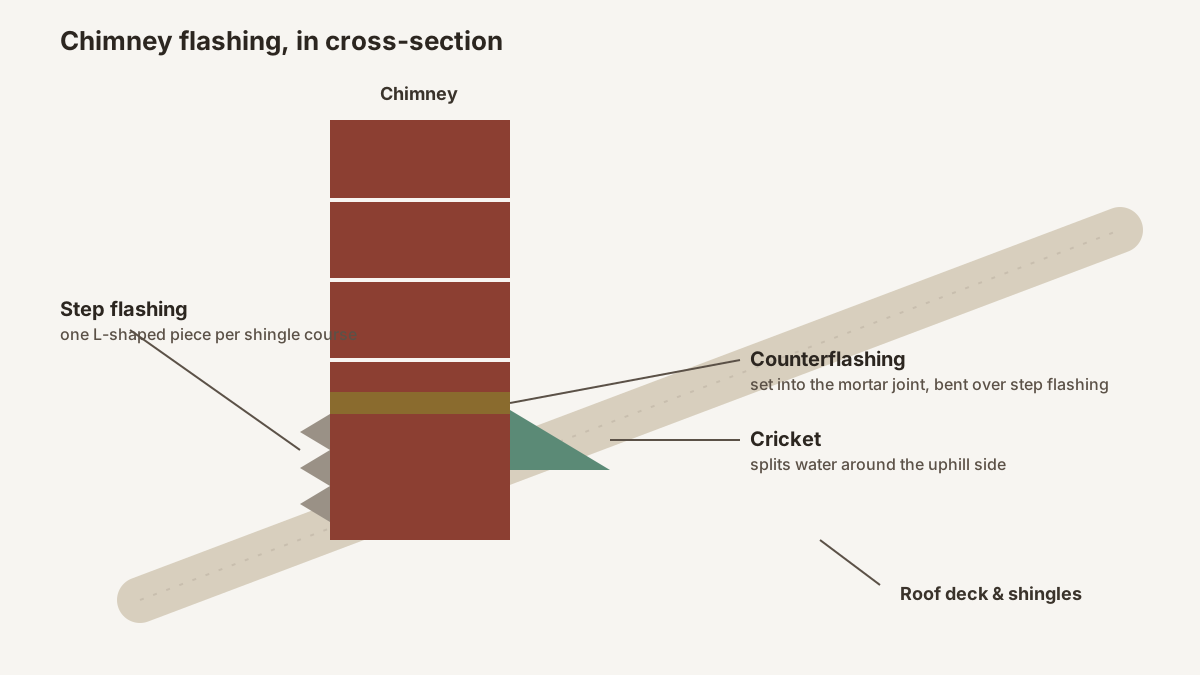
How chimney flashing is built: step flashing, counterflashing, and a cricket working together.
Why Chimney Flashing Leaks: The Causes Ranked by How Often They Show Up
Chimney flashing is actually two or three separate pieces working together, and each one fails in a different way. Ranked by how often a chimney flashing leak actually traces back to it:
Counterflashing pulling away from the mortar joint. The top piece, called counterflashing, is set into a cut mortar joint or under the chimney cap and bent down over the step flashing below it. Mortar erodes, sealant dries out, and the counterflashing works loose, opening a gap right where water runs fastest.
Step flashing that was caulked instead of woven. Correctly installed step flashing is a series of L-shaped metal pieces, one per shingle course, each one overlapping the one below it like shingles themselves. A crew in a hurry sometimes runs a single long strip of flashing and seals the seam with caulk instead, and that caulk is the first thing to fail in freeze-thaw or UV exposure.
A missing or undersized chimney cricket. On a chimney wider than about 30 inches on the uphill side, building code and NRCA guidance call for a chimney cricket, a small peaked structure built behind the chimney that splits water and debris around it instead of letting it pool against the uphill face. A missing or too-small cricket lets snow and leaves build up behind the chimney, and that standing water eventually finds the flashing seam.
Cracked or open mortar and chimney cap. Water doesn't need flashing to fail if it can get in above the flashing line entirely, through cracked mortar joints or a missing chimney cap, then travel down the inside of the flue or chase and show up as a leak with no obvious flashing damage at all.
Age and thermal cycling. Metal flashing expands and contracts every day it's in the sun, and that constant movement eventually works fasteners loose and opens hairline gaps at seams, especially on older aluminum flashing that wasn't given room to move.
Chimney flashing repair cost tracks closely with which of these is actually wrong: resealing a counterflashing joint is often a same-day fix, while rebuilding step flashing or adding a cricket means pulling shingles back and working with sheet metal.
Skylight Leaking Repair: Why It Rarely Starts at the Glass
Skylight leak causes get blamed on the glass or acrylic dome far more often than they deserve. In most cases the glazing itself is fine, and the water is coming from the perimeter flashing or the seal between the skylight curb and the roof deck around it, the same basic problem as a chimney, just built for a square or rectangular opening instead of a round one.
Perimeter flashing failure. Like a chimney, a skylight needs step flashing along its sides and head and sill flashing at the top and bottom, usually supplied as a kit matched to the skylight brand and roof pitch. A universal or mismatched flashing kit is one of the more common causes of a skylight leaking repair call within the first few years of installation.
Failed gasket or sealant around the glazing. The rubber gasket sealing the glass or acrylic panel to the frame degrades with UV exposure over time, especially on older skylights, and a failed gasket lets water in at the glass edge rather than the roof-flashing line.
Condensation mistaken for a leak. A surprising number of "skylight leak" calls turn out to be condensation dripping off the inside of the frame in cold weather, not water intrusion at all. Condensation tends to show up on cold mornings regardless of rain, while a true leak tracks with actual precipitation.
Curb or deck rot. On an older skylight, wood curb framing can rot from years of minor moisture intrusion, and once the curb itself is compromised no amount of resealing the flashing holds for long.
Telling a flashing leak from a condensation problem matters because the fix is completely different: a condensation issue needs better attic ventilation or an insulated skylight shaft, not a re-flash.
Roof Valley Leaks: The Third Most-Missed Failure Point
A roof valley is the internal angle where two roof slopes meet and drain into each other, and it carries more running water than almost any other part of the roof during a hard rain. That volume is exactly why a roof valley leak is disproportionately common for how little surface area a valley actually covers.
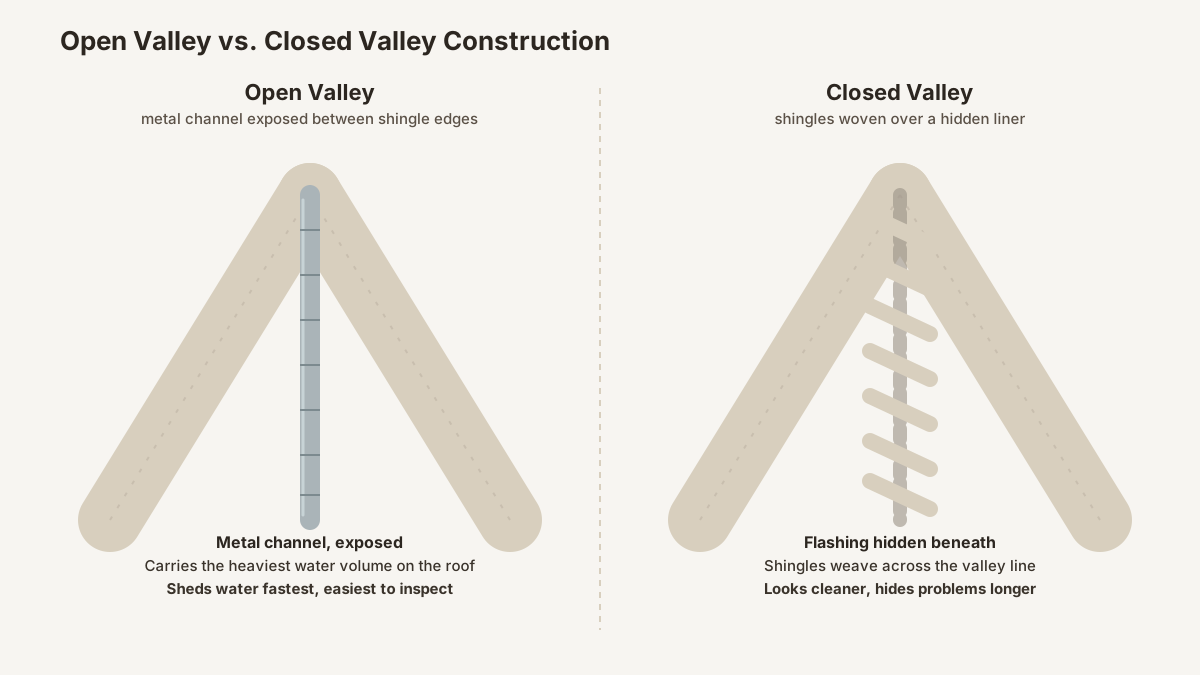
The difference between step flashing vs continuous flashing matters most right here. Open valleys use a metal channel, continuous flashing running the full length of the valley, exposed between the shingle edges on either side. Closed valleys weave shingles across the valley line with flashing hidden underneath. Open valleys shed water fastest and are easier to inspect; closed valleys look cleaner but hide flashing problems until the leak is already inside. Roof valley repair on a closed valley usually means pulling back shingles on both sides to inspect and replace the hidden liner, while an open-valley repair is often a more contained sheet-metal job.
Debris is the other half of the story: leaves, pine needles, and granule wear collect in a valley faster than anywhere else on the roof, and a valley that's never cleared traps water against the flashing seams long after the rest of the roof has dried.
Open valleys expose the metal channel and drain fastest; closed valleys look cleaner but hide flashing problems until the leak is already inside.
How to Tell Which One Is Actually Leaking
Chimneys, skylights, and valleys are sometimes only a few feet apart on the same roof plane, so a stain on the ceiling below doesn't tell you which one to blame without a little detective work.
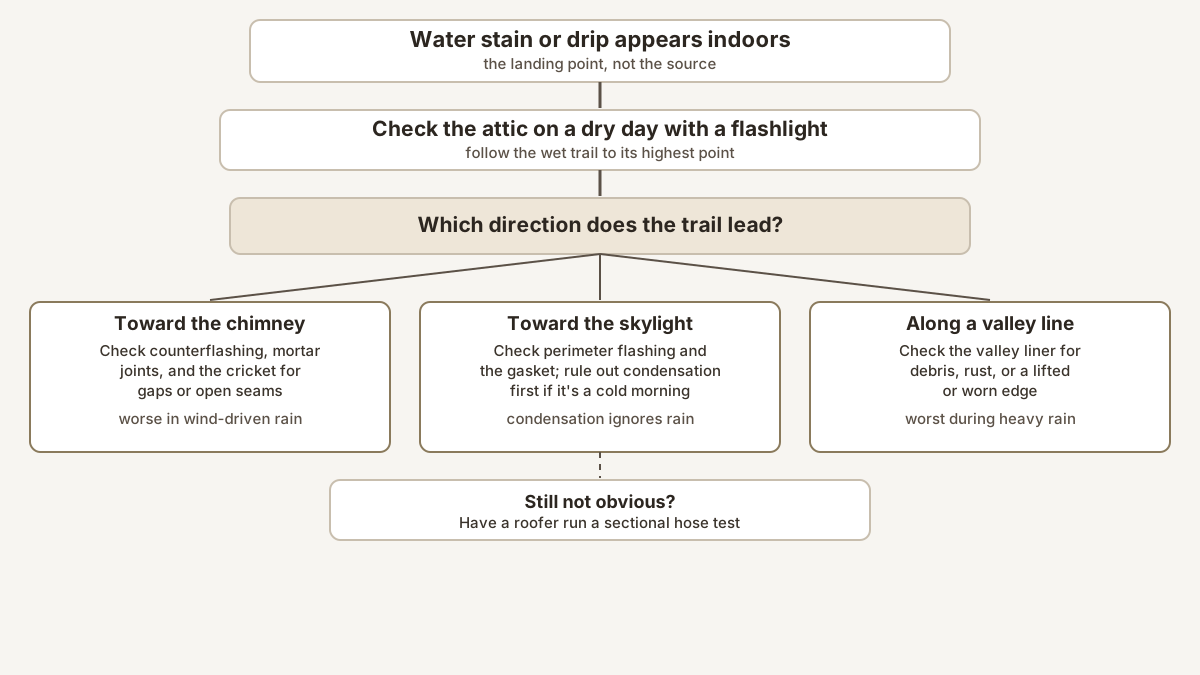
Go to the attic on a dry day with a flashlight. Look for staining, dark streaks, or damp wood along the rafters, and note whether the wet trail leads toward the chimney chase, the skylight shaft, or a valley line.
Check timing against the weather. A stain that grows only during wind-driven rain from one direction points more toward chimney or valley flashing on that side of the house; one that appears on cold, dry mornings and disappears by afternoon is more likely skylight condensation.
Inspect the chimney chase first if the stain is near an interior wall with a flue. Look at the counterflashing line, the mortar joints, and the cap from a safe vantage point; binoculars from the ground work as a first pass.
Inspect the skylight shaft if the stain is under a skylight well. Run a hand along the inside of the frame; moisture right at the frame edge points to perimeter flashing, while moisture only on the glass itself, with no framing damage, often points to condensation instead.
Check the nearest valley if the stain lines up with a diagonal roofline. From the ground or an upstairs window, look for granule buildup, debris, or a visibly rusted or lifted valley liner.
When it's still not obvious, bring in a roofer for a hands-on inspection. A professional can run a controlled hose test section by section, something that's harder to do safely and conclusively without roof experience.
How to trace a stain back to the chimney, skylight, or valley causing it.
What you're seeing
Most likely source
Next step
Stain near an interior chimney wall, worse in wind-driven rain
Chimney counterflashing or step flashing
Inspect mortar joints and flashing seams
Water on cold mornings, gone by afternoon, no correlation to rain
Skylight condensation
Check attic and shaft insulation and ventilation, not the flashing
Water tracking the glass edge, or damage right at the frame
Skylight perimeter flashing or gasket
Inspect the flashing kit and gasket seal
Stain lining up with a diagonal roofline between two slopes
Roof valley leak
Check the valley liner for debris, rust, or lifted edges
Musty smell or soft decking with no visible stain yet
Any of the three, caught early
Full attic inspection before it reaches drywall
Fixing It: What You Can Handle and What Needs a Roofer
Some of this is legitimately homeowner work if the roof is low-pitched, dry, and safe to access. Recaulking an already-sound counterflashing joint, clearing debris out of a valley, and resealing an accessible skylight gasket kit bought for the exact model are all within reach for someone comfortable on a ladder. Rebuilding step flashing, replacing a chimney cricket, reflashing a valley, or working on anything above one story is not.
Task
Homeowner can typically handle
Call a professional
Recaulking a sound counterflashing joint
Yes, on a low, dry, walkable roof
–
Clearing debris from a valley
Yes, from a stable ladder
–
Resealing a manufacturer-matched skylight gasket
Yes, if the kit matches the exact model
–
Rebuilding step flashing or counterflashing
–
Yes, always
Adding or rebuilding a chimney cricket
–
Yes, always
Roof valley repair (open or closed valley)
–
Yes, always
Any work above one story, or on a roof steeper than about 6:12 pitch (a 6-inch rise for every 12 inches of horizontal run)
–
Yes, always
When it's time to bring in a professional, get at least two written estimates, and make sure each one specifies the actual flashing work, not just "reseal and caulk." Before signing either one, verify that the contractor’s state license is active and ask them to confirm current liability insurance directly with their carrier rather than taking their word for it; a legitimate roofer will produce both without hesitation. A caulk-only fix on a chimney or skylight flashing problem is one of the most common reasons these leaks come back within a year. A roofing contractor that serves your area is reachable at 888-679-3798 if you'd rather describe the leak over the phone than start with a search.
What Chimney Flashing, Skylight, and Valley Leak Repairs Cost
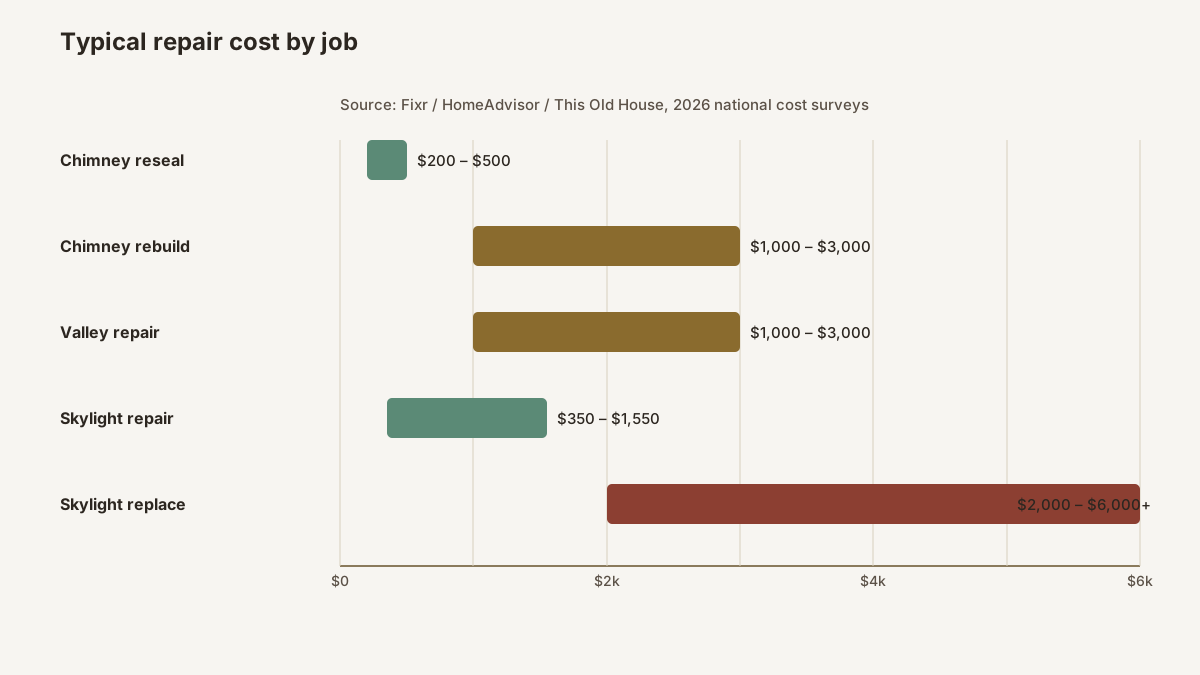
Every flashing repair cost figure below comes from a 2026 national roofing-cost survey. None of the datasets we draw from break out chimney, skylight, and valley repairs as their own line items, so where a specific figure doesn't exist, we've mapped the job to the closest general repair band, minor, moderate, or major, those surveys do track, and said so plainly rather than inventing a number that doesn't exist. Our roof repair cost guide breaks down general repair pricing by job type if yours doesn't fit neatly into chimney, skylight, or valley work. Treat every figure here as a researched range pulled from those surveys, not a quote for your roof: real pricing varies by region, roof access, and the extent of damage a crew finds once the work opens up, and the only number that’s actually binding is a written estimate from a contractor who has seen the job in person.
Job type
Typical range
What moves the price
Source
Chimney flashing reseal (sound counterflashing, minor gap)
$200 – $500
Accessibility, flashing material (aluminum vs. copper), story height
HomeAdvisor / This Old House, 2026
Chimney flashing rebuild (step flashing, counterflashing, or cricket)
$1,000 – $3,000
Mortar work, cricket framing, chimney size and pitch
Fixr, 2026 (moderate repair band)
Skylight leak repair (perimeter flashing or gasket reseal)
$360 – $1,550
Flashing kit match, story height, whether the curb is sound
HomeAdvisor / Bob Vila, 2026 (roof leak repair band)
Skylight unit or curb replacement
$2,000 – $6,000+
Skylight size, curb rot, whether the opening is reframed
Fixr / This Old House, 2026 (major repair band)
Roof valley repair (reline or reflash)
$1,000 – $3,000
Open vs. closed valley, shingle removal, valley length
Fixr, 2026 (moderate repair band)
Roof inspection to diagnose the source
$100 – $600
Roof size, whether infrared or moisture-meter testing is used
This Old House, 2026
Emergency or after-hours dispatch
+$100 – $300 on top of the repair
Same-day, weekend, or storm-surge demand
Fixr / Bob Vila, 2026
National cost ranges for chimney, skylight, and valley leak repairs, from 2026 contractor cost surveys.
Across every cause and severity, the average roof repair nationally lands somewhere between $531 and $1,173 depending on which 2026 survey you use, with This Old House's 2026 homeowner survey landing closer to the low end and HomeAdvisor's broader dataset pulling the average higher. None of these datasets include a regional price index, a multiplier some cost guides apply for local labor and material rates, so a written estimate from a licensed local roofing contractor, not this table, sets the real number for your address.
When a valley or flashing leak traces back to wind or hail rather than age, it shifts from an out-of-pocket repair to an insurance conversation. Industry data puts wind and hail behind 40.7% of homeowners insurance losses nationally, with the average claim running $13,511 and a claim frequency of about 2.82 per 100 insured homes a year, so it's worth checking storm dates against your repair timeline before paying out of pocket for damage a policy might cover.
When It's an Emergency (and the One Rule That Matters Most)
A chimney, skylight, or valley leak becomes an emergency the moment water is actively dripping indoors, especially anywhere near a light fixture, outlet, or breaker panel, or when a storm has visibly torn or lifted flashing you can see from the ground. In that situation, move anything valuable out from under the drip, set a container to catch it, and if water is anywhere near electrical fixtures, shut off power to that circuit at the breaker before doing anything else.
If the water is still coming in and you can't safely stop it from inside, call 888-679-3798 and describe what you're seeing, where it's coming from, and whether it's near anything electrical, so a roofing contractor that serves your area can tell you whether it needs a same-day tarp.
Never climb onto a wet, icy, or steeply pitched roof to inspect chimney, skylight, or valley flashing yourself; falls from roofs and ladders are a leading cause of home-repair injuries, and no leak is worth that risk. A temporary tarp set from a ladder at the eave, weighted or fastened to furring strips rather than straight through the shingles, buys time until a crew can get there safely. Left standing too long, a chimney or valley leak that's soaked framing or insulation also raises the odds of mold; the EPA notes that mold can begin developing on wet material within roughly 24 to 48 hours, one more reason a wait-and-see approach on an active drip rarely pays off.
Preventing the Next Leak
A handful of habits catch these three failure points long before they reach the ceiling.
Walk the attic twice a year, spring and fall, with a flashlight, checking specifically around the chimney chase, skylight shaft, and any valley you can see from inside.
Clear valleys and gutters of debris at least twice a year, more often under trees, since trapped leaves and needles hold water against flashing seams.
Have a roofer check chimney counterflashing and mortar joints every three to five years, or sooner after a hard freeze-thaw winter.
Re-caulk skylight perimeter flashing proactively once it's showing UV wear, rather than waiting for the first stain to appear on the ceiling below.
After any hail or high-wind event, have the chimney, skylight, and valleys inspected specifically, not just the open shingle field, since these details hide damage a drive-by look will miss.
A scheduled inspection is inexpensive next to a hidden leak that's been running for a season. Our roof inspection guide covers what a thorough inspection should include.
Regional Notes: Freeze Belt, Hurricane Coast, and Hail Alley
Climate shifts which of these three failure points shows up first, and how often.
Region
What tends to fail first
Why
Freeze belt (Upper Midwest, Northeast, Rockies)
Valley and chimney flashing, plus ice-dam backup at both
Freeze-thaw cycling works fasteners loose, and melting snow refreezes behind flashing edges
Hurricane coast (Gulf and Southeast Atlantic)
Skylight and chimney flashing lifted by wind-driven rain
Sustained high wind forces water sideways and up under flashing edges built for gravity flow
5,432 major hail events nationwide in 2025, with Texas alone recording 902; NOAA classifies hail 1 inch in diameter or larger as severe and 2 inches or larger as significant severe, the size most likely to crack rather than just dent flashing and valley liners
Everywhere else
Age-related flashing failure at all three spots evenly
Thermal cycling and UV wear on sealant and metal over 10–15 years
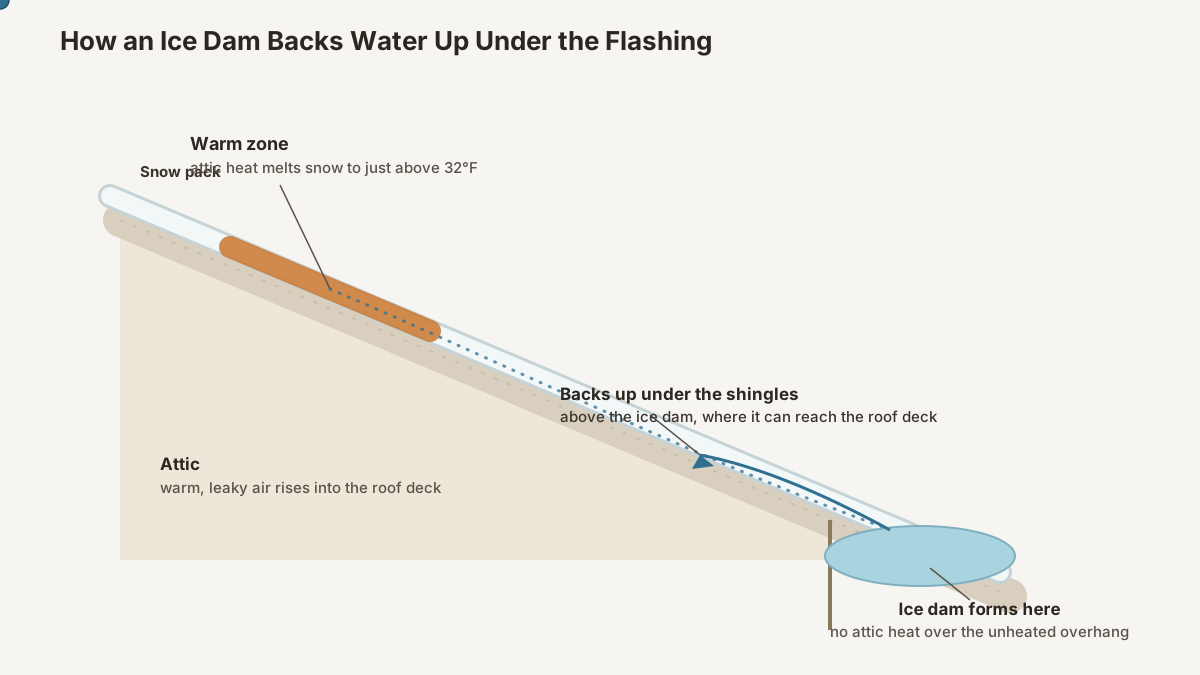
In freeze-belt climates, a valley or chimney leak that shows up in late winter is frequently an ice dam problem rather than a straightforward flashing failure: heat escaping the attic melts snow higher on the roof to just above 32°F, and that meltwater refreezes at the colder eave or valley edge, backing up under the flashing above it. Our ice dam guide covers that mechanism and the fix in more detail.
In hail alley, the visible damage and the real damage rarely match. A chimney or valley can look fine from the driveway while the flashing underneath is dented, cracked, or granule-stripped, which is why a hands-on inspection after any hail event matters more than a look from the ground. Our hail damage roof repair guide covers how to document that kind of damage for a claim.
Why late-winter valley and chimney leaks in freeze-belt climates are often an ice dam, not a flashing failure.
Frequently asked questions
How do I fix leaking chimney flashing?+
Start by identifying which piece has failed: a loose counterflashing joint can often be resealed, while damaged step flashing or a missing chimney cricket needs to be rebuilt with new sheet metal, not just recaulked. Caulk alone rarely holds for more than a season on a true flashing gap. If the leak is active or you're not comfortable on the roof, a roofing contractor that serves your area can diagnose and rebuild the flashing correctly.
How can I tell if chimney flashing is leaking?+
Look for a water stain, dark streak, or damp insulation in the attic near the chimney chase, especially one that grows worse during wind-driven rain from one direction. From the ground, check for counterflashing that's visibly pulled away from the mortar joint, or cracked mortar around the chimney cap. A musty smell near the chimney with no visible stain yet is often an earlier sign than the stain itself.
How much does chimney flashing repair cost?+
A simple reseal of sound counterflashing typically runs $200 to $500, based on 2026 national roofing-cost data, while rebuilding step flashing, counterflashing, or adding a chimney cricket falls closer to $1,000 to $3,000. The exact number depends on chimney size, roof pitch, and whether mortar work is also needed. A written estimate from a local roofer is the only way to pin down your actual cost.
Does homeowners insurance cover chimney repairs?+
It depends on the cause, not the fact that the chimney is leaking. Sudden damage from wind or hail is typically covered under a standard homeowners policy, minus your deductible, while gradual deterioration from age, weather cycling, or deferred maintenance usually is not. If a storm is the likely cause, document the damage with photos and the storm date before starting any repair, so an adjuster can evaluate the claim.
How long does chimney flashing last?+
Quality aluminum or galvanized flashing, installed correctly, commonly lasts as long as the roof itself, often 20 years or more, while copper flashing can outlast several roof replacements. Flashing that was caulked instead of properly lapped, or installed with an undersized cricket, tends to fail within a handful of years regardless of material. A visual check every few years catches early wear before it becomes an active leak.
What should chimney flashing look like when it's done right?+
Correctly installed chimney flashing has two distinct layers: step flashing woven into the shingle courses along the sides, and counterflashing set into a cut mortar joint or under the cap, bent down to overlap the step flashing below it. There should be no visible caulk bridging a gap where metal should overlap metal, and a cricket should be present behind any chimney wider than about 30 inches on the uphill side.
How do I fix a leaking skylight?+
First rule out condensation, which shows up on cold mornings regardless of rain and isn't a leak at all. If it's a true leak, check whether the flashing kit around the skylight is intact and matched to the model; a failed perimeter flashing or gasket usually needs a professional reseal or flashing rebuild rather than a caulk gun. Curb or deck rot on an older skylight typically means the unit needs replacing.
Who fixes skylight leaks?+
A licensed roofing contractor is the right call for a true skylight leak, since the fix usually involves the flashing kit and roof deck around the unit, not just the skylight itself. Some skylight manufacturers also maintain their own certified installer networks for warranty-covered units. Check your paperwork for a manufacturer warranty before paying out of pocket, since flashing defects are sometimes covered even after the labor warranty expires.
How much does it cost to repair a leaking skylight?+
A skylight leak repair limited to resealing the perimeter flashing or gasket typically falls in the $350 to $1,550 range, based on national 2026 roof leak repair data, since skylight-specific cost surveys are limited. A full unit or curb replacement, needed when the wood curb has rotted, runs closer to $2,000 to $6,000 or more. Get a written estimate, since accessibility and skylight size both move the number.
What's the difference between step flashing vs continuous flashing?+
Step flashing is a series of individual L-shaped metal pieces, one per shingle course, layered like shingles themselves along a sidewall or chimney. Continuous flashing is a single unbroken piece, most often used down the center of an open roof valley where water volume is highest. Both work when installed correctly; problems start when a crew substitutes a single strip of flashing and caulk where individual, overlapping pieces belong.
What is a chimney cricket, and does my chimney need one?+
A chimney cricket is a small peaked structure built into the roof behind a chimney that splits rain and debris around it instead of letting water pool against the uphill side. Building code and NRCA guidance generally call for one on chimneys wider than about 30 inches measured across the upslope face. If your chimney is that wide and has no cricket, it's a common, fixable cause of a recurring leak.
Can I repair chimney or skylight flashing myself?+
Only the simplest parts: recaulking an already-sound counterflashing joint, clearing debris from a valley, or resealing a manufacturer-matched skylight gasket kit are reasonable homeowner jobs on a low, dry, walkable roof. Rebuilding step flashing, adding a chimney cricket, reflashing a valley, or working above one story should go to a licensed roofer. A flashing repair that fails within a season usually ends up costing more than doing it right initially.