Most roof leak repair starts with finding the true entry point, which is often several feet from the ceiling stain, then sealing or replacing the failed flashing, boot, or shingles causing it. Minor fixes run $150 to $1,000; moderate repairs land between $1,000 and $3,000. Call a roofing contractor immediately if water is actively dripping indoors or near electrical fixtures.
A roof leak rarely announces itself where the damage actually starts. By the time you see a brown ring on the ceiling or a drip landing in a bucket, water has usually already traveled along rafters, decking, or old insulation from an entry point that might be ten feet away. That gap between symptom and source is why so many roof leak repair jobs start with the wrong assumption, and why patching the visible spot at the ceiling almost never fixes anything.
Here's what actually causes roof leaks, how to trace one back to its real source instead of guessing, what a repair should reasonably cost, when a leak crosses into emergency territory, and what a standard homeowners policy will and won't pay for. Every number below comes from a published 2026 contractor-cost survey, NOAA or Insurance Information Institute hail data, or a roofing industry standard, each one sourced at the bottom of the page.
What a Roof Leak Actually Is (and Why It's Rarely Where You Think)
A roof is a stack of layers, not a single surface, and a leak means water has beaten all of them at one point. From outside in, most residential roofs run shingles or another top layer, a water-resistant underlayment sheet, and the roof decking, usually plywood or OSB, nailed to the rafters or trusses. Water only shows up inside your house after it has already breached at least two of those layers, which is why a leak is often further along than it looks from the attic floor.
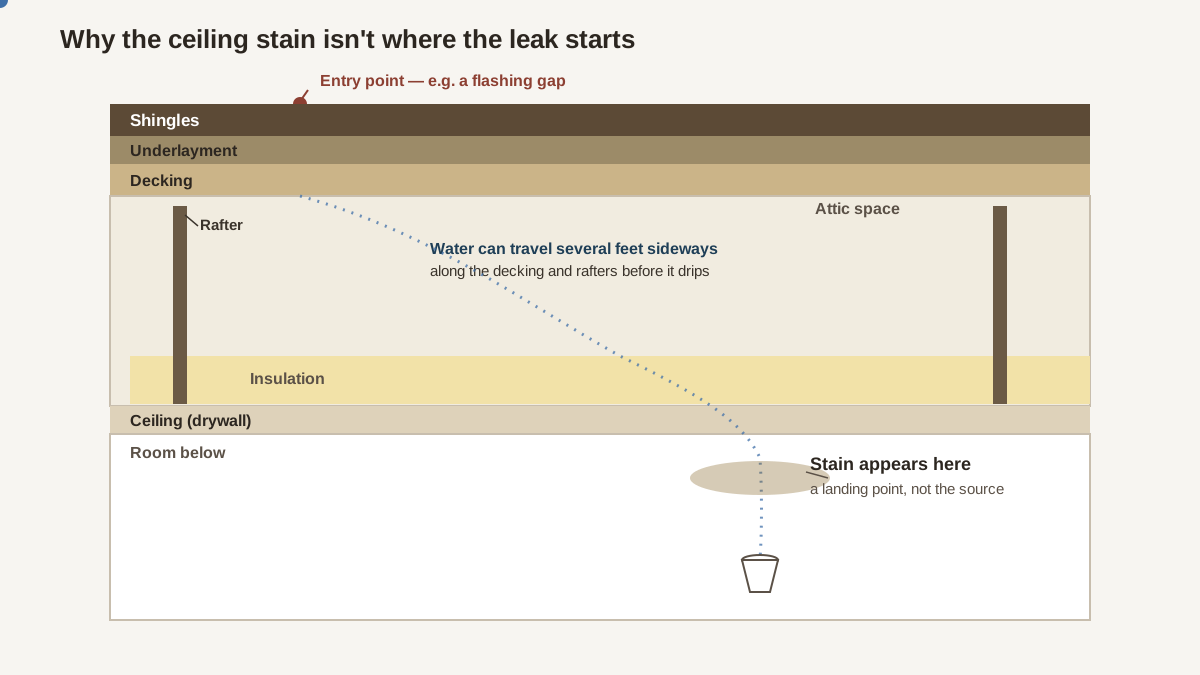
Once water gets past the shingles and underlayment, it doesn't necessarily fall straight down. It runs along the underside of the decking, follows a rafter, soaks into insulation, and drips off at whatever point gravity and the framing happen to send it, sometimes several feet horizontally from the actual hole. That's the hardest part of any roof leak repair: the ceiling stain is a landing point, not a map.
Roofers describe two broad leak types. An active leak is dripping or visibly wet right now, usually during or shortly after rain. A hidden leak has no obvious drip; it shows up as a soft spot in the decking, a musty smell, peeling paint, or a slowly spreading stain that grows a little with every storm. Hidden leaks are more common on older roofs and around anything that punctures the roof plane: a chimney, vent pipe, skylight, or old satellite mount.
Water often enters at one spot but travels sideways along the decking and rafters before it drips through, which is why the ceiling stain is rarely straight above the actual leak.
Why Roofs Leak: The Most Likely Causes, Ranked
Not every leak has the same odds. Based on how roofing crews describe callbacks, these are the causes worth ruling out first, roughly in the order you'll actually run into them:
Flashing failure. The thin metal strips sealing joints around chimneys, dormers, sidewalls, and roof-to-wall transitions are the single most common leak point on an otherwise sound roof. Sealant dries out, metal shifts, and water finds the gap.
Roof leak around chimney and skylight seals. Chimneys, skylights, and vent pipes all interrupt the shingle field, and every interruption needs its own flashing detail. These spots fail years before the shingles around them wear out.
Aging or damaged shingles. Cracked, curled, or missing shingles let wind-driven rain past the top layer, especially on a roof already past 15 to 20 years old.
Clogged or damaged gutters. Water that can't drain backs up under the shingle edge, the classic pattern behind an ice dam in cold climates, and a plain overflow problem everywhere else.
Nail pops and underlayment gaps. Roofing nails that back out over time, or underlayment installed with gaps at the seams, create small entry points that take years to show up as a stain.
Storm and hail damage. Wind can lift or tear shingles outright, and hail can crack the mat underneath a shingle even when the surface still looks intact from the ground.
Valley failures. Roof valleys carry more water than any other section, so a worn or improperly lapped valley liner leaks disproportionately often for its size.
How to Find Where a Roof Leak Is Coming From
Finding the actual hole is most of the job. Professional roof leak detection often uses a moisture meter, a handheld sensor that reads how far water has spread through decking and framing, and on stubborn or expensive roofs, an infrared camera that shows temperature differences where insulation is wet. You can run a rough version of the same process yourself with a flashlight, a ladder, and a dry day.
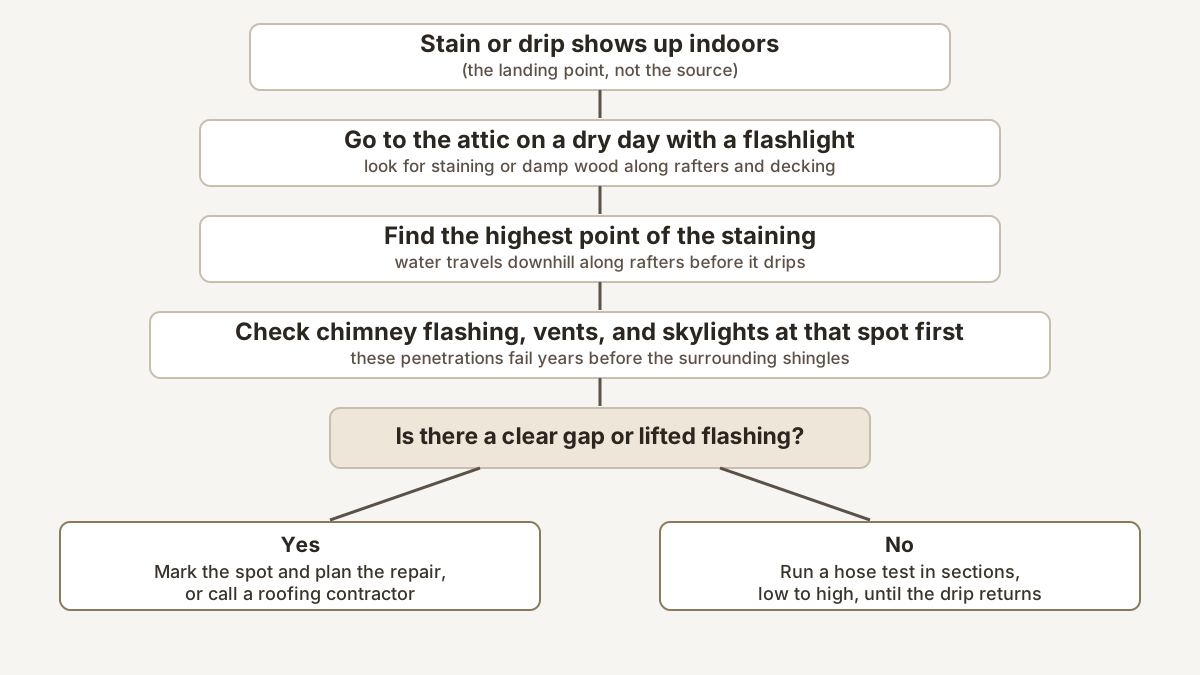
Start in the attic, not on the roof. Bring a flashlight and look for staining, dark streaks, or damp insulation along the rafters and decking.
Find the highest point of the stain or wet wood. Water travels downhill along rafters and decking seams, so the entry point is almost always higher up the slope than the visible damage.
Check every roof penetration first: chimney flashing, plumbing vent boots, skylight frames, and any spot where a satellite mount, solar bracket, or old antenna was ever bolted down.
Measure from a fixed point, like the ridge or a gable end, and take that measurement outside to locate the same spot on the roof surface.
On the roof, only if it's dry, low-pitched, and safe to walk, inspect the flashing, shingle edges, and nail heads at that location for cracks, gaps, or lifted seals.
If nothing is obvious, have someone run a hose over small, isolated sections of the suspect area for a few minutes at a time while you watch from inside, working from low on the roof upward until the drip reappears.
That last step, sometimes called a hose test, is standard trade practice for tracking down a leak that hides itself between storms. It takes patience: soaking one section for a couple of minutes and waiting before moving to the next avoids flooding the whole roof and making the source impossible to isolate.
How to trace a roof leak back to its actual source, step by step.
What the Leak's Timing and Location Are Telling You
Roof Leaking After Rain: What That Timing Tells You
If your roof leaking after rain shows up an hour or more after the storm passes, and not during it, that's usually melting ice, saturated insulation slowly draining, or water pooling in a valley, the internal angle where two roof slopes meet, or behind debris, and finding a gap only once it's had time to collect. A leak that starts the moment rain begins, and stops the moment it does, points more directly at an active gap right over the stain, like a lifted shingle or an open flashing seam.
Ceiling Leak From Roof: Why the Stain Isn't the Source
A ceiling leak from roof damage almost never sits directly under the hole. Water follows the path of least resistance along the top of the drywall or the underside of the decking, so a stain in a bedroom ceiling might trace back to a flashing gap over an attached garage, or a valley three feet to one side. Pulling insulation back near the stain, carefully, and only in a dry attic, usually reveals a darker, wetter trail leading toward the real source.
Roof Leak But No Visible Damage: When You Notice It Before You See It
A roof leak but no visible damage on the ceiling is common in the early stages. A musty smell in an upstairs closet, a slightly soft spot in the attic decking underfoot, or paint that's started to bubble without an obvious wet spot are all earlier warning signs than a full stain. Catching a leak at this stage, before it soaks through drywall, is the difference between a $200 to $500 flashing repair and a repair several times that price once decking and insulation are involved.
Leaks Around Chimneys, Skylights, and Roof Penetrations
Chimneys and skylights deserve their own mention because they fail on a different timeline than the rest of the roof. The shingles around a chimney can be ten years old and sound while the flashing itself has already opened up. Our guide to chimney flashing and skylight leaks covers the specific failure points and fixes for these penetrations in more depth.
Fixing a Roof Leak: What You Can Do and What to Hand to a Pro
Some roof leak repair is legitimately homeowner work. Recaulking a cracked pipe boot, resealing exposed nail heads with roofing cement, clearing a gutter that's backing water under the shingle edge, and swapping a handful of obviously cracked shingles on a low-pitch, walkable roof are all within reach for someone comfortable on a ladder. None of that applies on a steep roof, a wet roof, or anything more than one story.
Task
Homeowner can typically handle
Call a professional
Recaulking a pipe boot or exposed nail head
Yes, on a low, dry, walkable roof
—
Clearing gutters and downspouts
Yes, with a stable ladder
—
Replacing a handful of cracked shingles
Yes, on a low-pitch roof, matching material
—
Flashing rebuild around a chimney or skylight
—
Yes, always
Any repair on a pitch steeper than about 6:12
—
Yes, always
Decking replacement or structural repair
—
Yes, always
Flashing rebuilds, valley repairs, anything involving removing and re-lapping underlayment, and any repair on a roof pitch steeper than about 6:12 belong to a professional. Roof pitch is expressed as inches of rise per 12 inches of run; above roughly 6:12, standing on the surface safely takes roofing-specific fall protection, gear most homeowners don't own.
Flat roof leak repair and metal roof leak repair both follow the same diagnose-then-patch logic but use different materials entirely: flat membrane systems get patched with compatible membrane and adhesive rather than shingles, and standing-seam metal roofs usually fail at seams, fasteners, or transitions rather than in the middle of a panel. Both are more forgiving to walk than a steep asphalt roof, but the patch materials are specific to the system, one more reason a mismatched DIY patch tends to fail again within a season.
When you're ready to bring in a professional, get at least two written estimates, verify the contractor's state license is active through your state's contractor licensing board, ask whether the crew carries general liability and workers' compensation coverage that's currently in force, not just a policy that's since lapsed, and ask what the warranty covers on the repair itself versus just materials. A roofing contractor that serves your area is reachable at 888-679-3798 if you'd rather start with a phone conversation than a search.
What Roof Leak Repair Costs
Cost is the first question most people have, and it depends heavily on what's actually broken, not just how big the ceiling stain looks. These ranges come from national 2026 roofing-cost surveys, not a single company's price list, so treat them as researched ranges for comparison, not a quote for your house — the only number that's actually binding is a written estimate from a contractor who has seen your roof. Contractors typically bill materials by the square, the trade's unit for 100 square feet of roof surface, and price labor separately at roughly $50 to $120 an hour, which is part of why a small flashing fix costs a fraction of a full valley rebuild even though both get called "a repair."
Repair type
Typical range
What moves the price
Source
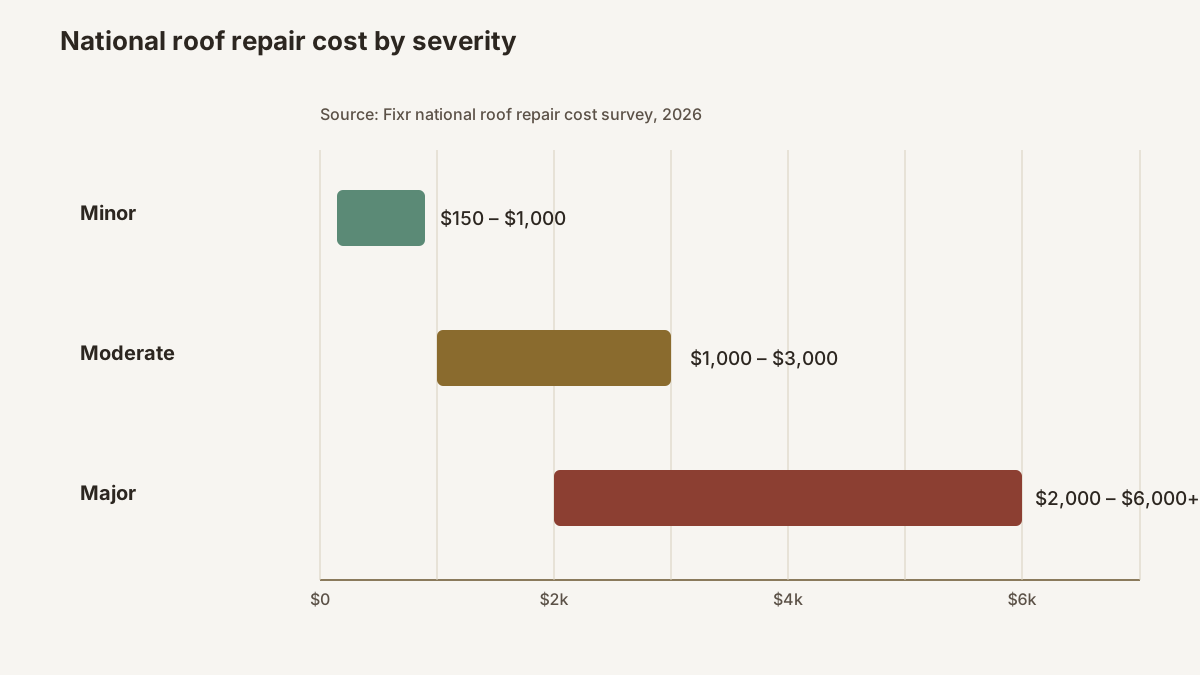
Minor repair (flashing reseal, pipe boot, a few shingles)
$150 – $1,000
Number of penetrations, roof pitch, ladder access
Fixr, 2026
Moderate repair (valley, larger flashing rebuild, several shingle courses)
$1,000 – $3,000
Decking exposure, material match, story height
Fixr, 2026
Major repair (decking replacement, extensive storm damage)
$2,000 – $6,000+
Rot or mold remediation, roof size, structural repair
Fixr, 2026
Roof leak repair specifically (as opposed to general repair)
$350 – $1,550
Entry points, interior damage, accessibility
Fixr / HomeAdvisor / Bob Vila, 2026
Emergency or after-hours dispatch
+$100 – $300 on top of the repair
Same-day, weekend, or storm-surge demand
Fixr / Bob Vila, 2026
Full roof replacement (when repair no longer makes sense)
$5,700 – $16,000, averages $9,600–$10,800
Roof size, material, layers to tear off, permits
HomeAdvisor / Fixr / HomeGuide, 2026
National roof repair cost ranges by severity, from 2026 contractor cost surveys.
How we got these numbers: this table blends several 2026 national contractor-cost surveys rather than one source, because individual sites vary by tens of thousands of quotes and how they weight regions. This dataset doesn't include a regional price index, a multiplier some cost guides apply for local labor and material rates, so a written estimate from a licensed local roofing contractor is what actually sets your number, not this table. Even that estimate can move once a crew is actually up there: rotted decking, harder roof access than a two-story eave suggests, or more damage than was visible from the ground are the most common reasons a final invoice runs past the original number. The overall roof repair average, across every severity and cause, lands at $1,150 to $1,173 depending on the survey.
Storm-driven leaks carry their own cost math. Industry data puts the average wind and hail homeowners claim at $13,511, with a frequency of about 2.82 claims per 100 insured homes per year, which is why a hail-cracked shingle mat often turns into a full slope repair and claim rather than an out-of-pocket patch.
If you're weighing repair against a full tear-off mainly as an investment question, it's worth knowing a replacement doesn't return its full cost at resale either: the 2025 Cost vs. Value report puts a typical asphalt shingle replacement at recouping about 68% of its cost, and a metal replacement around 50%.
When a Roof Leak Is an Emergency (and the One Safety Rule That Matters Most)
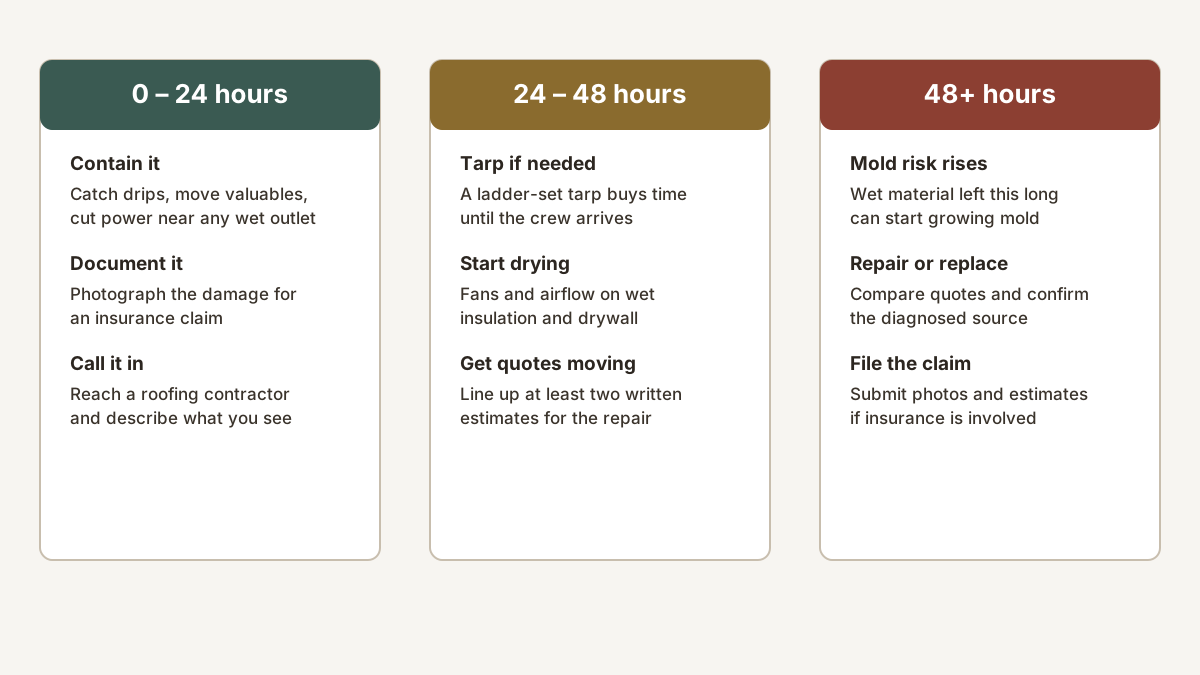
A roof leak emergency is any leak that's actively dripping indoors during or immediately after a storm, especially near a light fixture, outlet, or breaker panel, or any leak on a roof that's visibly missing a large section of covering. In that situation, the first move indoors is simple: move anything valuable out from under the drip, set a container to catch it, and if water is anywhere near electrical fixtures, shut off power to that circuit at the breaker before doing anything else.
If the water is still coming in and you can't safely stop it from inside, call 888-679-3798 and describe what you're seeing, how much water, where, and whether it's near anything electrical, so a roofing contractor that serves your area can tell you whether it needs a same-day tarp.
Never get on a wet, icy, or steeply pitched roof to chase a leak yourself; falls from roofs and ladders are a leading cause of home-repair injuries, and no leak is worth that risk. A temporary tarp, set from a ladder at the eave rather than by walking the roof surface, and weighted or nailed to furring strips, thin wood strips that spread the tarp's load without punching new holes, rather than straight through the shingles, buys time until a crew can get there. Our guide to emergency roof repair and tarping walks through how to do that safely, and what a legitimate emergency call-out should include.
The first 48 hours after finding a roof leak, broken into three windows.
Will Homeowners Insurance Cover a Roof Leak?
Will insurance fix a leaking roof? It depends entirely on what caused the leak, not on the fact that your ceiling is wet. A standard HO-3 homeowners policy covers sudden, accidental damage, like a wind-torn shingle or a hail-cracked roof letting rain through, but it does not cover damage from gradual wear, lack of maintenance, or a roof that was already past its expected service life.
Cause of the leak
Typically covered
Typically excluded
Wind or hail damage (sudden)
Yes, usually, minus your deductible
—
Fallen tree or debris impact
Yes, usually
—
Ice dam backup (sudden ice buildup)
Often, check your specific policy
Some policies cap ice-dam coverage
Gradual wear, age, or lack of maintenance
—
Almost always excluded
Flood water from ground level or storm surge
—
Excluded from HO-3; needs separate flood coverage
Roof past insurer's age limit (often 15–20 years)
Some carriers pay actual cash value only
Varies heavily by carrier and state
Does homeowners insurance cover roof leaks from every source equally? No, and that's the most common surprise in a denied claim. An adjuster's job is to determine whether the damage was sudden and accidental versus something that built up over months or years, and a roof with visible moss, curling shingles, or old repair patches makes the "gradual wear" argument easy for them to make.
If you're filing a claim, document everything before any repair starts: date-stamped photos of the interior damage and, if it's safe to get them, the roof itself; a written note of when the leak began and what the weather was doing; and any prior roof inspection or maintenance records you have. A public adjuster, hired independently and paid a percentage of the settlement, works for you rather than the insurance company, and can be worth the fee on a large or disputed claim; for a straightforward flashing repair, it usually isn't.
Preventing the Next Leak
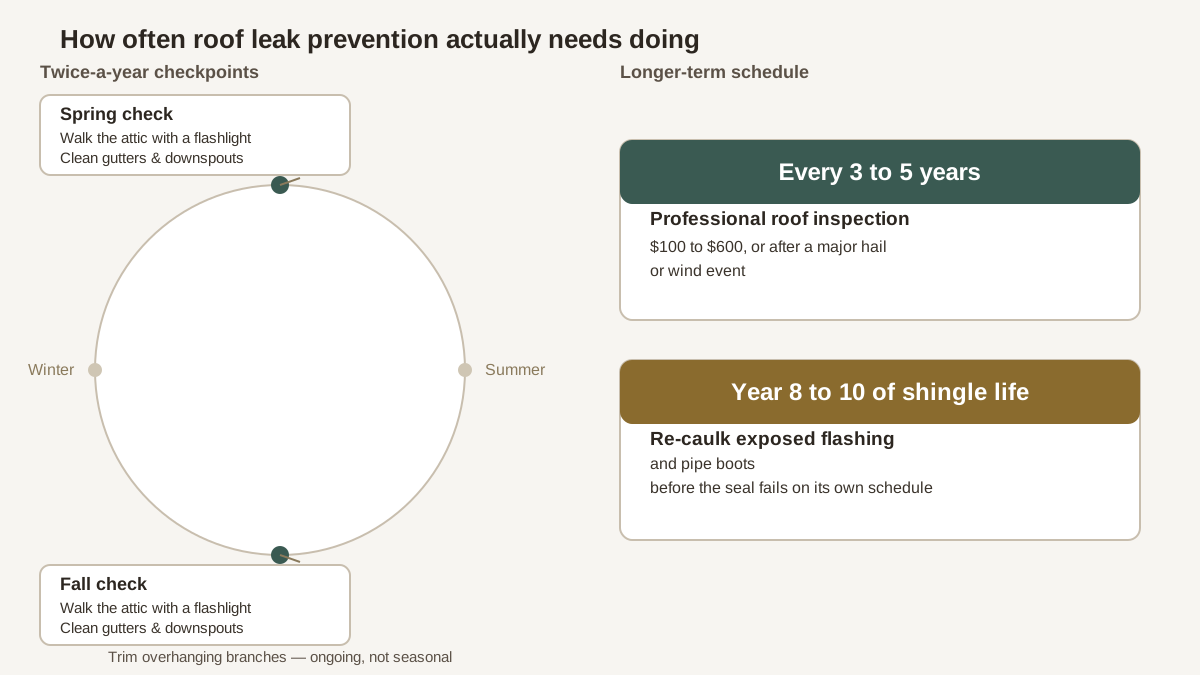
Most future roof leak repair bills are avoidable with a handful of habits that take an afternoon a year, not a specialist.
Walk the attic twice a year, in spring and fall, with a flashlight, looking for new staining before it reaches the ceiling below.
Clean gutters at least twice a year, more often under trees, since backed-up water is one of the most common causes of shingle-edge leaks.
Trim branches back from the roofline; both direct impact and the debris and shade that speed up shingle wear come from overhanging limbs.
Get a professional roof inspection, typically $100 to $600, every three to five years on an asphalt roof, or after any major hail or wind event, whichever comes first.
Re-caulk exposed flashing and pipe boots, the rubber collars sealing vent pipes, proactively around year eight to ten of a shingle roof's life, before the seal fails on its own schedule.
A scheduled inspection is cheap next to a hidden leak that's been running for a season. Our roof inspection guide covers what a real inspection should include and how to tell a thorough one from a five-minute walk-around.
The habits that prevent most future roof leak repair bills, and how often each one actually needs doing.
Regional Notes: Freeze Belt, Hurricane Coast, and Hail Alley
Climate shapes which cause tops your list. A leak in a Minneapolis colonial in February and a leak in a Houston ranch in September have almost nothing in common except the word "leak."
Region
Dominant leak cause
What to watch for
Freeze belt (Upper Midwest, Northeast, Rockies)
Ice dams backing meltwater under the shingle edge
Icicles along the eave, an attic warmer than the outside air, uneven snowmelt on the roof
Hurricane coast (Gulf and Southeast Atlantic)
Wind-driven rain forced past flashing, vents, and shingle edges
Damage right after a named storm; wind-rated materials required on replacement in many coastal counties
Hail-cracked shingle mat and granule loss, sometimes invisible from the ground
5,432 major hail events nationwide in 2025, with Texas alone recording 902
Everywhere else
Age-related flashing failure and gutter backup
Slow, steady leaks that show up over years rather than after a single storm
In freeze-belt climates, an ice dam forms when heat escaping from the attic melts snow on the upper roof while the eave, sitting outside the heated part of the house, stays below freezing, below 32°F, the temperature at which that meltwater refreezes into ice right at the edge. The ice backs up under the shingles above it. That's a different repair path than a summer leak: better attic insulation and ventilation prevent it, while the leak itself often needs ice-and-water shield installed under the shingles at the eave, not just a patch, and steam-thawing an existing dam typically runs another $400 to $1,500 on top of that.
In hail-prone states, the visible damage and the real damage often don't match. The National Weather Service's threshold for severe hail is 1 inch in diameter, roughly the size of a quarter, and significant severe hail starts at 2 inches; stones at the low end of that range can still crack a shingle's fiberglass mat without leaving a visible dent. A roof can look fine from the driveway with a full mat of cracked, bruised shingles underneath, which is why insurers and roofers both do a hands-on inspection rather than a drive-by after a hail event. Our hail damage roof repair guide covers how to spot that kind of damage and file the claim correctly.
Frequently asked questions
How much does it cost to repair a leaking roof?+
Most roof leak repairs run $150 to $1,000 for something minor, like a resealed flashing joint or a few replaced shingles, and $1,000 to $3,000 for a moderate repair involving a valley or larger flashing rebuild, according to national 2026 contractor surveys from Fixr and HomeAdvisor. Major repairs involving decking replacement or storm damage can run $2,000 to $6,000 or more. Get a written estimate for your specific situation rather than assuming the low end.
How do I fix a roof leak myself?+
You can safely handle small, accessible fixes yourself: recaulking a cracked pipe boot, resealing exposed nail heads with roofing cement, or clearing a clogged gutter forcing water under the shingle edge. Anything involving flashing rebuilds, roof pitches steeper than about 6:12, or a second story is safer, and more likely to actually hold, left to a licensed roofing contractor. A patch that fails within a season usually costs more than doing it right the first time.
How do I find a roof leak from inside the house?+
Start in the attic with a flashlight on a dry day and look for staining or damp wood along the rafters and decking, then find the highest point of that staining, since water travels downhill before it drips. Check every roof penetration first, chimney flashing, vent boots, and skylight frames, since those fail years before the surrounding shingles do. Measure from a fixed point like the ridge so you can find the same spot outside.
How serious is a roof leak?+
It depends on how long it's been running and where it's landing. A leak caught within a day or two and dried out promptly is usually a straightforward repair, but a leak dripping into insulation or drywall for weeks can lead to rot and mold, which the EPA notes can begin developing on wet material within 24 to 48 hours. Any leak near electrical wiring or a fixture is serious immediately, regardless of size.
What should I do right after I notice a roof leak?+
Move anything valuable out from under the drip, set a container to catch the water, and if it's anywhere near an outlet, light fixture, or the breaker panel, shut off power to that circuit before doing anything else. Take photos for insurance purposes, then call a roofing contractor to schedule an inspection. Don't get on the roof yourself, especially if it's wet, icy, or steeply pitched.
How long does it take to fix a roof leak?+
A minor repair, like resealing a flashing joint or swapping a few shingles, typically takes a crew two to four hours once they've found the source. Finding the source can take longer than the fix itself, sometimes a full visit just to trace it. A major repair involving decking replacement or a full slope of storm damage can take one to three days depending on weather and material availability.
Will insurance cover a roof leak?+
Only if the cause was sudden and accidental, like wind or hail damage, rather than gradual wear or a lack of maintenance. A standard HO-3 policy typically covers storm-caused leaks minus your deductible, but denies claims where an adjuster determines the roof failed from age or neglect. Document the damage with photos immediately and keep any prior inspection records, since those often decide a disputed claim.
Can a roof leak be repaired in the rain?+
Not safely, and not effectively. Wet shingles and flashing don't seal properly, roofing cement and sealants need a dry surface to bond, and a wet or icy roof is far more dangerous to walk. The realistic move during active rain is a temporary tarp applied from a ladder at the eave, followed by the actual repair once the roof surface has dried out completely.
Why does my roof only leak in heavy rain?+
That pattern usually points to a gap that only lets water through under volume or pressure, like a marginal flashing seal, a valley that overflows only when it's carrying more water than usual, or wind-driven rain forced sideways under a shingle edge during a storm. Light rain doesn't generate enough volume or pressure to find that same path, which is why the leak seems to come and go.
How do I fix a flat roof leak?+
Flat and low-slope roofs use membrane systems like EPDM, TPO, or modified bitumen rather than shingles, so the repair uses membrane patches and compatible adhesive instead of roofing cement and shingle tabs. Small punctures and seam separations are patchable; widespread membrane wear, ponding water, or multiple failed seams usually mean it's time to discuss a full membrane replacement instead of chasing patches season after season.
How do I fix a metal roof leak?+
Standing-seam and corrugated metal roofs typically fail at fastener penetrations, seams, and flashing transitions rather than in the middle of a panel. Repairs usually involve replacing a stripped or backed-out fastener with a properly gasketed screw, resealing a seam with a sealant made for metal roofing, or rebuilding the flashing detail at a penetration. Metal is more forgiving to walk than asphalt, but the fasteners and sealants have to match the panel system.