A roof inspection is a top-to-bottom check of the roof covering, flashing, ventilation and attic for damage or wear, and it typically costs $100 to $600 for a standard visual inspection, per This Old House. Most homes need one twice a year, plus anytime a hail or wind storm passes through, before a sale, or when an insurer asks for proof of condition.
You already know when this matters most: right after a hailstorm rattles the gutters, right before a buyer's inspector climbs a ladder at your closing, or the week your insurance company sends a letter asking for proof the roof isn't overdue for attention. What you might not know is what actually happens once someone's up there, what it should cost, and how to tell a thorough look from a five-minute walk-by dressed up as one.
This guide walks through what a real inspection covers, the moments that should trigger one, what a written report should include, and where the money goes if the inspector finds a problem. The costs referenced come from national homeowner-cost surveys published in 2026 by outlets like This Old House, Bob Vila and Fixr, with hail and insurance figures from the Insurance Information Institute and the National Weather Service's Storm Prediction Center. It won't be specific to your roof, no article can be, but it's enough to walk into your next inspection, routine or storm-triggered, knowing what a good one looks like.
What an Inspection Actually Covers (and What It Isn't)
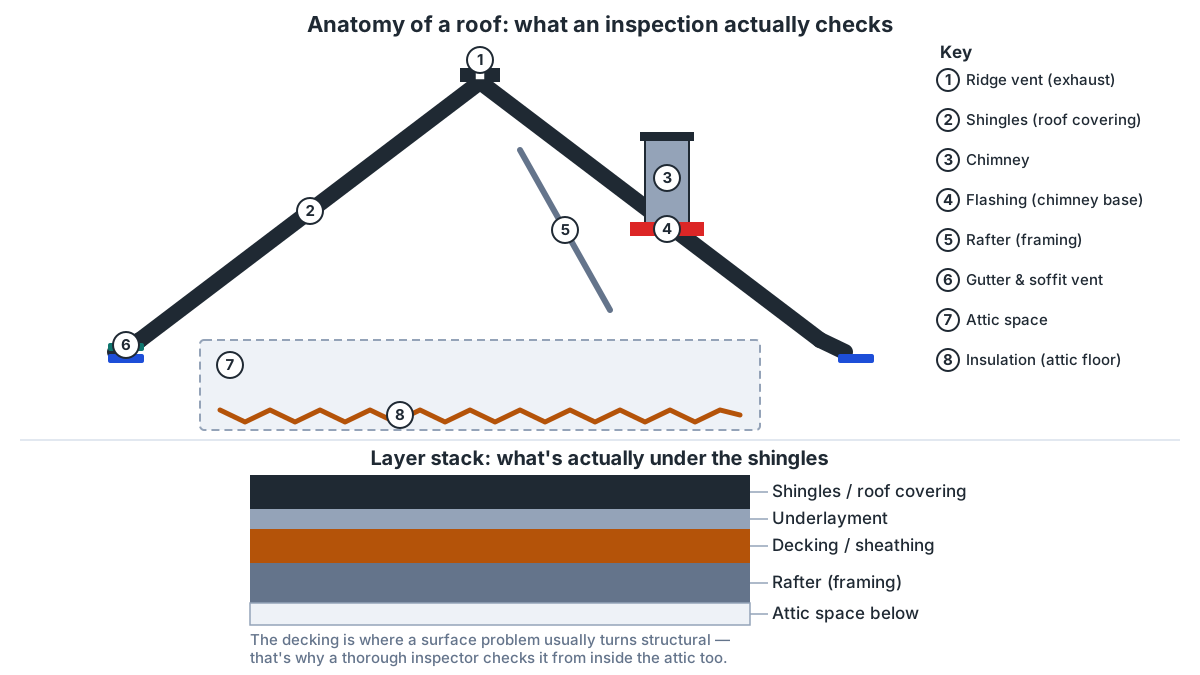
A roof inspection is a systematic look at every part of the roof system: the shingles or covering, the flashing around anything that pokes through it, the ventilation, and usually the attic underneath. It's done by someone trained to tell cosmetic wear from a spot that's already letting water in. That's different from standing in the driveway and squinting up at the ridge line, and it's different from the quick sales walk a contractor does on the way to handing you a quote for a full tear-off.
Skip it long enough and small problems compound quietly. A curling shingle or two, the kind that runs $150 to $800 to fix according to Bob Vila, turns into a soaked deck board and a ceiling stain by the following winter, once it's grown into the kind of repair that runs into the thousands. Insurers have gotten stricter about proof of roof condition before they'll renew a policy without a fight, and a flag on an aging roof from a home inspector can stall a sale at the worst possible moment, after you've already accepted an offer.
The part most homeowners underestimate is how much of the real damage lives where you can't see it from the yard. The wood layer under the shingles, called the decking or sheathing, is where a surface problem usually turns structural, and a thorough inspector checks it from inside the attic even when the shingles up top look fine. A roof can look fine from the street and still be failing underneath.
The parts of a roof system an inspector actually checks, from the visible shingles down to the rafters in the attic.
When You Actually Need One
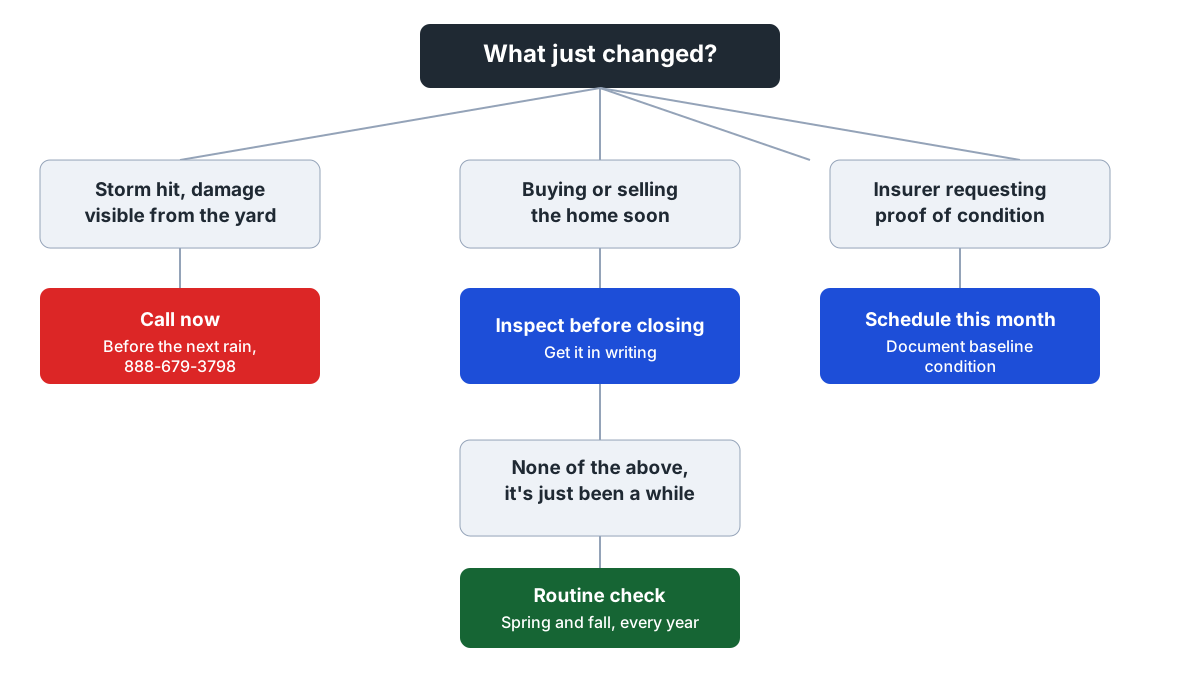
Four moments that should send you looking for a roof inspection, and what to do at each one.
A handful of moments send people looking for one, and they're not equally common. Storms and life events, not curiosity, are usually what puts someone on the phone.
After a hail or wind event
This is the single biggest driver nationally. The Insurance Information Institute counted 5,432 major hail events in 2025, up slightly from 5,373 the year before, with Texas (902 events), Kansas (375), Oklahoma (369), Nebraska (315) and Missouri (253) taking the most storms. The National Weather Service's Storm Prediction Center defines severe hail as 1 inch in diameter or larger, about the size of a quarter, and significant severe hail as 2 inches or larger, roughly a hen's egg by the same scale. Either size can crack a shingle's mat and bruise the underlayment beneath it, and most of that damage is invisible unless someone is actually up there or flying a drone over it.
If a storm just came through and you can already see shingles in the yard or a stain spreading across a ceiling, that's not a wait-for-spring situation. A roofing contractor that serves your area, reachable at 888-679-3798, can get someone out to look before the next system rolls through and turns a repair into a replacement.
Before you buy or sell a house
A roof inspection before buying a house is one of the few line items a buyer's agent will actually push for, because a roof nearing the end of its life is one of the small number of defects that reliably move a sale price. Sellers who get ahead of it with their own inspection walk into negotiations holding a report instead of reacting to one the buyer's inspector just wrote.
When your insurer asks for one
Some insurers now require proof of a recent inspection, or at minimum ask pointed questions about roof age and condition, before renewing a policy, especially in states that see frequent hail or wind claims. Wind and hail together accounted for 40.7 percent of homeowners insurance losses in 2022, and over the 2018-2022 period tracked by the Insurance Information Institute, the average wind and hail claim ran $13,511, so it's no surprise underwriters have gotten more careful about the roofs they're covering.
The other triggers are quieter: granule loss heavy enough to show up as grit in the gutters, a soft spot you can feel underfoot near a valley, or simply a roof old enough that you've lost track of when it went on. Planning solar panels is worth adding to that list too. A roof inspection before solar panels go up costs far less than pulling panels back off two years later to replace a roof that couldn't wait.
What Happens During a Real Inspection, Step by Step
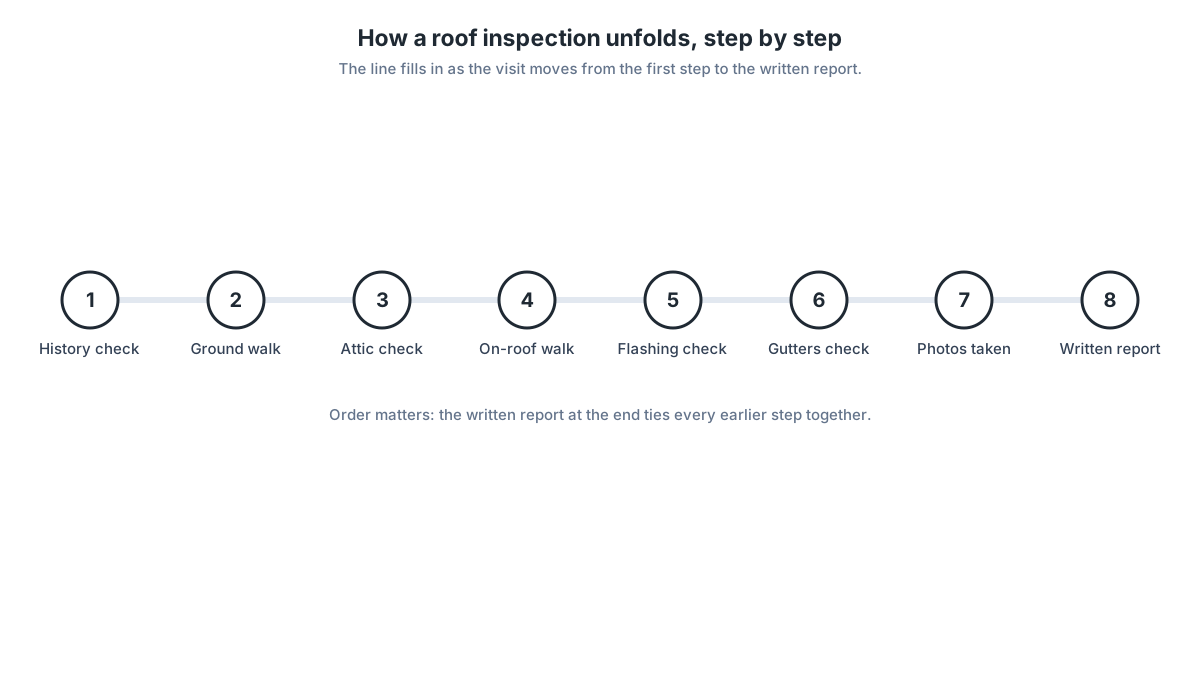
A thorough roof inspection follows a sequence, not a glance. Here's roughly what a professional walks through, in order:
History first. A good inspector asks about the roof's age, any prior repairs, and whether work on it was ever permitted, before climbing anything.
Ground-level walk-around. Binoculars from all four sides catch missing shingles, a sagging ridge, and obvious flashing separation before anyone gets on a ladder.
Attic and interior check. Daylight coming through the decking, damp or discolored insulation, and dark staining on the rafters usually show up here before they're visible from outside.
On-roof walk, when conditions allow. Wet, icy, or unusually steep roofs get skipped in favor of a closer look from a ladder or a drone pass instead; see the DIY section below for exactly where that line sits.
Close inspection of flashing and penetrations, meaning anything that pokes a hole through the roof plane: chimneys, vent pipes, skylights and valleys. These are where roofs tend to fail first, since every seam is a place water can find a way in.
Gutters and drainage. Granules, the sand-like coating that protects an asphalt shingle from UV, piling up in the gutters is a sign of accelerated wear, and downspouts dumping water against the foundation create a second problem entirely.
Photo documentation. Every issue gets photographed, not just described, which matters enormously if you end up filing an insurance claim.
Written report. A real roof inspection report lists each finding with a photo and a recommended timeline, fix now, fix this season, or monitor, rather than a single line that just says the roof is fine.
How long the visit takes depends heavily on roof size, pitch, and how many issues the inspector stops to document. A small single-story home moves faster than a large multi-story roof with a complicated layout. What matters isn't the clock; it's whether the inspector actually got into the attic and checked the flashing closely, rather than just walking the ridge and calling it done.
The order a thorough inspection follows, step by step, ending in a written report.
The Inspection Checklist a Thorough Inspector Actually Uses
Ask any inspector for their roof inspection checklist and you'll get some version of the table below. If you're hunting for a roof inspection checklist pdf to keep on hand, most manufacturer and contractor sites offer a free download covering the same six areas. The version below is the one that matters when you're standing in the driveway deciding whether to trust the report you were just handed.
Area checked
What a thorough inspector looks for
Shingles / roof covering
Granule loss, cracking, curling or lifted edges, missing pieces, dark algae staining
Daylight through the decking, damp insulation, dark staining on rafters, musty odor
Ventilation
Intake and exhaust balance, blocked soffit vents, signs of trapped attic moisture
Gutters & drainage
Granule buildup, improper slope, downspouts discharging away from the foundation
Structural
Sagging ridgelines, soft spots underfoot, roof planes that no longer line up evenly
A rushed inspection, the kind that comes free with a same-day sales pitch, usually stops after the first row. The other five are where the honest answers live.
Ground-Level, On-Roof, or Drone: How the Methods Compare
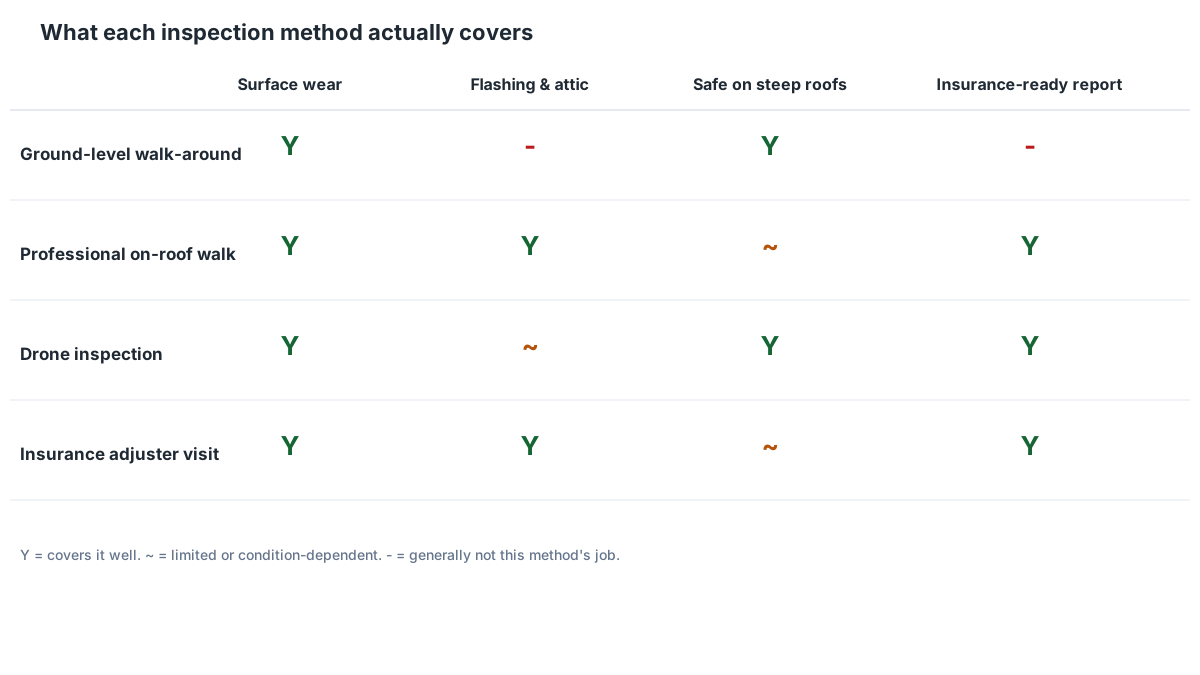
Not every roof inspection needs a person standing on the ridge. A drone roof inspection has become common enough that it's worth knowing what each method actually catches, and where each one falls short.
Which inspection method covers which kind of check.
Little; but very steep or fragile roofs are often unsafe to walk at all
Most routine and pre-sale inspections
Drone / aerial inspection
Full-roof photo coverage without anyone climbing
Close physical checks, like probing a soft spot or testing a flashing seal by hand
Steep, tile, fragile, or liability-sensitive roofs
Insurance adjuster inspection
Storm-specific damage tied to a claim date
General wear unrelated to the claimed event
After you've already filed a claim
The pitch of a roof, how steep it is, is the single biggest factor in which method makes sense. A flat or gently sloped roof is safe to walk and easy to photograph by hand. A steep roof, or a tile roof, is exactly the situation a drone was built for, since tile in particular cracks under foot traffic that wouldn't bother asphalt shingles at all.
A drone roof inspection cost isn't tracked separately in the national surveys cited for pricing in this guide, but in practice it tends to land close to what a standard on-site inspection costs, since the setup time saved is offset by equipment and photo processing. A local quote will tell you more than any national number here.
What You Can Check Yourself, and Where That Should End
You don't need to hire anyone for the ground-level pass. Binoculars, a walk around the exterior, and 15 minutes in the attic with a flashlight will catch a good share of problems: missing shingles, a sagging ridge, daylight through the roof deck, a musty smell that means moisture has been sitting somewhere.
Never climb onto a roof that's wet, icy, or steep enough that walking it without fall protection is a genuine risk, just to save the cost of a professional visit; that's exactly why real inspectors carry harnesses, insurance, and training you don't have. A fall is not a trade worth making for a free look.
Once you're past what binoculars and a flashlight can tell you, it's time to call a professional. Look for a roof inspection company with an actual roofing background, not just a general home-inspection service, and ask whether the crew carries manufacturer-level training such as GAF Master Elite or an NRCA-affiliated certification. Programs like these, run through organizations such as the National Roofing Contractors Association, set the training and safety standards the trade holds itself to. Before that crew gets on your roof, verify their state contractor license is active through your state's licensing board lookup, and confirm they're currently carrying general liability insurance rather than a certificate from a policy that's since lapsed. When you're ready to book, a roofing contractor that serves your area, reachable at 888-679-3798, can walk you through what a written estimate should include before anyone gets on a ladder, and our guide on how to vet a roofing contractor covers the full list of questions worth asking.
What an Inspection Actually Costs
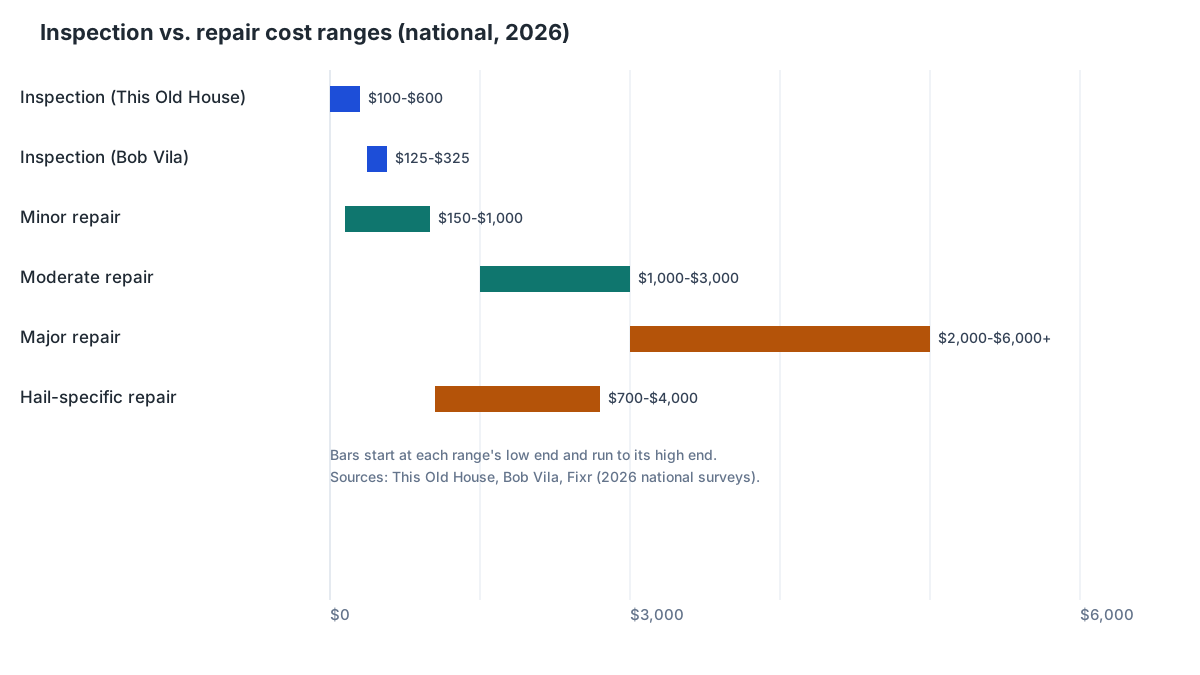
A standalone roof inspection cost is smaller than most homeowners expect, and it's tiny compared with what a missed problem eventually costs.
What an inspection costs next to what a repair costs once something is actually found.
Service
Typical range
What moves the price
Source
Standard visual inspection
$100 - $600
Roof size, pitch, number of stories, accessibility
This Old House, 2026
Alternate estimate for the same visit
$125 - $325
Same drivers; often waived if you hire that contractor for the repair
Bob Vila
Minor repair after a finding
$150 - $1,000
A handful of shingles, a small flashing fix
Fixr, 2026
Moderate repair after a finding
$1,000 - $3,000
Larger leak area, partial decking replacement
Fixr, 2026
Major repair after a finding
$2,000 - $6,000+
Extensive storm damage, wide leak spread, sagging
Fixr, 2026
Hail-specific damage repair
$700 - $4,000
Number of slopes affected, shingle type, deductible
Fixr, 2026
How we got these numbers: these are researched ranges pulled from published 2026 homeowner cost surveys at This Old House, Bob Vila and Fixr, not a quote for your roof. The number you actually pay varies by region, how hard your roof is to access, and the extent of damage a crew finds once they've opened up a section to look, so treat the low end as a rough floor in lower-cost markets and expect the high end where labor runs expensive or the damage runs deeper than it looked from the ladder. A roof repair cost breakdown by job type, or a full roof replacement cost estimate if the inspection turns up something bigger, both go deeper than the inspection number alone. Either way, only a written estimate from a contractor who has actually been up on your roof is the number that's binding, so get one in writing before you budget anything.
Is a 'Free' Roof Inspection Really Free?
A free roof inspection is a legitimate offer from plenty of honest roofing contractors. They're hoping to earn the repair or replacement work, and a no-cost look is a reasonable way to compete for it. The offer itself isn't the red flag; what happens after the free look is where you need to pay attention.
Storm-chasing crews follow hail tracks from state to state, knock on doors the week after a storm, and sometimes describe minor cosmetic wear as urgent structural failure to push for a same-day signature. A legitimate no-cost visit still produces a written report with photos, doesn't require you to sign anything on the spot, and doesn't ask you to pay upfront for work tied to an insurance claim that hasn't been approved yet.
Ask for the report before you commit to anything. If a company won't leave you with photos and a written list of findings, treat that refusal as the actual answer to whether the inspection was thorough.
Buying, Selling and Insurance Claims
A roof inspection before buying a house typically happens as part of the broader home inspection, but it's worth requesting a roofing-specific follow-up if the general inspector flags anything. General home inspectors look at roofs from a ladder or the ground and aren't always trained to catch what a roofing specialist would.
For insurance purposes, a roof inspection for insurance serves two different goals depending on timing. Before a claim, it documents baseline condition, which matters if a storm hits later and you need to show what was and wasn't already there. After a storm, it supports a claim by pairing your contractor's findings with the insurance adjuster's own assessment; two reports pointing at the same damage carry more weight than one.
Keep documentation simple but complete: dated photos from before the storm if you have them, the contractor's written report with photos from after, and a copy of the adjuster's estimate once it arrives. Wind and hail claims averaged $13,511 in severity over 2018-2022 per the Insurance Information Institute, so this isn't paperwork worth skipping. A well-documented claim moves faster and gets disputed less often than one built on a phone call and a memory of what the roof used to look like.
How Often You Actually Need One, by Region
The general rule roofing professionals lean on, in the spirit of guidance from groups like the National Roofing Contractors Association, is a routine roof inspection twice a year, roughly every 6 months, once in spring and once in fall, plus an extra look after any storm severe enough to notice from inside the house. Where you live changes what that extra look should focus on.
Region type
Typical roof stress
What to inspect for
When it shows up most
Hail-prone interior states
Bruised shingle mat, granule loss
Every slope, checked after any hail-producing storm
Spring and summer storm season
Freeze-thaw climates
Ice damming, flashing pulled loose by repeated expansion and contraction
Eaves, valleys, and flashing seals
Late winter into spring
Hurricane and high-wind coastal areas
Wind-lifted shingles, torn ridge caps, wind-driven rain intrusion
Ridge lines, roof edges, and every penetration
Hurricane season and right after any high-wind event
Texas, Kansas, Oklahoma, Nebraska and Missouri led the country in major hail events in 2025, according to the Insurance Information Institute, so homes in that corridor get more value out of a post-storm inspection habit than homes in milder regions. That doesn't mean coastal and cold-climate roofs get a pass; it just means the calendar trigger matters more where hail isn't the dominant threat, and the twice-a-year baseline carries more of the load.
After the Report: What to Actually Do With It
A finished roof inspection report is only useful if something happens after you read it. Sort findings into three buckets: fix now (active leaks, exposed decking, anything letting water in today), fix this season (flashing wear, minor shingle damage that isn't leaking yet), and monitor (cosmetic issues worth another look at the next inspection).
Small items are cheap to handle this season and expensive to ignore for three. A missing shingle fixed this month costs a fraction of what the same missing shingle costs once it's let water sit against the decking for a year. Industry cost-tracking backs that logic up from the other direction, too: a full asphalt shingle replacement recoups about 68 percent of its cost at resale, versus roughly 50 percent for metal, according to the 2025 Zonda/JLC Cost vs. Value report, which is one more reason catching a problem while it's still a repair tends to be the better financial move. Keep the report itself; insurers, buyers, and future inspectors all want to see the history, not just the current condition.
If the report points toward something bigger than a patch, our guide on what actually happens during a reroof walks through the process day by day, and our hail damage roof repair guide covers the claims process if a storm was the reason you scheduled the inspection in the first place. Either way, the inspection did its job the moment it turned an unknown into a decision you can actually make.
Frequently asked questions
Is a roof inspection free?+
Sometimes, but not always. Many roofing contractors offer a free roof inspection when they're hoping to win the repair or replacement work, while a standalone inspection with no strings attached typically runs $100 to $600, according to This Old House. If a company offers a free look, ask for a written report with photos regardless; a legitimate inspection produces documentation whether or not you end up paying for anything.
When should you get a roof inspection?+
Get one twice a year as routine maintenance, plus right after any hail or wind storm strong enough to notice from inside the house. Add an inspection before buying or selling a home, before your insurer renews a policy on an aging roof, and before installing solar panels. Waiting until you see a leak usually means the roof has been compromised for longer than you'd think.
What is a roof inspection, exactly?+
It's a systematic check of the entire roof system, the covering, flashing, ventilation, and usually the attic underneath, done to catch damage before it turns into a leak. A real inspection goes beyond a glance from the driveway; it includes a close look at the roof surface, a check of the attic from inside, and a written report with photos of anything found.
What do roof inspectors look for?+
Granule loss, cracked or curling shingles, damaged flashing around chimneys and vents, soft spots in the decking, blocked ventilation, and signs of moisture in the attic top the list. A thorough inspector also checks the gutters for granule buildup, an early sign of accelerated shingle wear, and looks for sagging along the ridge or roof planes that no longer line up evenly.
What does a roof inspection consist of, step by step?+
A thorough inspection starts with a history check, moves to a ground-level walk-around with binoculars, then an attic check from inside, an on-roof walk if conditions allow, a close look at flashing and penetrations, and a gutter check, with photos along the way. It ends with a written report ranking findings by urgency: fix now, fix this season, or monitor.
How long does a roof inspection take?+
There's no single national average, since it depends heavily on roof size, pitch, and how many issues the inspector stops to document along the way. A small single-story ranch moves much faster than a large multi-story home with a complicated roofline. What matters isn't the clock; it's whether the inspector actually got into the attic and checked flashing closely, not just how fast they moved.
How often should you get a roof inspection?+
Twice a year, once in spring and once in fall, is the general baseline most roofing professionals recommend, with an added inspection after any severe storm. Homes in hail-prone states like Texas, Kansas, Oklahoma, Nebraska and Missouri, which led the country in major hail events in 2025, get more value from a post-storm habit than homes in calmer regions.
How much does a roof inspection cost?+
A standard visual roof inspection typically runs $100 to $600, according to This Old House, with another national estimate from Bob Vila putting the range closer to $125 to $325. Many contractors waive the fee if you hire them for the resulting repair or replacement. Actual repair work runs separately, from around $150 for a minor fix up to $6,000 or more for extensive damage, per Fixr.
How are drone roof inspections done?+
A trained operator flies a camera-equipped drone in a grid pattern over the roof, capturing overlapping photos of every slope, valley, and penetration without anyone climbing a ladder. It's especially useful on steep, tile, or fragile roofs where walking risks both safety and the roofing material itself. Drone footage can't replace every physical check, like probing a soft spot by hand, but it covers ground a walking inspection sometimes misses.
What happens if a roof fails inspection?+
There's no pass-or-fail grade on a routine inspection; you get a report ranking findings by urgency instead. If a home-sale inspection flags major roof problems, it typically becomes a negotiating point, where the seller repairs it, credits the buyer, or the deal adjusts to reflect the cost. For insurance, a roof judged to be in poor condition can affect renewal terms or require repairs before a policy renews.
How do you get a roof inspection for insurance?+
Contact a roofing contractor directly rather than relying only on your insurer's adjuster, and ask for a written report with dated photos documenting current condition or storm damage. If you're filing a claim, get your own inspection done close to the same time as the adjuster's visit, so both reports describe the roof in the same condition and timeframe.