An ice dam roof leak happens when meltwater backs up behind a ridge of ice at the eaves and forces its way under the shingles into your attic. Stop the active drip first: a fan blowing cold air on the ice, or calcium chloride in a stocking laid across it, buys time. Call a roofing contractor once the roof is safe to inspect.
Picture a two-story house with a foot of snow on the roof and a brown ring spreading across a guest room ceiling three days after a thaw. That is the signature of an ice dam: not a punctured roof, not a missing shingle, but water that had nowhere to go except sideways and up, under the roofing material itself. Ice dams form on almost any pitched roof once attic heat, snow depth, and a hard freeze line up, and the leak they cause rarely traces back to anything you did wrong in the moment. It is a heat-loss problem wearing a roofing costume.
This guide walks through why ice dams build, how to knock down the immediate leak without doing more damage than the ice already did, what ice dam removal and repair actually run, and the insulation and ventilation changes that keep the same stain from reappearing next February.
What an Ice Dam Actually Is
An ice dam is a ridge of solid ice that forms along the lower edge of a roof, roughly where the roofline overhangs the exterior wall, while the roof higher up is still covered in snow. It is not the same thing as an icicle hanging off a gutter, though the two often show up together. The dam itself is only half the problem. Behind it, meltwater pools into a shallow, invisible lake with nowhere to drain, and shingles built to shed water running downhill were never designed to hold back standing water. That pooled water finds the first gap in the roofing system, a nail hole, a shingle seam, a spot where the underlayment has aged out, and works its way sideways and uphill, against gravity, until it reaches warm attic air and drips.
The size of a dam tracks roughly with how long the freeze-thaw cycle runs. A single overnight refreeze after a sunny afternoon usually builds a thin ridge that melts off within a day or two on its own. A multi-week cold snap with intermittent thaws can pile ice several inches thick along the eaves, heavy enough to tear gutters loose before a single drop ever reaches the ceiling. Weight matters almost as much as water here: ice runs about 57 pounds per cubic foot, and a saturated, ice-loaded roof edge stresses fascia boards, gutter hangers, and the first few feet of roof decking in ways most homeowners never notice until the thaw is well underway.
Why Ice Dams Form in the First Place
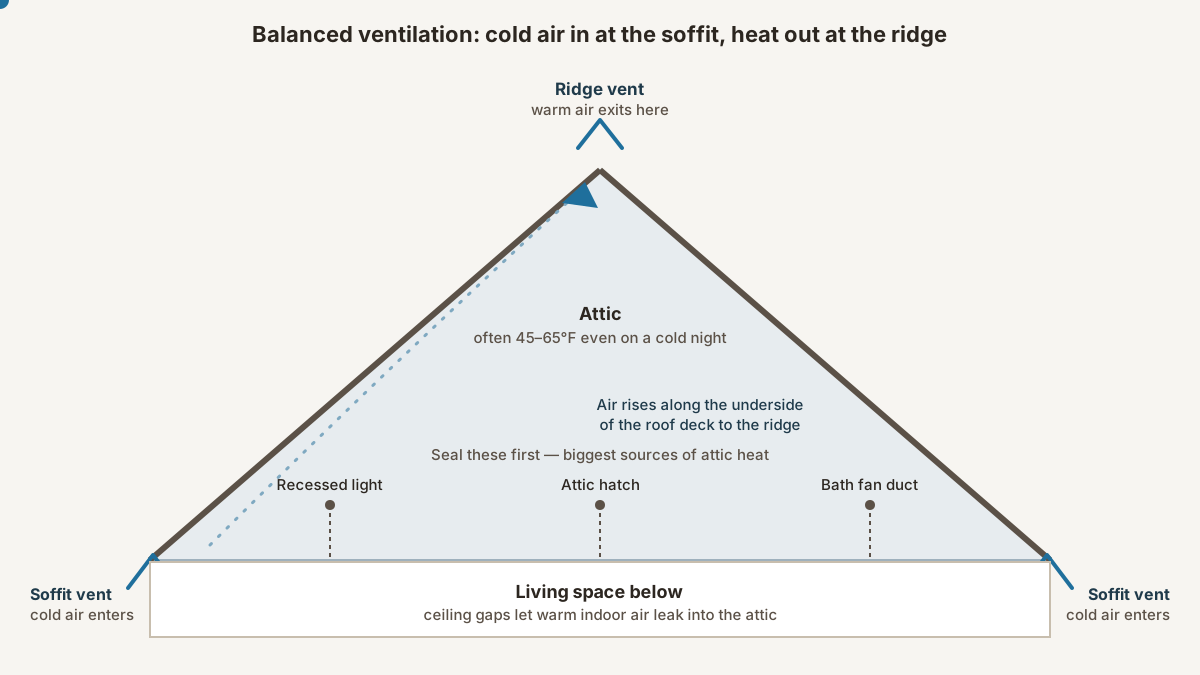
Every ice dam traces back to the same three ingredients arriving together: snow cover, a warm attic, and a cold eave. Heat escaping from the living space below collects in the attic, often holding that space at 45°F to 65°F even on a single-digit night outside, and warms the roof deck near the ridge, even in a well-built house, since some heat loss through top-floor ceilings, recessed lights, and bath fans is close to unavoidable without an attic retrofit. That warmth melts the underside of the snowpack on the upper roof.
The meltwater runs downhill under the snow until it reaches the overhang, the section of roof that extends past the exterior wall with no heated space underneath it. With no attic heat rising through that stretch, the roof surface there sits at outdoor air temperature, and the meltwater refreezes on arrival the moment it drops back below 32°F. Ice dam roof damage builds from that single mismatch, repeated every freeze-thaw cycle of the season.
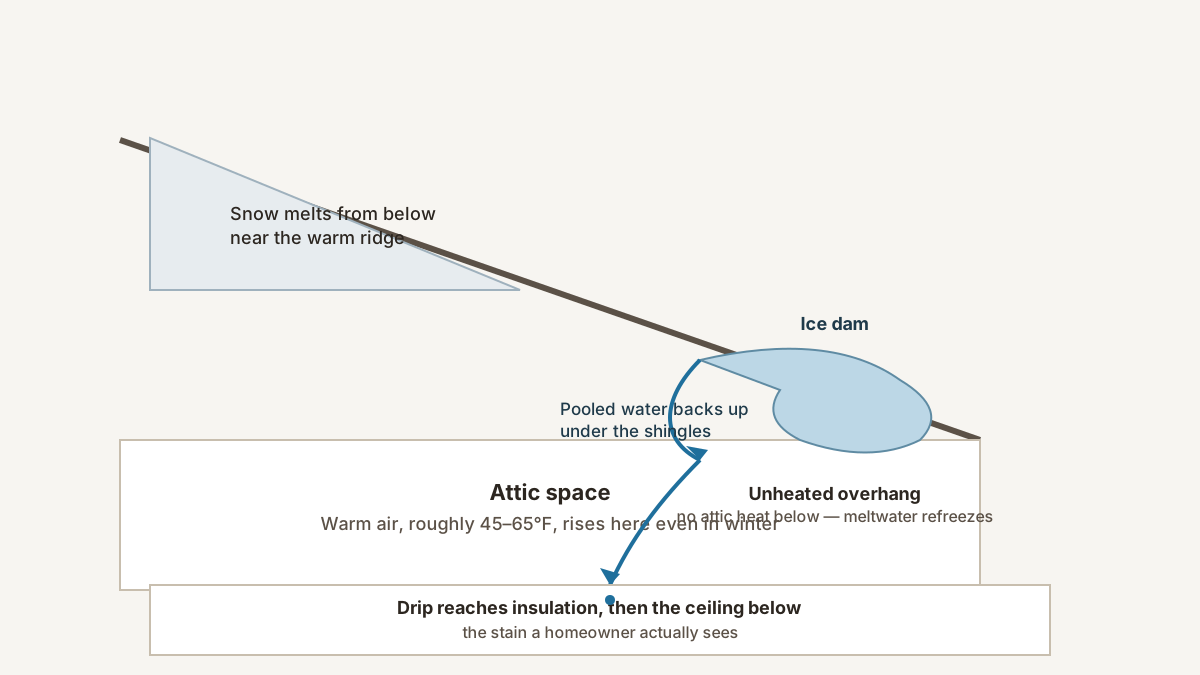
A handful of features make one roof more dam-prone than its neighbor. Poor attic insulation and air sealing, recessed can lights, an unsealed attic hatch, and bath or kitchen exhaust fans that dump moist warm air into the attic instead of outside all raise the heat reaching the underside of the deck. Complex rooflines, valleys, dormers, and low-slope sections collect deeper snow and drain more slowly than a simple gable, so they dam first. Gutters clogged with leaves from the fall before give meltwater one more place to pool and freeze. None of this means the roofing material failed; a brand-new roof and a fifteen-year-old roof form ice dams under identical conditions if the attic above behaves the same way. How an ice dam forms: warm attic air melts snow near the ridge, the meltwater refreezes at the unheated overhang, and standing water backs up under the shingles.
Is Your Leak Really From an Ice Dam?
Timing is the first clue. A leak that shows up only in cold weather, after a snow event followed by a partial thaw and refreeze, and never during a summer thunderstorm, points to an ice dam rather than a failed flashing or a worn-out roof. Location is the second clue. Ice-dam leaks tend to appear near exterior walls and eaves, in the outer few feet of a ceiling or the top of an exterior wall, because that is where the overhang sits. A stain in the middle of a ceiling, far from any wall, is more often a plumbing vent, a bathroom fan duct, or condensation from an attic that is not ventilated correctly.
From outside, look for a visible ridge of ice at the eave with icicles hanging off the gutter edge, and check whether the snow above the dam looks thinner or patchier than the snow elsewhere on the roof, a sign that attic heat is escaping unevenly through that section. If you can safely see into the attic, a flashlight check along the lowest few feet of roof deck, right above the exterior wall line, often shows a dark, damp stain or frost buildup exactly where the dam sits below. That combination, cold-weather timing plus an eave-adjacent stain plus visible exterior ice, is close to conclusive without needing to get on a ladder. If the timing or location does not fit that pattern, our roof leak repair guide walks through the other common sources, from failed flashing to a cracked vent boot.
How to Remove Ice Dams Without Damaging Your Roof
Knowing how to remove ice dams without making the leak worse starts with one rule: relieve the standing water behind the dam rather than chasing the ice itself off the roof. A roof rake for ice dams is a long-handled tool that lets you pull snow off the bottom 3 to 4 feet of roof from the ground, which reduces the meltwater feeding the dam without you setting foot on a ladder or the roof. Work from the ground, pull in the direction of the slope rather than straight down, and stop well short of the dam itself; raking snow is safe, raking ice is not.
Melting a channel through the dam
Filling the toe of an old pair of pantyhose or a fabric tube with calcium chloride ice melt and laying it perpendicular across the dam, so it reaches from above the ice down past it, melts a channel that lets trapped water drain instead of backing up under the shingles. Avoid rock salt, which is harsher on metal gutters, plants, and concrete below than calcium chloride. This buys time; it does not remove the underlying cause.
What not to do
Chipping or hacking at ice with an axe, hammer, or ice pick cracks shingles and strips the protective granule coating even when the ice itself comes off clean, trading a temporary ice problem for a permanent roofing one. A pressure washer does the same thing faster. Climbing onto a snow- or ice-covered roof to deal with a dam directly is the single riskiest move available to a homeowner, and it is where most ice dam roof leak situations turn into a fall injury on top of a water problem. If the dam has already torn a gutter loose or cracked a section of shingles, treat it like any other emergency roof repair: get it tarped or contained rather than attempting a permanent fix in the middle of a storm.
When Steam Removal and a Roofing Crew Make Sense
Once a dam is thick enough that a rake and a stocking of calcium chloride are not keeping up, low-pressure steam removal is the method roofing crews use to clear ice without gouging shingles the way an axe or a pressure washer would. The equipment melts the ice from direct contact rather than impact, so it comes off in a controlled way without stripping granules or lifting the shingle edges the ice has bonded to. A roofing contractor that serves your area can be reached at 888-679-3798; describe how thick the ice is and whether water has already reached the inside so the crew can bring the right equipment on the first trip.
A professional visit does two things a homeowner's rake cannot. First, it clears the dam itself with equipment sized for the job instead of an afternoon of chipping. Second, a crew already on the roof can check for the damage the dam caused underneath it, lifted or cracked shingles, saturated underlayment, ice that has worked its way past the drip edge, none of which is visible from the ground. Ask whether the visit includes a written condition report, not just an ice-removal invoice; that report becomes the backbone of an insurance claim if the leak turns out to have reached the decking or insulation. Before that crew gets on your roof at all, verify their state contractor's license is current and ask to see proof of active liability insurance; many states require a roofing or general contractor license for exactly this kind of work, and current coverage is what stands between you and the bill if someone gets hurt or a gutter gets torn out during removal. A separate roof inspection once the ice is gone is worth scheduling even if the immediate leak has stopped.
What Ice Dam Repair and Removal Cost
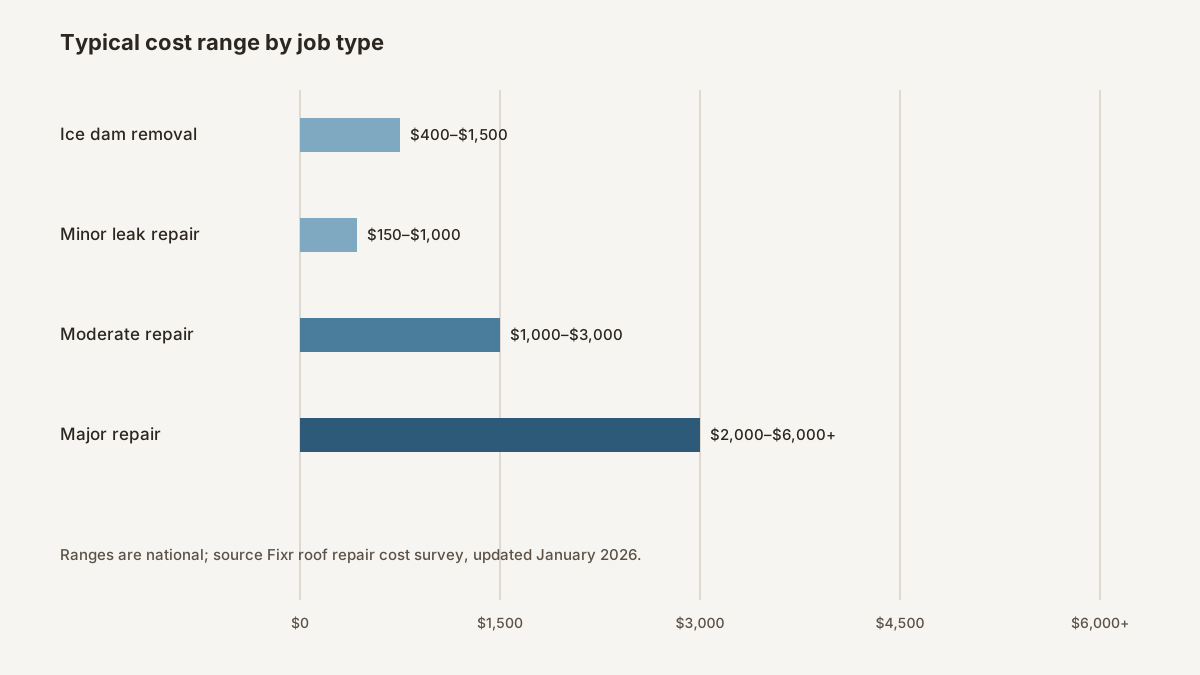
Costs split into two buckets: getting the ice off the roof, and repairing whatever damage the leak caused before you got there. Typical national cost ranges for ice dam removal and the repairs that follow it, from the cost table sources above. The table below is a researched range pulled from national roof-repair cost surveys, not a quote; use it to sanity-check a contractor's number, not as a substitute for one.
extent of decking rot, mold remediation, interior finish work
Fixr
Average roof repair job (national)
$395 – $1,966 (avg $1,173)
material, local labor market, emergency timing
HomeAdvisor
These are national ranges pulled from multiple cost-guide surveys rather than a local price index, since ice dam damage is site-specific by nature. A job in a high-labor-cost metro, or a rural area with few roofing crews within an hour's drive, lands at either end of that range for reasons that have nothing to do with the ice itself. The final price varies by region, roof access, and how much rot or saturation the crew actually finds once the old shingles come off, none of which shows up in a national table. A written, itemized estimate from a local contractor, covering ice removal, any decking or insulation replacement, and interior drywall or paint work as separate line items, is the only number that's binding. For repairs beyond what is in this table, our full roof repair cost guide breaks down pricing by damage type and material.
When to Stop and Call a Professional
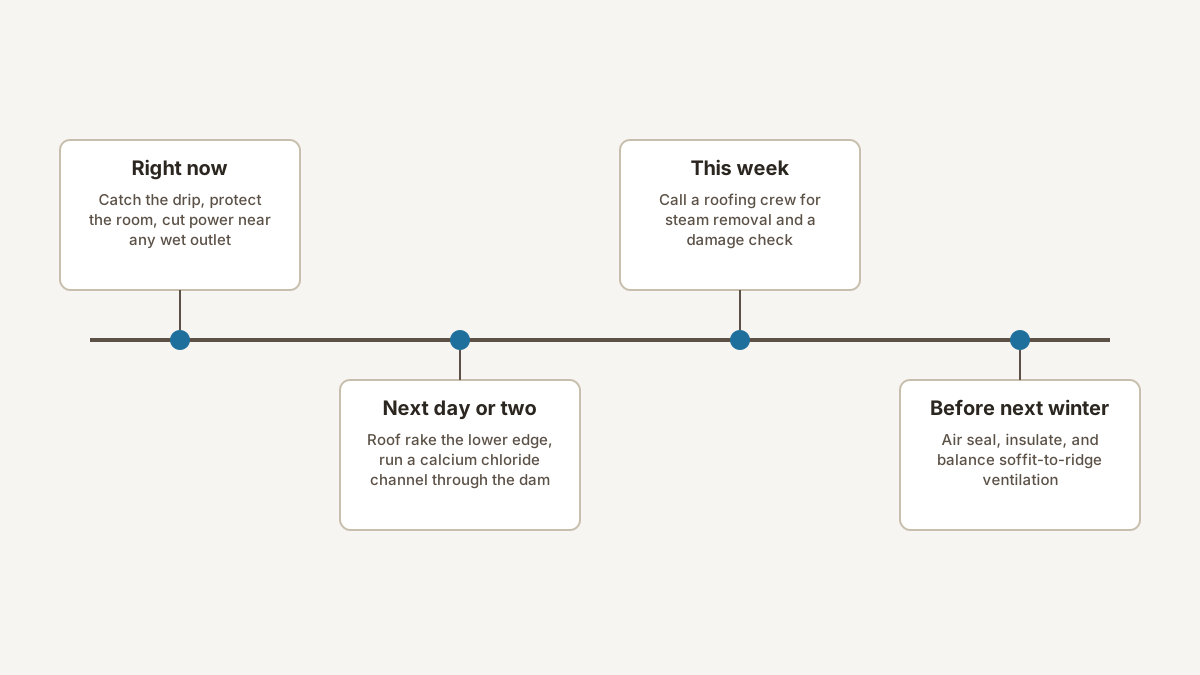
Do not climb onto a snow-covered or ice-covered roof to chip at an ice dam yourself; the fall risk is higher than the cost of any repair on the table above. That single rule matters more than any other in this guide. If water is actively dripping indoors right now, work through these steps in order rather than trying to fix the roof first. The response sequence for an ice dam roof leak, from stopping the active drip to the off-season prevention work that keeps it from returning.
Move anything valuable out from under the stain and set a bucket or tarp to catch the drip.
If the ceiling is bulging, relieve the pressure with a small hole poked at the center, into the bucket below, before drywall gives way on its own in a larger, messier collapse.
Cut power at the breaker panel to any light fixture or outlet near the wet area.
Call a roofing contractor and describe what you see so the crew plans for interior drying to IICRC water-damage standards, not only a roof fix; a roofing contractor serving your area is reachable at 888-679-3798.
Photograph the ceiling stain, the attic if you can see it safely, and any exterior ice before cleanup starts, for the insurance file.
Beyond the active-drip scenario, get a professional involved rather than a second season of rake-and-melt if the same section of roof dams every winter, if you can see daylight or staining on the underside of the roof deck from the attic, or if the ceiling below has bubbled paint, a musty smell, or soft drywall, all signs the water has been sitting longer than a single storm's worth. If mold has already started growing, EPA guidance treats anything beyond about 10 sq. ft. as a professional remediation job, not a weekend cleanup.
Filing an Ice Dam Insurance Claim
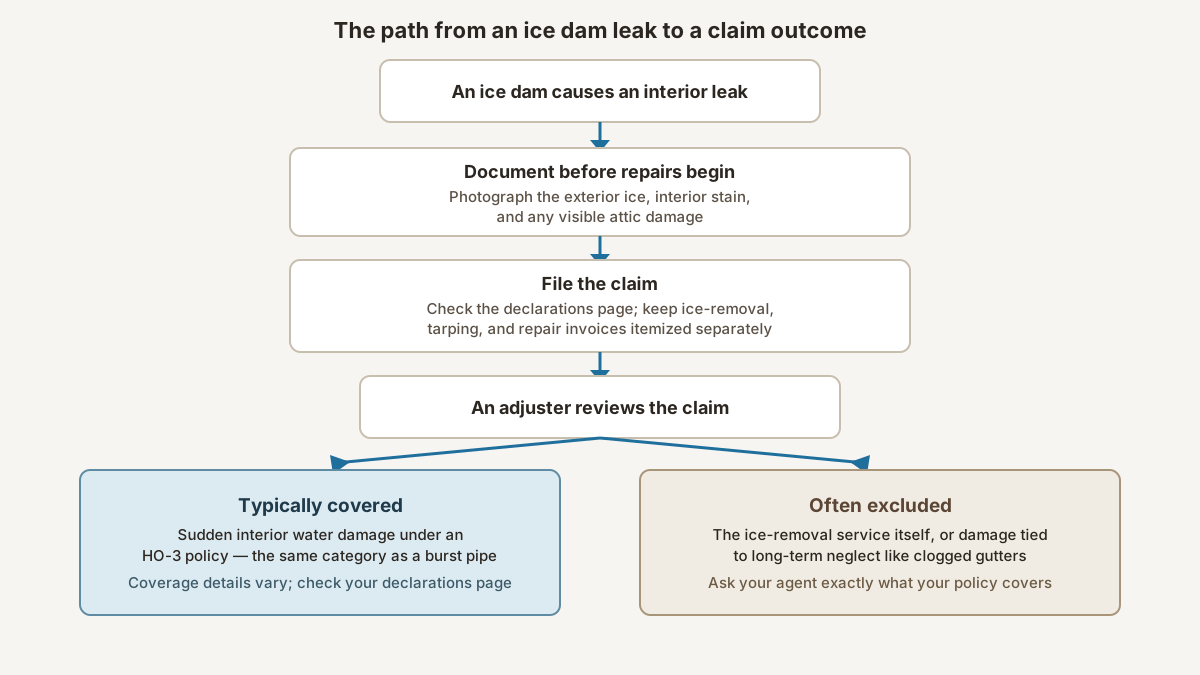
Most standard homeowners policies (HO-3 form) treat sudden interior water damage from an ice dam as a covered peril, the same category as a burst pipe, because the damage is sudden and accidental rather than the slow, ongoing kind. What typically is not covered is the ice dam removal itself in many policies, and damage an insurer can show resulted from long-term neglect, such as gutters that were never cleaned or attic ventilation that was known to be blocked for years. Every policy is different, and the only way to know what yours actually says is to read the water-damage and ice-dam-specific language in your declarations page or ask your agent directly; general guidance here is not a substitute for that.
What to document for an ice dam insurance claim
Start the paper trail before repairs begin wherever safety allows it. Photograph the exterior ice formation, the interior stain or active drip, and any visible attic damage, then keep every invoice: the ice removal visit, any emergency tarping, and the repair itself as separate line items rather than one lump total. A dated, written estimate that breaks out ice removal from structural repair gives the adjuster less room to argue that the whole bill was "just" ice clearing, which some policies exclude. If the settlement offer feels low relative to the documented scope, a public adjuster, who works for you rather than the insurance company for a percentage of the payout, is worth a conversation before you sign a final release. Documentation habits carry over directly from our hail damage insurance claim guide, which covers the same adjuster process for a different kind of storm loss. Photograph the damage and keep ice-removal and repair invoices itemized separately — that documentation is what an adjuster weighs first.
Ice Dam Prevention for Next Winter
Ice dam prevention is almost entirely an attic problem, not a roofing problem, which is why re-shingling a roof rarely stops a house from damming again the following winter. Air sealing comes first. Every gap that lets warm household air leak into the attic, around recessed lights, the attic hatch, plumbing stacks, and bath fan ducts, adds heat exactly where you do not want it. Sealing those penetrations with caulk or foam, then topping insulation to a depth that meets current recommendations for your climate, closes off the heat source that melts snow from underneath in the first place.
Fix
What it does
Who typically does it
Air seal attic penetrations
Stops warm house air from leaking into the attic
Insulation contractor or handy homeowner
Add or top up attic insulation
Keeps roof deck temperature closer to outdoor air
Insulation contractor
Balance soffit and ridge ventilation
Flushes any residual heat out before it reaches the deck
Roofing or insulation contractor
Install ice and water shield at eaves during re-roofing
Self-sealing underlayment that resists backup even if a dam forms
Roofing contractor, at next reroof
Soffit and ridge ventilation work as a pair: cold outside air enters low at the soffit, flows under the roof deck, and exits high at the ridge, carrying away any heat that air sealing and insulation did not catch before it reaches the snow. A roof that vents well stays close to outdoor temperature edge to edge, which is the actual goal, not just a thicker layer of pink insulation. None of this is a same-week fix; it is off-season work best scheduled for late summer or fall, well before the first snow, alongside a roof inspection that checks whether the eaves already have ice and water shield installed under the shingles from a past reroof. If the eaves need that shield added and a reroof is on the table anyway, our guide on how to choose a roofing contractor covers the certifications and questions worth asking before you sign a contract. Balanced soffit-to-ridge ventilation flushes attic heat before it reaches the roof deck, the fix that keeps an ice dam from re-forming next winter.
Freeze Belt vs. Warmer Climates: Does This Apply to You?
Ice dams are a routine seasonal call in the Snowbelt, the Upper Midwest, the interior Northeast, and the mountain West, the same regions where NOAA's 30-year U.S. Climate Normals show weeks of snowpack and repeated freeze-thaw swings each winter rather than one storm that melts off in a day. Houses in these regions are more likely to already have ice and water shield at the eaves from code requirements adopted after decades of exactly this damage pattern, and local roofing crews see enough of the problem each winter to have steam equipment on hand.
In the Mid-Atlantic, Ohio Valley, and similar transition climates, snow cover is less consistent, so roofs and gutters are sometimes detailed with less ice-dam protection even though a single hard winter can still produce a dam. In warm-winter regions, the Gulf Coast, the Southeast, and most of the Southwest, ice dams are rare enough that many roofing crews rarely encounter one, so a homeowner who gets an unusual cold snap may need to widen the search for a contractor experienced with steam removal rather than assuming every local roofer has done one recently. The building-science fix, air sealing plus balanced attic ventilation, is identical everywhere; only how often it gets tested by the weather changes region to region.
Frequently asked questions
Can an ice dam cause a roof leak?+
Yes. An ice dam blocks meltwater from draining off the roof, so the water backs up and works under the shingles instead of running off the edge, which is exactly how an ice dam roof leak starts. The shingles were designed to shed downhill-running water, not hold back a pool, so once water is standing behind the dam it finds the nearest gap and drips into the attic.
What causes ice dams on a roof?+
A warm attic melting the underside of snow on the upper roof, combined with a cold, unheated overhang below where that meltwater refreezes. Poor attic insulation, air leaks from recessed lights or bath fans, and complex rooflines with valleys or dormers all make the pattern worse by adding heat or trapping deeper snow.
How do I remove an ice dam from my roof?+
From the ground, a roof rake for ice dams clears snow off the bottom few feet to reduce the meltwater feeding the dam, and a stocking filled with calcium chloride laid across the ice melts a drainage channel. Anything beyond that, thick ice, a roof you cannot reach safely from the ground, or ice that keeps rebuilding, calls for steam removal from a roofing crew rather than chipping at it yourself.
Does homeowners insurance cover roof leaks from ice dams?+
Most standard HO-3 policies cover the sudden interior water damage an ice dam causes, similar to a burst pipe, though the ice removal itself and any damage tied to long-term neglect are often excluded or handled differently. Coverage details vary by carrier and policy, so check your declarations page or ask your agent before assuming either way.
How do I stop an ice dam from coming back?+
Ice dam prevention means fixing the attic, not the roof: air seal penetrations like recessed lights and the attic hatch, bring insulation up to a proper depth, and balance soffit-to-ridge ventilation so the roof deck stays close to outdoor temperature. A re-roof alone rarely solves a recurring dam if the attic underneath is still leaking heat.
Is a leaking roof always covered by insurance?+
No. Coverage generally depends on whether the cause was sudden and accidental, like an ice dam or wind damage, versus gradual deterioration from age or deferred maintenance that most policies exclude. An adjuster will often ask how long the roof has been in its current condition, which is why photo documentation from before the leak started helps if you have it.
How does a roof rake help with ice dams?+
A roof rake lets you pull snow off the lower three to four feet of roof from the ground, cutting off the fresh meltwater that keeps feeding an existing dam, without you climbing a ladder or standing on ice. It does not remove ice that has already formed; pair it with a calcium chloride channel or a call to a roofing crew for the dam itself.
Can ice dams cause structural roof damage?+
Left long enough, yes. Beyond the interior leak, the weight of a thick, ice-loaded eave stresses gutters, fascia boards, and the first few feet of roof decking, and repeated seasons of trapped moisture can rot decking or sheathing under the shingles. Most ice dam roof damage stays cosmetic if it is caught and dried out quickly, which is why an active drip is worth acting on the same day.
How do I fix ice damming on a roof for good?+
A permanent fix targets the attic: seal air leaks, add insulation to a proper depth for your climate, and balance soffit and ridge ventilation so heat is not reaching the roof deck. Ice and water shield installed under the shingles at the eaves during a future reroof adds a backup layer, but it manages a leak that still happens rather than stopping the dam from forming.
How do I prevent ice dams and the roof leaks they cause?+
Start before the first snow: check that recessed lights, the attic hatch, and duct penetrations are sealed, confirm insulation depth meets current recommendations, and make sure soffit vents are not blocked by insulation or debris so ridge ventilation can actually pull air through. A fall roof inspection is a good time to also confirm ice and water shield is present at the eaves.