Roof repair cost runs from about $150 for a simple sealant patch to $8,000 or more for major storm damage, with most homeowners paying $400 to $1,900 per HomeAdvisor and Fixr 2026 data, and single repairs averaging $1,060 to $1,173. Hail and wind damage often run higher. Get two or three written estimates before any work starts.
A cracked pipe boot on a ranch roof in July and a wind-lifted ridge cap after a March storm both land on a contractor's invoice under the same two words: roof repair. The first bill might run $180. The second might run $2,400. That gap is exactly why so many people search roof repair cost and come away more confused than when they started. The number depends on what actually failed, how much roof area it touches, and who you call to fix it.
This guide covers what a repair actually includes versus a full reroof, what causes most repair calls in the first place, how to tell a $200 fix from a $6,000 one before a contractor ever climbs a ladder, and when repair money is better spent on replacement instead. Every dollar figure below comes from national cost surveys published in 2025 and 2026, cited by source, so you can see exactly where each range comes from.
What Counts as a Roof Repair (and What Doesn't)
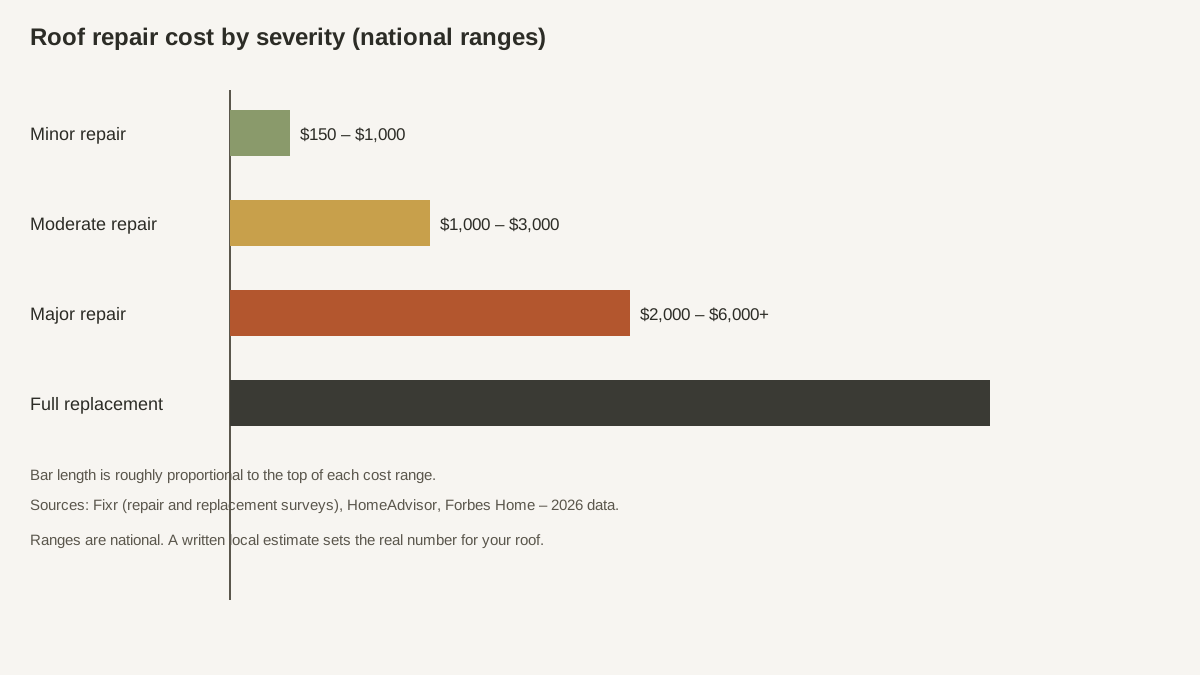
"Roof repair" covers an enormous range of work, from a $10 tube of sealant smeared over a popped nail to a full section of decking replaced after a tree limb comes through. Fixr's 2026 cost survey splits the category into three tiers that hold up well in practice: minor repairs running $150 to $1,000 (a handful of shingles, a small flashing patch, a resealed vent boot), moderate repairs running $1,000 to $3,000 (a full slope of shingles, a valley rebuild, storm damage across one section), and major repairs running $2,000 to $6,000 or more (structural decking, widespread hail or wind damage, multiple leak points). Roof replacement is a different job entirely: tearing off the old covering, and sometimes the decking (the plywood or OSB layer underneath the shingles), and installing a new roofing system top to bottom.
Contractors typically price repair work by the job or by the hour, not by the "square" (100 square feet of roof area) the way they price a full reroof. A single-story ranch with one bad valley and a two-story colonial with the same valley problem can cost close to the same amount to fix, because the work itself, not the size of the house, drives the price. That's the opposite of how replacement pricing works, where total roof area is the main variable.
Two numbers matter more than any others when you're trying to plan a budget. HomeAdvisor's 2026 survey puts the national average repair at $1,173, with a typical range of $395 to $1,966. Fixr's separate 2026 survey lands close by, an average of $1,150, typical range $400 to $1,900. Both surveys report a wider outer range, from about $150 on the low end to $8,000 for the worst structural jobs, so treat the "typical range" as where most homeowners land and the outer numbers as the tail.
What's Actually Wrong: The Most Common Causes, Ranked
Before you can guess at cost, you need a reasonable idea of what actually failed. Repair calls tend to break down in roughly this order:
Age and ordinary wear: brittle, granule-bare shingles and dried-out sealant
Flashing failures at chimneys, vents, and skylights
Wind-lifted or missing shingles
Hail bruising and impact damage
Ice dam backup in freeze-thaw climates
Poor attic ventilation and leftover bad workmanship from a prior repair
Wind and hail: the biggest wildcard
Hail doesn't always punch a hole; more often it bruises the shingle mat, which shortens its life without an obvious leak on day one. The Insurance Information Institute, citing NOAA's Storm Prediction Center, counted 5,432 major hail events in 2025, up slightly from 5,373 in 2024, with Texas leading at 902 events, followed by Kansas, Oklahoma, Nebraska, and Missouri. NOAA defines severe hail as 1 inch in diameter or larger and significant severe hail as 2 inches or larger. Wind and hail combined accounted for 40.7% of homeowners insurance losses in 2022, with an average claim severity of $13,511, according to the III.
Flashing and penetrations: the most-missed spot
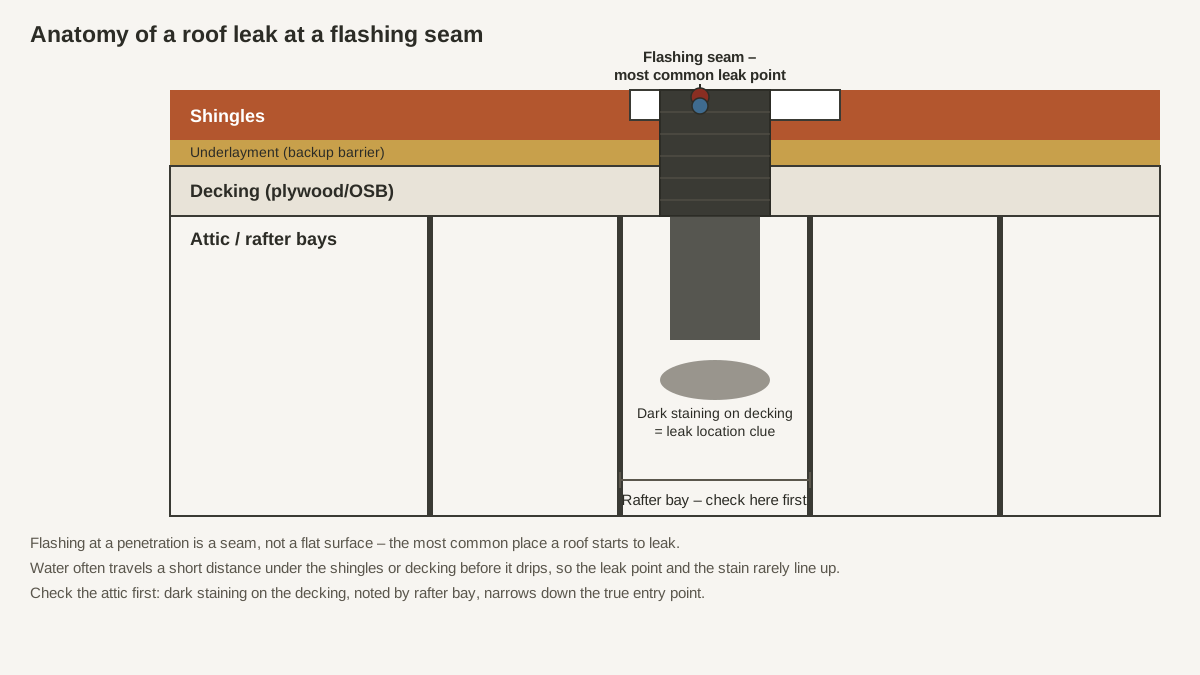
Flashing is the metal (or, on older homes, sometimes tar) installed where the roof plane meets a chimney, vent pipe, skylight, or wall. It fails more often than the open shingle field because it's a seam, not a flat surface, and seams are where water finds a way in. If you have a chimney or skylight, that junction deserves a look first; we cover both failure points in detail in chimney flashing and skylight leaks. A hot, poorly ventilated attic also cooks the underside of shingles from below and shortens their life on its own, and a meaningful share of "new" leaks are really old repairs that were never done right the first time.
How to Figure Out What's Actually Wrong Before You Call Anyone
A little diagnosis before the first phone call helps you tell a $200 problem from a $2,000 one, and it keeps a contractor's estimate honest. Work through it in this order:
Start inside, in the attic, on a dry day: look for dark staining on the underside of the decking, rusted nail tips, or compressed insulation, and note exactly which rafter bay (the framing bay between two roof rafters) it's under.
Walk the exterior perimeter with binoculars rather than the roof itself: look for curled, cracked, or missing shingles, lifted flashing, and granules piling up in the gutters.
Check every penetration first, chimneys, vent pipes, skylights, and where the roof meets a wall, since flashing fails more often than the open shingle field.
Time the leak against the weather: a leak that only shows up during wind-driven rain often points to flashing or a wall junction, while one that appears any time it rains points to the shingle field itself.
If you can't find the source, or the roof is steep, wet, or more than one story, stop and hire a professional inspection rather than climbing up yourself.
Getting a professional inspection alone, before any repair, typically runs $100 to $600 per This Old House, or $125 to $325 per Bob Vila. That's a small price against guessing wrong and paying a crew to chase the wrong leak. For a deeper walkthrough of tracing an active leak to its exact source, see our roof leak repair guide.
Flashing seams, not the open shingle field, are where most roof leaks actually start — and water often travels before it drips, so the stain and the source rarely line up.
Fixing It: What You Can Handle and What Needs a Licensed Roofer
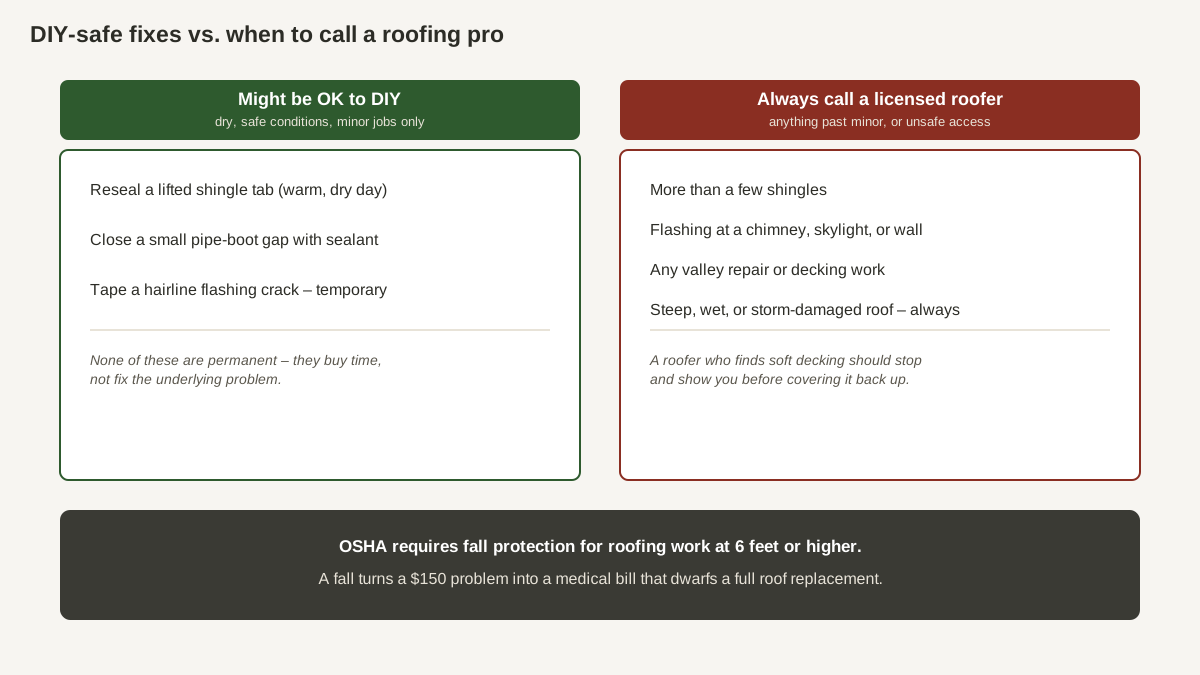
A handful of small jobs are genuinely within reach for a careful homeowner under the right conditions. A single lifted shingle tab can often be resealed with roofing cement on a warm, dry day. A small gap around a pipe boot (the rubber collar sealing a vent pipe where it passes through the shingles) can sometimes be closed with a compatible sealant. A hairline crack in old flashing cement can be bridged temporarily with roof repair tape until a professional can take a proper look. None of these are permanent fixes; think of them as buying time, not solving the underlying problem.
Never get on a wet, steep, or storm-damaged roof to make a repair yourself; a fall from roof height turns a $150 problem into a medical bill that dwarfs any full roof replacement. That single rule matters more than any cost figure in this guide. If the pitch is steep enough that you'd need fall protection, if it's wet or icy, or if you can see storm damage from the ground, the job belongs to someone with harness gear, ladder stabilizers, and insurance — OSHA requires fall protection for roofing work at 6 feet or higher for exactly this reason — not a homeowner in tennis shoes.
Everything past that point, replacing more than a few shingles, reworking flashing at a chimney or skylight, addressing a valley, or touching decking, is a licensed roofer's job. Flashing work in particular gets undone by good intentions: a bead of caulk over failed step flashing looks like a fix and buys a season, then fails again because the underlying metal was never corrected. A roofer who finds soft decking during a shingle repair should stop and show you before covering it back up; that's a sign of a bigger problem worth pricing out separately.
A short list of repairs a careful homeowner can attempt safely — everything past that, especially roof access, belongs to a licensed pro.
What Roof Repair Actually Costs in 2026
Here's how the major national cost surveys break down. Four separate publishers, using different methodologies and sample sizes, land in a similar band, which is a reasonable sign the numbers are trustworthy rather than a marketing figure from a single lead-generation site.
Publisher
Reported average
Typical range
Notes
HomeAdvisor
$1,173
$395 – $1,966
Full project range runs $150 – $8,000 depending on scope
Fixr
$1,150
$400 – $1,900
Minor $150–$1,000; moderate $1,000–$3,000; major $2,000–$6,000+
This Old House
$531
$482 – $579
2026 survey of 1,000 homeowners; skews toward smaller jobs
Bob Vila
$1,060
$379 – $1,758
Close to the HomeAdvisor and Fixr midpoint
A basic shingle repair cost usually falls in the minor tier above, while a full slope or a structural fix pushes into the moderate and major tiers. Notice This Old House's average sits noticeably lower than the other three. That survey draws from 1,000 homeowners and appears to include more small, single-item repairs (sealant touch-ups, one or two shingles, a minor flashing dab) than the HomeAdvisor and Fixr samples. Treat it as a floor for a genuinely minor job rather than a typical repair bill.
Cost also varies sharply by what actually failed, not just by severity tier. A flashing repair cost, for instance, sits at the low end of the range, since it's usually a targeted fix rather than a full slope of shingles.
Roof repair cost by severity, based on Fixr, HomeAdvisor and Forbes Home 2026 data.
Repair type
Typical range
Source
Roof leak
$350 – $1,500
Fixr
Flashing repair
$200 – $500
HomeAdvisor / This Old House
Hail damage
$700 – $4,000
Fixr / This Old House
Wind or hurricane damage
$250 – $6,500
Fixr
Sagging roof section
$1,500 – $7,000
Bob Vila
Ice dam removal
$400 – $1,500
Fixr
Inspection only (no repair)
$100 – $600
This Old House / Bob Vila
Two cost drivers show up across every survey: labor and emergency timing. Roofing labor runs $45 to $120 an hour depending on the market, and Fixr and Bob Vila both note an emergency service markup of $100 to $300 for after-hours or storm-response calls, on top of the repair itself. If a leak can safely wait for a normal daytime appointment, it usually costs less than the same repair called in at 9 p.m. during a storm.
How we got these numbers: every figure above comes directly from a published 2025 or 2026 cost survey, cited by publisher in the table. These are researched ranges, not a quote for your roof; nothing in this guide invents a number for your specific address or ZIP code, and actual cost varies by region, roof access, and what a contractor finds once the damaged area is opened up. A written estimate from a roofer who has actually looked at your roof is the only number that applies to your house.
Does Roofing Material Change the Repair Bill?
Yes, and the pattern matches what you'd expect from material cost and installation complexity. HomeAdvisor's 2026 data breaks the average repair down by covering material:
Material
Average repair cost
Source
Asphalt shingle
$975
HomeAdvisor
Tile
$1,000
HomeAdvisor
Metal
$1,700
HomeAdvisor
Slate
$1,800
HomeAdvisor
Metal and slate repairs cost more for two connected reasons. The materials themselves cost more per unit, and both systems require a specialist who works with them regularly. A roofer who repairs asphalt shingles all week may not have the right tools or techniques for standing-seam metal panels or fastened slate tiles, so the pool of qualified contractors is smaller and rates reflect that. Underlayment type matters too: a roof with quality synthetic underlayment beneath the visible material tends to develop fewer secondary leaks even when the top layer is damaged, because the underlayment is doing its job as a backup barrier.
If your roof uses tile or slate, resist the urge to walk it to inspect damage yourself. Both materials crack under foot traffic even when the roof itself is structurally sound, which can turn a $1,000 repair into a $3,000 one before a contractor ever arrives. Flat and low-slope roofs, common on additions, garages, and commercial buildings, price differently again because the repair is usually a membrane patch rather than a shingle swap; see our guide to flat roof repair for membrane-specific pricing. For cracked or slipped tiles specifically, or shingle-matching considerations on an asphalt repair, we cover both separately: tile roof repair and shingle replacement.
When a Repair Stops Making Sense: Repair vs. Replacement
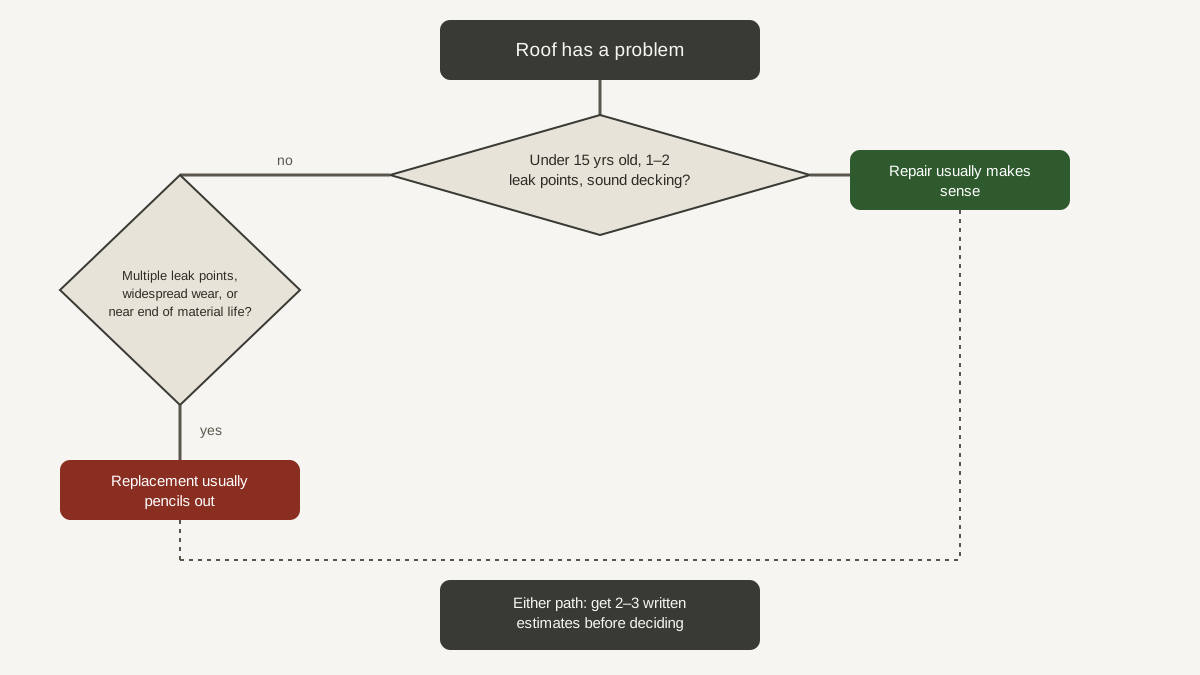
Everyone searching roof repair vs replacement is really asking one question: is this the last repair I'll need to pay for, or the first of several before I end up replacing the roof anyway? There's no universal cutoff, but the signs below are the ones roofers actually use.
Sign
Repair usually makes sense
Replacement usually makes sense
Roof age (asphalt)
Under 15 years
Past 20–25 years, or near end of material's rated life
Leak pattern
One or two isolated points
Multiple, unrelated leak points
Damage extent
Localized to one slope or penetration
Spread across most or all slopes
Repair history
First or second repair
Three or more repairs in a few years
Decking condition
Sound, no rot found
Soft, delaminated, or rotted in multiple spots
Sale timeline
Staying long-term
Selling soon; buyer financing may require a sound roof
A simple repair-or-replace decision flow.
If what you're actually seeing is a visible dip or sag rather than ordinary wear, treat it as its own question; our sagging roof guide covers when that's cosmetic and when it's structural.
Money matters here too, not just condition. The Zonda / JLC Cost vs. Value 2025 report, which tracks 28 project types across 119 markets, found that a full asphalt shingle roof replacement costs an average of $31,871 and recoups about 68% of that cost at resale ($21,501). A metal roof replacement averages $51,865 and recoups roughly 50% ($25,972). Those figures are for a full reroof, not a repair, and they matter because a homeowner planning to sell within a few years should weigh resale recoupment against a cheaper repair that simply gets the roof through the sale.
For comparison, here's what full replacement runs nationally, the number you're implicitly choosing against every time you pay for another repair:
Publisher
Average
Typical range
Fixr
$10,000
$7,500 – $14,000
HomeAdvisor
$9,607
$5,902 – $13,374
HomeGuide
$10,800
$5,700 – $16,000
Forbes Home
$11,500
$6,700 – $80,000
A rough gut check: if a single repair estimate comes in above roughly 30% to 40% of what a full replacement would cost on the same roof, get a second estimate that prices both options side by side. Below that threshold, repair is almost always the more efficient use of money, especially on a roof under 15 years old. For the full replacement math, including per-square and per-material pricing, see our roof replacement cost guide.
Is Roof Repair Covered by Insurance?
Sometimes, and the distinction insurers draw is between sudden damage and gradual damage. A standard HO-3 homeowners policy typically covers roof damage caused by a specific, sudden event, hail, wind, a fallen tree limb, fire, minus your deductible. It typically excludes damage from age, wear, poor maintenance, or a roof that was already failing before the storm. An adjuster's job during a claim is largely to sort a given leak into one of those two buckets.
Wind and hail are the claims insurers see most often on roofs. The Insurance Information Institute reports wind and hail losses at a claim frequency of 2.82 per 100 house-years and an average claim severity of $13,511, together making up 40.7% of homeowners insurance losses in 2022. If your roof damage followed a specific storm, especially one with reported hail, you have a reasonably strong basis for a claim.
Documentation that helps a claim move faster
Photos of the damage taken as soon as it's safe, before any temporary repair
The date of the storm or event, cross-referenced against local weather reports if you have them
Receipts for any emergency tarping or water mitigation
A written estimate from a roofing contractor, separate from the insurer's own adjuster estimate
Company adjuster vs. public adjuster
The adjuster your insurer sends works for the insurance company, not for you; that doesn't make their estimate wrong, but it means a second opinion is reasonable, especially on a large claim. A public adjuster is a licensed professional you hire directly, usually for a percentage of the settlement, to represent your interests in valuing and negotiating the claim. For a straightforward, moderate repair, most homeowners don't need one; for a major storm claim with a dispute over scope, a public adjuster can be worth the fee.
Claim deadlines and documentation rules vary by state and by policy, so check your own policy's declarations page and file promptly once damage is safe to assess. Your state's department of insurance publishes consumer guidance on the claims process if your insurer's timeline is unclear.
When to Stop DIYing and Call a Roofer Immediately
A few situations don't belong on a homeowner's to-do list, no matter how handy you are. Active water coming through a ceiling light fixture or electrical box is an electrocution risk, not just a water problem: shut off power to that circuit at the breaker panel if you can safely reach it, then call a licensed electrician, or 911 if you smell smoke. A sagging roofline, visible daylight through the deck from inside the attic, or a roof that took a direct tree strike all mean the structure itself may be compromised, and walking up to look isn't worth the risk; call a roofer instead of climbing up to check it yourself.
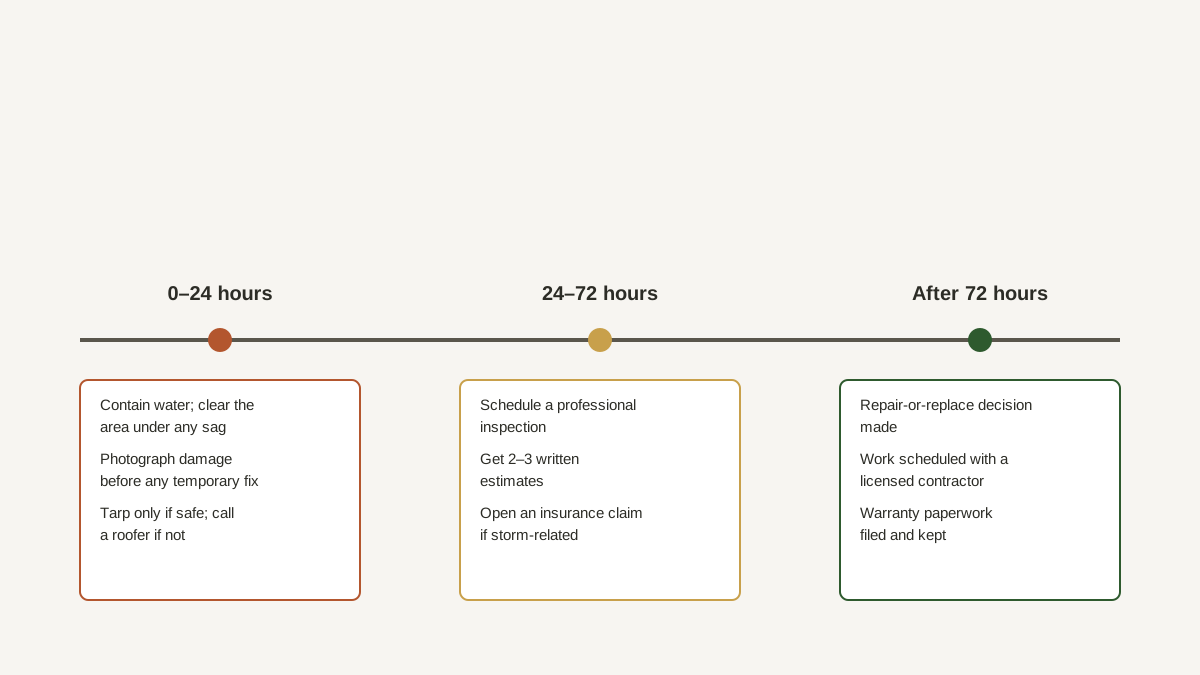
The first 72 hours after you spot roof damage.
In the first hour after you spot serious damage, the priority is containing water and documenting the damage, not fixing anything permanently. Move furniture and electronics out of the drip path, set a container to catch water, and take photos before you place a tarp, since insurers and contractors both want to see the damage as it happened. If the water is still coming in and you can't safely assess it yourself, calling a line like 888-679-3798 can connect you with a roofing contractor that serves your area, so you're not searching for a company name while your ceiling drips. For step-by-step tarping and temporary stabilization, see our emergency roof repair guide.
Once the immediate water is under control, resist the urge to have a full repair done by whoever answers the phone first. An emergency tarp job is reasonable to book quickly; a permanent fix is worth a day or two of getting a second opinion, unless the damage is actively getting worse.
How to Choose Someone to Do the Work
Roofing has a low barrier to entry and a high rate of storm-chasing companies that show up after a hail event, collect a deposit, and are gone by the next season. A few checks filter most of the bad options out before you sign anything.
License, insurance, and certification
Confirm the contractor holds any license your state requires for roofing work — most licensing states run a public lookup on the state contractor board's site where you can verify the number is active before signing anything — and ask for proof of both general liability insurance and workers' compensation coverage, current and in force before work starts, not just a business card that says "insured." Manufacturer certifications are a useful signal of ongoing training: GAF Master Elite and Owens Corning Preferred or Platinum Preferred contractor programs both require background checks and continuing education to maintain, and the National Roofing Contractors Association runs its own PROCertification workforce credential. None of these are legally required to do roofing work, but a contractor who has bothered to earn one has usually also bothered to get the boring stuff, licensing and insurance, right.
Red flags
Pressure to sign the same day, especially paired with a "storm damage" claim you haven't verified yourself
A request for full payment up front, before any material has been delivered
No local address or a business only a few months old with no verifiable past jobs
An estimate with no breakdown of material, labor, and disposal, just a single lump number
What a written estimate should include
A real estimate names the specific material and manufacturer, the scope of work in plain language (what's being removed and what's being installed), a total price broken into material and labor, a timeline, and the warranty terms for both material and labor. If a contractor won't put that in writing, treat their verbal number as a starting point for negotiation, not a real roof repair estimate.
If you'd rather start with a phone call than a search, 888-679-3798 connects you with a roofing contractor that serves your area. For a deeper checklist beyond what's here, see how to choose a roofing contractor.
Preventing the Next Roof Repair
Most of what prevents a repeat repair call is unglamorous maintenance rather than a product you buy once. Clean gutters twice a year, more often under overhanging trees, so water actually drains instead of backing up under the shingle edge; our gutter installation guide covers what a proper system costs if yours needs replacing rather than just clearing. Trim branches that overhang the roof, both to reduce falling debris and to cut down on the shade and moisture that speeds up moss and algae growth.
Have a roof looked at after any significant storm, even if nothing is visibly wrong from the ground; a professional roof inspection catches bruised shingles and lifted flashing well before they turn into an active leak. Attic ventilation is worth checking too: proper intake and exhaust venting keeps the underside of the roof deck closer to outside temperature, which slows shingle aging and reduces the risk of ice dams in cold climates. If your roof is more than 10 years old and the asphalt shingles are showing early granule loss, a roof coating may extend its useful life for a few more years, though coatings work best as maintenance on a roof that's still in reasonably good shape, not as a substitute for repair on one that's already failing.
Regional Notes: Hail Belt, Freeze-Thaw Country, and Hurricane Coast
Roof repair causes and frequency aren't evenly distributed across the country, and it's worth knowing which category your region falls into.
Hail belt
Texas, Kansas, Oklahoma, Nebraska, and Missouri led the country in major hail events in 2025, with Texas alone recording 902, according to the Insurance Information Institute citing NOAA's Storm Prediction Center. State Farm has separately identified Minnesota, Texas, Arkansas, Illinois, and Nebraska as its top states for hail claims by dollar volume. If you live in this band, an annual post-storm inspection is worth more than it is almost anywhere else; see our dedicated guide on hail damage roof repair for how to spot bruising before it becomes a leak.
Freeze-thaw country
In the Upper Midwest, Northeast, and mountain West, ice dams are the dominant winter repair cause: snowmelt refreezes at a cold eave and backs water up under the shingles above it. The fix during the event is different from the fix afterward; see our ice dam guide for both. Attic insulation and ventilation matter more here than almost anywhere else, since a warm attic is what causes the uneven melting that creates dams in the first place.
Hurricane coast
Along the Gulf and Atlantic coasts, wind uplift and wind-driven rain around flashing and roof edges are the recurring problem, often compounded by salt air accelerating corrosion on metal fasteners and flashing. A roof in this zone benefits from more frequent flashing checks than the national average schedule, since a small gap becomes a serious leak the first time a tropical system pushes rain sideways.
Frequently asked questions
How much does it cost to patch up a roof?+
A basic roof patch cost, a resealed vent boot, a few replaced shingles, or a small flashing repair, typically runs $150 to $1,000, according to Fixr's 2026 cost survey. Most patch jobs land closer to the bottom of that range unless a contractor charges a minimum service-call fee, which can push a very small job's price above what the repair itself would otherwise cost.
How much does roof repair cost?+
Nationally, roof repair averages $1,060 to $1,173 per HomeAdvisor and Bob Vila, with most homeowners paying between $400 and $1,966. The full range runs from about $150 for a minor patch to $8,000 or more for major structural or storm damage. Material, roof pitch, height, and how many separate problem areas a crew has to address all move the number within that range.
Is roof repair covered by insurance?+
Sometimes. A standard homeowners policy typically covers roof damage from a sudden, specific event such as hail, wind, or a fallen tree, minus your deductible. It generally doesn't cover damage from age, wear, or lack of maintenance. Wind and hail alone made up 40.7% of homeowners insurance losses in 2022, per the Insurance Information Institute, so storm-related repairs are the claims insurers see most often.
Should I repair or replace my roof?+
As a rule of thumb, repair makes sense for a roof under 15 years old with one or two isolated leak points and sound decking underneath. Replacement starts to make more sense once a roof is past 20 to 25 years, has multiple unrelated leak points, or has needed three or more repairs in a few years. A written estimate that itemizes both options is worth getting before you decide.
How do you know a roof needs to be replaced instead of repaired?+
Widespread granule loss, curling shingles across most slopes, soft or spongy decking in more than one spot, and daylight visible through the roof deck in the attic are the clearest signs. A single leak with sound shingles around it usually points to repair; damage spread across the whole roof, or a roof already at the end of its material's rated life, usually points to replacement.
Why is roof repair so expensive?+
Most of the cost is labor, not material: Fixr and Forbes Home both put labor at up to 60% of what a full roofing job costs, and roofers charge $45 to $120 an hour for repair work depending on the market. Add a minimum service-call charge, the cost of getting a crew and safety equipment onto a steep or high roof, and disposal of old material, and even a small repair carries overhead a simple caulk tube doesn't.
What should I do if a new roof leaks?+
Call the contractor who installed it first: a leak on a recent roof is usually a workmanship issue covered under a labor warranty, not something you should pay to fix again. Photograph the leak and any interior damage, note the date and weather conditions, and put the request in writing. If the original contractor is unresponsive or out of business, a manufacturer's material warranty may still apply separately from the labor warranty.
How do I file a claim for roof repair?+
Photograph the damage before any temporary repairs, keep receipts for emergency tarping or water mitigation, and call your insurer to open a claim as soon as it's safe to do so. An adjuster will typically inspect the roof and estimate the covered scope of work; get your own written estimate from a roofing contractor to compare against theirs before you agree to a settlement amount.
How much is roof repair in Texas?+
The data behind this guide doesn't include a Texas-specific repair average, so a local written estimate is the only reliable number. What we do know: Texas led the country with 902 major hail events in 2025, more than any other state, according to the Insurance Information Institute citing NOAA's Storm Prediction Center, which means hail-related repair calls are especially common there.
How much does roof repair cost per square foot?+
Fixr puts roof repair at roughly $3.50 to $11 per square foot, though repair work is rarely priced strictly by area the way a full replacement is. A per-square-foot number is most useful for a single large section, like reshingling one whole slope; a small, isolated fix such as a flashing patch is usually priced as a flat job or an hourly service call instead.
What can I use to patch a roof myself?+
Roofing sealant, specialty roof repair tape, and caulk rated for exterior and roofing use can buy time on small, specific problems: a lifted shingle tab, a nail pop, a hairline crack in old flashing cement. Treat these as a stopgap, not a fix, and get a professional to look at the spot within a few weeks, before a small leak becomes a bigger repair.