The fastest way to find a good roofing company is to verify three things before you sign anything: a current state contractor license, active general liability and workers' comp insurance, and a written estimate that itemizes material, labor, and payment terms. Add a manufacturer certification like GAF Certified and one verified reference, and you've screened out nearly every storm chaser.
Your roof is the single most expensive system on the house to get wrong, and hiring the wrong crew to replace it is how homeowners end up paying twice, once for a bad job and once to fix it. Every roofing company under a pop-up tent in a storm-hit neighborhood says the same three things: free inspection, insurance will cover it, we can start Monday. Some of them are legitimate local contractors expanding into a disaster market. A good number are not.
This guide walks through how to tell the difference before a single shingle comes off your roof: what a real license lookup actually shows you, which certifications mean something versus which ones are just a logo on a website, what a complete contract has to include, and the red flags that should end a sales pitch on the spot. It also lays out what roofing work costs nationally, so you have a number to measure a local quote against instead of just trusting the first bid, or the lowest one.
Why the Company You Hire Matters More Than the Shingle You Pick
Materials matter less than most people think. An architectural asphalt shingle from one manufacturer performs about the same as its closest competitor. What actually determines whether your roof lasts 15 years or 30 is installation quality: flashing that's cut and bent correctly around every chimney and skylight, the right nailing pattern (four nails per shingle is standard; high-wind installations call for six), adequate ventilation, and underlayment lapped the right direction. A skilled crew with a mid-grade shingle will usually outlast a premium shingle installed by a rushed crew.
That's why the vetting process matters more than the brochure. A roofing contractor is the general term for the business that sells, manages, and installs the job; the actual installers on your roof may be direct employees or a subcontracted crew, and knowing which one you're getting is part of vetting a company properly. The best roofing company for your job isn't necessarily the biggest name in local advertising. It's the one whose license, insurance, and installation crew you can verify before the tear-off starts.
Skipping that verification gets expensive. A roof replacement is a five-figure purchase for most homes, and a botched install can void the manufacturer's warranty, cause leaks that show up 18 months later after the crew is gone, or leave you fighting an insurance claim with photos that don't match what the adjuster expected. The sections below cover the specific checks that catch a bad hire before the contract is signed.
How Homeowners End Up With a Bad Roofing Company, Ranked by How Often It Happens
Most bad hires trace back to one of a handful of recurring patterns, roughly in the order they trip up first-time buyers:
1. Signing during the storm-chaser rush
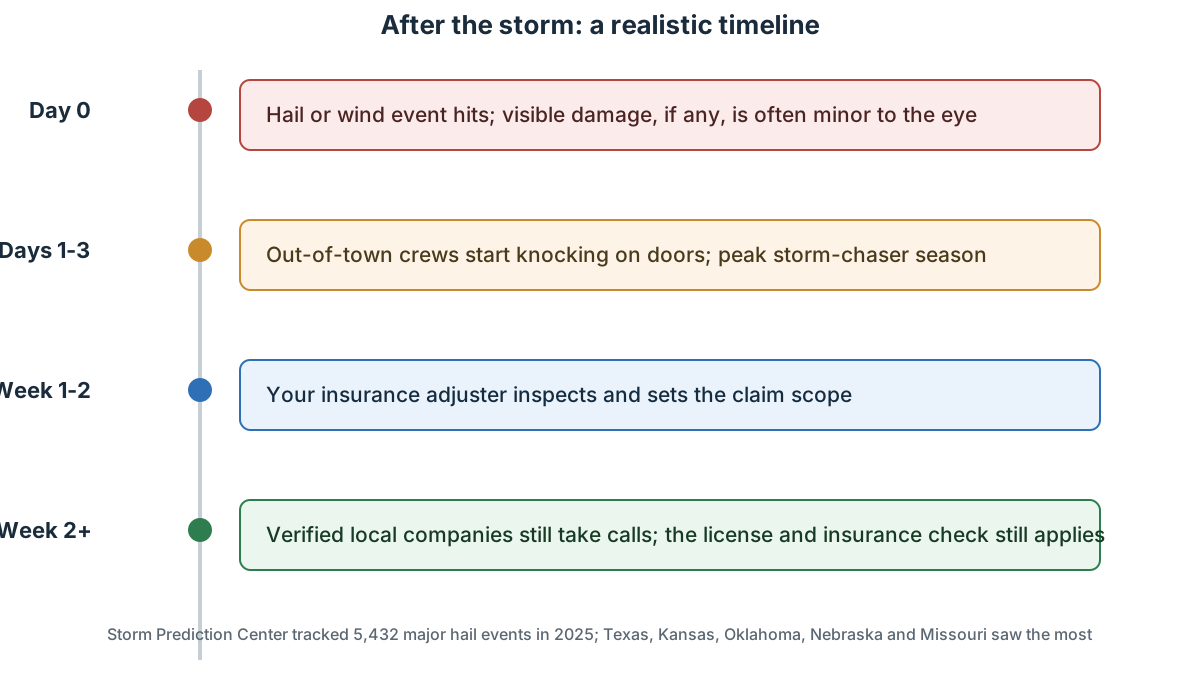
After a hailstorm or a hurricane, out-of-town crews follow the damage. Some are legitimate roofing contractor operations staffing up for a busy season; others are a truck, a ladder, and a sales script with no local address, no local license, and no intention of honoring a workmanship warranty once they've moved to the next county. A roofing storm chaser scam almost always starts with a knock on the door within days of the storm and a demand to sign before you've even called your insurance company.
2. Never checking the license or insurance
A surprising number of homeowners hire based on a yard sign or a neighbor's referral and never ask to see a license number or a certificate of insurance. If the crew is uninsured and a worker is hurt on your roof, the medical bill and the liability can land on your homeowners policy instead of theirs.
3. Choosing on price alone
The lowest bid on a roof replacement is sometimes just a leaner company with lower overhead. It's also the easiest way to end up with a subcontracted crew paid by the square, working fast, skipping the underlayment step nobody will see until the first leak.
Further down the list: hiring a general contractor who subcontracts the roof without disclosing it, trusting a verbal price with nothing in writing, and paying a large deposit to a company with no fixed address. Each of these is preventable with the checks in the next section.
How to Vet a Roofing Company, Step by Step
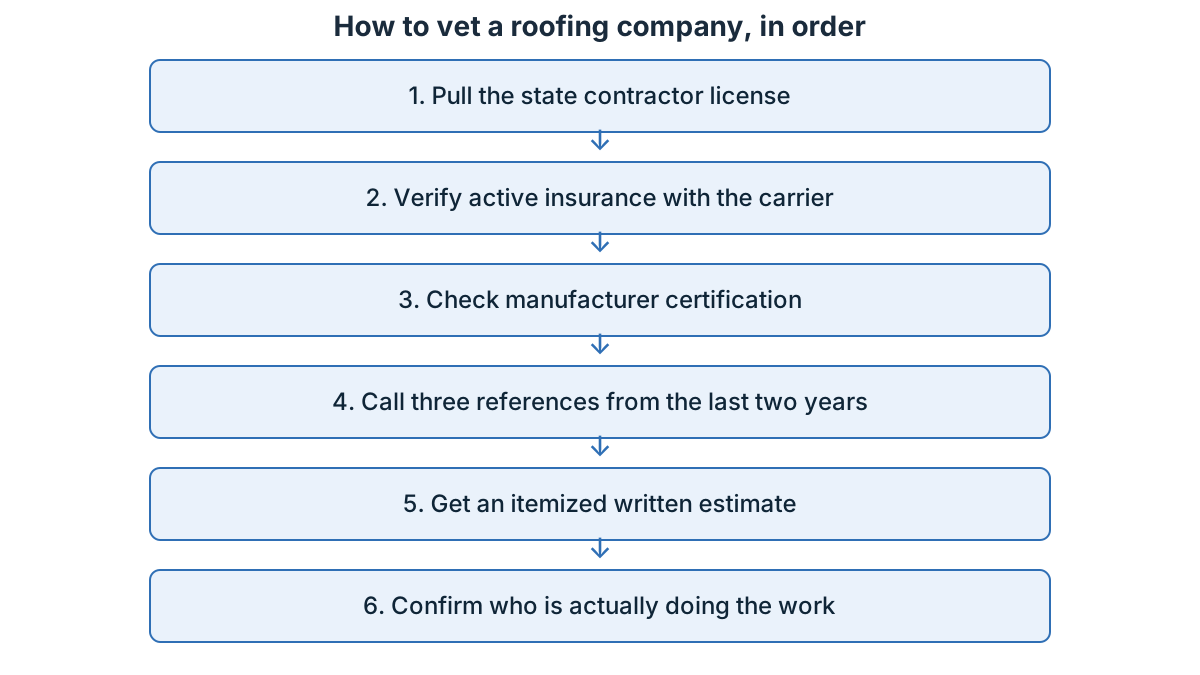
Treat this as a checklist you run before you let anyone climb a ladder, not something you do after you've already picked a favorite. Work through it in order.
Pull the license. Every state that requires roofing licensure keeps some form of roofing contractor license lookup tool on its contractor licensing board website. Search the company's legal name and the individual license holder's name, and confirm the license is active, not expired or suspended.
Ask for a certificate of insurance naming you, not just the company, and call the insurance carrier listed to confirm the policy is current. A photo of an old certificate is easy to reuse after a policy has lapsed.
Check for manufacturer certification. A GAF certified contractor, an Owens Corning Preferred Contractor, or an NRCA member has passed some level of training and vetting with that organization, which is a stronger signal than a five-star review page the company controls itself.
Get three references from jobs done in the last two years, and actually call them. Ask what the crew was like day to day, not only whether the roof looks fine now.
Get a written estimate that breaks out material, labor, tear-off and disposal, permit costs, and the payment schedule, not a single lump-sum number scrawled on a business card.
Confirm who's actually doing the work. Ask directly whether the crew on your roof will be direct employees or a subcontractor, and if it's a subcontractor, ask for that company's license and insurance too.
A company that answers all six without hesitation is behaving like a business that plans to still be around in five years, when your workmanship warranty actually matters. If you'd rather start by talking to a local roofing contractor who serves your area before running this checklist yourself, 888-679-3798 can connect you with one; the same verification steps still apply before you sign anything. For a deeper look at what a real inspection should cover beyond a quick walk-around, see our roof inspection guide.
Run these six checks in order before you sign anything.
What You Can Verify Yourself vs. When to Bring in a Second Opinion
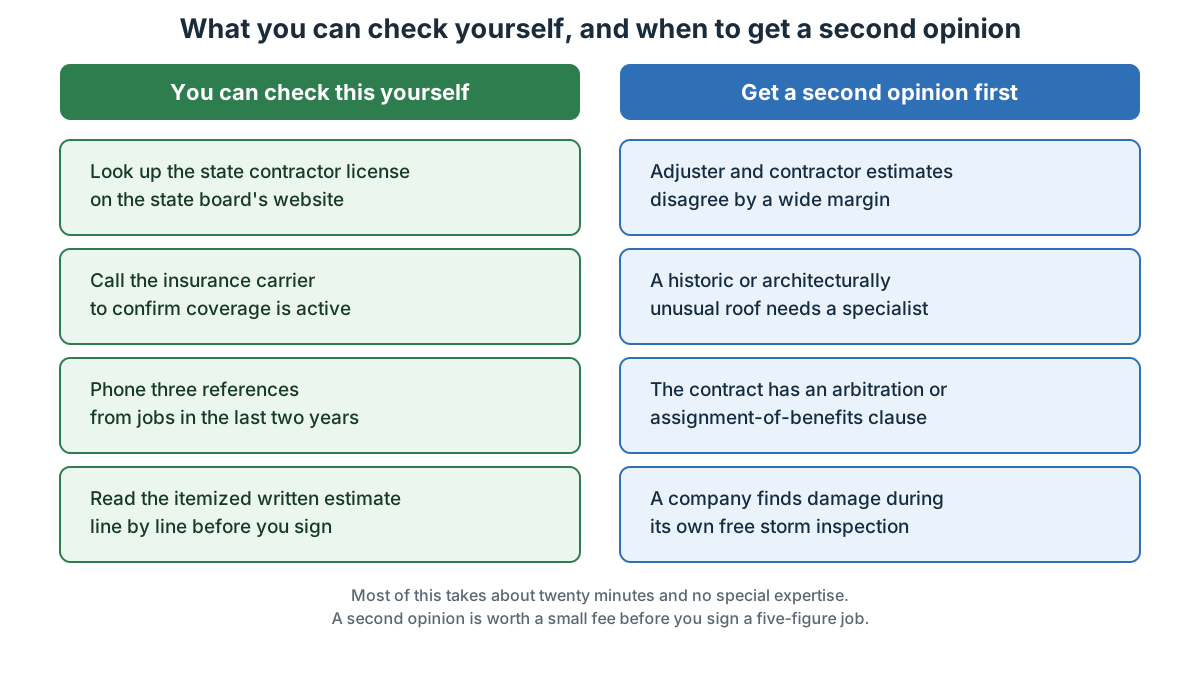
Most of the vetting above takes a phone call and twenty minutes, and it doesn't take any special expertise to do it. License lookups, insurance verification, and reference calls are all things any homeowner can handle directly.
Where it's worth paying for outside help: a large storm-damage claim where the insurance company's adjuster and the roofing company's estimate disagree by a wide margin, a historic or architecturally unusual roof where you need an independent inspector's opinion before choosing a specialist, or a contract with unusual terms, such as an arbitration clause, an assignment-of-benefits clause, or financing language you don't fully follow. A public adjuster or a real estate attorney reviewing a contract is a small cost next to a five-figure roofing job, and it's money well spent when the numbers don't add up.
One place homeowners frequently skip a second opinion when they shouldn't: a company that shows up right after a storm offering a free inspection and then finds damage on the spot. An independent inspection, paid for separately or done through your insurer's adjuster, gives you a second set of eyes before you commit to a company with a financial interest in finding damage.
Most vetting takes about twenty minutes and no special expertise; a few situations are worth paying an inspector or attorney to look at first.
What Roofing Work Actually Costs, So You Can Sanity-Check a Quote
National cost surveys vary from publisher to publisher, which is normal since they poll different regions and different years. Looking at several side by side gives you a range to measure a local quote against, not a single number to expect exactly.
Job type
Typical range
What moves the price
Source
Roof inspection
$100 – $600
Whether it includes a written report and photos, or just a walk-around
This Old House
Minor repair (a few shingles, a flashing fix)
$150 – $1,000
Material match, roof pitch, number of stories
Fixr; This Old House
Moderate repair
$1,000 – $3,000
Extent of decking damage, number of repair areas
Fixr
Major repair
$2,000 – $8,000+
Structural decking, large leak damage, steep or multi-story roofs
Fixr; This Old House
Full replacement, asphalt shingle (avg. home)
roughly $6,000 – $16,000; national average near $10,000
Square footage, tear-off and disposal, permits, roof pitch
Fixr; HomeAdvisor; HomeGuide
Full replacement, metal (1,700 sq ft)
$14,000 – $38,000
Panel type, standing seam vs. corrugated, labor availability
Fixr
Full replacement, slate (1,700 sq ft)
$20,000 – $60,000
Structural reinforcement, specialist labor
Fixr
How we got these numbers: the figures above come from national cost-survey publishers, using each site's most recently updated page rather than a single averaged figure. Your local quote depends on labor rates in your area, the pitch and access difficulty of your specific roof, and current material pricing, so treat this table as a sanity check on a written estimate, not a substitute for one. Labor typically runs 40% to 60% of the total invoice on a full replacement, and permits usually add another $100 to $500, so a quote that's almost entirely one line item is worth asking about. For a deeper breakdown by material and region, see our full roof replacement cost guide and the repair cost guide for smaller jobs.
Cost isn't only about the invoice. According to the 2025 Zonda / JLC Cost vs. Value report, a national-average asphalt shingle roof replacement job cost $31,871 and recouped about 68% of that at resale (what the industry calls its cost recouped), while a metal roof replacement job cost $51,865 and recouped about 50%. A cheaper roof isn't automatically the better financial decision if it needs replacing again in half the time.
National price ranges by job type, from an inspection to a full replacement.
Certifications and Licenses Worth Checking
Not every credential on a company's website means the same thing. Some are earned through training and audits; others are just a logo anyone can download.
Credential
What it actually requires
Why it's worth checking
State contractor license
Passing a state exam, proof of insurance, sometimes a bond, renewed on a schedule set by the state board
The baseline; a company that can't produce one shouldn't be on your roof
GAF Master Elite / Certified / Certified Plus
Manufacturer-run tiers; a GAF certified contractor has agreed to installation standards GAF audits directly
Ties your workmanship warranty to the manufacturer, not just the installer
Similar manufacturer-run network with its own vetting and training requirements
Same logic; an extended warranty usually requires this status
NRCA membership / PROCertification
Industry association training and, for PROCertification, hands-on workforce skills testing
Signals the company invests in crew training beyond the state minimum
A license is not optional; the certifications are a tier above it. A company can be perfectly licensed and insured without any manufacturer certification and still do excellent work, and plenty of small, reputable local outfits operate exactly that way. What a certification buys you is a manufacturer-backed warranty that survives even if the individual company closes, which matters if you're planning to stay in the house for the roof's full lifespan.
What the state license lookup actually shows
Most state boards publish license status, issue date, any disciplinary actions, and whether the required insurance and bond are current. Run the search before the estimate appointment, not after you've already liked the sales rep. A clean record on paper is worth more than a confident pitch at your kitchen table.
Red Flags That Should End the Conversation
Some warning signs are subtle. Others are not, and you can end the meeting the moment you spot one.
What you see
Legitimate roofing company
Likely storm chaser or scam
Local presence
Physical address you can look up, in business under the same name for years
Out-of-state plates, a P.O. box, or a company name that changes each season
Sales approach
Schedules an estimate, leaves you time to compare bids
Pressures you to sign the same day with "today-only" pricing
Payment
Modest deposit, balance due on completion or by milestone
Demands full payment or a large deposit up front
Insurance talk
Tells you to file your own claim and works from the adjuster's scope
Offers to "cover your deductible" or inflate the claim, which insurers treat as fraud
Paperwork
Detailed written estimate with a license number printed on it
Verbal quote, blank contract, or a contract you're told to sign before the price is filled in
The deductible-waiver offer deserves its own warning: a contractor who tells you they'll absorb your insurance deductible so the job is "free" is asking you to participate in misrepresenting the claim to your insurer. Insurers and state regulators treat that as claim fraud, not a discount, and it can affect your own claim later if the invoiced amount doesn't match what actually changed hands. For the specifics of filing a storm claim without giving a chaser room to inflate it, see our hail damage and insurance claim guide.
If the water is still coming in and you need someone out now rather than after you've run the full checklist, 888-679-3798 connects you with a roofing contractor that serves your area for an emergency tarp or assessment. The full vetting process still applies before you sign anything for permanent repair or replacement.
The Roofing Contract Checklist: What a Real Contract Includes
Everything you verified in the sections above should show up in writing before a crew touches your roof. Use this roofing contract checklist line by line.
Company's full legal name, license number, and physical address
Scope of work: tear-off vs. overlay, decking replacement terms, underlayment type
Material brand, product line, and color, itemized separately from labor
Total price broken into material, labor, tear-off and disposal, and permit costs (commonly $100–$500 depending on your city)
Payment schedule tied to milestones, not a single lump sum
Start date, estimated completion date, and what happens if weather delays the job
Cleanup and magnetic nail-sweep terms
Warranty terms: workmanship warranty length and what voids it, separate from the manufacturer's material warranty
Never pay more than a small deposit up front, and never pay the final balance until the work has passed a final walkthrough; a contract with no milestone payments is one of the clearest signs a company is planning to disappear before the job is finished.
A blank line where the price should be, a contract that references "standard terms" without attaching them, or a company that only emails you a link instead of leaving a paper or PDF copy in your hands are all reasons to ask for a revision before you sign. A company confident in its pricing has no reason to leave it vague.
How to Get Your Roof Warranty Explained Before You Sign
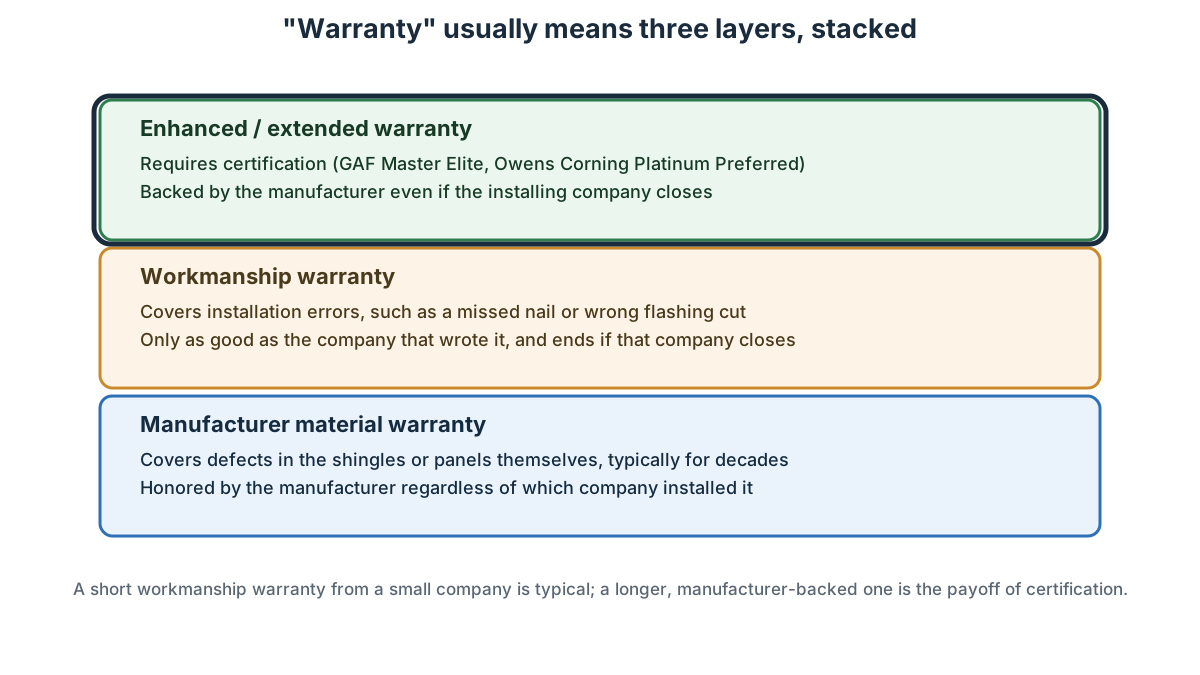
Getting your roof warranty explained before you sign is worth the extra ten minutes, because "warranty" on a roofing contract usually means three separate things stacked together, each honored by a different party.
The three layers
The manufacturer's material warranty covers defects in the shingles or panels themselves, typically for decades, and it's honored by the manufacturer regardless of which company installed the roof. The workmanship warranty covers installation errors, such as a nail that missed the truss or flashing cut wrong, and it's only as good as the company that wrote it; if that company closes, the warranty usually closes with it. The extended or "enhanced" warranty that comes with a certification like GAF Master Elite or Owens Corning Platinum Preferred is backed by the manufacturer even if the installing company later goes out of business, which is the main financial reason certification is worth paying attention to.
Ask specifically how long the workmanship warranty runs, and get that number in writing along with what voids it. A short warranty is typical from a smaller company working alone; a longer one backed by the manufacturer is the clearest financial argument for paying attention to certification in the first place. Don't accept a verbal "we stand behind our work" as a substitute for a written term.
A roofing warranty is usually three separate promises stacked together, each honored by a different party.
Regional Notes: Hail Belt, Hurricane Coast and Freeze-Thaw Roofs
Where you live changes both what your roof needs to survive and how crowded the storm-chaser market gets after a bad season.
The hail belt
The National Weather Service's Storm Prediction Center tracked 5,432 major hail events across the country in 2025, up slightly from 5,373 in 2024, with Texas leading every other state by a wide margin at 902 events, followed by Kansas (375), Oklahoma (369), Nebraska (315), and Missouri (253). "Severe" hail in that count means stones at least one inch across; "significant severe" means two inches or larger, the size that reliably cracks shingles and dents metal panels. Insurers feel that volume directly: State Farm alone paid out more than $3.5 billion in hail claims in 2022, over $1 billion more than the year before. If you're in this belt, expect a wave of out-of-town roofing companies within days of any large storm, which is exactly when the vetting checklist above matters most.
Hurricane and high-wind coast
Nationally, wind and hail together account for about 40.7% of homeowners insurance losses by dollar value, with an average claim severity around $13,511 and a claim frequency of about 2.82 per 100 insured homes each year, according to the Insurance Information Institute. Coastal and Gulf-facing homes should ask any roofing company specifically about wind-rated shingle installation and the nailing pattern used, since a standard nailing pattern often isn't enough to meet high-wind building code in these zones.
Freeze-thaw climates
In colder states, the failure pattern is different: ice dams form when heat escaping through the attic melts snow on the upper roof, and that meltwater refreezes the moment it reaches the unheated eave, where the surface drops back below 32°F and traps water under the shingles. Freeze-thaw cycling stresses shingles and flashing the same way over years rather than in a single event. A company used to hail claims in Texas isn't automatically the right fit for diagnosing an ice-dam leak in a northern climate, so local experience with your specific failure mode is worth asking about directly. If that's your climate, our ice dam guide covers the specific leak pattern and what not to do.
A realistic timeline after a hailstorm, and why patience matters.
How to Avoid Getting Burned Twice
Once you've been through a bad experience with a contractor, or watched a neighbor go through one, a few habits keep it from happening again.
Keep a folder, physical or digital, with your roof's install date, the company's license number, the workmanship warranty document, and photos from the day the job finished. If a leak shows up in year three, you'll have everything a second company or an insurance adjuster needs without hunting for it.
Re-verify insurance if you use the same company for maintenance years later, since a policy that was active at installation can lapse long before your next call. And when a storm hits your area and the door-knockers show up, slow down and run the same license and insurance check you'd run on anyone else, regardless of how the truck is branded or how urgent the pitch sounds.
The single best protection is time. A company willing to let you take a few days to check references and compare a second bid is behaving like a business that expects to be around for the workmanship warranty. One that isn't willing to give you that time is telling you something too. If the estimate comes in higher than expected, our roof financing guide walks through loans and insurance-claim paths side by side.
Frequently asked questions
How do I hire a roofing contractor without getting burned?+
Verify the license number with your state's contractor board, confirm insurance directly with the carrier, and get a written estimate broken into material, labor, and disposal costs before you sign anything. Add a manufacturer certification like GAF Certified if you want the extended warranty option, and call at least two references from jobs finished in the last two years. Skipping any one of these is how homeowners end up with an uninsured crew or a contract with no enforceable terms.
How should I deal with a roofing contractor who's pressuring me to sign the same day?+
Treat the urgency itself as the warning sign. A legitimate roofing company understands you're comparing bids and getting a second opinion, and same-day pricing on a five-figure purchase is a sales tactic, not a real deadline. Ask for the same written estimate with 48 hours to review it; if the company won't give you that, that alone tells you how they'll handle a dispute once the deposit is in hand.
How can I check if a roofing company is legit before I let them on my roof?+
Run the company's name through your state's contractor license lookup, confirm the insurance certificate by calling the listed carrier rather than trusting the paper, and search the business address to make sure it's a real, standing location rather than a P.O. box. A legitimate company will have a track record you can verify independently, not just reviews posted on its own website.
What does a roofing contractor actually do, beyond installing shingles?+
A roofing contractor manages the entire job: pulling permits, ordering material, scheduling the crew, coordinating tear-off and disposal, and handling flashing and ventilation details that determine whether the roof actually lasts, all while standing behind the workmanship with a warranty. Some contractors employ their own installation crews directly; others subcontract that labor, which is worth asking about since it affects who's accountable if something goes wrong.
How do roofing contractors get paid, and when should I pay mine?+
Most legitimate roofing companies structure payment in stages: a modest deposit at signing, sometimes a progress payment once material is delivered or tear-off begins, and the final balance only after a completed walkthrough. Paying the full amount up front leaves you nothing to hold back if the work is unfinished or done poorly, which is why a payment schedule tied to milestones belongs in the written contract, not a verbal agreement.
Can a general contractor replace a roof, or do I need a roofing specialist?+
A licensed general contractor can legally oversee a roof replacement in most states, but the actual installation should still be done by roofers with roofing-specific training, since flashing, ventilation, and manufacturer nailing patterns are specialized skills. If a general contractor is managing your project, ask directly who is performing the roofing work and confirm that subcontractor's license and insurance separately.
How much does roofing contractor insurance cost, and why does it matter to me as the homeowner?+
That premium varies by crew size, claims history, and state, so it isn't something we can quote as one figure. What matters more to you as the homeowner is simpler: if an uninsured worker is hurt on your property, the liability and medical costs can shift onto your homeowners policy instead of theirs. Confirming active general liability and workers' comp coverage before the job starts is worth the five-minute phone call to the carrier.
What training does someone go through to become a roofing contractor?+
Requirements vary by state; most require passing a trade exam, proving a set number of years of experience or apprenticeship, and carrying insurance and sometimes a bond before a license is issued. Manufacturer certifications like GAF's tiers or NRCA's PROCertification go further, adding hands-on installation training and periodic audits. None of that guarantees a perfect crew, but it's a meaningfully higher bar than a truck and a business card.
Is a roofing company profitable enough that a lowball bid should worry me?+
Roofing carries real material, labor, and insurance costs, so a bid dramatically below every other quote usually means something is being cut: material grade, crew experience, insurance coverage, or the tear-off and disposal step. A sustainable roofing company can usually explain why its price sits where it does; one that can't, or one pricing far under the rest of the market, is worth asking harder questions of before you sign.
Why do new roofing companies suddenly appear after a big storm?+
Storm damage creates a short-term surge in demand that some legitimate regional contractors staff up for, and some pure storm chasers exist only to work that surge before moving to the next affected area. The difference shows up in the paperwork: a real company registers to do business in your state, carries verifiable insurance, and stands behind a workmanship warranty; a storm chaser often skips one or more of those, banking on being gone before it matters.