Emergency roof repair means stopping active water intrusion first and scheduling a permanent fix second. In the first hour, get everyone clear, find where water is entering, and call a roofing contractor or your insurer. An emergency roof tarp typically adds $100 to $300 in after-hours labor on top of standard repair pricing, which itself runs roughly $400 to $1,900 for most jobs nationally.
An emergency roof repair call usually starts with a sound, not a decision: a crack of thunder followed by a drip on the ceiling, or a heavy limb landing on the roof deck with a thud you feel through the floor. By the time most homeowners search for help, water is already moving through insulation and drywall, and the question is not whether to fix the roof, it is what to do in the next thirty minutes to keep the damage from spreading.
This guide covers what actually counts as a roof emergency, what causes most of them, the first-hour checklist, how an emergency roof tarp gets installed and what it costs on top of a standard repair, when a fallen tree or storm turns a repair into an insurance claim, and how to find a roofer who will show up at night without charging like it is the only option you have.
What Counts as an Emergency, and What Doesn't
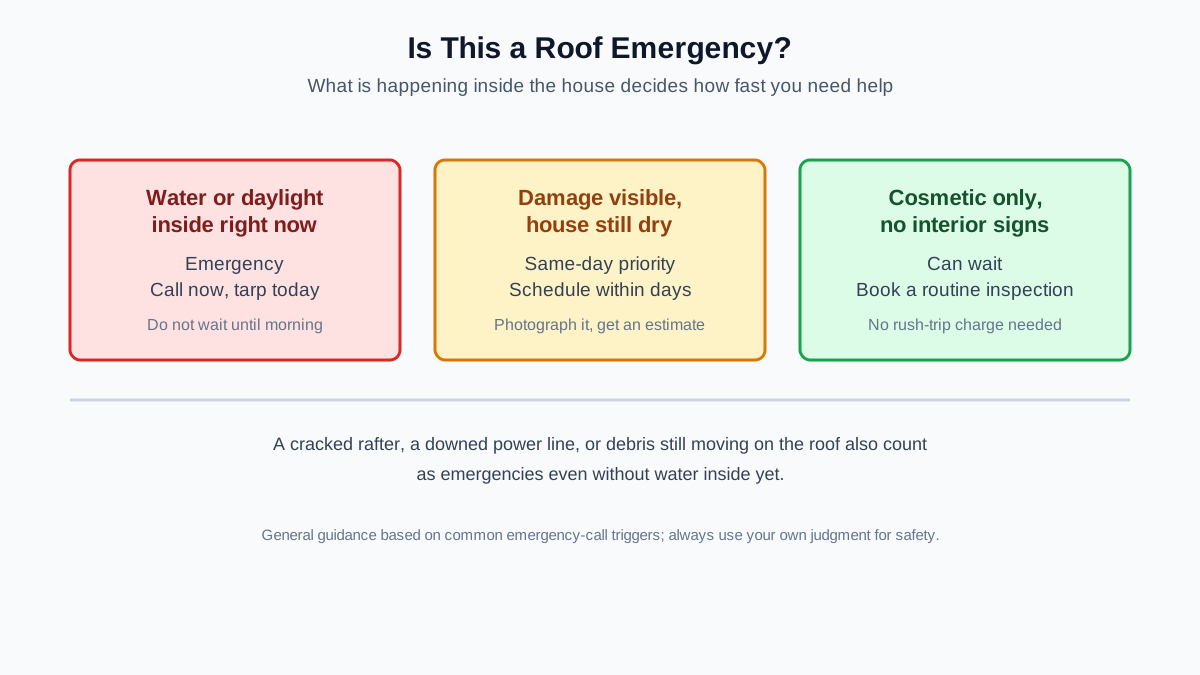
Not every roof problem is an emergency, and treating every ding or curled shingle like one wastes money on rush-trip charges. The dividing line is simple: if water, wind, or daylight is actively entering the living space, or a structural member is compromised, it counts. If the roof looks rough but the inside of the house is still dry, it is a scheduling problem, not a 2 a.m. phone call.
A few situations sit in a gray zone. A ceiling stain that has stopped spreading might be an old leak that already dried out, or it might be a storm that just started before the drywall soaked through; either way it deserves a same-day look rather than an emergency dispatch. A missing ridge cap after a windstorm looks alarming from the driveway but often causes no interior damage if the underlayment beneath it is intact. The table below sorts the situations people search for most into what needs action now and what can wait for a scheduled repair.
The fastest way to sort a roof problem: is water or daylight getting into the living space right now, or is the house still dry?
Situation
Act now (true emergency)
Can wait for a scheduled repair
Water dripping or pooling inside
Yes, every time
—
Tree limb resting on the roof deck
Yes, especially if it is still attached and moving
—
Daylight visible through the attic decking
Yes, that is an active hole
—
Missing shingles, roof deck still dry inside
—
Schedule within a few days
Granule loss in the gutters after hail, no interior signs
—
Book an inspection this week
Curling or cracked shingles on an older roof, no leak yet
—
Plan a repair or replacement estimate
What Usually Causes a Roof Emergency
Most roof emergencies trace back to a handful of causes, and weather drives the majority of them. Ranked by how often they show up in emergency calls, wind-driven rain during a storm is the most common trigger: shingles lift at the tab edge, water finds the gap, and it tracks along the decking before it ever shows up as a ceiling stain, so the leak often appears several feet from where the wind damage actually happened. Fallen or overhanging tree limbs come next, especially after the kind of straight-line wind event that snaps branches faster than it lifts shingles.
Hail is the third major cause, and it behaves differently: rather than one obvious hole, it leaves dozens of small bruised or cracked spots across a slope that can each turn into a leak point over the following weeks, not just the day of the storm. In colder climates, an ice dam at the eaves is a slower-moving version of the same problem, forcing meltwater backward under the shingle line during a freeze-thaw cycle (snowmelt refreezing each time the surface temperature drops back below water's 32 degrees Fahrenheit freezing point) instead of a single storm event; our ice dam guide covers that mechanic in more depth. Rounding out the list: a cracked or lifted section of flashing around a chimney or skylight, a failed rubber boot around a plumbing vent pipe, and, less often, storm-driven debris punching a hole straight through the decking.
What to Do in the First Hour
The first hour decides how much damage the rest of the day does. Move fast on containment, not on climbing anything.
Get everyone clear of the room under the leak or the tree limb, and move furniture and electronics out from underneath if it is safe to do so.
Cut the power to any light fixture or outlet near the leak at the breaker, since water and electricity are a bad combination even from a slow ceiling drip.
Catch the water: a bucket under a drip, or a tarp funneled into a container for a wider leak, buys time without anyone going near the roof.
Poke a small drain hole in a bulging ceiling section with a screwdriver over a bucket, which relieves pressure in a controlled spot instead of letting the ceiling collapse on its own.
Photograph the interior damage and, from a safe window or the ground, the exterior damage, with a timestamp, before anything gets moved or covered.
Call for help. If the water is still coming in and it is dark, wet, or windy outside, do not go up on the roof yourself; call 888-679-3798 to reach a roofing contractor that serves your area and describe exactly what you are seeing.
If a tree limb came down with the storm and it is still touching a power line, stay inside and call the utility company or 911 before calling anyone about the roof itself; a downed line is a life-safety issue that outranks roof damage every time.
The first hour is about containment and documentation; the tarp usually goes up within a day, with the permanent repair scheduled inside 48 hours.
How Emergency Roof Tarping Works
An emergency roof tarp is a heavy-duty waterproof cover, usually reinforced polyethylene, stretched over the damaged section and anchored so wind cannot get underneath and rip it loose. Done right, it can hold for weeks while a permanent repair gets scheduled and, if needed, an insurance claim gets processed. Done wrong, a tarp that is not sealed at the edges or anchored past the damaged area can funnel more water into the house than it keeps out.
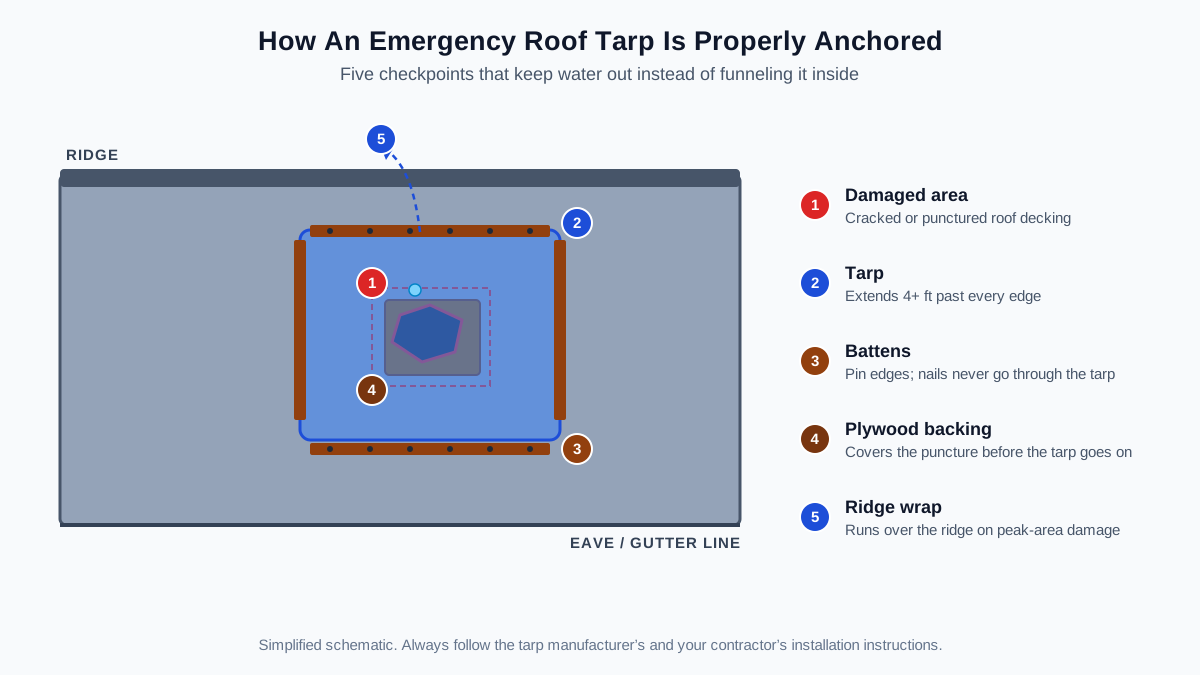
A professional crew tarping a roof generally works through the same sequence: clear debris from the damaged area, cover it with plywood if the decking itself is punctured, run the tarp at least four feet past every edge of the visible damage, wrap and nail battens over the tarp's edges rather than nailing straight through the material, and run the tarp up and over the ridge line whenever the damage is anywhere near the peak, so water cannot just run underneath it from the other slope. That sequence is exactly how to secure a tarp to a roof so it survives the next round of wind instead of becoming its own hazard.
For most homeowners, the honest answer to how to tarp a leaky roof is that this is not a solo project. Roofs are steep, wet decking is one of the more slippery surfaces there is, and a tarp that is not anchored correctly can pull a person off the roof in a gust. If the leak is manageable with a bucket and the roof is not safely walkable, wait for a professional rather than improvising after dark.
A tarp that skips any one of these five points is the most common reason an emergency tarp job leaks anyway.
A Tree Fell on the Roof: What Happens Next
When a tree fell on roof decking hard enough to crack it, you are usually looking at two different contractors, not one. A tree service handles cutting up and removing the trunk and branches safely, especially any limb under tension, meaning it is bent, pinned, or spring-loaded and can snap back hard once cut, while a roofer handles tarping the hole, assessing the decking and rafters underneath, and the eventual repair. Do not let anyone climb onto a leaning or partially cut tree to remove it themselves; that is one of the more dangerous DIY mistakes people make after a storm.
Before either crew touches anything, check for a few things from the ground: whether the limb pierced the decking or is just resting on top of intact shingles, whether it is touching a power line or the electric meter, and whether there is any visible sag in the roofline near the impact, which can point to a cracked or broken rafter rather than surface damage alone. A cracked rafter or truss is a structural problem, not a cosmetic one, and it needs a contractor or, on a serious hit, a structural engineer to sign off before anyone reroofs over it.
Most homeowners insurance policies treat a fallen tree as covered wind or weather damage if the tree came down due to a storm, though removal-only costs with no structural damage are sometimes excluded or capped, which is worth confirming with your carrier directly rather than assuming either way.
Storm Damage, Wind and Hail: What's Different About Each
Storm damage roof repair covers a wide range of failure modes, and treating them all the same way slows down both the repair and the insurance claim. Wind tends to lift and crease shingles at the tab edge, concentrated on whichever slope faced the gusts, and in the worst cases it peels shingles off in strips or lifts an entire ridge cap. Wind damage roof repair usually means replacing torn shingles and resealing lifted tabs, sometimes a full slope's worth if the wind event was severe enough.
Hail behaves differently: it bruises the shingle mat under the granule layer in a scattered, roughly circular pattern rather than tearing anything, so the damage is often invisible from the ground and shows up first as a pile of granules at the base of a downspout. NOAA's Storm Prediction Center classifies hail as severe once stones reach 1 inch in diameter, about the size of a quarter, and significant severe at 2 inches or larger, though plenty of shingle bruising happens well under that threshold without a single stone ever cracking one outright. Hail damage roof repair typically starts with a close inspection rather than an obvious hole, and our hail damage roof repair guide covers how to tell real bruising from a false alarm and how the insurance claim process works in detail.
A single storm frequently leaves both patterns on the same roof, wind-lifted shingles on one slope and hail bruising scattered across another, which is why a thorough post-storm inspection checks for both rather than stopping at whichever is easier to spot from a ladder.
What Emergency Roof Repair Costs
Add it up and emergency roof repair cost is really two numbers stacked together: an after-hours markup, plus whatever the underlying repair scope costs once someone can see the damage in daylight. The table below combines standard repair cost ranges from several published cost surveys with the emergency and after-hours markups two of those same publishers document separately.
Job type
Typical range
What moves the price
Source
After-hours / emergency markup on top of standard repair pricing
$100 – $300 added to the base repair cost
Time of day, weekday vs. weekend, contractor availability
Fixr, Bob Vila
Minor repair (a handful of shingles, small leak)
$150 – $1,000
Shingle availability, roof accessibility
Fixr, This Old House
Roof leak repair specifically
$350 – $1,550
How far water traveled from the entry point, decking condition
Full replacement, if damage is severe enough to force a reroof
$5,700 – $16,000 (national averages cluster near $10,000)
Material, roof size and pitch, local labor rates
Fixr, HomeAdvisor, HomeGuide
The after-hours markup itself is small, $100 to $300, but it stacks on top of a repair scope that can run from $150 for a minor fix to $16,000 for a full replacement.
How we got these numbers
These are national survey ranges pulled from independent cost-data publishers, not a quote for any specific roof or region. There is no separate published national figure for emergency roof tarp cost as a standalone line item; tarping is typically billed as labor time and materials within the emergency call-out rather than priced on its own, which is why the table above shows it as a markup on top of standard repair pricing instead of a flat number. Standard-hours labor alone typically runs $50 to $120 an hour, and bigger jobs are usually priced by the square, the roofing trade's term for 100 sq. ft. of surface; a full tear-off and replacement runs roughly $3.75 to $11 per sq. ft. depending on material, which is where the $5,700-to-$16,000 replacement range above comes from. Your actual cost depends on how far a crew has to travel after hours, how much of the roof needs covering, and how busy local roofers are after a wide-area storm, so treat every range here as a starting point and get a written estimate before you commit to anything beyond the emergency tarp. For non-emergency pricing in more depth, see our roof repair cost guide and roof replacement cost guide.
Does Insurance Cover Emergency Roof Repair?
Most standard homeowners policies (an HO-3 is the most common form) cover sudden, storm-caused roof damage, including wind, hail, and a tree falling due to weather, under the policy's wind and hail or windstorm peril. What they generally do not cover is gradual damage from years of deferred maintenance, so an insurer that sees curling, worn shingles well past their expected lifespan on the same roof may deny a claim tied to that section even after a storm, arguing the damage predates the event.
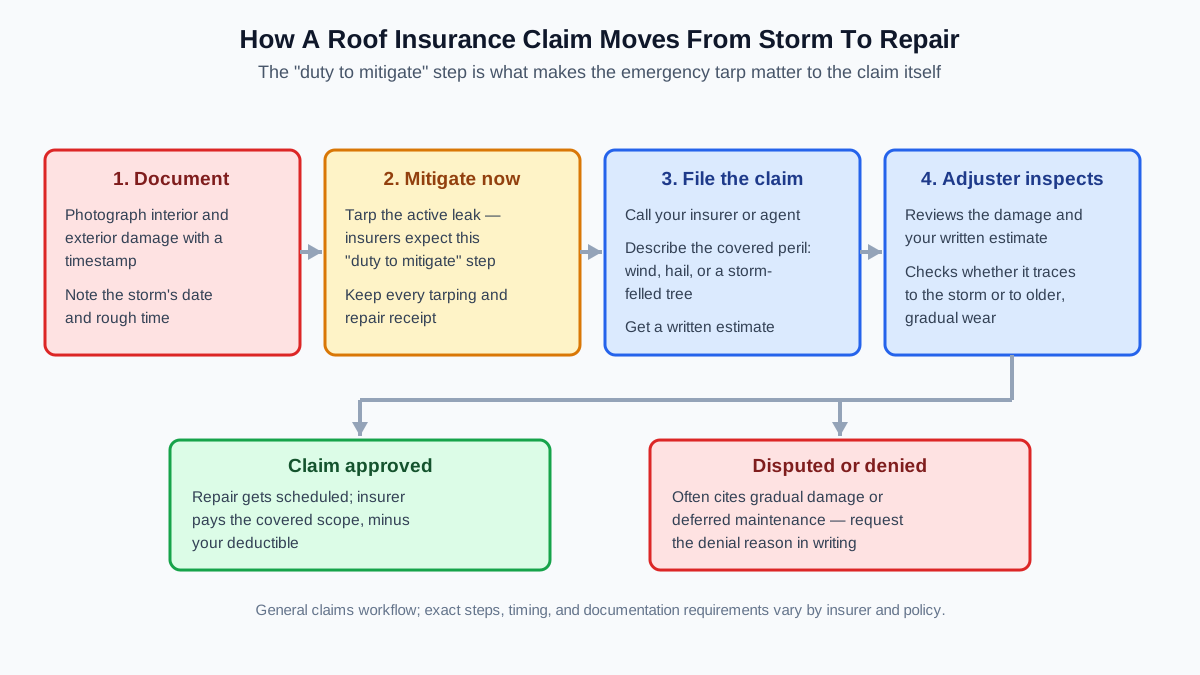
Most policies also include a duty to mitigate: you are expected to take reasonable, temporary steps, like tarping an active leak, to prevent further damage once you know about it, and insurers can push back on additional damage that happened because nobody covered an obvious hole. That is one more reason the emergency tarp matters even before an adjuster has looked at anything. Keep every receipt for tarping, temporary repairs, and even the tarp material itself; those costs are typically reimbursable as part of the claim.
Document before you call: photograph interior and exterior damage with a timestamp, note the date and rough time of the storm, and get a written estimate from a licensed roofer describing the scope of damage. Whether insurance covers roof damage in your specific case depends on your policy's exclusions, your deductible, and how clearly the damage ties back to a covered event, so read your declarations page or call your agent directly rather than assuming either way. For the fuller breakdown of how a claim moves from filing to final check, see our hail damage roof repair guide, which covers the claims process step by step.
Insurers expect the tarping step before they will fully cover storm damage, since a duty-to-mitigate clause is standard in most homeowners policies.
Finding a 24 Hour Roof Repair Company You Can Trust
A genuine 24 hour roof repair company answers the phone at odd hours, gives you a real name and license number, and does not ask for full payment before anyone shows up. After a wide-area storm, out-of-state crews often work neighborhoods door to door, and a share of them are not licensed to work in your county at all; treat an unsolicited knock the day after a storm with the same caution as an unsolicited emergency repair quote over the phone.
Ask a few direct questions before anyone gets on a ladder: current state or local license number, proof of general liability insurance, whether the tarping charge is separate from the eventual repair estimate, and roughly how long the tarp is expected to hold. A contractor trained through the NRCA (National Roofing Contractors Association) or certified under a shingle manufacturer's tiered program, such as GAF's Master Elite level (the top of its three certification tiers, above Certified and Certified Plus) or Owens Corning's Preferred and Platinum Preferred network, has typically been vetted on both workmanship and safety practices, which is worth asking about even for a quick tarping job.
If you would rather start with a name you can verify than a stranger with a magnetic sign on a pickup truck, call 888-679-3798 to reach a roofing contractor that serves your area and can walk you through what an honest emergency estimate should include. For the fuller checklist of licensing, insurance proof, and contract red flags beyond an emergency call, see our how to choose a roofing company guide.
DIY Limits and Safety
There is a real, narrow list of things a homeowner can safely do during a roof emergency: catching water in a bucket, relieving pressure in a bulging ceiling, photographing damage, and calling for help. Everything past that belongs to someone with fall protection, the right ladder setup, and experience reading a wet, granule-covered roof surface, which is one of the more dangerous things to stand on even for people used to ladders.
Never climb onto a wet, storm-damaged, or dark roof yourself, and never work anywhere near a downed power line or a service mast that debris has struck; both situations belong to a professional crew, not a homeowner with a tarp and good intentions.
A few more limits worth naming plainly: do not walk a roof steeper than a comfortable stair pitch without fall protection (OSHA requires it for residential roofing work done 6 feet or more above the ground, a height most single-story eaves clear easily), do not nail a tarp directly through shingles without battens, the thin wood strips installed over the tarp's edge to pin it down without puncturing it directly, and do not sign anything, including an assignment of benefits that hands a contractor authority to deal with your insurer, before you have read it and confirmed the company is licensed and insured. If an estimate arrives within hours of the storm and pressures you to sign on the spot, that is a signal to slow down, not speed up.
Preventing the Next Roof Emergency
Most roof emergencies are weather events you cannot prevent, but you can reduce how much damage the next one does. Trim back branches that overhang the roofline well before storm season, since a limb hanging directly over the house turns an ordinary windstorm into a falling-debris risk it would not otherwise be. Clean gutters and downspouts twice a year so water has somewhere to go instead of backing up under the shingle line during a heavy rain.
Schedule a roof check after any major storm season even when nothing looks obviously wrong from the ground; catching a lifted shingle tab or a bruised patch of granules before it becomes an active leak is far cheaper than an emergency tarp call later. If your roof is aging and you live somewhere that sees hail most years, ask about impact-resistant shingles when it comes time to replace it. Some insurers offer a premium discount for them, which is worth confirming with your carrier directly since it varies by company and state.
Keep a small emergency kit on hand before you need it: a heavy-duty tarp sized for your roof, rope or bungee cords, work gloves, and the phone number for a roofer you trust already saved in your phone. Preparation is the cheapest part of the entire emergency roof repair process, and it is the only part you get to control ahead of time.
Regional Notes: Hail Alley, the Freeze Belt and the Hurricane Coast
Where you live changes which roof emergency is most likely to reach you first. The Insurance Information Institute, citing NOAA's Storm Prediction Center, counted 5,432 major hail events across the US in 2025, with Texas alone accounting for 902 of them, more than any other state, followed by Kansas, Oklahoma, Nebraska, and Missouri. That central swath is often called Hail Alley, and roofing companies there build entire crews around storm-season response.
Nationally, wind and hail combined made up 40.7 percent of homeowners insurance losses in 2022, with an average claim severity of $13,511, according to the same source, which is a large part of why a well-documented emergency response matters financially and not just structurally.
Region
Most common emergency trigger
What to watch for
Hail Alley (TX, KS, OK, NE, MO and neighbors)
Hail bruising, sometimes paired with straight-line wind
Granule loss in gutters after any spring or summer storm
Freeze belt (Upper Midwest, Northeast)
Ice dams backing water up under shingles at the eaves
Interior water stains near exterior walls in late winter
Hurricane coast (Gulf and Atlantic)
Wind-lifted shingles and wind-driven rain, often bundled together
Flashing failures around low-slope sections and chimneys
Anywhere with mature trees nearby
Fallen or overhanging limbs during any high-wind event
Branches resting on the roofline before a storm even hits
In the freeze belt, an ice dam problem often overlaps with an aging or already hail-bruised roof, which is why a shingle that survived one winter can crack the next once summer hail softens it first. Along the Gulf and Atlantic coasts, wind speed rather than hailstone size is the number that matters most, and a post-storm inspection there should check flashing around low-slope sections as carefully as it checks the shingle field itself.
Frequently asked questions
How much does emergency roof repair cost?+
Emergency roof repair typically costs the standard repair price plus a $100 to $300 after-hours markup, based on published cost-survey data. Most non-emergency roof repairs run $400 to $1,900 nationally, so an emergency call for a moderate repair often lands between $500 and $2,200 once the after-hours labor is added, though your final number depends on the scope of damage and how far a crew has to travel.
How much does emergency roof tarping cost?+
There is no separate published national figure for tarping alone, since most roofers bill it as labor time and materials within the emergency call rather than as its own line item. Expect the standard after-hours markup of roughly $100 to $300 on top of whatever the underlying repair estimate runs, and ask for that broken out separately on your written estimate.
What is a roof tarp?+
A roof tarp is a heavy-duty waterproof cover, usually reinforced polyethylene, stretched over storm or impact damage and anchored with wood battens so wind cannot lift it. It is a temporary measure meant to stop water intrusion until a permanent repair can be scheduled, not a substitute for the actual fix.
How do you secure a tarp to a roof?+
A properly secured tarp extends at least four feet past every edge of the visible damage, runs up and over the ridge when the damage is near the peak, and is pinned down with wood battens nailed through the tarp's edge rather than nailed straight through the material itself. Skipping the battens or stopping short of the damaged area is the most common reason a tarp fails in the next windstorm.
Who puts tarps on roofs?+
A roofing contractor typically handles emergency tarping as part of a storm-response or emergency repair call, since the job involves working on a wet, damaged, and often steep roof safely. Some general storm-restoration companies also offer tarping, but confirming the crew carries liability insurance and roofing-specific experience matters more than which type of company shows up.
Does homeowners insurance cover roof damage from a storm?+
Most standard HO-3 policies cover sudden, storm-caused roof damage, including wind, hail, and a tree falling due to weather, under the wind and hail or windstorm peril. Gradual damage from age or deferred maintenance is typically excluded, so document the storm date and photograph the damage promptly to tie your claim clearly to a specific covered event.
How long does an emergency roof repair take?+
The emergency tarp itself usually goes up in one to three hours once a crew arrives, depending on the size of the damaged area and how steep or wet the roof is. The permanent repair behind it can take anywhere from a few hours for a simple shingle replacement to several days for a full reroof, and insurance claims and material availability often set the real timeline more than labor does.
Should I repair or replace my roof after storm damage?+
That decision usually comes down to how widespread the damage is and how much life was left in the roof beforehand. Scattered damage on one or two slopes of an otherwise sound roof is typically a repair; damage across every slope, or a roof that was already near the end of its expected life, more often points a licensed contractor toward recommending a full replacement instead.
How do I get insurance to cover roof damage?+
Photograph the damage promptly, note the date of the storm, and file the claim with your insurer before doing anything beyond emergency tarping. Getting a written estimate from a licensed roofer that documents the scope of damage, and keeping every receipt for temporary repairs, gives the adjuster a clear paper trail that supports the claim.
What should I do if a tree falls on my roof?+
Get everyone clear of the area, check from a safe distance whether the tree is touching a power line, and call 911 or the utility company first if it is. A tree service typically handles removing the tree itself while a separate roofing contractor tarps the hole and assesses whether the decking or rafters underneath were damaged.
Is a cracked roof rafter after a tree strike a safety issue?+
Yes. A cracked or broken rafter is a structural problem, not a cosmetic one, and it can affect how much weight the roof can safely carry until it is repaired. A roofing contractor or, on a serious hit, a structural engineer should inspect and sign off on the framing before anyone re-covers it with new roofing material.