Sump pump installation means fitting a pump into a basin at your basement's lowest point, wired to switch on automatically and carry groundwater away from the foundation. A licensed plumber typically finishes installation, pit, check valve, and discharge line included, in a single day. Battery backup guards against the outages that cause many failures; get a written local estimate to price the job.
The pit is usually already there, a round hole cut into the basement floor near the lowest corner of the house, sometimes with an old pump sitting dead at the bottom, sometimes empty and covered with a piece of plywood someone meant to deal with eventually. Sump pump installation is the job of putting a working pump into that pit, or cutting a new pit where one has never existed, so that groundwater collecting under the slab gets carried outside before it finds its way up through the floor.
This guide covers what the job actually involves, from a fifteen-minute check of whether you need one at all to the step-by-step version a licensed plumber follows on install day. You will find an honest comparison of pedestal and submersible pumps, a look at battery backup and the other ways to keep a pump running through a power outage, what drives the price up or down (since we are not going to hand you a made-up number), and the single safety rule that matters more than anything else in this article. If you searched sump pump installation because water showed up in your basement after the last big storm, or because the pit down there has sat empty since you moved in, this is the page that walks you through the actual decision.
What Sump Pump Installation Actually Involves
Sump pump installation solves one specific problem: water pressing up against or under a concrete slab from the soil below it, called hydrostatic pressure, that would otherwise find the path of least resistance straight through a crack, a cove joint where the wall meets the floor, or a floor drain. A pump living in a basin below the slab surface intercepts that water before it gets that far, and switches itself on and off automatically as the water level in the pit rises and falls.
How Does a Sump Pump Work?
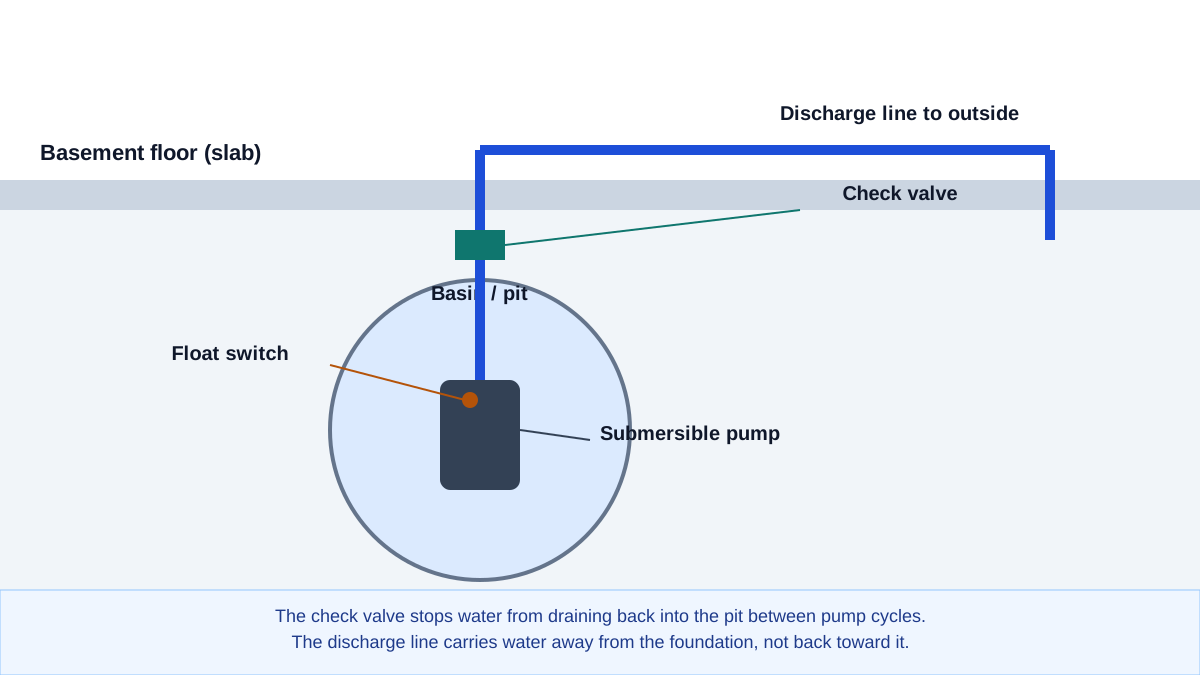
The system has four working parts, and understanding them makes every later section easier to follow. The basin, sometimes called the pit or crock, is a plastic liner set into a hole cut through the slab, typically about 18 inches across and 24 to 30 inches deep, wide enough to hold the pump with room for water to collect around it. The pump itself sits inside, either hanging from a pedestal above the water or submerged directly in it, and is triggered by a float switch that rises with the water level. The check valve sits in the discharge pipe just above the pump and stops water from running back down into the pit between cycles, which would otherwise make the pump short-cycle and wear out fast. The discharge line, typically 1-1/2 to 2-inch PVC pipe, carries the water from the check valve, up and out through the rim joist or foundation wall, to a point on the property far enough from the house that the water does not just seep straight back toward the foundation.
The four working parts of a sump pump system: basin, pump, check valve, and discharge line.
None of that is complicated in isolation. What makes installation a job for a licensed plumber more often than a weekend project is the combination of cutting concrete, tying into an electrical circuit near standing water, and routing a discharge line so it actually drains where it is supposed to instead of freezing shut or dumping water onto a neighbor's yard.
Why Basements Flood: The Real Causes, Ranked
Basements and crawlspaces flood for a small number of reasons, and they show up in a fairly predictable order. Ranked roughly by how often each one turns out to be the answer:
A naturally high water table or poor soil drainage. Clay-heavy soil drains slowly and holds water against the foundation long after a storm passes; homes built where the water table sits close to the surface deal with this year-round, not just after heavy rain.
Grading and gutters that send water toward the house instead of away from it. Downspouts that dump at the foundation, or a yard that slopes toward the house instead of away from it, push far more water at the foundation than the soil around it can absorb.
Heavy rain or fast snowmelt overwhelming the soil's absorption rate. Even well-drained soil can only take water in so fast; a hard, sustained storm or a quick spring thaw can push more water at the foundation in a few hours than the ground can carry away.
An existing pump that has failed or was never installed in the first place. A house with a pit but no working pump, or a pump that seized, lost power, or was never wired in when the basement was finished, has effectively no protection at all.
Foundation age and construction type. Older foundations poured without a modern drain tile system, or block foundations with porous mortar joints, let water through more readily than a newer poured wall with a working perimeter drain.
The first two causes are worth fixing on their own regardless of whether you also install a pump. Redirecting downspouts and regrading soil near the foundation costs little compared to plumbing work and reduces how hard the pump has to work once it is in. A sump pump is the backstop for water that gets past those defenses, not a replacement for them. For a more precise picture than a rule of thumb, FEMA's National Risk Index lets you look up flood and other hazard data for your own county.
Do You Actually Need a Sump Pump Installed?
Before deciding you need a new sump pump, spend a few minutes actually checking, since the signs point in different directions depending on whether the problem is drainage, an existing pump, or something else entirely.
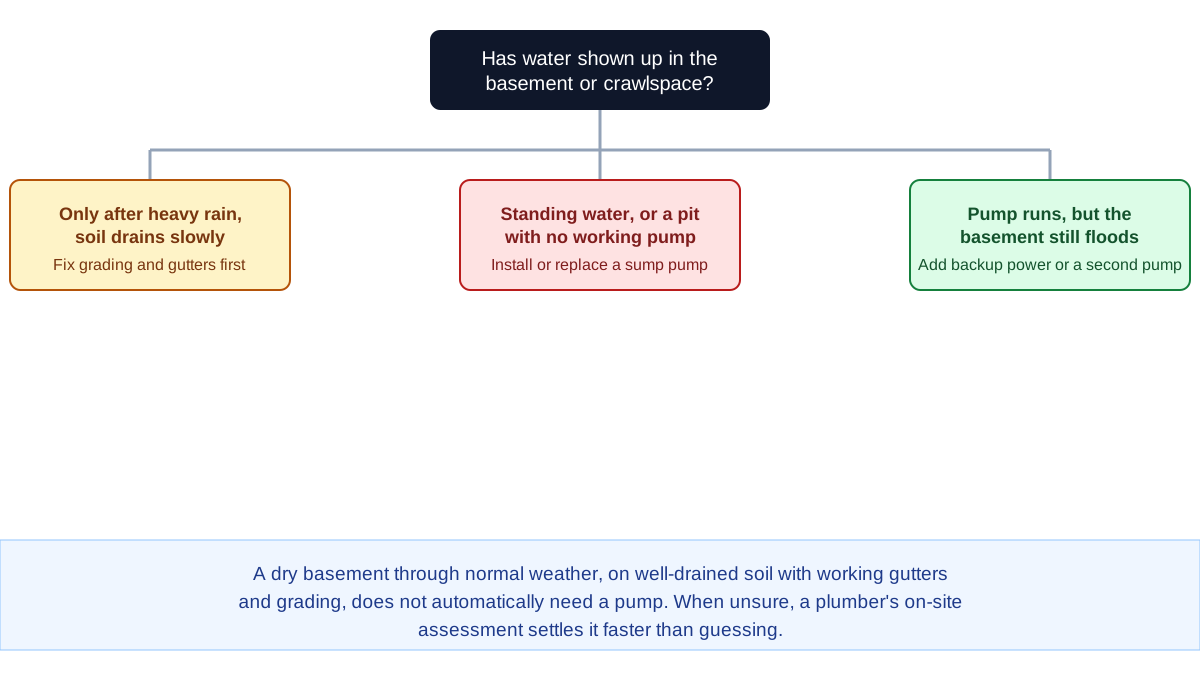
A quick way to sort a drainage fix from an installation job from a backup-power gap.
Look for these first: a musty smell that comes and goes with the weather, white chalky efflorescence staining on foundation walls where mineral-laden water has evaporated and left deposits behind, damp patches on the lowest section of wall after rain, or a pit that is already there but sits dry and quiet with no pump inside it. Any one of these points toward groundwater intrusion that a properly installed pump would address.
If a pump is already installed, testing it takes five minutes. Pour a few gallons of water into the pit until the float rises, and confirm the pump kicks on, moves water out through the discharge line, and shuts off cleanly once the level drops. A pump that hums but does not move water, one that never shuts off, or one that stays silent while the pit fills is not doing its job, and that is a repair or replacement question rather than a first-time installation.
Homes without a visible pit and no history of water intrusion do not automatically need one. A dry basement through several seasons of normal weather, on soil that drains well, with gutters and grading already doing their job, is a case where a plumber's site visit is worth more than guessing. The problems people search for most after this one tend to be either a pump that is already installed but not working, which is a repair call, not an installation, or uncertainty about whether their particular house needs a pump at all, which is exactly what an in-person assessment settles. Not every basement leak is groundwater, either; our guide to a burst pipe under the sink covers water damage that traces to a plumbing failure rather than the soil outside.
Pedestal vs. Submersible: Choosing the Right Pump
Every sump pump on the market is either a pedestal or a submersible design, and the difference comes down to where the motor sits relative to the water. Most residential units of either design are rated between 1/3 and 1/2 horsepower, enough to keep a properly sized basin from filling faster than the pump can empty it.
A pedestal pump keeps its motor mounted above the pit on a post, with only the intake down in the water. Keeping the motor dry and easy to reach means it is generally simpler to service and inspect without pulling anything out of the pit, and it tends to fit in a smaller basin. The tradeoff is that the motor sits exposed above the floor, which some homeowners find noisier and less tidy-looking in a finished or semi-finished basement.
A submersible pump houses the entire motor inside a sealed, waterproof housing that sits down in the pit, usually with a lid over the basin. Being fully submerged keeps the pump quieter and out of sight, and it is the more common choice in finished basements for exactly that reason. Because the whole unit lives underwater, though, checking or replacing it means lifting the pump out of the pit rather than simply looking at an exposed motor.
Factor
Pedestal pump
Submersible pump
Motor location
Mounted above the pit, stays dry
Sealed and submerged inside the pit
Noise
More audible, motor is exposed
Quieter, muffled by the basin lid and water
Servicing
Motor is visible and accessible without removal
Requires lifting the unit out of the pit
Basin size needed
Works in a narrower pit
Needs a wider basin to house the motor
Typical setting
Unfinished basements, crawlspaces
Finished basements, living spaces above
Neither design is universally better; the right one depends on whether the basement is finished space you want quiet and out of sight, or a utility area where easy access to the motor matters more than noise. A plumber walking the site can tell you which basin size and pump type fits your specific pit and how deep it needs to be cut.
How a Professional Installs a Sump Pump, Step by Step
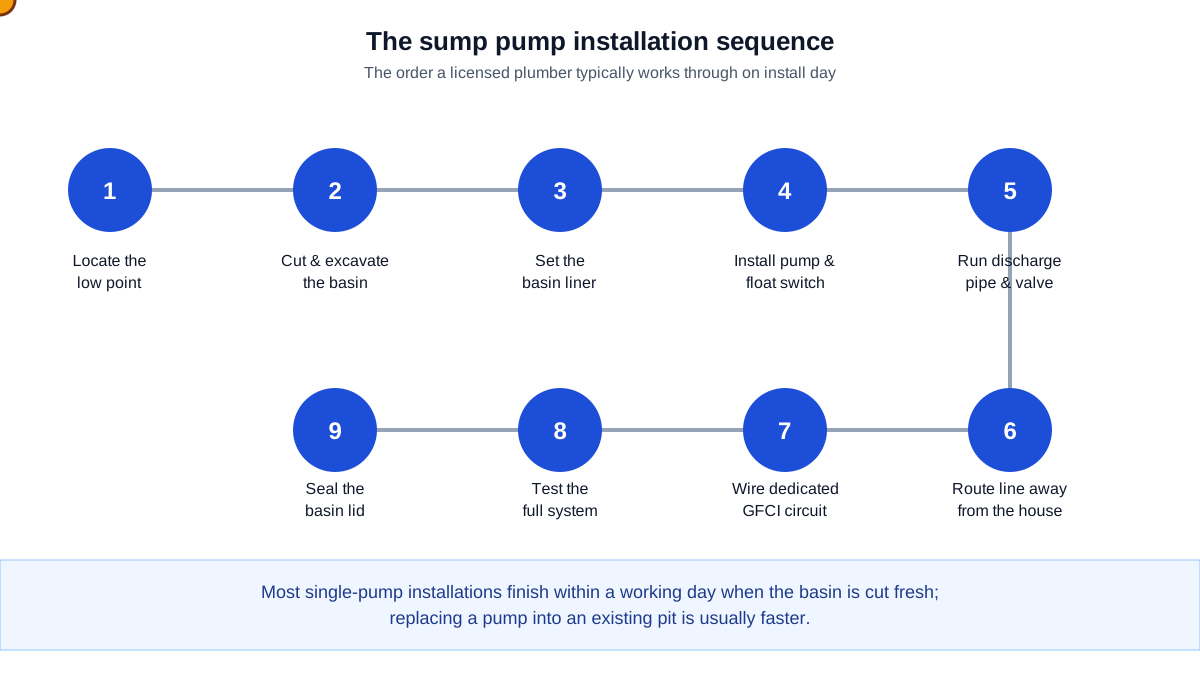
A professional sump pump installation follows a fairly consistent sequence, whether the pit already exists or has to be cut from scratch. Here is the order a licensed plumber typically works through:
Locate the lowest point in the basement or crawlspace floor, since that is where groundwater collects first and where the pit needs to sit.
Cut and excavate the basin opening through the concrete slab if no pit already exists, removing soil to the depth the basin requires.
Set the basin liner into the hole, backfilling gravel around it so groundwater can flow in through the liner's perforations rather than around it.
Install the pump, pedestal or submersible, and connect the float switch so it triggers at the correct water level.
Run the discharge pipe up from the pump through a check valve, then out through the rim joist or foundation wall.
Route the discharge line away from the foundation outside, to daylight, a dry well, or a storm connection where local code allows it, so the water the pump just removed does not simply drain back toward the house.
Wire the pump to a dedicated, grounded circuit, typically 15 or 20 amps and GFCI-protected, separate from other basement outlets so a tripped breaker elsewhere in the house cannot take the pump down with it.
Test the system by filling the pit and confirming the float switch, pump, and check valve all work together through a full cycle.
Seal the basin lid over the pit to control radon and moisture (the EPA's action level for radon is 4 picocuries per liter, and a sealed lid keeps soil gas from being drawn up through an open pit), and patch the surrounding concrete.
Most single-pump installations finish within a working day when the basin is being cut fresh; replacing a pump into an existing pit is usually faster. Adding a battery backup pump or rerouting a discharge line that was never installed correctly can add time, which is one more reason a plumber's on-site look matters more than a phone estimate.
The order a licensed plumber typically follows on install day; most single-pump jobs finish within a working day.
Can You Install Your Own Sump Pump?
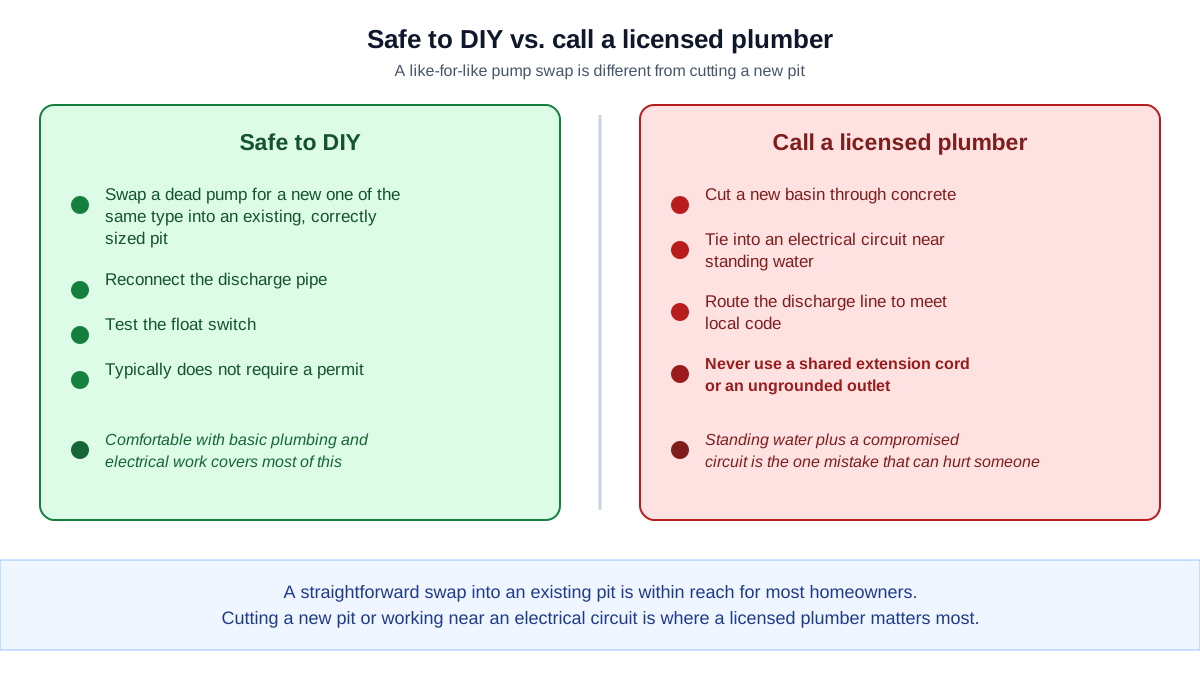
Some homeowners handle sump pump replacement into an existing, correctly sized pit themselves: swapping a dead pump for a new one of the same type, reconnecting the discharge pipe, and testing the float switch is within reach for anyone comfortable with basic plumbing and electrical work. Kits sold for exactly this purpose are common at home centers, and a straightforward swap does not typically require a permit.
Cutting a new pit, though, is a different job. It means breaking and removing concrete, digging below the slab, and often tying into an electrical circuit that has to be both grounded and, in most jurisdictions, protected the right way given how close it sits to standing water. Get this wrong and the failure mode is not a dry basement that stays dry, it is a pump that trips a breaker at the worst possible moment or, worse, an electrical hazard sitting in a pit that fills with water during exactly the storm you installed the pump to handle.
Never plug a sump pump into a shared extension cord or an ungrounded outlet: the combination of standing water and a compromised electrical circuit is the one mistake in this whole job that can genuinely hurt someone, not just cost money.
Routing the discharge line correctly is the other place DIY installs commonly go wrong. A line that empties too close to the foundation just recirculates the same water back toward the house, and a line that is not sloped or protected against freezing in cold climates can back up and force the pump to run against a blocked pipe. If you are unsure whether your discharge routing meets your local code, or the job involves cutting a new pit rather than swapping an existing pump, a licensed plumber that serves your area is worth the call before you start cutting concrete. Our guide to choosing a licensed plumber covers what to check before anyone touches your home's plumbing or electrical systems.
A straightforward pump swap is within reach for most homeowners; cutting concrete and wiring near water is not.
Battery Backup, Water-Powered and Generator Options
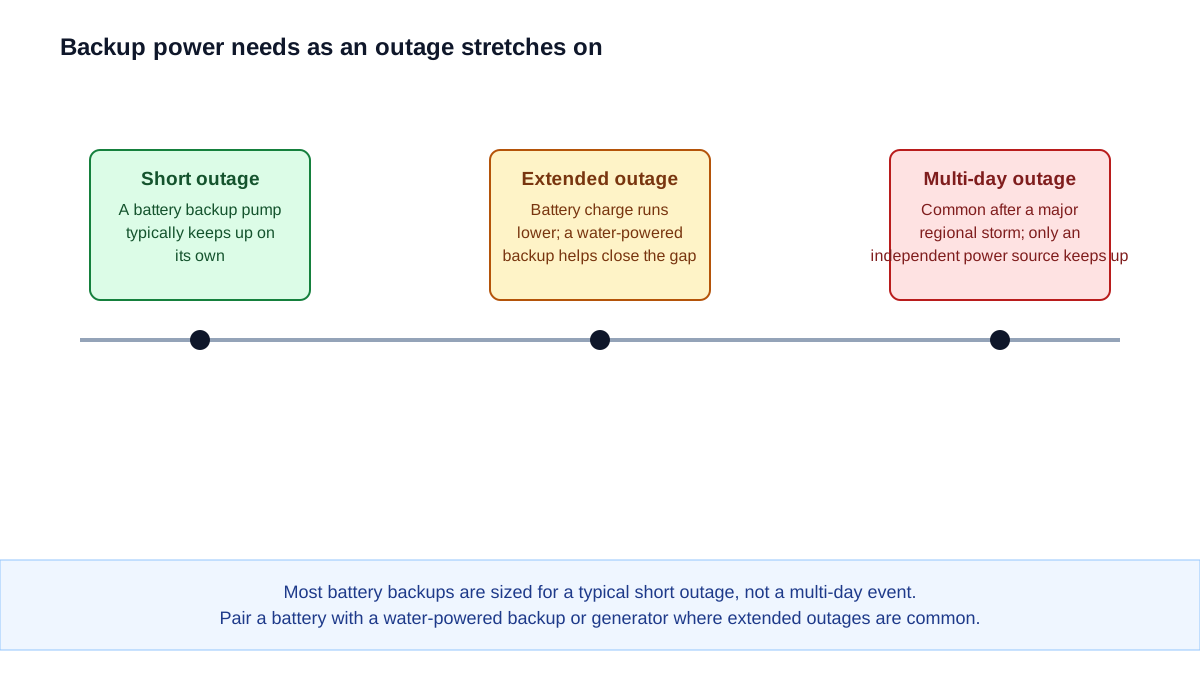
Wiring a pump only to household power leaves it doing exactly nothing during the power outage that often accompanies the storm serious enough to flood a basement in the first place. That gap is why battery backup sump pump systems exist, and why they are worth serious consideration rather than an optional extra.
The battery backup pump sits alongside the primary pump in the same pit, wired to a dedicated battery that keeps it running when the power is out. It is the most common backup option, needs no separate water or gas connection, and the battery itself needs periodic testing and eventual replacement to stay reliable, the same way a smoke detector battery does.
Municipal water pressure itself powers the water-powered backup pump option, which creates suction that pulls water out of the pit with no battery and no electricity required at all. It only works on a home connected to municipal water with adequate pressure, will not function on well water, and uses more water from the supply line than most homeowners expect, worth knowing before choosing it.
For whole-home coverage rather than just the pump, a standby generator keeps everything in the house running through an extended outage, at a scope and cost well beyond a sump-pump-only backup. It is the right answer for a household already considering whole-home backup power for other reasons, less so as a solution purchased just for the pump.
Backup type
Power source
Best fit
Main limitation
Battery backup pump
Dedicated battery
Most homes, especially shorter outages
Battery needs periodic testing and replacement
Water-powered backup
Municipal water pressure
Homes on municipal water with strong pressure
Will not work on a well; uses supply water
Standby generator
Fuel-powered generator
Households wanting whole-home backup, not just the pump
Largest scope and complexity of the three options
Why a battery backup alone may not be enough where multi-day outages are common.
Most battery backups are sized to cover a typical short outage, not a multi-day event. In regions where extended outages after a major storm are common, pairing a battery backup with a water-powered backup, or moving toward a standby generator, closes the gap that a battery alone cannot.
What Sump Pump Installation Costs
We are not going to hand you a made-up national average for sump pump cost, because the data pack behind this guide does not include a verified national cost survey specific to sump pump installation the way it does for some other plumbing jobs. What we can do is walk through exactly what determines your price, so the written estimate you get actually makes sense line by line. That price also moves with things a phone call cannot see: your region's labor rates, how hard the pit is to access, and what a plumber actually finds once the slab is open, whether that is clean soil and a straightforward run or a collapsed drain tile that turns a half-day job into two.
Cost factor
Why it moves the price
Source
New pit vs. existing pit
Cutting and excavating a new basin through concrete adds labor and disposal that a straight pump swap into an existing pit does not
Written local estimate
Pedestal vs. submersible pump
Unit and installation labor differ between the two designs
Written local estimate
Backup system added
A battery, water-powered, or generator backup is additional equipment and labor on top of the primary pump
Written local estimate
Discharge line routing
A short run to daylight costs less than a long trenched line to the street or a dry well
Written local estimate
Electrical work required
Running a new dedicated circuit costs more than tying into an existing outlet that already meets code
Written local estimate
Permit and inspection
Local jurisdictions vary on whether a permit is required for this scope of work and what it costs
Written local estimate
Ask any plumber quoting the job to itemize the pump and basin, the backup system if you are adding one, the discharge line work, the electrical work, and any permit fee as separate line items rather than one lump sum. That breakdown is what lets you compare two estimates fairly and see exactly what you are paying for. A written local estimate, not a number pulled off the internet, is the only figure worth planning a budget around, since pit depth, soil conditions, discharge distance, and local labor rates all vary too much for a single national number to mean much for your specific house. Everything in the table above is a cost driver, not a quote, and none of it substitutes for that written estimate.
Safety, Permits and Hiring a Licensed Plumber
Sump pump installation is not typically an emergency in the way a burst pipe or a gas leak is, but two situations change that. If water is actively rising in your basement right now and an existing pump has failed or was never there, that is an active flooding event, not a maintenance question, and it is worth acting on immediately: unplug any submerged electrical equipment from a dry, safe distance rather than reaching into standing water, and if the water is still coming in, call 888-854-0126 and describe what you are seeing to a plumber that serves your area. If the outlets or breaker panel themselves are wet or partly underwater, stay out of that room and call an electrician or your utility before you touch anything electrical, not after. The EPA notes that mold can start growing on wet material within 24 to 48 hours, one more reason an active flooding event is worth treating as urgent rather than something to mop up over the weekend.
Cutting concrete and working near an electrical circuit are the two parts of this job most worth a licensed professional rather than a first attempt. Most states require a licensed plumber for work that ties into the home's plumbing and, depending on the scope, an electrician or a plumber certified for the electrical portion for the dedicated circuit. Ask any installer for proof of license and current liability insurance before work starts; most state plumbing or contractor licensing boards run a free online lookup where you can verify a license number is active before anyone touches your home, and get the discharge routing and permit requirements confirmed in writing rather than assumed.
Choosing who does the work matters as much as the pump itself. Look for a plumber that serves your area who is willing to explain pit sizing, pump selection, and discharge routing before you commit, not just quote a price over the phone. A written estimate that itemizes each part of the job, the kind described in the cost section above, is one of the clearest signs you are dealing with someone who does this correctly and often. You can reach a plumber that serves your area at 888-854-0126 to talk through what your specific basement needs before scheduling anything. If the flooding already reached carpet, drywall, or furniture before the new pump went in, that cleanup is a separate job from the plumbing itself: look for a restoration contractor certified by the IICRC (Institute of Inspection, Cleaning and Restoration Certification) rather than assuming a shop-vac and a few box fans will finish the job. If standing water is already spreading beyond what a wet-dry vacuum can handle, our guide on when you actually need an emergency plumber covers the decision between an after-hours call and one that can wait until morning.
Sump Pump Maintenance and Regional Considerations
A sump pump that gets tested once and forgotten is exactly the pump that fails during the storm it was installed for. Most submersible pumps run for roughly 7 to 10 years before the motor wears out, and a short maintenance routine, done a couple of times a year, catches most failures well before that point.
Test the float switch by pouring water into the pit until the pump kicks on, and confirm it shuts off cleanly once the level drops.
Clean the pit of grit, gravel, and debris that can jam a float switch or clog an intake screen over time.
Check the discharge line outside for blockage, disconnection, or a line that has settled and no longer slopes away from the house.
Inspect the check valve for proper seating, since a valve stuck open lets water run back into the pit and forces the pump to short-cycle.
If you have a battery backup sump pump, test the battery on its own, not just the primary pump, since the two can fail independently.
Where you live changes what to watch for most closely. In the freeze belt, states across the northern tier where hard winters are routine, a discharge line that empties too close to the house can freeze solid once temperatures drop to 32 degrees Fahrenheit or below and back up, which is exactly what a properly routed line to daylight or a dry well is meant to prevent; check that line before the first hard freeze each year. Along the hurricane and tropical storm coast, extended power outages after a major storm are the bigger risk, which is where a battery backup alone tends to fall short and a water-powered backup or generator closes the gap. In regions with a naturally high water table or heavy clay soil, the pump runs more often year-round rather than only after storms, which shortens the practical service interval between checks and makes a working backup system less optional than it is elsewhere.
Region type
What matters most
Why
Freeze belt (northern tier)
Discharge line routing and freeze protection
A frozen discharge line backs up and can stall the pump during a winter thaw event
Hurricane and tropical storm coast
Backup power that survives multi-day outages
Major storms often knock out power for longer than a battery alone is built to cover
High water table or clay-heavy soil
Pump durability and shorter check intervals
The pump cycles more often year-round, not just after heavy weather
None of this replaces a professional installation done correctly the first time, but it is what keeps a correctly installed pump working when the day finally comes that you actually need it. Most of it fits naturally into the kind of seasonal walkthrough covered in our plumbing maintenance checklist, and if a frozen discharge line is a recurring problem where you live, our frozen pipe guide covers cold-weather protection for exposed plumbing in more depth.
Frequently asked questions
What is sump pump installation?+
It is the process of fitting a pump into a basin at the lowest point of a basement or crawlspace floor so it can automatically pump groundwater away from the foundation. The job includes the pit or basin, the pump itself, a check valve, and a discharge line routed outside. A licensed plumber typically completes it in a single working day.
How much does sump pump installation cost?+
There is no reliable single national number to quote, since pricing depends heavily on whether a new pit needs to be cut, the pump type, any backup system added, discharge line length, and electrical work required. Ask a local plumber for a written estimate that itemizes each of those pieces separately so you can see exactly what drives your price.
Can I install my own sump pump?+
Swapping a dead pump for a new one in an existing, correctly sized pit is within reach for many homeowners comfortable with basic plumbing and electrical work. Cutting a new pit, tying into an electrical circuit, and routing a discharge line to meet local code is a different scope of work best left to a licensed plumber.
Does homeowners insurance cover sump pump installation?+
Typically not on its own. A standard homeowners policy generally treats installing a sump pump as a home improvement rather than a covered loss, though some insurers offer optional endorsements specifically for sump pump or water backup failure. Check your policy directly or ask your insurer what a sump pump or water backup endorsement covers.
How long does sump pump installation take?+
A straightforward pump swap into an existing pit is often finished within a few hours. Cutting a new basin through the concrete slab, running a new discharge line, and wiring a dedicated circuit typically fills a full working day. Adding a battery backup pump or a longer discharge run can extend the timeline.
Why do homes need a sump pump?+
A sump pump protects against groundwater pressing up against or under the foundation slab, a problem called hydrostatic pressure, that would otherwise force water through cracks, floor drains, or the joint where the wall meets the floor. Homes on poorly drained soil, with a high water table, or in areas prone to heavy rain or snowmelt need one most.
Why is my sump pump running constantly?+
A pump that never shuts off usually means the check valve is stuck open and letting water flow back into the pit between cycles, the float switch is stuck or miscalibrated, or genuinely high groundwater is keeping the pit full faster than the pump can keep up. Test the float and inspect the check valve first before assuming the pump itself has failed.
Why is my sump pump not working?+
The most common causes are a tripped breaker or unplugged pump, a float switch that is stuck or jammed against the side of the pit, a clogged intake screen, or a motor that has simply reached the end of its service life. Test the float switch by hand and check the power connection before assuming the pump needs replacing.
What happens when a sump pump fails?+
Groundwater that the pump would normally carry outside instead collects in the pit and, once it overflows, spreads across the basement or crawlspace floor. How fast that becomes a real problem depends on the soil, the weather at the time, and whether the failure happens during a heavy rain event or a dry stretch.
Does Lowe's install sump pumps?+
Big-box home improvement stores sell sump pumps and sometimes offer installation coordinated through a local contractor network, but policies vary by store and change over time. Call your local store directly to confirm current installation options, or work directly with a licensed plumber who can also handle pit cutting and electrical work if your job needs it.