Slab leak repair means finding and fixing a water or drain line broken inside or under your home's concrete foundation, then either patching that one spot, rerouting the line through walls or the attic, or lining the pipe with epoxy. A licensed plumber confirms the leak electronically first; cost and method depend on pipe age, material, and how many leaks the slab actually has.
Picture a slab-on-grade ranch house from the late 1980s, copper supply lines run straight through four inches of concrete. One morning the water bill jumps for no obvious reason, the hallway carpet feels warm underfoot, and there's a faint hiss coming from behind the water heater closet wall. That's a textbook slab leak announcing itself, and it's one of the few plumbing problems where waiting a week can turn into a torn-up floor instead of a small repair bill.
This guide walks through what slab leak repair actually involves: how a plumber confirms the leak before anyone touches a jackhammer, the repair paths a good crew should offer you, what actually drives the price up or down, and where slab leak insurance coverage typically starts and stops. Every figure here traces to a named source. Where we don't have a verified number specific to slab leak work, we say so directly instead of guessing at one.
What a Slab Leak Actually Is
A slab leak is a break in a water supply line, sometimes a drain line, that runs either under the concrete foundation slab or within it, poured into the concrete when the house was built. Most homes built before the mid-1990s with slab construction ran copper supply pipes, usually 1/2-inch branch lines off a 3/4-inch trunk, directly through or under that concrete, and copper doesn't hold up forever against damp soil and decades of slight ground movement. Newer homes more often use PEX tubing, typically 1/2-inch in diameter, routed through a manifold, which lowers the risk considerably but doesn't erase it if a fitting was nicked during the pour.
Some homeowners search this problem as a foundation leak instead, which describes the same event from the foundation's point of view rather than the pipe's. Either term points to the same underlying problem: water escaping somewhere you can't see and usually can't reach without cutting concrete, tunneling underneath the slab, or rerouting the line somewhere else entirely. That last part is what separates a slab leak from every other leak in the house: you're not looking for a wet cabinet under a sink, you're looking for a hidden break under a foundation you can't just open up to check.
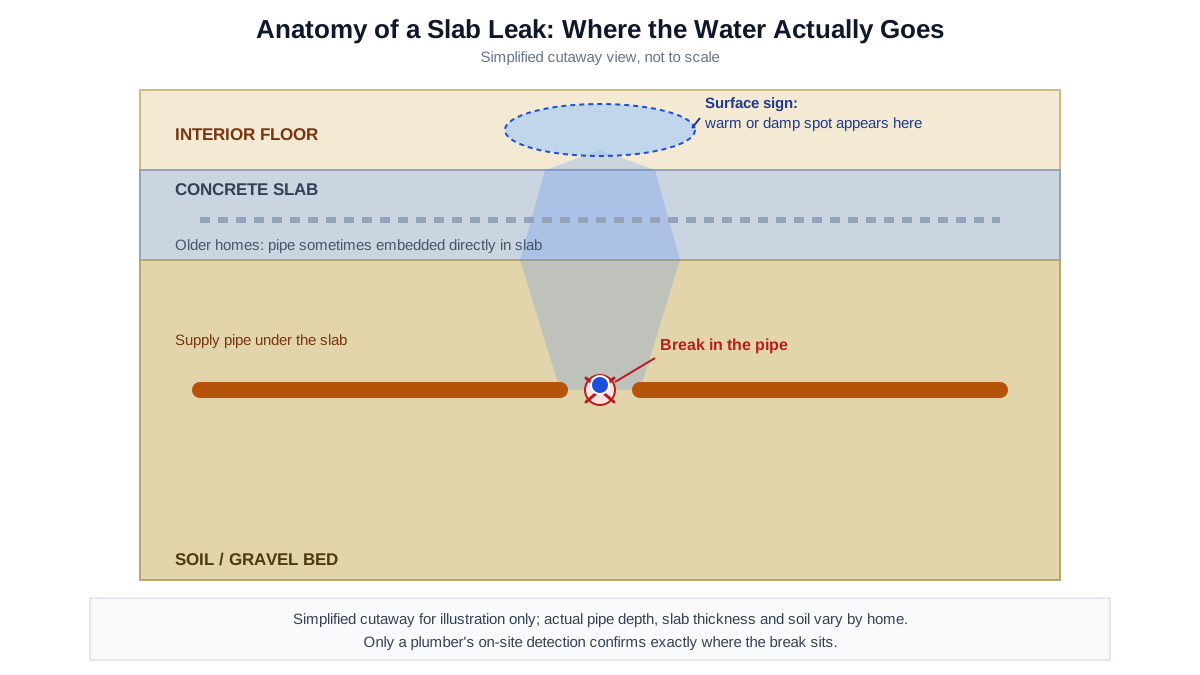
Why a slab leak stays hidden: the break sits under the concrete, and the only visible clue is where the water finally reaches the surface.
The Slab Leak Signs Worth Taking Seriously
Few homeowners catch a slab leak from an actual puddle. More often it's a pattern of smaller things that, together, only add up to one explanation. Here are the slab leak signs a plumber hears about most on an initial call:
What you notice
What's likely happening
How urgent
Water bill jumps well above normal with no new usage to explain it
Steady loss from a pressurized supply line
Call this week
A warm or damp patch on the floor with no obvious source
Hot-water line leaking under that spot
Call this week
Sound of running water when every fixture is off
Active leak under pressure
Call now
Baseboards, carpet edges or drywall staying damp or musty
Water has been migrating for a while
Call now
Cracks in tile or slab, or a door that suddenly sticks
Soil under the slab has softened or shifted
Call now, note for insurer
Low water pressure at one fixture only
Leak is bleeding pressure before it reaches that line
Call this week
None of these alone proves a slab leak on its own. A warm spot can just be a sunny window, and a pressure drop can be a worn cartridge in one faucet. That's exactly why the next step is confirmation, not demolition, and it's worth doing before anyone opens a wall or a floor.
What Causes a Slab Leak, Ranked by How Often It's the Reason
Plumbers don't treat every slab leak the same, because the underlying cause changes both the fix and the odds of another leak showing up somewhere else in the same line. Roughly in order of how often each one turns out to be the answer:
Pipe age and material. Copper installed before the mid-1990s is the single biggest factor. Decades of contact with damp, mineral-rich soil thins the pipe wall from the outside until it perforates, a process plumbers usually call soil-side corrosion or electrolysis.
Abrasion from ground movement. Concrete and soil shift slightly with temperature and moisture. A pipe that rubs against rebar, gravel, or the underside of the slab with every seasonal cycle eventually wears a hole at that one contact point.
Poor original installation. A pipe laid with no sand bedding, a kinked run, or a joint that was never fully soldered fails years before the rest of the line around it.
High or fluctuating water pressure. Most homes run comfortably in the 40 to 60 psi range; pressure regularly above 80 psi, the ceiling most plumbing codes treat as the point where a pressure-reducing valve becomes necessary, stresses every joint in the system, and the under-slab section takes that stress with the least room to flex or move.
Dissimilar-metal corrosion. Where copper touches steel rebar or certain soil types directly, a small electrical current forms and eats through the pipe from the outside in, the same basic mechanism as a boat hull corroding near the propeller.
How a Plumber Confirms a Slab Leak, Step by Step
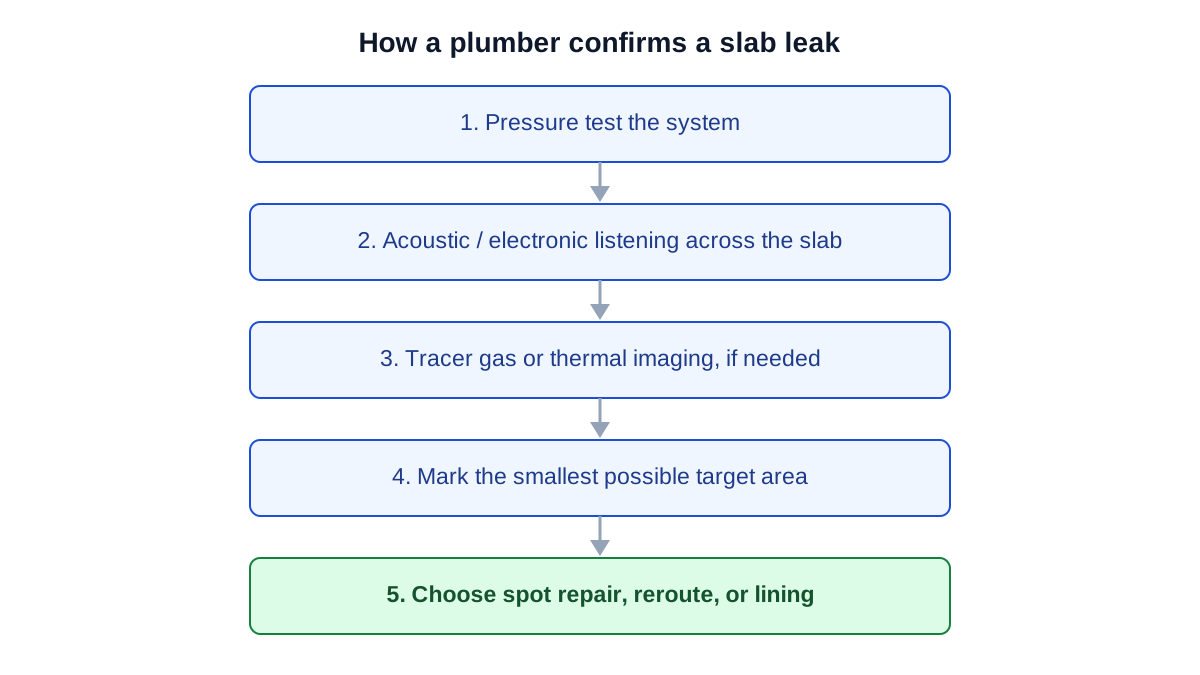
A competent plumber doesn't guess where to cut. Slab leak detection is its own specialty, and it usually follows a fairly consistent sequence:
Pressure test the system. The plumber isolates the house from the street supply and watches whether pressure holds; a slow drop confirms a leak somewhere in the pressurized lines, not just a running toilet.
Acoustic or electronic listening. A ground microphone or listening disc is moved across the slab in a grid pattern. A pressurized leak makes a distinct hiss that's loudest directly above the break.
Tracer gas, when sound alone isn't conclusive. Nitrogen mixed with a small amount of hydrogen is pushed through the line; a handheld sensor picks up gas escaping through the slab, which works even in noisy or multi-story homes.
Thermal imaging on hot-water lines. An infrared camera can spot the warm plume rising through the slab and drywall, narrowing the search area before anyone opens a wall.
Video inspection on drain lines. If the leak is on the drain side rather than the pressurized supply side, a small camera run through a cleanout shows cracks, offset joints, or root intrusion directly.
Mark and confirm the smallest possible target area, so a spot repair opens only that section of slab instead of guessing at a wider one.
How a plumber narrows down a slab leak before opening any concrete.
This matters for your wallet as much as your floor. A plumber who skips proper detection and opens concrete based on a guess can miss the actual leak by several feet, which means a second hole, a second patch, and a bill that reflects both.
Your Repair Options: Spot Repair, Reroute or Epoxy Lining
Once the leak is confirmed and located, a good plumber should walk you through more than one path, not just quote the single job their crew happens to prefer that week.
Method
What it involves
Disruption
Best fit
Spot repair
Cut a small section of slab or wall directly over the confirmed leak, remove the bad section of pipe, splice in new pipe
One access hole, often closed the same day
A single, isolated leak in an otherwise sound line
Reroute (repipe around it)
Abandon the damaged under-slab section, run new PEX or copper through the attic, a wall chase, or an exterior wall instead
No slab cutting; some wall or ceiling access
Leak is hard to reach, or other lines in the slab are best left undisturbed
Epoxy pipe lining (trenchless)
Coat the inside of the existing line with an epoxy barrier, sealing pinholes without removing the old pipe
Minimal; usually a few access points, no trenching
Multiple small pinhole leaks in an aging copper system, not a full break
Full repipe
Replace the home's entire supply system, abandoning the slab lines completely
Highest; multiple walls opened over several days
Copper system decades old with repeat leaks in different spots
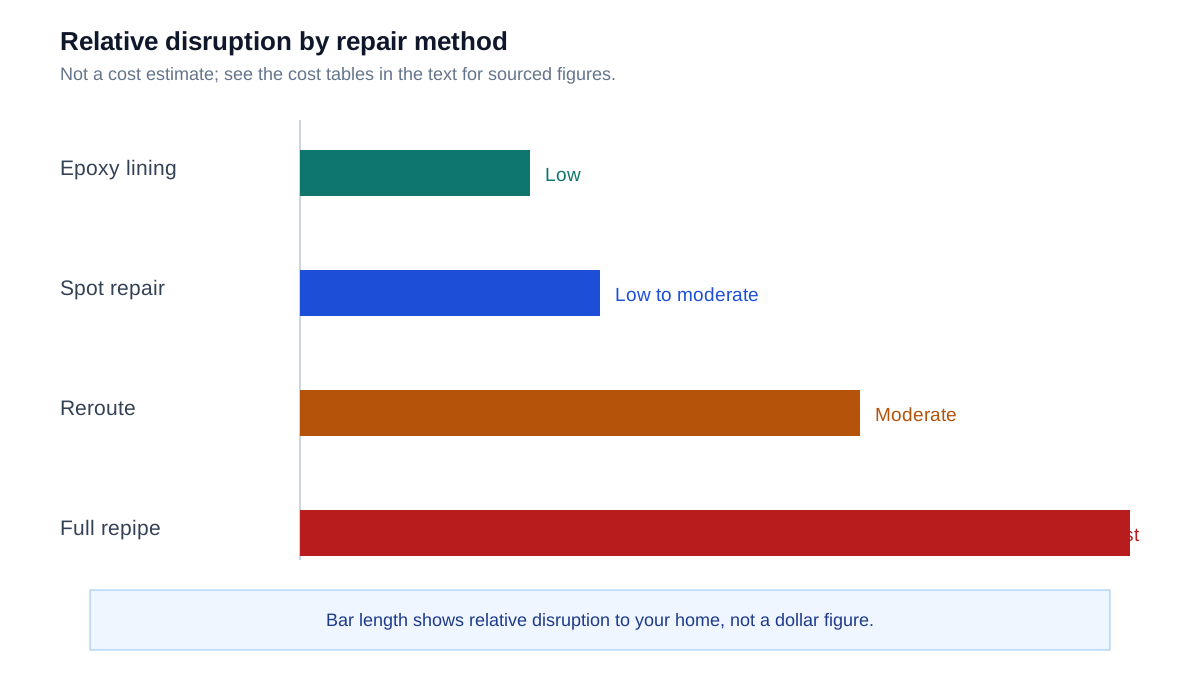
Relative disruption to your home by repair method.
A plumber who only offers spot repair on a system that's already had two prior leaks elsewhere is treating the symptom, not the pipe underneath it. Ask directly whether yours looks like an isolated failure or the first of several. The answer should follow from the pipe's age and material, not a guess made on the spot.
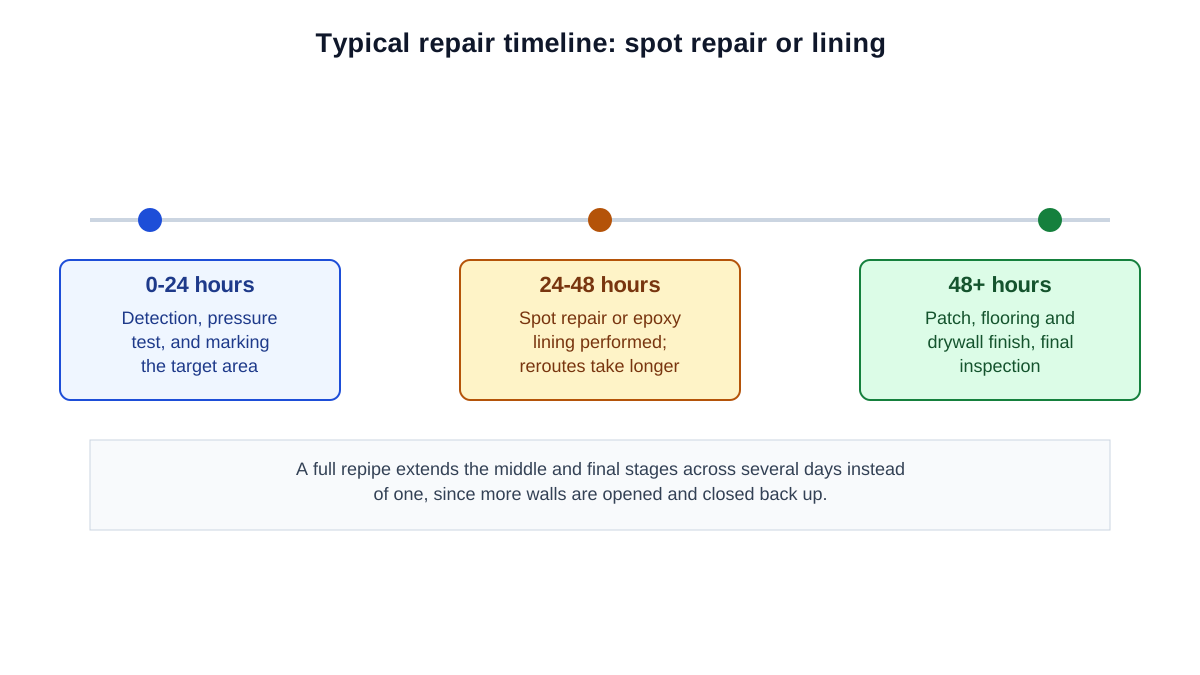
Most jobs follow a similar shape once the method is chosen: detection and marking typically fill the first 24 hours, the spot repair or lining itself is usually finished within the next 24 to 48 hours, and a reroute or full repipe stretches that middle stage across several additional days because more walls come open. The timeline below shows what a typical spot repair or lining job looks like from the first call to the floor being usable again.
What a typical spot repair or lining job looks like from first call to finished floor.
What You Can Safely Do Yourself, and Where It Stops
There's a real DIY tier here, it's just a short one. If you suspect a slab leak, this is the sequence worth working through before anyone shows up:
Locate your main shutoff valve now, before you need it in a hurry, usually near the water meter or where the line enters the house.
Turn off the water heater if the warm spot suggests a hot-water line, so you're not heating water that's draining straight into the ground. Most residential heaters are set around 120°F, which is exactly why a hot-line break tends to show up as a warm patch on the floor rather than a puddle.
Check your water meter with every fixture in the house off. If the dial is still turning, that confirms an active leak somewhere in the pressurized system.
Photograph any visible cracking, staining, or flooring damage before it's repaired, for an insurance file if you end up needing one.
Call a licensed plumber to schedule detection, not a general contractor and not a foundation company, until the leak itself has been located and stopped.
Do not rent a jackhammer and open the slab yourself: cutting into a post-tension slab in the wrong spot can sever a structural cable under tension, and diy slab leak repair on a pressurized line risks flooding the space below faster than you can patch it.
If the water is still coming in and shutting the main valve doesn't stop it, call 888-854-0126 and describe exactly what you're seeing, the sound of running water, a wet spot, a spiking meter, so whoever answers can get the right kind of crew moving instead of the wrong one. Our guide on when you actually need an emergency plumber covers the line between a call that can wait and one that can't. If what you're actually dealing with is a burst fitting under a sink rather than something under the slab, our pipe burst under the sink guide is the faster read.
What Slab Leak Repair Costs, and What Actually Moves the Price
Here's the honest answer up front: our data doesn't include a verified national survey specifically for slab leak repair cost or slab leak detection cost. The major cost-survey publishers we track price water heaters, drain cleaning, and sewer line work in detail, but they don't break out slab leak jobs as their own category. Anyone who gives you a single confident number without seeing your house and your pipe is guessing. What we can tell you honestly is what drives the number up or down, plus what comparable underground plumbing work costs nationally, as a sense of scale.
What drives the price
Pushes cost down
Pushes cost up
Number of leaks
One isolated pinhole
Multiple leaks across an old copper system
Access
Leak near an exterior wall or crawlspace edge
Leak under a load-bearing interior wall or a finished basement
Repair method
Epoxy lining, no digging required
Full repipe with multiple walls opened
Flooring above
Concrete or unfinished slab
Hardwood, tile, or stone that has to be matched and replaced
Slab type
Standard reinforced slab
Post-tension slab, which needs an engineer to locate cables before cutting
How We Got These Numbers
For scale, here's what national cost surveys report for comparable trenchless and point-repair plumbing work. These are not slab-leak-specific quotes, but they cover the same categories of labor and equipment a slab leak job draws on, so they're useful for calibration even though they price a different part of the plumbing system.
Comparable job
Typical national range
Source
Video / camera line inspection
$100 - $800
Fixr, cost to unclog a main sewer line, 2025
Trenchless pipe lining (CIPP), per linear foot
$90 - $250
HomeAdvisor, sewer main repair cost guide, 2026
Trenchless pipe bursting, per linear foot
$60 - $200
HomeAdvisor, sewer main repair cost guide, 2026
Spot (dig-and-patch) pipe repair
$600 - $1,050
HomeAdvisor, sewer main repair cost guide, 2026
Plumber service call / diagnostic visit
$50 - $200+
HomeGuide, main sewer line cleaning cost, 2025
Open trench excavation, per linear foot
$4 - $12
HomeAdvisor, sewer main repair cost guide, 2026
Treat that second table as context, not a quote calculator. It prices sewer-line work, and a slab leak on a pressurized supply line involves different detection equipment and often floor or wall finish repair on top of the plumbing itself. Our sewer line repair guide breaks those trenchless numbers down further if that's the job you're actually pricing. The only reliable number for your own average slab leak repair cost comes from a plumber who has located your leak in person and seen what sits above it.
Slab Leak Insurance: What Your Policy Usually Covers and Where It Stops
A standard HO-3 homeowners policy typically draws a line straight through a slab leak claim. The sudden and accidental water damage, warped flooring, wet drywall, mold remediation tied to that water, is usually covered, while the plumbing repair that caused it usually is not. That split trips people up every year, because it means an insurer may write a check for the flooring crew and decline the plumber's invoice on the very same claim.
Coverage generally hinges on how the leak happened, not just that it happened:
Sudden pipe failure, a pinhole that opened without warning, is the scenario closest to being covered for the resulting damage.
Gradual leaks, the kind that show up as a slowly rising water bill over months, are the scenario insurers most often deny, on the reasoning that ongoing damage should have been caught and stopped sooner.
Excavation and slab-cutting needed to reach the pipe is sometimes a named coverage, often called tear-out or access coverage, and sometimes excluded entirely. This varies by carrier and by state, so it's worth reading your declarations page instead of assuming either way.
What to Document Before You File
Document the damage thoroughly before cleanup starts: photos of the wet area, the plumber's written diagnosis of cause and location, and a copy of the utility bill showing the usage spike if that's what tipped you off in the first place. It's the same groundwork groups like the Insurance Information Institute recommend for any water-damage claim, and it puts you in a stronger position if the adjuster pushes back. Ask your adjuster specifically whether the policy covers the plumbing repair itself (rare), the water damage from the leak (common), and the cost to access the pipe (varies by carrier). If your adjuster and your plumber disagree on cause, a second written opinion is reasonable, and a public adjuster is worth considering if the claim is large enough to justify their fee.
If the standing water sat long enough to raise mold concerns, EPA guidance on mold cleanup and the IICRC's water damage restoration standards, both listed in the sources below, are useful starting points for what a legitimate remediation job should look like, separate from the plumbing fix itself.
What a standard HO-3 policy tends to cover after a slab leak, and where it typically stops. Coverage varies by carrier and state, so check your declarations page.
Choosing a Plumber for Slab Leak Work
Slab leak jobs reward experience more than most plumbing calls, because a wrong diagnosis means cutting concrete in the wrong place. A few filters separate a specialist from a generalist who's simply willing to try:
Ask what detection equipment they own. Acoustic listening discs and a tracer-gas kit, not just "we'll listen for it." A plumber who owns the equipment does this often enough to be good at it.
Verify state licensing directly through your state's plumbing or contractor board rather than taking a business card's word for it. Every state that licenses plumbers publishes a free lookup tool.
Ask for proof of liability insurance, not just a license number, especially before anyone cuts into a slab inside your home.
Ask whether they'll offer more than one repair method. A crew that only quotes a full repipe on a single isolated pinhole, or only quotes a spot repair on a decades-old system with a history of leaks, is quoting their preferred job rather than necessarily yours.
Get the estimate in writing before work starts. It should itemize the detection method used, the repair method chosen, the area of slab or wall to be opened, and what's excluded, like flooring replacement, drywall finish, or permit fees.
Our full guide to choosing a licensed plumber covers the red flags worth watching for on any job, not just this one. If you're comparing quotes and want to reach a plumber that serves your area to talk through a suspected slab leak, 888-854-0126 connects you with one who can walk through detection options over the phone before anyone sets foot in your house.
Preventing the Next Slab Leak, by Pipe Material and Habit
You can't prevent a slab leak the way you'd prevent a clogged drain, but you can lower the odds and catch the next one faster:
Install a pressure-reducing valve if your static water pressure runs above 80 psi. Sustained high pressure is one of the few risk factors a homeowner can actually control directly.
Watch your water bill month to month, not just when it feels unusually high. A slow upward trend is often the earliest signal, well before any wet spot appears on the floor.
Consider a leak-detection sensor near known risk areas, the water heater closet, the main shutoff, or any spot with prior repair history, that alerts you to a pressure drop or moisture before it becomes a soaked floor.
Know your pipe material and age. If you're in a home built before the mid-1990s with copper under a slab, it's worth budgeting mentally for the possibility the same way you'd budget for a roof: not urgent, but not indefinite either.
None of this replaces a proper walkthrough of the rest of the house. Our seasonal plumbing maintenance checklist covers the habits that catch small problems before they become slab-sized ones.
Regional Notes: Expansive Soil, Freeze Belt, and Older Copper Systems
Slab leak risk isn't distributed evenly across the country, and the reasons differ by region even though the plumbing fix is largely the same everywhere.
In the Sun Belt and Gulf Coast, especially areas with expansive clay soils, the ground itself does more of the work. Clay swells when wet and shrinks hard when dry, and that repeated movement flexes the slab and any pipe running through or under it. Homes in these regions also tend to be slab-on-grade rather than basement or crawlspace construction, which means every supply line in the house is a slab-leak candidate instead of an easily accessible one.
Freeze-belt states see a different mechanism behind the same problem: the more common under-slab failure there is a joint stressed by ground movement during a hard freeze-thaw cycle, soil repeatedly crossing the 32°F line where it expands and contracts. The leak itself still shows up the same way no matter what triggered it, a warm spot, a pressure drop, a rising bill.
Across the country, the single biggest predictor is still simpler than climate: a home built before the mid-1990s with copper supply lines under the slab carries meaningfully more risk than a newer PEX system on a manifold, no matter which state it sits in.
Frequently asked questions
How much does slab leak repair cost?+
There's no single reliable national figure, because the major cost-survey publishers we track don't price slab leak jobs as their own category. What drives the number is the repair method, how many leaks there are, and what sits above the slab. Comparable trenchless plumbing work runs roughly $60 to $250 per linear foot nationally; a local written estimate is the only number worth planning around.
How long does slab leak repair take?+
A spot repair or epoxy lining job is often finished in a single day once the leak is located, with the access hole patched shortly after. A reroute or full repipe typically runs several days because of the wall and drywall work involved. Detection itself usually adds a separate visit, or the first hours of the same appointment, before any repair work starts.
What is a slab leak?+
A slab leak is a break in a water or drain line that runs under or through a home's concrete foundation slab, most often in older copper supply lines. It's sometimes called a foundation leak instead. What makes it different from any other household leak is access: you can't just open a cabinet to see it, and reaching it usually means cutting concrete, tunneling under the slab, or rerouting the line elsewhere.
How do you fix a slab leak?+
Once a plumber confirms the leak's location electronically, there are usually three paths: a spot repair that opens a small section of slab or wall over the leak, a reroute that abandons the damaged section and runs new pipe through the attic or a wall instead, or epoxy pipe lining that seals pinhole leaks from the inside without removing the old pipe. A full repipe replaces the whole system when a copper line has failed more than once.
How much does slab leak detection cost?+
We don't have a verified national figure specific to slab leak detection. As a point of comparison, a plumber's general service call or diagnostic visit nationally runs about $50 to $200 or more, and a video line inspection for comparable underground work runs $100 to $800. Ask upfront whether the detection visit is a flat fee or gets credited toward the repair if you hire that same plumber.
How does slab leak detection work?+
A plumber typically starts with a pressure test to confirm an active leak, then narrows the location with acoustic listening equipment moved across the slab in a grid. If sound alone isn't conclusive, tracer gas or thermal imaging on hot-water lines can pinpoint the spot more precisely. The goal is marking the smallest possible target area before anyone opens concrete.
Does insurance cover slab leak repairs?+
Usually not the plumbing repair itself, but the resulting water damage often is, if the leak was sudden rather than gradual. A standard HO-3 policy tends to cover damaged flooring, drywall, and mold remediation tied to a sudden pipe failure, while excluding damage from a slow leak that built up over months. Whether the cost of accessing the pipe is covered varies by carrier, so check your declarations page.
Is a cracked slab the same thing as a slab leak?+
Not necessarily. A cracked slab can be a purely structural issue tied to soil movement or settling, with no plumbing involved at all, while a slab leak is specifically a broken water or drain line under or in the concrete. The two sometimes cause each other, since a long-running leak can soften soil and contribute to cracking, but a foundation specialist and a plumber solve different halves of that problem.
Can I fix a slab leak myself?+
Only the early steps: finding your main shutoff valve, turning it off if the leak is active, and checking your water meter to confirm a leak exists. Actually opening the slab or repairing a pressurized line under it is not a do-it-yourself job. Cutting into the wrong spot on a post-tension slab can sever a structural cable, and a mistaken cut can flood the space below faster than a homeowner can manage.
What's the difference between spot repair and rerouting a slab leak?+
Spot repair cuts a small opening directly over the confirmed leak and replaces just that section of pipe, which keeps disruption low but only works well for a single, isolated break. Rerouting abandons the damaged under-slab section entirely and runs new pipe through the attic, a wall chase, or an exterior wall, avoiding slab cutting altogether at the cost of more wall or ceiling access.