Choosing a licensed plumber comes down to four checks before anyone touches your pipes: a current state license you can verify online, proof of liability insurance, a relevant certification like backflow-prevention training for anything touching your main supply, and a written, itemized estimate before work starts. Skip any one of those, and you are gambling on a stranger's word instead of hiring a real local plumber.
Type "plumber near me" into a phone at ten at night with water coming through a ceiling and you get a wall of ads, a map full of five-star ratings that all sound the same, and no fast way to tell a fifteen-year licensed plumber apart from two guys with a van and a magnetic sign. Most bad plumbing experiences do not start with the leak. They start with a rushed decision, made under pressure, based on nothing more than who answered the phone first or whose truck looked cleanest in the driveway.
This guide is the checklist that closes that gap: how to tell a real local plumber from a risky one, how to verify a license and insurance in the ten minutes before anyone opens a wall, what a fair written estimate actually contains, and what the work tends to cost nationally so a quote can be checked against something more solid than a gut feeling. If you already know the job and just want someone on the way, you can reach a licensed plumber that serves your area at 888-854-0126 and describe what you are seeing. Everyone else, keep reading before you dial anyone.
Why the Plumber Matters More Than the Fixture Brand
Homeowners spend more time comparing faucet finishes and water heater brands than they spend vetting the person installing either one. That is backward. A $900 water heater set by a crew that sized the expansion tank correctly, vented it to code, confirmed the temperature-and-pressure relief valve is rated to open at 150 psi or 210°F, and pressure-tested the lines will outlast a $2,000 unit installed by a crew that skipped the permit and eyeballed the rest. The fixture is a commodity. The licensed plumber holding the wrench is where the job actually succeeds or fails.
Plumbing mistakes are also unusually good at hiding. A drain trap installed without the code-standard 1/4-inch-per-foot slope, a cross-connection between a hose bib and the potable supply, or a sewer line repaired without a permit inspection will not show up on the invoice. It shows up eight months later as a sewer-gas smell, a failed home inspection at resale, or a burst fitting behind drywall that a homeowner's insurer questions once they learn the work was never permitted. Picking the right plumber the first time is cheaper than living with someone else's shortcut for the next decade, or paying twice to have it corrected.
None of this means every job needs a specialist. A dripping faucet washer or a running toilet flapper is well within reach for most homeowners, and the guide to fixing a dripping faucet walks through it. The line worth knowing is where a simple fix ends and a code-regulated repair begins, and that line is exactly what the next few sections cover.
What Actually Separates a Good Plumber From a Bad One
Ranked roughly by how much each factor predicts a good outcome: a current state license tied to a real, findable business rather than a name that changes every year, and proof of liability insurance the company will put in writing before anyone shows up. Just behind those two, technicians who hold a relevant credential such as backflow-prevention certification for anything touching your main supply, an actual look at the problem — sometimes with a camera — before quoting a full sewer or repipe job rather than a phone-only price, and a written, itemized estimate instead of a number scribbled on the back of a business card.
Star ratings matter less than most people assume. A company sitting on 500 reviews and a 4.7 average can still be the wrong pick for your specific job if nearly all of those reviews describe faucet installs and none describe a sewer line replacement. Read a handful of the detailed, recent reviews that describe work similar to yours instead of trusting the average alone.
One distinction is worth understanding early: the best plumber for a same-day clogged drain is not automatically the right call for a full sewer line replacement or a whole-house repipe. Bigger, code-regulated jobs deserve a company that can show you a permit history and a real diagnosis, not just a fast truck roll.
How to Vet a Plumber, Step by Step
This is the order that actually protects you, done before a technician opens a wall or a contract gets signed.
Get two or three names, not one. Ask neighbors with a similar-age house, or search for a local plumber and note which names come up more than once.
Ask for the state license number over the phone, then look it up yourself through your state's licensing board rather than trusting a screenshot.
Ask the office to email a certificate of insurance directly from their insurer, not a photo of a card, and check the expiration date.
Ask which plumber on staff holds backflow-prevention certification or cross-connection control training, and whether it covers the specific system involved.
For a sewer line or slab issue, ask whether they run a camera inspection before quoting a full replacement, not after you have already agreed to one.
Request a written, itemized plumbing estimate: parts and fixture model, labor, permit fees, haul-away of old equipment, and a start date.
Ask whether they pull permits for water heater, sewer, or gas line work, and confirm your city or county actually requires one for the job you are planning.
Compare at least two written estimates side by side before signing anything, using the questions further down this page.
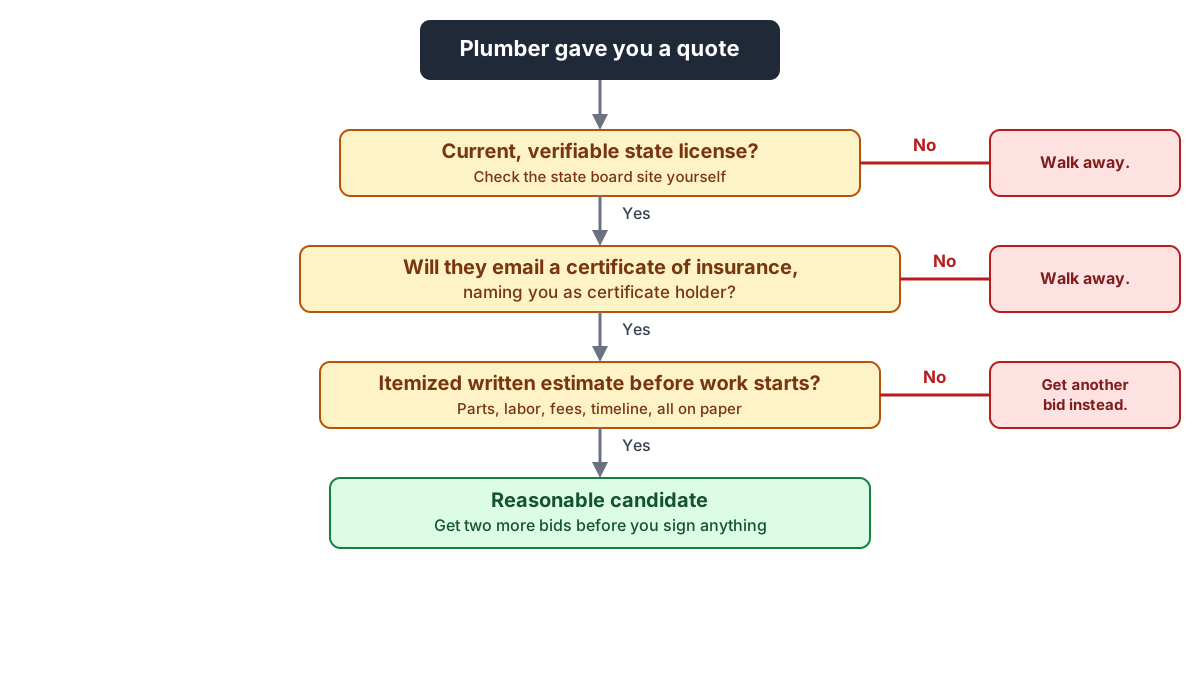
The flowchart below compresses that same sequence into three yes-or-no checks you can run on the first call.Three yes-or-no checks, license, insurance, written estimate, that separate a reasonable candidate from a company to avoid.
Plumber vs. Handyman: When Each One Is Legal
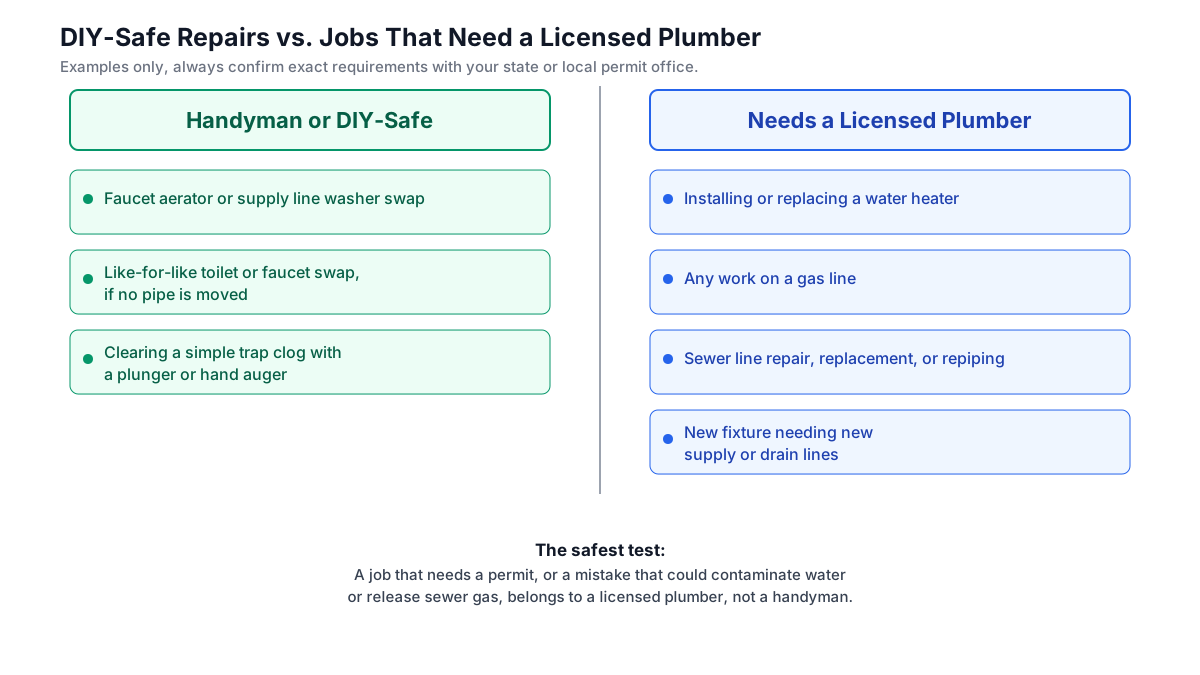
Confusion over plumber vs handyman work comes up constantly, because both can technically show up with a truck and a toolbox, and only one of them is legally allowed to touch certain systems. The general pattern across most states: a handyman can handle small, non-permit jobs that do not open or alter the water supply, the drain-waste-vent system, or a gas line. Anything permanently connected to those systems, or anything a local code office requires a permit for, generally needs a state-licensed plumber, and in many jurisdictions the permit itself cannot legally be pulled by an unlicensed handyman at all. Rules vary by state and by city, so treat the table below as a general pattern to confirm locally, not a legal guarantee for your address.
Task
Typically a handyman job
Typically needs a licensed plumber
Replacing a faucet aerator or supply line washer
Yes, in most states
-
Swapping a like-for-like toilet or faucet fixture
Often, if no pipe is moved
Some states require a plumber regardless
Clearing a simple trap clog with a plunger or hand auger
Yes
-
Installing or replacing a water heater
-
Yes, almost everywhere, usually with a permit
Any work on a gas line
-
Yes, and often a separate gas endorsement
Sewer line repair, replacement, or repiping
-
Yes, permit and inspection required
Installing a new fixture that requires new supply or drain lines
-
Yes in most jurisdictions
The safest test: if the job requires a permit, or if a mistake could contaminate the drinking water supply or release sewer gas into the house, it is a job for a licensed plumber, not a general handyman, no matter how confident either one sounds on the phone.Handyman tasks stay simple and permit-free; anything touching the water supply, drain-waste-vent system, or a gas line legally requires a licensed plumber in most states.
License Tiers and Certifications Worth Asking About
What each credential actually verifies
Plumbing licensing in the United States is handled state by state, not by a single national board, so the exact titles vary. Here is what the credentials that come up most often actually mean.
Credential
Issued by
What it verifies
When it matters most
Journeyman plumber license
State plumbing or contractor licensing board
Passed a trade exam and logged required apprenticeship hours; legally authorized to perform licensed plumbing work
Any permit-required job
Master plumber license
State licensing board
Additional years of logged experience and a harder exam; typically the tier authorized to pull permits and supervise other plumbers
Confirming who can legally pull the permit on a large job
State-approved certifying body, often administered through IAPMO-aligned programs
Technician is trained to test and repair devices that stop contaminated water from siphoning back into the drinking supply
Irrigation systems, boilers, any cross-connection to the potable line
Gas piping / gas fitter endorsement
State licensing board (requirements vary by state)
Separate exam covering gas line sizing, pressure testing, and venting
Any job connecting to a gas line for a water heater, furnace, or range
Backflow-prevention certification covers the technician's training; the device itself typically needs its own recurring check, annually in most jurisdictions, with results reported back to the local water utility or cross-connection control program.
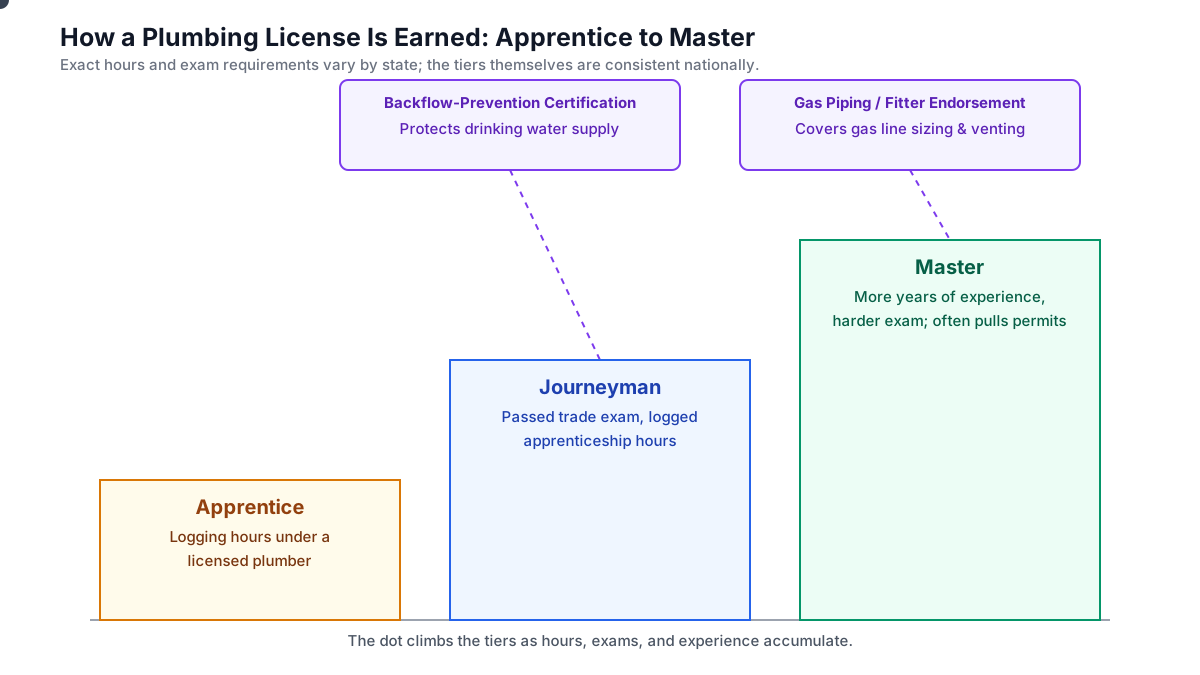
The plumber license lookup tool on your state board's website will usually show which tier a given license holder carries, along with whether it is active, expired, or suspended. A company that cannot answer which tier its technicians hold, or dodges the question, is telling you something.Apprentice, journeyman, and master are the core license tiers nationwide; backflow-prevention and gas-piping endorsements are separate credentials layered on top.
Checking the License and the Insurance Before Anyone Touches Your Pipes
A plumber license lookup takes about five minutes and it is the fastest way to separate a real business from a risky one. Every state that licenses plumbers runs a public search tool through its licensing board or department of consumer affairs. Search by the company name or the license number given to you over the phone, and confirm three things: the license is active, not expired or suspended; it is the correct classification for the work, plumbing or mechanical, not just a general contractor license; and the name on the license matches the name on the estimate.
Insurance is the part homeowners skip most often, and it is the part that protects you financially if something goes wrong. It generally comes in two pieces: general liability, which covers damage to your home during the job, and workers' compensation, which covers an injured plumber so that injury does not become your legal problem. Ask for both, not just one.
Ask the company to email you a certificate of insurance directly from their carrier, naming you as the certificate holder, before anyone opens a wall or touches your main water line. A verbal "yes, we're insured" costs nothing to say and protects you not at all; a certificate with policy numbers and an expiration date is the real proof.
What an unlicensed plumber actually risks costing you
The unlicensed plumber risks are not abstract. If unpermitted work causes a leak or a flood later, some homeowner insurers can deny the claim once they learn the repair was never inspected. Unlicensed work can also surface during a home sale, when an inspector flags it and the buyer's lender asks for it to be redone by a licensed plumber before closing, at your expense. And if the work is simply wrong, there is no state complaint process to file against someone who was never licensed in the first place; you have no real recourse beyond small claims court.
Once a name checks out on license and insurance, you do not have to keep searching. A plumber that serves your area is reachable at 888-854-0126 if you would rather ask these questions live than dig through a website.
What a Fair Plumbing Estimate Looks Like
A useful plumbing estimate reads like a parts list, not a single round number. At minimum it should name the fixture or equipment brand and model, the labor charge, permit fees where applicable, haul-away or disposal of old equipment, warranty terms on both parts and labor, and an estimated start date. If a company hands you one lump figure with no breakdown, ask them to itemize it before comparing it against anyone else's bid.
Most companies do not charge for an estimate on a full replacement job, since it functions as a sales visit. A diagnostic or service call for a repair, by contrast, usually carries its own fee, often applied toward the repair if you go ahead with it. Ask which situation you are in before anyone arrives, so a service call fee does not surprise you on a visit you assumed was free.
Big-ticket quotes deserve extra scrutiny. If a company is proposing a full sewer line replacement instead of a repair, or a whole-house repipe instead of a spot fix, ask them to walk through why, ideally backed by a camera inspection you can see for yourself. The sewer line repair guide covers trenchless options that can cost less than a full dig-and-replace, which is worth knowing before you agree to the bigger job.
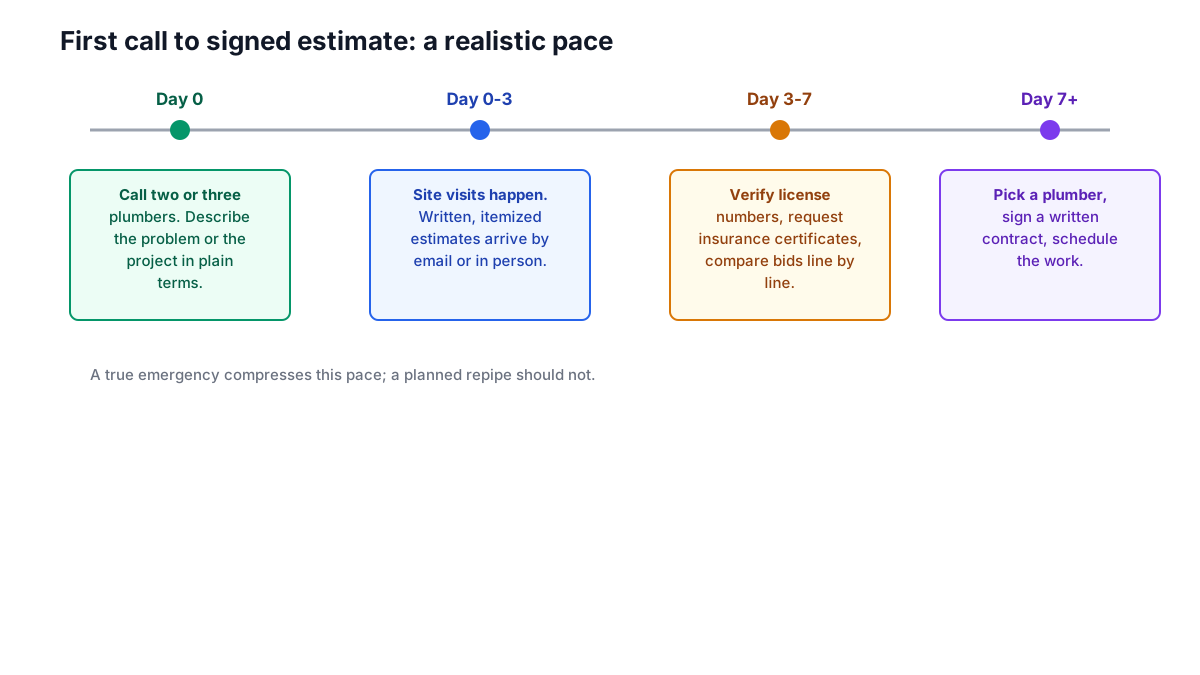
The timeline below shows a realistic pace from first call to signed estimate. A company that pressures you to sign the same day, before a second bid is even in hand, is trying to shortcut that pace for a reason.A realistic pace from the first phone call to a signed contract. Heavy pressure to skip this pace is itself a warning sign.
What Plumbing Work Actually Costs, So You Can Sanity-Check Any Quote
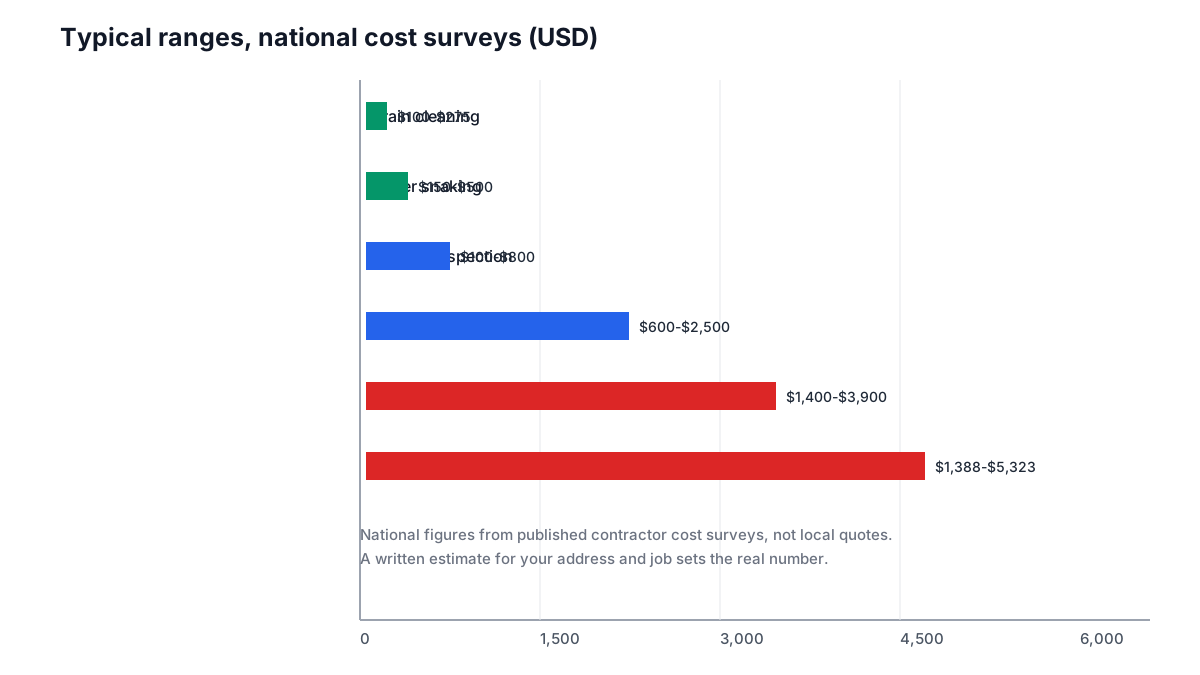
Knowing the national range will not tell you the exact price for your job, but it will tell you when a number is out of line. These figures come from published contractor cost surveys, not a single company's price list.
Job type
Typical range
What moves the price
Source
Service call / diagnostic fee
$50-$200+
Region, whether it's applied toward the repair
HomeGuide 2025
Drain cleaning, single fixture
$100-$275 (national avg. for drain jobs overall: $246)
$60-$250/lf full dig; $90-$250/lf CIPP lining; $60-$200/lf pipe bursting
Method (dig vs. trenchless), pipe run length
HomeAdvisor 2026
Water heater replacement, tank
$600-$2,500 (avg approx. $1,000-$1,347)
Tank size, fuel type, permit
NerdWallet 2025; HomeAdvisor 2026; Bob Vila 2024
Water heater replacement, tankless
$1,400-$3,900 (avg approx. $2,500)
Gas line upsizing, venting changes
NerdWallet 2025; Bob Vila 2024
How we got these numbers: the ranges above are pulled directly from published national contractor cost surveys, not averaged or adjusted by us. Where a metro-level figure exists in those same surveys, it's useful context: Bob Vila's 2024 tracking put a typical tank water heater replacement around $1,600 in Chicago, $1,500 in Philadelphia, $1,400 in Dallas, and $1,300 in Phoenix — all inside the national range above, not outside it. Tank size moves the number too: the same HomeAdvisor data scales an installed tank replacement from about $800-$2,300 for a 40-gallon unit up to $1,100-$4,000 for a 75-gallon unit, with the common 50-gallon size landing at $800-$2,500. A written estimate from a licensed plumber for your address, your equipment, and your local labor market sets the real number for your job. A quote that lands far outside these ranges, in either direction, is worth a second opinion.
The chart below lines up the smaller repair ranges against the larger repair and replacement jobs, which makes the jump in stakes easy to see at a glance.National ranges for common repairs against the larger sewer and water heater jobs, based on published contractor cost surveys.
Red Flags That Should End the Call
A handful of behaviors show up again and again in complaints filed against home-service contractors, and every one of them is a reason to thank the caller and move to the next name on your list.
Demands full payment in cash before any work begins, or refuses a written contract entirely.
Cannot produce a license number on request, or the number does not match the company name when you look it up.
Pressures you into a same-visit full sewer replacement or repipe for what sounds like a repairable clog, especially with a "today only" discount attached.
Will not put an estimate in writing, or the written number keeps changing after you ask questions.
Skips the permit on water heater, sewer, or gas line work "to save you money" — a water heater permit typically runs only $25-$300 — which usually means skipping the inspection too.
Shows up in an unmarked vehicle with no company name, logo, or local address anywhere on the paperwork.
Reviews are overwhelmingly recent and generic, with little detail about the actual work performed.
None of these alone is automatically disqualifying, a small independent plumber can be entirely legitimate without a wrapped van, but two or more together is a pattern worth walking away from rather than negotiating with. Pressure tactics show up most around genuine emergencies, so it helps to already know what actually counts as a plumbing emergency before a late-night sales pitch tries to convince you otherwise.
Ten Questions to Ask Before You Sign Anything
These are the questions to ask a plumber before any money changes hands. A confident, specific answer to each one is a good sign; a vague answer or visible annoyance at the question is information too.
What is your state license number, and can I verify it myself online?
Can you email me a certificate of insurance directly from your carrier?
Which plumber will actually be on site, and what license tier do they hold?
For a sewer issue, will you run a camera inspection before recommending replacement?
What brand and model are you quoting, and why that one for this house?
What does the estimate include, and what would trigger an extra charge?
Do you pull permits for this type of job, and who schedules the inspection?
What is the warranty on parts, and separately, on your labor?
What is your estimated start date and how long will the work take?
Can you give me two references from a job similar in size to mine?
Ask the same ten questions of every company you are comparing so the answers line up side by side. A company that answers all ten without hesitation next to one that dodges half of them is usually not a close call.
Regional Notes: How Local Conditions Change What a Good Plumber Should Check
A technically correct answer in one region can be the wrong recommendation in another, and a good local plumber adjusts for it instead of quoting the same fix everywhere.
Region pattern
What a good plumber should check
Watch for
Cold-winter / freeze belt
Insulation on exterior-wall and crawlspace lines, whether older galvanized supply lines need replacing
A one-time thaw treated as the fix instead of the insulation gap that let the line sit below the 32°F freeze point in the first place
Hot, humid Southeast and Gulf Coast
Slab leak risk on slab-on-grade homes, backflow protection against storm-surge sewer backup
A slow water bill creep dismissed instead of checked for a slab leak
Older Northeast and Midwest housing stock
Cast iron drain line condition, remaining galvanized supply pipe, sewer lateral age
A quote that ignores pipe material entirely and prices only the visible fixture
Expansive clay soil regions
Slab and foundation movement stressing buried supply and sewer lines
Repeated "mystery" leaks in the same area treated as unrelated events
Ask a candidate plumber directly how their recommendation changes for your climate and your home's age specifically. A company that gives the same generic pitch regardless of region or house age is a company that is not actually looking at your specific risk. Freeze risk in particular is worth reading up on before winter, not during it, and the guide to frozen pipes covers both prevention and what thawing safely actually involves.
Frequently asked questions
Do plumbers need a license?+
Yes, in nearly every state, anyone performing plumbing work for pay beyond small, non-permit repairs is required to hold a state plumbing license. Requirements and exact titles vary by state, so confirm the specific rule through your state's licensing board rather than assuming it matches a neighboring state.
How do I check a plumber's license?+
Search your state's plumbing or contractor licensing board website using the company name or the license number they give you over the phone; nearly every state offers a free public plumber license lookup tool. Confirm the license is active, correctly classified for plumbing work, and matches the name on your estimate.
What license do plumbers need?+
Most states use a tiered system: apprentice, journeyman, and master plumber, each requiring logged hours and a passing exam score at the state licensing board. A journeyman is typically authorized to perform licensed work, while a master plumber has more experience and is often the tier allowed to pull permits and supervise other plumbers.
How much does a licensed plumber charge per hour?+
Published cost surveys put standard plumber hourly labor in roughly the $75 to $150 range nationally, though the number moves with region, overhead, and the complexity of the job. Ask for an hourly rate or a flat quote up front, and get it in writing before work starts.
Do plumbers have insurance?+
A properly licensed, established plumbing company generally carries both general liability insurance, which covers damage to your home during the job, and workers' compensation, which covers an injured worker. Ask for a certificate of insurance emailed directly from the carrier rather than accepting a verbal answer.
Do plumbers give free estimates?+
Usually, yes, for a full replacement or installation, since the visit functions as a sales call. A diagnostic or service call tied to an active repair typically carries its own fee, often applied toward the job if you proceed, so ask which situation applies before anyone arrives.
What's the difference between a plumber and a handyman?+
A handyman can generally handle small, non-permit tasks like a faucet aerator swap, while a licensed plumber is legally required for anything connected to the water supply, drain-waste-vent system, or gas lines, especially work that needs a permit. When in doubt, the presence of a permit requirement is the clearest test.
How do I choose a good plumber?+
Verify a current state license, request a certificate of insurance, confirm relevant certifications like backflow-prevention training, and get a written itemized estimate before work starts. Compare at least two bids using the same set of questions, and treat any company that resists those steps as a company to avoid.
Who is the best plumber in my area?+
There is no single national answer, since licensing, insurance, and staffing vary company to company and state to state. The way to find the best plumber for your specific job is to run the license, insurance, and estimate checks in this guide against two or three local candidates and compare their written bids.
What can a licensed plumber do that a handyman can't?+
A licensed plumber can legally perform and pull permits for code-regulated work, water heater installation, gas line connections, sewer repair, and new supply or drain lines, that a general handyman is not authorized to do in most states. Unlicensed work on those systems can also create problems later with insurance claims or a home sale.