Plumbing maintenance means a twice-a-year walkthrough plus a few monthly habits: know your main shutoff valve location, flush the water heater to clear sediment, check exposed pipes and hose bibs before winter, and watch for slow drains before they become clogs. None of the basic steps require a plumber, and doing them is far cheaper than the emergency repairs skipped maintenance eventually causes.
A slow drain in the upstairs bathroom of a 1960s split-level does not announce itself. It gets a little slower every few weeks until, on a Sunday night with company over, the sink backs up completely and nobody in the house knows where the main shutoff valve even is. Almost every emergency plumbing call traces back to something that gave a warning first, a water heater that has been quietly rumbling with sediment for two years, a hose bib nobody disconnected before the first freeze, a slow drain that finally gave out.
This guide is the checklist a plumber wishes every homeowner already had: what to check twice a year, what to check every month, how to flush a water heater and find your main shutoff valve location before you are standing in an inch of water looking for it, what each small job saves you against, and which parts of the list are safe to do yourself versus worth paying a licensed plumber for.
Every dollar figure below comes from a named cost survey. Where our data does not price something specific, a professional inspection visit, for instance, we say so instead of guessing.
What Plumbing Maintenance Actually Means
Plumbing maintenance is not one big job. It is a short, repeatable list of checks that catch a problem while it is still cheap: a slow drain before it becomes a full clog, a stiff shutoff valve before it will not turn during a real leak, sediment (mineral buildup that settles at the bottom of a water heater tank) before it cuts short a tank water heater's typical service life of 8 to 12 years. None of it requires opening drywall or renting equipment. Most of it takes less time than a load of laundry.
That is also what separates maintenance from repair. A plumber doing a maintenance visit is checking and testing, not fixing something that has already failed. If they find a real problem along the way — a corroded shutoff valve that will not close, an anode rod (the sacrificial metal rod inside a tank water heater that corrodes so the tank itself does not) eaten down to bare wire — that becomes a separate repair quote, which is one reason two houses on the same street can get very different bills after what both owners call "a plumbing inspection."
This guide is the plumbing preventive maintenance checklist a plumber wishes every homeowner already had: what to check twice a year, what to check monthly, how to flush a water heater and find your main shutoff valve before you need it in a hurry, and which of it is safe to do yourself versus worth paying a licensed plumber for.
What Breaks First When Plumbing Maintenance Gets Skipped
Ranked roughly by how often each one actually shows up on a service call, here is what neglect tends to hit first:
Water heater sediment buildup. Mineral deposits settle at the bottom of the tank, insulate the water from the heating element or burner, and force the unit to work harder until it fails years earlier than it should.
Small drain clogs, ignored. Soap scum, hair, and grease narrow a pipe gradually until one ordinary evening it is fully blocked, usually with company over.
A shutoff valve nobody has turned in years. Valves corrode or seize shut from disuse, so the one time you actually need it to close, it will not.
Exposed pipes and hose bibs left unprotected. A single hard freeze splits a line that has been fine for a decade, simply because it never had a reason to freeze before.
Slow leaks under sinks and around toilet bases. Small enough to go unnoticed for months, big enough over that time to rot a subfloor or start mold growth behind a cabinet.
Tree roots and grease working into an aging sewer line. Invisible until the main line backs up into every drain in the house at once, usually at the worst possible moment.
Almost every item on that list gives some kind of warning first. A plumbing maintenance routine is simply the habit of noticing that warning before it turns into an emergency call.
The Twice-a-Year Plumbing Walkthrough
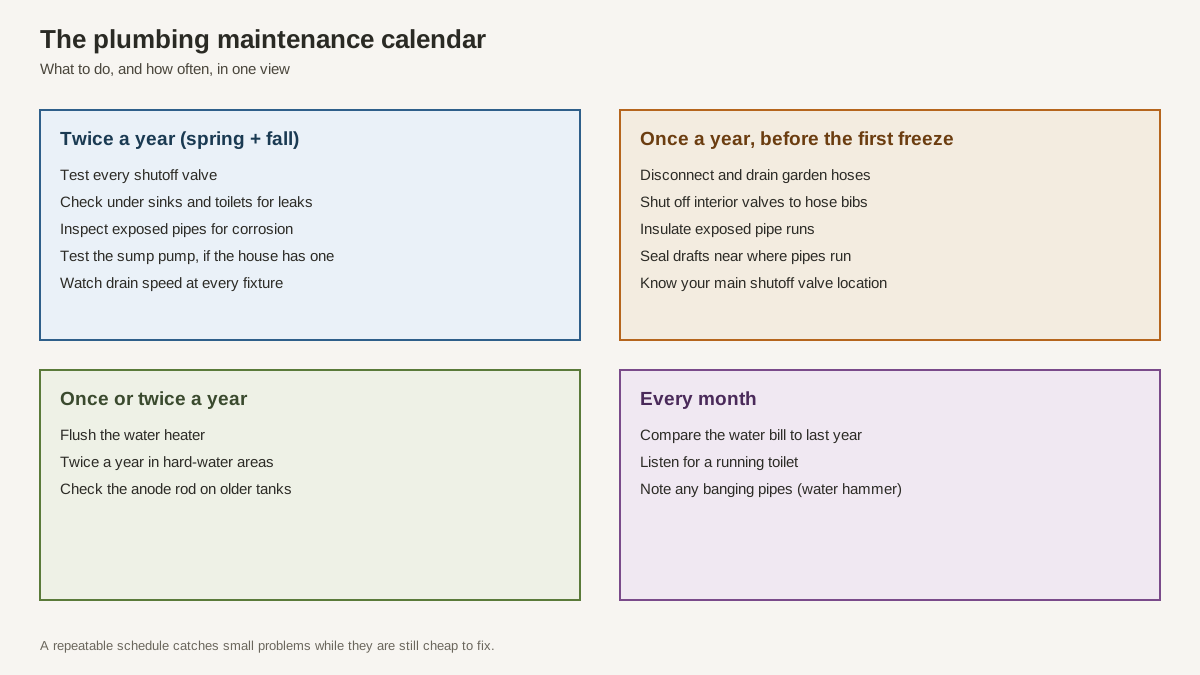
The plumbing maintenance calendar, by frequency.
Do this walkthrough twice a year — once in spring, once in fall — and most plumbing failures never get the chance to become emergencies:
Test every shutoff valve in the house (under sinks, behind the toilet, at the washing machine) by turning it closed and back open. A valve that will not turn is a problem to fix now, not during a leak.
Look under every sink and around every toilet base for a damp spot, a water stain, or a faint mineral crust — all signs of a slow leak that has not announced itself yet.
Check exposed supply lines in the basement, crawlspace, attic, and garage for corrosion, a greenish crust on copper, or active dripping at a joint.
Run water at every fixture and watch how fast it drains. A sink or tub that drains noticeably slower than it used to is telling you something before it fully clogs.
Inspect the water heater for rust at the base, a puddle in the drain pan, or a popping or rumbling sound while it heats — often the first sign of sediment buildup.
Test the sump pump, if the house has one, by pouring a bucket of water into the pit and confirming it kicks on and empties it.
Check exterior hose bibs and any irrigation shutoffs for drips or corrosion at the connection.
Walk the yard and note any unusually green or soggy patch that does not match the rest of the lawn, a common early sign of a leaking sewer or supply line underground.
None of this requires a plumber's toolbox. What it does require is doing it on a schedule, twice a year, rather than only after something already feels wrong.
Winterizing Your Plumbing Before the First Freeze
Every fall, before the first hard freeze (water freezes at 32°F, and pipe left exposed below that long enough will crack as the ice inside expands), take an afternoon to winterize plumbing throughout the house. This is the single item on the checklist most likely to prevent an actual emergency call rather than just a repair.
Disconnect garden hoses from every outdoor spigot and drain them before storing for winter.
Shut off any interior valve that feeds an exterior hose bib, then open the outside spigot to drain the remaining water from the line.
Add pipe insulation (inexpensive foam sleeves) to any exposed line in a crawlspace, attic, garage, or exterior wall cavity you can reach.
Seal obvious drafts near where pipes run — a gap around a dryer vent, a foundation crack, a crawlspace hatch that does not latch tight.
Open cabinet doors under sinks on exterior walls during a forecast cold snap, so warm room air can reach the pipes inside.
Note your home's freeze history. If a specific pipe has frozen before, it will again unless something about its exposure changes.
If a pipe freezes anyway despite winterizing, our guide on frozen pipe repair covers how to thaw it safely, when to shut off the main valve instead, and what a broken section typically costs to fix.
What to Check Every Month
Reading the Water Bill for Hidden Leaks
Between the two seasonal walkthroughs, the monthly list is short on purpose. Maintenance works because it is small and repeated, not because it is constant. Glance at your water bill and compare it to the same month last year; a jump with no obvious explanation — no new appliance, no unusual guest stay — is one of the more reliable early signs of a hidden leak, often inside a wall or under a slab where nothing is visible yet.
Listen for a running toilet after each flush. A flapper that does not fully seat can waste a surprising amount of water a month without ever showing a drop on the floor. And if you hear a banging noise in the walls right after a valve or the washing machine shuts off, that is water hammer, a pressure wave with nowhere to go. Most household supply lines run 40 to 80 psi, and a valve or solenoid slamming shut sends that pressure back up the pipe with nowhere to absorb it. It is usually a simple fix, an arrestor installed at the fixture, not a sign of a bigger problem.
A quick visual check of any exposed pipe near a laundry area or water heater, done in passing rather than as a formal inspection, rounds out what a month actually needs.
Flushing the Water Heater: What It Does and How Often
A water heater flush clears the layer of mineral sediment that settles at the bottom of a tank over months of normal use, especially in hard-water areas. Left alone, that sediment insulates the water from the heating element or burner, forces the unit to work harder to reach its usual setting (most manufacturers recommend 120°F), and is one of the more common reasons a tank water heater fails years before it should.
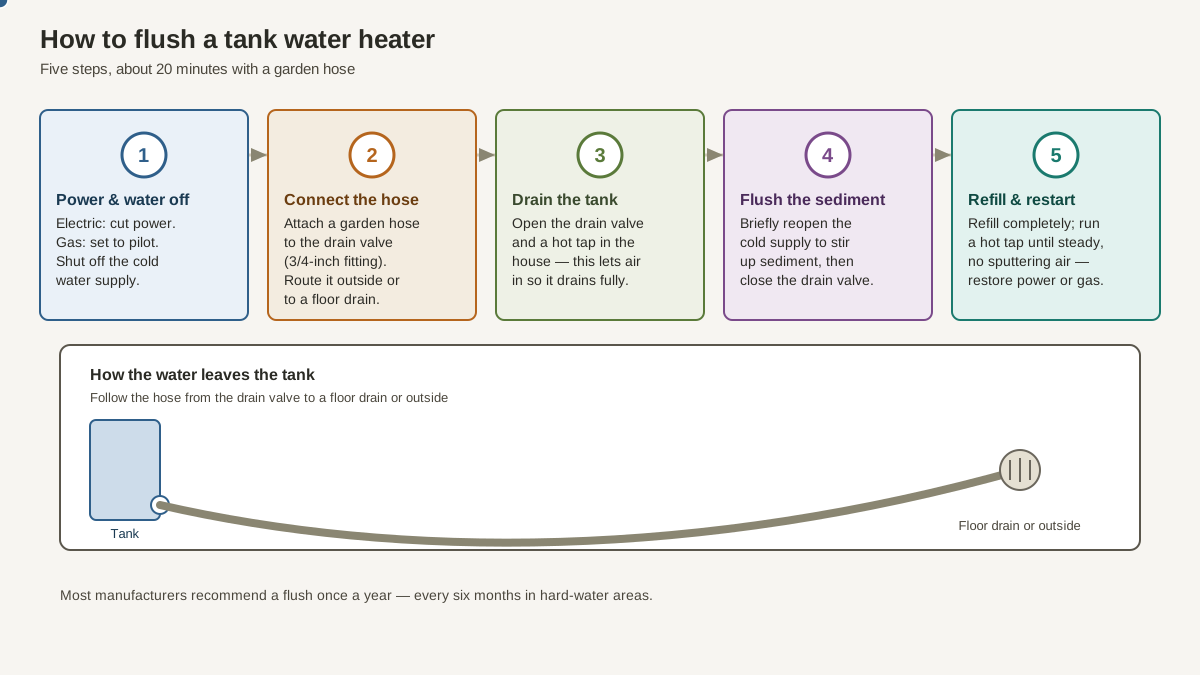
Most manufacturers recommend flushing a tank water heater once a year; homes on well water or in a known hard-water area sometimes benefit from doing it every six months instead. The steps:
Turn off the power (electric) or set the gas valve to pilot, and shut off the cold water supply feeding the tank.
Connect a garden hose (a standard 3/4-inch fitting matches every tank's drain valve) to the drain valve near the bottom of the tank and run the other end to a floor drain or outside.
Open the drain valve and a hot water tap somewhere in the house to let air into the system so the tank drains fully.
Once it is empty, briefly reopen the cold water supply to stir up and flush out remaining sediment, then close the drain valve.
Refill the tank completely, running a hot tap until the water flows steady with no sputtering air, before turning the power or gas back on. Running a tank dry with the heating element or burner active can damage it.
Our cost data does not price a standalone flush service separately from a general plumber visit; expect it to fall within a standard service call if you would rather have a licensed plumber handle it, and treat any specific quote as local pricing rather than a national figure. What the data does show clearly is the other side of the ledger: a 40- or 50-gallon tank water heater that fails early from neglected sediment costs $600 to $2,500 installed to replace, against roughly the cost of a garden hose and 20 minutes to flush it. Our water heater replacement cost guide breaks tank-versus-tankless pricing down in full if you are past the point of prevention.
The full water heater flush process, step by step — about 20 minutes with a garden hose, once a year or every six months in hard-water areas.
Finding Your Main Shutoff Valve Location Before You Need It
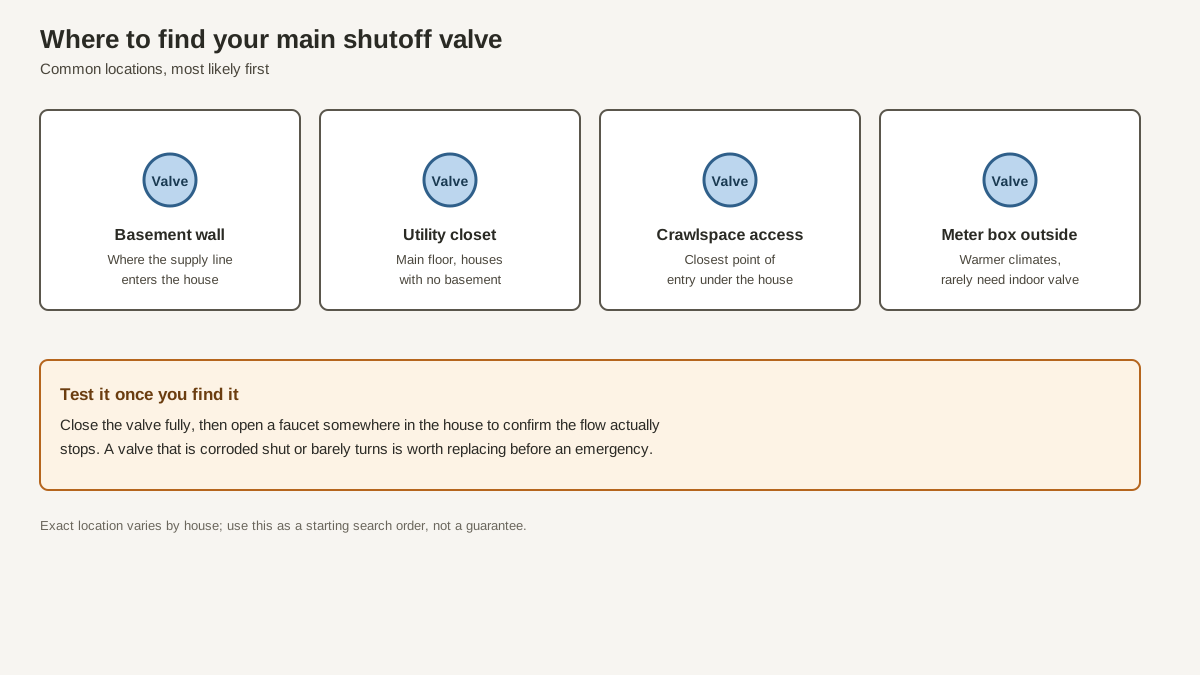
Where to find your main shutoff valve, most common locations first.
Ask most homeowners where their main shutoff valve is, and you get a shrug. That is fine, until the exact moment it is not: a supply line lets go under a sink, or a water heater's tank finally fails, and now you are standing in rising water looking for a valve you have never once needed until this second.
Learning your main shutoff valve location today, while nothing is wrong, is the single most valuable thing on this entire checklist — write it down, and make sure everyone else in the house knows it too.
Where to look, in roughly the order each spot is most common:
A basement wall, typically where the main supply line enters from the street or a well.
A utility closet or mechanical room on the main floor, if the house has no basement.
A crawlspace access point, closest to the line's point of entry.
Near the water meter itself, in a pit or box outside, common in warmer climates where indoor pipes rarely need frost protection.
Occasionally a garage wall, if that is where the builder routed the supply line.
Test it once you find it. Close it fully, then open a faucet somewhere in the house to confirm the flow actually stops. A valve that is corroded shut or barely turns is worth replacing before an emergency, not after. If you have found the valve, closed it, and water is still coming from wherever the leak is, the shutoff may not be doing its job, or there may be a second source. At that point, call 888-854-0126 and describe what you are seeing so a plumber that serves your area can walk you through the next step.
Plumbing Inspection Checklist: What's DIY and What Needs a Plumber
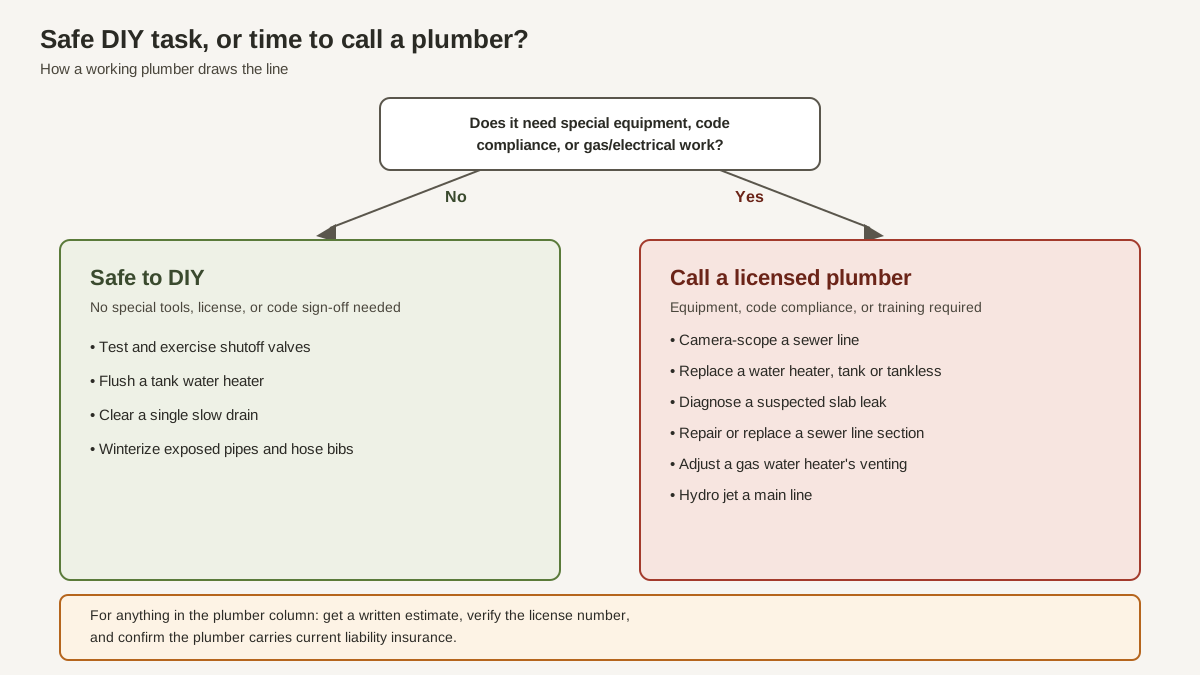
Not every item on a plumbing inspection checklist is meant for a homeowner, and not everything needs a truck to show up either. The table below draws the line the way a working plumber would.
Task
Who handles it
Why
Test and exercise shutoff valves
Homeowner
No tools or certification required
Flush a tank water heater
Homeowner (careful) or plumber
Straightforward with a garden hose on tank models
Clear a single slow drain (plunger, zip-it tool)
Homeowner
Basic mechanical task, no special equipment
Winterize exposed pipes and hose bibs
Homeowner
Insulation and disconnecting hoses is straightforward
Camera-scope a sewer line
Licensed plumber
Requires specialized equipment and training to interpret
Replace a water heater, tank or tankless
Licensed plumber
Gas or electric hookup, code compliance, permit in most areas
Diagnose a suspected slab leak
Licensed plumber
Requires leak-detection equipment most homeowners do not own
Repair or replace a section of sewer line
Licensed plumber
Excavation, code compliance, and equipment
Adjust or repair a gas water heater's venting
Licensed plumber
Combustion safety and local code compliance
Hydro jet a main line
Licensed plumber
High-pressure equipment that can damage older or fragile pipe if misused
For anything that lands in the plumber column, get a written estimate before work starts, verify the license number with your state's contractor licensing board, and confirm the plumber carries current liability insurance.
Which plumbing maintenance tasks are safe to do yourself, and which call for a licensed plumber.
What Maintenance Costs, and What Skipping It Costs Instead
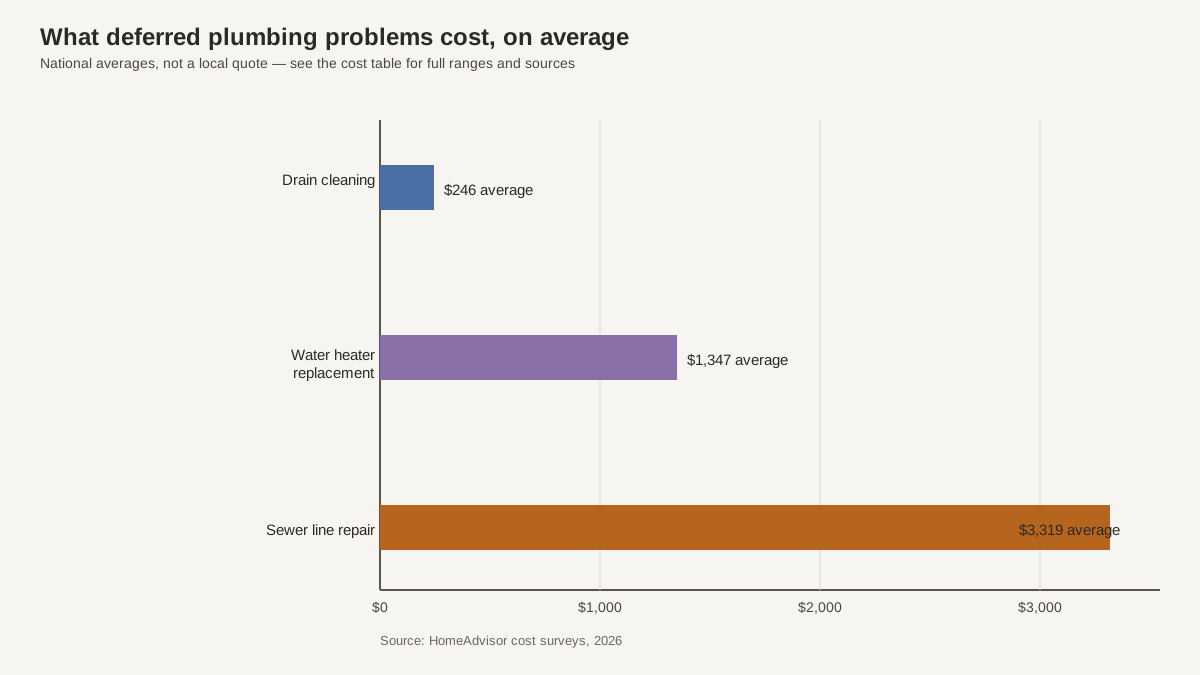
What deferred plumbing problems cost, on average.
How we got these numbers: our cost data does not include a line item for a routine maintenance visit or a water heater flush by itself. What it does include is real national cost data for the repairs that show up when maintenance gets skipped, plus the general hourly and service-call rates plumbers charge for any visit. We are not going to invent a number for the maintenance visit itself; here is what the data actually shows. Every figure in the tables below is a researched range pulled from published cost surveys, not a quote for your job — the only number that actually binds is a written estimate from a plumber who has seen the work in person.
Job
Typical Range
What Moves the Price
Source
Single-fixture drain cleaning
$110 – $275
Access, clog location, snake vs. camera diagnosis
HomeAdvisor / HomeGuide, 2025-2026
Main line cleaning by snaking
$200 – $500
Distance to blockage, root intrusion
HomeGuide, 2025
Main line cleaning by hydro jetting
$600 – $1,400
Grease buildup, pipe diameter, prior root cutting
HomeGuide, 2025
Sewer line repair or replacement
$1,388 – $5,323
Trenchless vs. dig-and-replace, length, depth
HomeAdvisor, 2026
Plumber's hourly rate
$75 – $150/hr
After-hours dispatch, region, licensing tier
Fixr, 2025
Standard service call
$50 – $200+
Distance, timing, whether it's credited to a repair
HomeGuide, 2025
Tank water heater, installed
$600 – $2,500
Tank size, gas vs. electric, permit fees
HomeAdvisor / NerdWallet, 2025-2026
Tankless water heater, installed
$1,400 – $3,900
Venting changes, gas line upsizing, unit capacity
HomeAdvisor / NerdWallet, 2025-2026
Put side by side against a maintenance habit, the case is straightforward:
Skipped habit
What tends to fail
What that repair costs
Never flushing the water heater
Sediment shortens tank life, sometimes years early
$600 – $2,500 (tank) or $1,400 – $3,900 (tankless), installed
Ignoring a slow drain
Full clog, sometimes a main-line backup
$110 – $275 single fixture; $200 – $1,400 main line by method
When a Small Plumbing Problem Becomes a Call-a-Plumber Situation
Most of the checklist above is homeowner territory. A short list of situations calls for a licensed plumber instead of another attempt on your own:
A shutoff valve that will not turn, or will not fully stop flow once tested.
Water showing up at more than one fixture, which points to a main-line issue rather than a single clogged drain.
Any smell of gas near a water heater or gas line — stop, leave the area, and call your gas utility's emergency line or 911 before doing anything else. This is not a maintenance item.
A slow drain that keeps returning within weeks of being cleared, which usually points to a problem further down the line, not at the fixture.
Visible corrosion, rust staining, or a soft spot on the floor around a water heater, signs the tank itself may already be failing.
Any leak you can hear or see but cannot locate, especially one that shows up on the water bill before it shows up anywhere visible.
A licensed plumber that serves your area can pressure-test lines, camera-scope a sewer main, and diagnose a leak that is not visible from a walkthrough. Reach one at 888-854-0126 and describe what you have found so far. Before hiring anyone, confirm their license number, ask for proof of insurance, and get the scope of work in writing; our guide on how to choose a licensed plumber covers the specific red flags worth watching for.
If what you are dealing with is already an active emergency rather than a maintenance question, our guide on when you actually need an emergency plumber covers that distinction directly.
Regional Notes: Freeze Belt, Hard Water and Older Pipe Networks
The checklist above is a national baseline. Where a house sits changes which parts of it matter most. Repair cost follows the same pattern: pricing for the same job varies by region, by how easily a plumber can access the pipe or fixture, and by how much damage turns up once a wall or floor is actually open, so treat every range in this guide as a starting point for a conversation, not a bid for your address.
In the freeze belt — the Upper Midwest, Northeast, Mountain West, and northern Great Plains — winterizing exposed pipes and hose bibs every single fall carries the most weight, since these houses see repeated hard freezes each winter and usually already have some insulation and heat tape in place from the builder.
Occasional-freeze regions — the Gulf Coast, Southeast, and parts of Texas and the Southwest — face the risk from the other direction. Homes there are rarely built with freeze protection at all, so a single unusual cold snap can burst pipes across an entire neighborhood at once. A one-time pass at insulating exposed lines, done proactively rather than after the first hard freeze catches everyone off guard, is worth more here than almost anywhere else on this list.
Mineral buildup drives the priority in hard-water regions, common across much of the Midwest and Southwest: water heaters sediment up faster and fixtures show scale sooner, which is why a flush schedule closer to twice a year makes more sense than the once-a-year default.
Region
Main Priority
Why
Freeze belt (Upper Midwest, Northeast, Mountain West, northern Great Plains)
Fall winterizing every year
Repeated hard freezes each winter
Occasional-freeze regions (Gulf Coast, Southeast, parts of TX/SW)
One-time insulation pass, watch forecasts
Homes rarely built with freeze protection
Hard-water regions (much of the Midwest, Southwest)
Flush the water heater twice a year
Mineral buildup accelerates wear
Older housing stock (pre-1970s pipe, cast iron or clay sewer lines)
Periodic sewer line camera inspection
Aging pipe is more prone to root intrusion and corrosion
Houses with older pipe networks — cast iron, galvanized steel, or clay sewer lines common before the 1970s — benefit from periodic camera inspection of the sewer line, which catches root intrusion and corrosion earlier than waiting for a backup to announce it. And in any flood-prone area, a functioning sump pump belongs on the seasonal walkthrough alongside everything else on this list; our sump pump installation guide covers types and backup power options if the house does not have one yet.
Frequently asked questions
What does plumbing maintenance include?+
Plumbing maintenance means a short list of checks done on a schedule: testing shutoff valves, flushing the water heater, watching for slow drains, checking exposed pipes for corrosion, and winterizing hose bibs before the first freeze. None of it requires major tools, and most homeowners can handle the bulk of it themselves, saving the licensed-plumber tasks, sewer camera work, gas line inspection, water heater replacement, for a professional.
How often should you do plumbing maintenance?+
Twice a year covers most of it, once in spring and once in fall, plus a short monthly check of your water bill and a listen for running toilets. Flush a tank water heater once a year, or twice a year in a hard-water area. Winterize exposed pipes and hose bibs every fall before the first hard freeze, regardless of how mild the season is expected to be.
Where is the main shutoff valve located?+
Most often in a basement, near where the main line enters the house, or in a utility closet if there is no basement. Homes with a crawlspace usually have it near the access point, and homes in warmer climates sometimes have it near the water meter outside instead. Find yours before you need it, then test it by closing it fully and confirming a faucet actually stops running.
How do you flush a water heater?+
Turn off the power or gas, shut the cold water supply, then connect a hose to the drain valve near the tank's base and run it to a floor drain or outside. Open the drain valve and a hot tap elsewhere in the house to let it fully drain, briefly reopen the cold supply to stir up remaining sediment, then close the drain, refill the tank completely, and restore power or gas.
How often should you flush a water heater?+
Most manufacturers recommend once a year for a standard tank water heater. Homes on well water or in a known hard-water area often benefit from flushing twice a year instead, since mineral sediment builds up faster there. Skipping it long-term insulates the tank's heating element or burner from the water, forces the unit to work harder, and is a common reason a water heater fails years before it should.
What does it mean to winterize plumbing?+
To winterize plumbing means disconnecting and draining garden hoses, shutting off any interior valve feeding an outdoor hose bib, insulating exposed pipes in a crawlspace, attic, or garage, and sealing drafts near where pipes run. Homes in occasional-freeze regions benefit the most, since their plumbing usually was not built with freeze protection in mind and a single hard freeze can catch an entire neighborhood off guard.
What's a plumbing inspection checklist for?+
A plumbing inspection checklist gives you a repeatable way to catch small problems, a stiff shutoff valve, a slow drain, sediment in a water heater, before they turn into an emergency call. Working through the same list every spring and fall means nothing gets missed simply because it was not top of mind that week, and it clearly separates what a homeowner can check from what needs a licensed plumber.
Can I do plumbing maintenance myself?+
Most of it, yes. Testing shutoff valves, flushing a tank water heater, clearing a single slow drain, and winterizing exposed pipes and hose bibs are all reasonable for a homeowner. Camera-scoping a sewer line, diagnosing a suspected slab leak, replacing a water heater, and any gas line work belong to a licensed plumber, both for the specialized equipment involved and, with gas, for the safety and code requirements.
How much does plumbing maintenance cost?+
Our cost data does not price a standalone maintenance visit separately from a general plumber call, which typically runs $75 to $150 an hour on top of a $50 to $200-plus service call, per Fixr and HomeGuide's surveys. What the data shows clearly is the other side: the repairs skipped maintenance leads to, from $110 to $275 for a single clogged drain up to $1,388 to $5,323 for a full sewer line repair.
Is preventive plumbing maintenance actually worth it?+
Yes. A plumbing preventive maintenance habit trades a small, predictable amount of time for a much larger, unpredictable repair bill. Flushing a water heater costs little beyond twenty minutes and a garden hose; replacing one early because sediment killed it costs $600 to $2,500 installed. The same math holds for a slow drain caught early against a sewer line that finally backs up at $1,388 to $5,323 to fix.
What is the single most important thing on a plumbing maintenance checklist?+
Knowing your main shutoff valve location before you ever need it. Every other item on this checklist is about preventing damage; the shutoff valve is about limiting it the moment prevention fails. Find it, test it by closing it fully and confirming a faucet stops running, and make sure everyone else in the house knows where it is too.