Frozen pipe repair starts with finding the frozen section, opening the faucet it feeds, and applying gentle heat from the open end inward, never an open flame. If the pipe has already split, shut off the main water valve, then call a plumber to replace the damaged section. A simple, reachable freeze often thaws in under two hours; a burst line needs a licensed plumber.
You turn on the kitchen faucet on a sub-zero morning and nothing comes out, not a trickle, not even a hiss of air. Or it's worse: a pop from inside a wall overnight, and by morning there's a wet ceiling downstairs. Both situations start the same way — a section of supply line got cold enough, for long enough, that the water inside turned to ice.
From here: finding the frozen section before you touch anything, thawing it without cracking it, what to do the instant it's already split, what the repair and cleanup actually cost, and why a house in Minneapolis needs different protection than one in Houston against the same cold snap. Prevention comes last — it costs less than anything on the table below.
Every dollar figure here is cited to a named source, and where our data doesn't cover a specific cost, we say so instead of guessing.
What's Actually Happening Inside a Frozen Pipe
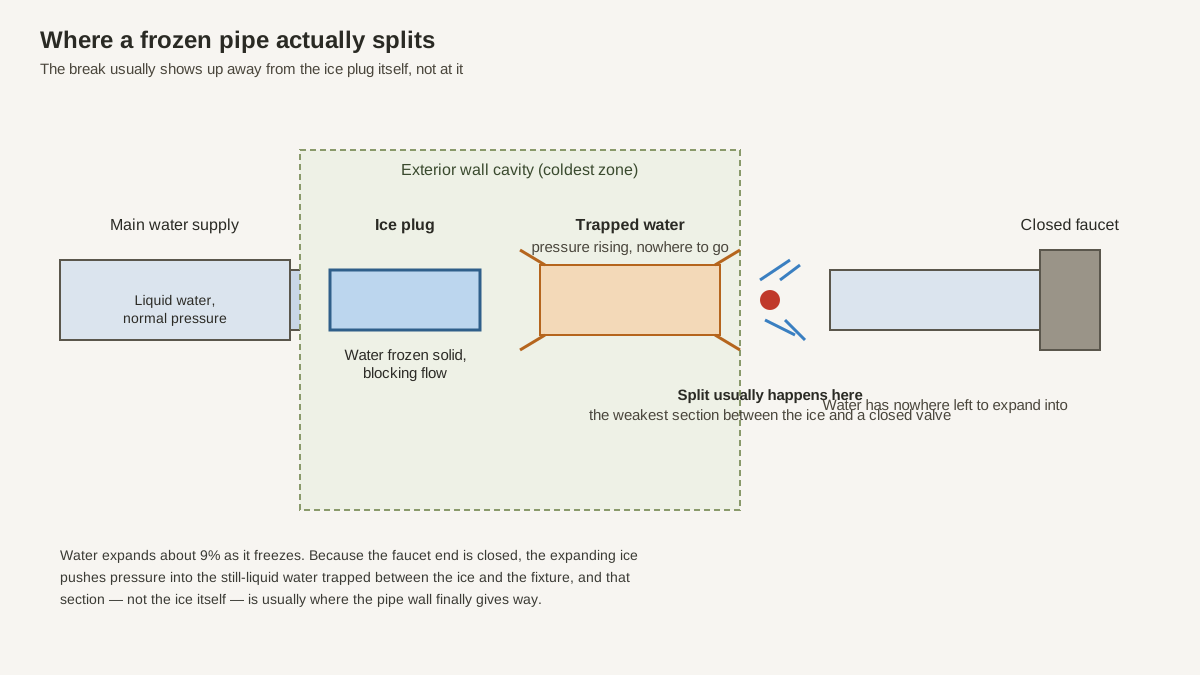
The split usually happens away from the ice itself, in the trapped water behind it.
Water expands roughly nine percent as it turns to ice. Inside a closed pipe, that expansion has nowhere to go, so pressure builds on whichever side of the ice plug is still liquid and trapped between the ice and a closed faucet or valve. That's the piece most people get backward: the pipe usually doesn't split at the frozen section itself. It splits at the weakest point in the trapped water between the ice and the dead end, sometimes several feet away from where the ice actually formed.
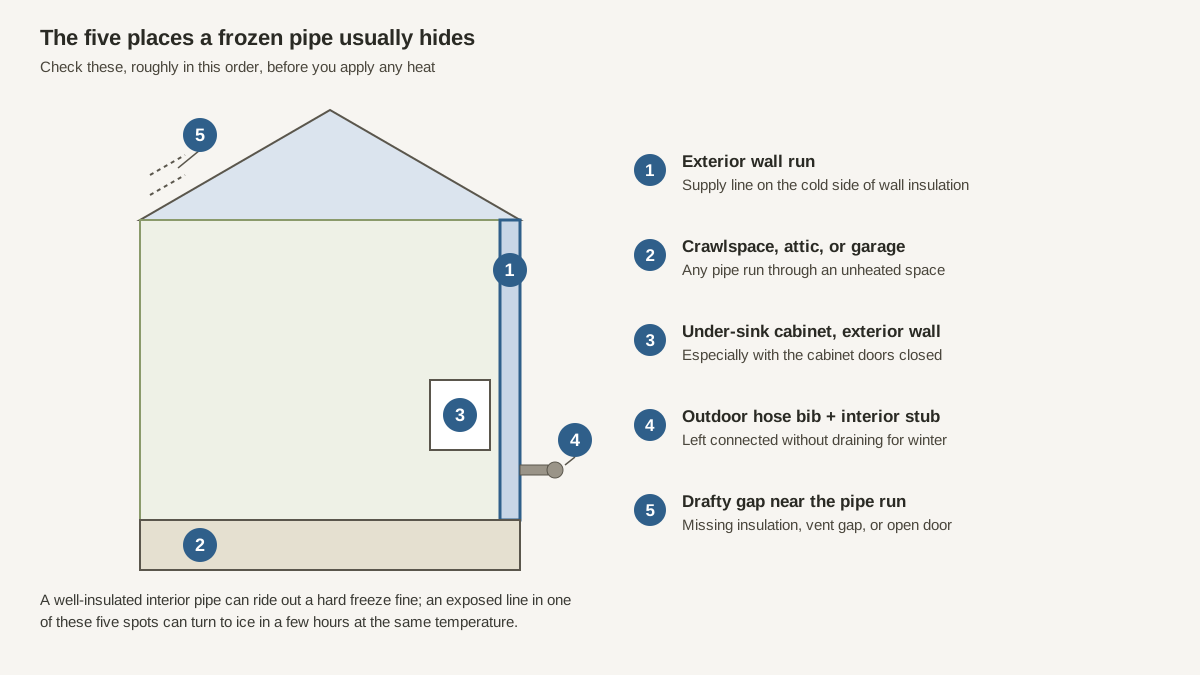
Ice plugs form fastest where a pipe loses heat faster than the surrounding house can replace it. In practice, that's a short list of predictable spots, and a plumber checks them in roughly this order:
Supply lines running through an exterior wall with little or no insulation between the pipe and the siding.
Pipes in an unheated crawlspace, attic, or garage, especially near a vent or a gap in the foundation skirting.
Lines under a kitchen or bathroom sink that sits against an exterior wall, particularly with the cabinet doors closed.
Outdoor hose bibs and the short interior stub feeding them, if the line wasn't shut off and drained for winter.
Any pipe run through a space with a recent draft: a missing insulation batt, a gap around a dryer vent, or a door left open to a garage.
None of that requires deep cold for very long. A well-insulated interior pipe can ride out a hard, sustained freeze without trouble, while an exposed line in a crawlspace can turn to ice in a few hours at a temperature that wouldn't bother the rest of the house at all. Frozen pipe repair almost always starts with figuring out which of these situations you're actually in, not with guessing.
Why Pipes Freeze, Ranked by How Often It Happens
Most calls trace back to one of six situations, roughly in order of how often a plumber sees each one:
Poor insulation around an exterior-wall run. The single most common cause. A supply line was routed on the cold side of the wall's insulation, often in a house built before current energy codes.
Unheated spaces dipping below freezing. Crawlspaces, attics, and garages don't get central heat, and a pipe run through one is only as warm as that space.
A cold snap the house isn't built for. A region that rarely sees hard freezes often has pipes with no special protection at all, so a single unusual night can freeze many houses at once.
Heat turned down or off. A vacant house, a vacation without the thermostat left high enough, or a furnace failure during a cold spell all remove the margin that normally keeps interior pipes safe.
Exterior hose bibs left connected. A garden hose left attached over winter traps water in the bib and the short interior stub feeding it, and that water has no way to drain even if the valve is shut.
Wind exposure. Wind striking an exterior wall pulls heat out of that wall cavity faster than still air at the same temperature, which is why a windy night causes more freeze calls than a calm one at the same reading.
At What Temperature Do Pipes Freeze?
There's no single trigger temperature that applies to every pipe. What matters more than the number on the thermometer is how long the cold lasts and how exposed the line is: a well-protected pipe can ride out a hard, multi-day freeze without trouble, while an exposed line in a drafty crawlspace or against an uninsulated exterior wall can turn to ice during a comparatively short cold snap, especially with wind on it. That's why two houses on the same street, hit by the same cold snap, can have completely different outcomes — one loses water at a single tap, and the other doesn't notice a thing.
How to Find the Frozen Section Before You Do Anything Else
Before you apply any heat, work out where the ice actually is. Guessing wastes time and, if you pick the wrong spot, can leave a section under pressure with nowhere for the melting water to go.
Turn on the affected faucet and leave it open a crack. A trickle or a hiss of air tells you the blockage is downstream of the pipe you're checking; nothing at all means the ice plug is closer to that fixture.
Trace the supply line back from that fixture toward the nearest exterior wall, crawlspace access, attic hatch, or garage wall.
Feel along exposed sections for a spot that's noticeably colder than the rest of the pipe, or look for frost forming on the outside.
Check whether other fixtures on the same branch are also affected: a bathroom and an adjacent kitchen sink often share a run, and if both are out, the freeze is likely upstream of where they split.
If every fixture in the house is affected at once, suspect the main line or the meter itself rather than an interior branch, and treat that as a call-a-plumber situation from the start.
The most common way people discover this is a frozen pipe no water situation at a single tap while every other fixture in the house runs fine. That pattern almost always means the ice is somewhere on that one fixture's dedicated branch, not in the main supply, which narrows the search considerably.
Check these five spots first, roughly in this order, before you start applying heat.
How to Thaw a Frozen Pipe Safely
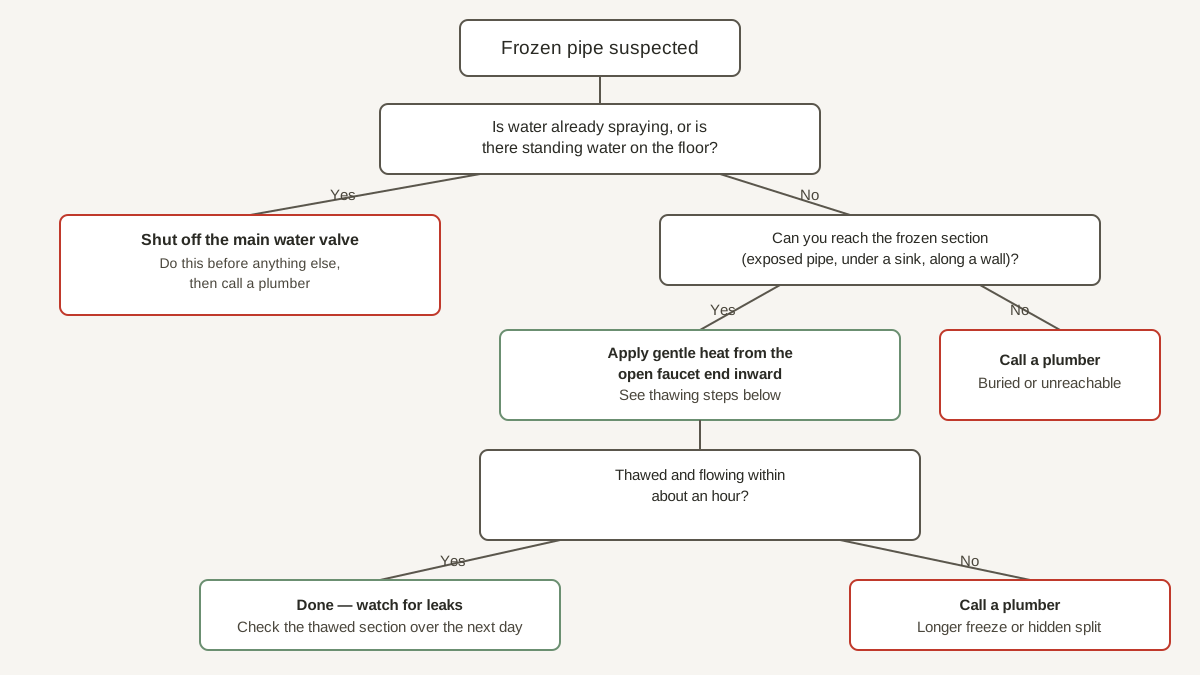
Whether to thaw it yourself or call a plumber, step by step.
Once you've found the section, how to thaw frozen pipes comes down to applying gentle, steady heat from the open end toward the blockage, never the other way around, and never all at once.
Open the faucet the frozen line feeds, even just a crack, so water can flow and steam can escape as the ice starts to melt.
Start heating at the open end of the frozen section (closest to the faucet) and work back toward the blockage. This gives melting ice and building pressure somewhere to release, rather than trapping it between two ice plugs.
Use a hair dryer on low-to-medium heat, an electric heating pad wrapped around the pipe, an electric space heater aimed (not touching) at the area with someone present, or towels soaked in hot water and reapplied as they cool.
Keep working the length of the frozen section gradually rather than blasting one spot; a pipe that heats unevenly is more likely to crack from thermal stress.
Check the faucet periodically. A steady trickle that grows into a full stream means you've broken through; keep applying heat a little further to clear any remaining ice.
A few methods belong on the never list. Don't use a blowtorch, a propane torch, or any open flame near a pipe: older solder joints and nearby framing can ignite before you notice, and PEX tubing melts outright. Don't leave a space heater unattended near flammable insulation or wood framing. And don't pour boiling water directly onto a pipe; the sudden temperature swing can crack copper or split a fitting that a slower heat source wouldn't touch.
Most single-section freezes that haven't already split clear in 30 minutes to a couple of hours of steady work. If you've been at it longer than that with no change, or the pipe is buried inside a finished wall or a slab where you can't reach it at all, that's the point to stop and call a plumber rather than keep guessing.
When the Pipe Has Already Split, Not Just Frozen
Spraying water, a steady drip from a ceiling, or a wet spot spreading across a floor means the thawing steps above no longer apply. The ice already did its damage, and the priority shifts from finding heat to stopping water.
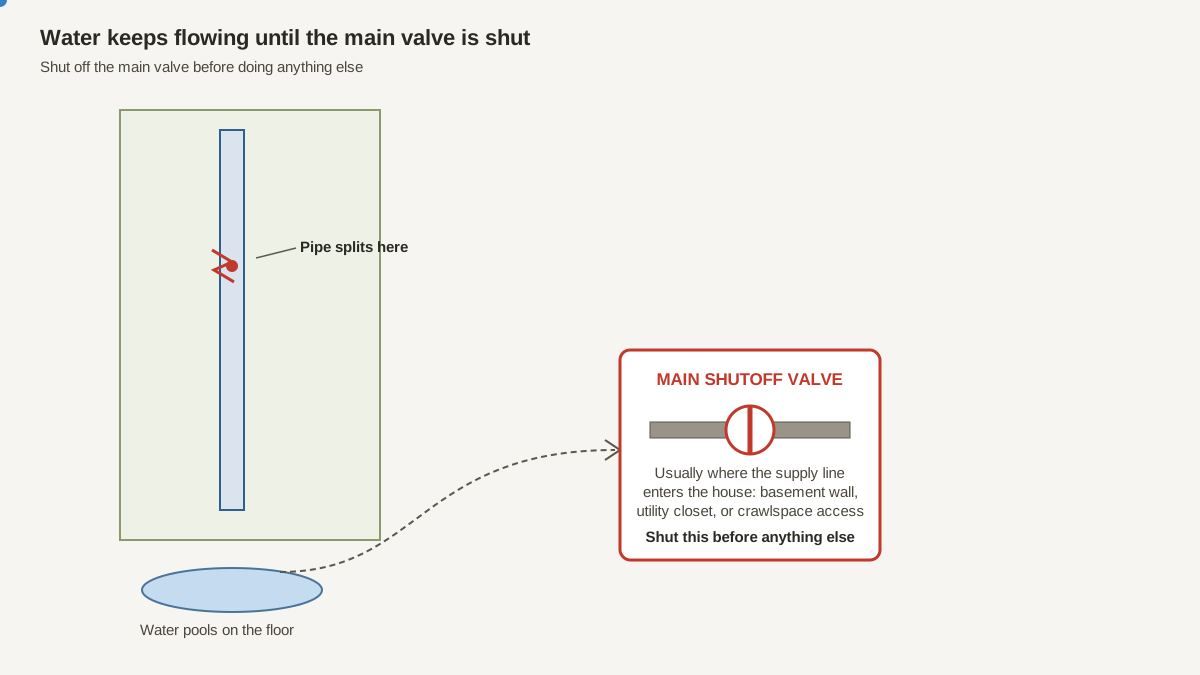
The moment you see or hear water from a split pipe, shut off the main water valve before you do anything else — every minute the water keeps running adds to the cleanup, and it's easier to fix a repair than to fix a flooded floor. Most homes have the main shutoff near where the supply line enters the house — a basement wall, a utility closet, or a crawlspace access — and it's worth knowing where yours is before you ever need it in a hurry.
After the water's off, open the nearest low-point faucet or drain valve to relieve pressure and drain what's left in the line, then move anything valuable away from the wet area. If the water is still coming in and you can't find or reach the shutoff, a plumber that serves your area can walk you through it over the phone, call 888-854-0126 and describe what you see, including whether the water is still running and roughly where it's coming from.
A split copper line, a cracked PEX fitting, or a burst galvanized joint all need a licensed plumber to cut out the damaged section and repair or replace it; this isn't a repair to attempt yourself once the pipe has actually failed, even if the leak looks small. A pinhole crack under pressure can widen fast once the surrounding ice fully melts. If the break is specifically in the supply line under a sink, our guide on pipe burst under the sink walks through the shutoff and cleanup steps for that exact spot.
Every minute the water keeps running adds to the cleanup, so find and shut the main valve first.
What Frozen Pipe Repair Costs
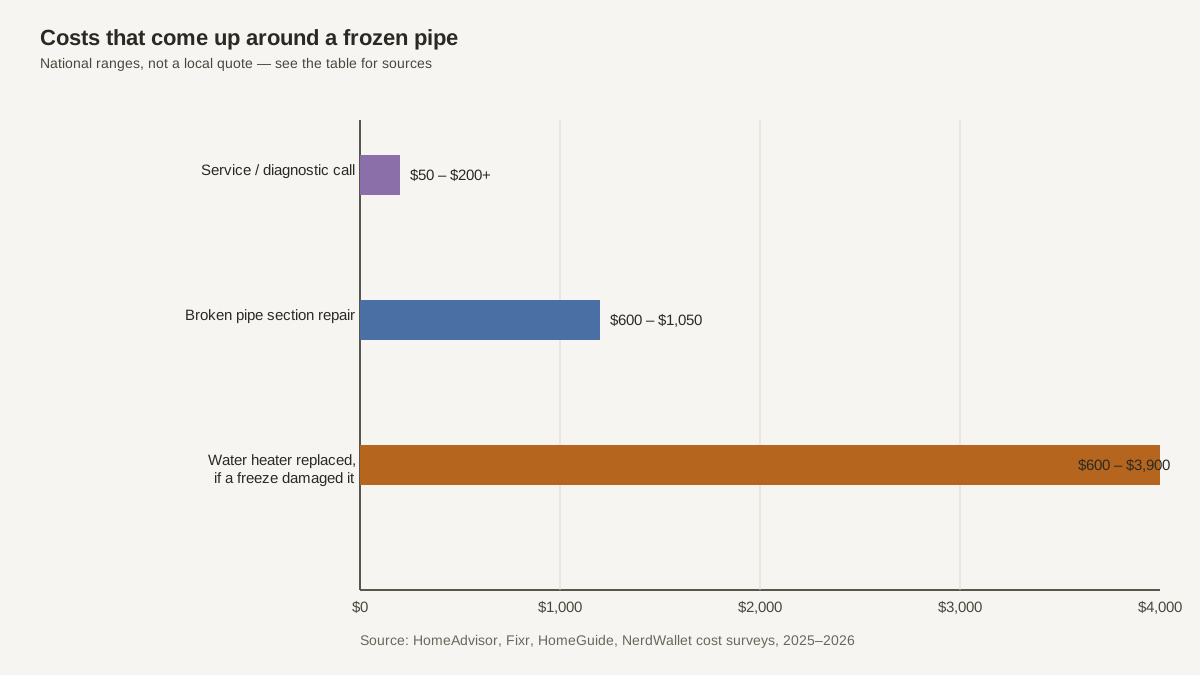
National cost ranges tied to a frozen or burst pipe, low to high.
How we got these numbers: our cost data doesn't include a survey written specifically for frozen or burst pipe repair, so we're not going to invent one. What we do have is HomeAdvisor's broken-pipe-repair figures (from its sewer-and-pipe-repair cost survey), Fixr's and HomeGuide's plumber hourly and service-call figures, and water heater replacement data; all of which apply directly to the parts of a frozen-pipe repair that overlap with general plumbing work. Treat the ranges below as a starting point, not a quote for your specific pipe.
Job
Typical Range
What Moves the Price
Source
Patch or replace one broken pipe section
$600 – $1,050
Wall or slab access, pipe material (copper, PEX, galvanized), number of fittings
HomeAdvisor, broken pipe repair figure, 2026
Plumber's hourly rate
$75 – $150/hr
After-hours or holiday dispatch, licensing tier, region
Fixr, sewer line cleaning survey, 2025
Service call / diagnostic visit
$50 – $200+
Distance, emergency vs. scheduled timing, whether it's credited toward the repair
HomeGuide, sewer line cleaning survey, 2025
Water heater replacement, if a freeze also damaged the unit
$600 – $3,900
Tank vs. tankless, fuel type, venting changes
HomeAdvisor, 2026 / NerdWallet, 2025
If a freeze cracked the tank or a fitting on the water heater itself, our water heater replacement cost guide breaks tank-versus-tankless pricing down in more detail than the summary row above.
Notice what isn't in that table: a national number for insulation, heat tape, or other pipe insulation materials. Our cost data doesn't cover those items either, and hardware pricing varies too much by store and region to state a range honestly. Expect a modest per-foot material cost for foam sleeves or heat cable, and ask a plumber or an electrician (heat tape ties into a wall outlet or dedicated circuit) for a written quote if you want it professionally installed rather than DIY.
An access-heavy repair, one buried in a finished wall, under a slab, or in a tight crawlspace corner, typically costs more than the base range above once opening and patching the surrounding material is added in. Ask for that broken out separately on any written estimate so you can see what's pipe work and what's drywall or flooring work.
Cleaning Up After a Burst Pipe
Once the water's off and the repair is scheduled or done, frozen pipe burst cleanup becomes a race against time rather than a plumbing problem. The window most restoration standards point to is 24 to 48 hours before wet building materials start supporting mold growth, based on guidance from the Institute of Inspection, Cleaning and Restoration Certification (IICRC) and the EPA's mold guidance.
Situation
What You Can Handle
When to Call a Pro
Damp drywall or a small puddle, caught within the hour
Towel-dry, run fans and a dehumidifier, watch the area
If it stays damp past 48 hours or you see discoloration
Standing water more than an inch deep
Shut off power to the area first; don't wade in if outlets or a panel are submerged
Call a water damage restoration company right away
Water that got behind walls or under flooring
Little that's safe to do yourself beyond removing what's visibly soaked
Moisture-meter or thermal-camera inspection from a restoration pro
Water that touched insulation, subfloor, or sat over 24 hours
Remove obviously soaked items; limited beyond that
Professional drying equipment, following IICRC S500 guidance
Photograph everything before you move or discard it: soaked drywall, water lines on cabinets, ruined flooring, since your insurer will want documentation, not just a description. Pull up carpet padding where it's saturated (padding rarely survives a soaking and holding onto it doesn't help a claim), but leave structural drying decisions like whether a subfloor needs to come up to a professional who can measure moisture content rather than guess.
A finished basement or a room with drywall that stayed wet for more than a day is usually past the point where fans and a dehumidifier alone solve it. That's when a licensed water damage restoration company, working to IICRC S500 standards, brings in commercial dehumidifiers and air movers sized for the space rather than the handful of box fans most households own.
Does Homeowners Insurance Cover a Frozen or Burst Pipe?
A standard HO-3 homeowners policy typically covers sudden and accidental water damage from a burst pipe — the Insurance Information Institute describes this as one of the more common water-damage claims insurers pay. What it typically does not cover is damage traced back to a homeowner's failure to maintain reasonable heat in the house or to shut off and drain the system before leaving it vacant in cold weather; most policies include some version of this reasonable care clause, and it's the single most common reason a frozen-pipe claim gets denied.
Before you file, gather documentation: photos of the damage and the source of the leak, the plumber's written diagnosis of what failed and why, receipts for any emergency mitigation (a plumber's after-hours visit, a rented dehumidifier), and a record of the thermostat setting if the house was unoccupied when it froze. If your policy has a deductible that makes filing a marginal decision — a small repair close to the deductible amount — weigh the claim against future premium impact before you submit it.
Every insurer and every state regulates claims slightly differently, and this guide covers general national HO-3 practice rather than any one state's specific rules. If your claim gets disputed, your state's department of insurance can tell you the complaint process that applies where you live.
When to Call a Plumber Instead of Continuing to DIY
Thawing an accessible, unbroken pipe yourself is reasonable. A few situations call for a licensed plumber instead of another attempt on your own:
The pipe has already split, cracked, or is spraying water: this is a repair job, not a thawing job.
You can't locate the frozen section within about 30 to 60 minutes of tracing and checking.
The pipe is buried in a finished wall, under a slab, or somewhere else you can't physically reach.
Every fixture in the house lost water at once, which points to the main line or meter rather than a single branch.
You smell gas anywhere near where you're working: stop immediately and treat that as a separate emergency.
The same section has frozen more than once this season, which means the fix isn't the thaw itself but the insulation or heat source around it.
A licensed plumber that serves your area can diagnose the exact failure point, cut out and replace a split section cleanly, and — just as important — tell you why that particular spot froze so it doesn't happen again next cold snap; reach one at 888-854-0126 and describe what you've found so far. Before hiring anyone for repair work, confirm their license number, ask for proof of insurance, and get the scope of work in writing; our guide on how to choose a licensed plumber covers the specific questions worth asking and the red flags worth walking away from.
If you're not sure whether what you're looking at counts as an emergency at all — a slow drip versus an active spray, a cold pipe versus a confirmed freeze — our guide on when you actually need an emergency plumber walks through that distinction in more detail.
How to Keep Pipes From Freezing Again
Most of prevention comes down to a handful of habits, cheaper by far than any repair on the table above:
Add pipe insulation to any exposed run in a crawlspace, attic, garage, or exterior-wall cavity you can access: foam sleeves are inexpensive and take an afternoon to install along the most exposed sections.
Seal drafts near where pipes run: gaps around dryer vents, foundation cracks, or a crawlspace hatch that doesn't close tightly all let cold air reach pipes that would otherwise be fine.
Disconnect and drain outdoor hoses before the first hard freeze, and shut off any interior valve feeding an exterior hose bib if your house has one.
Open cabinet doors under sinks on exterior walls during a forecast cold snap, so warm room air can reach the pipes inside.
Let a faucet drip slightly on the coldest nights if a pipe has frozen before — moving water resists freezing better than still water sitting in a pipe.
Keep the thermostat no lower than the mid-50s if you're leaving the house for an extended period in winter, and never shut the heat off entirely.
Know where your main shutoff valve is before you need it — this is the single fastest way to limit damage once a pipe has already split.
Houses in regions that rarely see hard freezes benefit the most from a one-time pass at insulation and sealing, since most of their plumbing was never built with freeze protection in mind to begin with. A seasonal walk-through — checking insulation, hose bibs, and any known problem spot before the first real cold snap — catches most of this before it becomes a repair call; our seasonal plumbing maintenance checklist covers it alongside the rest of a home's plumbing.
Regional Notes: Freeze Belt vs. Occasional Cold Snaps
Where you live changes both how likely a freeze is and how prepared your plumbing already is for one.
Region
Main Risk
What to Do
Freeze belt (Upper Midwest, Northeast, Mountain West, northern Great Plains)
Repeated hard freezes every winter, but homes are generally built with insulation and heat tape already in place
Routine seasonal upkeep; a first-time freeze here is less common than a maintenance gap
Occasional-freeze regions (Gulf Coast, Southeast, parts of Texas and the Southwest)
Homes and exposed plumbing rarely built for freeze exposure at all, so a single unusual cold snap can burst many pipes across a region at once
Insulate exposed lines ahead of a forecast freeze; drip faucets and open cabinet doors during the cold snap itself
Elevated or exposed structures — mobile homes, homes on piers, any house with plumbing routed through an unheated crawlspace
Pipes exposed to outside air regardless of the regional climate around them
Skirting, heat tape, and crawlspace insulation matter here no matter what region the house sits in
A hard freeze that a Minneapolis house shrugs off without a second thought can burst dozens of pipes across a single neighborhood in a region that hasn't seen one in years, simply because the plumbing was never insulated for it. If you live somewhere freezes are rare, the prevention steps above are worth doing once, proactively, rather than waiting to find out the hard way which pipes in your house were never protected.
Frequently asked questions
How much does frozen pipe repair cost?+
A straightforward patch or section replacement for a broken supply line typically runs $600 to $1,050, based on HomeAdvisor's broken-pipe-repair figures from its sewer-and-pipe-repair survey. That range assumes the pipe is reachable without major drywall or slab work; a repair buried in a finished wall or a hard-to-reach crawlspace corner usually costs more once access and patching are added in. Get a written estimate before work starts so access work is itemized separately from the pipe repair itself.
How do I thaw a frozen pipe myself?+
Open the faucet the frozen line feeds so water can flow and steam can escape as the ice melts, then apply gentle heat starting at the open end and working back toward the blockage — a hair dryer, an electric heating pad, or towels soaked in hot water all work. Never use a blowtorch, a propane torch, or an unattended space heater near a pipe. Most single-section freezes clear in 30 minutes to a couple of hours of steady, gentle heat.
How long does it take to fix a frozen pipe?+
A single frozen section that hasn't split usually thaws in 30 minutes to a couple of hours with steady, gentle heat applied from the open faucet end inward. A pipe that's already burst is a different timeline: a plumber typically needs one to three hours on site to shut the water off, cut out the damaged section, and replace it, longer if the break is inside a finished wall or a slab.
What causes pipes to freeze?+
Pipes freeze when the water inside sits in cold temperatures long enough for ice to form — most often in an exterior wall with too little insulation, an unheated crawlspace or attic, or an uninsulated garage. A sudden hard freeze in a region that rarely sees one, a thermostat turned down while a house sits vacant, or an outdoor hose bib left connected all raise the odds significantly.
Why do frozen pipes burst?+
Frozen pipes burst because ice expands roughly nine percent as it forms, and that expansion traps water between the ice plug and a closed fixture or valve, building pressure with nowhere to go. The pipe usually splits downstream of the ice itself, at whatever section is weakest, rather than exactly where the ice formed. That's why a burst can show up as a leak in a completely different spot than the freeze.
What should I do if a pipe is frozen but hasn't burst?+
Open the faucet it feeds, apply gentle heat working from the open end toward the ice, and check that the area around the pipe is warming, not just the pipe's surface. Keep a bucket and towels nearby in case a hidden crack was already there before the freeze. If you can't find the frozen section within about 30 to 60 minutes, or it's buried in a wall or slab, call a plumber rather than keep guessing.
At what temperature do pipes freeze?+
There's no single trigger temperature — how long the cold lasts and how exposed the pipe is matter more than the exact reading. A well-protected pipe can ride out a hard, sustained freeze without trouble, while an exposed line in a crawlspace, attic, or uninsulated exterior wall can freeze during a comparatively short cold snap, especially with wind on it. Indoor supply lines running through exterior walls or unconditioned spaces stay the most exposed even when the outdoor temperature looks only modestly cold.
Why do I have water at every other faucet except one?+
This is the classic frozen pipe no water pattern — ice is blocking flow somewhere between the main line and that one fixture's branch, while the rest of the house draws from a different run. Trace that fixture's supply line back toward the nearest exterior wall, crawlspace, or unheated space and look for the coldest, most exposed section. If the blockage is behind a finished wall or under a slab, that's a job for a plumber.
How much does burst pipe repair cost?+
Once a pipe has actually split, expect to pay for the repair and any water cleanup separately. HomeAdvisor's broken-pipe-repair figures put a straightforward cut-and-patch job at $600 to $1,050, while a plumber's hourly rate for the visit itself typically runs $75 to $150 on top of a $50 to $200-plus service call in many markets. Water damage cleanup and drying, if the leak ran for more than a few hours, is a separate cost on top of the pipe repair.
How do I clean up after a burst pipe?+
Shut off the water first, then remove standing water and anything soaked that can't dry within 24 to 48 hours, since that's roughly the window before mold becomes a real risk. Run fans and a dehumidifier, pull baseboards or drywall that stayed wet, and photograph everything before discarding damaged items for your insurance claim. Water that sat for more than a day, or came from a source other than clean supply water, is worth a professional restoration assessment rather than DIY drying alone.