Sewer line repair means clearing, patching, or replacing the underground pipe that carries wastewater from your house to the city main or a septic tank. A simple root clog often clears with snaking or hydro jetting for a few hundred dollars, while a cracked or collapsed lateral typically runs $1,388 to $5,323, whether a plumber lines it, bursts it, or digs a trench.
Every house past the property line has one pipe nobody thinks about until it fails: the sewer lateral, the buried line running from your foundation to the street main or a septic tank. When it works, you never see it. When it does not, water backs up into the lowest drain in the house, whether that's a floor drain, a basement toilet, or a ground-floor tub, usually on a weekend, usually with company coming over.
Picture a 1950s ranch with a mature silver maple thirty feet from the foundation. Every couple of years, the kitchen sink and the basement floor drain gurgle together, then clear on their own after a day or two. That is not a fluke. That is root intrusion at a pipe joint, and it tends to get worse rather than better until someone runs a camera down the line and finds out what is actually there.
This guide walks through why sewer lines fail, how a plumber actually diagnoses the break, what each repair method costs, what your insurance is likely to say, and where the line sits between something you can handle yourself and something that needs a licensed plumber.
What's Actually Failing When a Sewer Line Backs Up
The pipe in question is the lateral: the single run of pipe, usually 4 to 6 inches across, that leaves your foundation, crosses the yard, and ties into either the municipal sewer main under the street or a septic tank. Unlike the branch drains inside your walls, the lateral carries everything: kitchen, bathrooms, laundry, every fixture in the house, in one shared pipe. That is why a lateral failure looks different from a single clogged drain. It hits more than one fixture at once, and it usually hits the lowest one first.
If only the kitchen sink is slow, that is a branch-line problem, and you can usually chase it down with our clogged drain guide rather than anything in this one. A true sewer line problem announces itself differently: the tub backs up when someone flushes the toilet, the basement floor drain bubbles when the washer drains, or wastewater comes up through the lowest fixture in the house before anything else acts up. That shared pattern of several fixtures affected together, worst at the lowest point, is what most people are describing when they search for sewer backup repair, and it is the clearest sign you are dealing with the main line, not a branch.
A sewer line problem is also easy to confuse with a slab leak, but the two are close to opposite. A slab leak is a pressurized water-supply line leaking under the foundation. A sewer line problem is the unpressurized drain line backing up. The diagnosis, the cost, and the urgency differ for each, so rule one out before you assume the other.
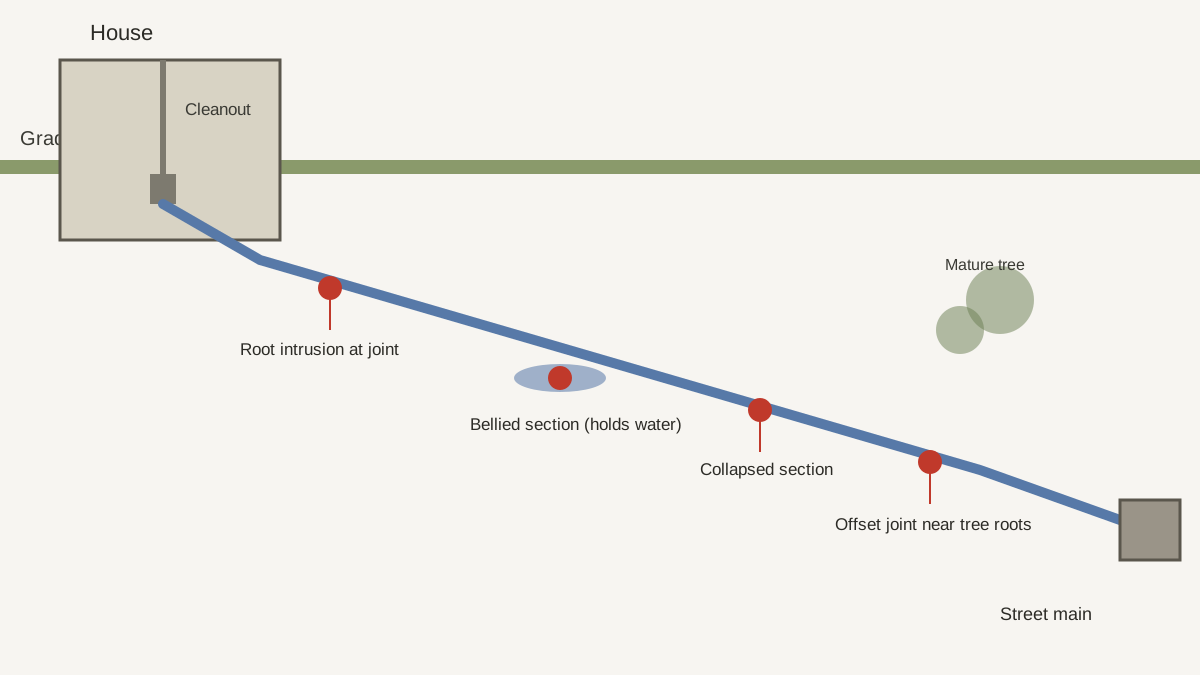
A lateral can fail a few distinct ways: a full blockage from roots or grease that stops flow outright, a partial blockage that only backs up under heavy use (a full load of laundry, a house full of holiday guests) but drains slowly the rest of the time, a belly where the pipe has settled into a low spot that holds standing water and solids, or a structural break where the pipe has cracked, separated at a joint, or collapsed. Each calls for a different fix, which is why the diagnosis step later in this guide matters more than guessing from symptoms alone.
Where a sewer lateral runs, and where it typically fails.
What Causes a Sewer Line to Fail, Ranked by How Often We See It
Tree roots find the smallest crack
Tree roots in sewer line joints are the single most common reason a lateral fails before its expected lifespan. Sewer pipe carries warm, nutrient-rich water around the clock, and roots grow toward that moisture instinctively. A joint that is open even a fraction of an inch is enough for a root hair to get in; once inside, it thickens year over year until it is a rope-sized mass that snags paper and grease and eventually blocks the line. Mature silver maple, willow, cottonwood, and sweetgum trees are the usual suspects because their root systems are aggressive and shallow, but almost any tree or large shrub within 20 to 30 feet of the lateral becomes a candidate over a couple of decades.
Old pipe, old joints
Houses built before the 1980s were commonly plumbed with clay tile, cast iron, or, worse, Orangeburg, a tar-impregnated paper pipe that was cheap and common from the 1940s through the 1970s and tends to flatten and delaminate on its own, roots or no roots. Clay tile comes in short sections with a lot of joints, and every joint is a place roots can enter and the ground can shift. Cast iron holds up structurally longer but rusts and scales from the inside, narrowing the channel until it carries a fraction of its original capacity. None of these were bad materials for their era. They are simply old enough now that failure is a matter of when, not if.
The remaining causes show up less often but still matter. A bellied section forms where years of soil settling around the pipe created a permanent low spot that holds water and traps solids even when nothing else is wrong. Plumbing code sets a minimum downward slope for the run — 1/4 inch of fall per foot on pipe up to 3 inches, 1/8 inch per foot once the lateral itself reaches 4 to 6 inches across — so by definition a belly is any stretch that has settled flatter than that grade. Grease, "flushable" wipes, and paper towels do not break down and build up at a joint or a belly until they catch everything moving behind them. And ground movement, whether freeze-thaw heaving in northern climates or expansive clay soil that swells and shrinks with moisture, can crack a pipe or open a joint gradually, one wet season at a time.
How a Plumber Figures Out What's Wrong
Guessing at a sewer line problem from symptoms alone is how homeowners end up paying for a repair that does not fix anything. A competent plumber works through roughly the same sequence every time:
Runs water at more than one fixture, or asks what fixtures were running when the backup happened, to confirm the problem is shared across the house rather than isolated to one branch line.
Checks the cleanout first (the capped pipe near the foundation or at the property line) because it is the fastest way to see whether water is already backing up before it reaches the house — plumbing code requires a cleanout at least every 100 feet of horizontal run, so a longer lateral often has more than one to check.
Runs a sewer line camera inspection down the cleanout or through a fixture, feeding a waterproof camera on a flexible cable through the pipe while watching a live monitor for roots, cracks, offsets, bellies, or a full collapse.
Uses a transmitter on the camera head, called a sonde, so a technician above ground with a locator wand can mark the exact depth and position of the problem on the lawn, which matters even for trenchless work.
Records the footage and the distance-to-defect reading, then matches the finding to a repair method. This is the point where you get a specific quote instead of a guess dressed up as one.
Pay for the camera step even if you feel fairly sure you already know the cause. It is the only reliable way to see the true condition of a suspected belly, confirm whether a root ball has genuinely separated a joint, and rule out a second problem farther down the line, which happens more often than homeowners expect in a lateral that has not been inspected in twenty or thirty years.
What You Can Try Yourself, and Where It Becomes a Professional Job
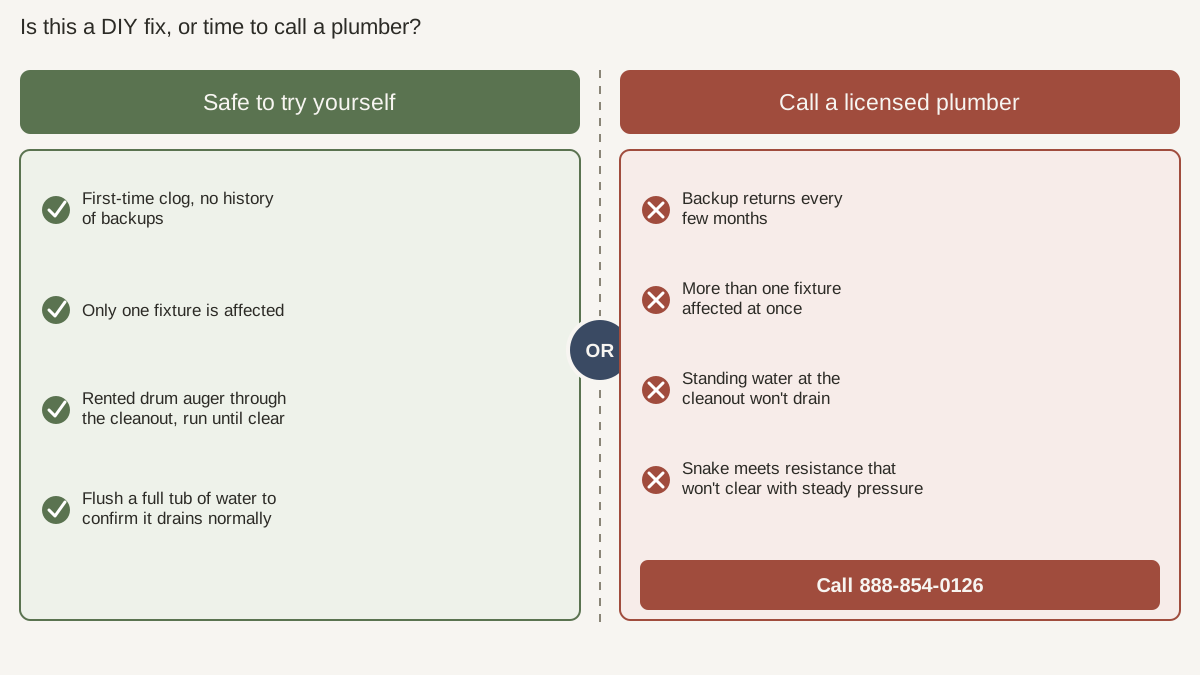
A plunger does nothing for a main-line clog. You are pushing against the full volume of water sitting in a large pipe, not a small trap. What can help, if the blockage is simple and recent, is a rented drum auger (a mechanical snake, not the small hand-crank kind used for a sink trap) fed through an accessible cleanout, run slowly until you feel it break through, then flushed with a full tub of water to confirm the line is actually clear. That is a reasonable weekend project for a straightforward, first-time clog with no history of backups.
It stops being a do-it-yourself job the moment any of these are true: the backup keeps returning every few months, more than one fixture is affected, standing water sits at the cleanout and will not drain, or the snake meets resistance that will not clear with steady pressure. That last one is often a belly, an offset joint, or a root mass too dense for rental equipment. Hydro jetting, camera work, and anything involving trenchless equipment or excavation calls for a licensed plumber, both because the equipment is specialized and because a mishandled attempt at digging near a gas or water line becomes its own emergency. If a rental snake is not clearing it on the first real attempt, that is the point to call 888-854-0126 and get a plumber who serves your area to run a camera before you spend more money guessing.
For context on how snaking and jetting compare outside a sewer-specific situation (a single clogged shower drain, say, rather than a shared main line), our drain cleaning cost and methods guide breaks down both approaches in more detail.
Where a DIY snake job ends and a call to a licensed plumber begins.
Trenchless vs Open-Trench: Matching the Method to the Damage
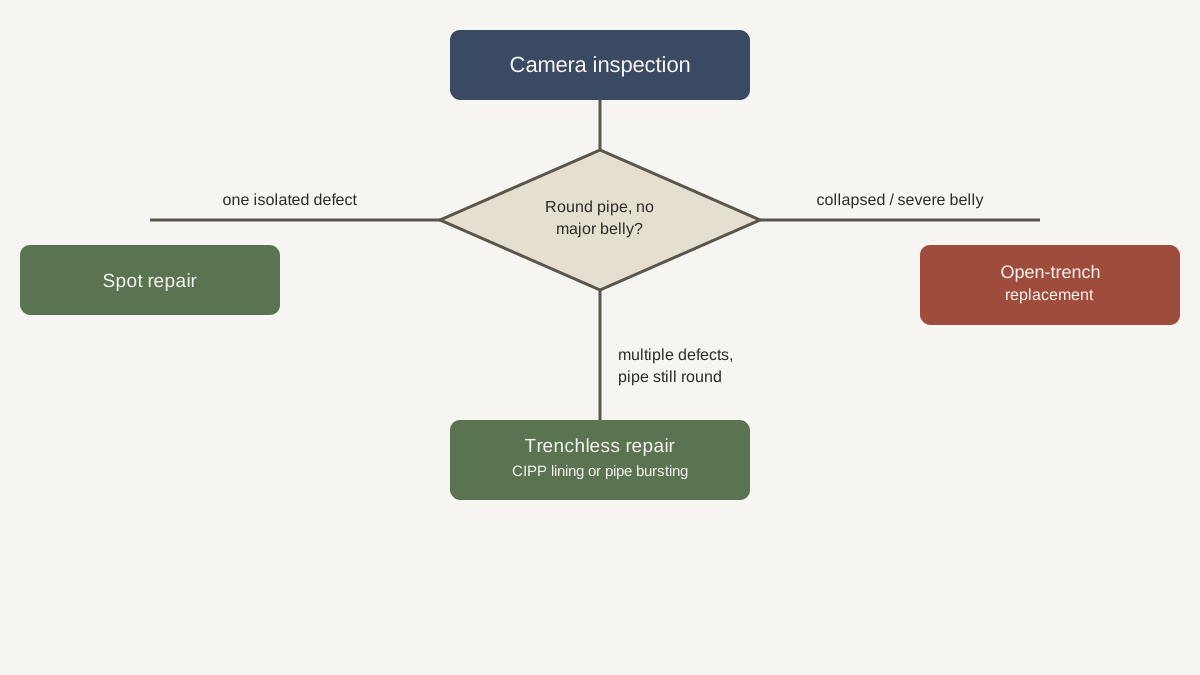
Trenchless sewer repair covers two distinct methods, and neither is right for every situation. CIPP lining (cured-in-place pipe) threads a resin-saturated liner into the existing pipe and cures it in place, creating a new pipe inside the old one. It needs the original pipe to still hold a mostly round shape, since a liner cannot fix a collapsed or badly bellied section. Pipe bursting pulls a new pipe through the old one while a bursting head fractures the original pipe outward into the surrounding soil. It can handle a full-length replacement and even a modest increase in diameter — commonly moving a 4-inch lateral up to 6 inches — but it still needs a fairly straight path and access pits at each end.
Method
Best fit
Digging required
Typical cost basis
Snaking / hydro jetting
Simple clog, roots not yet through the joint
None
Per job
Spot repair
One damaged section, rest of the pipe sound
Small dig at the defect
Per job
CIPP lining
Round pipe, multiple cracks or root entry points, no major belly
Access pits only
Per linear foot
Pipe bursting
Full-length replacement, want a larger diameter, no severe belly
Access pits only
Per linear foot
Open-trench replacement
Collapsed sections, a severe belly, or a change in pipe route
Full trench along the run
Per linear foot plus trenching
A belly decides more of these calls than homeowners expect. If the camera shows a low spot holding standing water, lining it just recreates the same low spot with a smoother interior — better than nothing, but it will not stop future buildup the way correcting the grade does. That is usually the case a plumber makes for open-trench work even when trenchless equipment is available nearby, so ask them to show you the footage and point to the belly on-screen rather than taking the recommendation on faith.
How a camera inspection points to the right repair method.
What Sewer Line Repair Costs, Job by Job
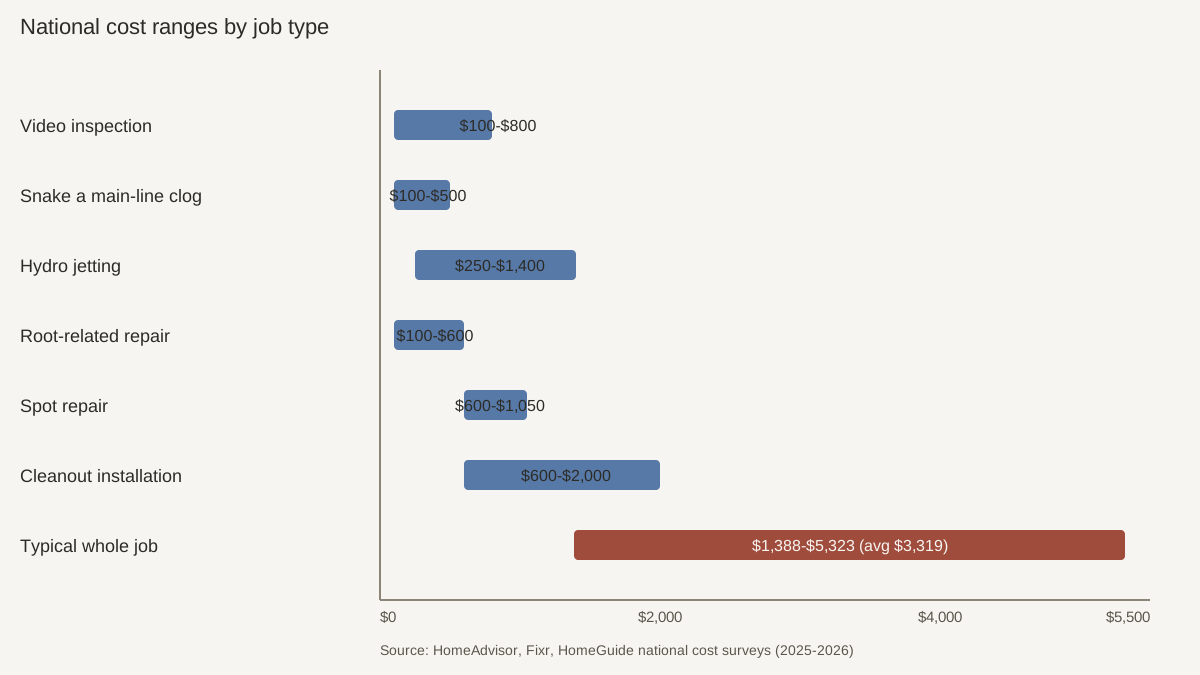
Sewer line repair cost depends more on which of the methods above your situation calls for than on anything else. A snaked clog and a full trenchless replacement are both "sewer line repair" in casual conversation, and they sit an order of magnitude apart in price. Here is what national cost surveys report for each job type:
Job type
Typical range
What moves the price
Source
Video/camera inspection
$100 – $800
Pipe length, access, whether it is a stand-alone visit
Fixr
Snaking a main-line clog
$100 – $500
Distance to the blockage, how packed it is
Fixr; HomeGuide
Hydro jetting
$250 – $1,400
Grease and scale buildup, root density, pipe diameter
Fixr; HomeGuide
Root-related repair
$100 – $600
How far roots have grown into the joint
HomeAdvisor
Spot (single-section) repair
$600 – $1,050
Depth, access, pipe material
HomeAdvisor
Cleanout installation
$600 – $2,000
Number of cleanouts added, depth
Fixr
CIPP lining (trenchless)
$90 – $250 per linear foot
Pipe diameter, number of bends, liner material
HomeAdvisor
Pipe bursting (trenchless)
$60 – $200 per linear foot
Soil type, old pipe material, access-pit count
HomeAdvisor
Open-trench replacement
$60 – $250 per linear foot, plus $4 – $12 per linear foot trenching
Depth, run length, landscaping or hardscape removed
HomeAdvisor
Typical whole-job spend
$1,388 – $5,323 (average $3,319)
Method, permit, materials, restoration
HomeAdvisor
National cost ranges by job type, low to high.
How we got these numbers: these are national ranges pulled from cost-survey publishers, not local quotes. This data set does not include a regional price index, so treat the low end as more likely in a lower-cost-of-living area and the high end as more likely in an expensive metro, and get a written estimate from a plumber who serves your area before budgeting off any figure on this page. Sewer line replacement cost climbs fast once a job needs a permit, deep excavation, or restoration of a driveway, patio, or mature landscaping sitting over the pipe — those line items are not always broken out on a quote, so ask what is included before you compare two bids.
Does Insurance Cover It, and How People Pay for the Rest
A standard HO-3 homeowners policy almost never covers the sewer line itself. Insurers treat a lateral's gradual failure — root intrusion, age, corrosion — as wear and tear and maintenance, and that is excluded on every standard policy regardless of carrier. What a policy is more likely to cover, and only if you carry a sewer or water backup rider, which is often a modest add-on rather than standard coverage, is the water damage that results from a backup: ruined flooring, drywall, or belongings if sewage backs up into a finished basement. That distinction is worth reading carefully, because it is the source of most disputes homeowners run into on this exact claim. The pipe repair and the resulting water damage are frequently two separate coverage questions.
Before assuming you are covered or not, pull your actual policy declarations page and look for a backup or sewer/sump overflow endorsement by name. Do not rely on what a neighbor's policy said, since riders vary by carrier and by state. If you do have coverage and need to file a claim, document everything before cleanup starts: photos and video of the backup and any affected rooms, the plumber's camera footage and written diagnosis, and receipts for emergency mitigation work. A public adjuster you hire yourself works for you and takes a percentage of the settlement; the adjuster the insurance company sends works for the carrier. For a claim this size, most homeowners do fine working directly with the company adjuster, but it helps to know the distinction exists if a claim turns contentious.
When insurance does not apply, which for the pipe repair itself is most of the time, homeowners typically pay out of pocket, use financing many plumbing companies offer directly for larger jobs, or draw on a home equity line, since a failed sewer line is exactly the kind of large, unplanned repair that product is meant for. A handful of municipalities run cost-share or low-interest loan programs for lateral repairs that cross public right-of-way, since a failing private lateral can also let groundwater into the public system. One phone call to your city or county public works department settles it, rather than assuming no such program exists locally.
When to Call a Plumber Right Away
Most sewer line problems give some warning: slow drains, occasional gurgling, a backup that clears on its own for a while. A few situations do not wait, and most sewer backup repair calls start exactly like one of these.
If sewage is backing up into more than one drain at the same time — the tub fills when the toilet flushes, or the basement floor drain bubbles when the washer empties — stop running water anywhere in the house immediately and call a plumber, because a blocked main line will keep forcing wastewater out of the lowest drain in the home until the blockage clears.
Sewage contact is a real health risk, not a minor inconvenience. It carries bacteria and pathogens that do not belong on skin or in an open cut, so keep kids and pets away from any standing water until it has been cleaned up and disinfected. If the water is actively rising or you smell sewer gas indoors, call 888-854-0126 to reach a plumber that serves your area and describe exactly what you are seeing and which fixtures are affected — that detail helps a crew bring the right equipment on the first visit instead of a second trip. If you are not sure whether your situation counts as an emergency at all, our guide to when you actually need an emergency plumber walks through the judgment calls in more detail, including a written estimate checklist and the red flags worth asking about before you hire anyone for work this size — our guide to choosing a licensed plumber covers that ground.
How to Keep It From Happening Again
Backflow prevention
If your fixtures sit below street level — a finished basement, a walkout lower level — or your neighborhood has a history of the municipal main surcharging during heavy rain, a backflow preventer valve installed on the lateral stops city sewage from being pushed back into your house even when your own line is fine. It is a relatively small, one-time job compared with what it protects against — ask about it specifically if you have had even one backup that traced back to the street side rather than your own pipe.
A maintenance rhythm that pays off
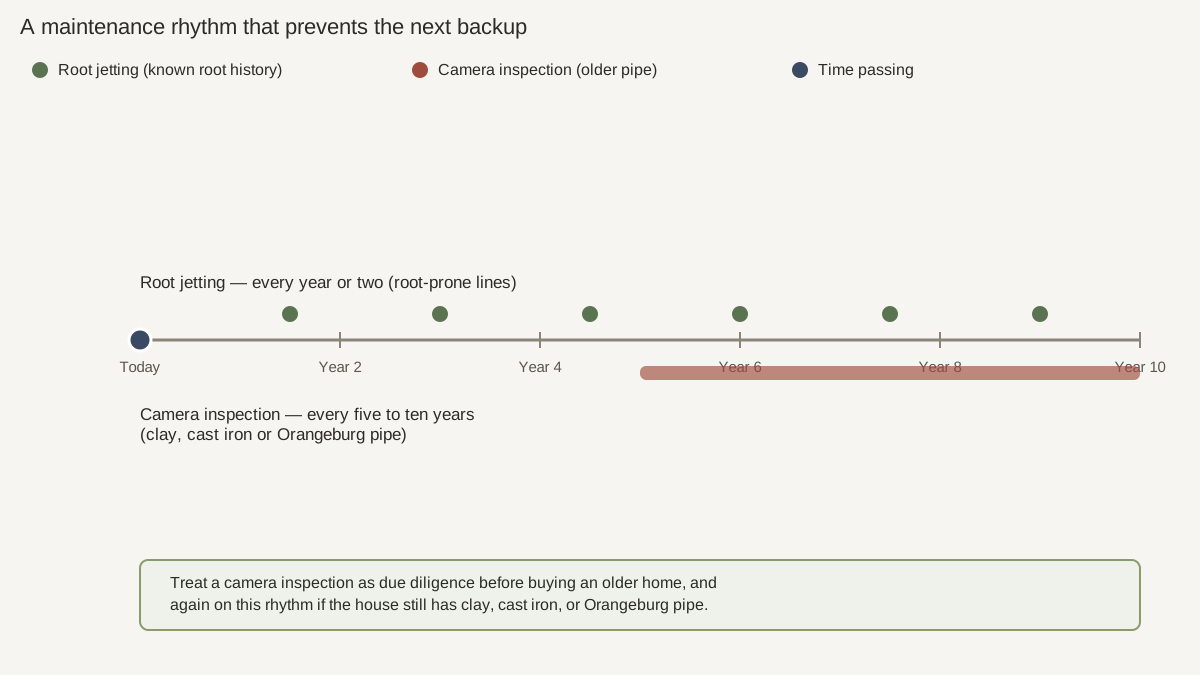
For a lateral with a known root history, jetting every year or two before roots regrow to blockage size costs far less than another emergency call, and it pairs naturally with the rest of a seasonal plumbing maintenance routine. For everyone else, treat a camera inspection as due diligence before buying an older home, and again every five to ten years after that if the house still has clay, cast iron, or Orangeburg pipe. Catching a belly or a root ball early, before it collapses, is almost always the cheaper repair.
Beyond that, the everyday habits are simple. Keep new trees and large shrubs well clear of the lateral's path. Treat every wipe as non-flushable no matter what the package claims. Scrape grease into the trash instead of the drain — it goes down soft and warm and turns into a hard blockage once the pipe cools.
Sticking to this rhythm catches a belly or root ball before it turns into an emergency call.
Regional Notes: Freeze Belt, Clay Soil and Hurricane Coast
Sewer line problems track climate and soil more than most homeowners expect. In the freeze belt — the Upper Midwest, the Northeast, the Mountain states — the ground itself heaves and settles as soil temperatures cycle above and below 32°F each winter, which shifts pipe joints gradually over years and contributes to the offset joints and root entry points described earlier. Laterals in these regions are also typically buried well below the local frost line to keep them from freezing solid, so depth alone can push excavation and trenching costs higher per linear foot than in a milder region, and any trench 5 feet deep or more requires OSHA-mandated shoring, sloping, or a trench box before a crew can safely work in it.
Across large parts of Texas, Oklahoma, and other areas with expansive clay soil, the ground swells when wet and shrinks when dry, and that repeated movement is one of the more common causes of a bellied or cracked lateral even in a house well under fifty years old. Along the Gulf Coast and other low-lying, high-water-table areas, heavy rain can overwhelm the municipal system faster than it drains, pushing water back up private laterals through inflow and infiltration. A backflow preventer valve matters more in these areas than almost anywhere else, and it is worth asking a local plumber whether the neighborhood has a known history of main-line surcharging during storms.
None of this changes what a broken lateral costs to fix. The repair methods and cost drivers described earlier in this guide apply everywhere. It does change how soon you are likely to need a repair, and it is a fair question to ask a plumber during a camera inspection: given the soil and the pipe material here, how many more years of service should this line reasonably have left?
Frequently asked questions
What is trenchless sewer line repair?+
Trenchless sewer repair fixes or replaces a damaged lateral without digging a trench along its full length. A plumber threads a resin liner through the existing pipe and cures it in place (CIPP lining), or pulls a new pipe through the old one while a bursting head fractures it outward (pipe bursting). Both need only small access pits, cost less in restoration than open-trench work, and require the pipe to still hold a mostly round shape.
How much does sewer line repair cost?+
Nationally, sewer line repair cost runs $1,388 to $5,323 for a typical job, averaging around $3,319, though a simple snaked clog can cost a few hundred dollars and a long trenchless or open-trench replacement can run well past $5,000 depending on length and depth. The method your camera inspection points to, not the word repair itself, is what sets the price. Get a written local estimate before budgeting off any national range.
Is sewer line repair covered by homeowners insurance?+
Usually not for the pipe itself. A standard HO-3 policy treats root intrusion, age, and corrosion as excluded wear and tear. What may be covered, if you carry a sewer or water backup rider, is the resulting interior water damage from a backup — flooring, drywall, belongings — which insurers often treat as a separate coverage question from the pipe repair. Check your declarations page for the rider by name before you assume either way.
Who is responsible for sewer line repair?+
In most areas, the homeowner is responsible for the lateral from the house to the property line or the connection at the street main, while the municipality maintains the main line itself. Some cities also own or share responsibility for the section of lateral under the public right-of-way. Because this varies by city and utility, one call to your local public works or water department confirms it, rather than assuming the cost is entirely yours.
How long does sewer line repair take?+
A camera inspection with simple snaking or hydro jetting is often finished the same day. A spot repair or a trenchless lining or bursting job typically takes one to two days once scheduled, mostly limited by liner cure time or coordinating access pits. A full open-trench replacement usually takes two to five days, including excavation, pipe placement, inspection, and backfilling, with landscaping restoration sometimes following as a separate step.
How often do sewer lines need to be replaced?+
There is no fixed schedule. It depends on the pipe material, the soil, and whether tree roots are nearby. Clay, cast iron, and especially Orangeburg pipe installed before the 1980s are well past a reasonable service life and worth a camera inspection even with no symptoms yet. A modern PVC lateral installed correctly is commonly rated for around 100 years of service, though real-world life varies with soil movement and installation quality. A periodic camera check, not age alone, is the most reliable way to know where a given line stands.
Why is sewer line replacement so expensive?+
Most of the cost is access, not pipe. Excavating a trench deep enough to reach the lateral, working around other buried utilities, and restoring whatever sits above it — a driveway, patio, or mature landscaping — typically costs more than the pipe and labor to install it. Trenchless methods exist largely to avoid that restoration cost, which is why lining or bursting often comes out cheaper than open-trench work over a comparable length of pipe.
How do I pay for sewer line replacement if insurance doesn't cover it?+
Most homeowners pay out of pocket, use financing many plumbing companies offer directly for larger jobs, or draw on a home equity line, since this is exactly the kind of large, unplanned repair that product is meant for. A few municipalities offer cost-share or low-interest loan programs for lateral repairs that affect the public right-of-way. It costs nothing to call your city or county public works department and ask before ruling that out.
Will my lawn be torn up, and how do I repair it after sewer line replacement?+
Only open-trench replacement disturbs the surface along the full run; trenchless lining and pipe bursting need just small access pits. After a trench job, most contractors backfill, compact, and grade the trench line, but replacing sod, mature plantings, or hardscape is often a separate cost. Ask what restoration is included in the quote before you sign, since it is a common gap between two otherwise similar bids.
What's the difference between a sewer line repair and a full replacement?+
A repair — snaking, hydro jetting, or a spot fix — addresses a specific, limited problem while leaving most of the original pipe in place. A replacement, whether trenchless or open-trench, replaces the entire run because the pipe is compromised throughout, badly bellied, or old enough that a spot fix would just move the next failure a few feet down the line. The camera inspection is what tells you which one you actually need.