A pipe burst under sink usually means a corroded angle stop, a loose P-trap slip nut, or a supply line that froze or got nicked during another repair. Shut off both angle stops, or the main valve if they won't close, then dry the cabinet to find the failed fitting. Simple fitting swaps are DIY-friendly; a broken supply line section typically runs $600 to $1,050.
You open the cabinet under the kitchen sink to grab dish soap and step into an inch of water instead. Or you hear it before you see it: a hiss or a hard spray from behind the disposal, and by the time you've pulled everything out from under the sink, the cabinet floor is already soaked. Either way, the next sixty seconds matter more than anything you'll read after them.
This guide covers what's actually under a sink and which part usually fails, how to shut the water off fast, how to figure out exactly where the leak is coming from, which fixes are within reach of a homeowner and which need a licensed plumber, what the repair and cleanup typically cost, and how a hard freeze in one region and a corroded fitting in another both end up looking the same by the time you find the puddle.
Every dollar figure here is cited to a named source, and where our data doesn't cover a specific cost, we say so instead of guessing.
What's Actually Happening When a Pipe Bursts Under the Sink
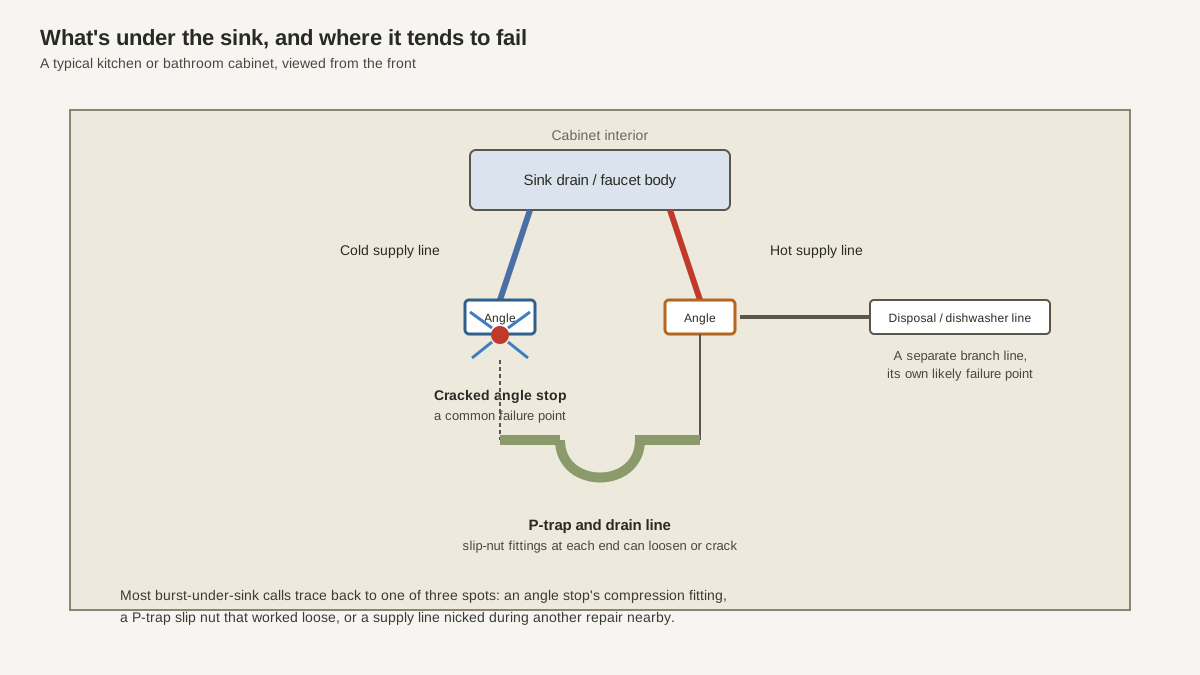
What's under the sink, and where it tends to fail first.
Open the cabinet doors under a kitchen or bathroom sink and you'll find a small, cramped plumbing system: a hot supply line and a cold supply line, each running through its own angle stop (the small oval valve you turn to shut off water at that fixture alone), a P-trap carrying wastewater to the drain, and sometimes a branch line feeding a dishwasher or garbage disposal. Any one of those parts can fail, and "burst" covers a range of what actually happens.
A true burst is sudden: a compression fitting lets go, a plastic angle stop cracks under pressure, or a soldered joint splits, and water sprays or streams out immediately, sometimes hard enough to hit the back of the cabinet. That's different from a slow pipe leak under sink fittings, which drips or weeps for days before anyone notices the swollen particle board or the musty smell. Both end up in the same cabinet, but they call for different first moves: a burst needs the water off in the next sixty seconds, while a slow leak gives you time to actually diagnose it before touching anything.
Either way, that cabinet runs on the same household water pressure as every other fixture in the house, and a compression fitting or a length of flexible supply line that's been sitting under a sink for fifteen or twenty years is rarely the strongest link in that system.
Why Pipes Burst Under a Sink, Ranked by How Often It Happens
Plumbers see the same handful of causes over and over, roughly in this order:
A corroded or worn angle stop. These small valves get turned once, at installation, and then never again for years. The compression fitting or the rubber seal inside dries out, cracks, or corrodes, and it fails exactly when someone finally does turn it, often during an unrelated faucet or disposal repair.
A loose or cracked P-trap slip nut. Slip nuts get hand-tightened, and over time, vibration, temperature swings, and the weight of the trap itself work them loose. This shows up as a pipe leak under sink drains more often than a dramatic spray.
A frozen supply line behind an exterior-wall cabinet. A sink set against an uninsulated exterior wall puts its supply lines closer to outside temperatures than almost any other fixture in the house. Once that water sits at or below 32°F long enough to freeze solid, it expands by roughly 9% in volume, and the resulting pressure looks for the weakest point in the line rather than staying put at the ice itself. A frozen pipe burst here is one of the most common winter emergency calls.
Accidental damage during another repair. A nicked supply line from a screwdriver slip while installing a new faucet, garbage disposal, or under-sink filter is common enough that plumbers expect to check recent DIY work first when a leak shows up soon after.
Age and material fatigue. Galvanized steel supply lines corrode from the inside out and can go decades looking fine, then fail without warning. Older flexible braided lines have a similar failure pattern once the braiding starts to corrode.
Water hammer and pressure spikes. Most homes run at 40 to 80 psi of static water pressure, and codes such as the International Residential Code require a pressure-reducing valve once it climbs past 80 psi; a fast-closing valve elsewhere in the house sends a pressure shock well above that baseline through the system, and over years, that repeated stress is hard on the weakest fitting in the house, which is often the small compression joint at an angle stop.
Copper, PEX, CPVC and Galvanized: How Each One Fails
Material
How It Typically Fails
DIY Repair Difficulty
Copper
Pinhole corrosion, or a soldered joint that separates from age or a nearby freeze
Hard: resoldering needs a torch, flux, and practice most homeowners don't have
PEX
A crimp or clamp fitting that was never seated correctly, or damage from a rodent or a staple driven through the wall
Moderate: needs a specific crimp or expansion tool, but no open flame
CPVC
Becomes brittle with age and can crack from a hard freeze or a sharp impact
Moderate: solvent welding is learnable, but the joint needs to cure before use
Galvanized steel
Internal corrosion that thins the pipe wall from decades of mineral buildup
Hard: usually needs threading tools and often signals the whole run should be replaced
Braided or flexible supply line
Braiding corrodes or frays, then the inner tube fails under pressure
Easy: hand-tightened compression fittings, no soldering or special tools
Notice that the easiest failure to fix yourself, a braided supply line burst at its compression nut, is also one of the most common. That's good news: a large share of under-sink emergencies are within reach of a homeowner with a wrench and fifteen minutes, once the water is off.
The First Hour: Shutting Off the Water and Assessing the Damage
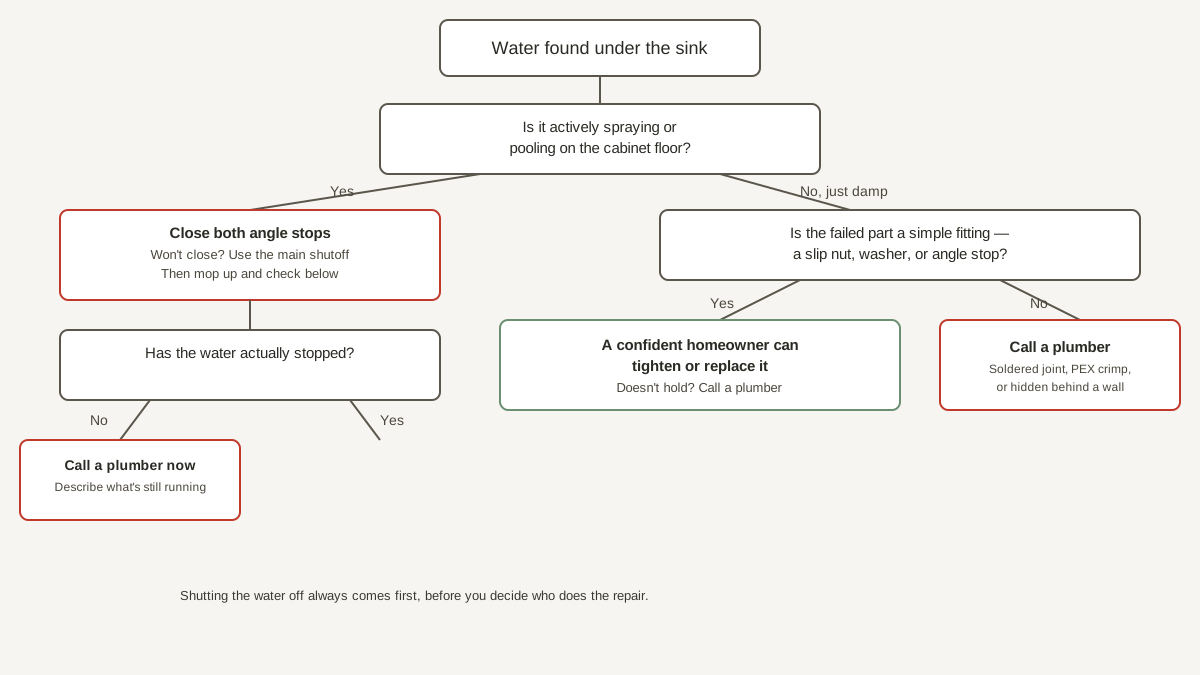
Shut it off first, then decide who makes the repair.
Knowing how to shut off water under sink fixtures before an emergency happens saves minutes you can't get back once water is actually spraying. The moment you see or hear water from a burst pipe under the sink, shut off the angle stops, or the main water valve if they won't close, before you do anything else, since every minute it keeps running adds to the cleanup bill.
Open the cabinet doors and look for the two angle stop valves, usually oval handles low on the wall behind the pipes. Turn each one clockwise until it stops.
If a valve won't turn, is already broken, or you can't find one at all, go to the home's main shutoff valve instead, typically near where the supply line enters the house, in a basement, utility closet, or crawlspace access, and turn it off there.
Open the faucet above the sink briefly to relieve pressure and confirm the flow has actually stopped.
If any of the water reached an outlet, power strip, or anything plugged in near the cabinet, shut off power to that circuit at the breaker panel before you reach into the water.
Soak up standing water with towels, then pull anything stored under the sink out — cleaning supplies, trash bags, small appliances — and set it aside to dry before the cabinet floor swells further.
If the water is still coming and you can't find or reach a working shutoff, a plumber that serves your area can walk you through it over the phone: call 888-854-0126 and describe what you see, including whether the spray has slowed and roughly which pipe it's coming from.
Once the water's off, take a minute before reaching for tools. A burst pipe repair job goes faster when you already know which fitting failed, so the next section walks through finding it.
Diagnosing Where the Water Is Actually Coming From
With the water off and the cabinet dried out, the actual source is often harder to spot than you'd expect: water travels along a pipe or a cabinet wall before it drips, so the wettest spot isn't always the failure point.
Dry every surface in the cabinet completely, including the pipes themselves, with a towel or paper towels.
Turn the angle stops back on slowly, one at a time, watching closely as pressure returns.
Check each connection in turn: the angle stop compression nuts, the supply line's connection at the faucet, the P-trap slip nuts at both ends, and the disposal or dishwasher line if the sink has one.
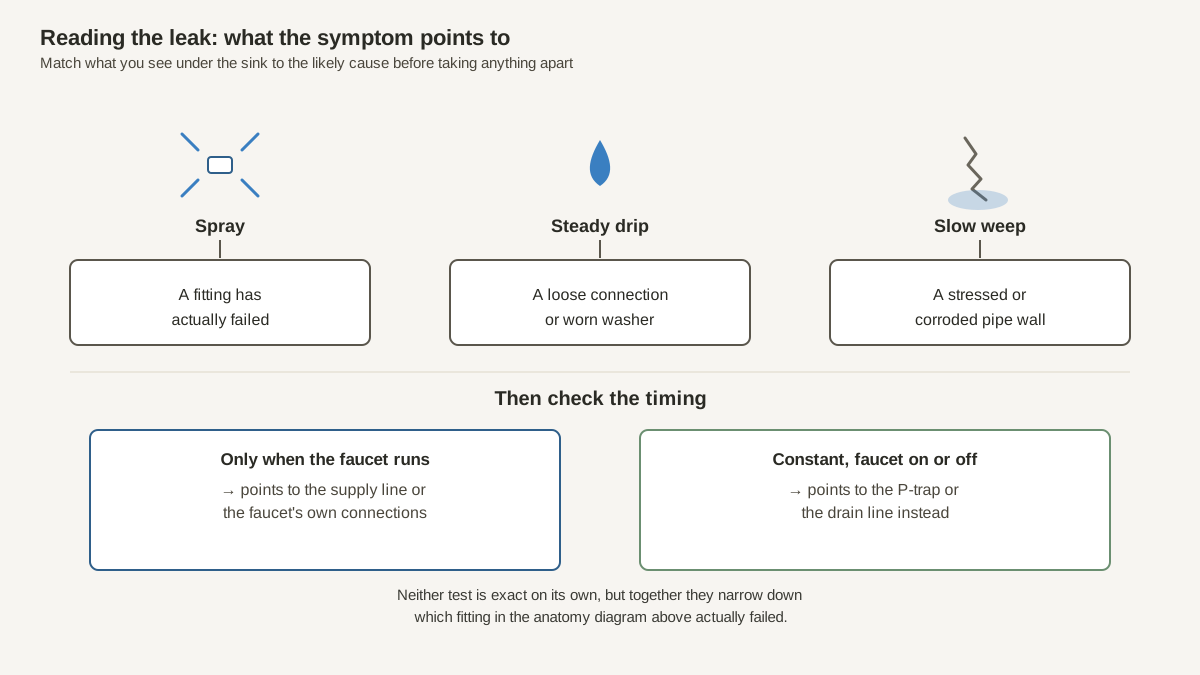
Look for the difference between a spray (a fitting has actually failed), a steady drip (a loose connection or worn washer), and a slow weep along a crack (often a stressed or corroded pipe wall itself).
If the sink shares a wall with a dishwasher or refrigerator water line, check those connections too. Water can travel along a cabinet base and pool under the sink from a completely different fixture.
A leak that only shows up when the faucet runs, rather than constantly, usually points to the supply line or the faucet's own connections rather than the drain side. One that appears regardless of whether the faucet is on almost always traces back to the P-trap or the drain line instead. That distinction alone often points to a burst pipe repair on the supply side rather than a simpler drain-fitting fix.
What the leak looks like narrows down which fitting to check first.
Fixing It Yourself vs Calling a Plumber
What a Handy Homeowner Can Safely Fix
A short list of under-sink repairs is genuinely within reach without a plumbing license, as long as the water is off and the part is accessible:
A loose P-trap slip nut. Hand-tighten it, then give it a quarter turn with slip-joint pliers. Don't overtighten it, since that can crack the plastic nut.
A worn slip-nut washer. These are inexpensive at any hardware store; bring the old one to match the size.
A failed compression angle stop. With the main shutoff closed, a multi-turn or quarter-turn replacement angle stop threads onto the same supply line in most cases.
A frayed braided supply line. The valve end is almost always a standard 3/8-inch compression fitting, so bring the old line to the store to match the faucet or fill-valve end's size and thread exactly. These are a straightforward swap: unscrew the old one at both ends, wrap the threads, and hand-tighten the new one before a final quarter turn with a wrench.
What Needs a Licensed Plumber
A soldered copper joint that's separated or is leaking at the seam: this needs a torch, flux, and the pipe fully drained and dried first.
A PEX crimp or expansion fitting, unless you already own the specific crimp tool and rings for that pipe's exact diameter.
Any leak that's actually inside a wall, under a slab, or otherwise not visible and reachable from inside the cabinet.
A galvanized steel line showing corrosion: cutting and threading steel pipe without the right tools usually makes the problem worse, not better.
Repeated failures at the same spot, which usually means the underlying cause (a freeze risk, water hammer, or pipe fatigue) hasn't actually been fixed.
If you're not confident which category your situation falls into, our guide on when you actually need an emergency plumber walks through that distinction with more examples.
What Burst Pipe Repair Under a Sink Costs
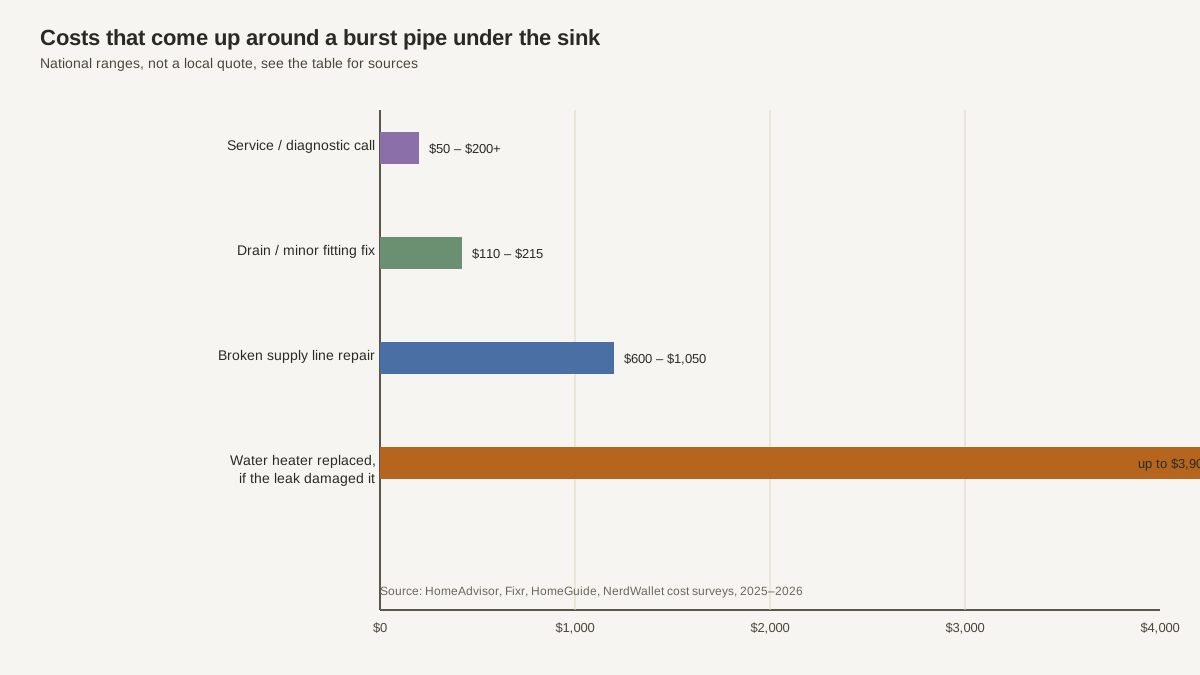
National cost ranges tied to a burst pipe under the sink, low to high.
How we got these numbers: our cost data doesn't include a survey written specifically for a burst pipe under a sink, so we're not inventing one. What we do have is HomeAdvisor's broken-pipe-repair figure, HomeAdvisor's kitchen-sink drain cleaning figure as a reasonable stand-in for a minor fitting-level fix, and Fixr's and HomeGuide's plumber hourly and service-call figures, all of which apply directly to the parts of this repair that overlap with general plumbing work. Treat the ranges below as a starting point, not a quote for your specific pipe.
Job
Typical Range
What Moves the Price
Source
Service call / diagnostic visit
$50 – $200+
Distance, emergency vs. scheduled timing, whether it's credited toward the repair
HomeGuide, main sewer line cleaning cost survey, 2025
Minor fitting fix (angle stop, slip nut, supply line swap)
Priced within the hourly rate below (not separately tracked)
Plumber's hourly rate typically applies; a straightforward swap runs well under an hour
Fixr, sewer line cleaning survey, 2025 (hourly rate)
Kitchen sink drain cleaning (comparable labor, if the fix is at the P-trap or drain side)
$110 – $215
Clog severity, trap accessibility, whether the trap needs replacing rather than just clearing
HomeAdvisor, clogged drain repair page, 2026
Broken supply line / pipe section repair
$600 – $1,050
Cabinet or wall access, pipe material, number of fittings involved
HomeAdvisor, broken pipe repair figure (sewer main repair page), 2026
Water heater replacement, if the leak reached and damaged a nearby unit
$600 – $3,900
Tank vs. tankless, fuel type, venting changes; most residential tanks hold 40 to 50 gallons
HomeAdvisor, 2026 / NerdWallet, 2025
The plumber's hourly rate itself, $75 to $150 depending on region and timing according to Fixr's sewer line cleaning survey, is what actually prices most under-sink fitting repairs: a fifteen-minute angle stop swap and a forty-five-minute P-trap replacement both fall well inside a single billed hour or a flat-rate minimum in most markets. If a freeze cracked the water heater's tank or a fitting on it, our water heater replacement cost guide breaks tank-versus-tankless pricing down in more detail.
An access-heavy repair, one where the cabinet has to come apart or the pipe run continues into a finished wall, typically costs more than the base ranges above once the extra labor is added in. Ask for that broken out separately on any written estimate, and see our guide on drain cleaning costs and methods if the actual problem turns out to be a clog rather than a burst.
Cleaning Up the Water Damage Before It Becomes a Bigger Problem
A cabinet base is usually particle board, and particle board that's been sitting in water swells, delaminates, and rarely returns to its original shape once it dries. Getting standing water out fast matters more under a sink than almost anywhere else in the house.
The 24–48 Hour Mold Window
The Institute of Inspection, Cleaning and Restoration Certification (IICRC) and the EPA's mold guidance both point to roughly 24 to 48 hours as the window before wet building materials start supporting mold growth. A fresh supply-line burst is also what the IICRC S500 standard classifies as Category 1 water, the cleanest of its three categories, since it left the potable water system rather than a drain. That clock starts the moment the leak began, not when you found it, so a slow drip that went unnoticed for a few days is already past that window by the time you spot the swollen cabinet floor. The EPA draws the DIY line at roughly 10 square feet of visible mold: smaller patches on the cabinet floor or wall can typically be cleaned by a homeowner with soap, water and full drying, while anything larger, or any moldy area you can't fully dry within that 24-to-48-hour window, calls for a professional.
Situation
What You Can Handle
When to Call a Pro
Small puddle, caught within the hour
Towel-dry, wipe the cabinet interior, run a fan with the doors open
If a musty smell or discoloration shows up over the next few days
Cabinet floor visibly swollen or soft
Remove stored items, prop the doors open, run a fan and a small dehumidifier
The particle board itself may need replacing; a contractor or handyman can assess it
Water reached the kitchen or bathroom subfloor
Little that's safe to do yourself beyond removing what's visibly soaked
Moisture-meter inspection to check whether subfloor material needs to come up
Leak ran unnoticed for more than a day
Photograph the damage before cleanup
A water damage restoration company, working to IICRC S500 guidance, for drying and mold prevention
Photograph everything before you throw anything out: the swollen cabinet floor, water lines on the wood, any items that got soaked. Your insurer will want documentation, not just a description, if you decide to file a claim.
Does Homeowners Insurance Cover a Burst Pipe Under the Sink?
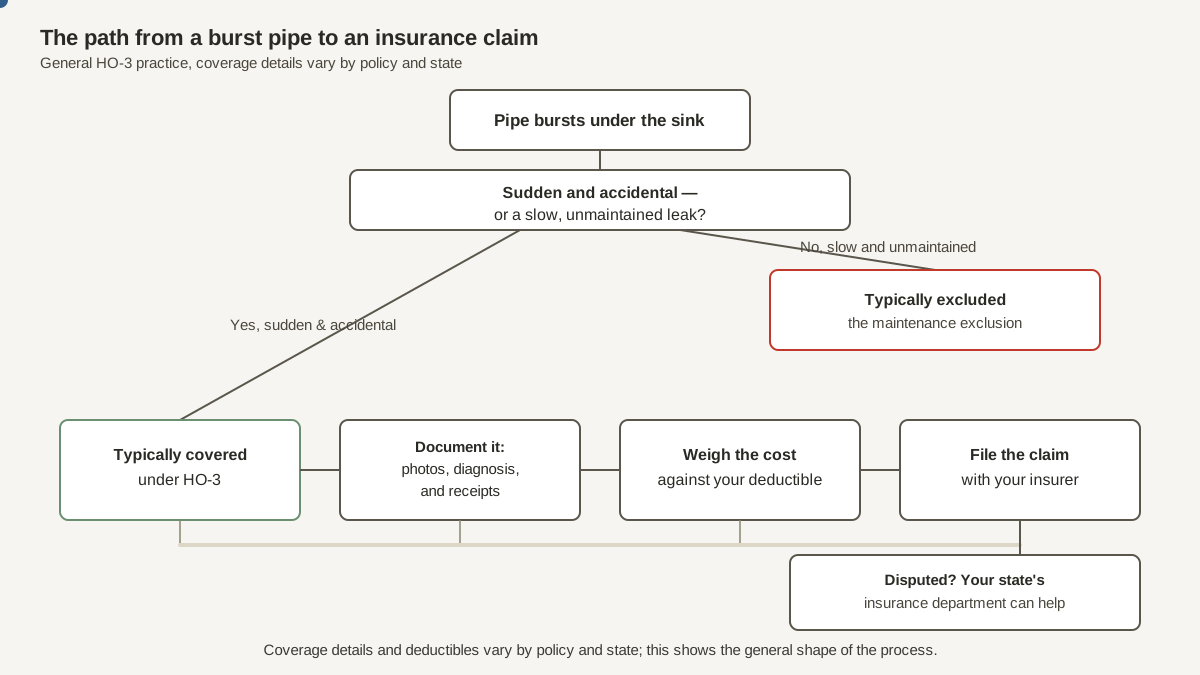
A standard HO-3 homeowners policy typically covers sudden and accidental water damage from a burst pipe; the Insurance Information Institute describes this type of claim as one insurers commonly pay. What it typically does not cover is damage traced back to a homeowner's failure to maintain the plumbing, or a slow leak that clearly went on for weeks or months before anyone addressed it; most policies include some version of this maintenance exclusion, and it's a common reason a claim gets denied or reduced.
Before filing, gather documentation: photos of the damage and the failed fitting itself, the plumber's written diagnosis of what broke and why, and receipts for any emergency work. If the repair cost is close to your deductible, weigh the claim against the effect on future premiums before deciding whether to submit it. A $600 to $1,050 pipe repair may not clear a $1,000 deductible once cleanup is factored in, or it may clear it easily; that math is specific to your policy.
Every insurer and every state regulates claims somewhat differently, and this guide covers general national HO-3 practice rather than any one state's specific rules. If a claim gets disputed, your state's department of insurance can explain the complaint process that applies where you live.
Sudden and accidental damage is usually covered; a leak that sat unaddressed for weeks usually isn't.
When to Call a Plumber Instead of Continuing to DIY
Handling a simple fitting yourself is reasonable once the water's off. A few situations call for a licensed plumber instead of another attempt on your own:
The water is still running and you can't find or close a working shutoff: this is not a DIY situation, so call for help immediately.
The failed connection is a soldered copper joint or a PEX crimp fitting you don't have the tool for.
The leak is behind a wall, under a slab, or otherwise not fully visible and reachable.
The same spot has failed more than once, which usually means the underlying cause hasn't actually been addressed.
You smell gas anywhere near where you're working: stop immediately, leave the area, and call your gas utility or 911 from outside the house before you do anything else.
The disposal or dishwasher supply line is involved and you're not confident about disconnecting appliance connections safely.
A licensed plumber that serves your area can diagnose the exact failure point, replace it correctly the first time, and tell you whether it's a one-off part failure or a sign of a bigger issue with the supply lines feeding that sink; reach one at 888-854-0126 and describe what you've found so far. Before hiring anyone, confirm their license number, ask for proof of insurance, and get the scope of work in writing. Our guide on how to choose a licensed plumber covers the specific questions worth asking and the red flags worth walking away from.
How to Keep the Pipe Under Your Sink From Bursting Again
Most prevention here is cheap compared to any repair on the cost table above:
Replace old compression angle stops with quarter-turn ball-valve stops when you're already under the sink for another reason; they last longer and are less likely to seize between uses.
Exercise angle stops once or twice a year by turning them fully closed and back open, rather than letting them sit untouched for a decade until an emergency forces the issue.
Don't overtighten slip nuts, hand-tight plus a modest quarter turn is usually enough; cranking down harder is more likely to crack the nut than seal the joint better.
Insulate exposed supply lines if the cabinet sits against an exterior wall, and open the cabinet doors during a forecast cold snap so warm room air can reach the pipes inside.
Avoid storing heavy chemical bottles directly against supply lines and fittings; leaks and spills from cleaning products can corrode metal fittings over time.
Have a plumber inspect supply lines whenever other under-sink work is being done, since it costs little extra to swap an aging line while the cabinet is already open.
A short seasonal check of the angle stops, supply line condition, and the P-trap connections catches most of this before it becomes an emergency call; our seasonal plumbing maintenance checklist covers it alongside the rest of a home's plumbing.
Regional Notes: Freeze Belt vs Warm-Climate Causes
Where you live changes which failure mode is most likely, even though the fittings themselves are the same nationwide.
Region
Main Risk
What to Do
Freeze belt (Upper Midwest, Northeast, Mountain West, northern Great Plains)
A frozen pipe burst behind an exterior-wall vanity or kitchen sink during a hard cold snap
Insulate exposed lines, open cabinet doors during a forecast freeze, know where the main shutoff is before winter starts
Warm, humid regions (Gulf Coast, Southeast, parts of the Southwest)
Faster corrosion of metal fittings and angle stops from humidity, and hard water mineral buildup inside older lines
Exercise angle stops periodically so a corroded one is found before it fails under pressure
Older homes nationwide, regardless of climate
Galvanized supply lines and original 1970s-or-older compression fittings simply reaching the end of their service life
Budget for proactive replacement of visibly aged supply lines rather than waiting for a burst
A house in a region that rarely freezes can still have a burst pipe repair emergency from a corroded angle stop that's never been touched since the home was built, while a well-insulated house in the freeze belt can go through a hard winter without incident simply because its exposed lines were protected years ago. The pipe under your sink doesn't care what the regional average looks like: it cares about its own age, material, and how exposed it actually is.
Frequently asked questions
How do I fix a burst pipe under the sink?+
Shut off both angle stops first, or the main water valve if they won't close, then dry the area and find the exact failure point. If it's a loose P-trap slip nut or a failed angle stop, a homeowner can often replace it with basic tools. A soldered joint, a PEX crimp fitting, or any leak hidden behind a wall needs a licensed plumber to repair correctly.
How much does burst pipe repair cost?+
A straightforward broken supply line section runs $600 to $1,050 according to HomeAdvisor's broken-pipe-repair figures, while a minor fitting fix like an angle stop or slip nut typically falls within a plumber's standard $75 to $150 hourly rate. A basic service call adds $50 to $200 or more on top of the repair itself. Get a written estimate before work starts so labor and parts are itemized separately.
Is a burst pipe under the sink an emergency?+
Yes, if water is actively spraying or pooling, treat it as an emergency and shut off the angle stops or main valve immediately, since every minute it runs adds to the water damage. A slow drip that's been caught early and isn't actively worsening can usually wait for a scheduled repair rather than an after-hours emergency call, but don't leave it unaddressed for more than a day or two.
How long does it take to fix a burst pipe?+
A simple fitting swap, like a slip nut or an angle stop, usually takes a plumber well under an hour once the water is off. A broken supply line section that needs cutting and reconnecting typically runs one to two hours on site. A repair that requires opening a wall or cabinet takes longer, since the access work adds time on top of the pipe repair itself.
Why is there an open pipe under my sink?+
An open-ended pipe under a sink is usually a capped-off line for a future dishwasher, disposal, or water filter connection rather than a sign of damage, check that it has a cap or valve on the end. If it's dripping or was clearly disconnected recently, it may be the source of your leak; trace it back to see whether it connects to the supply or the drain side before assuming it's a burst pipe.
Why is there a bend in the pipe under the sink?+
That bend is the P-trap, typically 1 1/4 inches in diameter under a bathroom sink and 1 1/2 inches under a kitchen sink, and it's there on purpose: it holds a small amount of standing water that blocks sewer gas from coming back up through the drain into your kitchen or bathroom. It also happens to be one of the more common leak points, since its slip-nut fittings are hand-tightened and can loosen or crack over years of use.
What causes a pipe to leak or burst under a sink?+
The most common causes, roughly in order, are a corroded or worn angle stop valve, a loose or cracked P-trap slip nut, a frozen supply line behind an exterior wall, accidental damage during another repair like a faucet or disposal install, and general age-related fatigue in older galvanized or braided supply lines. Water hammer from fast-closing valves elsewhere in the house adds ongoing stress to whichever fitting is weakest.
How do I shut off the water under a sink?+
Look for two small oval angle stop valves low on the wall behind the pipes, one for hot and one for cold, and turn each clockwise until it stops. If a valve won't turn or is already broken, go to the home's main shutoff valve instead, usually located where the supply line enters the house. Knowing this location before an emergency happens saves critical minutes.
Does insurance cover a burst pipe?+
A standard HO-3 homeowners policy typically covers sudden, accidental water damage from a burst pipe, according to the Insurance Information Institute. It typically does not cover damage from a slow leak that went unaddressed for weeks or from a homeowner's failure to maintain the plumbing. Document the damage with photos and a plumber's written diagnosis before filing, and check your specific policy's exclusions.
What's the difference between a slow leak and a burst pipe under the sink?+
A burst is sudden, a fitting fails and water sprays or streams out right away, demanding an immediate shutoff. A slow pipe leak under sink fittings drips or weeps gradually, sometimes for days or weeks, often noticed only once the cabinet floor swells or a musty smell shows up. Both need the water shut off and the failed part replaced, but a slow leak gives you more time to diagnose it correctly first.