A water heater replacement cost typically runs $600 to $2,500 installed for a standard tank and $1,400 to $3,900 for a tankless unit, with the national average landing near $1,300 to $1,350. The final number depends on tank size, fuel type, whether your gas line or electrical panel needs upgrading, and any permit or venting work your local code requires.
Your water heater picked the worst possible morning to fail, and now you're staring at a puddle, a cold shower, or a quote from a plumber that seems to have come out of nowhere. This guide breaks down what a water heater replacement actually costs in 2026, based on national contractor-cost surveys rather than guesswork, and walks through the decisions that move the number up or down: tank versus tankless, gas versus electric, the size you actually need, and the permit and code items a lot of quotes bury in the fine print.
None of the figures here are invented. They come from the plumbing-industry cost surveys cited throughout, and where a local factor, your city's labor rates, your specific gas line, your home's electrical panel, changes the price, we say so instead of forcing a number that fits neatly into a paragraph. By the end you'll know what a fair water heater replacement cost looks like for your situation, what a written estimate should include, and where the line sits between a Saturday-afternoon DIY job and a call to a licensed plumber.
What Actually Drives a Water Heater Replacement Cost
Before any table of numbers means anything, it helps to know what's actually inside a water heater replacement cost quote. A contractor isn't pulling a figure out of the air, at least not a fair one: they're pricing the unit itself, labor, code compliance items, and whatever your specific house adds to the job.
The unit
A basic 40- or 50-gallon electric tank sits at the low end. A high-recovery gas unit, a hybrid heat pump model, or a tankless system costs more before a wrench ever touches it. Recovery rate, how fast the unit reheats water after a draw, pushes the price up inside every category, since a faster-recovery unit needs a bigger burner or element.
Labor and access
A straight swap, same type, same location, same venting, is the cheapest labor call a plumber makes. Add a closet with tight clearance, a water heater tucked in an attic or crawlspace, or a switch from gas to electric, and labor time climbs fast, because the crew is now running new lines instead of reconnecting old ones.
Code and permits
Many jurisdictions require a permit for water heater replacement, an inspection, and an expansion tank on closed systems where the water utility has a check valve or pressure-reducing valve on the main. HomeAdvisor's national data puts permits at $25 to $300 and an expansion tank at $90 to $350 when one is required.
Where you live
Local labor rates matter more than most homeowners expect. Bob Vila's metro-level data shows a full replacement averaging around $1,600 in Chicago, $1,500 in Philadelphia, $1,400 in Dallas and $1,300 in Phoenix, all for comparable work, priced differently because labor and permitting costs differ by market. If your quote sits well outside the national range, ask what's driving it before you assume you're being overcharged. Even within one metro area, the number still varies by the specific job: how hard the unit is to access, whether it's a straight swap or a fuel-type change, and how much venting or code work the crew finds once the old tank is actually out.
Cost by Water Heater Type: Tank, Tankless, Hybrid and Solar
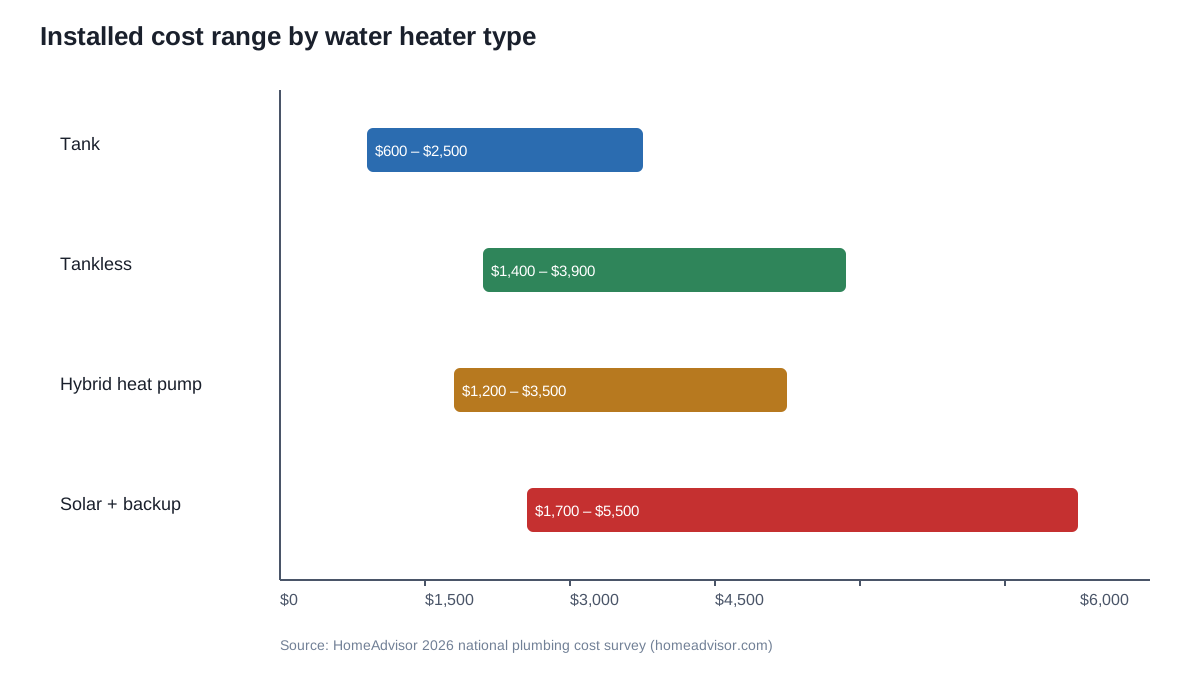
Here's the water heater replacement cost by type, using the installed-cost ranges from HomeAdvisor's 2026 plumbing cost survey and cross-checked against NerdWallet's independent research. Every range below includes both the unit and labor.
Installed cost ranges by water heater type. Source: HomeAdvisor 2026 national plumbing cost survey.
Water heater type
Typical installed cost
What moves the price
Source
Conventional tank (gas or electric)
$600 – $2,500
Fuel type, tank size, venting
HomeAdvisor 2026
Tankless (gas or electric)
$1,400 – $3,900
Gas line upsizing, electrical capacity, venting
HomeAdvisor / NerdWallet 2026
Hybrid heat pump
$1,200 – $3,500
Equipment cost, condensate drain, clearance
HomeAdvisor 2026
Solar (with backup tank)
$1,700 – $5,500
Roof collectors, backup tank, permitting
HomeAdvisor 2026
National average, all types
$1,347 average ($881 – $1,825 typical)
Blended across the survey
HomeAdvisor 2026
Bob Vila's separate survey lands close to the same place: a national average of $1,293, with a typical range of $874 to $1,765 for the job as a whole. When two independently run surveys land within about $50 of each other on the average, that's a reasonable sign the number reflects what plumbers are actually charging, not an outlier pulled from a handful of quotes.
Gas units alone run $700 to $2,700 installed; electric units run a wider $600 to $3,500, mostly because electric tankless models at the top of that range need a serious panel upgrade. If a tankless water heater cost quote you received sits near $4,000, ask whether it includes the gas line and venting work, because NerdWallet's data shows Home Depot-installed tankless jobs averaging $4,300 when that full scope is included.
How these numbers were built
This guide leans on two independent surveys, HomeAdvisor and NerdWallet, rather than a single source, and neither publisher breaks its numbers down by metro area, so every range above is national. Your local quote should land inside it once your market's labor rates and permit fees are factored in; if it doesn't, ask the contractor what's different about your job. For a plain-English rundown of water heater types and how efficiency affects the bill over time, the Department of Energy's Energy Saver program is a solid next stop before you buy.
It's worth being direct about what these numbers are and aren't: every range on this page is a researched range built from published contractor-cost surveys, not a quote for your specific job, and it can't be. The only number that actually binds anyone is a written estimate from a local plumber who has seen your tank, your access, and your gas or electrical setup in person.
Cost by Tank Size, Fuel Type and Labor
Size and fuel type swing the number as much as the water heater category does. Here's the breakdown by tank size and by labor component, still from HomeAdvisor's national survey.
Size or line item
Typical installed cost
Source
40-gallon tank
$800 – $2,300
HomeAdvisor 2026
50-gallon tank
$800 – $2,500
HomeAdvisor 2026
75-gallon tank
$1,100 – $4,000
HomeAdvisor 2026
Labor only, tank swap
$150 – $450
HomeAdvisor / NerdWallet 2026
Labor only, tankless install
$600 – $1,900
HomeAdvisor / NerdWallet 2026
Permit
$25 – $300
HomeAdvisor 2026
Expansion tank (where required)
$90 – $350
HomeAdvisor 2026
A 40 gallon water heater cost and a 50-gallon unit sit almost on top of each other at the low end, since both use similar tank materials and comparable labor. The gap opens at the high end, where a 50-gallon high-recovery gas model costs more than a comparable 40-gallon unit. Step up to 75 gallons, usually for a house with four or more people or two bathrooms running back to back, and the range jumps to $1,100 – $4,000.
On fuel, a straight gas vs electric water heater cost comparison favors gas at the low end, $700 minimum versus $600, close enough not to matter much, but electric has the wider ceiling, because electric tankless units with the biggest output need dedicated high-amperage circuits that a standard panel often can't supply without an upgrade. If your water heater installation cost estimate includes a panel or service upgrade, get that line item broken out separately rather than folded into a lump sum.
Repair or Replace? A Step-by-Step Way to Decide
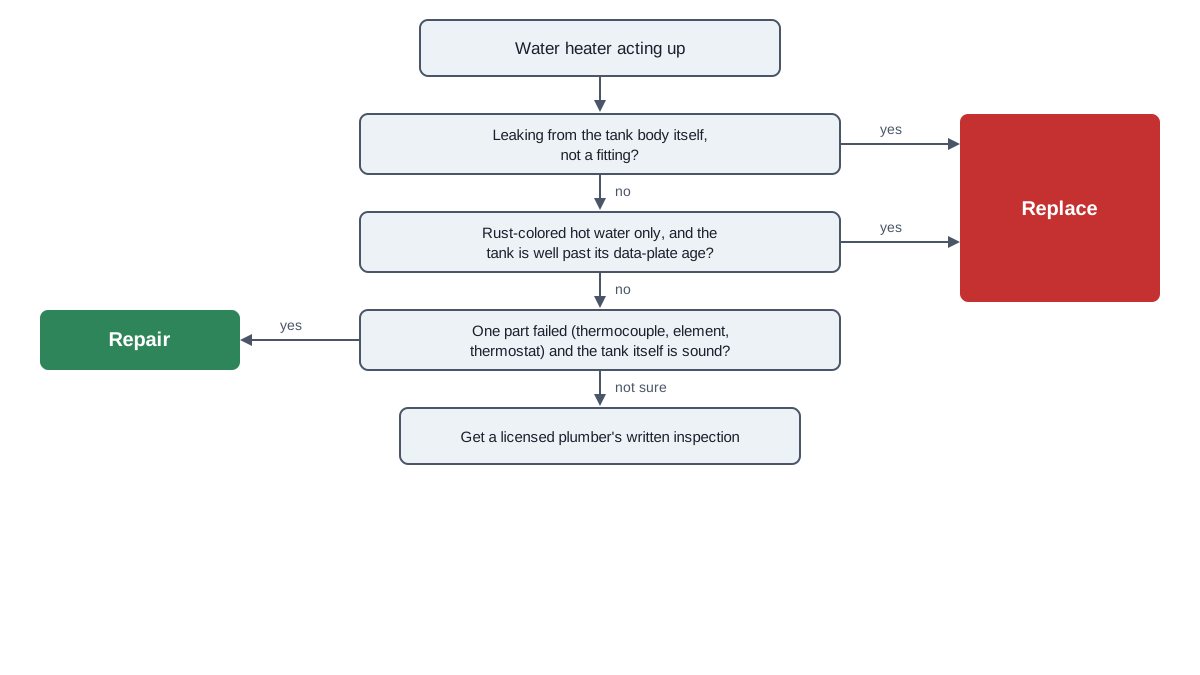
Not every failing water heater needs a full replacement. Here's a step-by-step way to tell which side of the line you're on before you call anyone.
A step-by-step way to sort a repairable water heater from one that needs replacement.
Check the data plate on the side of the tank for the manufacture date. A unit well past a typical service life is a candidate for replacement even if today's problem looks minor, because the next failure rarely arrives at a convenient time.
Look at where the water is coming from. Water pooling under fittings or the drain valve is often a repairable part. Water seeping from the tank body itself, which our guide to a leaking water heater walks through in more detail, almost always means replacement, because a tank seam doesn't get patched.
Run the hot water and watch the color. Rust-colored water from the hot side only, with the cold side staying clear, points to internal tank corrosion.
Listen for rumbling or popping when the burner or element runs. That's usually sediment buildup, and it shortens the tank's remaining life even when the unit is still technically working.
Get a written inspection from a licensed plumber before you decide. A short look at the tank, the venting, and the anode rod tells a pro more than any symptom checklist can from the outside.
Diagnosing a cost to replace water heater units this way, before the problem turns into an emergency, is almost always cheaper than an after-hours job. A tank leaking from the body, rusting internally, or already past a typical service life is not a candidate for a patch repair. A tank with a bad thermocouple, a tripped high-limit switch, or a failed heating element, on the other hand, is often a $150 – $450 repair away from running fine for a few more years, well short of full water heater replacement cost.
Tank vs Tankless: Which One Is Worth the Extra Cost
The tankless water heater cost premium is real, and it's fair to ask whether it's worth paying. Here's how the two approaches compare, beyond the sticker price.
Factor
Storage tank
Tankless
Installed cost
$600 – $2,500
$1,400 – $3,900
Hot water supply
Limited by tank size, then a wait to reheat
Continuous, limited instead by flow rate
Typical wear pattern
Tank corrodes from the inside over time
Heat exchanger scales up, especially with hard water
Existing gas line / panel
Usually compatible as-is
Often needs upsizing for gas, or a panel upgrade for electric
Footprint
Closet or utility room floor space
Wall-mounted, smaller footprint
If your current setup already has an adequately sized gas line and a spot for wall-mounted venting, the tankless water heater cost gap narrows, because you're not paying to upsize the gas line at the same time. If it doesn't, that hidden cost is often the real reason a tankless quote lands at the top of the $1,400 – $3,900 range instead of the bottom.
Tankless units aren't maintenance-free. Hard water shortens the life of the internal heat exchanger unless the system gets descaled on a schedule, and a unit throwing error codes or losing output is a separate problem from a routine replacement, covered in our tankless troubleshooting guide by common brand failure points. A storage tank has fewer parts to go wrong but a shorter overall lifespan, particularly in a house with hard water and no softener.
What a Water Heater Installation Actually Involves
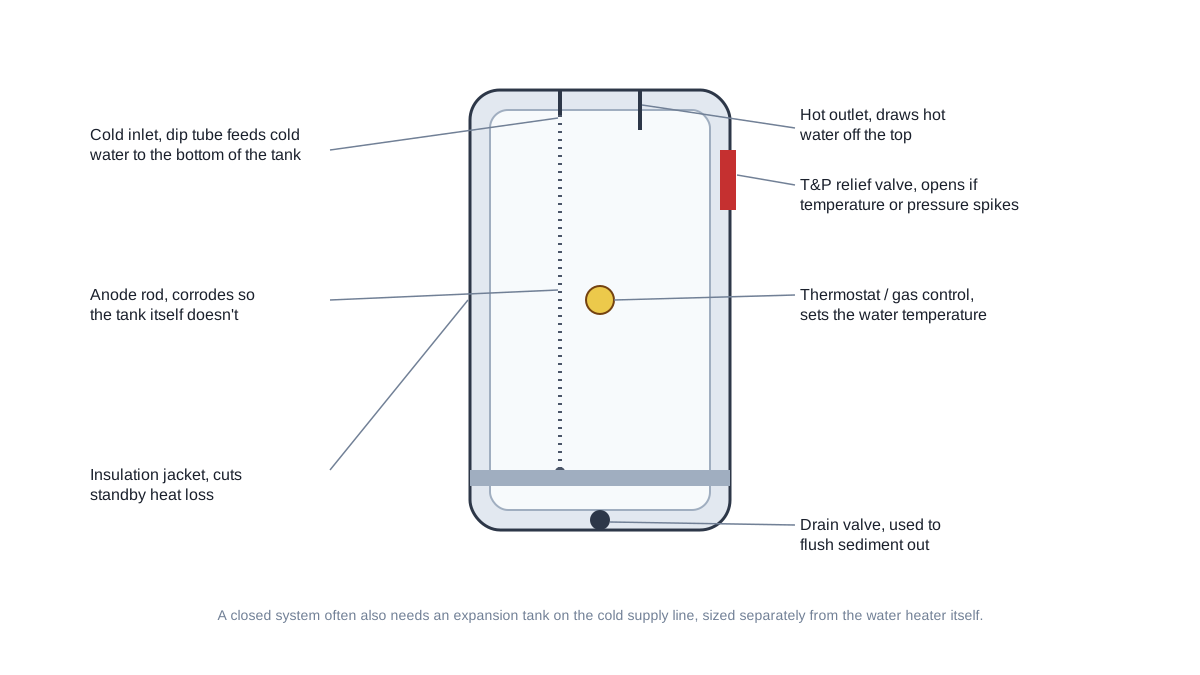
Here's what actually happens on installation day, whether the crew is swapping a tank or putting in a tankless unit.
The main parts of a tank-style water heater, referenced throughout this guide.
For a tank swap
The plumber shuts off the water supply and, on a gas unit, the gas valve, then drains the old tank through the drain valve before disconnecting the water lines and, on gas units, the flue and gas line. The old tank comes out, the new one goes in on a stand or pan if code requires it, and the plumber reconnects the dip tube, cold inlet, hot outlet, and, on gas units, the gas line and venting. A water heater installation cost quote for a straight swap should already include pressure-testing the connections and setting the thermostat before the crew leaves.
For a tankless conversion
This is a bigger job. In addition to everything above, the crew typically needs to run a larger gas line to the unit, since tankless units draw more BTUs on demand than a tank's burner does, install new venting rated for the unit, and mount it on an exterior or interior wall with the required clearances. Electric tankless conversions instead need a dedicated high-amperage circuit, which is why electric tankless labor and material costs can land near the top of the $600 – $1,900 tankless labor range.
What a good crew checks before they leave
A thorough installer tests the T&P relief valve, confirms the expansion tank is charged to the right pressure if one was installed, checks for gas leaks with a proper detector rather than a soap-and-water test alone, and walks you through the thermostat setting and shutoff locations. A rushed installer who skips the pressure test and the gas-leak check is cutting corners you'll only discover the hard way.
What You Can Handle Yourself, and Where DIY Ends
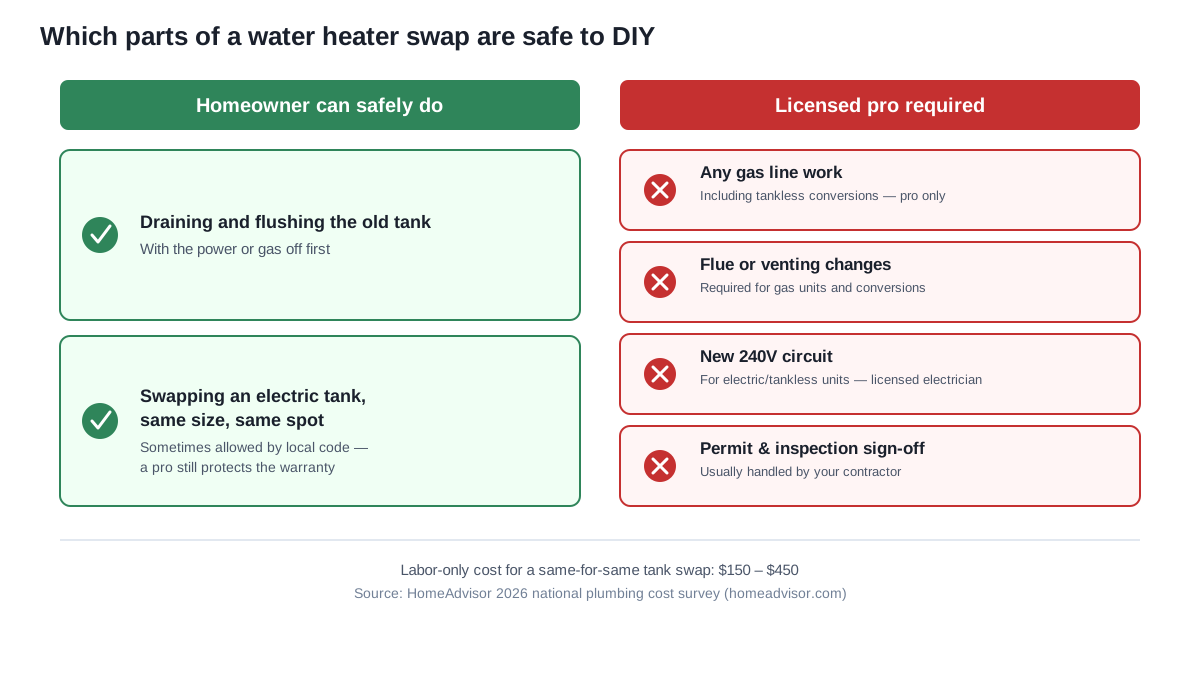
Some of this job is within reach for a handy homeowner. A lot of it isn't, and the part that isn't is where injuries and code violations happen.
Task
Homeowner
Licensed pro
Draining and flushing the old tank
Yes, with power/gas off first
—
Swapping an electric tank, same size, same spot
Sometimes, where local code allows
Recommended anyway, for warranty and inspection
Any gas line work, including tankless conversions
No
Yes, licensed plumber or gas fitter
Flue or venting changes
No
Yes
New 240V circuit for an electric or tankless unit
No
Yes, licensed electrician
Permit pull and inspection sign-off
Rarely worth the hassle
Usually handled by the contractor
If you're comfortable with the water lines and confident the old and new units are truly like-for-like, the labor-only side of a water heater installation cost, $150 – $450 for a tank, is real money you can keep in your pocket. The moment gas, venting, or a new circuit enters the picture, the math changes: a botched gas connection or an unvented flue is not a mistake you want to discover later.
For anything past a same-for-same tank swap, a plumber that serves your area can size the job correctly the first time. 888-854-0126 reaches one who can walk through what your specific setup needs before anyone shows up with a truck. Our guide to choosing a licensed plumber covers the license lookup, insurance proof, and questions worth asking before you sign anything. Whoever you hire, verify the license is active and ask to see proof of current liability insurance before work starts, not after; most state licensing boards let you check a contractor's status online in a couple of minutes.
Which parts of a water heater swap are safe to do yourself versus jobs that need a licensed pro. Labor-only cost for a like-for-like tank swap: $150–$450, per HomeAdvisor's 2026 national plumbing cost survey.
Safety, Permits and the Code Rules That Show Up on Your Bill
Permits exist because a water heater install involves gas, high-temperature water under pressure and, on tankless units, high-amperage electrical work, three things a code inspector checks for a reason.
If you ever smell gas near the water heater, do not attempt to relight the pilot or flip any switch near it: leave the house, and call your gas utility or 911 from a safe distance before you call a plumber.
Short of an active gas smell, here's what the code and safety items on your quote are actually protecting against. The T&P relief valve exists to release pressure automatically if the tank overheats or over-pressurizes, and it should have a discharge pipe running close to the floor or to a drain, never capped off. An expansion tank is required in many jurisdictions once the water utility has a check valve or pressure-reducing valve on the incoming line, because without one, thermal expansion has nowhere to go but back-pressure on the tank.
If your project includes upsizing a gas line for a tankless conversion, that's licensed-plumber territory in essentially every jurisdiction, and it's worth reading our gas line repair guide for what that scope of work involves and who's licensed to touch it. Combustion venting is the other place inspectors focus: a gas unit installed in a closet or small utility room needs enough combustion air, and a mis-vented flue is a carbon monoxide risk, not a cosmetic one. Those venting and combustion-air requirements trace back to NFPA 54, the National Fuel Gas Code, which most local gas codes for water heaters are built on.
Most local plumbing codes are built on a base model code, commonly the Uniform Plumbing Code published by IAPMO, though every city and county amends it before adopting it. That's why permit fees, expansion-tank rules and inspection timelines vary by ZIP code even though the underlying safety logic is the same everywhere.
A permit costing $25 to $300, HomeAdvisor's range, buys you an inspection that catches these problems before you're living with them. Skipping the permit to save that fee is one of the more common ways a cheap installation turns into an expensive one the next time you try to sell the house or file a claim tied to the water heater. For general background on relief valves, scald prevention and other water heater hazards, the Consumer Product Safety Commission publishes consumer guidance worth a look.
Does Insurance or a Warranty Cover Any of This
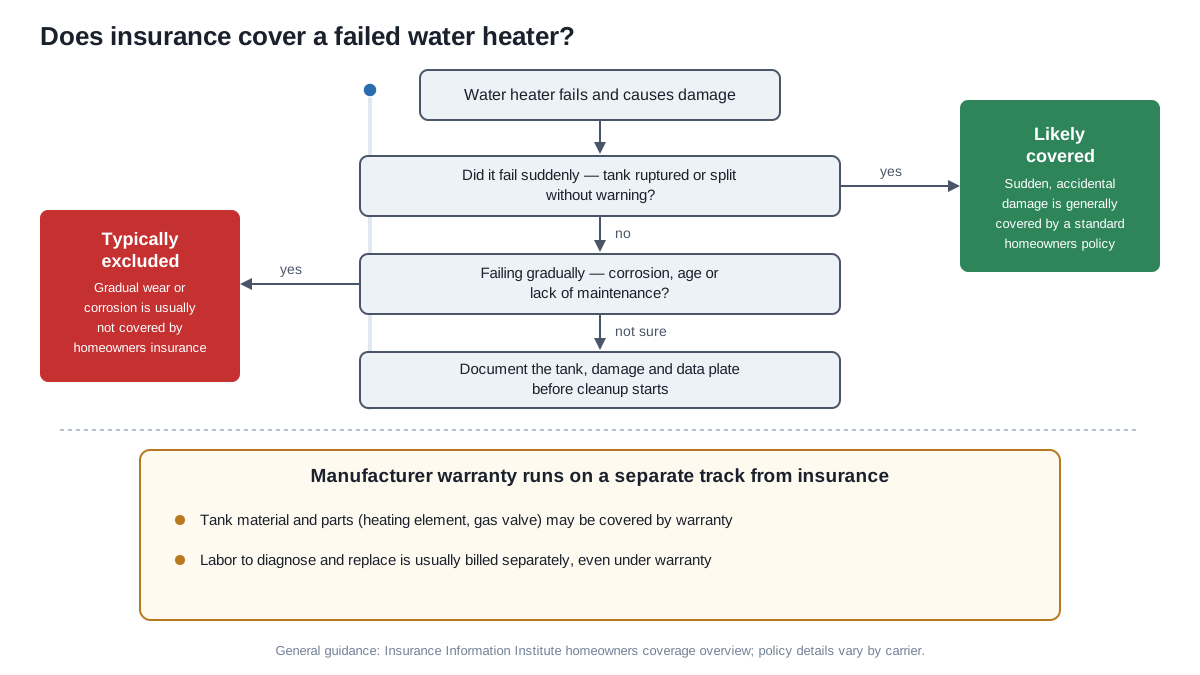
Insurance response comes down to one distinction: whether the water heater failed suddenly and accidentally or simply wore out over time. Adjusters treat those two situations very differently, and knowing which one applies is often the difference between a covered claim and a bill you pay yourself.
A standard homeowners policy generally covers sudden, accidental damage, a tank that ruptures without warning and floods a closet or basement, but typically excludes damage from gradual wear, corrosion, or a lack of maintenance, according to the Insurance Information Institute's general guidance on homeowners coverage. That distinction is why two nearly identical claims can get two different answers: a newer tank that splits a seam overnight looks different to an adjuster than an older tank that's been visibly rusting at the base for months.
Manufacturer warranties run on a separate track from insurance entirely. Most tanks carry a materials warranty on the tank itself, and a shorter warranty on parts like the heating element or gas valve. A warranty claim typically still requires a licensed plumber to diagnose the failure and often to perform the replacement labor, which is not itself covered, so you're usually paying full water heater replacement cost for labor even when the unit is under warranty for parts.
If you do have water damage from a sudden failure, document it before cleanup starts: photos of the tank, the surrounding damage, and the data plate showing the install date, plus any prior repair records. That paper trail is what turns a disputed claim into a straightforward one.
Sudden failures and gradual wear get treated very differently by a homeowners policy, and warranty coverage runs on its own separate track. General guidance: Insurance Information Institute.
How to Get More Years Out of the Next One
A water heater that's maintained tends to outlast one that isn't, and most of the maintenance that matters takes less time than the emergency call it prevents.
The anode rod
The anode rod is a sacrificial metal rod inside the tank that corrodes so the tank itself doesn't. Left unchecked for years, especially in hard water, it can wear down completely, after which the tank starts corroding directly. Checking and replacing it on a schedule is one of the cheaper ways to postpone a full replacement.
Sediment and flushing
Sediment settles at the bottom of a tank over time, especially with hard water, and it's the rumbling and popping noise mentioned earlier in this guide. Flushing the tank periodically clears it out; skipping this for years is a common reason a tank fails earlier than it should have.
Know when it's a repair, not a replacement
A failed thermocouple, heating element, or thermostat is a repair, not a reason to replace the whole unit, provided the tank itself is sound. Brand-specific parts and quirks, Rheem, A.O. Smith, Bradford White and the rest each have their own common failure points, are covered in our water heater repair by brand guide, worth a look before you assume replacement is the only option.
The single biggest driver of an early, unplanned replacement is deferred maintenance, sediment left to build up, an anode rod never checked, a T&P valve never tested. None of that shows up on the sticker price of a new unit, but all of it shows up eventually as a water heater replacement cost nobody budgeted for.
Regional Notes: Freeze Belts, Hurricane Coasts and Hard Water
Climate and water chemistry change which parts of this guide matter most for your specific house, even though the cost ranges themselves are national.
Freeze-prone climates
In parts of the country that see hard freezes, an outdoor or garage-mounted water heater and its supply lines need freeze protection, and a burst supply line feeding the unit is a separate emergency from the water heater itself, covered in our frozen pipe guide if that's what you're actually dealing with. A tankless unit installed outdoors in a freeze-prone climate needs a model rated and installed for that exposure, not a standard indoor unit relocated outside.
Hurricane and flood-prone coasts
In flood-prone areas, elevating the water heater above expected flood levels, when it's being replaced anyway, is a common upgrade a plumber may suggest during the job, since a tank that's flooded once is a strong candidate to fail again.
Hard water regions
Hard water accelerates two of the failure modes covered above: it eats through an anode rod faster, and it scales up a tankless unit's heat exchanger faster than in a soft-water area. If you're in a hard water area and considering tankless, ask your installer about a pre-filter or water softener as part of the job, since it protects the more expensive of the two systems to replace.
Frequently asked questions
How much does it cost for a water heater replacement?+
A water heater replacement typically costs $600 to $2,500 for a standard tank and $1,400 to $3,900 for tankless, installed. HomeAdvisor's national survey puts the blended average at $1,347, with most homeowners landing between $881 and $1,825; Bob Vila's separate survey shows a close $1,293 average. Your actual number depends on tank size, fuel type, and whether the job needs new venting, gas line work, or an expansion tank.
What does water heater installation cost, separate from the unit itself?+
Labor alone runs $150 to $450 for a tank swap and $600 to $1,900 for a tankless install, according to HomeAdvisor and NerdWallet's cost surveys. That range widens for tankless because the labor often includes new gas line or electrical circuit work, not just mounting the unit. Add $25 to $300 for a permit and $90 to $350 if an expansion tank is required.
Can I replace my own water heater?+
You can handle a like-for-like electric tank swap in some jurisdictions if you're comfortable with the plumbing connections and your local code allows a homeowner permit. Gas line work, venting changes, and new electrical circuits are a different matter: those need a licensed plumber or electrician in essentially every area, both for safety and because an unlicensed gas connection can complicate your homeowners coverage.
Does homeowners insurance cover hot water heater replacement?+
Generally only if the failure was sudden and accidental, like a tank that ruptures without warning, according to the Insurance Information Institute's guidance on standard homeowners coverage. Gradual damage from corrosion, age, or a lack of maintenance is typically excluded. Document the failure with photos and any repair history before cleanup, since that record is what supports a claim if you decide to file one.
How long does it take to get a water heater replaced?+
A straightforward tank swap, same type and same location, is usually a same-day job once a plumber is on site. A tankless conversion or a switch between gas and electric takes longer, since it involves new gas line, venting, or electrical work in addition to the unit itself. Availability of the specific model can also add time if it isn't in stock locally.
How much does tankless water heater installation cost?+
Tankless installation runs $1,400 to $3,900 total, including labor of $600 to $1,900, per HomeAdvisor and NerdWallet's cost data. NerdWallet's research on Home Depot installations found average tankless installs closer to $4,300 when gas line upsizing and venting are included in the scope. The gap between the low and high end usually comes down to whether your existing gas line and venting can be reused.
What do I need to replace my water heater?+
At minimum, a plumber needs the tank's size, fuel type, and its location and clearances to quote the job accurately. For a like-for-like swap, that's often enough. For a tankless conversion or a fuel-type switch, they'll also need to assess your existing gas line capacity, venting, or electrical panel, since those often need upgrading and are a large part of the total cost.
Who can replace a water heater?+
A licensed plumber handles the great majority of water heater replacements, and it's required by code for any job involving gas lines, venting, or new electrical circuits. A plumber that serves your area can be reached at 888-854-0126 to describe your setup and get a sense of scope before anyone shows up. Some jurisdictions allow a homeowner permit for a simple electric tank swap.
How much does water heater repair cost, compared to replacement?+
A repair, a new thermocouple, heating element, or thermostat, is almost always cheaper than replacement, generally close to the $150 to $450 labor cost for a tank swap, plus the part. Replacement makes more sense once the tank itself is leaking, rusting internally, or nearing the end of a typical service life, since a repair on a failing tank just delays the same cost.
Is a broken water heater covered by insurance?+
It depends on what broke. A sudden tank rupture that causes water damage is the kind of loss a standard homeowners policy is built to cover; a slow leak or a unit that simply wore out generally isn't, per the Insurance Information Institute's general coverage guidance. The water heater itself is often treated differently from the water damage it caused, so check both angles with your adjuster.