HVAC maintenance means a seasonal professional tune-up plus year-round basics: changing the filter on schedule, keeping the outdoor condenser clear, and testing the system before the weather turns. A single tune-up runs $125 to $200 per HomeAdvisor's survey; an annual maintenance plan for one system typically runs $100 to $300 a year. Skipping it does not save money. It just delays a bigger repair bill.
Nobody thinks about their HVAC maintenance schedule until the furnace won't light on the coldest morning of the year, or the air conditioner blows warm air the week a heat wave rolls through. By then the honest answer is usually the same one a technician gives a homeowner in a hundred-year-old bungalow with a furnace that's been running since Clinton was in office: the filter hasn't been changed since spring, the outdoor coil is buried in cottonwood fluff, and nobody's looked at the heat exchanger, the metal chamber that separates burning gas from the air blowing into your living room, in three years.
This guide covers what a real seasonal checklist looks like, what a professional tune-up actually includes versus what you can do yourself, what maintenance costs against what a skipped repair costs, and how the calendar shifts for a freeze-belt winter versus a Gulf Coast summer that never really ends. Every number here traces to a national cost survey named in the source list, and every step traces to the standards technicians are actually trained against, not a marketing brochure.
What HVAC Maintenance Actually Covers
HVAC maintenance is not one task. It's a short list of checks and cleanings that, done twice a year, catch small problems before they become no-heat or no-cool calls. A real tune-up touches the parts that fail quietest: electrical connections that loosen from vibration, a condensate drain (the line that carries water away from the indoor coil) that grows algae and clogs, refrigerant charge that slowly drifts low from a pinhole leak, and a flame sensor that gets a thin film of oxidation and starts misreading the pilot.
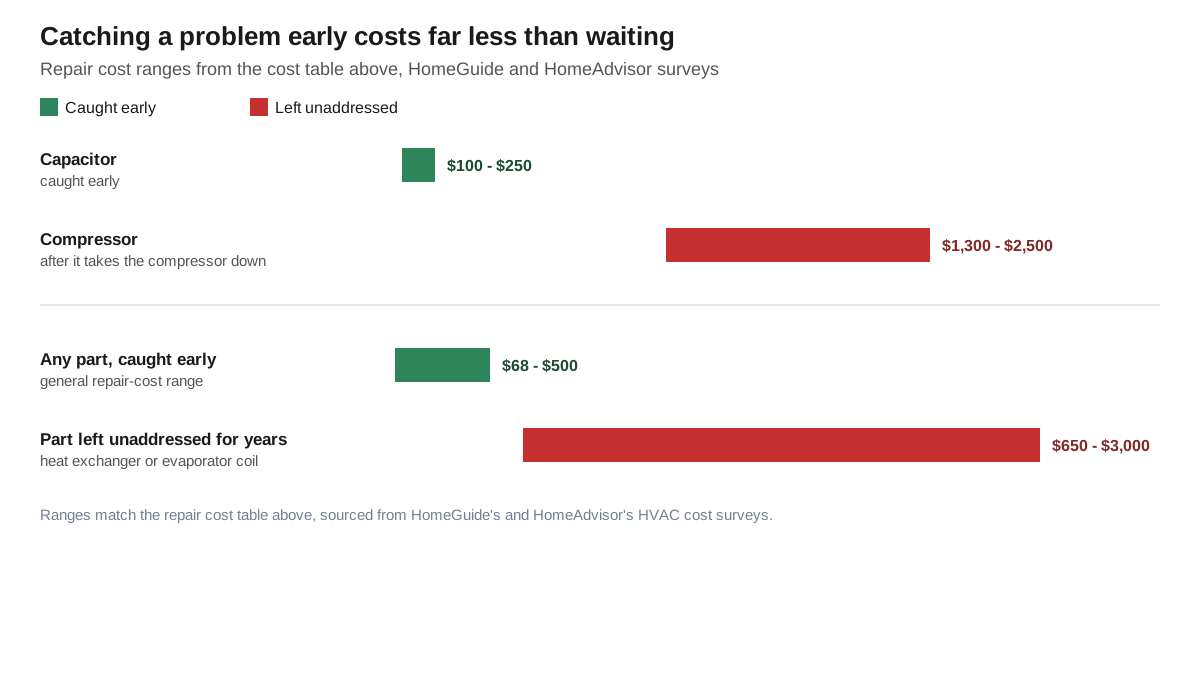
None of that shows up as an obvious symptom at first. The system still runs. It just runs a little worse, a little less efficiently, and a little closer to the point where one more stressed part gives out. That's the entire case for maintenance: it's cheaper to replace a $100-$250 capacitor on a scheduled visit than to pay an emergency rate for the same part after it takes the compressor down with it.
A tune-up also isn't the same thing as a repair visit. A technician doing maintenance is checking and cleaning, not fixing a system that's already failed. If they find something broken, that becomes a separate repair quote, which is one reason two neighbors can have wildly different bills after what both call "a maintenance visit": actual cost varies by region, how accessible the equipment is, and the extent of what the technician finds once the panels are actually off.
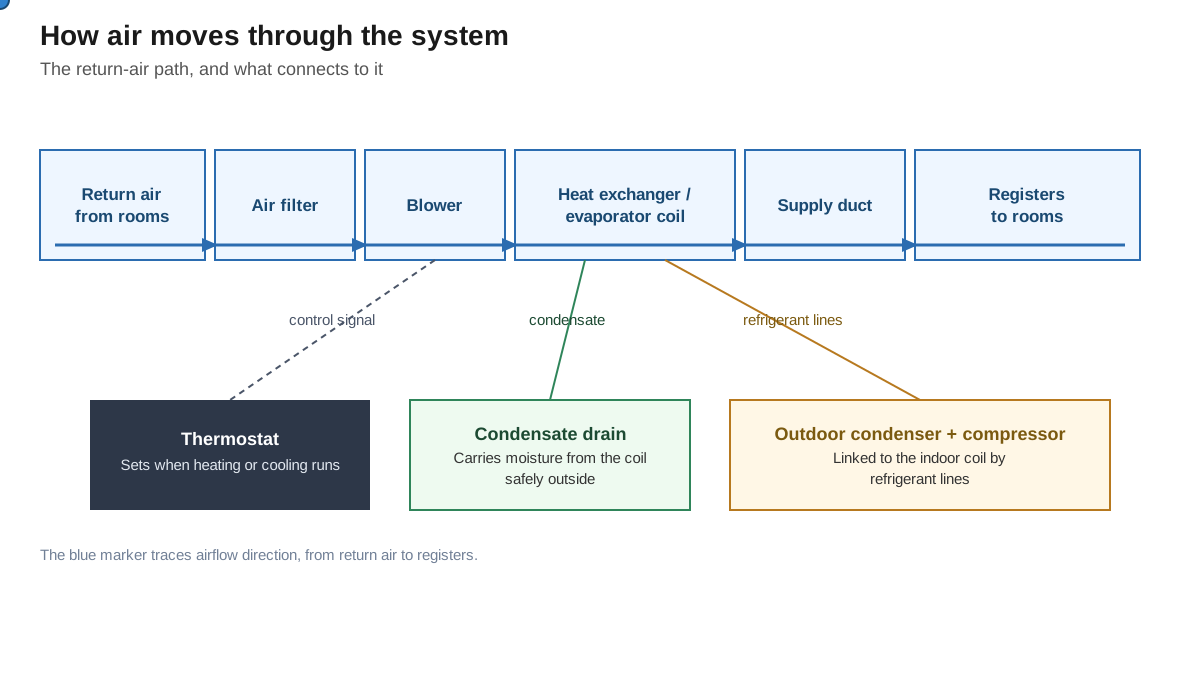
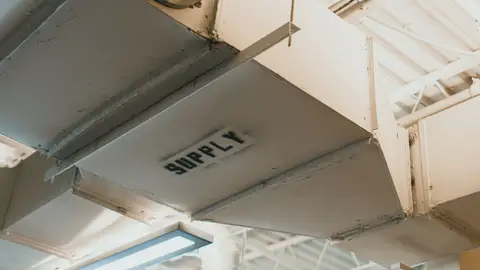
Return air is pulled through the filter and blower, crosses the heat exchanger or evaporator coil, and is pushed out through supply ducts to registers; the thermostat, condensate drain, and outdoor condenser tie into that same path.
Why Skipped Tune-Ups Turn Into Bigger Repairs
Ranked by how often each one actually shows up on a service ticket, here's what neglect tends to break first.
A dirty air filter is the single most common root cause a technician finds. Restricted airflow makes the system work harder, can freeze the indoor coil solid in cooling mode, and can overheat a furnace's heat exchanger in heating mode, which shortens its life and, in the worst case, cracks it. Almost every other failure on this list traces back to airflow at some point.
A dirty outdoor condenser coil is next. Cottonwood, grass clippings, and pollen mat against the fins and insulate the coil from the outside air it needs to dump heat into. The compressor runs hotter and longer to hit the same setpoint, which is the single biggest driver of a shortened compressor life and a higher electric bill.
Water damage often traces back to a clogged condensate drain, which backs up into the drain pan and, once that overflows, into a ceiling or a closet floor below the unit. It's one of the more common causes of secondary water damage claims tied to HVAC equipment, and it's also one of the easiest things on this list to prevent with a $10 vacuum-out twice a year.
Further down the list: a weak capacitor that struggles to start the compressor or blower motor, a worn ignitor that takes three or four tries to light the burner, and a flame sensor (the small rod that confirms the burner actually lit, so the gas valve knows it's safe to stay open) that's picked up enough oxidation to falsely tell the system there's no flame and shut it down.
Two scheduled tune-ups a year routinely catch the cheaper repair on the left; the range on the right is what waiting turns it into, per HomeGuide's and HomeAdvisor's cost surveys.
The Spring HVAC Checklist Before Cooling Season
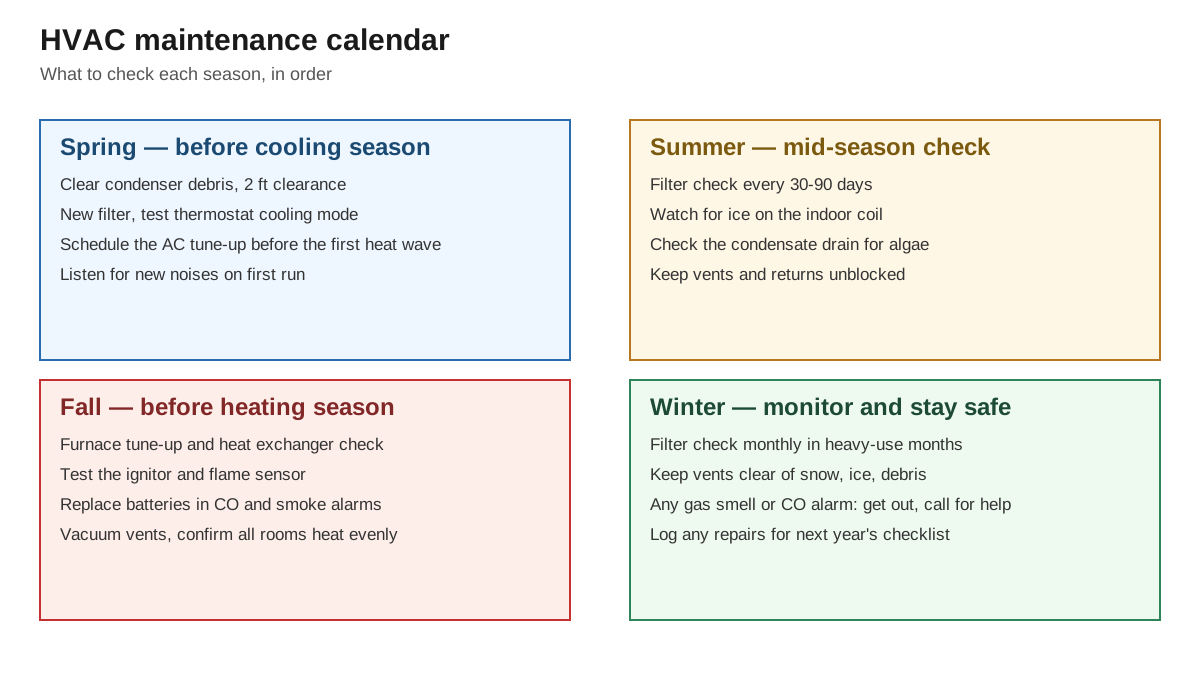
The HVAC maintenance calendar, season by season.
This spring HVAC checklist is built around one goal: get the air conditioner ready before the first real heat wave, not during it, when every technician in the area is already booked solid.
Clear leaves, mulch, and grass clippings from the outdoor condenser and keep at least two feet of open space around it.
Straighten any bent fins gently with a fin comb; bent fins choke airflow the same as debris does.
Replace the air filter, even if it doesn't look full, since a spring pollen season loads a filter fast.
Run the thermostat in cooling mode on a mild day and confirm cold air actually reaches the farthest room.
Look at the indoor coil access panel and the drain line termination for any staining that suggests a slow leak.
Book the professional tune-up for a weekday morning in March or April, before the first 90-degree stretch fills every technician's calendar.
That last step matters more than it sounds. A tune-up scheduled in a slow month is a routine visit. A tune-up requested the same week a heat wave lands is competing with actual no-cool emergencies, and the wait can stretch to a week or more.
The Fall Furnace Checklist Before Heating Season
The fall furnace checklist matters more than the spring one in one specific way: a furnace failure is a safety issue, not just a comfort one, because it involves combustion and, in a gas system, a flue that has to carry exhaust safely out of the house.
Replace the filter and vacuum visible dust from the return grille and the blower compartment door.
Have a technician inspect the heat exchanger for cracks, since a cracked exchanger can let combustion gases mix into the air stream.
Test the ignitor and flame sensor, or have the technician do it, since these are the two most common no-heat calls each winter.
Replace the batteries in every smoke alarm and carbon monoxide alarm in the house, not just the one nearest the furnace.
Confirm every register in the house is opening and blowing warm air once the system has run for ten minutes.
Check the outdoor vent termination (for a high-efficiency furnace) or the chimney flue (for an older unit) for any blockage from a bird's nest, snow, or debris.
A furnace that's been sitting idle since April also just needs to run once before the cold actually arrives. Firing it up on a 65-degree day in October and catching a burning-dust smell (normal for the first few minutes) versus a genuinely off smell gives you time to react before you actually need the heat.
What to Actually Do Every Month
Between the two seasonal visits, the list of things a homeowner should check shrinks to almost nothing, and that's by design. Maintenance works because it's small and repeatable, not because it's constant.
How Often to Change Air Filter Media
Three things decide the real answer: the filter's MERV rating (a 1-16 scale measuring how fine a particle it traps), whether pets shed in the house, and how many hours a day the system runs. A basic 1-inch fiberglass filter in a house with no pets and light use can sometimes stretch to 90 days. A pleated filter in a house with dogs, cats, or an allergy sufferer, or during a heavy pollen or wildfire-smoke stretch, does better changed every 30 days. When in doubt, hold the old filter up to a light; if you can't see light through it clearly, replace it.
Beyond the filter, a monthly walk past the outdoor unit to check for debris and a glance at the thermostat to confirm it's holding the setpoint you expect covers most of what actually needs eyes between the spring and fall visits. A dirty filter also loads dust into the ductwork faster; if the ducts themselves haven't been looked at in years, the duct cleaning guide covers when that's worth paying for and when it's not.
What a Professional Tune-Up Actually Includes
A tune-up performed to ACCA (Air Conditioning Contractors of America) standards and by a NATE-certified technician follows a checklist, not a guess. That includes checking refrigerant charge against manufacturer specs, testing electrical connections and capacitors under load, cleaning the condenser and evaporator coils, checking the blower for correct static pressure, inspecting the heat exchanger (heating systems), and testing safety controls like the flame sensor and limit switch.
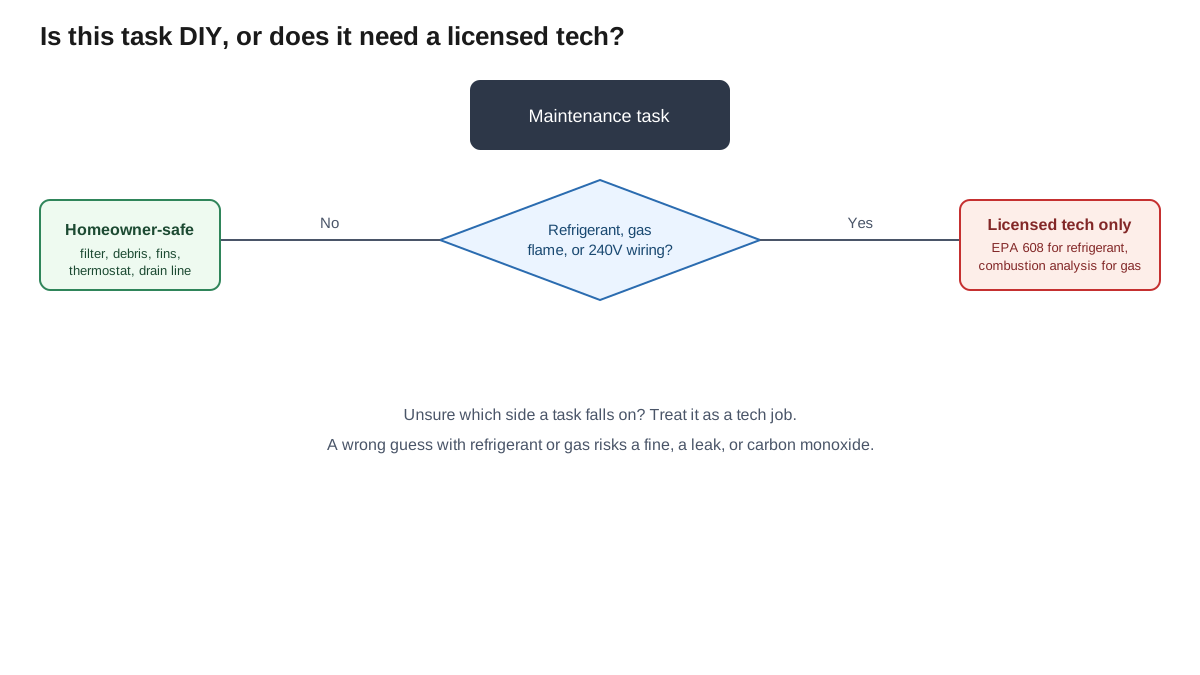
Some of that work is legally restricted. Under the federal Clean Air Act, only a technician holding EPA Section 608 certification may handle, recover, or add refrigerant, because refrigerant is a regulated substance. That single rule draws the clearest line in the table below between what a homeowner can safely handle and what has to go to a licensed technician.
Task
Who handles it
Why
Replace or clean the air filter
Homeowner
No tools or certification needed; the highest-value task on this list
Clear debris, keep 2 ft clearance around the condenser
Homeowner
Airflow only, no electrical or refrigerant exposure
Straighten bent condenser fins with a fin comb
Homeowner (careful)
Cosmetic and airflow fix, no live components touched
Test thermostat settings and batteries
Homeowner
No system access required
Vacuum the condensate drain at its outside termination
Homeowner (basic clog)
Shop-vac suction from outside; a deeper clog needs a technician's snake
Check or adjust refrigerant charge
Licensed tech, EPA 608 certified
Federal law restricts refrigerant handling to certified technicians
Inspect the heat exchanger for cracks
Licensed tech
Requires disassembly and combustion analysis equipment; a crack is a carbon monoxide risk
Calibrate blower speed and duct static pressure
Licensed tech
Requires test instruments and manufacturer specs
Test capacitors and contactors under electrical load
Licensed tech
High-voltage components; shock and fire risk if mishandled
Whether refrigerant, gas, or high-voltage components are involved decides who should do the work.
What HVAC Maintenance Costs
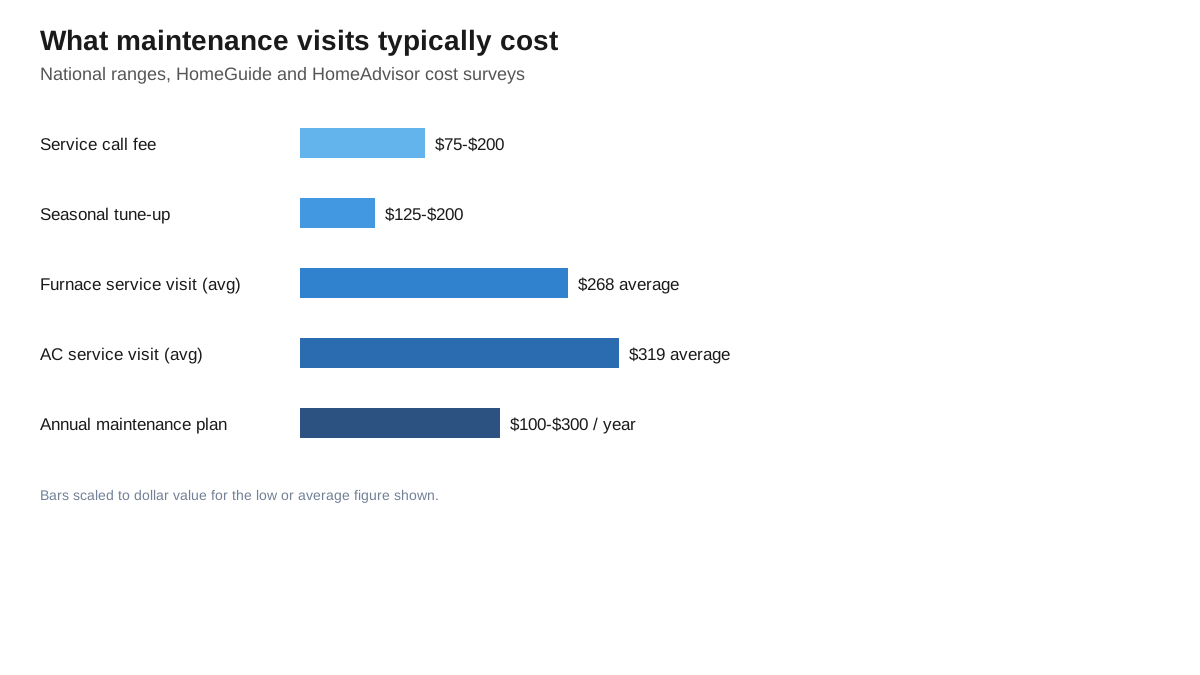
The HVAC tune-up cost for a single seasonal visit runs $125 to $200, based on HomeAdvisor's furnace repair cost survey. Some companies fold that into a discounted HVAC maintenance plan, which typically runs $100 to $300 a year per system according to HomeAdvisor's furnace installation cost data, and usually bundles two visits (spring and fall) plus a priority-scheduling perk for emergencies.
Service
Typical range
What moves the price
Source
Single seasonal tune-up
$125 - $200
Region, whether it's diagnostic-only or includes minor parts
HomeAdvisor, furnace repair cost survey
Annual maintenance plan (per system)
$100 - $300 / year
Plan tier, number of visits, parts discounts included
HomeAdvisor, furnace installation cost page
Standard diagnostic or service call
$75 - $200
After-hours vs. daytime, distance, complexity of the problem
HomeGuide, HVAC repair cost survey
Average AC service visit
$319
Refrigerant type, unit accessibility, system age
HomeGuide, HVAC repair cost survey
Average furnace service visit
$268
Fuel type, whether parts get replaced during the visit
HomeGuide, HVAC repair cost survey
Repair caught early (capacitor, ignitor, flame sensor)
$68 - $500
Which part, brand, parts availability
Fixr, HomeAdvisor and HomeGuide cost surveys
Repair that ran unaddressed for years (heat exchanger, evaporator coil)
$650 - $3,000
How long the fault ran, secondary damage to other parts
HomeGuide, HVAC repair cost survey
Every figure in the table above is a researched range pulled from the national cost surveys named in this guide's source list, not a quote for your specific job. The only number that actually binds anyone is a written estimate from a local contractor who has seen your equipment in person.
Put another way: two scheduled tune-ups a year cost roughly the same as one emergency service call, and they're the visits most likely to catch a $100-$250 capacitor before it takes out a compressor that costs $1,300 to $2,500 to replace on its own, per HomeGuide's figures.
What each type of maintenance visit typically costs, per HomeGuide and HomeAdvisor cost surveys.
When a Maintenance Issue Becomes a Safety Call
Most maintenance is routine. A small number of situations are not, and they deserve a straight answer instead of a checklist.
If you ever smell gas near the furnace, notice soot or a strange odor when the system runs, or a carbon monoxide alarm sounds, get everyone out of the house immediately, call your gas utility or 911 from outside, and do not go back in until a professional confirms it's safe. A cracked heat exchanger or a flue blockage can push carbon monoxide, an odorless gas, into the living space, and it is not something to troubleshoot yourself.
Heating equipment is also a leading cause of home structure fires. The National Fire Protection Association's most recent detailed report counted an estimated annual average of 44,210 home structure fires caused by heating equipment, resulting in 480 civilian deaths, 1,370 injuries, and more than a billion dollars in direct property damage each year, with space heaters alone responsible for nearly nine out of ten of those deaths. A furnace or heat pump that's had its annual inspection is a very different risk profile from a space heater running unattended overnight, but the underlying lesson holds for both: heating equipment deserves real attention, not an afterthought.
Outside of gas smell, smoke, or a CO alarm, most other symptoms (a system that's not cooling well, a furnace that's short-cycling, a strange noise) are worth a same-week service call rather than a true emergency. The emergency HVAC guide walks through which symptoms genuinely can't wait until morning.
Is an HVAC Maintenance Plan Worth It
An HVAC maintenance plan is worth it for most homeowners running a system more than three or four years old, for one simple reason: it converts an unpredictable emergency repair bill into a small, scheduled cost. At $100 to $300 a year, a plan usually pays for itself the first time it catches a $100-$250 capacitor or ignitor before it fails on a Sunday and triggers an emergency-hourly rate of $140 to $250 on top of the part, per HomeGuide's figures.
Where a plan makes less sense is a system under manufacturer warranty that already requires documented annual maintenance to keep the warranty valid; in that case, check what the warranty actually mandates before paying twice for the same requirement.
There's also a point where maintenance stops being the right lever. A system pushing 15-20 years old that needs a $650-$2,400 evaporator coil or a $1,000-$3,000 heat exchanger is usually a candidate for full replacement instead of another repair, since HomeAdvisor's data puts full AC installation at an average of $5,977 and full furnace installation at an average of $4,814. If you're at that decision point, the site's AC replacement cost guide and new furnace cost guide break down what drives those numbers so you can compare a big repair against a full swap.
How Climate Changes Your Maintenance Priorities
The checklist above is a national baseline. Where you live shifts which parts of it matter most.
In the freeze belt (the northern tier of states with long, hard winters), the fall furnace inspection carries the most weight, since the furnace runs nearly nonstop for months and a failure in January is both dangerous and hard to get fixed quickly with every technician in the region already stretched thin. Pipe and equipment freeze protection around the unit matters here too.
Along the Gulf Coast and Southeast, the air conditioner runs close to year-round, which makes the condensate drain and coil cleaning the higher-priority items, since a system running that many hours accumulates more biological growth in the drain line and more airborne debris on the coil. Humidity also means a clogged drain backs up faster and causes water damage sooner than in a drier climate.
In hurricane-prone coastal areas, the outdoor condenser needs a look after any major storm for debris impact, salt exposure on the coil fins, and flooding around the base of the unit before it's powered back on.
In the arid Southwest, dust loads filters faster than the national default schedule suggests, and refrigerant charge accuracy matters more, since a system running at or near its design limit on a 110-degree day has very little margin for a low charge to hide in.
Choosing Who Does the Tune-Up
The clearest credential to look for is NATE certification (North American Technician Excellence), an industry-recognized exam covering HVAC fundamentals, electrical and controls, and installation or service specialties, with recertification required every two years. For anyone touching refrigerant, confirm they hold EPA Section 608 certification, which is a federal requirement, not an optional credential.
Before booking, ask for a written estimate, proof of licensing in your state, proof of liability insurance, and a written summary of exactly what the tune-up visit includes; a vague "full inspection" on an invoice with no itemized checklist is a red flag. Verify that license yourself on your state's contractor licensing board site rather than taking the company's word for it, and confirm the certificate of insurance hasn't expired before any technician sets foot on the property. A company that can't produce a license number or dodges the refrigerant-certification question is one to skip, regardless of price.
Watch for a tune-up that turns into a high-pressure sales pitch for a full system replacement on the spot. A legitimate finding (a cracked heat exchanger, a compressor testing outside spec) should come with a written explanation you can take to a second opinion, not a same-day, sign-here contract. The full guide to choosing an HVAC contractor covers the complete red-flag list and the questions worth asking before any tech sets foot on the property.
Frequently asked questions
How long does HVAC maintenance take?+
A standard seasonal tune-up takes about 45 minutes to an hour and a half per system for one technician. A larger house with multiple systems, or a unit that hasn't been serviced in several years and needs extra cleaning, can run closer to two hours. Add time if the technician finds something that needs a follow-up repair quote rather than a same-visit fix.
Why is HVAC maintenance important?+
It catches small, cheap failures (a weak capacitor, a dirty coil, a clogged drain) before they cause a bigger breakdown or damage other parts of the system. It also keeps the system running closer to its designed efficiency, which shows up as a lower utility bill, and on a furnace, a proper inspection checks for a cracked heat exchanger, a genuine carbon monoxide risk.
Is HVAC maintenance necessary?+
It's not legally required the way a car inspection sometimes is, but skipping it is a false economy for most homeowners. A $125-$200 tune-up that catches a failing part is consistently cheaper than the emergency repair, and sometimes the secondary damage, that part causes once it actually fails.
What does HVAC maintenance include?+
A real tune-up includes checking refrigerant charge, testing electrical connections and capacitors under load, cleaning the condenser and evaporator coils, checking blower airflow, and, on a furnace, inspecting the heat exchanger and testing the ignitor, flame sensor, and safety controls. Ask for an itemized checklist rather than accepting a vague description.
How often should you schedule HVAC maintenance?+
Twice a year is the standard recommendation: once in spring before cooling season and once in fall before heating season. A system that runs especially hard, such as a heat pump used for both heating and cooling in a mild climate, sometimes benefits from a mid-season filter and coil check on top of the two scheduled visits.
Are HVAC maintenance plans worth it?+
For most systems past the first few years, yes. At $100-$300 a year, a plan usually pays for itself the first time it catches a part before it fails and triggers an emergency-rate repair. Check first whether your system is still under a manufacturer warranty that already requires documented annual service, so you're not paying for the same requirement twice.
How much does HVAC maintenance cost?+
A single seasonal tune-up runs $125 to $200 per HomeAdvisor's furnace repair cost survey. An annual plan covering both spring and fall visits for one system typically runs $100 to $300 a year. Multiple systems, an older unit needing extra cleaning, or add-on services like duct inspection push the total toward the higher end of that range.
How much does AC maintenance cost by itself?+
An average AC service visit runs about $319, according to HomeGuide's cost survey, though a straightforward seasonal tune-up alone typically falls closer to the $125-$200 tune-up range if no repairs are needed. The gap between those figures usually comes down to whether the visit is maintenance-only or turns up a part that needs replacing.
Why is HVAC maintenance crucial after a heat wave?+
A heat wave pushes an air conditioner to run at or near its maximum capacity for days at a time, which is exactly when a marginal part (a weak capacitor, a slightly low refrigerant charge, a dirty coil already running hot) is most likely to fail completely. A post-heat-wave check catches that stress before the next one hits.
How do you service an HVAC system yourself?+
Homeowner-safe tasks are limited to replacing the filter, clearing debris and keeping clearance around the outdoor unit, straightening bent condenser fins, testing the thermostat, and vacuuming the condensate drain from its outside termination. Refrigerant charging, heat exchanger inspection, and electrical component testing require a licensed technician, and refrigerant handling is federally restricted to EPA Section 608 certified technicians.