AC not cooling almost always comes down to one of five things: a dirty air filter or blocked coil restricting airflow, a failing capacitor, a low refrigerant charge from a leak, a dead thermostat setting or battery, or a tripped breaker. Start with the filter and breaker, both free checks, before assuming you need a technician or a full refrigerant recharge.
The compressor kicks on, you can hear the outdoor unit running, and the vents are still blowing air that barely feels different from the room around it. Or the whole system went quiet at once and you're standing at the thermostat wondering whether this is a $100 fix or the start of an expensive week. Either way, you want a straight, ranked answer on ac not cooling causes and real repair costs, not a vague suggestion to call someone before you've even checked the filter.
This guide ranks the real causes by how often they actually show up, walks through a fifteen-minute check you can run yourself, separates what a homeowner can safely fix from what needs a licensed technician, and lays out national repair costs by cause with the source behind every figure. Where the data doesn't cover something specific to your house, this guide says so plainly instead of guessing at a number.
What's Actually Happening When the AC Runs but the House Stays Warm
An air conditioner that runs but doesn't cool is one of the most common home-repair complaints in the country, and it almost never means the whole system died. The compressor kicks on, the fan spins, you can hear the unit working outside, and the air coming out of the vents is just not cold. That gap between the system running and the house actually cooling is where nearly every real diagnosis starts.
Central air not cooling problems trace back to one of three systems working together: airflow across the coils, a correct refrigerant charge moving through the sealed loop, and a working thermostat telling the system what to do. The evaporator coil inside the air handler absorbs heat from the air blowing across it, and the condenser outside releases that heat into the outdoor air; when either coil is dirty, iced over, or starved of airflow, or when the refrigerant charge circulating between them runs low, the whole exchange breaks down and the vents blow air that is barely cooler than the room.
The good news: most causes are cheap, and a homeowner can usually narrow the list down in the time it takes to check a filter and a breaker panel. The sections below walk through the ranked causes, a fifteen-minute diagnostic routine, what a fix actually costs, and exactly where DIY should stop.
Why Central Air Stops Cooling: Seven Causes, Ranked by How Often They Show Up
Some causes show up on nine service calls out of ten; others are rare and expensive. Here is roughly the order technicians actually see them in, ranked from most to least common.
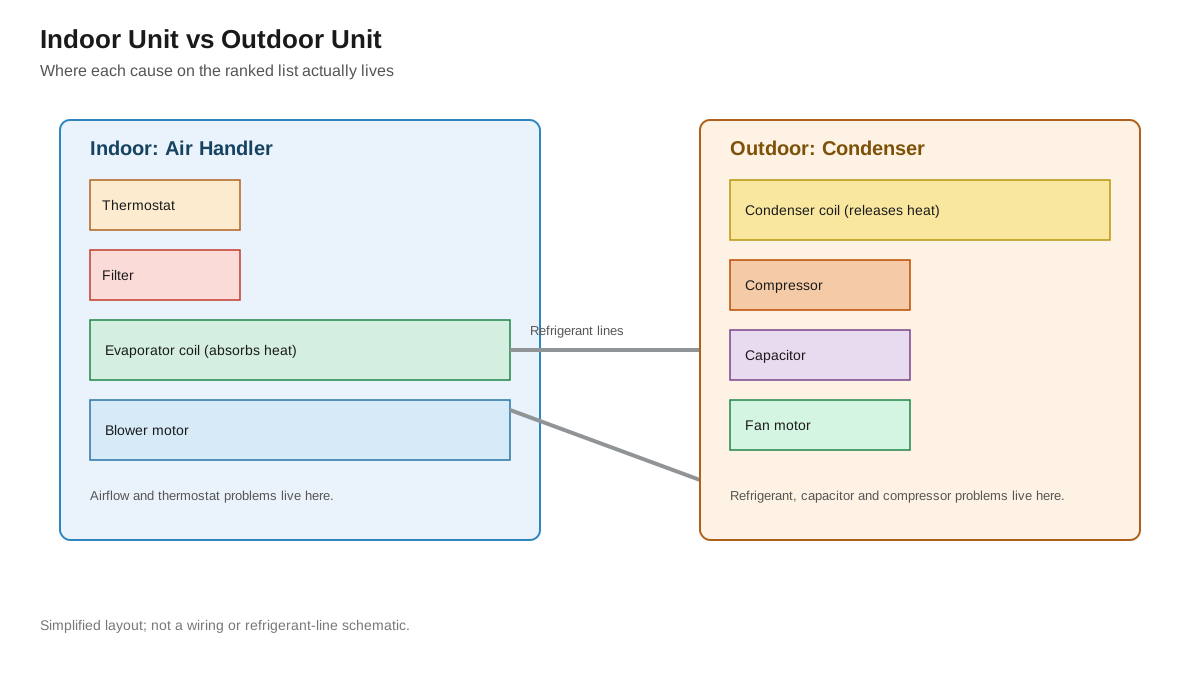
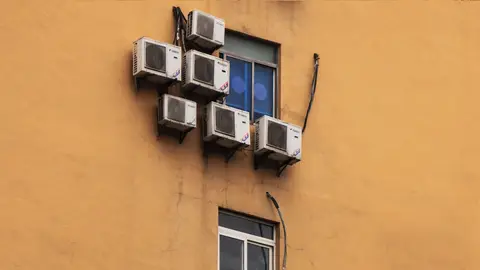
Where each ranked cause actually lives: indoor air handler vs outdoor condenser.
Restricted airflow. A clogged filter, a blocked return grille, or furniture pushed against a supply vent forces the evaporator coil to work with far less air moving across it than it was designed for. This is the single most common reason behind an ac not cooling house complaint, and it's the cheapest one to rule out.
Low refrigerant charge. An ac low on refrigerant didn't just run low from normal use; refrigerant is a sealed, closed-loop chemical, and a system that's short on charge has a leak somewhere in the lines, coil, or fittings. Recharging without finding the leak just buys a few more weeks before the same symptom returns.
Failing capacitor. The capacitor stores the electrical jolt that starts the compressor and outdoor fan motor. A weak one lets the outdoor fan run while the compressor hums and never starts, which is a common reason for ac running but not cooling even though the indoor blower is working fine.
Dirty condenser coil. The outdoor unit has to dump the heat pulled from inside the house into the outdoor air, and a coil caked in grass clippings, cottonwood fluff, or mulch dust can't shed heat efficiently, so the system runs constantly and still can't keep up on a hot afternoon.
Frozen evaporator coil. Once restricted airflow or a low charge lets the coil surface drop to 32°F or below, moisture in the air freezes onto it instead of just condensing off. Ice on the indoor coil or the refrigerant lines is usually a symptom of causes one or two above, not a standalone problem, but once ice forms it blocks airflow entirely and the system needs to fully thaw before anything else can be diagnosed.
Thermostat or control failure. Dead batteries, a loose wire, a blown low-voltage fuse on the control board, or a smart thermostat that lost compatibility after a firmware update can make a perfectly healthy system look completely dead.
Compressor failure. The compressor is the most expensive single part in the system and the least common failure on this list. When it does fail, the repair cost regularly approaches what a full replacement would cost, which is the point where the repair-or-replace math actually matters.
Seven causes, ranked roughly by frequency, cover the overwhelming majority of central air not cooling calls. The next section turns that list into a homeowner-friendly diagnostic routine.
A 15-Minute Diagnostic Routine Before You Call Anyone
Before you pick up the phone, most of what determines the cost and urgency of the repair can be checked without tools, in about the time it takes to walk from the thermostat to the outdoor unit and back.
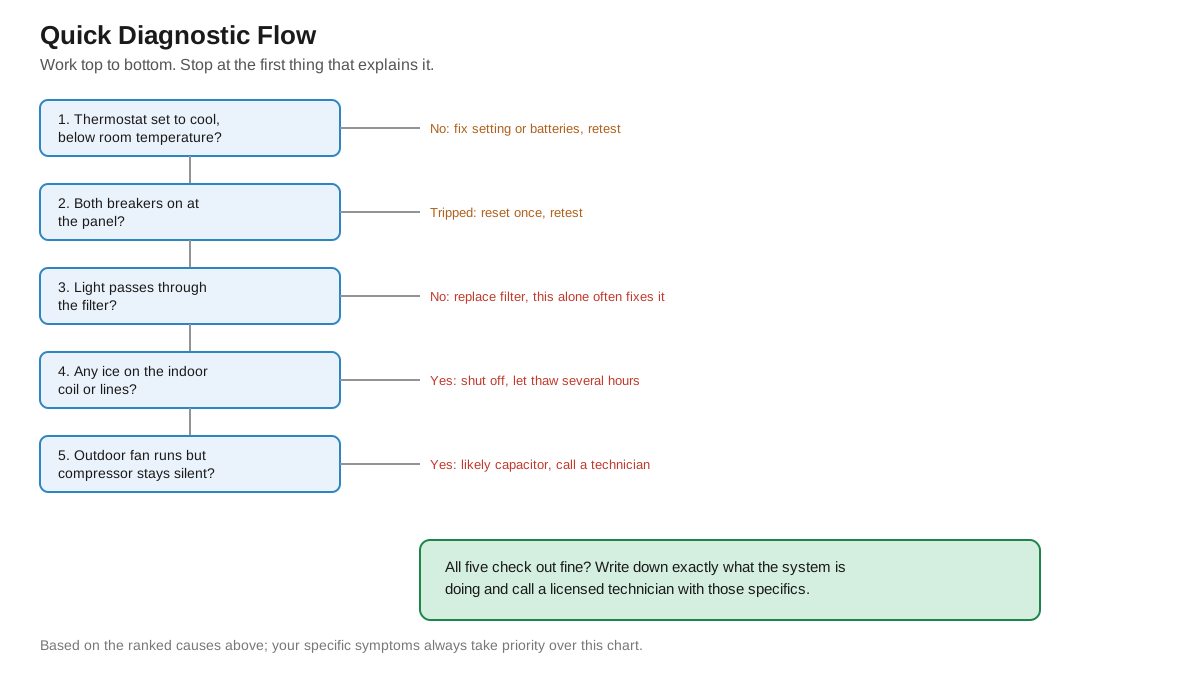
A homeowner-friendly diagnostic order, from the cheapest check to the one that means calling a technician.
Confirm the thermostat is set to cool, the set temperature is below the current room temperature, and, if it runs on batteries, the batteries aren't dead. A thermostat stuck on a stale reading is a surprisingly common false alarm.
Walk to the breaker panel and check both the indoor air handler breaker and the outdoor condenser breaker. A tripped double-pole breaker looks exactly like total system failure from inside the house.
Pull the air filter and hold it up to a light. If daylight barely shows through, that filter alone could be the entire problem, and a cheap replacement is worth trying before anything else.
Go outside and listen. A fan spinning with no compressor sound usually points to a capacitor issue; total silence outside while the indoor blower runs points toward a breaker, a disconnect switch, or a bad contactor.
Check the outdoor unit for anything blocking it, such as tall grass, a fence panel, mulch, or built-up debris packed into the coil fins, and clear a two-foot radius around the cabinet.
Look at the indoor coil and the refrigerant lines for ice. If you see any, shut the whole system off at the thermostat and let it thaw for several hours before running it again; restarting an iced system risks flooding the compressor with liquid refrigerant.
Check the condensate drain pan and line for standing water. A clogged drain often trips a safety float switch on purpose, shutting the system down before it can overflow onto the ceiling or floor below.
Write down exactly what you observed: what runs, what doesn't, any smell, any sound, any error code on a smart thermostat display, before you call a technician.
That last step matters more than it sounds. A technician who hears that the filter was clean, the breaker was fine, but there's ice on the indoor coil can often show up with the right part already in the truck instead of diagnosing from zero, which shortens the visit and the bill. One more number worth knowing if you own a cheap thermometer: a system that's working correctly typically pulls the air 15°F to 20°F cooler between the return grille and the supply vents, so checking that gap yourself can rule out total system failure in under a minute.
Fixes: What a Homeowner Can Do and What Needs a Licensed Technician
Once you know roughly where the problem sits, the next question is who should actually touch it.
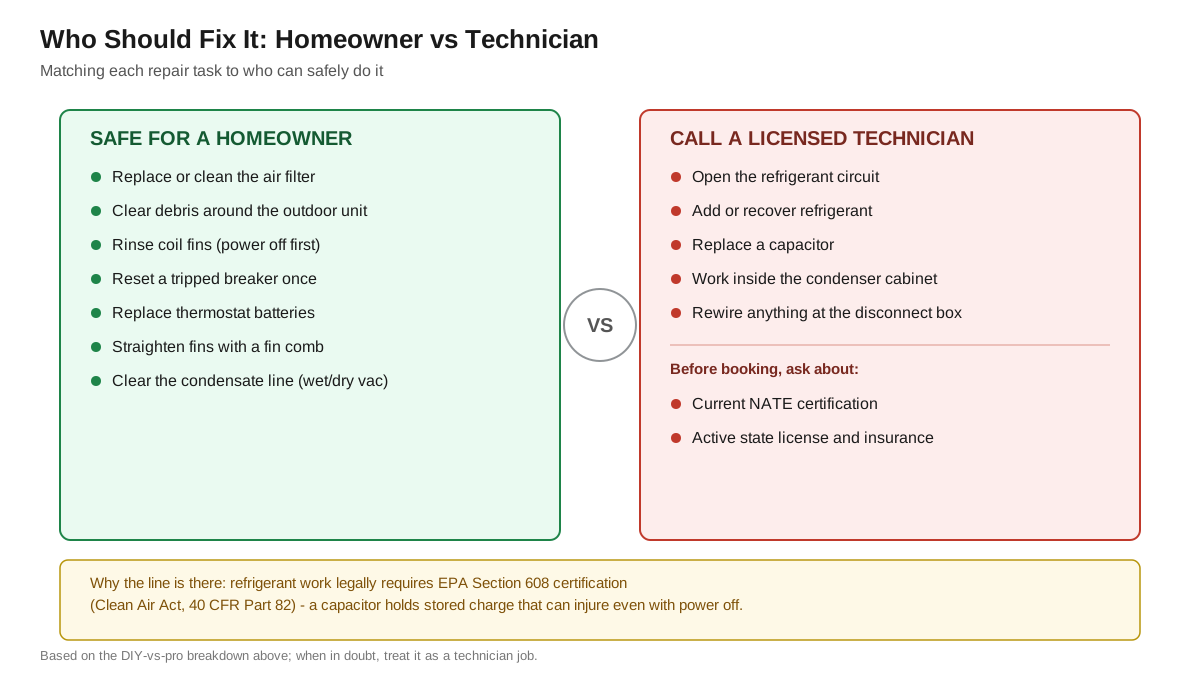
Safe for a homeowner: replacing or cleaning the air filter, clearing debris from around the outdoor unit, rinsing the outdoor coil fins gently with a garden hose with the power off at the breaker first, resetting a tripped breaker one time, replacing thermostat batteries, straightening bent coil fins with a fin comb, and clearing a condensate line with a wet/dry vacuum at the outdoor cleanout if your system has one.
Not a DIY repair, regardless of what a video makes it look like: opening the refrigerant circuit, adding or recovering refrigerant, replacing a capacitor without discharging it safely first, working inside the condenser cabinet, or rewiring anything at the disconnect box. Handling refrigerant that could be released into the atmosphere legally requires EPA Section 608 certification under the Clean Air Act (40 CFR Part 82, Subpart F), and a capacitor holds enough stored charge to injure someone even with the power off at the breaker.
If the fix involves anything past the filter, the breaker, the batteries, or the outside of the cabinet, that's the point where a licensed technician takes over. A quick way to gauge who's showing up: a NATE-certified technician has passed standardized exams covering exactly this kind of diagnostic work, from airflow and electrical controls to refrigerant charge, so asking about certification before you book is a reasonable filter on its own. The full NATE Certified HVAC Professional pathway runs five separate 30-question exams and requires recertifying every 2 years, with a 120-day grace period to retake a specialty exam, so a current card means the technician has kept the training current rather than passed a test once years ago. Before anyone opens the cabinet, it also costs nothing to verify that the contractor's state HVAC license is active and ask to see proof of current liability insurance; a legitimate company will produce both without hesitation. For the specific repair paths on compressors, capacitors, and blower motors, see our guide to blower motor, capacitor and compressor repairs.
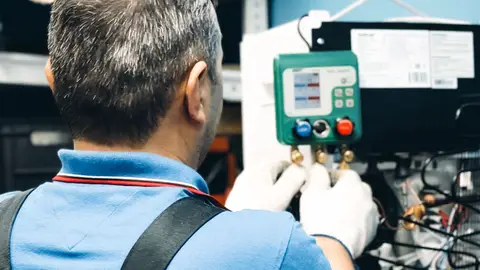
Where the line sits between a homeowner fix and a licensed-technician job, and why (EPA Section 608 certification for refrigerant work).
What It Costs to Fix an AC That Isn't Cooling
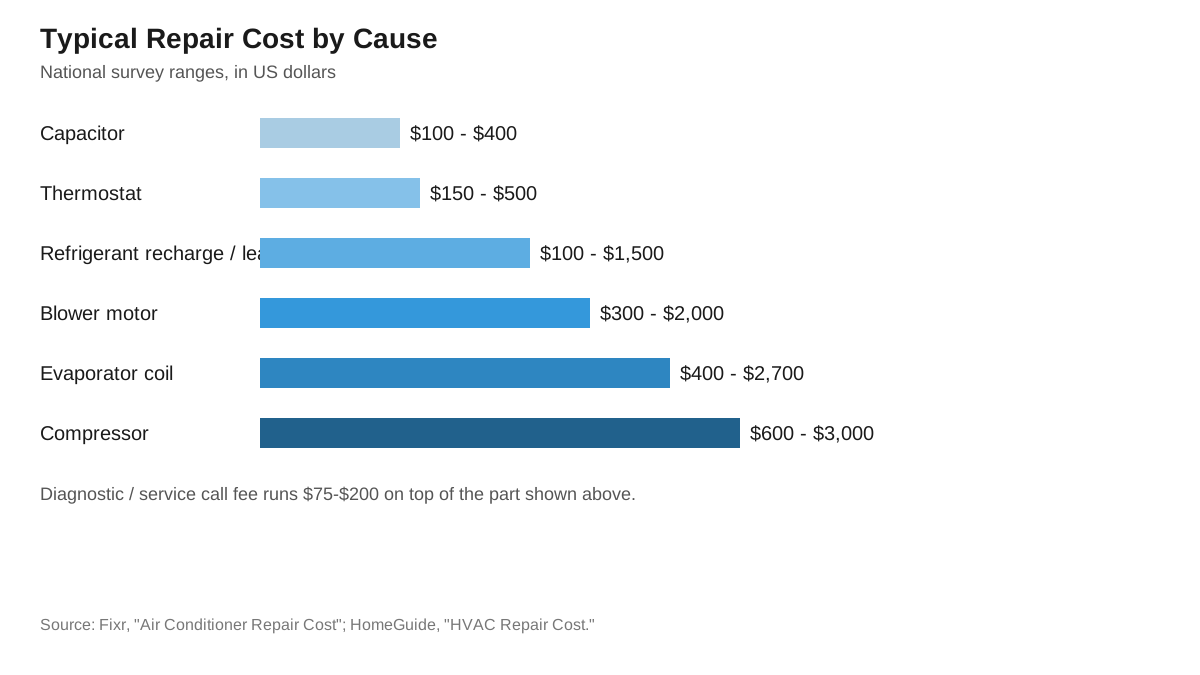
Every number below comes from national cost-survey data, not a quote for your specific house, but it's enough to tell you roughly what range to expect before a technician ever walks up the driveway.
Typical repair cost by cause, based on Fixr and HomeGuide national survey data.
How we got these numbers: the ranges above are researched ranges blended from two independent national cost surveys, HomeGuide and Fixr, which aggregate reported job costs from contractors and homeowners across the country, not quotes for any specific job. Neither publisher breaks these out by state or region, so treat them as a national starting point, not a local quote. The final price varies by region, by the age and brand of your equipment, by how hard the part is to reach, and by what a technician actually finds once the panel is open; a second failed part or a coil leak worse than it looked from outside can push the real number past either end of the range. A written estimate, itemized, from a local technician who has actually looked at your system is the only number that applies to your specific house. For a deeper breakdown of AC repair pricing by problem, including the repair-versus-replace math, see our AC repair cost guide; for full system replacement pricing by size and efficiency tier, see AC replacement cost.
When AC Not Cooling Turns Into a Real Emergency
Most versions of this problem are an inconvenience, not a hazard: uncomfortable, especially in July, but safe to leave until regular business hours. A smaller set of situations are genuinely different. If you smell burning plastic, hear buzzing, popping, or arcing from the electrical panel, the outdoor disconnect, or the thermostat, shut the system off at the breaker immediately and call a licensed technician, because an electrical fault behind a wall or inside a panel is a fire risk, not a comfort problem. The same goes for visible smoke, a strong chemical smell near the indoor unit, or standing water anywhere near an electrical panel or outlet.
Outside of an electrical hazard, treat AC not cooling as an urgent comfort issue rather than a true emergency for most households, but not for every household. Extreme indoor heat is genuinely dangerous for infants, older adults, anyone pregnant, and people with heart or respiratory conditions. If the house is climbing past the mid-80s with no relief in sight and someone in it fits that description, don't wait out the repair on principle: use fans, close blinds on the sun side of the house, and consider a cooling center or a relative's house for a few hours while a technician is on the way.
For a household without anyone in a heat-vulnerable group, the smarter move while you wait is usually simple: close blinds, run ceiling fans to move air across your skin, skip the oven, and set the thermostat fan to auto instead of on so you aren't pushing warm, unconditioned air through the ducts continuously. Our guide to what actually can't wait until morning covers the full list of true HVAC emergencies in more detail.
Specific Situations: Fan Running, Compressor Running, After a Power Outage
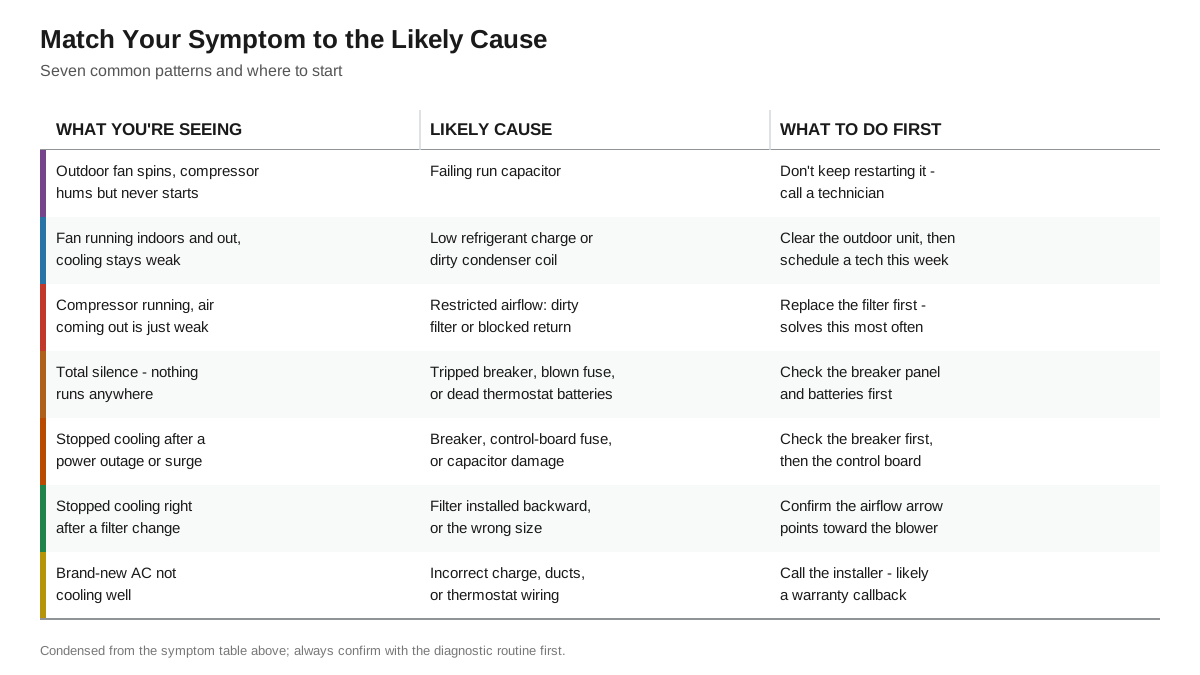
The general causes above cover most cases, but a handful of specific patterns come up often enough to deserve their own answer. Matching the exact symptom below to a likely cause can save an entire diagnostic visit.
What you're seeing
Most likely cause
What to do first
Outdoor fan spins, compressor hums but never starts
Failing run capacitor
Don't keep restarting it; repeated attempts can damage the compressor. Call a technician.
Ac not cooling but fan is running, both indoors and out
Low refrigerant charge or a dirty condenser coil
Check for anything blocking the outdoor unit, then schedule a technician this week
Ac not cooling but compressor is running, air is just weak
Restricted airflow from a dirty filter or blocked return
Replace the filter first; it solves this more often than any other single fix
Nothing runs anywhere, total silence
Tripped breaker, blown fuse, or dead thermostat batteries
Check the breaker panel and batteries before assuming the system failed
AC not cooling after power outage or a surge
Tripped breaker, a blown low-voltage control-board fuse, or a capacitor damaged by the surge
Check the breaker first; if that's fine, a technician should check the control board
AC not cooling after a filter change
Filter installed backward against the airflow arrow, or the wrong size restricting the return
Pull it and confirm the arrow on the frame points toward the blower
Brand-new AC not cooling well
Incorrect refrigerant charge from installation, undersized ductwork, or a miswired thermostat
Call the installer; this is very likely a warranty callback, not a paid repair
A correctly sized system starts with the numbers, not the equipment. Installers who follow ACCA's Manual S for equipment selection and Manual D for duct design are sizing the unit and the ductwork to the actual house instead of guessing, and a brand-new system that can't keep up often traces back to skipping that math rather than to a defective unit.
A window unit follows the same logic on a smaller scale. A window ac not cooling almost always traces back to a dirty filter, a blocked outdoor-facing grille, or a unit that's simply undersized for the room it's trying to cool, since a unit rated for a bedroom will never keep up with an open-plan living room no matter how well it's maintained.
A quick lookup for matching your exact symptom to the most likely cause, condensed from the scenario table above.
Preventing the Next AC Not Cooling Call
Most of the causes ranked earlier have a maintenance habit that heads them off long before they turn into a service call.
Change or clean the air filter on a regular schedule; monthly for a cheap fiberglass filter, every 60 to 90 days for a pleated filter, more often with pets or during wildfire smoke season. A clogged filter is the single biggest driver of frozen coils, overworked blower motors, and short-cycling compressors on this entire list, and it's the cheapest thing here to prevent. A filter's MERV rating matters too, on a scale that runs from 1 to 16 MERV: a rating higher than the system was designed to pull air through adds static pressure and can restrict airflow almost as badly as a dirty filter, so more filtration isn't automatically better. Keep the outdoor condenser clear of grass clippings, mulch, leaves, and overgrown shrubs so it can actually shed heat the way it's designed to.
Book an annual professional tune-up, ideally in spring before the first real heat wave, so a technician can check the refrigerant charge, tighten electrical connections, and test capacitor health while everything is still working rather than after it fails. Treat a system that keeps needing refrigerant topped off as a leak that needs finding, not a normal maintenance item; a properly sealed system shouldn't lose charge on a recurring basis. Straighten bent condenser fins gently with a fin comb if you notice them, and check the condensate line each spring so a slow clog doesn't trip a safety shutoff in the middle of a heat wave.
Regional Notes: Humid Coasts, Desert Heat and Cold-Climate Startups
National cost and frequency data blend climates that stress a system in very different ways, and the most common cause in one region isn't always the most common cause in another.
Humid Gulf Coast and Southeast homes push the evaporator coil harder than almost anywhere else, since it's pulling moisture out of the air as well as cooling it, and a dirty filter or restricted airflow shows up as a frozen coil faster here than in a dry climate. Condensate drain clogs are also more common simply because the system is removing more water day after day.
Desert Southwest heat stresses different parts. The outdoor unit runs for longer stretches against triple-digit ambient temperatures, which wears on the compressor and the capacitor that starts it faster than in milder climates, and blowing dust loads filters and condenser coils faster than in wetter regions, so filter changes and coil cleaning matter more here than almost anywhere else.
Cold northern climates flip the pattern, since a central AC system sits completely idle for months every winter. A quick startup check each spring, covering the filter, breaker, and thermostat setting, catches a capacitor or a control-board problem before the first real heat wave instead of during it, when every technician in the region is already booked solid.
Coastal areas add a different kind of wear regardless of humidity level: salt air corrodes the outdoor coil, cabinet, and electrical contacts, and that corrosion is a real factor in how often capacitors and contactors fail. Some manufacturers offer coated coils rated for coastal exposure, worth asking about the next time a coil needs replacing anyway.
Frequently asked questions
Why is my AC not cooling?+
Most of the time it's one of three things: restricted airflow from a dirty filter, a refrigerant leak that's dropped the charge, or a failing capacitor that won't fully start the compressor. Check the filter and the breaker panel first, since both are free checks that solve a surprising share of cases before you ever call a technician.
What causes AC not cooling?+
A dirty filter or blocked return is the single most common cause, followed by a low refrigerant charge from a leak, a weak capacitor that can't start the compressor, a dirty outdoor condenser coil, or a thermostat and control-board problem. Frozen evaporator coils and full compressor failure round out the list, but they're far less common than the first two.
What should I check if my air conditioner is not cooling?+
Check the thermostat setting and batteries, then the breaker panel for the indoor and outdoor units, then pull the filter and hold it up to a light. If those three check out, look outside for debris blocking the condenser and check the indoor coil for ice. Write down what you find; it speeds up a technician's diagnosis considerably.
Why is my AC not cooling enough?+
Weak cooling that never fully reaches the set temperature usually points to restricted airflow or a partially low refrigerant charge, rather than a total failure. A system that's undersized for the square footage, a dirty condenser coil, or leaky ductwork losing cooled air before it reaches the vents can all produce the same frustrating pattern of running constantly without ever catching up.
Why is my new air conditioner not cooling?+
A brand-new system that isn't cooling is very likely an installation problem, not a broken unit: an incorrect refrigerant charge set during installation, ductwork that's undersized for the new system's airflow, or a thermostat wired incorrectly are the usual culprits. Call the installer before a third-party repair company, since this almost always falls under the installation warranty.
How do I fix AC blowing warm air?+
Start with the filter and the breaker, since both can cause this exact symptom and cost nothing to check. If those are fine, look for ice on the indoor coil, which points to restricted airflow or low refrigerant, and check the outdoor unit for a fan that spins while the compressor stays silent, a classic capacitor symptom. Past that point, call a licensed technician.
How do you fix a window AC that's not cooling?+
Clean or replace the filter, and vacuum the front intake grille where dust collects fastest. Confirm the unit isn't undersized for the room, since a bedroom-rated unit will never keep pace with an open living area. Check that the accordion side panels seal tightly against the window frame, since a gap there lets conditioned air leak straight back outside.
Why is the AC not cooling the upstairs?+
Heat rises, so a second floor is naturally harder to cool than the first, but a big gap usually points to undersized or leaky ductwork serving the upper level, a return that's too small upstairs, or attic ducts running through extreme summer heat with poor insulation. A dirty filter restricting overall airflow makes an already-uneven system worse.
Why is AC not cooling to the set temperature?+
If the house gets close but never quite reaches the number on the thermostat, that's usually restricted airflow, a partially low refrigerant charge, or a system that was undersized for the square footage from the start. A fully broken component, like a dead capacitor, tends to produce no cooling at all rather than cooling that just falls short.
Is AC not cooling on a dangerously hot day an emergency?+
Not usually a fire-department emergency, but it can turn serious fast for infants, older adults, or anyone with a heart or respiratory condition during extreme heat. Use fans, close blinds, and consider a cooling center while you wait for a same-day technician. A burning smell or an arcing sound, though, means shut off the breaker immediately and call for help.