Choosing the best HVAC company comes down to four checks before anyone touches your system: a current state contractor license you can verify online, proof of liability insurance, technicians who hold NATE or EPA Section 608 certification, and a written, itemized estimate before work starts. Skip any one of those, and you are gambling on a stranger's word instead of hiring a real HVAC contractor.
Search "hvac company near me" in any mid-size American city and you get forty ad slots, a map pack of five-star reviews that all read suspiciously alike, and no easy way to tell a fifteen-year outfit staffed with certified technicians from two guys who bought a used van and a business license last month. That gap is where most bad HVAC experiences start. Not with a broken furnace. With a homeowner who picked a name off the first page of results because the truck looked clean and the salesman was friendly, then found out three years later that nobody ever ran a proper load calculation and the new system has been short-cycling since the day it went in.
This guide is the checklist that closes that gap. It walks through what actually separates a competent HVAC contractor from a risky one, how to verify a license and insurance in the ten minutes before anyone steps into your house, which certifications are worth asking about, what a real written estimate contains, and what the work itself tends to cost nationally, so a quote can be checked against something more solid than a gut feeling. None of the numbers below are invented. They come from published national contractor cost surveys and the standards bodies that actually issue these credentials, all cited at the bottom of the page.
Why the Contractor Matters More Than the Brand on the Box
Homeowners spend weeks comparing SEER ratings and brand names, then hire whichever HVAC company answered the phone first. That order of operations is backward. A $4,000 furnace installed by a crew that measured the house correctly, sized the ductwork to match, and set the gas pressure to the manufacturer's spec will outperform a $6,000 unit dropped in by a crew that eyeballed it. The equipment is a commodity. The installation is where the job actually succeeds or fails.
The technical term for the step most corner-cutting crews skip is a load calculation, usually done with ACCA's Manual J worksheet, which accounts for square footage, insulation, window count and orientation, and local climate to size a system correctly. Skip it, and you get a furnace or air conditioner that is oversized for the house. An oversized system short-cycles, meaning it blasts the space to temperature and shuts off before it has run long enough to dehumidify the air or distribute heat evenly, which is why an oversized system can leave a house feeling clammy in summer even though the thermostat says it hit the target.
None of that shows up on the invoice. It shows up eighteen months later as higher utility bills, uneven temperatures room to room, and a system that wears out faster than it should have. Picking the right HVAC contractor the first time is cheaper than living with a wrong-sized system for the next fifteen years, or paying to have someone else's mistake corrected. The full guide to AC replacement costs breaks down how tonnage and SEER rating change that number once sizing is done correctly.
What Actually Separates a Good HVAC Company From a Bad One
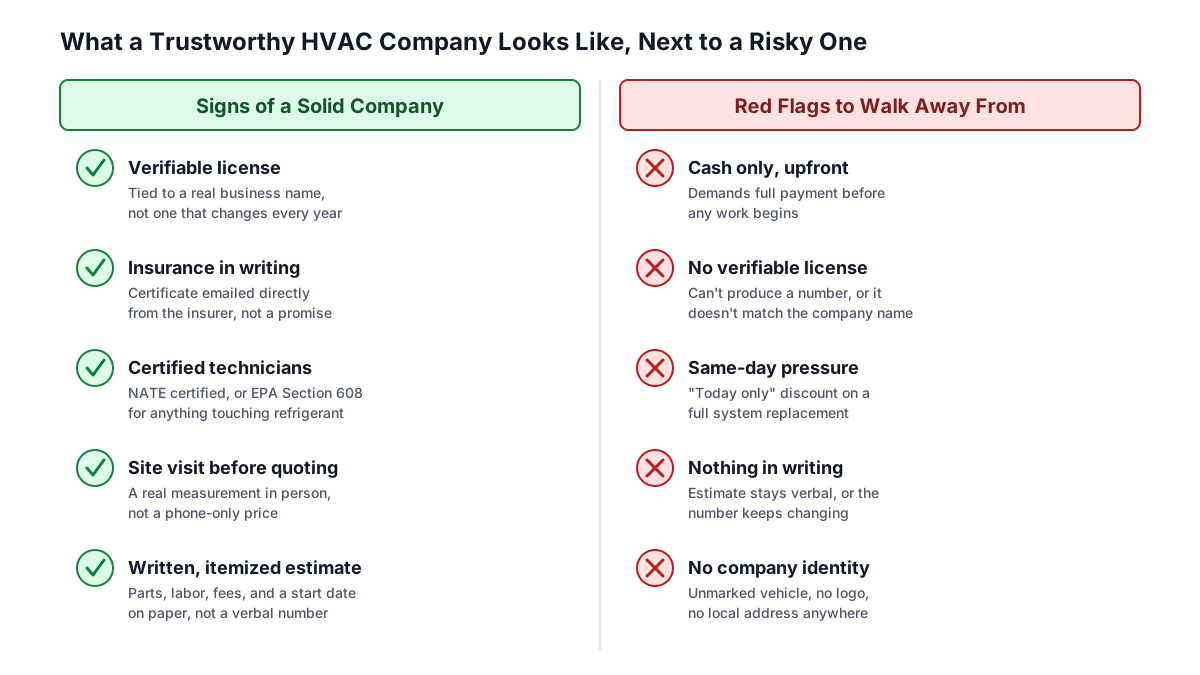
Ranked roughly by how much each factor predicts a good outcome, here is what actually separates a solid hvac company from one that will cost you twice: a current state license tied to a real business, not a name that changes every year; proof of liability insurance the company will put in writing before anyone shows up; technicians who hold real credentials such as NATE certification or the EPA's Section 608 card for refrigerant handling; a site visit and an actual measurement before quoting a full replacement, rather than a phone-only price; and a written, itemized estimate instead of a verbal number scribbled on a business card.
Reviews matter, but less than most people assume. A company with 400 reviews and a 4.6 average can still be the wrong choice for your specific job if none of those reviewers had a furnace replacement done, only filter changes and tune-ups. Read a handful of the detailed, recent reviews that describe a job similar to yours, not just the star average.
One distinction worth understanding early: a best hvac company for a same-day capacitor swap is not automatically the right choice for a full duct redesign or a heat pump conversion. Bigger jobs deserve a company that can show you a load calculation and a duct design, not just a fast truck roll.
The comparison below puts those signs side by side with the red flags covered later in this guide.The traits that predict a good HVAC hire, set directly against the red flags that predict a bad one.
How to Vet an HVAC Company, Step by Step
This is the order that actually protects you, done before a technician steps inside the house or a contract gets signed.
Get two or three names, not one. Ask neighbors with a similar house, or search for a local HVAC contractor and note which names come up more than once.
Ask for the state contractor license number over the phone, then look it up yourself on your state's licensing board site rather than trusting a screenshot.
Ask the office to email a certificate of insurance directly from their insurer, not a photo of an expired card, and check the expiration date.
Ask which technicians on staff hold NATE certified technician status or EPA Section 608 certification, and for what specialty (installation, service, or both).
For anything bigger than a repair, ask whether they will perform a Manual J load calculation before quoting equipment size, not after.
Request a written, itemized hvac estimate: equipment model and size, labor, permit fees, disposal of the old unit, and a start date.
Ask whether they pull permits for gas and electrical work, and confirm the county or city actually requires one for the job you are planning.
Compare at least two written estimates side by side before signing anything, using the questions in the section further down this page.
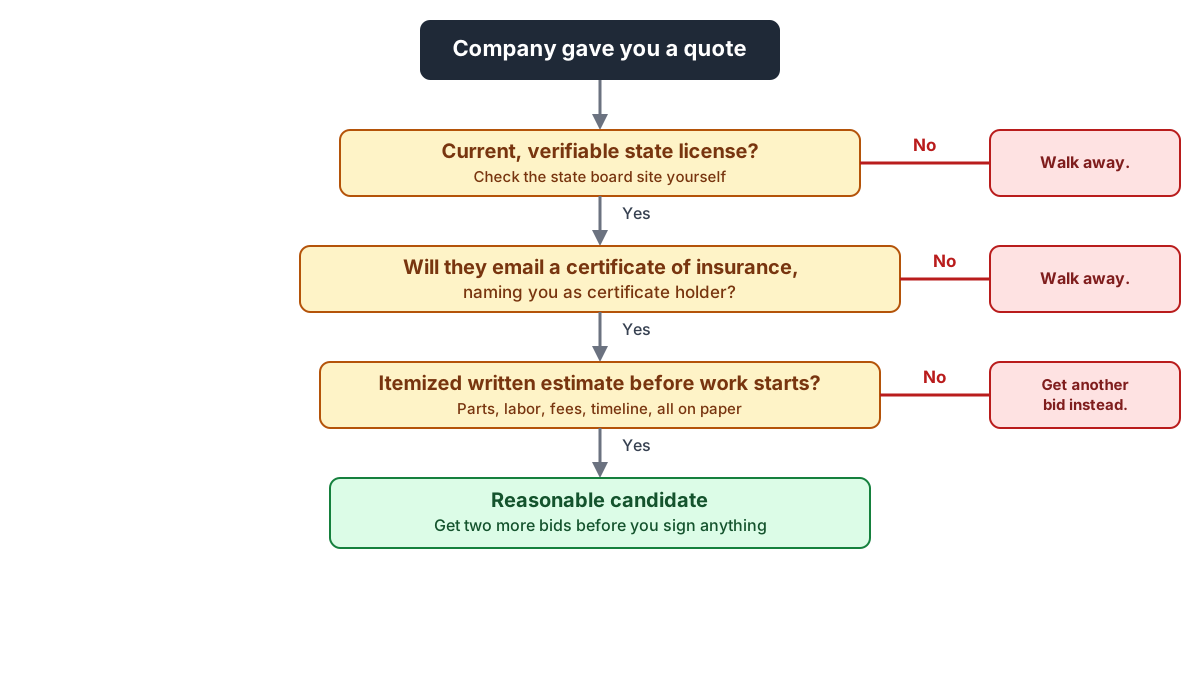
The flowchart below compresses that same sequence into three yes-or-no checks you can run in the first phone call.Three yes-or-no checks, license, insurance, written estimate, that separate a reasonable candidate from a company to avoid.
NATE, EPA Section 608 and the Other Certifications Worth Asking About
What each credential actually verifies
Not every certification carries the same weight, and a company that lists a wall of logos on its website is not automatically better than one with fewer but more relevant ones. Here is what the credentials that come up most often actually mean.
Credential
Issued by
What it verifies
When it matters most
NATE certification
North American Technician Excellence
Technician passed five 30-question exams under NATE's CHP-5 pathway, covering HVAC fundamentals, electrical and controls, comfort and airflow, installation, and service
Any repair or install; ask which technician on the job is certified
EPA Section 608
U.S. Environmental Protection Agency
Legally required certification under Section 608 of the Clean Air Act (40 CFR Part 82, Subpart F), earned by passing a core exam plus a Type I, Type II, Type III, or Universal specialty exam depending on the equipment
Any job touching refrigerant: recharges, leak repairs, AC replacement
ACCA Manual J / S / D
Air Conditioning Contractors of America
Standard methods for load calculation, equipment selection, and duct design
Full system replacement or new construction, not a simple repair
NADCA membership
National Air Duct Cleaners Association
Company follows the ACR duct cleaning standard (the 2025 Edition), from an association of more than 1,500 member companies; individual techs can hold ASCS or CVI credentials
Duct cleaning or inspection specifically
The EPA credential is the one non-negotiable item on this list. It is not a marketing badge; it is federal law. Anyone who services, repairs, or disposes of equipment that could release refrigerant into the atmosphere is required to hold Section 608 certification, and the EPA does not issue physical cards, so ask the company which third-party organization certified their techs and be ready for them to know the answer instantly.
NATE certification is not legally required the way EPA 608 is, but it is the closest thing the industry has to an independent competency exam, one that lapses without renewal every two years unless the technician logs 16 hours of continuing education or retakes the specialty exam within a 120-day grace period, and a company that pays to certify its technicians is usually a company that also invests in training, tools, and supervision elsewhere.
Checking the License and the Insurance Before Anyone Touches Your System
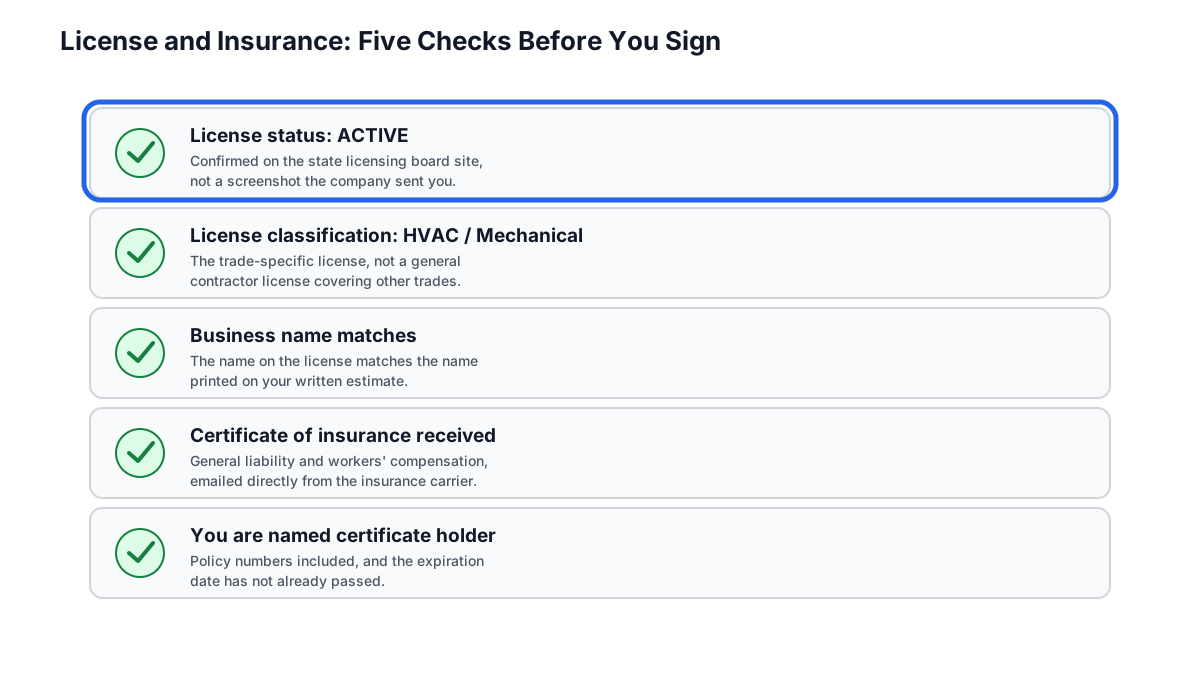
A hvac license lookup takes about five minutes and it is the single fastest way to separate a real company from a fly-by-night one. Every state that licenses HVAC contractors runs a public search tool on its licensing board or department of consumer affairs website. Search by the company name or the license number the office gives you over the phone, and confirm three things: the license is active (not expired or suspended), it is the right classification for the work (HVAC/mechanical, not just a general contractor license), and the name on the license matches the name on the estimate.
Insurance is the part homeowners skip most often, and it is the part that protects you financially if something goes wrong. HVAC contractor insurance generally comes in two pieces: general liability, which covers damage to your home during the job, and workers' compensation, which covers an injured technician so that injury does not become your legal problem. Ask for both, not just one.
Ask the company to email you a certificate of insurance directly from their insurance carrier, naming you as the certificate holder, before any technician steps into your house. A verbal "yes, we're insured" costs nothing to say and protects you not at all; a certificate with policy numbers and an expiration date is the real proof.
What a general contractor can and cannot do
A licensed general contractor can sometimes pull the permit and oversee an HVAC installation as part of a larger renovation, but the actual HVAC work, running gas lines, handling refrigerant, wiring the condenser, still needs to be performed or directly supervised by a licensed HVAC technician in most states. If a general contractor's crew is doing the mechanical work themselves without an HVAC subcontractor on site, ask directly who holds the mechanical license for that portion of the job.
The checklist below lines up all five checks in the order they actually happen, from license lookup to certificate of insurance.Five checks, in order, that separate a real HVAC company from one hoping you will not look too closely.
What a Fair HVAC Estimate Looks Like
A useful hvac estimate reads like a parts list, not a single round number. At minimum it should name the equipment brand and model, the size (in tons for cooling or BTUs for heating), the labor charge, permit fees, disposal of the old equipment, warranty terms on both parts and labor, and an estimated start date. If a company hands you one lump number with no breakdown, ask them to itemize it before you compare it against anyone else's bid.
Most companies do not charge for a replacement estimate on a full system, since it is effectively a sales visit. A diagnostic or service call for a repair, by contrast, usually does carry its own fee, often applied toward the repair if you go ahead with it. Ask which situation you are in before the technician arrives, so a $79 diagnostic fee does not surprise you on a call you assumed was free.
Big-ticket quotes deserve extra scrutiny. If a company is proposing a full heat pump conversion or an all-electric retrofit instead of a like-for-like replacement, ask them to walk through why, and treat the number with the same skepticism you would any major renovation bid. Industry cost-versus-value tracking for a full HVAC electrification conversion puts the average job cost around $19,484 nationally, with roughly 72 percent of that cost typically recouped in resale value, which is useful context for deciding whether that upsell fits your plans and your timeline rather than the salesperson's. The new furnace cost guide covers gas, electric and fuel-specific pricing in more depth if that is the estimate on the table.
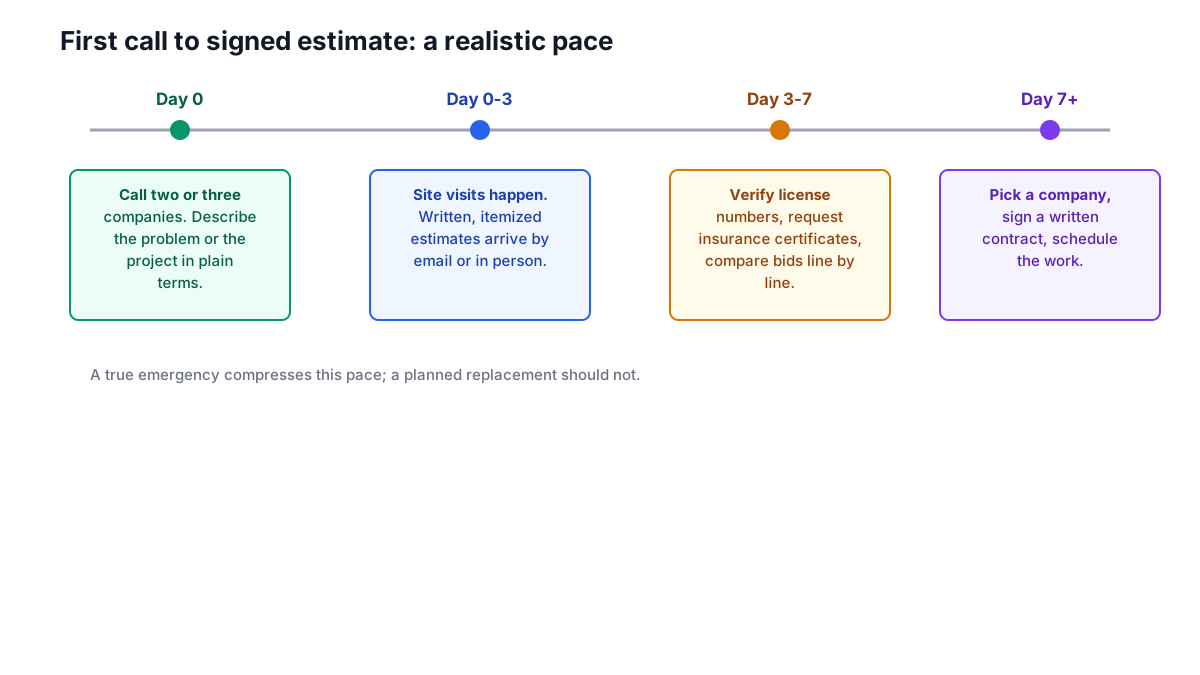
The timeline below shows a realistic pace from first call to signed contract. A company that pressures you to sign the same day, before you have a second bid in hand, is trying to shortcut that pace for a reason.A realistic pace from the first phone call to a signed contract. Heavy pressure to skip this pace is itself a warning sign.
What HVAC Work Actually Costs, So You Can Sanity-Check Any Quote
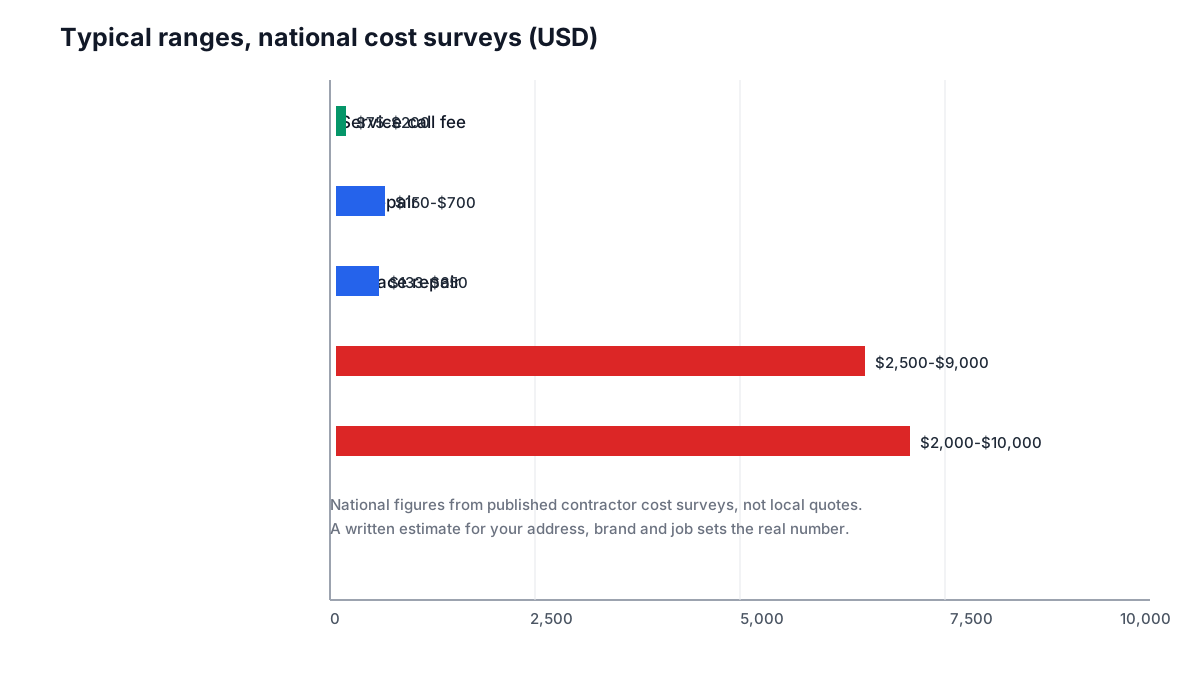
Knowing the national range does not tell you the exact price for your job, but it does tell you when a number is out of line. These figures come from published contractor cost surveys, not a single company's price list.
Job type
Typical range
What moves the price
Source
Standard service call / diagnostic fee
$75-$200
Region, whether it's applied toward a repair
HomeGuide 2025; Fixr 2026
Standard hourly labor
$75-$175/hr
Company overhead, complexity of the job
HomeGuide; Fixr
AC repair, general
$150-$700 (avg $293-$375)
Which part failed, refrigerant type
HomeGuide 2025; Fixr 2026
Furnace repair, general
$133-$650 (avg $318-$485)
Ignitor vs. blower motor vs. heat exchanger
HomeAdvisor 2026; Fixr 2025
Capacitor replacement
$100-$400
Single vs. dual-run capacitor, brand
HomeGuide; Fixr
Full AC installation
$2,500-$9,000 (avg approx. $5,977)
Tonnage, SEER rating, ductwork condition
HomeAdvisor 2026
Full furnace installation
$2,000-$10,000 (avg $4,800-$4,814)
Fuel type, permits, removal of the old unit
HomeAdvisor 2026; Fixr 2026
Annual maintenance / tune-up
$100-$300
Single visit vs. a seasonal service plan
HomeAdvisor 2026
How we got these numbers: the ranges above are pulled directly from published national contractor cost surveys, not averaged or adjusted by us. They describe the country as a whole; a written estimate from a licensed HVAC contractor for your address, your equipment brand, and your local labor market sets the real number for your job. A quote that lands far outside these ranges, in either direction, is worth a second opinion before you sign.
The chart below lines up the smaller repair ranges against the two big installation ranges, which makes the jump in stakes easy to see at a glance.National ranges for a service call, common repairs, and full installations, based on published contractor cost surveys.
Red Flags That Should End the Conversation
A handful of behaviors show up again and again in complaints filed against home-service contractors, and every one of them is a reason to thank the salesperson and call the next name on your list.
Demands full payment in cash before any work begins, or refuses a written contract entirely.
Cannot produce a license number on request, or the number does not match the company name when you look it up.
Pressures you into a same-visit full system replacement for what sounds like a repairable problem, especially with a "today only" discount attached.
Will not put an estimate in writing, or the written number keeps changing after you ask questions.
Skips permits on gas or electrical work "to save you money," which usually means skipping the inspection too, and heating equipment is already behind an estimated 44,210 home structure fires a year nationally, per NFPA.
Shows up in an unmarked vehicle with no company name, logo, or local address anywhere on the paperwork.
Reviews are overwhelmingly recent and generic, with little detail about the actual work performed.
None of these alone is automatically disqualifying in isolation, a small independent contractor can be entirely legitimate without a wrapped truck, but two or more of them together is a pattern worth walking away from, not negotiating with. Pressure tactics show up most often around genuine emergencies, so it helps to already know what actually counts as an HVAC emergency before a late-night sales pitch tries to convince you otherwise.
Ten Questions to Ask Before You Sign Anything
These are the questions to ask hvac contractor candidates before any money changes hands. A confident, specific answer to each one is a good sign; a vague answer or visible annoyance at the question is information too.
What is your state license number, and can I verify it myself online?
Can you email me a certificate of insurance directly from your carrier?
Which technician will actually be on site, and are they NATE certified or EPA 608 certified?
For a replacement, will you perform a Manual J load calculation before recommending a size?
What brand and model are you quoting, and why that one for this house?
What does the estimate include, and what would trigger an extra charge?
Do you pull permits for this type of job, and who schedules the inspection?
What is the warranty on parts, and separately, on your labor?
What is your estimated start date and how long will the work take?
Can you give me two references from a job similar in size to mine?
Ask the same ten questions of every company you are comparing so the answers line up side by side. A company that answers all ten without hesitation and a competitor that dodges half of them is usually not a close call.
Regional Notes: How Climate Should Change What a Good Company Recommends
A technically correct answer in one climate can be the wrong recommendation in another, and a good HVAC contractor adjusts for it instead of quoting the same system everywhere.
Region pattern
What a good company should ask about
Watch for
Cold-winter / freeze belt
Furnace sizing for design-day low temps, duct sealing in unheated attics or crawlspaces
Oversized furnace pitched as "extra safety margin" for cold snaps
Hot, humid summer regions
Latent (humidity) load, not just temperature; correct AC sizing to avoid short-cycling
System sized purely on square footage, ignoring humidity
Hurricane and storm coast
Outdoor unit tie-down or elevation, surge protection, generator compatibility
Standard install with no storm-specific adjustments in a known coastal zone
Hot, dry desert climates
Compressor duty cycle for sustained high-load running, shading options for the outdoor unit
Undersized equipment that runs nonstop through peak summer
Ask a candidate company directly how their recommendation changes for your climate specifically. A company that gives the same generic pitch regardless of region is a company that is not actually doing the load calculation it claims to do. Whichever company you choose, the seasonal maintenance checklist is worth reviewing together so both sides agree on the upkeep plan before the first tune-up is even scheduled.
Frequently asked questions
How do I choose an HVAC contractor?+
Verify a current state license, request a certificate of insurance, confirm the technician holds NATE or EPA Section 608 certification, and get a written itemized estimate before work starts. Compare at least two bids using the same set of questions, and treat any company that skips these steps as a company to avoid.
How do I find a good HVAC company?+
Start with two or three names from neighbors with a similar house or a search for a local HVAC contractor, then vet each one the same way: license lookup, insurance certificate, certifications, and a written estimate. A good company welcomes those checks; a weak one gets defensive about them.
What's the best HVAC company in my area?+
There is no single national answer, since licensing, insurance, and staffing vary company to company and state to state. The way to find the best HVAC company for your specific job is to run the license, insurance, and certification checks in this guide against two or three local candidates and compare their written estimates.
What is an HVAC contractor, exactly?+
An HVAC contractor is a licensed business (or the licensed individual behind it) authorized by the state to install, repair, or maintain heating, ventilation, and air conditioning systems. The license typically requires passing a trade exam and carrying insurance, which is why checking that license is the first real vetting step.
How do I look up an HVAC contractor's license?+
Search your state's contractor or mechanical licensing board website, most have a free public lookup tool, using the company name or the license number they give you over the phone. Confirm the license is active, correctly classified for HVAC work, and matches the name on your estimate.
What certifications should an HVAC technician have?+
At minimum, look for EPA Section 608 certification for any job touching refrigerant, which is legally required. NATE certified technician status is not legally mandated but is the closest thing the trade has to an independent competency exam, and it's worth asking which technician on the crew holds it.
How much does an HVAC estimate cost?+
A full-system replacement estimate is usually free, since it functions as a sales visit. A diagnostic or service call for a repair typically carries its own fee, commonly $75 to $200, which many companies apply toward the repair cost if you proceed with the work.
Can a general contractor do HVAC work?+
A general contractor can sometimes pull permits and oversee HVAC work as part of a larger renovation, but the mechanical work itself, gas lines, refrigerant, electrical connections, generally still needs a licensed HVAC technician performing or directly supervising it in most states. Ask who specifically holds the mechanical license for that portion of the job.
What questions should I ask an HVAC contractor before hiring?+
Ask for the license number, a certificate of insurance, which technician is certified and in what, whether they'll perform a load calculation for a replacement, what the written estimate includes, warranty terms, and for two references from a similarly sized job. A company that answers all of it without hesitation is a good sign.
Why does HVAC contractor insurance matter to me, the homeowner?+
If an uninsured technician is hurt in your home, or a mistake damages your property, you can be held financially responsible without proof of coverage. Ask for both general liability and workers' compensation coverage in writing, not just a verbal assurance, before anyone starts work.