A full AC replacement typically runs $2,900 to $9,000 installed, with a national average near $5,977, depending on tonnage, ductwork and labor rates in your market. A 1.5-ton system can start around $1,300; a 5-ton system often lands between $2,800 and $6,800. Ductless mini-splits range from $1,900 to $16,100 depending on zones. Get a written, itemized quote before you sign anything.
Picture a fourteen-year-old condenser behind a ranch house, humming through another July afternoon while its fan wobbles every time the compressor kicks on. The homeowner has paid for two capacitor swaps and a refrigerant top-off in the last three years, and the technician just used the word "replace" for the first time. That moment, repair bill in hand and unit still limping along, is where most people start searching for ac replacement cost numbers, and what they find is usually either a vague national average or a sales page dressed up as an article.
This guide takes the number apart: what a full ac replacement actually includes, what pushes the price up or down, how to tell a wear-and-tear breakdown from one still worth repairing, and what a contractor should hand you in writing before any money changes hands. Every figure below comes from published national cost-survey data, not a guess. Where the data does not cover something for your specific house, this guide says so instead of inventing a number.
What "AC Replacement" Actually Includes
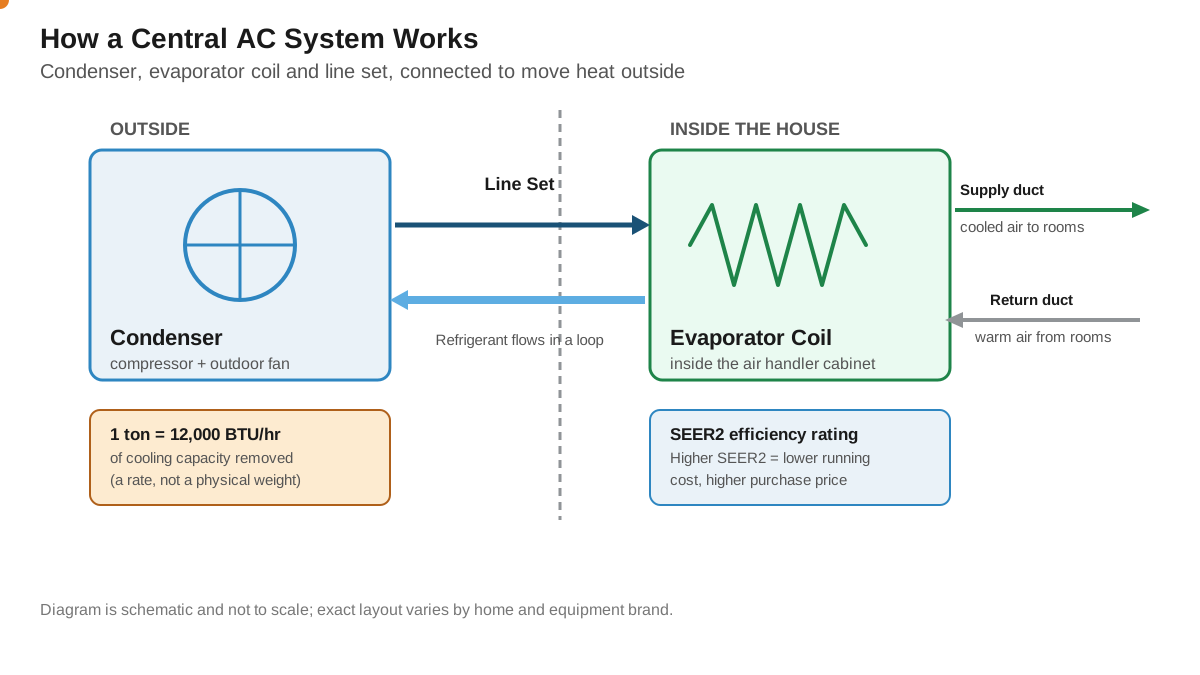
"AC replacement" sounds like swapping one box for another, but a proper job usually touches several separate pieces of equipment. The condenser is the noisy unit outside that houses the compressor and dumps heat into the outdoor air. The evaporator coil sits inside, typically in a cabinet above or beside the furnace or air handler, and it is what actually cools the air moving through your ducts. Between the two runs the line set, a pair of copper tubes that carry refrigerant back and forth. A full ac replacement normally means a new condenser and a new evaporator coil together, because mismatched old-and-new components rarely hit their rated efficiency and can void the manufacturer's warranty on the new piece.
Contractors size the whole system in tons of cooling capacity, not weight, but a unit of heat removal equal to 12,000 BTU per hour. Your new equipment also carries a SEER2 rating, the federal efficiency test that replaced the older SEER standard. A higher SEER2 number means lower running costs but a higher purchase price, and that gap is one of the biggest swings in what a job ends up costing. If the job also involves resizing or rerouting ductwork, that gets priced separately from the equipment, and it can move your total more than the condenser itself does. Some jobs bundle a new thermostat, a condensate pump, or a surge protector for the outdoor unit. Ask what is included before you compare two quotes side by side.
The condenser outside and the evaporator coil inside share one refrigerant loop; the line set is what a full replacement usually reuses or resizes.
The Signs That Point to Replacement Instead of Another Repair
Nobody replaces a healthy air conditioner. A few patterns show up most often when a system is genuinely done, roughly in order of how frequently they drive the decision.
The most common trigger is a major-component failure (the compressor or the evaporator coil going out) priced by the technician at a number that starts to rival a new system. If the system is still running but cooling poorly, it is worth ruling out a smaller fix first; see this step-by-step way to find out why an AC is not cooling before assuming the worst. Close behind is a pattern of repeat service calls: the same unit needing a capacitor, then a contactor, then a refrigerant recharge within a couple of seasons, each bill smaller than a replacement but adding up fast. A third pattern is a system that still runs on an older refrigerant being phased out under EPA rules: if a leak means recharging refrigerant that is scarce and expensive, that single repair can cost more than it is worth relative to a new system that uses current refrigerant.
Less dramatic but still real: a system that was undersized or oversized from day one and has never cooled evenly or controlled humidity well, no matter how well it is maintained. And occasionally the trigger is not the equipment at all: it is a renovation, an addition, or a switch from window units to central air, where "replacement" really means installing central air for the first time. Whatever the trigger, the honest first step is the same: get the actual diagnosis and an itemized repair quote in writing before deciding anything.
Repair or Replace? A Way to Decide That Is Not Guesswork
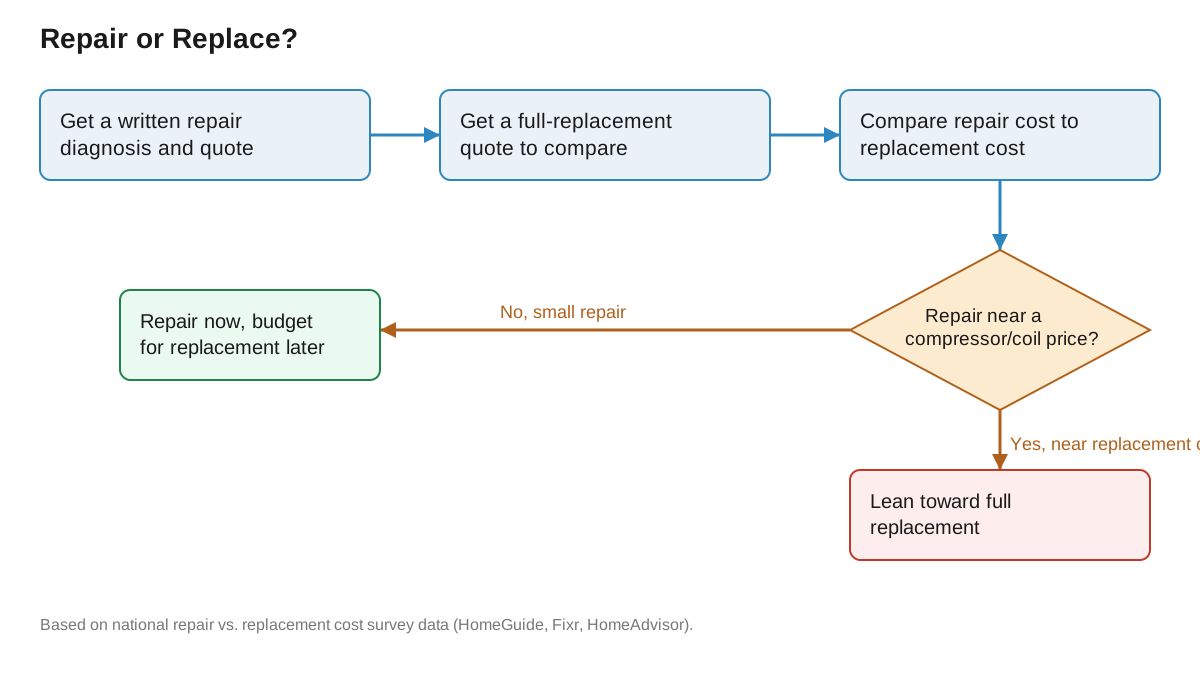
A simple way to weigh a repair quote against replacement.
Homeowners often ask this backwards, wondering whether the AC is simply old enough to replace, when the more useful question is whether the specific repair sitting in front of you right now is worth paying for. Run through it in order:
Get the failure diagnosis and an itemized repair quote in writing, broken out by part and labor.
Ask exactly what failed — a $100–$400 capacitor is a different conversation than a $600–$3,000 compressor.
Get a second quote for full replacement from the same visit or a separate contractor, so you are comparing real numbers, not a guess.
Check the current unit's efficiency rating against a new baseline system — an old, low-efficiency unit changes the math even when the repair itself is cheap.
Count how many service calls that unit has needed in the last two to three years, since repeat visits add up fast even when each one looks small.
If refrigerant is involved, ask which type and whether it is still in normal production, since scarce refrigerant can make a small leak an expensive repair.
Here is how the two paths compare in dollars, using national repair and replacement survey data:
Repair or job
Typical cost
Source
Capacitor replacement
$100 – $400
HomeGuide; Fixr
Refrigerant recharge (leak repair)
$100 – $600
HomeGuide
Evaporator coil replacement
$400 – $2,700
Fixr; HomeGuide
Compressor replacement
$600 – $3,000
Fixr; HomeGuide
Full AC replacement (equipment + labor)
$2,900 – $9,000
HomeAdvisor
A rough rule that tracks how most contractors talk about it: once a single repair quote climbs into the same range as a compressor or coil job, it is worth pricing full replacement before you say yes, because you may be a smaller amount away from new equipment with a full warranty instead of an old system with one more patch on it. Don't fall for the sunk-cost trap of chasing one more fix just because you already paid for the last three — a fresh, itemized quote resets the comparison every time. For a fuller breakdown of what individual repairs run, see this AC repair cost guide by problem.
What Actually Drives the Price
Two houses with the same square footage can get ac replacement cost quotes thousands of dollars apart, and it is rarely because one contractor is padding the bill. A handful of factors do most of the work:
System size. A properly sized system is not chosen by matching the old unit's tonnage — it comes from a Manual J load calculation, the industry's real ac size calculator, which accounts for square footage, insulation, window area, orientation and local climate. Bigger is not automatically better: an oversized system short-cycles, wastes energy and leaves a house cold but clammy.
Efficiency tier. The seer2 rating explained plainly: it is a ratio of cooling output to electricity used over a season, and current federal minimums are higher than they were a few years ago. Moving from a baseline unit to a premium high-SEER2 model raises the new ac unit cost up front in exchange for a lower utility bill over the equipment's life.
Ductwork condition. If the existing ducts are the right size, sealed and in good shape, they get reused. If not, ductwork work runs $1,000 to $5,000, averaging around $2,000, and that line item alone can rival the price of the outdoor unit.
Labor and market rate. HVAC labor runs $75 to $200 an hour depending on region and contractor overhead, and a same-day full swap involves several hours of licensed labor plus disposal of the old equipment's refrigerant, which by federal rule must be recovered, not vented, by an EPA-certified technician.
Add it up and a bare-bones ac installation cost for equipment and standard labor sits at the low end of the range; every ductwork change, efficiency upgrade, electrical adjustment or permit requirement stacks on top of that base.
AC Replacement Cost by System Size
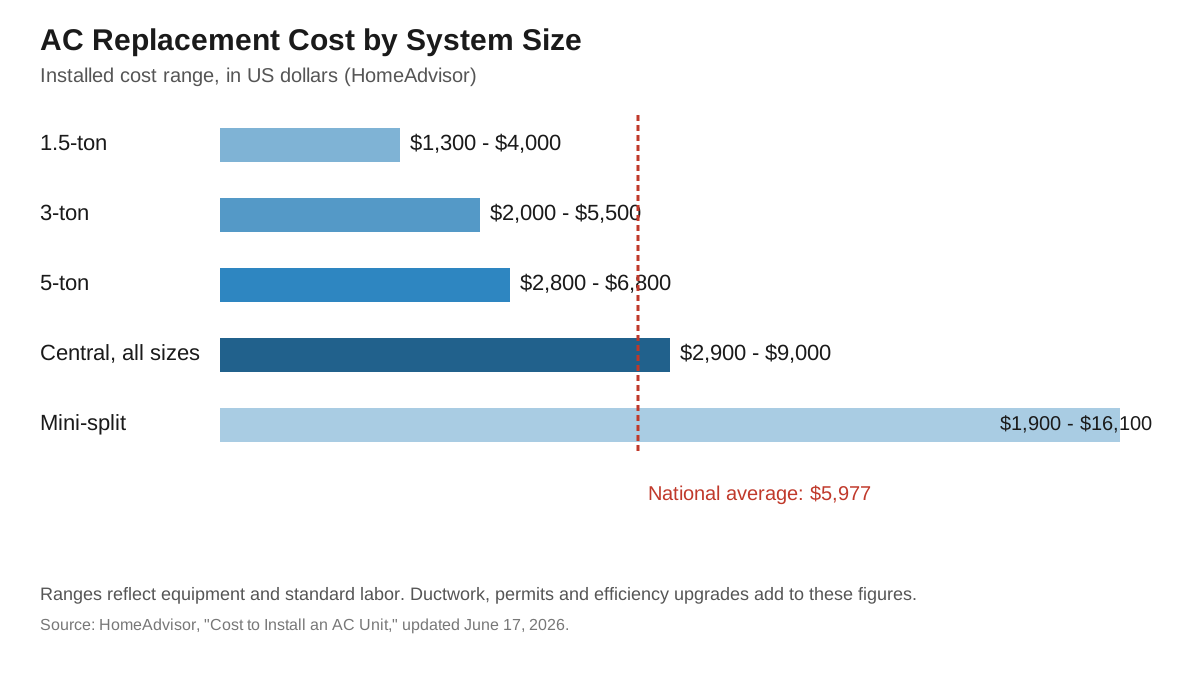
Installed AC replacement cost by system size, based on HomeAdvisor national survey data.
System size is the single biggest driver of price, since a bigger condenser and coil simply cost more to manufacture and install. Here is what national survey data shows by tonnage, plus the line items that get added on top:
System / line item
Typical installed range
Source
1.5-ton system
$1,300 – $4,000
HomeAdvisor
3-ton system
$2,000 – $5,500
HomeAdvisor
5-ton system
$2,800 – $6,800
HomeAdvisor
Central AC, all sizes combined
$2,900 – $9,000
HomeAdvisor
National average, all sizes
$5,977 (typical range $3,887 – $8,073)
HomeAdvisor
Ductless mini-split system
$1,900 – $16,100
HomeAdvisor
Ductwork replacement/repair, if needed
$1,000 – $5,000 (avg. ~$2,000)
HomeAdvisor
HVAC labor, hourly
$75 – $200
HomeAdvisor
Most homes with an existing 3-ton or similarly mid-size system land in the middle of that spread, which is also close to the national average. Larger homes, homes with duct problems, or households choosing a premium SEER2 unit trend toward the top; smaller condos or homes with intact ductwork and a baseline-efficiency unit trend toward the bottom. If you also need a new furnace at the same time, a common pairing when both pieces of equipment share an air handler, budget separately for that; see new furnace cost, gas, electric and installation explained, since a furnace and an AC are priced as distinct jobs even when installed on the same visit.
These ranges come from national contractor cost surveys — HomeGuide, Fixr and HomeAdvisor — not one company's price list, and the data pack behind this guide carries no regional price index, so treat every number here as a national floor and ceiling rather than a quote for your ZIP code. A written estimate from a licensed local contractor is what actually sets your price.
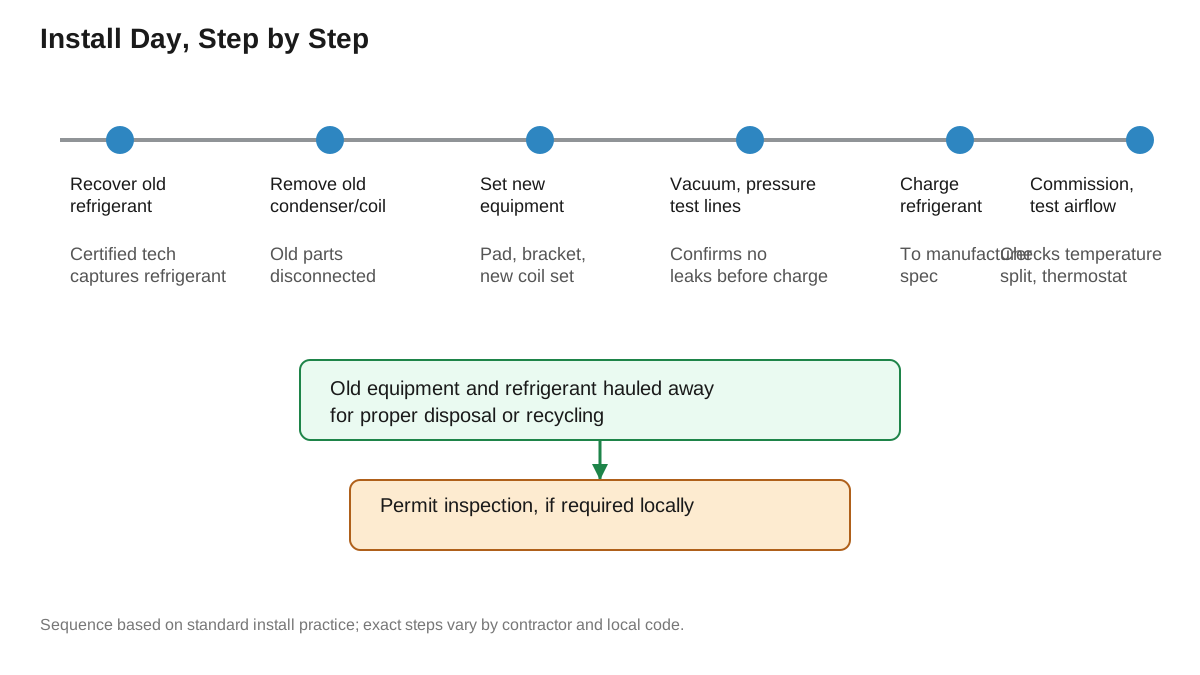
What Happens on Install Day
A typical install-day sequence for a straightforward system swap.
A straightforward swap, reusing the existing ductwork and line set, follows a fairly consistent sequence. A job that also touches ductwork, electrical or a full duct-free install runs longer, but the order of operations stays similar:
The technician shuts down the system and recovers the refrigerant from the old equipment into a certified container; federal rule requires this be captured, never vented into the air.
The old condenser and evaporator coil are disconnected and removed.
The new condenser pad and bracket go in outside, and the new coil is set in the indoor cabinet.
The line set is reused if it is the correct size for the new refrigerant, or replaced if it is not.
The crew pulls a vacuum — what techs call an evacuation — on the lines and pressure-tests for leaks before any refrigerant goes in.
The system is charged with refrigerant to the manufacturer's specification.
Everything is wired in, the thermostat is set up, and the crew commissions the system, checking airflow and the temperature split between the air going in and coming out of the coil.
The old equipment and recovered refrigerant are hauled away for proper disposal or recycling.
If your jurisdiction requires a permit for HVAC replacement, a final inspection closes out the job.
Ask your contractor to walk through this sequence for your specific job before install day so you know what to expect and can plan around a few hours without cooling.
Does Insurance or a Warranty Pay for Any of This?
Usually not, and it is worth understanding why before you assume a claim will cover a worn-out system. A standard homeowners policy (an HO-3, the most common form) is built to pay for sudden, accidental damage: a tree limb through the condenser, a lightning strike, a fire, storm damage, and similar sudden events, not the ordinary mechanical wear that ends most air conditioners' service life. If a covered peril damaged your system, document it with photos and your adjuster's report and file a claim; if the compressor simply gave out from age and use, that is a repair-or-replace decision you are funding directly, the same way you would fund a worn-out roof or a failed water heater.
Scenario
Typically covered by HO-3?
Note
Tree limb, lightning, fire or storm damage to the condenser
Usually yes
Document with photos before cleanup
Compressor or coil failure from age/wear
Usually no
Treated as normal mechanical breakdown
Theft of the outdoor unit or its copper coils
Often yes
Police report typically required
Gradual refrigerant leak from corrosion over years
Usually no
Falls under wear-and-tear exclusions
Separate from homeowners insurance, the equipment's own manufacturer's warranty typically covers parts for a set number of years and labor for a shorter window, and many manufacturers require you to register the equipment online within a set period after installation to get the full parts term instead of a shorter default one. A home warranty (a paid service contract, not insurance) is a different product still, with its own exclusions for pre-existing conditions and lack of maintenance. Read that contract as carefully as you would an insurance policy before assuming it will pay out.
Hiring Someone to Do the Work
Refrigerant work is not a general handyman task; it is regulated under 40 CFR Part 82, Subpart F of the Clean Air Act. Under the EPA Section 608 program, anyone who purchases refrigerant or works on equipment that could release it must hold Section 608 certification — Type I for small appliances, Type II for high-pressure equipment such as a residential condenser, Type III for low-pressure equipment, or Universal covering all three — and a legitimate contractor's technicians carry at least the Type II or Universal credential that central AC work requires. Beyond the legal minimum, look for technicians with NATE certification (North American Technician Excellence): the Certified HVAC Professional pathway alone is five separate 30-question exams covering HVAC fundamentals, electrical and controls, airflow, installation and service, with recertification required every 2 years through 16 hours of continuing education, or a 120-day grace period to retake a specialty exam instead. Look also for a contracting company that actually uses ACCA Manual J, Manual S and Manual D, the load-calculation, equipment-selection and duct-design standards that separate a right-sized system from a guess. For a longer checklist, see how to choose an HVAC contractor.
Credential
What it verifies
Granted by
EPA Section 608
Legal authority to buy and handle refrigerant
US EPA
NATE (CHP-5 pathway)
Technician competency across five HVAC exam areas
North American Technician Excellence
ACCA Manual J/S/D familiarity
Correct system sizing and duct design, not guesswork
Air Conditioning Contractors of America
State contractor license
Legal authorization to perform HVAC work in your state
Your state's licensing board
Before you hire, ask for proof of the state contractor license, current liability insurance, and whether the estimate includes a load calculation, not just a size matched to the old unit. Ask what the written quote includes: equipment model and SEER2 rating, permit and inspection fees, disposal of old equipment, and the warranty terms for both parts and labor. Get at least two or three written, itemized quotes that each show the same scope of work: a number scrawled on the back of a business card, with no equipment model or warranty terms listed, is not an estimate you can compare against anything. Red flags include high-pressure same-day-only pricing, no local address or license number you can verify, and a quote that is dramatically lower than every other bid with no explanation for the gap.
Mistakes That Cost You for Years
A handful of decisions made in a single afternoon can shape how a system performs for its entire life. Sizing it by eye instead of by Manual J is the most common one: an oversized unit short-cycles, cooling the air fast but shutting off before it removes enough humidity, leaving a house that feels cold and clammy at the same time. An undersized unit runs constantly and still cannot keep up on the hottest days.
Skipping the permit to save time or a fee can come back at resale, when an inspector or appraiser flags unpermitted mechanical work. Reusing an incompatible line set to save on copper is another one; an outdated line set sized for an older refrigerant type is not automatically correct for new equipment, and it can cause performance problems the installer will blame on the equipment instead of the shortcut. And mismatching a new high-efficiency coil with an old condenser, or vice versa, to save money on one half of the pair, routinely means the system never hits its rated SEER2 number.
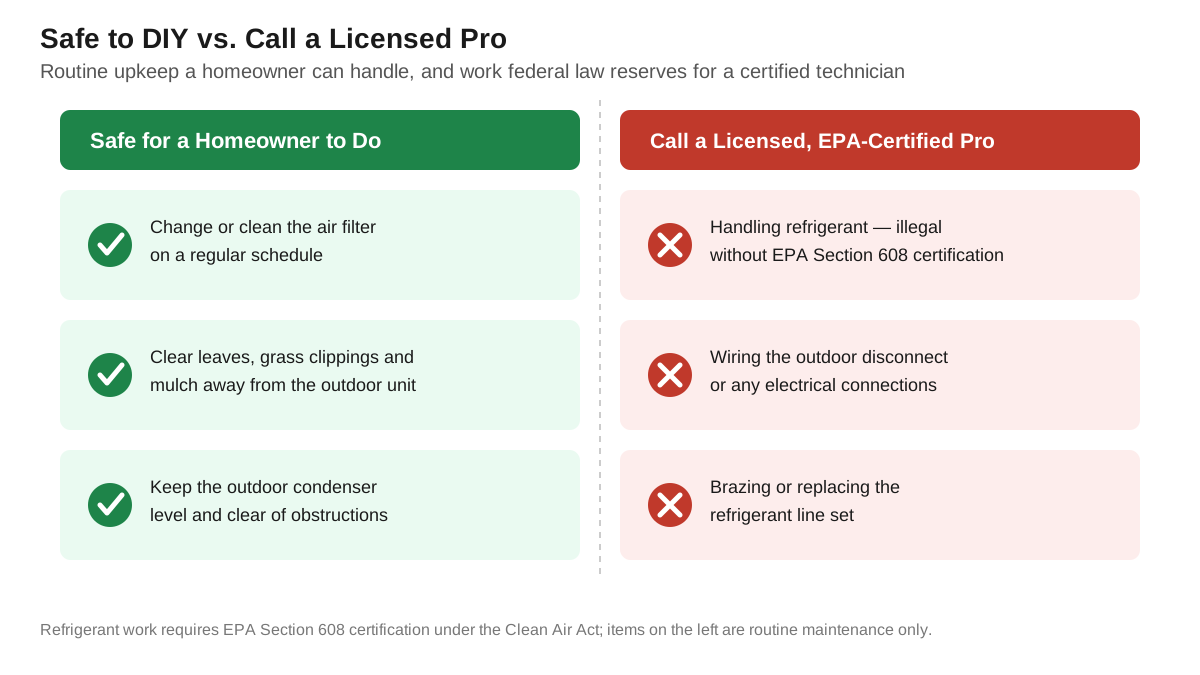
On the DIY side, know where the line actually is. Changing a filter, clearing debris and leaves from around the outdoor unit, and keeping the condenser level are all reasonable homeowner tasks. Handling refrigerant, wiring the disconnect, or brazing the line set is not; it is illegal without EPA Section 608 certification, and it is dangerous without the right gauges, recovery equipment and electrical safety practice. If a repair quote or a DIY video suggests topping off refrigerant yourself, that is the point to stop and call a licensed technician instead. And if the system fails outright with no cooling at all, this guide to what actually can't wait until morning can help you decide how urgent the call is.
Federal rule under EPA Section 608 reserves refrigerant and electrical work for certified technicians; routine upkeep stays a homeowner task.
Regional Notes: Humid Coasts, Desert Heat and Cold Winters
National averages blend very different climates, and the right system leans differently depending on where the house sits.
Humid Gulf Coast and Southeast homes need to worry about removing moisture from the air (latent heat in HVAC terms) as much as dropping the temperature. An oversized unit in this climate is a real problem, because it cools the air before it has run long enough to wring out the humidity, leaving rooms that feel damp even at a comfortable thermostat setting. Coil sizing and a properly sloped condensate drain line matter more here than almost anywhere else.
Hot, dry desert Southwest climates push the outdoor unit against high ambient air temperatures for long stretches of the year, which wears on the compressor and makes filter and coil maintenance more important, since dust loads the system faster than in wetter regions.
Cold northern "freeze belt" states often widen the AC replacement conversation to include a heat pump or dual-fuel system that shares equipment between heating and cooling seasons, plus freeze protection for any outdoor components and off-season startup procedures each spring.
Coastal, salt-air areas add corrosion resistance on the outdoor coil and cabinet as a real factor in how long a system lasts, and some manufacturers offer coated coils rated specifically for coastal installations. That is worth asking about if your house sits within a few miles of salt water.
Getting the Most Out of a New System
A properly sized, correctly installed system still needs upkeep to reach its full service life. Change or clean the filter on a regular schedule — most residential filters carry a MERV rating from 1 to 16, and a clogged filter, whatever its rating, is one of the most common reasons a system underperforms or freezes up, and it is the cheapest problem to prevent. Keep the outdoor condenser clear of leaves, grass clippings, mulch and overgrown shrubs, since restricted airflow around the unit makes the compressor work harder than it should. A seasonal HVAC maintenance checklist is worth keeping on the fridge.
Schedule an annual professional tune-up, ideally before the cooling season starts, so a technician can check refrigerant charge, electrical connections and coil condition before small issues turn into a service call in the middle of a heat wave. Treat a system that keeps needing refrigerant "topped off" as a leak that needs finding and fixing, not a normal maintenance item; refrigerant is a closed-loop system and should not need regular recharging.
If your ductwork is original to an older house, ask your technician about duct sealing during your next tune-up; leaky ducts waste conditioned air in the attic or crawlspace and make a correctly sized system work harder than its rating suggests it should have to. Pair good maintenance habits with the sizing and installation quality covered above, and a new system has a real shot at reaching the upper end of its expected service life instead of the lower end.
Frequently asked questions
How much does AC replacement cost?+
Installed replacement for a central system typically runs $2,900 to $9,000, with a national average around $5,977. Where you land in that range depends mostly on tonnage, the SEER2 tier you choose, and whether the ductwork needs work. A mid-size 3-ton swap with existing, adequate ductwork tends to land closer to the $2,000 to $5,500 range for that portion of the job alone.
How long does AC replacement take?+
A straightforward system swap that reuses the existing ductwork and line set is often described by installers as a same-day job. Work that also involves duct changes, a line-set reroute, or an electrical panel upgrade adds time. Ask your contractor for a written timeline specific to your house before install day, since scope varies a lot from job to job.
Is AC replacement covered by insurance?+
Usually not. A standard homeowners policy (HO-3) is built to cover sudden, accidental damage, such as a fallen tree limb, lightning or fire, not the ordinary mechanical wear that ends most air conditioners' service life. If a covered peril damaged your system, document it and file a claim; if age or use is the cause, that cost is on you the way a worn roof or water heater would be.
Why is AC replacement so expensive?+
Because you are buying two matched pieces of precision equipment, the condenser and the evaporator coil, plus a refrigerant charge, plus licensed labor to size, install, evacuate, pressure-test and commission the system correctly. Higher SEER2 equipment costs more upfront in exchange for lower running costs, and any ductwork, electrical or permit work adds to the base equipment-and-labor price.
Does the manufacturer's warranty reset after a replacement?+
Yes. New equipment carries its own new warranty terms starting from the installation date rather than continuing the old unit's coverage. Read the paperwork closely: many manufacturers require online registration within a set window after installation to get the full parts term instead of a shorter default one, and labor coverage is usually a separate, shorter term from parts coverage.
How can I save money on AC replacement?+
Get multiple written, itemized quotes so you are comparing the same scope of work rather than a bottom-line number. Ask whether existing ductwork and line set can be reused instead of replaced, right-size the equipment with a real Manual J load calculation instead of matching the old unit's tonnage, and ask your contractor about manufacturer rebates or utility efficiency incentives already on file.
What's the average cost of AC replacement?+
National survey data puts the average installed cost at $5,977, with most homeowners landing between $3,887 and $8,073. That average blends small and large homes, baseline and high-efficiency equipment, and simple and complicated ductwork situations, so treat it as a starting point for budgeting rather than a quote for your specific house.
How much does AC installation cost without removing old equipment?+
First-time central air installation, with no old system to remove, typically falls within the same $2,900 to $9,000 range as a replacement, since equipment and labor make up most of the price either way. The real difference shows up in ductwork: a house with no existing ducts adds a bigger line item than one where ducts just need modification.
How much does it cost to get AC fixed instead of replaced?+
AC repair averages around $375, with most jobs landing between $250 and $700, though a major component like a compressor can run $600 to $3,000 on its own. Once a single repair estimate approaches the lower end of full-replacement pricing, most contractors and homeowners start weighing a new system instead of another patch.
Does home insurance cover AC replacement after a covered loss?+
It can, if the damage falls under a covered peril in your policy, such as hail, wind, fire or a covered water event, and you have documentation and photos from before and after. It typically will not cover a system that failed from age or lack of maintenance, so check your declarations page and talk to your adjuster before assuming either way.