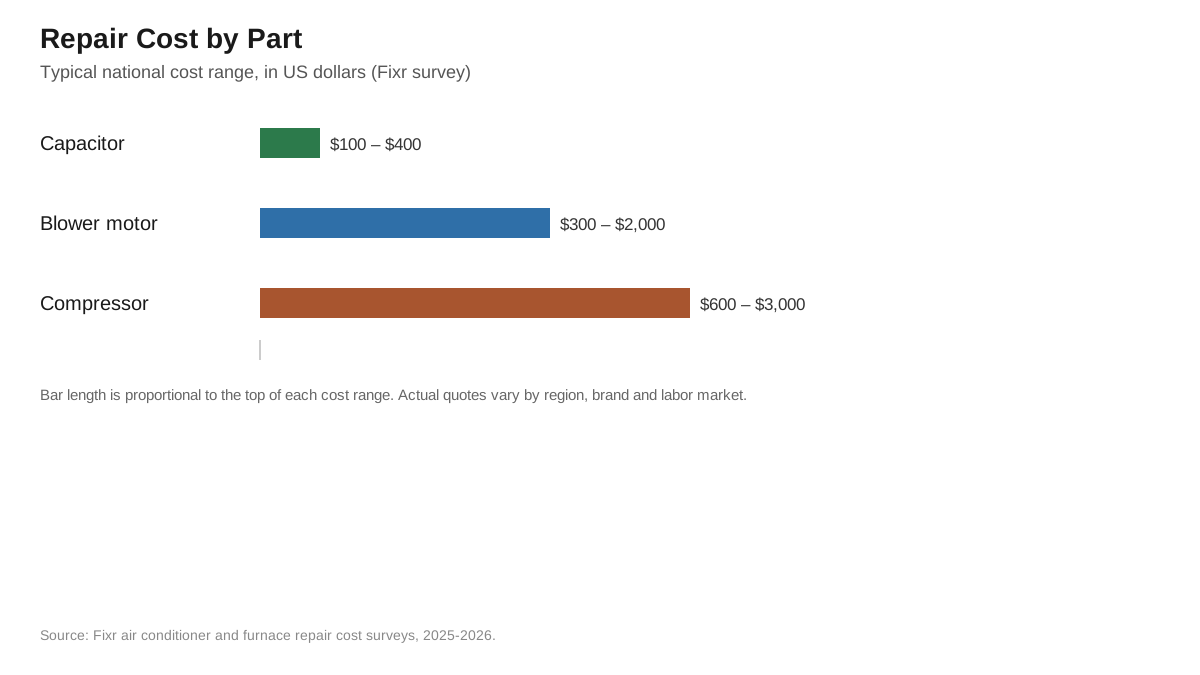
A furnace or AC capacitor runs $100 to $400, a blower motor runs $150 to $2,000 depending on whether it's an OEM or universal part, and a compressor runs $600 to $3,000 or more. Blower motor replacement usually lands in the middle of that range; ac capacitor replacement is the cheapest of the three and the one you can sometimes handle yourself.
The blower stopped, or the outdoor unit is humming but nothing is spinning, or the whole system tripped a breaker and refuses to reset. Somewhere between the thermostat and the compressor, one part failed, and now a stranger with a multimeter is about to tell you a number. Blower motor replacement, ac capacitor replacement, and compressor replacement are three completely different repairs with three completely different price tags, and plenty of homeowners get quoted for one when the actual problem is another.
Here's what each part does, which one is most likely to have failed based on what you're hearing and seeing, what each repair costs according to national cost surveys, and where the line sits between a Saturday-afternoon fix and a job that legally has to go to a licensed technician. None of the numbers below are invented; they come from HomeGuide, Fixr, and HomeAdvisor cost surveys, and from the standards bodies that certify the people doing this work.
Blower Motor, Capacitor or Compressor: What Each Part Actually Does
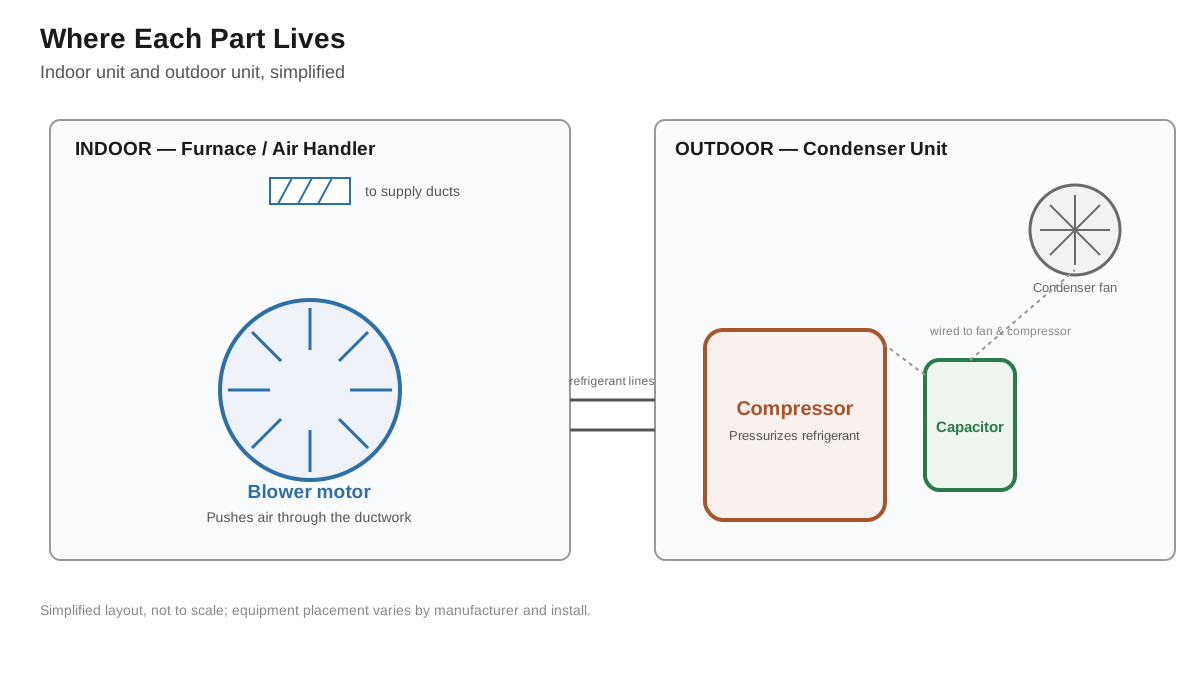
Three different parts fail for three different reasons, and they are not interchangeable diagnoses even though homeowners often use the words loosely. The blower motor is the fan, usually inside the furnace or air handler, that pushes conditioned air through your ductwork. The capacitor is a small cylindrical component, often about the size of a soup can, that stores an electrical charge and gives the compressor and fan motors the extra jolt of current they need to start spinning. The compressor is the pump inside the outdoor unit that pressurizes refrigerant, and it is the single most expensive part in the whole system.
Run Capacitor and Start Capacitor: Not the Same Job
Most residential systems use a dual run capacitor, one component wired to both the compressor and the outdoor fan motor. Some older or harder-starting compressors add a separate start capacitor that only fires for the first second or two of a cycle. When people search for ac capacitor replacement, they almost always mean the run capacitor, the part most likely to weaken with age and heat.
Blower Motor vs. Condenser Fan Motor: Two Different Parts
The indoor blower motor and the outdoor condenser fan motor both spin blades, and both get blamed when a system "isn't blowing," but they sit in different cabinets and fail for different reasons. The blower motor pulls air across the indoor coil and pushes it through the ducts; it runs on a schedule tied to your thermostat and, on many furnaces, to the equipment's own airflow demands. Condenser fan motor replacement is a separate repair, usually triggered by a motor that has seized after years of yard debris, grass clippings, and weather exposure rather than dust buildup indoors. There is no separate national cost survey for the condenser fan motor specifically, so expect a similar bracket to the blower motor figures below until a technician gives you a written number for your unit.
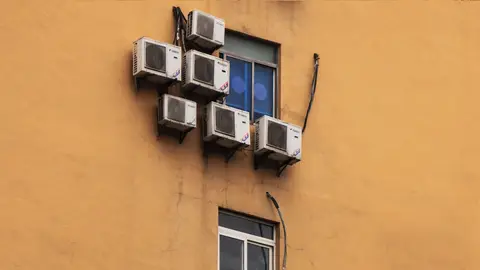
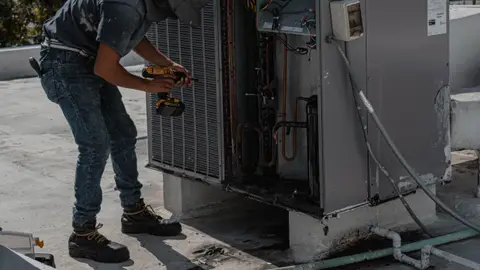
The blower motor lives indoors in the furnace or air handler; the capacitor and compressor sit outside in the condenser unit.
Why These Parts Fail: Causes Ranked by How Often They Show Up
Failures are not random, and the order below reflects how often each cause actually shows up on real HVAC service calls, from the most common trigger to the least.
Why Capacitors Fail
Heat and age account for almost every capacitor failure. A capacitor is rated in microfarads, and that rating drifts downward every summer it spends baking inside an outdoor unit in full sun. Once the rating drops far enough, the compressor or fan motor it feeds cannot get the jolt of current it needs to start spinning, and the system either hums without starting or trips off on its own protection. A power surge, most often from a nearby lightning strike, can also kill a capacitor instantly regardless of age.
Why Blower Motors Fail
A motor that whines or squeals before it fails is usually telling you the bearing is going; blower motor bearing replacement is a smaller job than a full motor swap on some models but not all, so get the specific diagnosis before assuming the worst. Dust and dirt buildup on the wheel or windings forces the motor to work harder and run hotter, which shortens its life, and a dirty filter is the single most common upstream cause of that buildup. On some furnaces the motor itself is fine and the actual failed part is the blower motor resistor, a small module that steps the motor down to lower fan speeds; restricted airflow makes that resistor run hot and burn out well before the motor does, and it is a far cheaper part to replace.
Why Compressors Fail
A compressor rarely fails first. Most compressor deaths trace back to something else going wrong for months beforehand: a weak capacitor that forced repeated hard starts, a slow refrigerant leak that made the compressor run hot and undercharged, or an electrical fault upstream that fed it dirty power. Replacing a failing capacitor the week it starts acting up is the cheapest insurance you can buy against a much larger compressor bill later. Straight age eventually catches up with every compressor, but a unit that has always run on correct refrigerant charge and clean power typically outlasts the rest of the system.
How to Tell Which Part Actually Failed
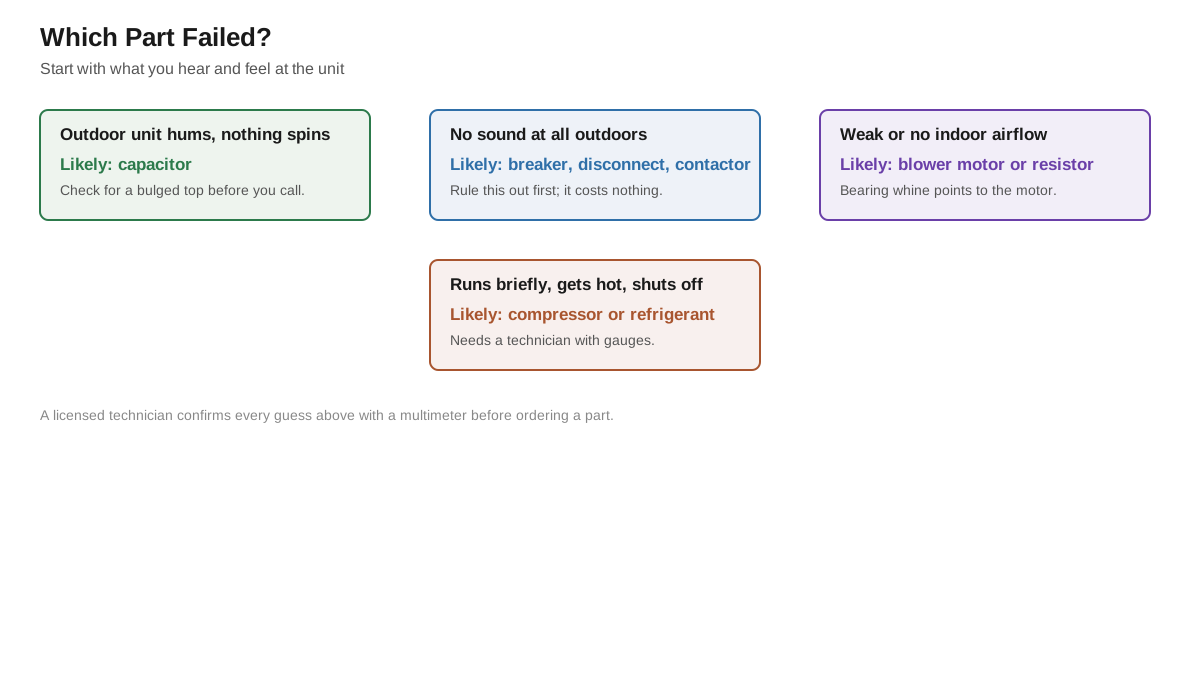
A quick way to narrow down which part failed before a technician arrives.
Before anyone touches a wire, cut power to the system at the thermostat and, for anything involving the outdoor unit, at the breaker or disconnect box beside the condenser. A licensed technician will still verify power is off with a meter before opening any panel, and so should you if you go any further than looking and listening.
Listen at the outdoor unit. A hum with no spinning fan or compressor almost always points to a weak or dead capacitor; if you hear nothing at all, suspect a tripped breaker, a bad contactor, or a thermostat problem instead.
Look for a bulge on top of the capacitor. A healthy capacitor has a flat or slightly domed top; a swollen, cracked, or leaking top is a dead giveaway it needs replacing, though a capacitor can also fail electrically while still looking fine.
Check whether the indoor blower runs at all. No airflow anywhere in the house points to the blower motor or its resistor, not the outdoor unit; airflow that is weak everywhere points more toward a failing blower motor bearing than a resistor.
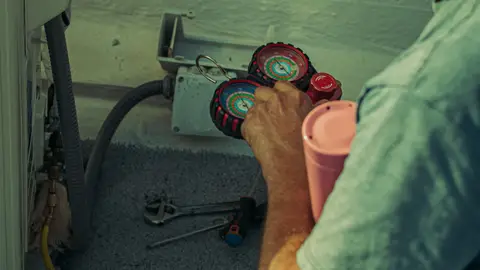
Feel for unusual heat or listen for a hard click-off. A compressor that starts, runs briefly, gets hot, and shuts itself off on protection is showing classic signs of either a failing capacitor forcing hard starts or a refrigerant problem, and either one needs a licensed technician with gauges to sort out.
Check the breaker and disconnect first, every time. A tripped breaker or a pulled disconnect produces the exact same "nothing is happening" symptom as a dead motor or compressor, and ruling it out costs nothing.
A technician diagnosing a bad blower motor or a failing capacitor runs the same checks with a multimeter: measuring capacitance against the rating printed on the capacitor's own label, and measuring the motor's amp draw against its nameplate rating. Both numbers either match what the part is supposed to do or they do not; there is not much gray area once a meter is involved. If the outdoor unit does nothing at all, our AC won't turn on guide walks through the breaker, thermostat, and capacitor checks in more detail.
DIY Fixes vs. When You Need a Licensed Pro
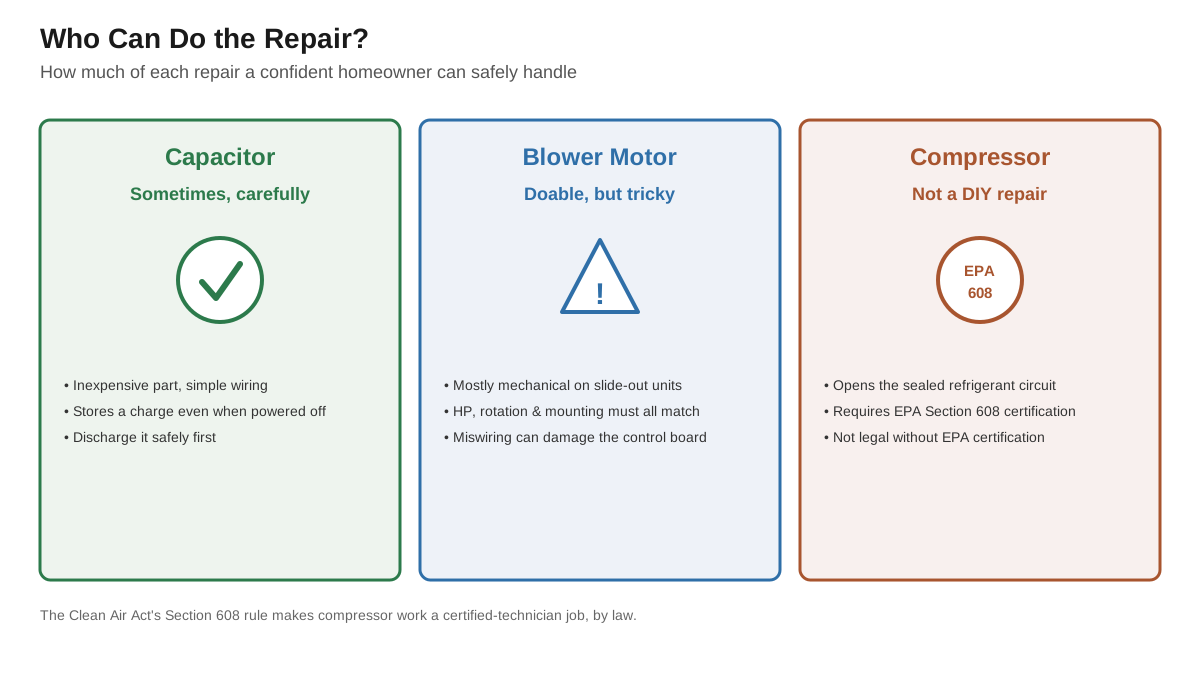
The honest answer splits three ways by part, and it is worth being straight about the risk before you decide.
Capacitor: The One Homeowners Can Sometimes Handle
Can you replace an AC capacitor yourself? It's one of the most common questions that brings people to this page, and the honest answer is: sometimes, carefully. A capacitor is inexpensive, sold at electrical supply houses and some hardware stores, and the swap itself is a handful of screws and two or three labeled wire connections. The real risk is that a capacitor stores an electrical charge even after the system is powered off, and discharging it safely takes the right tool and the right technique. If you have never done it, do not learn on a live system; a technician who does this daily can safely discharge, test, and replace a capacitor in well under an hour, which is part of why it is the least expensive of these three repairs even with a service call fee included.
Blower Motor: Doable for a Confident DIYer, Still Real Work
Is it hard to replace a blower motor yourself? It depends entirely on the platform. On a furnace with a slide-out blower assembly, the swap is mostly mechanical: disconnect the wiring harness, unscrew the mounting bracket, slide the old motor out, slide the matching replacement in. The part that trips people up is matching the exact horsepower, rotation direction, and mounting pattern, and on some systems the motor is wired through a control board that has to be told about the new motor's speed tap. Get the wrong replacement or miswire it and you can damage the control board on top of having bought the wrong motor.
Compressor: Not a DIY Repair, by Law
Compressor work almost always involves opening the sealed refrigerant circuit, and under the Clean Air Act's Section 608 rules (40 CFR Part 82, Subpart F), anyone who maintains, services, repairs, or disposes of equipment that could release refrigerant into the atmosphere has to hold EPA certification to do it legally. That is not a suggestion; it is federal law, and a homeowner without that certification cannot legally buy refrigerant or open the sealed system at all. This is the one repair on this page where hiring a licensed HVAC contractor is not optional.
Only the capacitor is ever a realistic DIY job; a compressor is off-limits without EPA Section 608 certification.
What Blower Motor, Capacitor and Compressor Repairs Cost
The numbers below come from national cost surveys, not from any single company's price list, and actual quotes swing with your local labor market, the brand and age of your equipment, and whether the job turns into an after-hours call. Capacitor replacement cost sits at the low end of this list, typically $100 to $400, while blower motor replacement cost and compressor replacement cost climb from there; compressor quotes cluster most often in the $1,300 to $2,500 band, even though the outer edge of the national range reaches $3,000.
Repair
Typical range
Source
AC or furnace capacitor replacement
$100 – $400
Fixr / HomeGuide
Blower motor replacement (AC or air handler)
$300 – $2,000
Fixr
Furnace blower motor replacement
$150 – $2,000, commonly $562 – $1,045
HomeAdvisor / Fixr
Compressor replacement
$600 – $3,000
Fixr
Diagnostic / service call fee
$75 – $200
HomeGuide
Emergency or after-hours hourly rate
$140 – $300
HomeGuide / Fixr
National repair cost ranges by part, from Fixr's cost survey.
What Moves the Price Within Each Range
Factor
Why it matters
OEM part vs. universal replacement
A part sourced directly from your equipment's manufacturer typically costs more than a compatible universal part, but it is guaranteed to match the original specs exactly.
Time of service
Emergency and after-hours calls run $140 to $300 an hour against a standard $75 to $175 rate, on top of the part itself.
Accessibility
A blower motor in an attic or a crawlspace air handler takes longer to reach than one in a basement or a hallway closet, and labor is billed by the hour.
Cascading damage
A capacitor that failed weeks ago and was ignored can take a compressor or a control board down with it, turning a $100 repair into a $600-plus one.
System age and warranty status
A part still under a manufacturer's parts warranty may cost only the labor to install; an out-of-warranty system pays full retail for the part as well.
When a Compressor Fails: Repair It, Replace the Unit, or Replace the Whole System
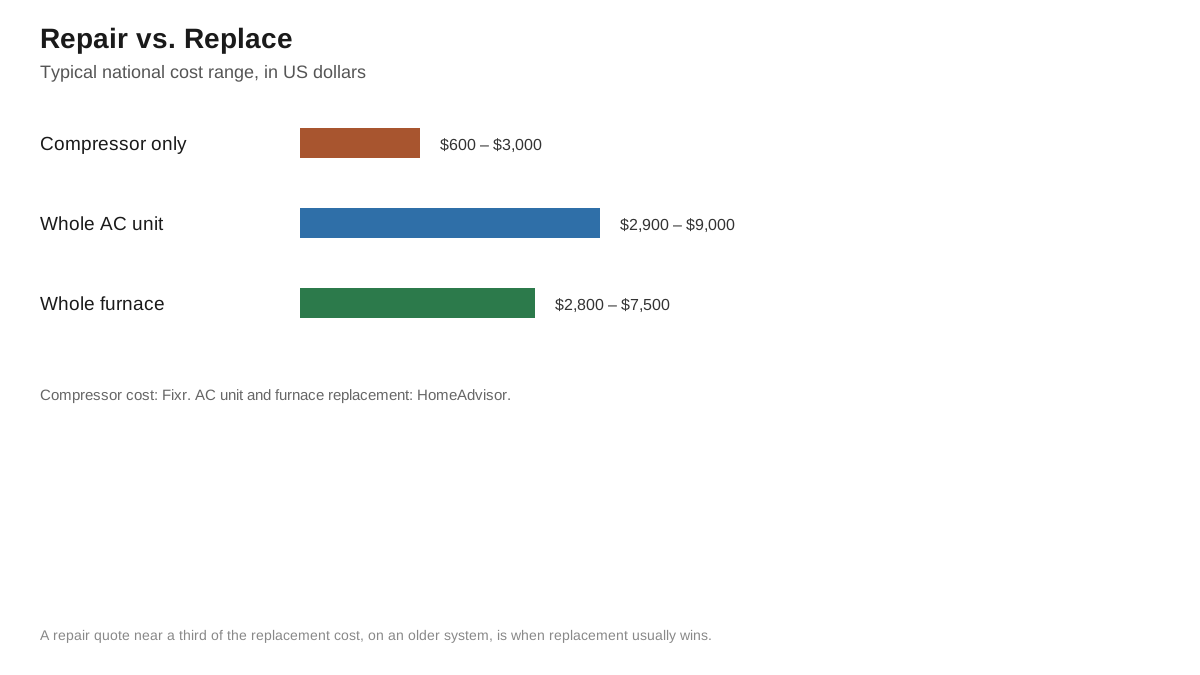
A compressor repair on an older system raises the repair-or-replace question fast, and the honest way to answer it is to compare numbers, not gut feeling.
How compressor repair cost compares to replacing the whole unit.
Scenario
Typical cost
When it makes sense
Replace the compressor only
$600 – $3,000
System is under 10 years old, still under a parts warranty, or the rest of the equipment is in good shape.
Replace the whole outdoor AC unit
$2,900 – $9,000, averaging around $5,977
System is older, out of warranty, or the compressor quote is already a large share of a full replacement.
Replace the whole furnace
$2,800 – $7,500, averaging roughly $4,800 to $4,814
Furnace blower motor, heat exchanger, and control board are all showing age together rather than one isolated failure.
Replacing the compressor alone makes the most sense while the rest of the system is younger and still under warranty, but replacing the whole unit often wins on total cost once age and multiple failing parts stack up together. There is no universal cutoff where repair stops making sense and replacement starts; the honest way to decide is to weigh the actual compressor quote against the full-replacement numbers in the table above and factor in how many other original parts, the blower motor, the coil, the control board, are the same age and likely to need attention next. A technician quoting your specific system, its refrigerant type, and its warranty status is the only way to get a real answer for your equipment. See our AC replacement cost guide for the full breakdown of what drives that number.
How Long a Blower Motor, Capacitor or Compressor Should Last
Manufacturers do not publish a fixed replacement calendar for these parts the way they do for an air filter, because hvac part lifespan depends far more on run hours and heat exposure than on the number of years since installation. A capacitor that spends every summer afternoon in full sun on a black rooftop unit ages faster than one shaded by the house's north wall.
When should a capacitor be replaced is less about a calendar date and more about a reading: a technician who tests capacitance during an annual tune-up and finds the rating has drifted meaningfully below the number printed on the label typically recommends replacing it before it fails outright, rather than waiting for a hot afternoon to make the decision for you. A tune-up runs $125 to $200 nationally and is one of the cheapest ways to catch a weakening capacitor before it takes a fan motor or compressor down with it.
Blower motors and compressors follow the same pattern: correct refrigerant charge, clean electrical supply, a clean filter, and regular airflow maintenance stretch their service life; restricted airflow, electrical surges, and a neglected capacitor shorten it. There is no honest single number to hand you here, and any guide that gives you one is guessing.
Why This Isn't a Job to Rush: Safety and Fire Risk
Home heating equipment fires are not rare, and electrical components inside that equipment, not just space heaters, are part of the picture. Fire departments in the US responded to an estimated annual average of 44,210 home structure fires caused by heating equipment between 2016 and 2020, resulting in 480 civilian deaths, 1,370 injuries, and more than a billion dollars in direct property damage a year, according to the National Fire Protection Association. A more recent NFPA release covering 2019 through 2023 puts the average closer to 38,881 fires a year, still measured in the hundreds of deaths and over a billion dollars in damage.
None of that means a blower motor or a capacitor is likely to start a fire on its own: heating equipment as a whole accounts for an estimated 13 percent of home structure fires, and within that share, portable space heaters cause roughly a third of the fires and nearly nine out of ten of the deaths, not permanently wired parts like a blower motor or a capacitor. It does mean electrical components inside heating and cooling equipment are worth respecting rather than rushing, and that a part showing early warning signs, a burning smell, a breaker that trips repeatedly, a compressor that hums and clicks off, deserves a technician's attention before it becomes a bigger problem. If you smell anything burning or see scorch marks near the unit, treat it as an emergency HVAC situation and shut the system off at the breaker until someone qualified looks at it.
What to Look for in Whoever Does the Repair
For the capacitor, you may not need anyone. For the blower motor and definitely for the compressor, who does the work matters as much as what it costs. A technician's NATE certification (Certified HVAC Professional pathway) means they have passed five 30-question exams covering fundamentals, electrical and controls, comfort and airflow, installation, and service, and recertify every two years with 16 hours of continuing education, or a retake of the specialty exam, inside a 120-day grace period. For any compressor or refrigerant work, confirm they hold current EPA Section 608 certification (Type I for small appliances, Type II for high-pressure systems, Type III for low-pressure systems, or Universal for all three), which the technician should be able to produce without hesitation since it is a federal requirement, not a courtesy.
Get a written estimate before any part is ordered, one that names the specific part, make, model, and horsepower or microfarad rating, not just "motor" or "capacitor," the labor charge, and whether the visit's diagnostic fee is credited toward the repair if you approve it. Our AC repair cost guide covers the full range of repairs beyond these three parts, and our guide to choosing an HVAC contractor walks through licensing, insurance, and the exact questions to ask before you approve any invoice.
How to Make These Parts Last Longer
None of this eliminates failure, but it stretches the years between repairs.
Change the air filter on the schedule your equipment manufacturer recommends; restricted airflow is the single biggest stressor on both the blower motor and the resistor that controls it.
Keep the area around the outdoor unit clear of grass clippings, leaves, and mulch, so the condenser fan motor and compressor are not working against blocked airflow.
Book an annual tune-up ($125 to $200 nationally) so a technician can test capacitance and amp draw before either one drifts far enough to cause a failure.
Have a licensed electrician check the circuit if you live somewhere with frequent grid surges or lightning; a whole-system surge protector is cheap insurance against a dead capacitor.
Do not ignore a humming outdoor unit, a squealing blower, or a breaker that trips more than once. Each one is a part asking for attention before it becomes a bigger bill.
For furnace-specific symptoms beyond these three parts, an ignitor problem, a cracked heat exchanger, a failed flame sensor, see our furnace troubleshooting guide for the full diagnostic path.
Regional Notes: Heat, Humidity, Dust and Salt Air
These parts do not fail at the same rate everywhere in the country.
Hot, Sun-Exposed Climates
In the Southwest and the Deep South, outdoor units run more hours per year and sit in more direct sun, both of which push capacitors toward failure faster than in a milder climate. More run hours also means more cumulative wear on the compressor and the condenser fan motor.
Humid and Coastal Regions
Salt air and high humidity accelerate corrosion on electrical contacts and motor windings, which shortens the working life of blower motors, capacitors, and compressors alike; equipment installed within a few miles of saltwater coastline typically needs closer annual inspection than equipment further inland.
Dusty and Arid Regions
Fine dust works its way into bearings and windings faster in arid climates, which is part of why blower motor bearing replacement and resistor failures show up more often in these regions; a tighter filter-change schedule matters more here than almost anywhere else.
Cold Climates
Furnace blower motors in cold climates run longer, more continuous cycles through the winter than AC blower motors do in summer in milder regions, which is one reason furnace blower motor replacement is its own line item in the cost data above rather than an identical number to the AC-side blower motor.
Frequently asked questions
What causes a blower motor to fail?+
Dust and dirt buildup that makes the motor run hot, worn bearings that show up as squealing or whining before the motor quits, and a failed blower motor resistor that mimics motor failure are the three most common causes. A dirty air filter is usually the root cause behind the first two, since restricted airflow forces the motor to work harder than it was designed to.
How do you know if your blower motor is going bad?+
A blower motor going bad usually announces itself before it quits completely: weak airflow throughout the house, a grinding or squealing noise when it starts, or a motor that runs intermittently and then stops are the classic warning signs. If you notice those symptoms, book a diagnostic visit before the motor fails completely and leaves you without heating or cooling.
Can a blower motor be repaired, or does it need to be replaced?+
Sometimes. A failed capacitor or a burned-out blower motor resistor can look exactly like a dead blower motor but costs far less to fix than replacing the motor itself. A technician tests the motor's amp draw and the resistor separately before recommending a full replacement, so get that diagnosis rather than assuming the motor is the failed part.
How much does blower motor replacement cost?+
Blower motor replacement runs $300 to $2,000 for AC and air handler units nationally, and furnace-specific blower motors commonly land between $562 and $1,045, according to Fixr's cost survey. The exact number depends on whether the part is OEM or universal, how accessible the motor is, and whether a control board also needs reprogramming for the new motor.
Is it hard to replace a blower motor myself?+
It depends on the platform. A furnace with a slide-out blower assembly is mostly mechanical work, disconnect the harness, unscrew the bracket, swap the motor, but matching the exact horsepower, rotation, and mounting pattern trips up a lot of DIYers, and a miswired replacement can damage the control board.
Can I replace an AC capacitor myself?+
Carefully, and only if you know how to safely discharge a capacitor first, since it stores an electrical charge even after the system is powered off. The part itself is inexpensive and the swap is a handful of screws and labeled wire connections, but the discharge step is the one that injures people who have never done it before.
How long does it take to replace an AC capacitor?+
A licensed technician typically completes a capacitor replacement in well under an hour once they are on site, including testing the old part and confirming the new one matches the correct microfarad and voltage rating. Most of the total time on a service call goes to diagnosis and the drive there, not the physical swap.
How often should you replace an AC capacitor?+
There is no fixed replacement schedule; a capacitor gets replaced when its measured capacitance has drifted meaningfully below the rating printed on its label, which a technician checks during an annual tune-up. Heat exposure and run hours matter more than age in years, so a unit that sits in full sun ages faster than a shaded one.
What happens when a start capacitor goes bad?+
A bad start capacitor usually shows up as a compressor or fan motor that hums but does not start spinning, since the motor never gets the extra jolt of current it needs to overcome inertia. Left alone, repeated failed starts strain the motor windings and can turn a cheap capacitor repair into a much more expensive motor or compressor replacement.
What causes a blower motor resistor to fail?+
Restricted airflow is the leading cause: a dirty filter, a blocked return, or a clogged coil makes the resistor run hotter than it was designed for, and it eventually burns out. Because a failed resistor can mimic a dead blower motor, a technician should test it separately before quoting a full motor replacement.