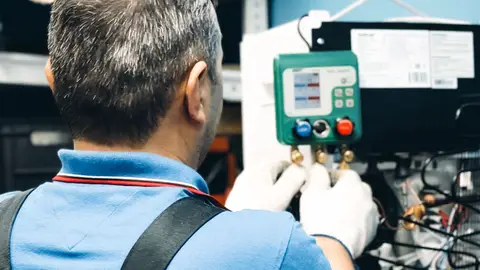
AC repair typically costs $250 to $700, averaging $293 to $375 depending on the survey, with a diagnostic fee of $75 to $200 on top. A capacitor runs $100 to $400; a compressor can run $600 to $3,000. Get a written AC repair estimate before you approve any work, and price full replacement if a repair quote nears $3,000 on an older system.
The compressor kicks on, hums for three seconds, and clicks off again. Or the vents are blowing air that is barely cooler than the room. Or a technician is standing in the driveway holding a clipboard, waiting for a number to mean something before you say yes to the work. Whatever brought you here, you want one thing: a straight answer on what AC repair actually costs, broken down by what is actually wrong, not a single vague average pulled out of thin air.
This guide walks through the real cost ranges by problem, how to tell a $100 capacitor from a $3,000 compressor before a technician ever shows up, what a legitimate AC repair estimate should include, and the point at which repairing stops making sense and replacing takes over. Every dollar figure below comes from published national cost-survey data, cited by source, and where the data does not cover something specific to your house, this guide says so plainly instead of guessing.
What You're Actually Paying For
"AC repair" is not one flat price; it is a diagnostic visit plus whatever part or labor the diagnosis turns up. Most companies charge a service call fee or AC diagnostic fee just to send a technician out and identify the problem, and that fee runs $75 to $200 according to HomeGuide's national survey, with Fixr putting the minimum service call at $75 as well. Some contractors waive that fee if you approve the repair on the spot; others charge it regardless and apply it toward the final bill. Ask which policy applies before the truck leaves the lot.
Once the diagnosis is in, the number moves fast depending on what failed. Two independent surveys put the ac repair cost average at $293 nationally (HomeGuide) and $375 (Fixr), with Fixr's typical range running $250 to $700 for a central system. Regular business-hours labor runs $75 to $175 an hour; call after hours or on a holiday and the emergency hourly rate jumps to $140–$300 depending on the company and the source. A written AC repair estimate should separate these two pieces, labor rate and parts, so you can see exactly what you are paying for instead of one bundled number with nothing behind it.
Why Air Conditioners Break: Causes Ranked by How Often They Show Up
Most AC failures fall into a fairly predictable order, from the parts that fail constantly to the ones that fail rarely but expensively.
Capacitor failure. The capacitor stores an electrical charge that gives the compressor and fan motors the jolt they need to start. Capacitors are cheap, wear out from heat cycling, and are by far the most common single repair on an aging system.
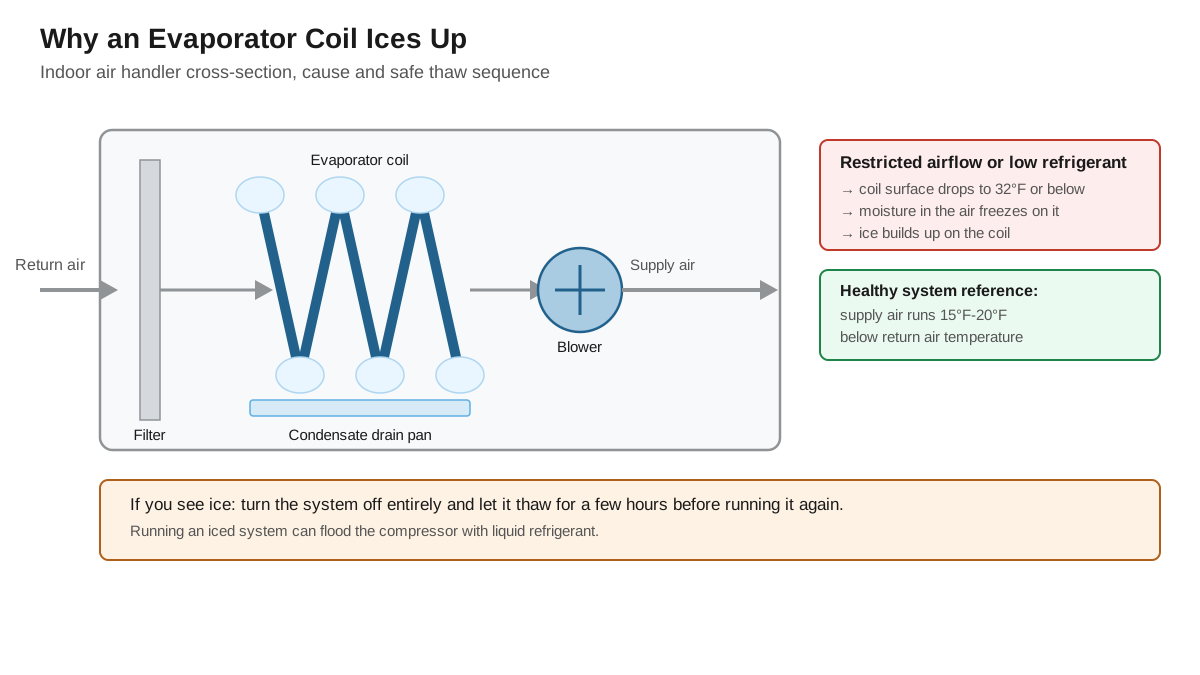
Dirty or restricted airflow. A clogged filter, a blocked return, or a coil caked in dust forces the system to work harder and often ices up the evaporator coil, which then shows up as "AC blowing warm air" even though the real cause is airflow, not refrigerant. A healthy system typically cools supply air about 15°F to 20°F below the return-air temperature, and a much narrower split points to an airflow or refrigerant problem rather than a unit that just needs more time to catch up.
Refrigerant leaks. A slow leak at a fitting, a coil pinhole from corrosion, or a damaged line set lets refrigerant escape gradually, so cooling weakens over weeks rather than failing all at once.
Thermostat and control issues. Dead batteries, a miswired connection, or a smart thermostat that lost compatibility with the system can look exactly like a dead unit even though every mechanical part is fine.
Blower motor wear. The motor that pushes air through the ducts eventually wears out its bearings or windings, especially on a system that has run for a decade or more with irregular maintenance.
Compressor failure. The compressor is the heart of the system and the most expensive part to replace. It fails less often than the parts above, but when it does, the repair cost regularly approaches what a new system would cost.
Knowing roughly where a symptom sits on this list before you call gives you a rough budget in your head, even before a technician confirms the exact part.
Ice on the coil means restricted airflow or low refrigerant, not a system that just needs more time — shut it off and let it thaw before running it again.
How to Narrow It Down Before a Technician Arrives
You cannot legally handle refrigerant or open sealed components without EPA Section 608 certification, but a homeowner can safely rule out several things in about 10 minutes, and doing so can save you a same-day emergency call for a problem that turns out to be a tripped breaker.
Check the thermostat first: confirm it is set to "cool," the temperature is below room temperature, and the batteries (if any) are not dead.
Check the breaker panel for both the indoor air handler and the outdoor condenser; a tripped double-pole breaker is a common, harmless-looking cause of "the AC won't turn on at all."
Pull the air filter and hold it to a light; if you cannot see light through it, replace it before doing anything else.
Look at the outdoor unit for leaves, grass clippings, or a fence panel blocking airflow, and clear anything within about 2 feet of the cabinet.
Check for ice on the indoor coil or the refrigerant lines; if you see ice, turn the system off entirely and let it thaw for a few hours before running it again, since running an iced system can flood the compressor with liquid refrigerant. Ice does not form there unless the surface has dropped to 32°F or below, so any ice at all points to restricted airflow or low refrigerant, not normal operation.
Check the condensate drain line and pan for standing water or a musty smell, which often means a clogged drain has triggered a safety switch that shuts the system down on purpose.
Note exactly what the system is doing: does the outdoor unit run but not cool, does nothing happen at all, is there a smell, a sound, or a specific error code on a smart thermostat display.
Write down what you find. A technician who hears "the breaker was fine, the filter was clean, but there's ice on the line" can often narrow the visit to a specific likely part before they even open a panel, which speeds up the diagnostic step and can shape a more accurate AC repair quote over the phone. If the system runs but never quite cools the house, our AC not cooling guide walks through the same troubleshooting in more depth.
AC Repair Cost by Problem
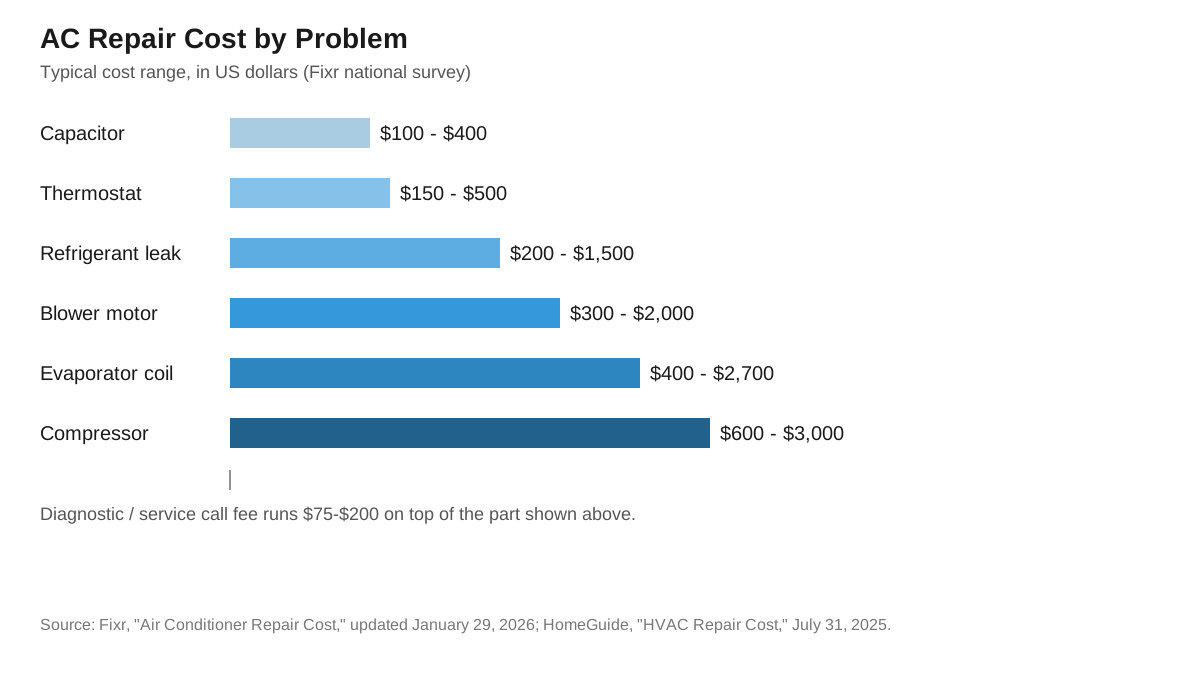
AC repair cost by problem, based on Fixr and HomeGuide national survey data.
Here is what national cost-survey data shows for the most common individual repairs, plus the diagnostic and labor charges that sit underneath every job:
Repair or fee
Typical cost range
Source
Diagnostic / service call fee
$75 – $200
HomeGuide; Fixr
Capacitor replacement
$100 – $400
Fixr; HomeGuide
Thermostat replacement
$150 – $500
Fixr
Refrigerant leak repair
$200 – $1,500
Fixr
Blower motor replacement
$300 – $2,000
Fixr
Evaporator coil replacement
$400 – $2,700
Fixr; HomeGuide ($650–$2,400)
Compressor replacement
$600 – $3,000
Fixr; HomeGuide ($1,300–$2,500)
Central AC repair, typical job
$250 – $700 (avg. $375)
Fixr
Mini-split repair
$300 – $1,000
Fixr
Emergency / after-hours hourly rate
$140 – $300
HomeGuide; Fixr
How we got these numbers: the ranges above are researched ranges pulled from two independent national cost surveys, HomeGuide and Fixr, which each aggregate reported job costs across the country. They are not a quote for your house. The final number varies by region, by the brand and age of your equipment, by how hard the part is to reach, and by what a technician actually finds once a panel or cabinet is open, which is exactly why only a written estimate from a local technician, itemized by part and labor, is binding, not this table or any other national average. For a closer look at what drives capacitor, blower motor, and compressor pricing specifically, see our guide to blower motor, capacitor, and compressor repairs.
DIY Fixes vs When You Need a Licensed Pro
A short list of tasks are genuinely safe and reasonable for a homeowner to handle without tools beyond a screwdriver and a garden hose.
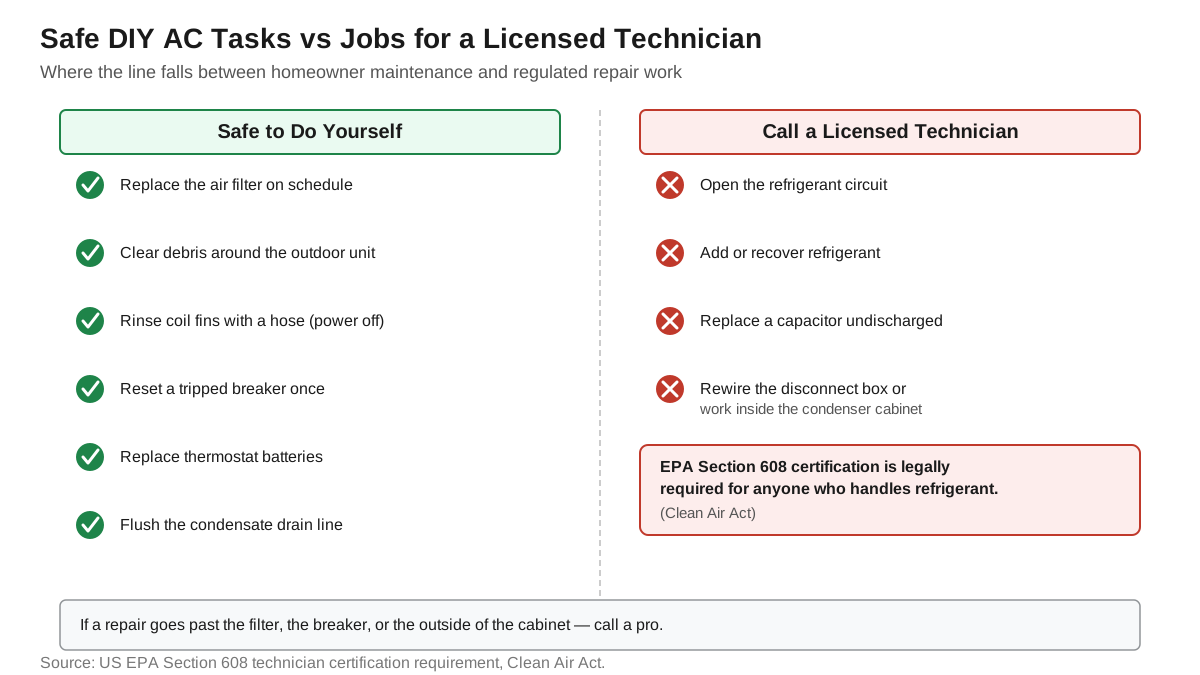
Safe to do yourself: replacing the air filter on schedule, clearing debris and vegetation from around the outdoor unit, gently rinsing the outdoor coil fins with a hose (power off first), resetting a tripped breaker once, replacing thermostat batteries, and flushing a condensate drain line with a wet/dry vacuum or a mix of water and vinegar if your system allows access to the cleanout.
Not a DIY job, regardless of what a video makes it look like: opening the refrigerant circuit, adding or recovering refrigerant, replacing a capacitor or contactor without discharging the capacitor safely first, rewiring the disconnect box, or working inside the condenser cabinet at all. Refrigerant work specifically requires EPA Section 608 certification under the Clean Air Act, and a capacitor that has not been properly discharged can hold a dangerous electrical charge even with the power off. If a repair involves anything past the filter, the breaker, or the outside of the cabinet, that is the point to call a licensed technician instead of reaching for a wrench.
EPA Section 608 certification is legally required for any refrigerant work — this split shows where the line falls, based on this guide's DIY vs pro breakdown.
AC Repair vs Replace: When the Math Flips
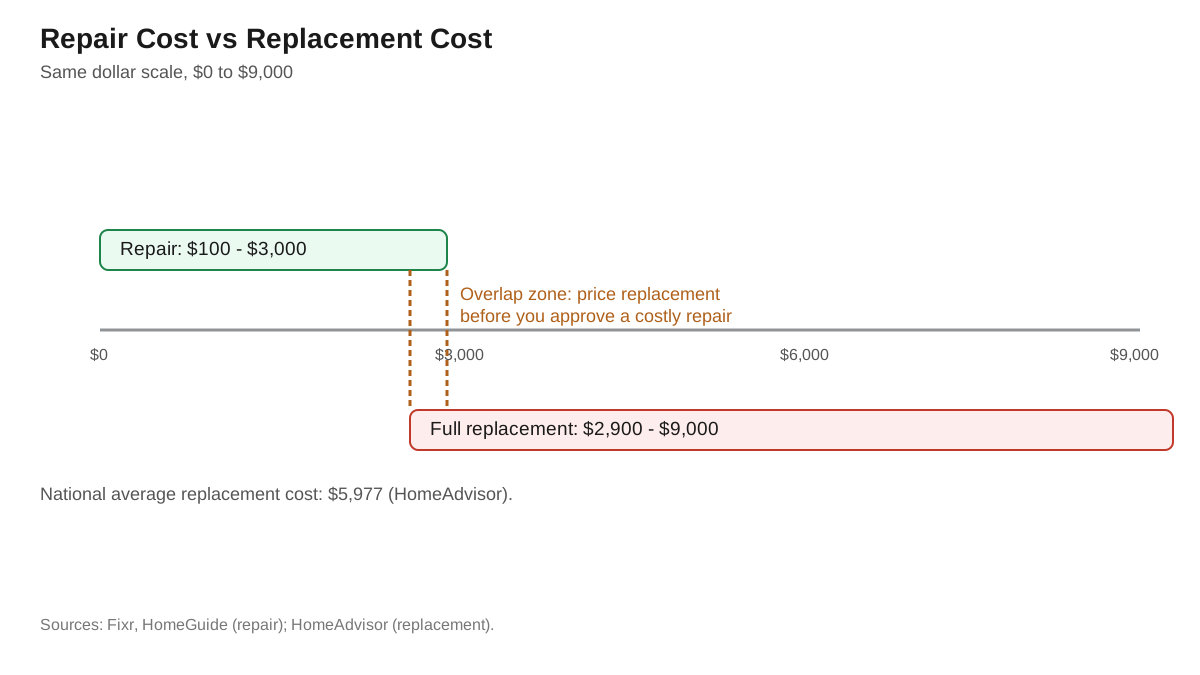
Where repair and replacement costs sit next to each other, and where they start to overlap.
The ac repair vs replace question is really a math problem, not a feeling. Run the numbers side by side before you decide either way.
Repair
Full replacement
Typical cost
$250 – $700 (avg. $375); major components up to $3,000
$2,900 – $9,000 (avg. $5,977)
What you get
The specific failed part fixed or swapped
New condenser and evaporator coil, new manufacturer warranty
Best fit
Younger system, isolated failure, otherwise reliable history
System near or past typical service life, repeat failures, major component quote
A workable rule that mirrors how most contractors actually talk through it with a homeowner: get the repair diagnosis and a written quote first, then ask for an ac replacement estimate from the same visit so you are comparing real numbers instead of a guess. If a single repair quote lands close to the compressor or coil range above, or if this is the second or third service call on the same unit within a couple of years, full replacement is worth pricing seriously before you approve another patch. If the failure is a one-off part on a system with no other history, repairing almost always makes more financial sense. For the full breakdown of installed replacement pricing by system size and efficiency tier, see our AC replacement cost guide.
Does Home Insurance Cover AC Repair?
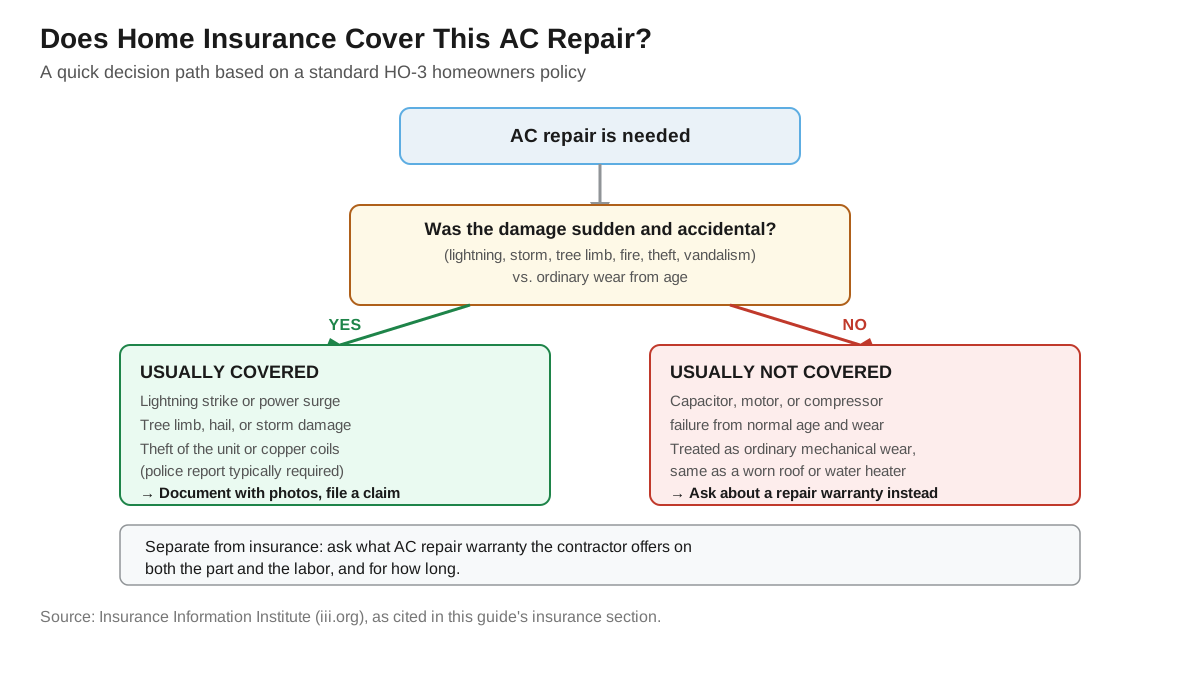
Usually not, and knowing why saves you a frustrating call to your agent. A standard homeowners policy (an HO-3, the most common form) pays for sudden, accidental damage: a lightning strike, a fallen tree limb, a fire, vandalism, or a covered storm event. It is not designed to pay for a part that simply wore out from age and normal use, the same way it will not pay to replace a worn roof or an old water heater on its own timeline. Does homeowners insurance cover AC repair after a covered event, though? Often yes, if you can document the cause with photos and, where relevant, a police or weather report.
Scenario
Typically covered by HO-3?
Note
Lightning strike or power surge damage to the unit
Usually yes
Keep the repair invoice describing the cause
Tree limb, hail, or storm damage to the outdoor unit
Usually yes
Photograph the damage before any cleanup or repair
Capacitor, motor, or compressor failure from age
Usually no
Treated as ordinary mechanical wear
Theft of the outdoor unit or its copper coils
Often yes
A police report is typically required
Separate from your homeowners policy, ask what AC repair warranty the contractor offers on both the part and the labor, and for how long, since a warranty on labor alone with no parts coverage is a much thinner promise than it sounds. If your system is still under its original manufacturer's warranty, check whether using an unauthorized independent technician for a covered part could affect that coverage before you book the repair.
A standard HO-3 policy covers sudden, accidental damage — not routine mechanical wear. Based on Insurance Information Institute guidance cited above.
Choosing Who Actually Does the Repair
Refrigerant work is regulated, not optional professional courtesy. Anyone who buys refrigerant or works on equipment that could release it must hold EPA Section 608 certification under the Clean Air Act, and a legitimate company's technicians carry it. Beyond that legal floor, look for technicians with NATE certification (North American Technician Excellence), which tests real competency across HVAC fundamentals, electrical and controls, airflow, installation, and service rather than a single afternoon of training.
Credential
What it verifies
Granted by
EPA Section 608
Legal authority to buy and handle refrigerant
US EPA
NATE (CHP-5 pathway)
Technician competency across five HVAC exam areas, recertified every two years
North American Technician Excellence
State contractor license
Legal authorization to perform HVAC work in your state
Your state's licensing board
Before you approve any work, verify the state license number yourself on your state's contractor or mechanical licensing board site rather than taking a business card at face value, confirm current liability insurance directly with the company (a certificate from their insurer, not just a verbal yes), and get a written AC repair estimate that names the part, the labor charge, and whether the diagnostic fee applies toward the repair if you say yes. Ask directly what the AC repair warranty covers and for how long. Red flags worth walking away from: a technician who pressures you into a same-visit decision on a major repair, a quote with no part number or labor breakdown, and a price that is dramatically lower than every other bid with no explanation for the gap. Our full guide to choosing an HVAC contractor covers the license lookup and interview questions in more detail.
When AC Repair Can't Wait
Most AC failures are an inconvenience, not a hazard: uncomfortable, especially in summer, but not dangerous to leave until regular business hours. A smaller set of situations are different. If you smell burning plastic or hear buzzing, popping, or arcing coming from the electrical panel, thermostat, or outdoor disconnect, shut the system off at the breaker immediately and call a licensed technician, because an electrical fault behind a wall is a fire risk, not a comfort problem. The same goes for a strong chemical or ammonia-like smell near the indoor unit, standing water near an electrical panel, or visible smoke of any kind.
Is AC repair an emergency in the more everyday sense, when the system simply will not cool on a hot day? Usually not medically, but it can become one fast for infants, older adults, or anyone with a heart or respiratory condition during extreme heat. In that situation, treat the household's safety as the priority: use fans, close blinds, stay hydrated, and consider a cooling center or a relative's house while you wait for a repair, rather than waiting out extreme indoor heat on principle. What to do while waiting for AC repair in a less urgent case is simpler: close blinds on the sun side of the house, run ceiling fans to move air, avoid running the oven, and keep the thermostat fan setting on "auto" rather than "on" so you are not forcing warm, unconditioned air through the ducts. Our emergency HVAC guide covers the full list of situations that genuinely cannot wait until morning.
Preventing the Next Expensive Repair
Most of the repairs on the cost table above have a maintenance habit that reduces how often they happen. Change or clean the filter on a regular schedule; a clogged filter is one of the single biggest drivers of frozen coils, overworked blower motors, and short-cycling compressors, and it is the cheapest thing on this list to prevent. Filters are rated on a 1 to 16 MERV scale, and most residential AC systems run cleanly with a filter in the 8 to 13 MERV range without overloading the blower; grabbing the highest-rated filter on the shelf without checking whether the system can handle it can restrict airflow instead of helping, bringing back the same frozen-coil problem a dirty filter causes. Keep the outdoor condenser clear of leaves, mulch, and overgrown shrubs so it can actually shed the heat it is designed to remove.
Schedule an annual professional tune-up, ideally in spring before the cooling season starts, so a technician can check refrigerant charge, tighten electrical connections, and test capacitor health before a weak part fails during the first heat wave of the year. Treat a system that keeps needing refrigerant "topped off" as a leak that needs finding, not a normal maintenance item, since a properly sealed system should not lose charge on a regular basis. Straighten bent condenser fins gently if you notice them, since crushed fins restrict airflow the same way debris does, and keep an eye on the condensate line each spring so a slow clog does not trigger a safety shutoff in the middle of July.
Regional Notes: Heat, Humidity, and Salt Air
National averages blend climates that stress a system in very different ways, and the most common repair in one region is not always the most common repair in another.
Humid Gulf Coast and Southeast homes push the evaporator coil harder than most, since it is pulling moisture out of the air as well as cooling it, and a dirty filter or low airflow shows up faster as a frozen coil than it would in a drier climate. Condensate drain clogs are also more common here simply because the system is removing more water.
Desert Southwest heat stresses different parts: the outdoor unit runs for longer stretches against high ambient temperatures, which wears on the compressor and the capacitor that starts it more than in milder regions, and dust loads filters and coils faster than in wetter areas, making filter changes and coil cleaning matter more.
Cold northern climates flip the pattern, since a central AC system sits idle for months every winter. A quick startup check each spring, filter, breaker, thermostat setting, catches a problem before the first real heat wave rather than during it.
Salt air along the coast adds a different kind of wear: corrosion on the outdoor coil, cabinet, and electrical contacts is a real factor in how often capacitors and contactors need replacing, and some manufacturers offer coated coils rated for coastal exposure that are worth asking about on your next repair or replacement.
Frequently asked questions
How much does AC repair cost?+
National survey data puts the average around $293 to $375, with a typical range of $250 to $700 for a central system. A single small part like a capacitor runs $100 to $400, while a major component like a compressor can run $600 to $3,000. Get a written, itemized AC repair estimate before you approve any work.
How much does air conditioner repair cost for a specific part?+
It depends entirely on the part: a capacitor runs $100 to $400, a thermostat $150 to $500, a refrigerant leak repair $200 to $1,500, a blower motor $300 to $2,000, an evaporator coil $400 to $2,700, and a compressor $600 to $3,000, according to Fixr's national cost survey.
How much does HVAC repair cost overall?+
Across both AC and furnace repairs, HomeGuide's national survey puts the average at $293, with a typical range of $144 to $451. AC service alone averages $319 and furnace service averages $268 in that same survey, so the type of system and the specific failure matter more than a single blended number.
Does home insurance cover AC repair?+
Usually not for ordinary wear and tear. A standard HO-3 policy is built to cover sudden, accidental damage, a lightning strike, a fallen tree limb, storm or fire damage, not a capacitor or compressor that failed from age and normal use. If a covered peril caused the damage, document it with photos and file a claim.
Does homeowners insurance cover AC repair after a storm?+
Often yes, if the storm caused documentable damage, such as a tree limb, hail, or wind-blown debris striking the outdoor unit. Photograph the damage before any cleanup or repair begins, keep the contractor's invoice describing the cause, and check your policy's wind and hail deductible, which can differ from your standard deductible.
Why is AC repair so expensive?+
Because you are paying for licensed, regulated labor as much as parts. Refrigerant work legally requires EPA Section 608 certification, technicians carry insurance and often years of training, and major components like a compressor or evaporator coil are precision parts, not off-the-shelf hardware. A same-day or after-hours call adds an emergency labor rate on top of all of that.
How long does AC repair take?+
A straightforward repair, like a capacitor or thermostat swap, is often finished within one visit lasting one to two hours once the part is diagnosed and on the truck. A repair needing an ordered part, a refrigerant leak search, or a major component like a compressor can take one to several days depending on parts availability.
Is AC repair an emergency?+
Rarely a true emergency, but it can turn into one during extreme heat for infants, older adults, or anyone with a heart or respiratory condition. A burning smell, arcing, buzzing from the electrical panel, or visible smoke is always urgent: shut the system off at the breaker and call a licensed technician right away.
Does a home warranty cover AC unit repair?+
It can, but home warranty contracts are a separate paid service product from insurance, with their own exclusions for pre-existing conditions, lack of documented maintenance, and specific covered components. Read the contract's HVAC section closely and confirm coverage before you assume a claim will be approved.
How can I get a lower AC repair estimate?+
Get two or three written, itemized quotes so you are comparing the same scope of work rather than one bottom-line number. Ask whether the diagnostic fee applies toward the repair, whether parts carry a separate warranty from labor, and whether a less expensive repair option exists for an older system nearing the end of its service life.
Do you tip AC repair technicians?+
It is not expected or required the way it might be for a restaurant server, but it is not unusual to tip $10 to $20 per technician, or offer cold drinks, for a difficult job done well, especially in extreme heat. Skipping a tip is completely normal and will not affect the quality of the work or the warranty.