The furnace always seems to quit on the coldest night of the year, right after the thermostat clicks over and nothing happens. Before you assume the worst, or worse, before you pay for an emergency service call you did not need, it helps to know that most furnace failures trace back to a short, predictable list of parts: an igniter, a flame sensor, a filter, a breaker, a thermostat setting. This guide covers what furnace repair actually involves: sorting your symptom into the right category, running the five-minute checks a technician would ask about over the phone anyway, understanding what each likely fix costs based on published 2026 cost surveys, and knowing where DIY ends and a licensed technician has to take over. It also covers the one safety rule that matters more than any troubleshooting step below, because a furnace problem is occasionally a safety problem wearing a comfort problem's clothes.
What "Furnace Not Working" Actually Covers
"My furnace stopped working" is dispatcher shorthand for at least four different problems, and what the fix costs depends on which one you actually have. Some HVAC companies still log the most urgent version as a no heat in house call, a phrase that jumps a service ticket ahead of routine maintenance on the schedule board. No power at all means the blower does not even hum when the thermostat calls for heat. Power but no ignition means the blower or inducer motor runs, but no flame ever lights, so the house never gets any heat. Ignition without real heat covers a furnace blowing cold air even though it clearly turned on. And short cycling, where the unit fires, runs for a minute or two, and shuts off again before the house warms up, is its own category with its own causes.
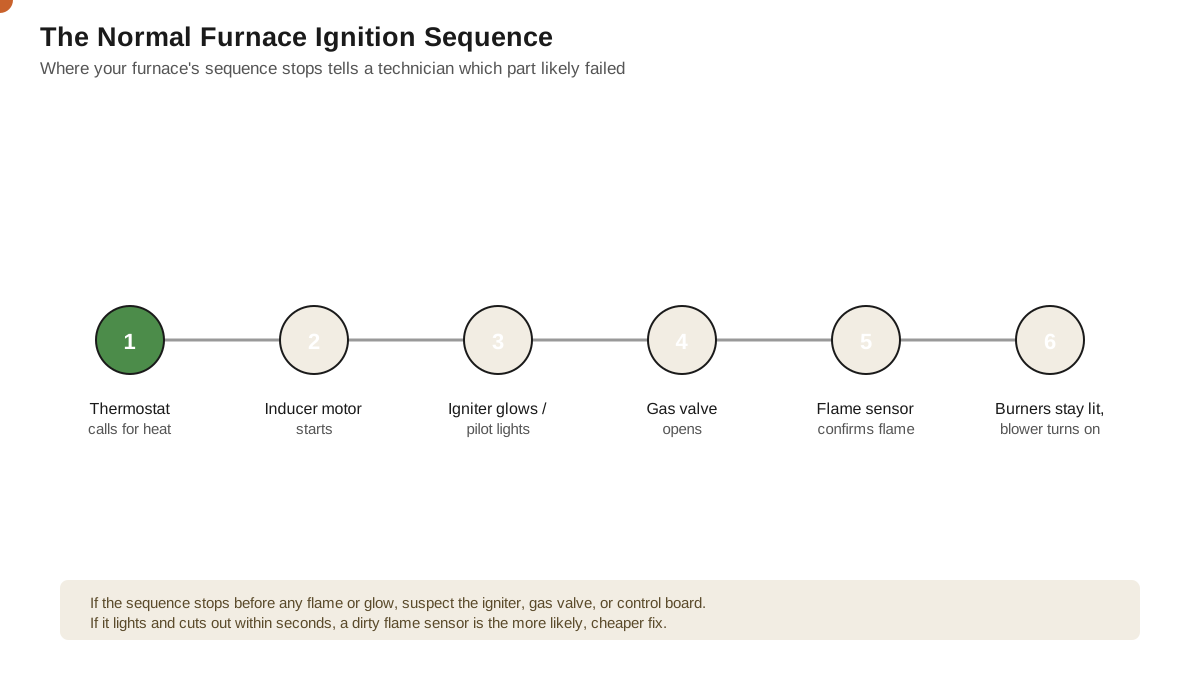
Sorting your symptom into one of those four buckets before you call anyone saves real money. A technician who hears "it won't turn on" versus "it turns on but blows cold" already knows roughly where to start the ignition sequence check, the chain of steps (thermostat call, inducer motor, igniter or pilot, gas valve, flame sensor) that has to complete correctly before the house gets warm, instead of running the same generic checklist you could have run yourself first. If your furnace won't turn on at all, start with power, not parts, since that single distinction changes everything that follows.
The Most Likely Reasons a Furnace Stops Working
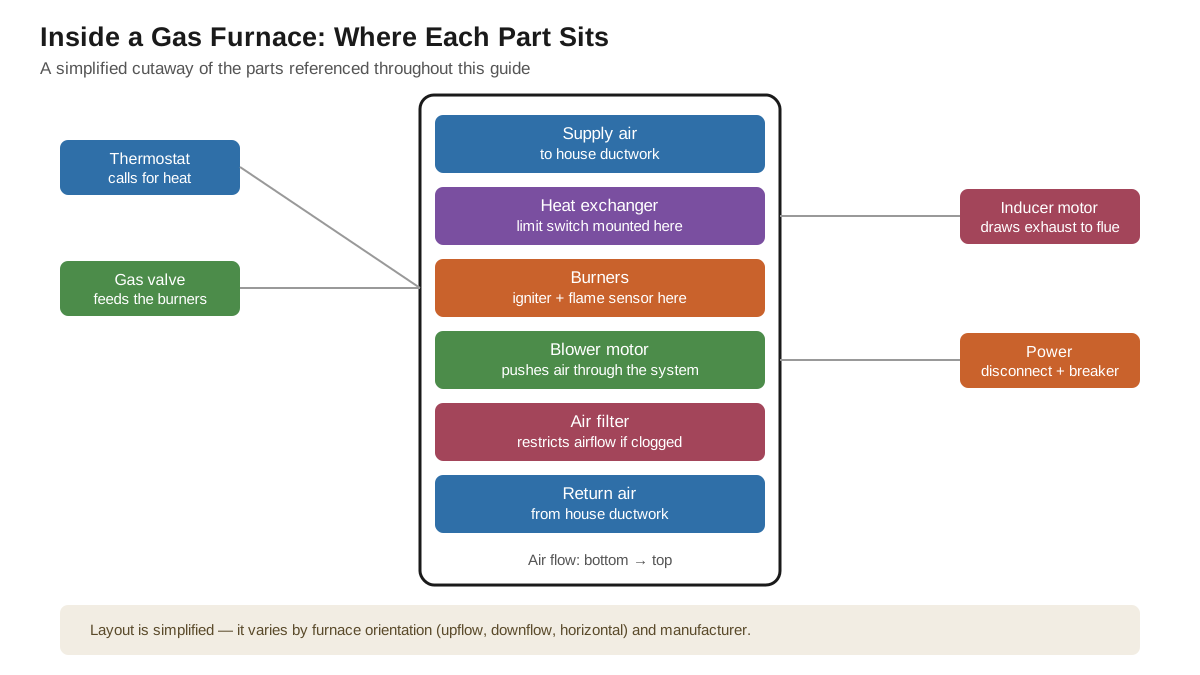
Furnace failures cluster around a short list of usual suspects. Here they are roughly in the order a technician checks them, cheapest and most common first.
Ignition failure
Modern gas furnaces use a hot surface igniter (a ceramic element that glows and lights the gas) or, in older units, a standing pilot light. Igniters are brittle and fail from age and thermal cycling, not damage, so a furnace not igniting with no other warning sign is often doing exactly what a worn igniter does at the end of its life. Search interest backs this up: questions like why a furnace stopped lighting and furnace not igniting after replacement are among the most common furnace complaints homeowners look up.
Dirty flame sensor
A flame sensor is a thin metal rod near the burners that confirms a flame is actually present. Coated in carbon buildup, it can't verify ignition, so the control board shuts the gas valve back off, often within ten to twenty seconds, a pattern that can look like short cycling but starts one step later in the sequence than an igniter failure. This is one of the cheapest fixes covered below and one a technician can usually complete in the same visit as the diagnosis.
Thermostat, breaker, and power issues
Before assuming a mechanical failure, rule out the boring stuff: a tripped breaker or blown fuse at the furnace's dedicated circuit, a switch that looks like an ordinary light switch near the unit or at the top of the basement stairs (the furnace's service disconnect) left in the off position, dead thermostat batteries, or a schedule that got wiped after a power blip. A furnace not working after a power outage is common enough to check the disconnect switch and breaker first, before anything else.
Clogged filter and short cycling
A filter that hasn't been changed in months restricts airflow across the heat exchanger, and the higher its MERV rating (the industry's 1-to-16 scale for how fine a particle a filter traps), the more that restriction tightens as dust builds up on the denser filter media. The unit runs hotter than it should internally, a limit switch (a safety control that shuts the burner off if internal temperature climbs too high) trips, and the furnace shuts down mid-cycle, sometimes restarting a few minutes later once it cools. That pattern is furnace short cycling, and it's the failure mode most directly inside a homeowner's control to prevent.
Mechanical and safety-critical failures
Less common, but the reason a repair estimate can run into four figures: a failed blower motor, a bad control board, a stuck gas valve, or a cracked heat exchanger, the sealed chamber that keeps the combustion flame and its exhaust separated from the air blown through your house. A cracked heat exchanger is a safety issue first and a repair line item second, covered further down.
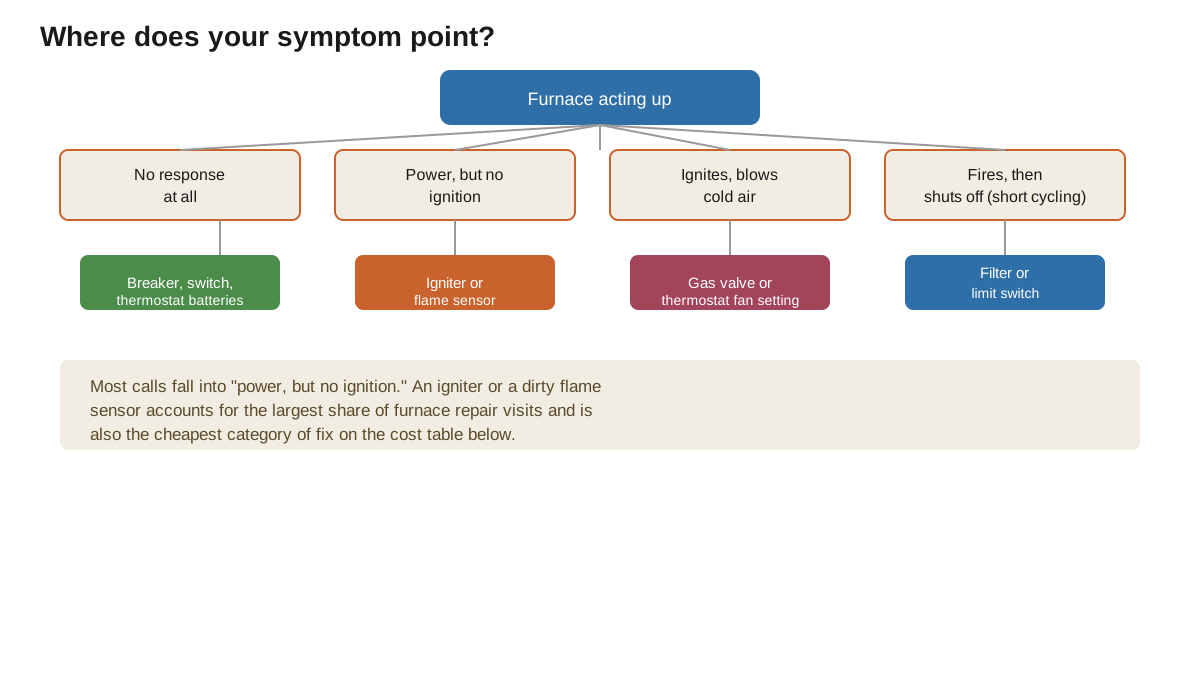
| Symptom | Most likely cause | Typical repair cost* |
|---|---|---|
| No response at all | Tripped breaker, disconnect off, dead thermostat batteries | Often no parts needed |
| Furnace not igniting | Failed igniter or dirty flame sensor | $68 - $500 |
| Furnace blowing cold air | Ignition failure, stuck gas valve, thermostat set to "fan" | $68 - $600 |
| Furnace short cycling | Clogged filter, dirty flame sensor, failing limit switch | $68 - $600 |
| Runs, but house won't warm up | Failing blower motor, undersized ductwork, aging unit | $150 - $2,000 |
*Ranges reflect national component costs from the surveys cited in the cost table below; a written local estimate is the only way to know your actual number.
How to Diagnose It Yourself, Step by Step
Work through these checks in order before calling anyone. Each one takes under five minutes and needs no tools beyond a flashlight.
- Check the thermostat: confirm it's set to heat, the set temperature is above room temperature, and the display isn't blank (swap batteries if it is).
- Check power: find the furnace's service disconnect switch, usually a light-switch-style toggle mounted on or near the unit, and confirm it's on, then check the breaker panel for anything tripped.
- Check the filter: pull it and hold it up to a light. If you can't see light through it, replace it. This alone is the single most common cause of both short cycling and weak airflow.
- Listen for the sequence: with the thermostat calling for heat, you should hear the inducer motor start, a pause, then either a visible glow (hot surface igniter) or a clicking pilot ignition, then a soft whoosh as the burners light. Note exactly where the sequence stops.
- Watch the flame: if the burners light but shut off again within ten to twenty seconds, that points to the flame sensor rather than the igniter.
- Check for an error code: many furnaces flash a diagnostic LED near the blower access door. Match the flash pattern to the sticker inside the panel, or note it down for the technician.
- Check the outside vent and intake pipes on a high-efficiency unit: these run 2-inch or 3-inch PVC pipe on most residential furnaces, and a blockage from ice, snow, or a bird's nest will trip a safety lockout and stop ignition entirely.
If the sequence stops before any flame or glow appears, you're most likely looking at an igniter, gas valve, or control board issue, none of which a homeowner should attempt without gas-appliance training. If it lights and then cuts out, a dirty flame sensor is the more likely and far cheaper explanation. Either way, what you learn in this five-minute check is exactly what a technician needs to hear on the phone to bring the right part on the first visit instead of a second trip.
What You Can Safely Fix Yourself
Plenty of furnace repair calls resolve without a technician ever touching a wrench. Filter changes are the biggest one: a fresh filter, checked monthly during heating season, prevents the airflow-restriction chain that causes a lot of short cycling in the first place. Thermostat batteries, a reset breaker, and confirming the service disconnect switch is on cost nothing and rule out the most common false alarms.
Clearing the outdoor vent and intake pipes of snow, leaves, or a wasp nest is safe, quick, and something a homeowner can do without any special knowledge, since those pipes just need to be physically open. Keeping the area around the furnace clear of stored boxes and anything flammable is both a safety practice and, on some units, a requirement for the furnace to draw combustion air properly.
Gently wiping visible dust off an accessible flame sensor with the power off and the sensor cool, using a dry cloth rather than sandpaper unless you know the exact grade the manufacturer allows, is something some experienced homeowners attempt. If you're not confident identifying the flame sensor from the igniter, or you'd have to remove any gas-carrying component to reach it, that's the line where the next section takes over.
Repairs That Need a Licensed Technician
Anything that involves opening the gas train, disconnecting electrical components inside the control cabinet, or working on the heat exchanger housing belongs to a licensed HVAC technician, not a homeowner with a screwdriver. Igniter replacement and flame sensor replacement are both quick, low-cost jobs for a technician, since they carry the tools and the exact replacement part on the truck and can confirm the fix with a combustion test on the spot.
Diagnosing a failed blower motor or control board takes a multimeter and, often, a part ordered to match your specific furnace model, which is why these repairs run higher and sometimes take a second visit. A stuck or failing gas valve is a safety-relevant component that should never be forced open or bypassed by anyone without gas-appliance certification.
To confirm a cracked heat exchanger, a technician will typically reach for a combustion analyzer (a tool that measures flue gases, including carbon monoxide, to confirm the furnace is burning cleanly and venting properly) rather than relying on a visual inspection alone, since a hairline crack can be invisible to the eye but still leak exhaust into the airstream your ducts push through the house.
What Furnace Repair Costs, Part by Part
Three independent 2026 cost surveys land in a similar place for furnace repair overall. HomeGuide puts the average furnace service call at $268. HomeAdvisor's average sits at $318, with a typical range of $133 to $505 and a wider professional range of $64 to $1,475 for edge cases. Fixr's survey runs higher, a national average of $485 with a typical range of $349 to $650. The spread between those averages is real: Fixr's figure leans toward jobs that already involve a part, while HomeGuide and HomeAdvisor include a lot of simpler service calls in their averages.
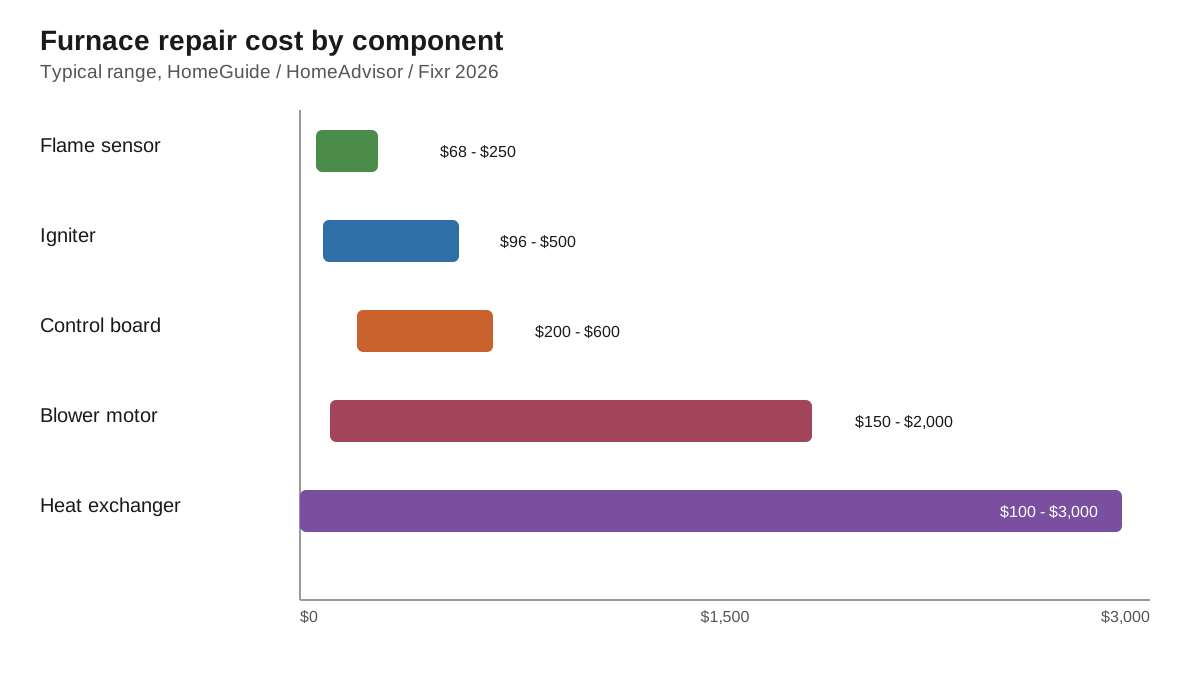
| Job | Typical cost | Source |
|---|---|---|
| Diagnostic / service call | $75 - $200 | HomeGuide, 2025 |
| Seasonal tune-up | $125 - $200 | HomeAdvisor, 2026 |
| Igniter replacement | $96 - $500 | Fixr, HomeAdvisor, HomeGuide, 2026 |
| Flame sensor replacement | $68 - $250 | Fixr, HomeAdvisor, 2026 |
| Control board replacement | $200 - $600 | HomeAdvisor, 2026 |
| Blower motor replacement | $150 - $2,000 | HomeAdvisor, Fixr, 2026 |
| Heat exchanger replacement | $100 - $3,000 | HomeAdvisor, Fixr, HomeGuide, 2026 |
| Overall repair, national average | $268 - $485 | HomeGuide, HomeAdvisor, Fixr, 2026 |
Labor alone runs $50 to $162 an hour across the three surveys, and most companies fold the first hour into a flat service-call fee rather than billing purely hourly. A heat exchanger repair is the biggest wild card on this list: HomeAdvisor's data allows for a lower-cost partial repair in some cases, while Fixr's $1,346 to $2,673 range reflects that most heat exchanger problems in practice mean a full replacement of that component.
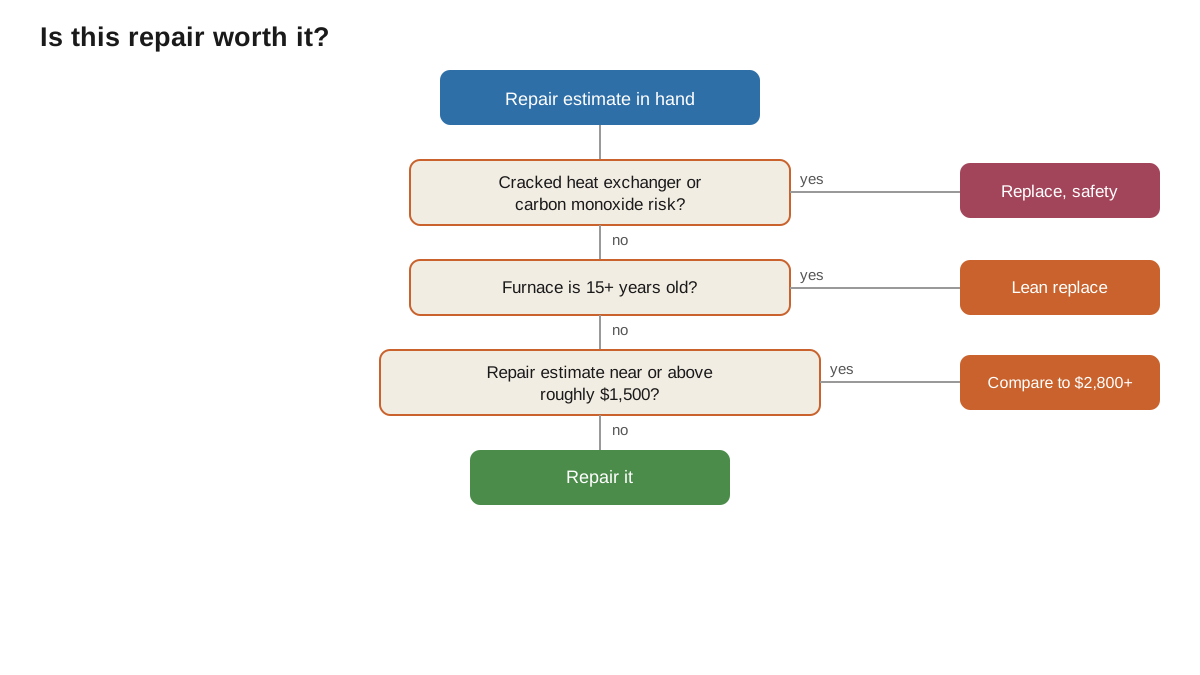
That last number is worth comparing against furnace replacement rather than repair. A whole new furnace runs $2,800 to $7,500 nationally, averaging around $4,800 to $4,814 depending on the survey, per the new furnace cost breakdown. If a repair estimate for an older unit is already closing in on a third of that replacement floor, and the furnace is well past its expected service life, replacement is usually the better dollar-for-dollar decision, not just the safer one.
Safety Rules and When Not to Wait
Most furnace failures are inconvenient, not dangerous. A small number are genuinely urgent, and knowing the difference matters more than any troubleshooting step above. Fire departments nationwide respond to an estimated annual average of 44,210 home structure fires caused by heating equipment, about 13 percent of all home structure fires, resulting in about 480 deaths, 1,370 injuries, and more than a billion dollars in property damage a year, according to a National Fire Protection Association analysis of 2016 to 2020 data. A more recent NFPA release covering 2019 to 2023 puts the annual average at 38,881 heating-equipment fires. Furnaces sit inside that broader category alongside space heaters and fireplaces: space heaters alone account for roughly one-third of those fires but nearly nine in ten of the deaths, since a furnace burns and vents from a sealed cabinet rather than sitting exposed in the room. Furnaces are still a real factor, and improper venting or a neglected repair is a recurring one investigators cite.
If you smell gas anywhere near the furnace, leave the house immediately, don't flip any switches or light anything, and call your gas utility's emergency line from outside before you call anyone else.
Beyond a gas smell, treat these as same-day, not scheduled-appointment, situations: a carbon monoxide alarm going off, soot or unusual staining around the furnace cabinet, a burning or electrical smell, or no heat at all with young children, older adults, or anyone with a health condition in the house during freezing weather. A cracked heat exchanger falls into this category too, since it can let combustion byproducts, including carbon monoxide, mix into the air your ducts distribute through the house. For a fuller rundown of what genuinely can't wait until morning versus what can, the guide to emergency HVAC situations covers the full list.
How to Keep This From Happening Again
Most of the furnace repair calls on this page are preventable, and the habits that stop them cost far less than an emergency visit. Change the filter every one to three months during heating season, more often with pets or a dusty house. Keep the area around the furnace clear so it can draw combustion air properly. Test the carbon monoxide detector near the furnace, not just the smoke detector, on the same schedule you check your smoke alarms.
A seasonal tune-up, typically $125 to $200 per HomeAdvisor's 2026 data, is the single best dollar-for-dollar prevention step available. A technician cleaning the flame sensor, checking the igniter's condition, testing the limit switch, and confirming clean combustion before the season starts catches the parts on this page's cause list while they're still cheap fixes instead of after-hours emergencies. The full seasonal HVAC maintenance checklist covers the furnace alongside the rest of the system, month by month.
When you do need a technician, whether for a repair or the annual tune-up, look for one certified through NATE (North American Technician Excellence), whose CHP-5 credential requires passing 5 separate 30-question exams and recertifying every 2 years with 16 hours of continuing education (a 120-day grace period applies if that deadline slips), and ask for a written estimate that separates diagnostic time, parts, and labor before any work starts. The guide to choosing an HVAC contractor covers credentials, licensing, and the exact red flags worth watching for.
Regional Notes: Freeze Belt, Mild Climates, and Older Housing
In the freeze belt, the upper Midwest, the Northeast, and the northern Mountain West, a furnace failure is an urgent problem the day it happens, not a maintenance item to schedule around. Homes in these regions tend to run the furnace nearly continuously for months at a time, which means components like igniters and blower motors accumulate cycles faster and wear out on a shorter timeline than the same parts in a milder climate.
Older housing stock in these same regions is more likely to still run a standing pilot light instead of electronic ignition, especially furnaces installed before the 1990s. A standing pilot that's gone out is usually a five-minute relight following the instructions on a plate inside the unit, not a repair call at all, though a pilot that won't stay lit after relighting points to a failing thermocouple (a small safety sensor that shuts the gas off if it doesn't detect the pilot flame) and does need a technician.
In milder climates across the South and parts of the West, a furnace sits unused for most of the year, and igniters and gas valves can fail from disuse and corrosion just as often as from wear. A furnace that worked fine last February and won't ignite this November is a common enough pattern in these regions that it's worth a pre-season check rather than waiting to find out on the first cold night. None of the national cost data in this guide includes a regional cost-of-living index, so treat every figure above as a starting point and get a local written estimate before comparing quotes.
Frequently asked questions
What can cause a furnace to stop working?
How much does furnace repair cost?
How much does furnace maintenance cost?
Can an old furnace be repaired?
How do you know when your furnace needs to be replaced?
Does homeowners insurance cover furnace repair?
Can a furnace blower motor be repaired, or does it need replacing?
Why is my furnace not igniting?
How do I troubleshoot a furnace that's not turning on?
How to repair a furnace that's blowing cold air?
Sources and further reading
- HVAC Repair Cost — HomeGuide, July 31, 2025
- Cost to Repair a Furnace — HomeAdvisor, Updated June 20, 2026
- Furnace Repair Cost — Fixr, Updated August 29, 2025
- Cost to Install a Furnace — HomeAdvisor, Updated June 17, 2026
- Furnace Replacement Cost — Fixr, Updated January 28, 2026
- Certified HVAC Professional (CHP-5) — NATE (North American Technician Excellence)
- Home Heating Fires — National Fire Protection Association, December 2022
- NFPA Releases Findings on Home Heating Fires — ANSI (citing NFPA), February 6, 2025