Commercial HVAC repair covers rooftop package units, split systems and building controls for offices, retail and restaurants, not a single house. The equipment is bigger, the electrical heavier, and downtime costs money every hour. A service call typically starts at $75 to $200, and major failures like a blower motor, compressor or heat exchanger run $300 to $3,000 before replacement is on the table.
A rooftop unit going quiet on a July afternoon is a different problem for a business than it is for a homeowner. Nobody is napping through it: they are losing customers, or watching a walk-in cooler's compressor strain to keep food safe, or listening to tenants call the property manager. Commercial HVAC repair is the umbrella term for fixing that equipment: rooftop units (RTUs), package units, split systems tied to bigger air handlers, and the controls that schedule them. This guide walks through why these units fail, what a real diagnosis looks like, what the repair or replacement actually costs based on the best national data available, and how a commercial hvac service contract changes the math on all of it.
None of the numbers here are invented. They come from national cost surveys and the technical bodies that certify the people doing the work, cited in full at the bottom of the page. Where the data does not exist at the commercial scale, this guide says so plainly and tells you what actually moves the price instead of guessing.
What Counts as Commercial HVAC, and How It Differs From a House System
Commercial HVAC is heating and cooling equipment sized and installed for a business occupancy (offices, retail strips, restaurants, warehouses, schools, medical suites) rather than a single-family home. The practical differences show up fast once you are the one paying for repairs:
Size and location. Most commercial buildings under roughly 25,000 square feet run one or more rooftop package units (RTUs) that combine the compressor, condenser, evaporator coil, and gas or electric heat in one roof-mounted cabinet, in place of a furnace in a closet and a condenser in the side yard.
Electrical load. Commercial units routinely run on three-phase power, typically 208 or 480 volts, and higher-amperage disconnects than a residential 240-volt circuit. That is one reason a landlord or facility manager cannot legally do what a homeowner sometimes gets away with.
Controls. A building automation system (BAS) or a commercial programmable thermostat schedules multiple zones and units together, so a single bad sensor or failed relay can look like a much bigger problem than it is.
Access. Roof access means rooftop hvac unit repair almost always involves a ladder or roof hatch, fall-protection rules, and, for anything larger than a routine filter change, a bucket truck or crane for parts that will not fit through a hatch.
The keyword people actually type when a unit dies is usually some version of commercial ac repair or emergency commercial hvac repair, and the search results split the same way the job does: a diagnostic visit first, then a repair-or-replace decision once the technician knows what failed.
How a Rooftop Unit Actually Works
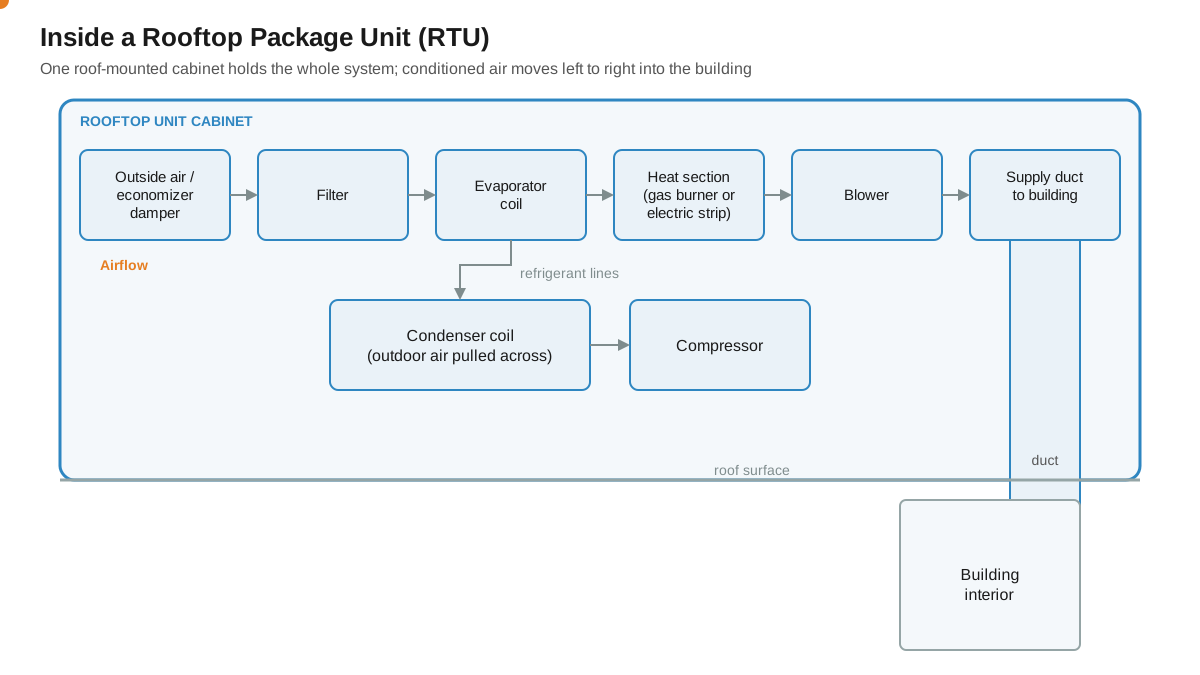
A single rooftop package unit does the job that a house splits between two boxes. Inside one cabinet: a compressor and condenser coil for cooling, an evaporator coil and blower to move conditioned air into the ductwork below, a gas burner or electric heat strip for winter, filters, and, on most units built in the last decade, an economizer that pulls in outside air when conditions allow, to cut how hard the compressor has to work.
That economizer is also the single most common source of a "rooftop unit not cooling" call that turns out not to be the compressor at all. A stuck damper, a failed actuator, or a sensor reporting the wrong outdoor temperature can starve the coil of airflow or trick the unit into running the wrong cycle, and it happens far more often than a burned-out compressor does.
Rooftop units are built to run for years under normal maintenance, but how many depends heavily on climate and duty cycle: coastal salt air, heavy grease-laden exhaust near a restaurant kitchen, or a skipped maintenance contract will all shorten the equipment's working life. There is no national dataset in this pack that prices out lifespan by climate zone or building type, so the honest move is to ask your contractor for the manufacturer's rated service life on your specific unit rather than trust a number from a general guide, and read the blower motor and mechanical repair guide for what typically fails first as a unit ages.
One roof-mounted cabinet does the job a house splits between a furnace and an outdoor condenser; the animated marker follows conditioned air from intake to the supply duct.
Why Rooftop and Commercial Units Fail, Ranked by How Often We See It
Not every dead unit is a dead compressor. In order of how often a technician actually finds each cause on a "no cooling" or "no heat" call:
Airflow problems. A clogged filter, blocked outside air intake, or iced evaporator coil is the single most common reason a unit runs but does not cool, and it is the cheapest to fix if caught early. Restricted airflow lets the coil surface drop below 32°F, the temperature at which the moisture condensing on it turns to ice instead of draining away.
Electrical and control failures. A tripped breaker, a failed contactor (the relay-style switch that energizes the compressor), a bad capacitor, or a control board that lost communication with the thermostat or BAS. Capacitors alone run $100 to $400 to replace and are one of the most frequent single-part failures on any AC-style compressor.
Refrigerant issues. A slow leak at a fitting or coil, usually showing up as reduced cooling capacity over weeks rather than a sudden stop. Refrigerant leak repair runs $200 to $1,500 depending on where the leak is and how much refrigerant the system holds.
Mechanical wear. Blower motor bearings, belts, or the compressor itself. A blower motor replacement runs $300 to $2,000; a compressor is the most expensive single component at $600 to $3,000.
Heat exchanger and ignition failures on the gas-heat side: an ignitor, flame sensor, or cracked heat exchanger. These matter most for winter calls, and a cracked heat exchanger is a safety shutdown, not a repair-later item: if anyone on site smells gas or a technician suspects a cracked exchanger, shut the unit down, clear the area, and call your gas utility or 911 before you call anyone else.
Age matters more than any single part. A unit past 12 to 15 years failing during a heat wave or cold snap is a strong signal to have the technician quote both the repair and a full replacement in the same visit, so you are comparing real numbers instead of guessing under pressure.
Diagnosing a Unit That Won't Cool or Heat, Step by Step
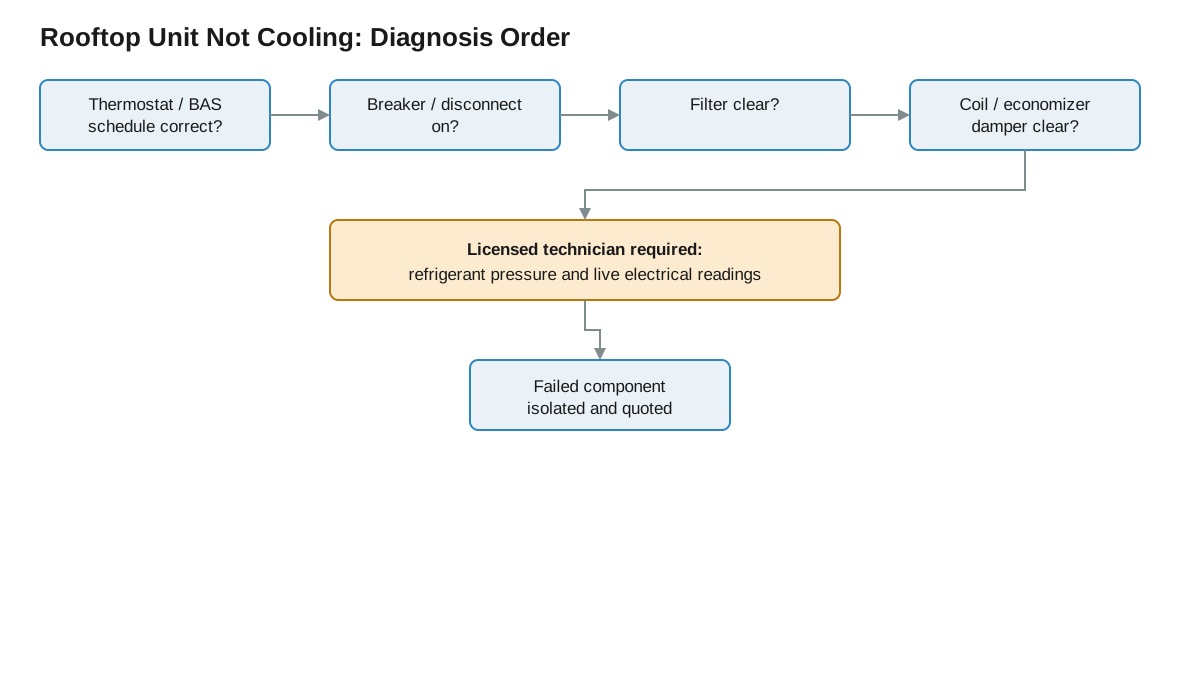
This is the order a competent technician actually follows, and it is not because it is faster for them: it rules out the cheap, common causes before touching anything expensive. The order a technician actually checks when a rooftop unit is not cooling, from the cheapest cause to the most expensive.
Confirm the thermostat or BAS schedule. A programmed setback, an occupancy sensor override, or a simple dead battery in a wall thermostat causes more "the unit is broken" calls than any mechanical failure.
Check the disconnect and breaker. A tripped breaker or a disconnect switch bumped during other roof work will stop a perfectly healthy unit cold.
Pull and inspect the filter. A filter that has not been changed on schedule can choke airflow enough to trip a high-pressure safety switch (the sensor that shuts the compressor down before it damages itself) or freeze the coil.
Look at the outdoor coil and economizer damper. Debris, a bent fin bank, or a stuck damper blocks the airflow the whole cycle depends on.
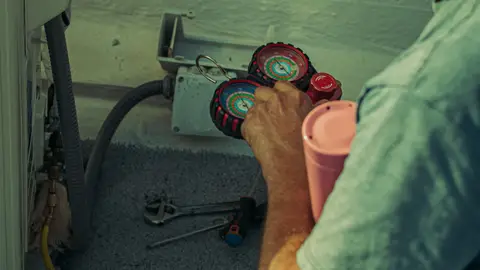
Check refrigerant pressures and electrical readings. This is where the visit moves into licensed-technician territory: refrigerant gauges and live electrical testing on a commercial disconnect are not a DIY step.
Isolate the failed component once pressures and electrical readings point to a specific part, and quote the repair against the unit's age and remaining expected life.
A technician doing this properly documents readings at each step. If a company diagnoses a "compressor failure" in under five minutes without checking airflow or electrical first, that is worth a second opinion before you approve a $2,000-plus repair.
What You Can Check Yourself, and What Needs a Licensed Tech
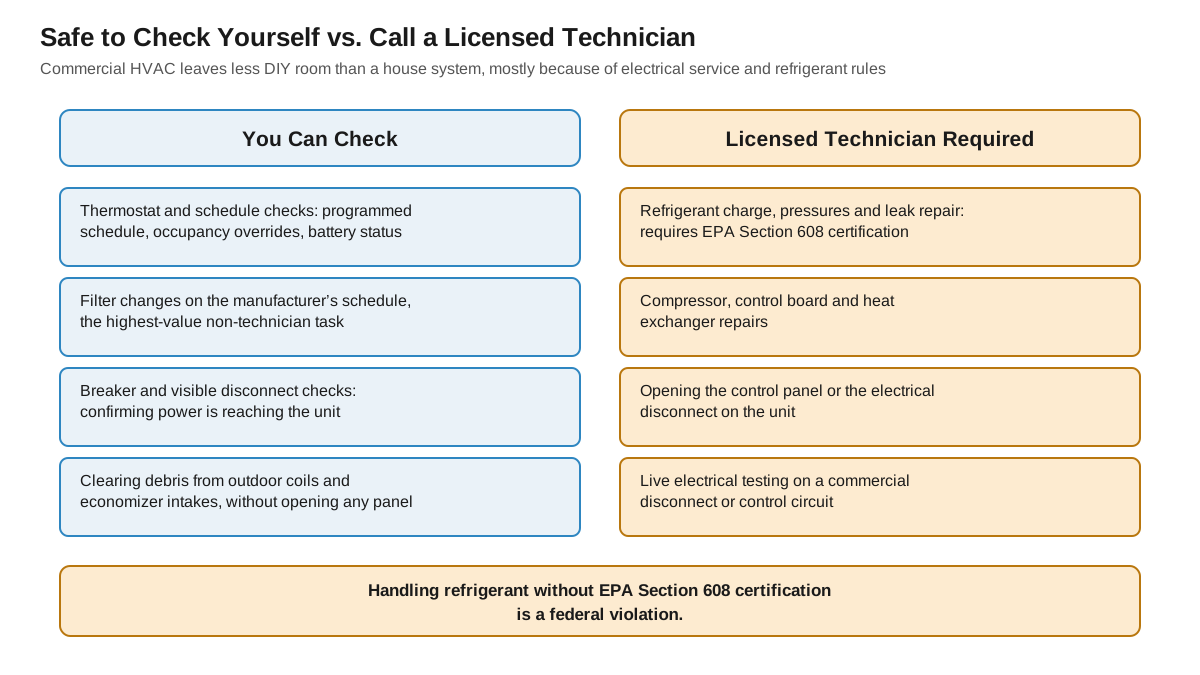
Commercial HVAC leaves less room for DIY than a house does, mostly because of the electrical service and refrigerant regulations involved, but a facility manager or building owner can still legitimately handle a short list of items before calling anyone:
Thermostat and schedule checks: confirming the programmed schedule, occupancy overrides, and battery status.
Filter changes on the schedule the manufacturer specifies, matched to the correct MERV rating (the 1-to-16 scale that measures how well a filter captures particles), which is the single highest-value maintenance task a non-technician can do.
Breaker and visible disconnect checks: confirming power is actually reaching the unit before assuming it failed. The disconnect is the switch or pull-block mounted near the unit that a technician uses to kill power before opening any panel.
Clearing debris away from outdoor coils and economizer intakes at ground level or from a safely accessed roof, without opening any panel.
Anyone other than a licensed, insured HVAC contractor should stay out of the electrical disconnect, control panel, and refrigerant lines on a rooftop unit: the voltage and refrigerant pressure involved can cause serious injury or death, and handling refrigerant without EPA Section 608 certification is a federal violation. Everything past filter changes and breaker checks (refrigerant charge, compressor, control board, heat exchanger, or any repair requiring the unit to be opened) is a commercial hvac repair call, not a maintenance task.
What a facility manager can legitimately check before calling a contractor, versus what federal and electrical-safety rules reserve for a licensed, EPA 608-certified technician.
What Commercial HVAC Repair Actually Costs
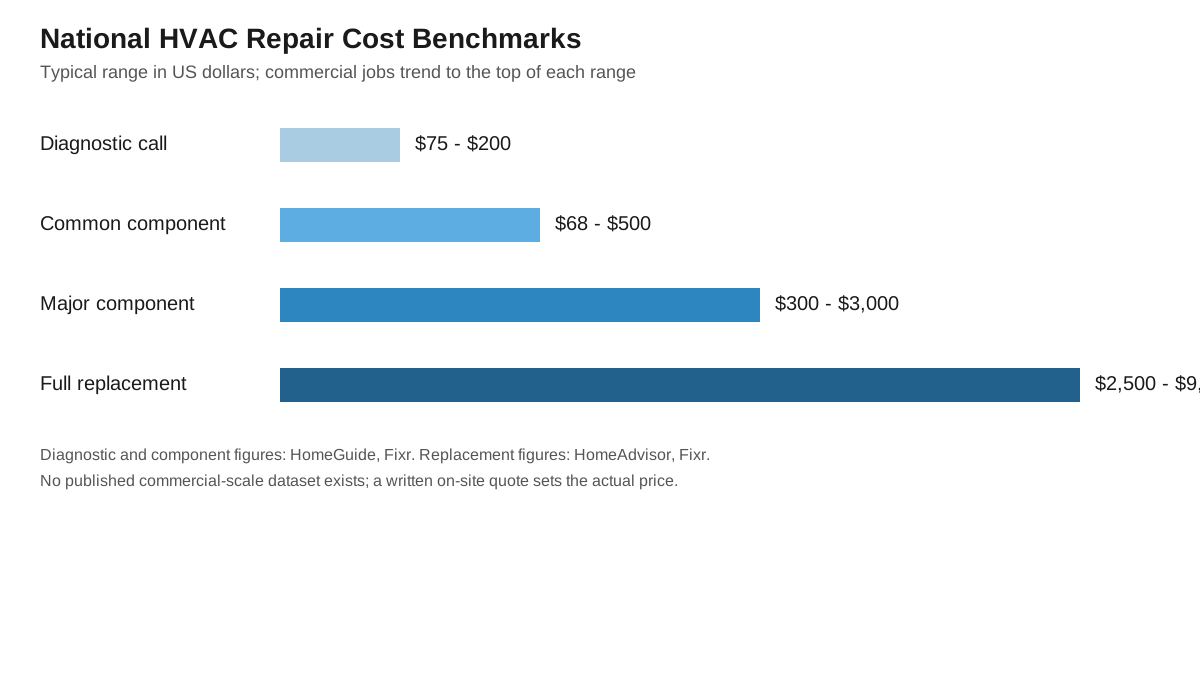
There is no published national dataset that prices commercial rooftop-unit repair separately from residential HVAC repair. The best public cost surveys available price HVAC work by job type and component, not by building class. The ranges below are those national benchmarks, with the honest caveat built in: a commercial job on a larger, roof-mounted, three-phase unit reliably lands at or above the top of these ranges, and a written on-site quote is the only way to get an actual number for your equipment. National repair and replacement cost benchmarks by job type. Commercial rooftop jobs typically land at or above the top of each range. Sources: HomeGuide, Fixr, HomeAdvisor.
Job type
National benchmark range
What moves the price on a commercial job
Source
Diagnostic / service call
$75 – $200 (after-hours or emergency calls run $140 – $300 per hour)
Roof access, ladder or lift needs, after-hours dispatch
HomeGuide, Fixr
Common component repair (capacitor, thermostat, ignitor, flame sensor)
$68 – $500 per component
Part availability, whether it is a proprietary control board
HomeGuide, Fixr, HomeAdvisor
Major component repair (compressor, blower motor, heat exchanger, evaporator coil)
$300 – $3,000 per component
Unit tonnage, crane or rigging access, warranty status
HomeGuide, Fixr, HomeAdvisor
Full unit replacement (residential-scale benchmark; commercial RTUs run higher)
$2,500 – $9,000 for a cooling-only system; $2,800 – $7,500 for a furnace-style heating system (this benchmark blends all fuel types)
Tonnage (the unit's cooling capacity, where one ton equals 12,000 Btu per hour), crane rental for roof placement, ductwork tie-in, controls integration
HomeAdvisor, Fixr
One number worth remembering: minor repairs like a capacitor swap often cost less than a single emergency after-hours dispatch fee. That is the strongest argument for a commercial hvac service contract that includes priority scheduling: the repair itself is rarely the expensive part, and the emergency premium plus the lost business hours are. For a fuller breakdown of what drives each repair price up or down, see the AC repair cost guide.
Service Contracts: What a Real One Includes
A commercial hvac service contract is a standing agreement, usually annual, that trades a predictable fee for scheduled inspections, priority response, and often a discount on parts and labor when something does fail. Contracts vary by contractor and building, but the tiers below describe what is typically covered at each level. Get the specific scope in writing before signing, because "full coverage" means something different from one company to the next.
Contract element
Inspection-only plan
Full-coverage plan
Scheduled inspections (typically 1–4 per year)
Yes
Yes
Filter changes included
Sometimes
Usually
Priority / same-day emergency response
Rarely
Usually
Discounted labor rate on repairs
Rarely
Usually
Parts covered on failure
No
Varies by contract; get the exclusions in writing
A commercial hvac inspection under either tier should include filter condition, refrigerant pressure and temperature split, electrical connections and amperage draw, condensate drainage, and economizer or damper operation, with the readings written down, not just a checkbox. If a contract quote does not name what gets inspected, ask for the checklist before you sign, not after the first no-show.
Downtime, Emergency Calls, and What Happens After Hours
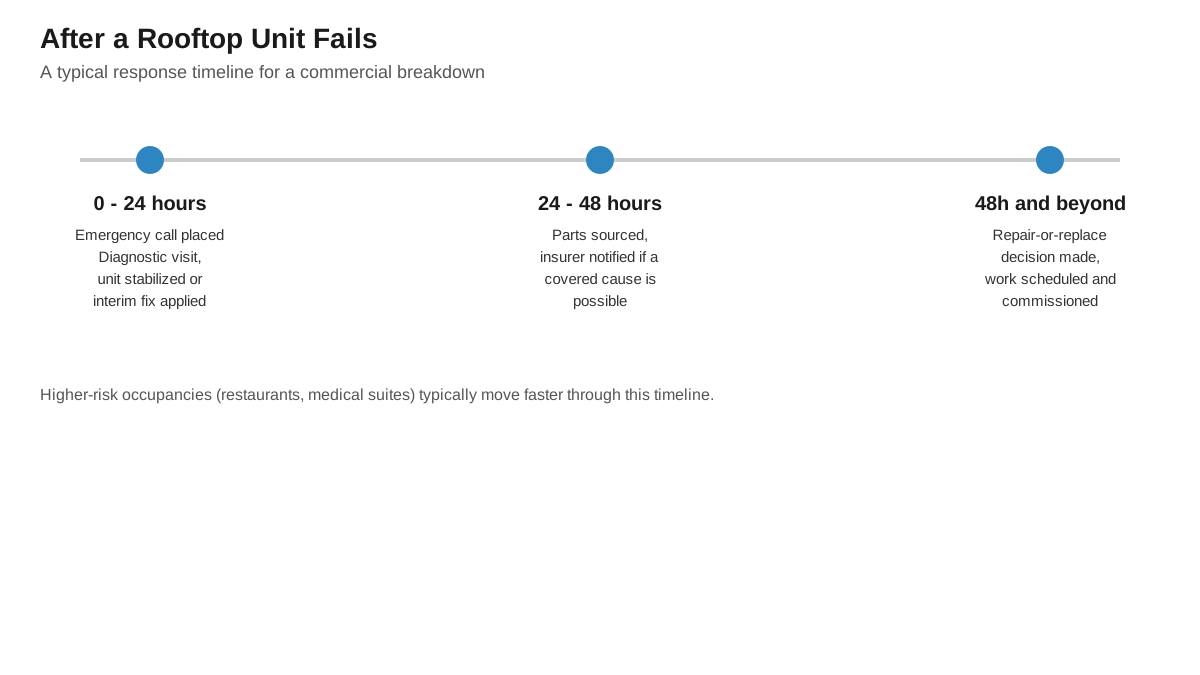
The cost that never shows up on an invoice is the business lost while the building is uncomfortable or a walk-in cooler is climbing past a safe temperature. What typically happens in the hours after a rooftop unit goes down, and when the repair-or-replace decision usually gets made. An emergency commercial hvac repair call typically carries a higher hourly rate than a scheduled visit: the pack's national data puts emergency and after-hours labor at $140 to $300 per hour against $75 to $200 for a standard diagnostic visit, because the contractor is pulling a technician off another job or out of bed.
Most contractors that offer 24-hour dispatch prioritize calls by risk: a restaurant losing refrigeration or a medical office losing climate control for sensitive equipment typically jumps the queue ahead of an office that is merely warm. If your business falls into a risk category like that, say so when you call. It changes how fast someone shows up, and it is the kind of detail a good service contract negotiates in advance rather than during the emergency itself. If you are not sure whether what you are looking at actually counts as an emergency, the criteria in our guide to what can't wait until morning apply to commercial equipment the same way they do at home.
Does Insurance Cover a Commercial HVAC Breakdown?
Standard commercial property insurance is built around sudden, accidental physical loss: a fire, a storm, a burst pipe that damages the unit. It generally does not cover ordinary wear and tear or a unit that fails because maintenance was skipped, which is exactly why insurers sell a separate line called equipment breakdown coverage (sometimes called boiler and machinery coverage) specifically for mechanical and electrical failure of HVAC, refrigeration, and similar systems.
Whether a specific breakdown is covered comes down to the cause named in the policy and the exclusions attached to it, not a number this guide can honestly print without your actual policy in hand. If a unit fails, photograph the equipment and any visible cause, keep the technician's diagnostic report, and call your agent or broker before authorizing a major repair if there is any chance a covered event (a storm, an electrical surge, a fire) is the actual cause.
Hiring a Commercial HVAC Contractor: Certifications and Red Flags
Commercial work draws on the same licensing most states require for residential HVAC, plus certifications specific to bigger equipment and refrigerants. Ask for these before signing anything:
NATE certification (North American Technician Excellence): the technician-level credential built around a five-exam pathway (30 questions each) covering fundamentals, electrical and controls, airflow, installation, and service, with recertification every two years via 16 continuing education hours, or a retaken specialty exam, inside a 120-day grace period.
EPA Section 608 certification: federally required under the Clean Air Act for anyone who handles refrigerant, earned by passing a Core exam plus the Type I, Type II, Type III, or Universal specialty exam that matches the equipment involved; a contractor who cannot produce this for the technician on your roof should not be touching the refrigerant lines.
ACCA-trained load and duct design: Manual N, Q, and CS are the ACCA standards specifically written for commercial load calculation (sizing equipment to the building's actual heating and cooling demand instead of guessing) and equipment selection, distinct from the residential Manual J/S/D most homeowner-facing companies use.
State contractor license and proof of insurance, including workers' compensation. Roof work carries fall-hazard exposure the contractor's insurance needs to actually cover.
Red flags worth walking away from: a "diagnosis" given before anyone climbs the ladder, a quote with no itemized parts and labor, pressure to sign a service contract on the same visit as an emergency repair, or a technician who cannot produce an EPA 608 card when asked directly. A written estimate should name the part, the labor hours, and whether the visit charge is credited toward the repair if you approve it. For the fuller version of this checklist, see how to choose an HVAC contractor.
The Maintenance Schedule That Actually Prevents Breakdowns
Rooftop unit maintenance is cheaper than emergency repair in almost every case, and the tasks below, including a check of the temperature split (the difference between the air going into and coming out of the coil, typically 18°F to 22°F on a properly charged system running in cooling mode, a quick read on whether the system is actually cooling properly), reflect what NATE- and ACCA-trained technicians typically check on a commercial visit. There is no single published "official" frequency table in the public data this guide draws from, so treat the cadence column as common industry practice rather than a regulatory requirement. Your contractor may adjust it for your climate, run hours, or equipment age.
Task
Typical cadence
Who does it
Filter inspection or change
Monthly to quarterly, depending on filter type and dust load
In-house staff or contractor
Full mechanical and electrical inspection
Twice a year (pre-cooling season, pre-heating season)
Licensed contractor
Refrigerant pressure and temperature-split check
Twice a year, or with any performance complaint
Licensed contractor (EPA 608 required)
Coil cleaning (condenser and evaporator)
Annually, more often near grease exhaust or coastal salt air
Licensed contractor
Economizer and damper function test
Twice a year
Licensed contractor
A unit that gets this schedule reliably still fails eventually. Every mechanical system does, but it fails on a predictable timeline instead of during the first heat wave or cold snap, and a documented maintenance history is exactly what a good contractor wants to see before quoting a repair-or-replace decision. See the seasonal HVAC maintenance checklist for the fuller task list this table is drawn from.
Regional Notes: Freeze Belt, Hurricane Coast, and Hot-Humid Climates
A rooftop unit in Minneapolis and one in Houston fail for different reasons, even though the equipment inside the cabinet looks nearly identical:
Freeze-belt climates put more wear on the heating side: ignitors, flame sensors, and heat exchangers, and on units that run the defrost cycle (a periodic reversal that melts ice off the outdoor coil) frequently in a heat-pump configuration. A cracked heat exchanger is a safety shutdown, not a wait-and-see repair, in these markets.
Hurricane-coast and salt-air markets shorten the life of outdoor coils and cabinets through corrosion, and a storm can bend fins or introduce water into electrical components even without direct physical damage. A post-storm inspection is worth scheduling even if the unit still runs.
Hot-humid climates run compressors and condensers harder for more months of the year, which is exactly the load pattern that turns a marginal capacitor or a slightly low refrigerant charge into a mid-summer failure. These markets get the most value out of the twice-a-year inspection cadence above.
None of this changes what a specific unit needs. That still comes from an on-site inspection, but it explains why a contractor in one region asks different questions than one in another, and why a maintenance contract written for a different climate zone is worth double-checking before you sign it.
Frequently asked questions
What is commercial HVAC, and how is it different from a home system?+
Commercial HVAC is heating and cooling equipment built for business occupancies (offices, retail, restaurants), usually as a roof-mounted package unit rather than a separate furnace and outdoor condenser. It runs on heavier electrical service, often three-phase power, and typically ties into a building automation system instead of a single wall thermostat. The scale is bigger, but the underlying refrigeration cycle is the same.
How does a rooftop HVAC unit work?+
A rooftop unit combines the compressor, condenser coil, evaporator coil, blower, and often gas or electric heat into one roof-mounted cabinet, ducted directly into the building below. Many also include an economizer that pulls in outside air to reduce compressor run time when conditions allow. That single cabinet does the job a house splits between an indoor furnace and an outdoor condenser.
How long do rooftop HVAC units typically last?+
There is no published national dataset that prices out commercial rooftop unit lifespan by climate zone or building type, so this guide will not hand you a number it cannot back up. What is well documented is what shortens a unit's working life: salt air, heavy grease exposure near kitchen exhaust, and a skipped maintenance contract all accelerate wear. Ask your contractor for the manufacturer's rated service life on your specific equipment, and keep a maintenance log so you have real numbers instead of a guess.
How often should commercial HVAC be serviced?+
Common industry practice calls for a full mechanical and electrical inspection twice a year, once before cooling season and once before heating season, with filter checks more frequently, often monthly to quarterly. Grease-heavy or coastal locations typically need coil cleaning and electrical checks more often. Your contractor should adjust this cadence for your specific equipment and run hours.
How much does a commercial HVAC service call typically cost?+
National cost survey data puts a standard HVAC diagnostic or service call at $75 to $200, with after-hours or emergency dispatch running $140 to $300 per hour instead. There is no separate published commercial-scale figure, so a larger rooftop unit or a job requiring roof access and rigging commonly lands at or above the top of that range.
How much does commercial HVAC maintenance cost?+
There is no published national dataset pricing commercial maintenance contracts specifically, so this guide will not invent one. What is documented is that a single missed-maintenance emergency repair (a compressor at $600 to $3,000, for example) routinely costs more than a year of scheduled inspections would have. Get a written, itemized contract quote for your specific units and building.
What is involved in replacing a commercial HVAC unit?+
Replacement means removing the failed unit, often by crane if it is roof-mounted, then setting the new unit, reconnecting ductwork, electrical, gas or refrigerant lines, and commissioning the controls to the building automation system or thermostat. National residential-scale benchmarks put a comparable cooling-only replacement at $2,500 to $9,000 and a furnace-style heating system (all fuel types blended) at $2,800 to $7,500, with commercial jobs typically running higher due to crane and controls integration costs.
Does insurance cover a commercial HVAC breakdown or replacement?+
Standard commercial property insurance covers sudden events like fire or storm damage, not ordinary wear and tear or a unit that failed from skipped maintenance. Mechanical or electrical breakdown specifically is usually covered, if at all, under a separate equipment breakdown (boiler and machinery) endorsement. Check your specific policy and call your agent before assuming a failure is or is not covered.
Why does commercial HVAC maintenance matter so much for a business?+
A failed unit does not just cost the repair bill. It costs lost sales, spoiled inventory in a walk-in cooler, or an uncomfortable space that sends customers elsewhere, and emergency after-hours labor runs well above a scheduled visit. Regular inspection catches the cheap failures, a filter, a capacitor, before they cascade into the expensive ones, like a compressor running on restricted airflow.
What's the difference between a commercial HVAC service contract and a one-off repair call?+
A service contract is a standing annual agreement covering scheduled inspections and, depending on the tier, priority response and discounted repair labor. A one-off repair call is exactly that: a single dispatched visit with no ongoing relationship or scheduled inspection built in. Businesses with equipment sensitive to downtime, like restaurants or medical offices, typically get the most value from a full-coverage contract.