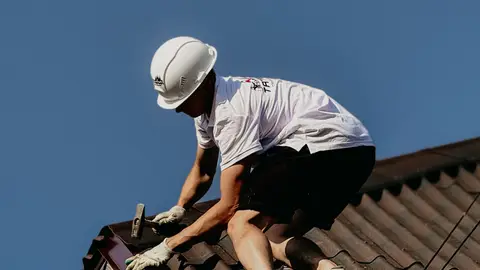
A full roof replacement typically runs $9,600 to $11,500 nationally, with most jobs landing between $5,700 and $16,000 depending on material, roof size, and how much old roofing has to come off first. Asphalt sits at the low end; metal, tile, and slate cost far more per square. A written local estimate gives you the exact number.
Picture a 1998 split-level outside Columbus with three layers of curling asphalt shingles and a soft spot near the chimney. The homeowner gets four quotes, and they land at $7,200, $9,800, $11,400, and $16,500, all for what is supposedly the same job. That spread is not a scam. It is what happens when four contractors measure, spec materials, and price labor differently, and it is exactly why a roof replacement cost is so hard to pin down from a single number on a billboard.
This guide pulls together national roof replacement cost data from the major cost-survey publishers, breaks it down by material and by size, and walks through the line items (tear-off, decking, permits, labor) that turn a low bid into a real one. It also covers what a new roof cost looks like next to a repair bill, what insurance actually pays for, and how to avoid the two most common ways homeowners overpay. Nothing here replaces a walk-through from a licensed roofing contractor who can put eyes on your actual roof, but it will get you close enough to know whether a quote is reasonable before you sign anything.
What Actually Counts as a Roof Replacement
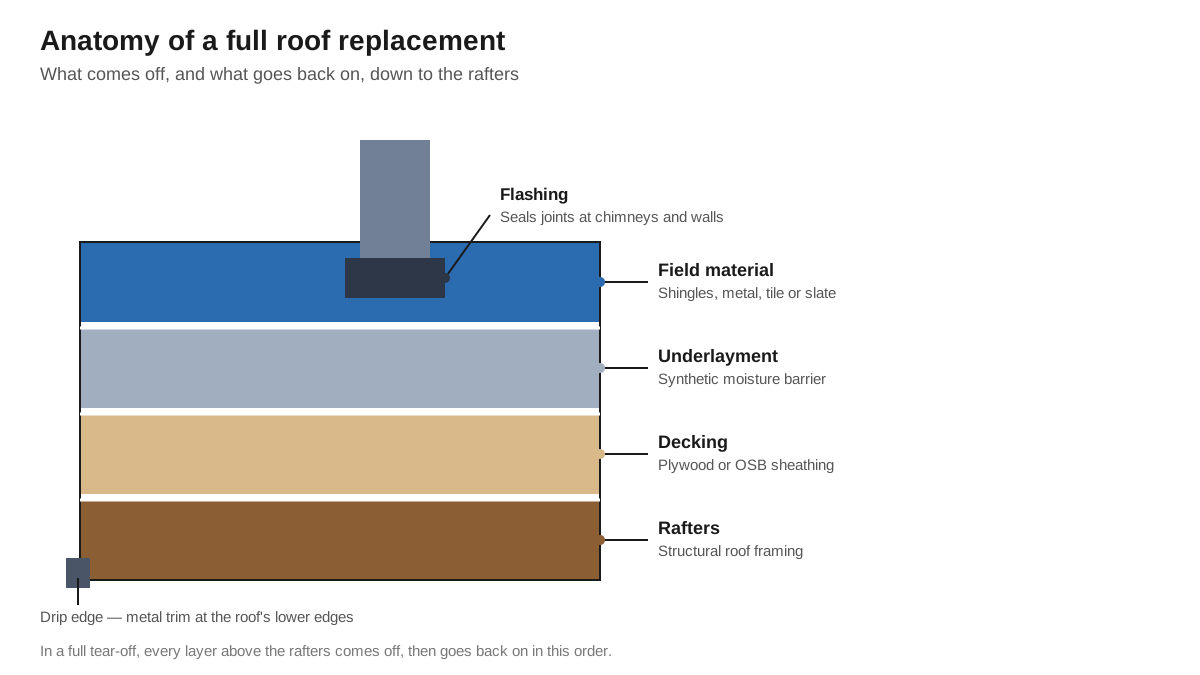
A roof replacement means every layer of roofing material comes off down to the deck (the plywood or OSB sheathing nailed to the rafters), and a new roofing system goes on from scratch: new underlayment, new flashing where the roof meets walls or chimneys, new drip edge, and new field material, fastened with the minimum most manufacturer installation instructions call for — 4 nails per shingle, 6 in high-wind regions. That is different from a reroof or "layover," where a second layer of shingles goes on top of the old one without a tear-off, and it is very different from a roof repair, where a crew patches, replaces flashing, or swaps a section of damaged shingles without touching the rest of the roof.
Many local codes and most manufacturers cap a roof at one layover before a full tear-off is required, and plenty of roofing contractors will not install over an existing layer at all because it hides the deck and voids some manufacturer warranties. If a contractor quotes a suspiciously low roof replacement cost and doesn't mention tear-off, ask directly whether the price includes removing the old roof. That single question separates a real bid from a placeholder number.
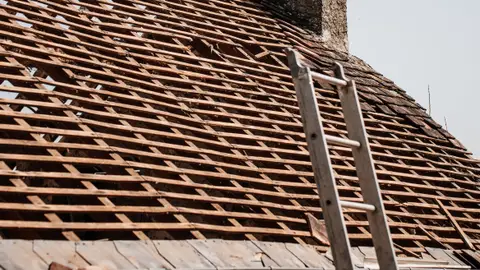
What actually comes off and goes back on in a full tear-off, from the rafters up to the visible field material.
What Actually Drives Your Roof Replacement Cost
Four variables move a roof replacement cost more than anything else: the material you choose, the total square footage of the roof (not the house's floor plan; a roof with dormers and hips covers more area than the footprint below it), how many layers have to come off, and local labor rates. Pitch matters too: a steep roof takes longer to work and often needs extra fall-protection setup — federal OSHA rules require fall protection once work is 6 feet or higher off the ground — which shows up in the labor line.
Roofers price by the square, a unit equal to 100 square feet of roof area — about 10 feet by 10 feet — not by the square foot alone. That's the cost per square roofing math behind most bids: material cost per square, plus labor per square, plus a per-square charge for stripping the old roof, added together and multiplied by however many squares your roof covers.
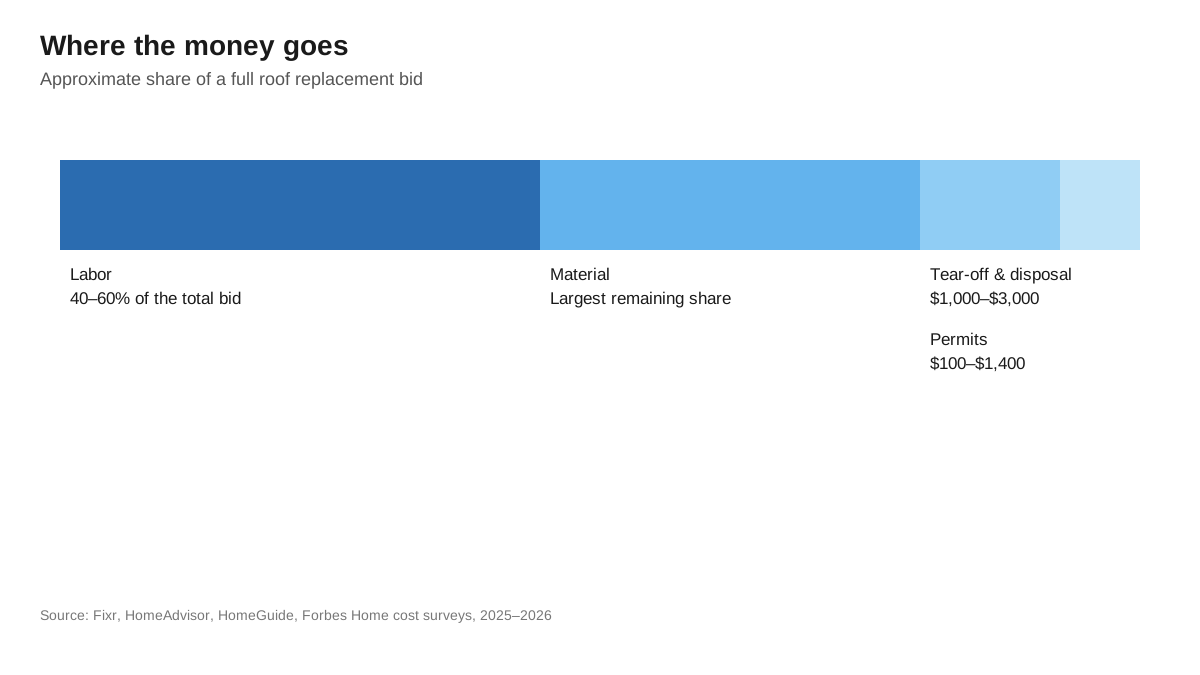
Roughly how a roof replacement dollar splits across material, labor, tear-off/disposal and permits.
Cost driver
Typical add to the job
Source
Tear-off and disposal of the old roof
$1,000–$3,000 total, or about $100–$300 per square
HomeAdvisor; HomeGuide
Decking (plywood/OSB) repair or replacement
$2–$8 per sq ft of deck replaced
Fixr
Permits
$100–$1,400, depending on jurisdiction
Fixr; HomeAdvisor
Labor share of the total job
40%–60% of the bid, often $150–$300 per square or $40–$60 per hour
Fixr; Forbes Home; HomeAdvisor; HomeGuide
A bid that skips decking, permits, or disposal as separate line items isn't necessarily dishonest, but it makes two bids impossible to compare fairly. Ask every contractor to break their number down the same way this table does before you compare dollar totals.
How to Tell You Need a Full Replacement, Not Just a Repair
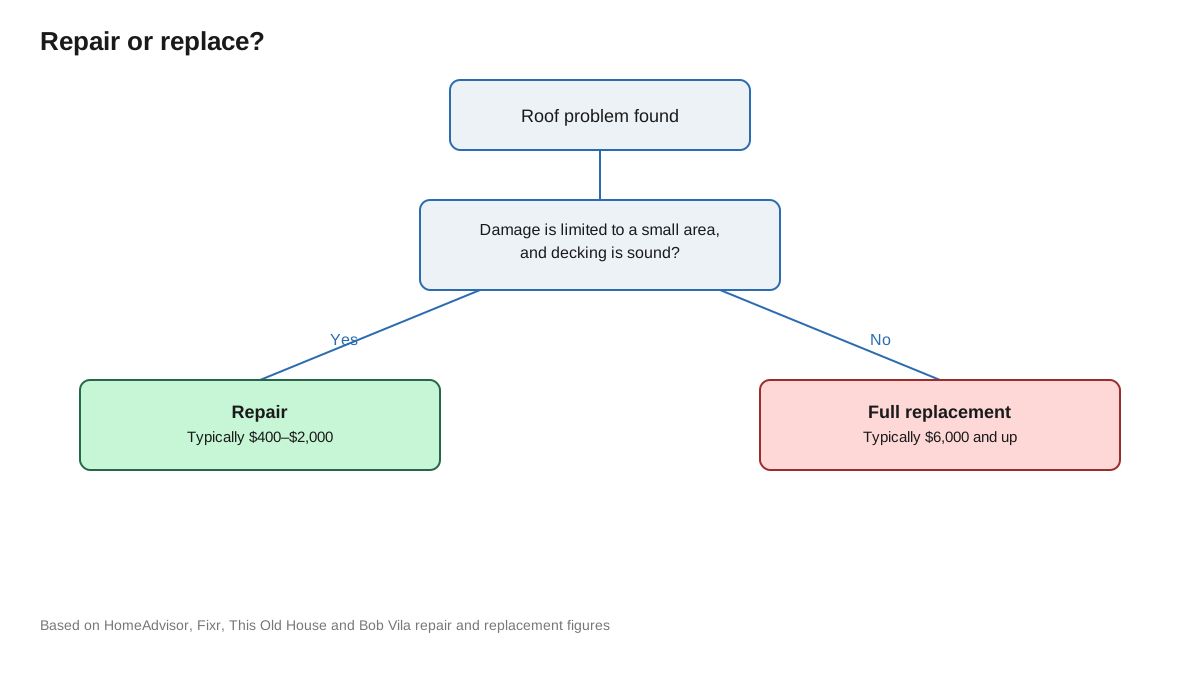
A single active leak, a handful of cracked shingles, or flashing that pulled loose in a windstorm is usually a repair, not a replacement, and repair pricing is a different animal entirely from a full roof replacement cost. A useful gut check: if the damage is confined to a small area of the roof and the decking underneath is still sound, repair is worth pricing first. If shingles are curling or losing granules across the whole field, if the decking has soft spots in more than one area, or if the roof is past the age range its material is rated for, a repair is usually a short-term patch on a roof that needs full replacement anyway.
A quick decision path for repair versus full replacement, based on damage extent and decking condition.
Average
Typical range
Source
Roof repair
$1,173
$395–$1,966 (project range up to $8,000)
HomeAdvisor
Roof repair
$1,150
$400–$1,900
Fixr
Roof repair
$531
$482–$579
This Old House
Roof repair
$1,060
$379–$1,758
Bob Vila
Full roof replacement, for comparison
$15,439
$6,885–$23,993
This Old House
Notice the gap: even the highest repair average sits under $2,000, while the low end of a full replacement starts around $6,000. That gap is the reason a legitimate roofing contractor will usually recommend the cheaper option when it genuinely applies, and it's also why a contractor who jumps straight to "you need a whole new roof" after a five-minute look from the driveway is worth a second opinion. Our full breakdown of roof repair cost covers repair pricing by damage type in more depth.
Roof Replacement Cost by Material
Material is the single biggest lever on new roof cost. Asphalt shingles dominate the US market because they're the cheapest option that still performs well, but the material line is only part of the story: installation difficulty, weight (which can require structural work), and how many crews are trained to install a given material all affect the final number.
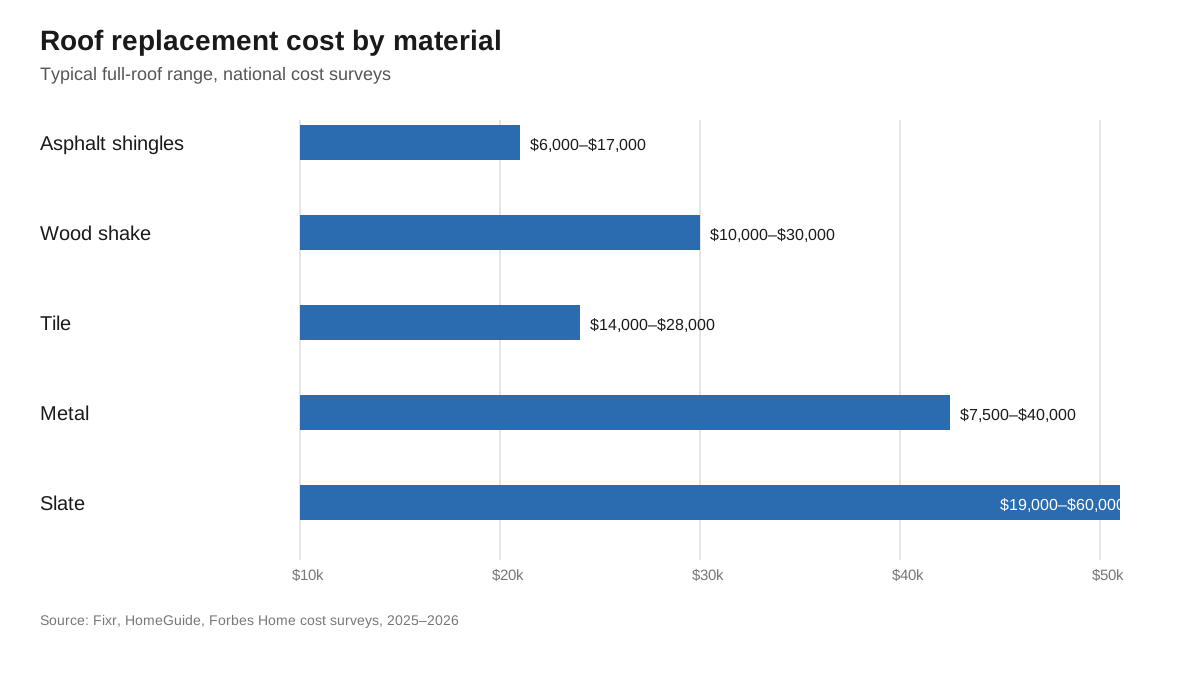
Roof replacement cost by material, low to high, for a roughly 1,700–2,000 sq ft roof (Fixr, HomeGuide, Forbes Home).
Material
Typical full-roof cost (roughly 1,700–2,000 sq ft of roof)
Source
Asphalt shingles (3-tab or architectural)
$6,000–$17,000
Fixr; Forbes Home; HomeGuide
Metal (standing seam or galvanized)
$7,500–$40,000
Fixr; HomeGuide; Forbes Home
Tile
$14,000–$28,000
Fixr
Slate
$19,000–$60,000
Fixr; Forbes Home
Wood shake
$10,000–$30,000
Fixr
Two things push the asphalt shingle roof cost and the metal roof cost ranges as wide as they are. First, source publishers surveyed slightly different roof sizes (1,700 to 2,000 square feet), so treat these as directional bands, not a single price. Second, "metal roof" covers everything from inexpensive corrugated panels to premium standing-seam systems, which is most of why its range runs from the cheapest asphalt job up past $40,000. If a contractor quotes solar shingles, HomeAdvisor puts that material alone at $21–$25 per square foot before labor, well above every option in the table above.
Roof Replacement Cost by Size and Square Footage
Size is the second-biggest lever, and it's the one homeowners most often get wrong, because a roof's square footage isn't the same as the home's living space. A roof with a steep pitch, multiple gables, or dormers can cover significantly more area than a flat-footprint calculation would suggest, sometimes by a wide margin depending on how many planes and cuts the roof has. Before you compare quotes, ask each contractor for the exact roof measurement they used (squares, pitch, and number of facets) or run your own numbers through a roof square footage calculator using your home's footprint and roof pitch so you have a baseline to check their math against.
Metric
Range across major cost surveys
Source
National average, full project
$9,607–$11,500
HomeAdvisor; Fixr; HomeGuide; Forbes Home
Typical homeowner range
$5,700–$16,000
Fixr; HomeAdvisor; HomeGuide
Full low-to-high spread (all materials, all sizes)
$2,700–$80,000
HomeGuide; Forbes Home
Cost per square foot, installed
$3–$11 for most jobs, up to $40 for premium installs (averages cluster around $4.75–$7)
Fixr; HomeAdvisor; HomeGuide; Forbes Home
Cost per roofing square (100 sq ft), installed
$300–$4,000 (averages cluster around $600–$700)
HomeGuide; Forbes Home
A small ranch with a simple gable roof and an asphalt spec will land near the bottom of that spread. A large two-story with multiple roof planes, dormers, and a premium material can land near the top even though it's still "just" an asphalt or metal roof. That's why two roofs of similar square footage but different shapes can carry noticeably different roof replacement cost totals, since the shape adds cutting, flashing, and waste that a flat, simple roof never sees. As a rough anchor, a straightforward 2,000 sq ft house lands around $6,700 to $13,400 for the full job, per HomeGuide's data — a starting point to sanity-check a quote against, not a substitute for your own roof's actual measurement.
What a Fair Roof Replacement Estimate Actually Includes
A one-line quote like "$9,500, asphalt shingles" tells you almost nothing. A written estimate you can actually compare against a second bid should spell out each of the following, in this rough order:
A physical inspection of the roof deck, not just a look from the ground or a drone photo
Exact roof measurements (squares, pitch, and how many layers are already on the roof)
Material and manufacturer named by brand and product line, not just "architectural shingles"
Tear-off and disposal spelled out, including how many layers come off and where debris goes
Decking replacement priced per sheet or per square foot, not lumped into a vague "as needed" allowance
Flashing, drip edge, underlayment, and ventilation itemized rather than bundled into "miscellaneous"
Permit costs, cleanup, a start-to-finish timeline, and a written warranty covering both labor and material
Never hand over the full roof replacement cost before work starts: a legitimate roofing contractor structures payment as a modest deposit plus draws tied to completed stages, not the entire balance up front. A contractor who insists on full payment before the first bundle of shingles arrives on site is a red flag regardless of how good the rest of the estimate looks.
When you're ready to line up estimates, call 888-679-3798 to reach a roofing contractor that serves your area, and ask every company that comes out to walk through the seven items above in writing before they leave your driveway.
Paying for It: Cash, Financing and Insurance
Most homeowners pay for a new roof one of three ways: cash or savings, a financing product, or an insurance claim when storm damage caused the need for replacement. Roof replacement financing typically comes through a contractor-arranged loan, a home equity line, or a personal loan, and terms vary enough by lender and credit profile that this guide won't put a rate on it — that number belongs in a conversation with your bank or the financing partner your contractor works with, not in a national cost guide. Our roof financing guide walks through how each path compares.
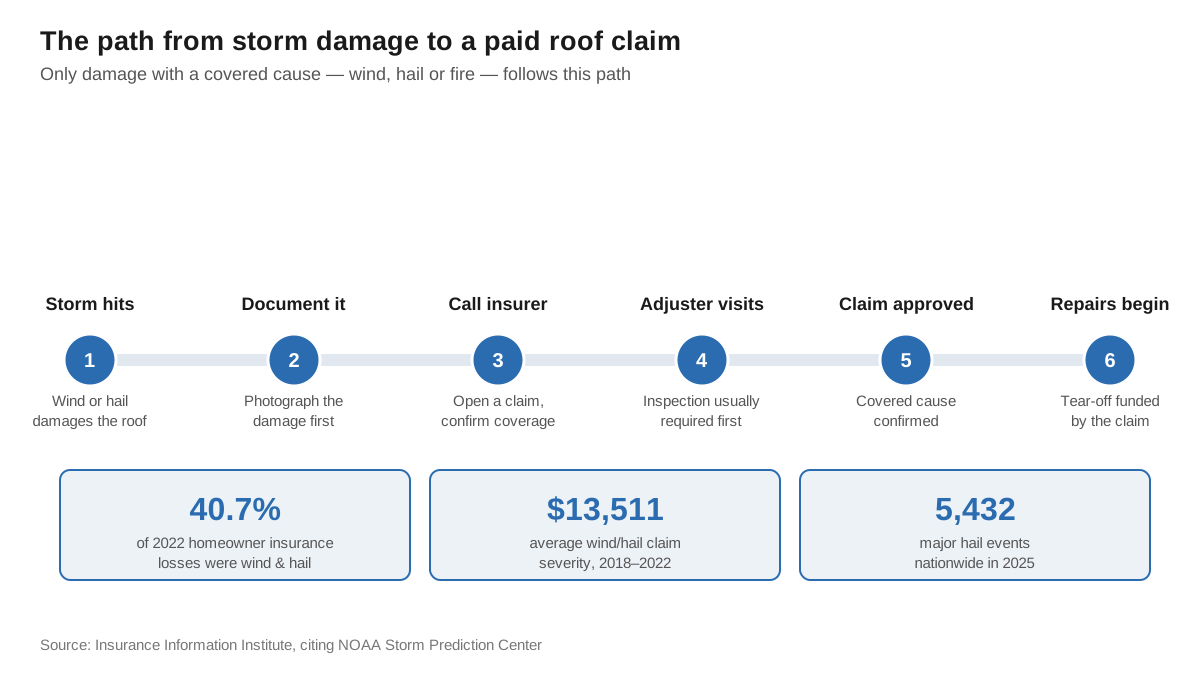
Insurance is a different question, and it only applies when the damage has a covered cause, typically wind, hail, or fire, not ordinary wear from age. Wind and hail together accounted for 40.7% of homeowner insurance losses in 2022, with a claim frequency of 2.82 per 100 house-years and an average claim severity of $13,511, according to the Insurance Information Institute. If your roof is a genuine insurance claim rather than a maintenance replacement, that claim goes through a very different process than paying out of pocket, and it usually starts with a documented inspection before any tear-off begins, not after.
How a wind- or hail-damage roof claim typically moves from storm to paid repair (Insurance Information Institute).
Do You Get the Money Back When You Sell?
Not entirely, and the gap between what a roof costs and what it adds to resale value is worth knowing before you spend more than you need to. Zonda's 2025 Cost vs. Value report, a national remodeling benchmark tracked annually by Remodeling and JLC, put real numbers on this for its standard project model:
Material
Job cost
Resale value added
Cost recouped
Source
Asphalt shingles
$31,871
$21,501
68%
JLC / Zonda Cost vs. Value 2025
Metal
$51,865
$25,972
50%
JLC / Zonda Cost vs. Value 2025
The report's benchmark project is a larger, standardized job than the size-based averages earlier in this guide, so don't read the dollar figures as apples-to-apples with the material table above — read the percentage recouped instead. An asphalt shingle roof recoups more of its cost at resale than a metal roof does, even though the metal job costs far more up front. That doesn't make metal a bad choice — it often lasts two to three times longer and can lower insurance premiums in hail-prone areas — but it does mean you shouldn't choose a premium material purely as a resale play.
When to Call a Roofing Contractor Now, Not Later
Some roof problems can wait for a scheduled estimate. Others can't. Water actively coming through a ceiling, a section of decking you can see daylight through, a tarp that's already failing in wind, or storm damage right after a hailstorm all belong in the call today category, not because every one of them is dangerous, but because delay turns a roof problem into a decking, insulation, and drywall problem. If you're up on a ladder and see soft, spongy decking or smell mold in the attic, get down and call a professional rather than testing your weight on it.
If the damage is fresh, a branch through the roof, shingles peeled back after high wind, or a hole from a fallen limb, call 888-679-3798 and describe exactly what you're seeing so a roofing contractor that serves your area can prioritize the call and tell you whether a tarp will hold until a full crew can get there. Our emergency roof repair guide covers temporary tarping in more detail, and if the damage came from a hailstorm specifically, the hail damage and insurance claim guide walks through documenting it before a contractor arrives.
Regional Notes: Hail Alley, Wind Zones and Everywhere Else
Roof replacement cost isn't only a material-and-size question; where you live changes both how often roofs get replaced and what they get replaced with. The country's hail-prone corridor running through the Plains and parts of the South sees the heaviest storm-driven roofing demand: there were 5,432 major hail events in 2025, up slightly from 5,373 in 2024, and Texas alone logged 902 of them, followed by Kansas (375), Oklahoma (369), Nebraska (315), and Missouri (253), per the Insurance Information Institute citing NOAA's Storm Prediction Center. Severe hail in that data means hailstones at least 1 inch in diameter; significant severe hail starts at 2 inches. State Farm alone paid out more than $3.5 billion in hail claims in 2022, concentrated in Minnesota, Texas, Arkansas, Illinois, and Nebraska.
If you're in one of those states, a roof replacement is more likely to start as an insurance claim than a planned project, and impact-resistant shingle or metal options are worth asking about even if they cost more up front — some insurers offer premium discounts for them, though that discount varies by carrier and isn't something a national cost guide can quote as a number. Outside hail country, the calculus shifts toward material longevity and climate fit: coastal wind zones favor materials and fastening methods rated for higher wind uplift, and cold climates put more weight on proper attic ventilation — building codes typically call for at least 1 sq ft of net free ventilation for every 300 sq ft of attic floor area — to prevent ice damming, which forms when trapped heat melts snow on the upper roof and the meltwater refreezes once it reaches the unheated eaves, below the 32°F freezing point; that's a separate problem from the roofing material itself. Whatever your region, get the local specifics — wind rating requirements, permitted materials, snow-load rules — confirmed by a contractor licensed to work in your county, since those rules vary block by block in ways no national guide can cover.
How to Avoid Overpaying for a New Roof
Two mistakes account for most of the money homeowners lose on a roof replacement, and neither one is choosing the "wrong" material. The first is accepting the first bid without a second one to compare it against: pricing on identical jobs can swing by thousands of dollars between contractors for reasons that have nothing to do with quality, from overhead to how busy a crew is that season. The second is skipping verification: a valid state contractor license, proof of liability insurance and workers' compensation, and a certification from the manufacturer whose product they're installing (GAF Master Elite or Owens Corning Preferred Contractor, for instance) all cost the contractor something to maintain, and a company that skips them is usually cutting corners somewhere else too. Our guide to choosing a roofing contractor covers license lookups and red flags in full.
Financial assistance exists in some areas for seniors, veterans, or lower-income homeowners facing a roof replacement they can't otherwise afford — county housing offices and local nonprofits are the right first call to ask what's available where you live, since program details and eligibility change by county and this guide can't quote specific terms for a program that isn't national. Beyond that, the single best lever you control is timing: scheduling a non-emergency replacement in a roofing contractor's slower season, rather than right after a regional storm when every crew in the county is booked, tends to produce more competitive bids simply because there's less demand pressure on the price.
Frequently asked questions
How much does a roof replacement cost?+
Nationally, most full roof replacements fall between $5,700 and $16,000, with published national averages ranging from $9,607 to $11,500 depending on the survey. Asphalt shingle jobs sit toward the low end of that range; metal, tile, and slate push the total higher because of both material price and installation complexity. Your exact number depends on roof size, pitch, material, and how much of the old roof has to be torn off — a written local estimate is the only way to nail it down.
What is the average roof replacement cost?+
Cost surveys put the national average roof replacement cost at $9,607 to $11,500, with a typical homeowner range of $5,700 to $16,000. These averages blend every material and roof size together, so a small asphalt roof will land well under the average and a large slate or metal roof can run several times over it. Treat the average as a planning benchmark, not a quote.
Can you negotiate roof replacement cost?+
Yes, within limits. Getting two or three written estimates and asking each contractor to itemize material, labor, tear-off, and permits the same way gives you real bargaining room, because pricing on similar jobs can vary by thousands of dollars for reasons unrelated to quality. Timing helps too — scheduling outside a contractor's busy storm season tends to bring more competitive bids. What you shouldn't negotiate away is licensing, insurance, or manufacturer certification just to save money.
How do you estimate roof replacement cost?+
Start with your roof's square footage measured in roofing squares (100 sq ft units), not your home's floor plan, since roof area is usually larger than the footprint below it. Multiply that by the per-square material and labor range for your chosen roofing material, then add tear-off, decking repair, and permit costs as separate line items. A contractor's on-site measurement will always beat a self-estimate, but this math gives you a number to check their bid against.
How much does a new roof cost if you do it yourself?+
This guide's cost data comes from professionally installed jobs, so it doesn't isolate a DIY-only material cost. What the pack data does show is that labor typically runs 40-60% of a professional bid, so a capable DIYer who skips paid labor is working against that share of the total — but roofing involves fall risk, code and permit requirements, and manufacturer warranties that often require licensed installation, so get a local professional's opinion before deciding to do it yourself.
How do you know a roof needs to be replaced?+
Widespread shingle curling or granule loss across the whole roof, decking with soft spots in more than one area, a roof at or past the age range its material is rated for, or repeated leaks in different spots all point toward replacement rather than another round of patching. A single leak, a handful of damaged shingles, or loose flashing in one spot is usually a repair. When in doubt, a roofing contractor can inspect the deck directly rather than guessing from the ground.
Will insurance help with a roof replacement?+
Only when the damage has a covered cause, typically wind, hail, or fire — not ordinary age-related wear. Wind and hail together made up 40.7% of homeowner insurance losses in 2022, with an average claim severity of $13,511, according to the Insurance Information Institute. If a storm caused your damage, document it and contact your insurer before any tear-off begins, since most policies require an inspection first.
What is included in a roof replacement?+
A full replacement should include tear-off and disposal of the old roofing down to the deck, repair of any damaged decking, new underlayment, new flashing at walls and penetrations, new drip edge, the new field material itself, ventilation work if needed, cleanup, and a permit where required. A fair written estimate itemizes each of those instead of bundling them into one lump sum, which is the easiest way to catch a bid that's missing something.
When should you redo your roof?+
Age and material rating are the starting point — every roofing material has a rated lifespan, and a roof nearing or past that range is worth a professional inspection even without visible problems. Beyond age, widespread granule loss, curling shingles, multiple soft spots in the decking, or recurring leaks in different areas are signs it's time to plan a replacement rather than another repair. Storm damage can also force the timeline regardless of the roof's age.
Is roof replacement tax deductible?+
For a typical owner-occupied home, a roof replacement is generally treated as a capital home improvement rather than a deductible expense in the year you pay for it, though it can add to your home's cost basis when you eventually sell. Rules differ for rental property, home offices, and storm-damage casualty situations, and they change with tax law. This guide isn't a substitute for advice from a tax professional who knows your specific situation.