Roof financing options range from paying cash to a home equity loan, a personal loan, a manufacturer's 0% dealer program, a roofing company payment plan, or an insurance claim when a storm caused the damage. Replacement averages $9,607 to $11,500 nationally, and most homeowners combine two paths: insurance for storm damage, plus a loan or payment plan for the deductible or any upgrade beyond it.
A hailstorm doesn't check your bank balance before it tears through three-tab shingles on a Tuesday afternoon, and neither does a roof that finally gives out after 22 quiet years. Either way, you're suddenly staring at a bill that can run anywhere from a few hundred dollars for a patch to five figures for a full tear-off, and roof financing options go from an abstract phrase to an urgent question in about the time it takes water to reach the living room ceiling.
This guide walks through every realistic way to pay for roofing work, cash, home equity, personal loans, manufacturer promotions, contractor payment plans, and insurance claims, what each one actually costs according to national data, and the fine print that turns a good-sounding offer into a bad one. Every figure below traces back to a named source, so you can see exactly where a number comes from before you use it to decide anything about your own roof.
Why Financing a New Roof Even Comes Up
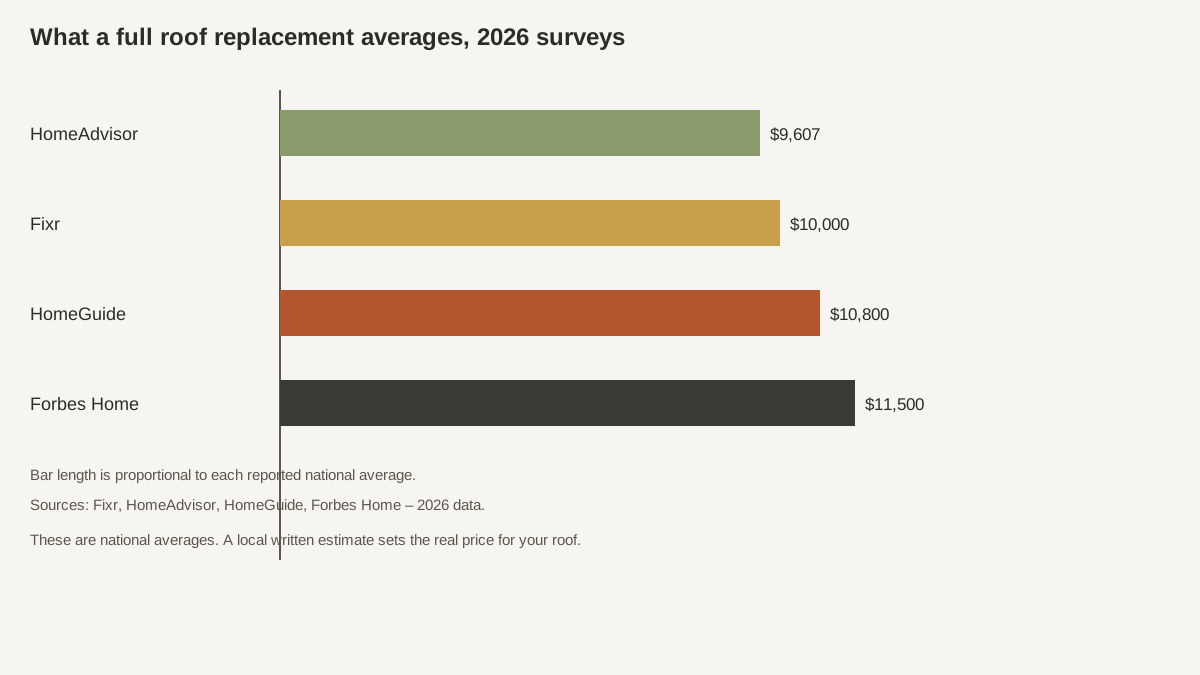
A roof rarely fails on a schedule that matches a bank account. Fixr's 2026 cost survey puts the national average for a full roof replacement at $10,000, with a typical range of $7,500 to $14,000. HomeAdvisor's separate 2026 survey lands close by at $9,607, with most homeowners paying $5,902 to $13,374. HomeGuide reports a national average of $10,800 (range $5,700 to $16,000), and Forbes Home puts the average at $11,500, with an outer range stretching all the way to $80,000 for large or high-end jobs. None of that is small change, and few households keep a five-figure sum sitting untouched for the roof specifically.
Financing a new roof is less a luxury than a default position for most homeowners. The money might come from an insurance settlement after a storm, a loan from a bank or credit union, a promotional program a manufacturer's dealer offers at the kitchen table, or the roofing company's own in-house payment plan. Repair work, by contrast, is usually small enough to pay out of pocket: HomeAdvisor's repair survey averages $1,173, and Fixr's averages $1,150, both well under most households' emergency fund if they have one. It's replacement, not a patch, that tends to force the financing question.
What Actually Drives the Need: Storms, Age, or Sudden Failure
Three situations account for almost every roof financing conversation, and they don't carry the same urgency or the same first move.
Storm damage is the most common driver in a lot of the country. The Insurance Information Institute, citing NOAA's Storm Prediction Center, counted 5,432 major hail events in 2025, up slightly from 5,373 in 2024. Texas led with 902 events, followed by Kansas, Oklahoma, Nebraska, and Missouri. Wind and hail together made up 40.7% of homeowners insurance losses in 2022, with an average claim severity of $13,511 and a claim frequency of 2.82 per 100 house-years, according to the III. When a storm is the cause, insurance, not a loan, is usually the first source of funds, and the financing question narrows to covering your deductible and anything the settlement doesn't reach.
Planned replacement is the second driver, and it's the one homeowners have the most control over. Asphalt shingles, the material on most American roofs, are typically rated for 20 to 30 years, and a roof nearing the end of that life gets scheduled, not forced, which means there's time to compare loan offers, check contractor financing terms, and avoid the pressure of a leak actively dripping into the living room. This is where shopping around matters most, because a rushed decision made under storm pressure and a planned decision made over a few weeks rarely land on the same terms.
Sudden failure is the third, and the least predictable. Rot that finally gives way, a leak that's been quietly spreading for years, or decking that turns out to be soft the moment a crew starts tearing off shingles for what was supposed to be a simple reshingle. None of this shows up on an insurance adjuster's radar the way storm damage does, since a standard HO-3 policy generally excludes damage from age and wear. If this is your situation, financing falls almost entirely on you: savings, a loan, or the contractor's payment plan, with no settlement to offset the bill.
If a storm just tore into your roof and water is actively getting in, call 888-679-3798 to reach a roofing contractor that serves your area before you sign anything a crew going door-to-door hands you. A second opinion costs nothing, and a rushed signature right after a bad storm is exactly how homeowners end up in financing terms they regret.
Step by Step: Figuring Out Which Path Fits Your Roof
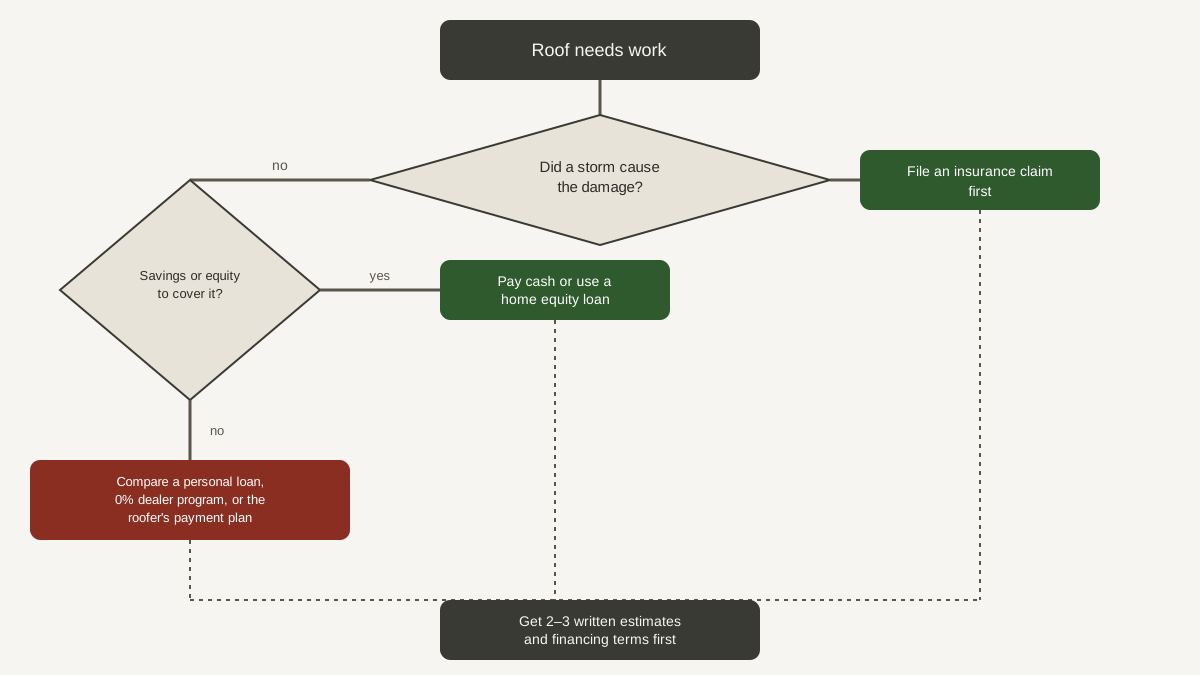
Work through these in order rather than jumping straight to a loan application:
Determine the cause first. If a storm, falling tree, or another sudden event caused the damage, open an insurance claim before you spend a dollar on financing; the settlement changes everything downstream.
Get two or three written estimates from licensed roofers, even if you're fairly sure you already know the scope of work. Estimates vary more than most homeowners expect, and a second number gives you real bargaining room no matter which financing path you pick.
Check what you actually have available before shopping for credit: savings earmarked for home repairs, available home equity, and a rough sense of your credit score, since all three change which options are realistic.
Ask every roofer on your estimate list what financing they offer in-house, and get the terms in writing, not just a verbal mention of low monthly payments.
Compare at least one outside option, a bank, credit union, or online lender, against whatever the roofing company offers on its own. A contractor's in-house program can be legitimately competitive or a markup dressed up as convenience, and you won't know which until you compare.
Read the fine print on any promotional 0% offer before you sign, specifically what happens if the balance isn't paid off by the end of the promotional window.
This order matters because skipping the insurance question is the single most common expensive mistake: homeowners who finance a full replacement out of pocket, only to learn weeks later that a storm-damage claim would have covered most of it, rarely get that money back after the fact.
The Financing Paths, From Cash to Credit
Here's what each option actually involves, roughly ordered from simplest to most involved.
Cash or savings. The simplest path: no interest, no application, no monthly payment to track. The tradeoff is opportunity cost. Money spent on a roof isn't earning anything elsewhere, and draining an emergency fund down to nothing leaves you exposed if something else breaks the same year.
Home equity loan or HELOC. A home equity line of credit (HELOC) or a home equity loan borrows against the value you've built up in your house. Rates are typically lower than unsecured personal loans because the loan is secured by your home, but that security cuts both ways: the house is collateral, so missed payments carry more consequence than missing a credit card bill.
Personal loan. An unsecured personal loan through a bank, credit union, or online lender doesn't require home equity and usually closes faster than a HELOC. Rates depend heavily on your credit profile, and because the loan isn't secured by the house, lenders price that risk into the rate they offer.
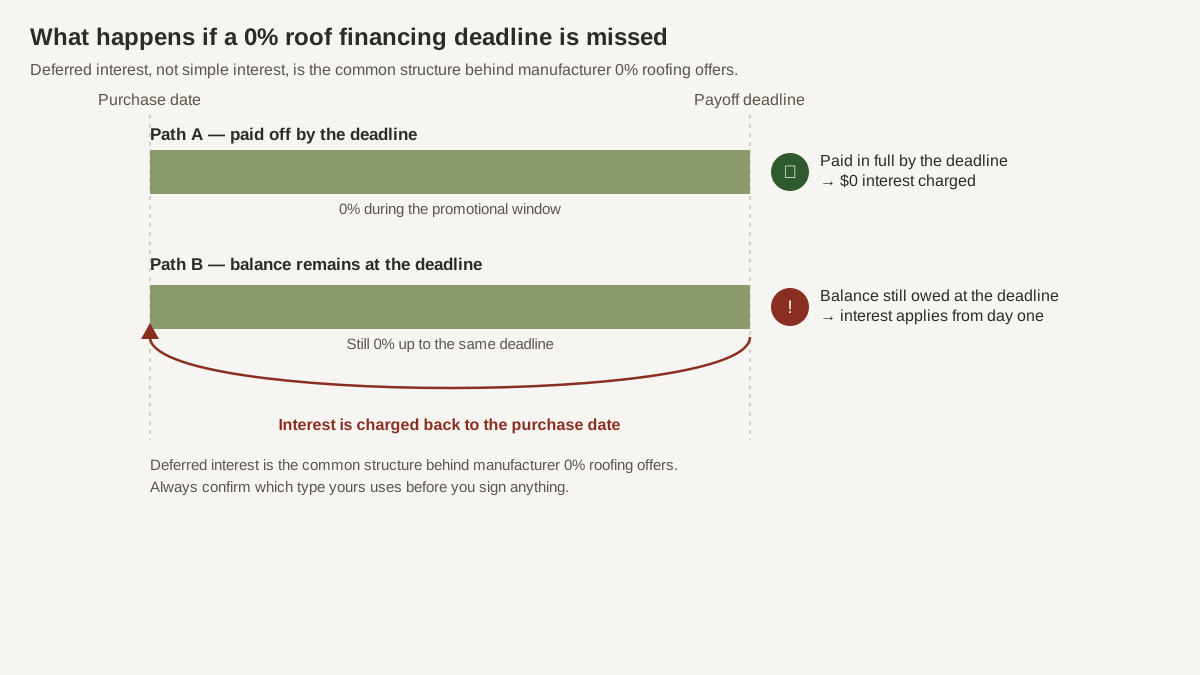
Manufacturer or dealer promotional financing. Many GAF, Owens Corning, and other manufacturer-certified dealers offer 0% financing roofing customers can use for a set promotional period, arranged through a third-party lender at the point of sale. These can be genuinely good deals if you pay the balance off inside the window. The catch is usually a deferred interest structure rather than simple interest: miss the payoff deadline by even one billing cycle, and some plans charge interest retroactively from the original purchase date, not just from the date you missed.
Roofing company payment plans. Some companies offer roof payment plans directly through their own office, sometimes through a financing partner, sometimes a true in-house program. Convenient, since it's one call and one set of paperwork, but it deserves the same scrutiny as any other loan: ask for the actual rate, not just the monthly figure.
Insurance claim. When a storm caused the damage, a roof replacement insurance claim can cover most of the job, with your deductible as the main out-of-pocket cost. This isn't financing in the traditional sense, since you're not borrowing, but it works the same way in a household budget: it turns a five-figure bill into a much smaller one.
Choosing a roof financing path, step by step.
What You're Actually Financing: 2026 Roof Costs
Before comparing financing terms, it helps to know the actual range you're financing against. These figures come from the same national cost surveys used across our roofing coverage, so you can see exactly where each number originates.
What a full roof replacement averages, by publisher, 2026 surveys.
Publisher
Average
Typical range
Source
Fixr
$10,000
$7,500 – $14,000
Fixr 2026 survey
HomeAdvisor
$9,607
$5,902 – $13,374
HomeAdvisor 2026 survey
HomeGuide
$10,800
$5,700 – $16,000
HomeGuide, Nov 2025
Forbes Home
$11,500
$6,700 – $80,000
Forbes Home 2026
Material choice moves the number sharply. Fixr's per-material figures for a roughly 1,700 sq. ft. roof run from $6,000 – $10,000 for asphalt shingles up to $20,000 – $60,000 for slate. HomeGuide's material breakdown by square (100 sq. ft., the roofer's standard pricing unit) shows a similar spread: asphalt material at $80 – $130 per square, metal at $100 – $800, and tile at $300 – $2,500, before labor. Labor itself runs 40 to 60 percent of the total bill according to Fixr and Forbes Home, which is a big part of why identical materials can price differently between two contractors in the same town.
If the job in question is a repair rather than a full replacement, the numbers are smaller but still worth financing consideration for anyone without a cushion: HomeAdvisor's repair average is $1,173 (range $395 – $1,966) and Fixr's is $1,150 (range $400 – $1,900), though major structural repairs can run $2,000 to $8,000 or more. Our roof repair cost guide breaks that down further, including cost by repair type.
One more figure worth knowing before you finance anything: the Zonda / JLC Cost vs. Value 2025 report, which tracks 28 project types across 119 markets, found that a full asphalt shingle replacement averages $31,871 in job cost and recoups about 68% at resale ($21,501), while a metal roof replacement averages $51,865 and recoups roughly 50% ($25,972). That report uses a different methodology and sample than the surveys above, aimed at remodeling-return questions rather than a typical homeowner's bill, but it's a useful check if resale value is part of your decision. See our full roof replacement cost guide for the complete per-material breakdown.
Every number on this page is a researched range pulled from national cost surveys, not a quote for your own roof – actual cost still varies by region, how easy the roof is to access, and what the crew finds once the old roofing comes off. A written estimate from a licensed local contractor, not this page, is the one number that's actually binding.
Comparing the Paths: What Each One Is Actually Good For
No single financing path is right for every homeowner. This table lines up the main tradeoffs so you can narrow the field before you start filling out applications.
Path
Best for
What to watch for
Cash or savings
Anyone who can cover the job without draining their emergency fund
Opportunity cost; leaves less cushion for the next surprise expense
HELOC / home equity loan
Homeowners with meaningful equity and a longer payoff horizon
Home is collateral; rates and terms vary widely by lender
Personal loan
Homeowners who want speed and don't want to touch home equity
Rate depends heavily on credit; often higher than a secured loan
Manufacturer 0% promotional
Anyone confident they can pay the full balance inside the promo window
Deferred interest can apply retroactively if you miss the deadline
Contractor payment plan
Convenience, one point of contact for the job and the financing
Compare the real rate against an outside lender before assuming it's the best deal
Insurance claim
Storm-caused damage covered under a standard HO-3 policy
Doesn't apply to age-related wear; deductible is still due
A pattern worth noticing: the paths with the lowest advertised cost, insurance and 0% promotional financing, both come with a condition attached, a covered cause of loss in one case and a strict payoff deadline in the other. Neither is free money, just money with different strings.
Using Insurance When a Storm Caused the Damage
A standard HO-3 homeowners policy typically covers roof damage from a sudden, specific event, hail, wind, a fallen tree limb, fire, minus your deductible. It typically excludes damage from age, wear, or a roof that was already failing before the storm hit. An adjuster's job during a claim is largely to sort your specific damage into one of those two buckets.
Wind and hail are, by a wide margin, the storm claims insurers see most often on roofs. The III reports a claim frequency of 2.82 per 100 house-years and an average claim severity of $13,511 for wind and hail combined, together making up 40.7% of homeowners losses in 2022. NOAA's Storm Prediction Center classifies hail 1 inch in diameter or larger as severe and 2 inches or larger as significant severe, a distinction worth knowing if you're describing hailstone size to an adjuster or the roofer writing your estimate. If a documented storm passed through your area, especially one with reported hail, you're starting from a reasonably strong position for a claim. Our hail damage roof repair guide covers how to spot bruising before you even file.
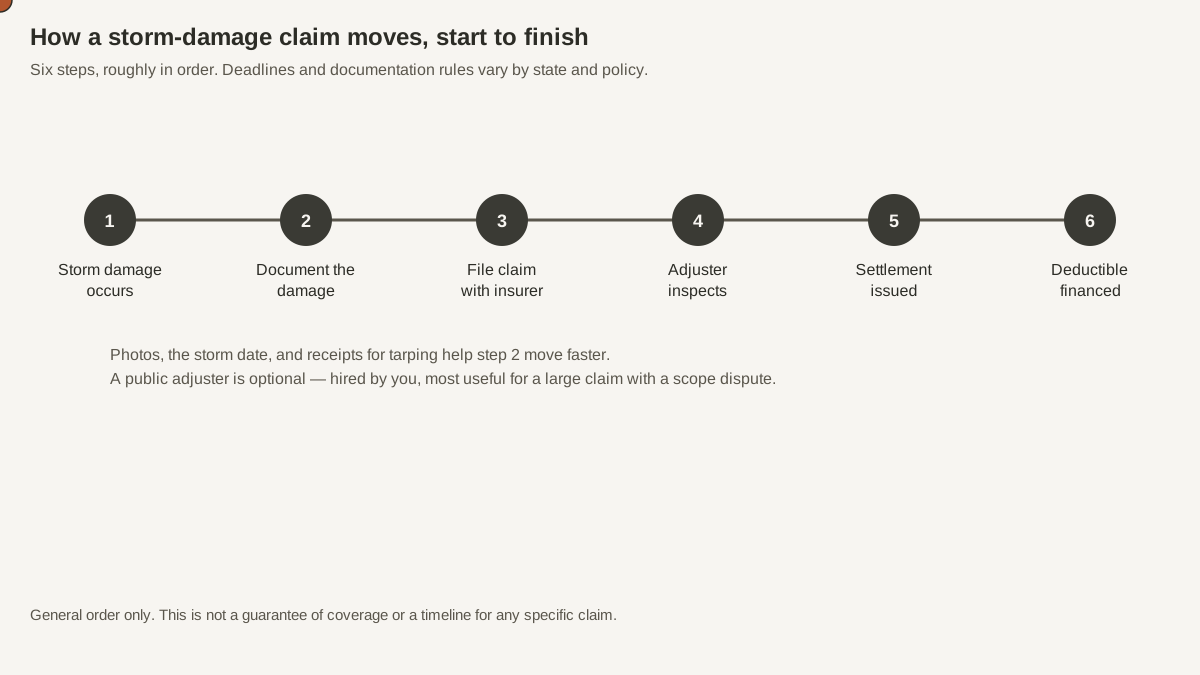
Documentation that moves a claim faster
Photos of the damage taken as soon as it's safe, before any temporary repair covers it up
The date of the storm, cross-referenced against local weather reports if you have them
Receipts for any emergency tarping or water mitigation
A written estimate from a roofing contractor, kept separate from the insurer's own adjuster estimate
Company adjuster vs. public adjuster
The adjuster your insurer sends works for the insurance company, not for you, which doesn't make their estimate wrong but does make a second opinion reasonable, especially on a large claim. A public adjuster is a licensed professional you hire directly, usually for a percentage of the settlement, to represent your interests in valuing and negotiating the claim. For a straightforward repair, most homeowners don't need one; for a major storm claim with a scope dispute, a public adjuster's fee can pay for itself.
Claim deadlines and documentation rules vary by state and by policy, so check your own declarations page and file promptly once it's safe to assess the damage. If the settlement doesn't cover the full job, whatever's left, your deductible plus any upgrade beyond a like-for-like replacement, is the actual amount you need to finance, not the full roof cost.
The general order a storm-damage roof claim follows, from the first photos to a scheduled repair.
Red Flags: Avoiding Predatory Financing and Storm-Chaser Contracts
Roofing has a low barrier to entry and, after any major hail event, a wave of companies that show up specifically to sell repairs, sometimes bundled with an easy-sounding financing pitch. A few checks filter out most of the bad actors before you sign anything.
Contractor credentials worth checking
Confirm the roofer holds any license your state requires, and ask for proof of general liability insurance and workers' compensation, not just a business card that says insured. Verify the license number directly with your state's contractor licensing board rather than taking the roofer's word for it, and confirm the certificate of insurance is current, not expired, before any crew sets foot on your roof. Manufacturer programs are a useful signal: GAF Master Elite and Owens Corning Preferred or Platinum Preferred contractor status both require background checks and ongoing training to maintain, and the National Roofing Contractors Association runs its own PROCertification workforce credential. A contractor who bothered to earn one has usually also bothered to get licensing and insurance right.
Financing red flags
Pressure to sign a financing agreement the same day, especially bundled with a storm-damage claim you haven't verified yourself
A rate or term that isn't written down anywhere, only described verbally as a monthly payment
A contract that requires full payment before any material is delivered or work begins
A dealer who won't say plainly whether a 0% offer uses deferred interest or simple interest
Never sign a financing agreement that requires full payment up front, and never let a 0% promotional period lapse without confirming the balance is paid in full, because a deferred-interest plan can charge interest retroactively from the original purchase date. That single rule matters more than any rate you'll see quoted in this guide.
A real written estimate names the specific material and manufacturer, the scope of work in plain language, a total price broken into material and labor, a timeline, and warranty terms for both material and labor. If a contractor's financing paperwork is vaguer than their roofing estimate, treat that as a warning sign rather than a coincidence. If you'd rather start with a phone call than a search, 888-679-3798 connects you with a roofing contractor that serves your area, and our how to choose a roofing contractor guide covers the rest of the vetting checklist. Once work is scheduled, our roof replacement timeline guide walks through what each day of the job actually involves, so you know what you're paying for as it happens.
Deferred-interest 0% roofing plans charge from the purchase date, not the missed date, if the balance isn’t paid in full by the deadline.
Regional Notes: Where Insurance Carries More of the Load
How much of a new roof gets financed through insurance versus a bank or dealer program isn't evenly distributed across the country, and it's worth knowing which pattern applies to you.
Hail belt
Texas, Kansas, Oklahoma, Nebraska, and Missouri led the country in major hail events in 2025, with Texas alone recording 902, according to the III citing NOAA's Storm Prediction Center. State Farm separately reported hail claims paid of over $3.5 billion in 2022, up more than $1 billion from 2021, with Minnesota, Texas, Arkansas, Illinois, and Nebraska among its top claim states. Homeowners in this band are more likely to finance a roof primarily through an insurance settlement than through a loan, and an annual post-storm inspection is worth more here than almost anywhere else.
Freeze-thaw country
In the Upper Midwest, Northeast, and mountain West, roof damage more often builds slowly through ice dams and freeze-thaw cycles than through a single storm event, which means it's less likely to be a clean insurance claim and more likely to fall to a loan or savings. See our ice dam guide for how that damage develops and what a fix costs.
Hurricane coast
Along the Gulf and Atlantic coasts, wind uplift and wind-driven rain around flashing and roof edges are the recurring cause, and separate windstorm deductibles, common in coastal policies, can mean a meaningfully larger out-of-pocket share than the standard deductible inland homeowners are used to. Check your policy's windstorm or hurricane deductible specifically before you assume a flat, percentage-based number.
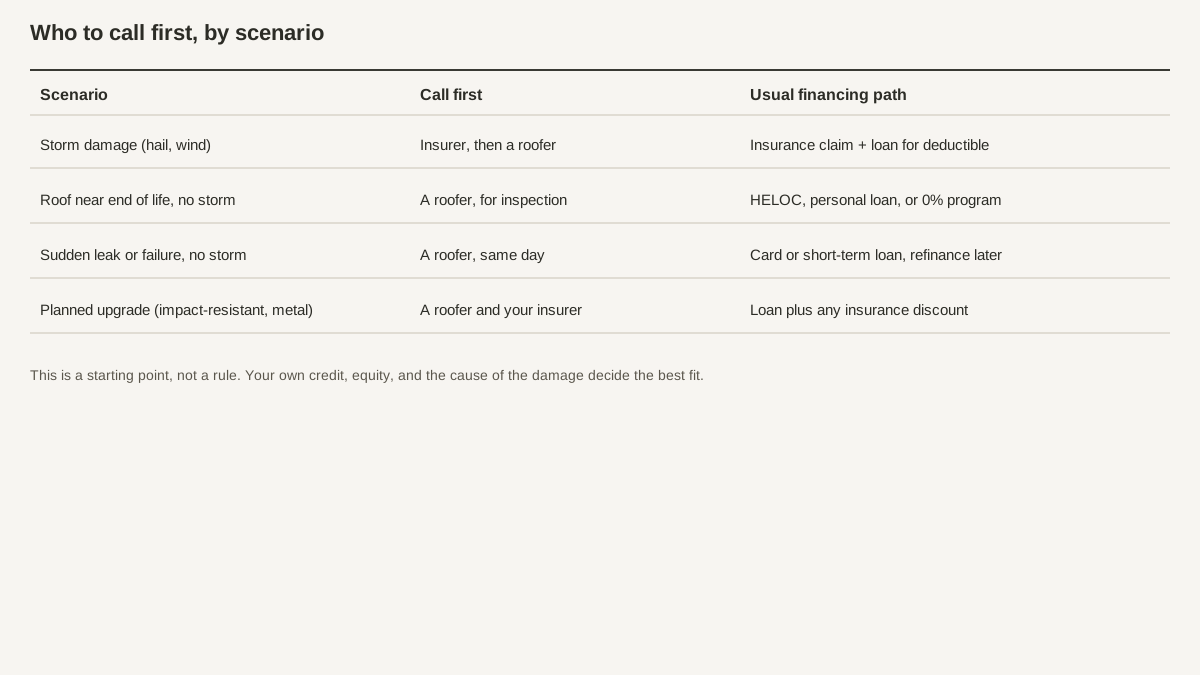
Who to call first, and the usual financing path, by scenario.
Frequently asked questions
What are the best roof financing options?+
The best roof financing options depend on why you need the roof and on your credit. Homeowners with storm damage typically start with a roof replacement insurance claim; homeowners without a claim compare a home equity loan, a personal loan, a manufacturer's 0% dealer program, and roofing company payment plans against each other before choosing. National surveys put a full replacement at $9,607 to $11,500 on average, the number most people end up financing against.
Can you finance a roof with bad credit?+
Yes, though your options narrow. A secured loan, such as a HELOC, generally remains available since the home itself backs the loan, while unsecured personal loans and manufacturer 0% programs typically require a stronger credit profile for the best rates. Some roofing companies offer in-house payment plans with more flexible approval, though those often carry a higher effective rate, so compare the actual terms rather than just the approval odds.
Does insurance cover a roof replacement?+
Sometimes. A standard HO-3 policy typically covers roof damage from a sudden, specific event like hail, wind, or a fallen tree, minus your deductible. It generally excludes damage from age, wear, or a roof that was already failing before the storm. Wind and hail alone made up 40.7% of homeowners insurance losses in 2022, according to the Insurance Information Institute, so storm-related roof claims are common.
How does 0% financing on a new roof actually work?+
Most 0% roofing offers come from a manufacturer's dealer network and run through a third-party lender, giving you a set promotional window, often a year or more, to pay off the balance with no interest. Many of these use a deferred interest structure rather than simple interest, meaning if you miss the payoff deadline, even briefly, interest can be charged retroactively from the original purchase date. Read the agreement's fine print before you count on the full promotional period.
Is a home equity loan a good way to pay for a roof?+
It can be, especially for a larger job, since HELOCs and home equity loans typically carry lower rates than unsecured personal loans because your home secures the debt. The tradeoff is that your house is collateral, so a home equity loan makes more sense if you're confident in your ability to keep up payments than if your income is uncertain.
How much does a new roof cost without financing?+
National 2026 surveys put a full roof replacement average between $9,607 and $11,500, with typical ranges running roughly $5,700 to $16,000 depending on material, size, and roof pitch. Material choice moves the number the most: an asphalt shingle roof commonly runs $6,000 to $14,000, while slate or high-end metal can run well into five figures on the same size house.
What credit score do you need to finance a roof?+
There's no single universal number, since it depends on the lender and the type of financing. Manufacturer 0% promotional programs and the best personal loan rates typically require good to excellent credit, while a HELOC leans more on your home equity and income than your score alone. Roofing company in-house payment plans sometimes approve a wider credit range, though usually at a higher effective cost.
Should I pay cash or finance a new roof?+
Pay cash if doing so doesn't drain your emergency fund down to nothing, since a roof is rarely the only expense that shows up in a given year. If covering the full cost in cash would leave you without a cushion, financing part of the job, through a loan, a manufacturer program, or an insurance claim if a storm caused the damage, is usually the more resilient choice, even if it costs a bit more over time.
Can a roofing company finance the job themselves?+
Many can, either through a true in-house payment plan or, more commonly, a financing partner the company has a relationship with. Ask for the actual rate and terms in writing rather than assuming a monthly payment quote is the whole story, and compare it against at least one outside lender before signing, since an in-house option isn't automatically the cheapest one available.
What happens if I can't pay off a 0% roofing loan in time?+
It depends on whether the plan uses deferred interest or simple interest, and that distinction is worth confirming before you sign. Under a deferred interest plan, missing the payoff deadline can trigger interest charged retroactively from the original purchase date, not just from the missed date forward, which can add up to a meaningfully larger bill than the loan appeared to carry.
Does a new roof increase home value?+
Some, though rarely dollar for dollar. The Zonda / JLC Cost vs. Value 2025 report found an asphalt shingle roof replacement recoups about 68% of its cost at resale, and a metal roof recoups roughly 50%. That makes a new roof a reasonable investment if you're selling soon, but it isn't a project that pays for itself outright the way the marketing sometimes implies.