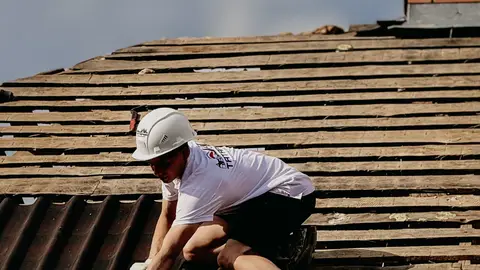
A commercial roofing company repairs and replaces low-slope systems like TPO, EPDM, and modified bitumen, plus metal panel roofs on warehouses. Most of these roofs fail at seams, flashing, and ponding water long before the membrane wears out. A scheduled inspection and a maintenance contract catch those failures early; skip both and a routine warehouse roof repair turns into an unplanned full replacement.
A stain spreading across a warehouse ceiling tile on a Tuesday afternoon does not wait for a slow month. Somewhere above the racking, a membrane seam has opened, a roof drain has clogged, or last month's hailstorm finally worked its way through a puncture nobody walked out to check. Commercial roofing covers a different set of problems than a homeowner's shingle roof: bigger, flatter, harder to inspect from the ground, and tied directly to whatever business operates underneath it.
This guide walks through what a commercial roofing company actually does on a low-slope building, why these roofs fail where they do, what a real inspection and a maintenance contract buy you, and what warehouse roof repair and full replacement tend to cost based on the national cost-survey data behind this page. It also covers the downtime and insurance questions that come up the moment a leak reaches inventory, equipment, or a tenant's lease space, plus how to vet a contractor before signing anything.
None of the pricing here is invented. Every dollar figure traces to a named cost survey or industry report in the sources list at the bottom of this page, and where those surveys don't break out commercial or low-slope numbers specifically, this guide says so plainly instead of guessing.
What Counts as Commercial Roofing
"Commercial roofing" is a catch-all for any roof over a building that isn't a single-family home or duplex: warehouses, distribution centers, retail strip centers, restaurants, schools, churches, offices, and low- to mid-rise apartment buildings. Most of that square footage is low-slope roofing, meaning the pitch is flat enough that water has to be moved off by slope and drains rather than shed by gravity the way a steep asphalt-shingle roof handles it. A big-box store or a 40,000-square-foot warehouse almost always has a low-slope membrane roof; a strip-mall storefront with a mansard facade might mix a membrane field with a small steep-slope accent that's the only part a customer actually sees from the parking lot.
The materials differ from a house roof too. Instead of asphalt shingles, a commercial low-slope roof is usually one continuous membrane, TPO, EPDM, PVC, or built-up and modified bitumen, rolled over rigid insulation and a structural deck, with every seam welded, taped, or torched together. Metal panel systems show up often too, especially on newer warehouses and pole-barn-style industrial buildings, because a standing-seam metal roof sheds water fast even on a shallow slope and holds up under the heat a building's rooftop equipment generates.
The stakes differ from a house as well. A residential reroof means a family reshuffles a week around a crew on the driveway. A commercial roof failure can mean soaked inventory, a shut production line, a tripped fire-suppression head, or a tenant citing a lease clause about habitable space. That combination, bigger roofs, harder access, and real business consequences when they leak, is why commercial roofing has its own rules for inspection, maintenance, and hiring, covered section by section below.
Commercial Roofing Systems Compared
A contractor bidding a commercial job usually picks from a short list of systems, and which one fits depends on the deck, the budget, and how much foot traffic the roof sees from rooftop HVAC service calls. Here's how the common ones stack up on the things that matter once you own the roof, not just on installation day.
System
How seams are joined
Where it's typically used
Known weak point
TPO (thermoplastic polyolefin)
Heat-welded
Warehouses, retail, offices; the most common new low-slope membrane today
A weld that isn't fully fused is the top cause of a later commercial roof leak
EPDM (rubber membrane)
Taped or liquid-adhered seams
Older low-slope roofs; still installed new on some projects
Black surface runs hotter unless coated; seams are the first place to check for a leak
PVC
Heat-welded
Restaurants and buildings with grease or chemical exposure on the roof
Membrane can shrink and pull at edges and penetrations as it ages
Modified bitumen / built-up (BUR)
Torched, hot-mopped, or self-adhered layers
Older buildings; still specified new in some markets
Multiple layers are durable but harder to patch without it showing; see flat roof repair for how these failures get fixed
Failure usually starts at fastener penetrations and panel laps, not the panel field itself
None of these systems is universally "best." A roofer choosing among them for your building weighs the existing deck, whether the roof will see regular foot traffic, local UV and hail exposure, and your budget for the install versus the maintenance it'll need afterward. If a bidder recommends switching systems entirely rather than replacing in kind, ask them to explain what about your specific roof drove that call. Membrane thickness is one spec worth asking about directly: TPO, EPDM, and PVC sheets are commonly sold in 45-, 60-, and 80-mil thicknesses, with 60-mil the one most often specified on a commercial low-slope roof, while standing-seam metal panels typically run 12 to 24 inches wide with concealed clips holding them to the deck, the fastener points the table above flags as the system's weak point.
Why Commercial and Warehouse Roofs Fail, Ranked
Low-slope commercial roofs don't usually fail the way a shingle roof does, with one obvious missing piece. They fail at a short, well-documented list of points, roughly in this order of how often a service call turns up each one:
Ponding water. Water that sits on the membrane for more than 48 hours after rain, the threshold most roofing technical guidance treats as the line between normal drainage lag and a real problem, blocks the surface's UV reflectivity, adds dead weight the deck wasn't necessarily built to carry indefinitely, and accelerates aging right at that spot. It's the single most common finding on a warehouse roof that's overdue for attention.
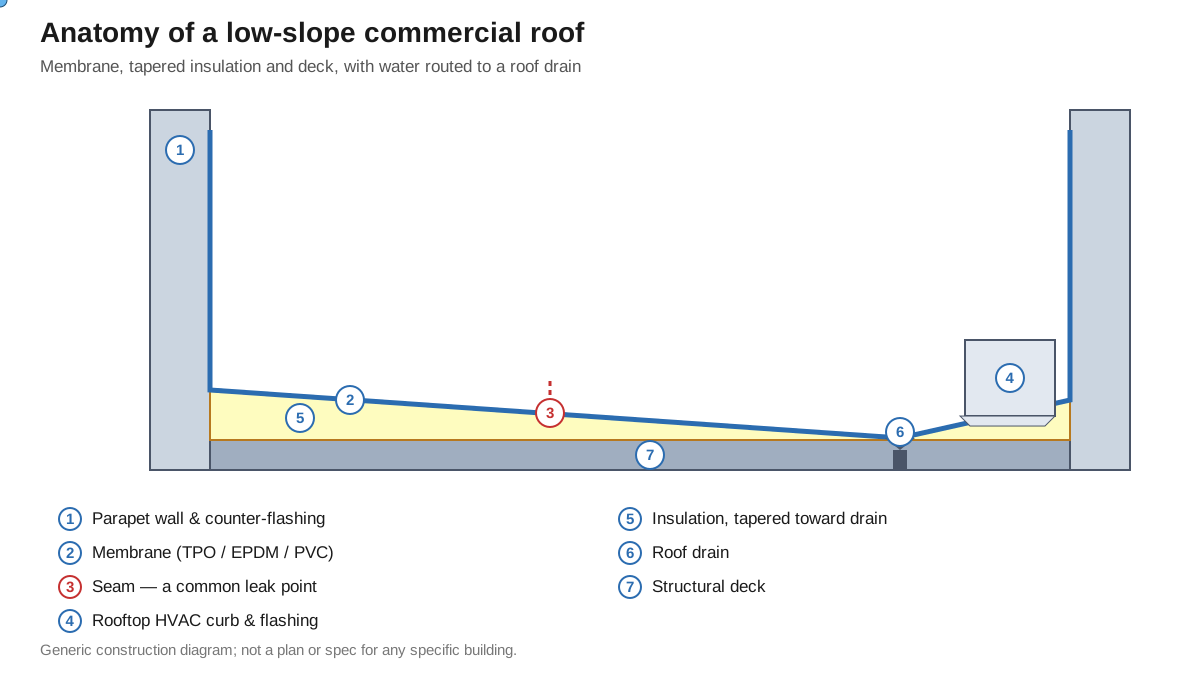
Seam failure. Every membrane roof is really a field of sheets joined at seams, and a seam that was finished off-spec, or one that's simply aged out, is the most common source of a commercial roof leak contractors report on service calls; see finding the source of a roof leak for how a crew traces one back to its origin.
Flashing and penetration failures. Anywhere something pierces the membrane, a vent stack, an HVAC curb, a roof drain, or the wall where the roof meets a parapet, counts as a joint, and joints fail before the flat field membrane does.
Punctures and foot-traffic damage. Dropped tools, foot traffic from HVAC and satellite-dish service calls, and gas or moisture trapped under the sheet (blistering) all create weak points that eventually split open.
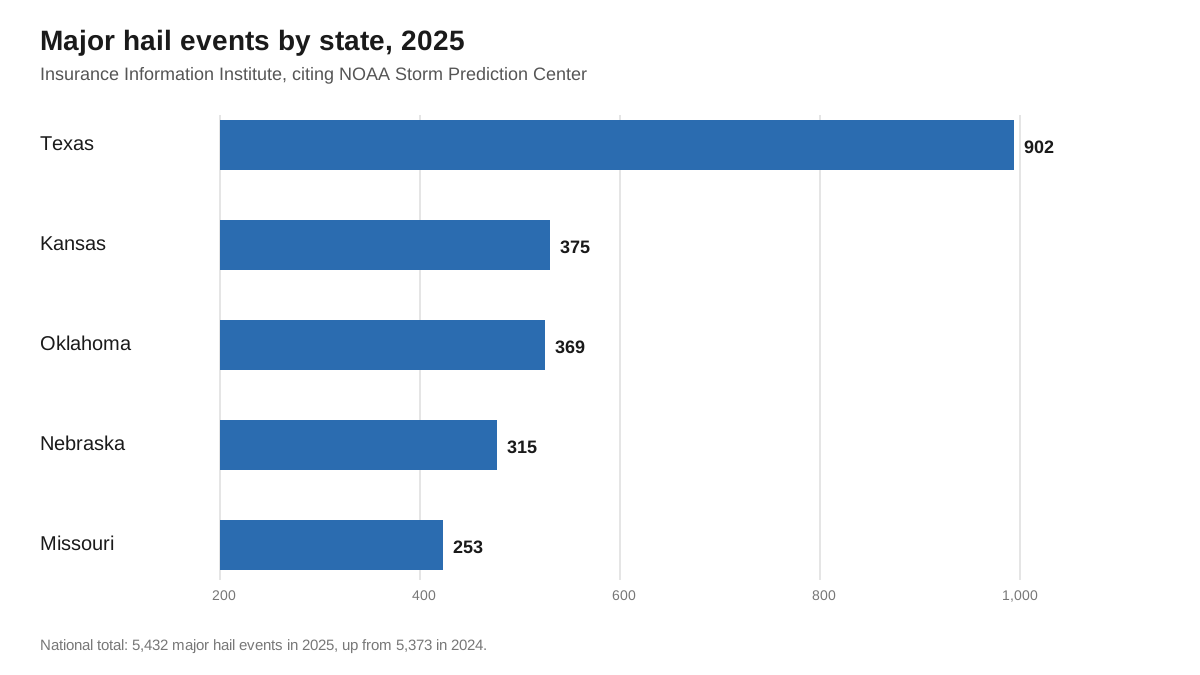
Hail and wind. The Insurance Information Institute counted 5,432 major hail events nationally in 2025, up slightly from 5,373 in 2024, with Texas (902 events), Kansas (375), Oklahoma (369), Nebraska (315), and Missouri (253) taking the most storms; NOAA's Storm Prediction Center defines severe hail as one inch in diameter or larger, and classifies hail of 2 inches or more as “significant severe.” Those same storms bruise and puncture commercial membranes, not just residential shingles.
UV and age degradation. Every membrane has a finite service life, commonly cited across the industry as roughly 20 to 30 years for TPO, EPDM, and PVC and 40 years or more for a well-installed standing-seam metal roof, and sun exposure dries and stiffens the surface year over year. A roof well past its expected life tends to fail in several spots at once instead of one clean location.
Deferred maintenance. A lot of the failures above get caught early, and cheaply, by a routine walk of the roof. Skip that walk for a few seasons and small problems compound into the kind of repair, or replacement, covered later in this guide.
How the layers of a low-slope roof are built to drain toward a roof drain, and where seams and flashing typically fail first.
What a Real Commercial Roof Inspection Covers
Inspecting a commercial roof properly means a systematic walk of the roof, not a quick look from the parking lot. A commercial roof inspection done right follows the same short checklist every time. Most manufacturers tie their system warranties to a documented inspection schedule, and the exact interval varies by product, so check your specific warranty document rather than assuming, but a spring/fall cadence plus a check after any significant storm is common practice among facility managers. Here's roughly what a thorough inspection walks through, in order:
History review. Age, prior repairs, and whether any past work was permitted or documented, before anyone gets on the roof.
Drain and scupper check. Every drain, scupper, and gutter outlet gets cleared and tested, since a blocked drain is what turns ordinary rain into ponding water.
Membrane field walk. The inspector looks for blistering, cracking, shrinkage, and any spot where the surface has been punctured or worn thin.
Seam and flashing probe. Seams, curbs, penetrations, and parapet flashing get checked by hand, since these are where a commercial roof leak usually starts.
Moisture scan, when warranted. On a roof approaching or past its expected service life, an infrared scan or capacitance meter can find wet insulation trapped under an intact-looking membrane, damage you'd never catch by eye alone.
Written report. Photographs and a dated, written report, not just a verbal "looks fine," give you a record for insurance, budgeting, and warranty compliance.
Skip that documentation step and you lose more than peace of mind. A written inspection history is often what an insurer or a manufacturer asks for before honoring a claim or a warranty, and it's the paper trail that shows a roof was maintained, not neglected, if a dispute ever comes up. For more on what a full inspection covers and how often to schedule one, see our roof inspection guide.
Warehouse Roof Repair: What Gets Fixed and Who Should Touch It
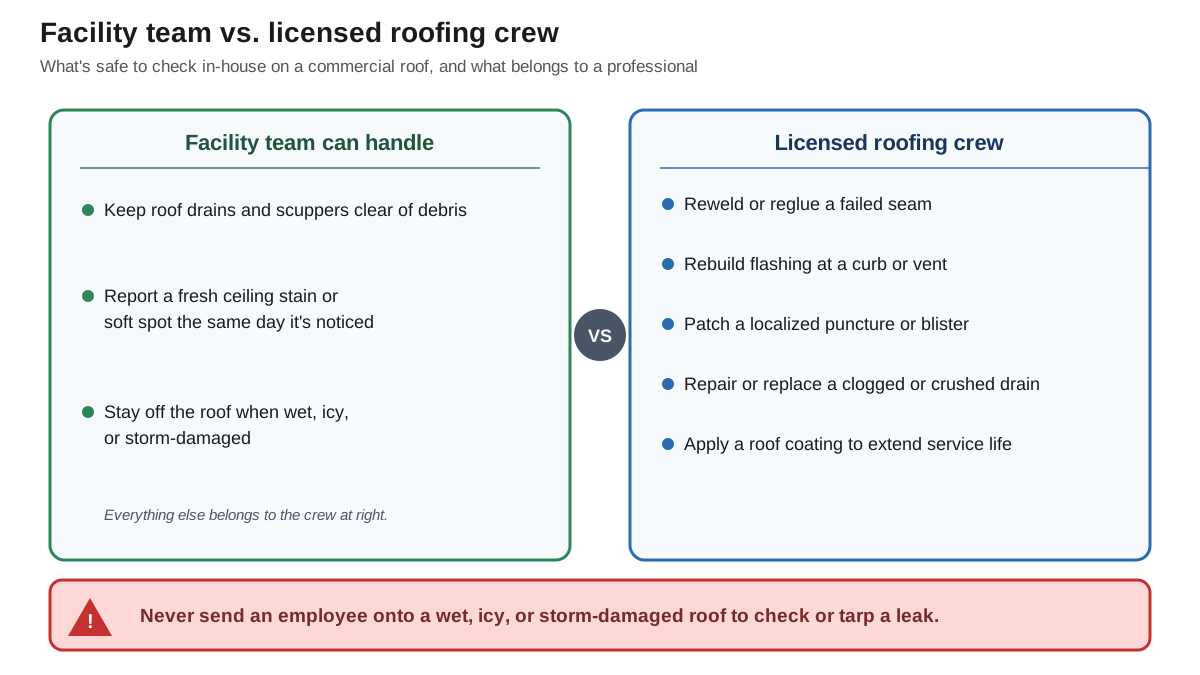
On a residential shingle roof, a handy homeowner can sometimes reseal a nail head or clear a gutter safely from a ladder. On a low-slope commercial roof, that DIY window is much narrower. What a facility team can reasonably handle in-house is housekeeping: keeping drains and scuppers clear of debris, reporting a fresh ceiling stain or a new soft spot the same day it's noticed, and staying off the roof entirely when it's wet, icy, or still under a storm-damage assessment. Never send an employee up onto a wet, ice-covered, or storm-damaged low-slope roof to look at or tarp a leak; that fall risk isn't worth it, and it's the single most preventable serious injury tied to commercial roofing.
Actual warehouse roof repair work belongs to a licensed roofing crew. The common fixes, roughly from smallest to largest: reweld or reglue a failed seam, rebuild flashing at a curb or vent, patch a localized puncture or blister, repair or replace a clogged or crushed drain, and, when the membrane is still structurally sound but worn, apply a roof coating to extend its service life. A crew doing this work correctly tests the repair, documents it with photos, and notes it in the roof's maintenance log so the next inspector, or the manufacturer, has a record.
If a storm just tore loose flashing or opened a seam and water is actively coming in over racking, inventory, or equipment, call 888-679-3798 to reach a roofing contractor that serves your area and describe exactly what's leaking and where. Getting someone qualified assessing the damage quickly matters more here than it does on a house, since a warehouse roof left open even overnight can mean a much larger inventory or equipment loss by morning.
What's safe for facility staff to check versus the repairs that require a licensed commercial roofing crew.
What a Commercial Roof Replacement Actually Involves
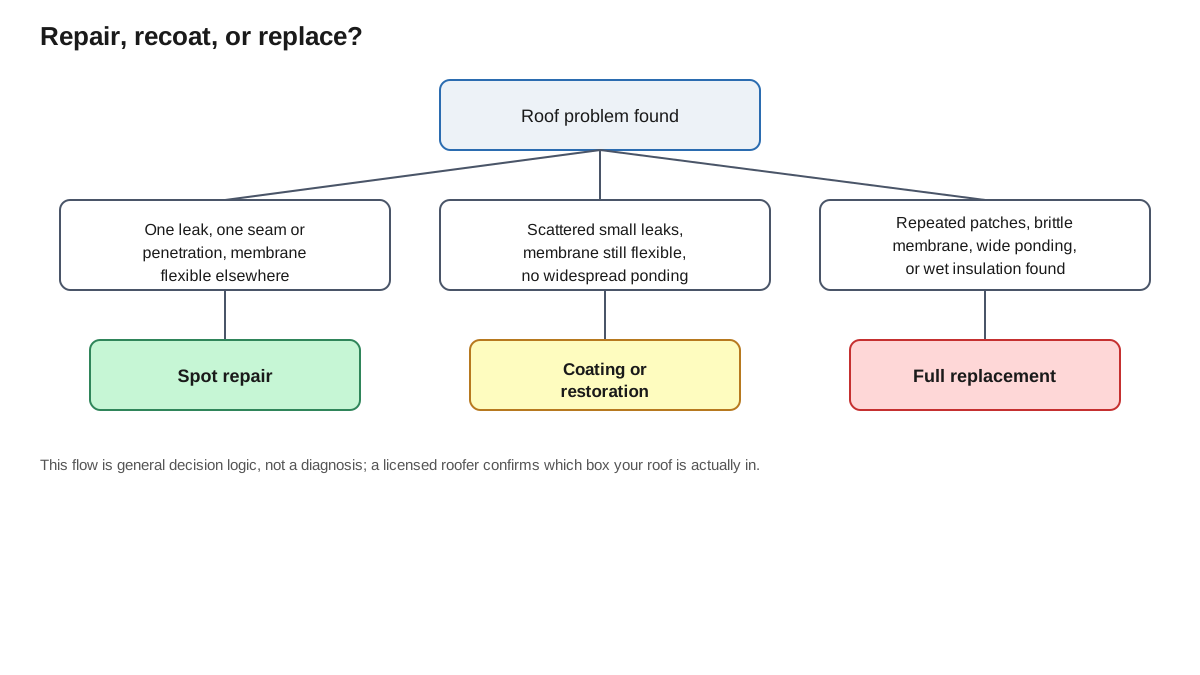
Repair, recoat, or replace: how the underlying roof condition points to each option.
Not every failing roof needs a full replacement, and not every leak needs to be patched forever. The honest answer usually falls into one of a few buckets, and the figure above walks through the decision in order. This table breaks the same logic out in words:
What the roof looks like
What it usually points to
One leak, one seam or penetration, membrane elsewhere still flexible
Spot repair
Several small leaks scattered across the field, membrane still flexible, no widespread ponding
Roof coating or restoration, if the existing membrane is a compatible candidate
Repeated patches in the same spots, membrane brittle or cracking when flexed, or ponding across large areas
Full replacement
Moisture scan finds wet insulation under large areas of the membrane
Full replacement; wet insulation trapped under a membrane rarely dries out on its own
When replacement is the answer, the work generally goes: tear-off of the old roofing down to the deck (or, where code and the existing roof allow it, a recover layer installed over the old membrane instead), deck inspection and repair of any rotten or delaminated sections, new insulation, often tapered to correct old ponding areas rather than reproducing them, and a new membrane or panel system installed with properly finished seams and flashing. Permits, code requirements, and how many roofing layers are already on the building all factor into whether tear-off or recover is even an option.
On an occupied building, timing and staging matter as much as the roofing work itself. A contractor doing this right phases the job section by section, protects inventory and equipment below the open area, and gives you a written schedule for how the building stays weathertight if the job runs more than a single day, rather than leaving a wide section of deck exposed overnight and hoping for good weather.
What Commercial Roofing Actually Costs
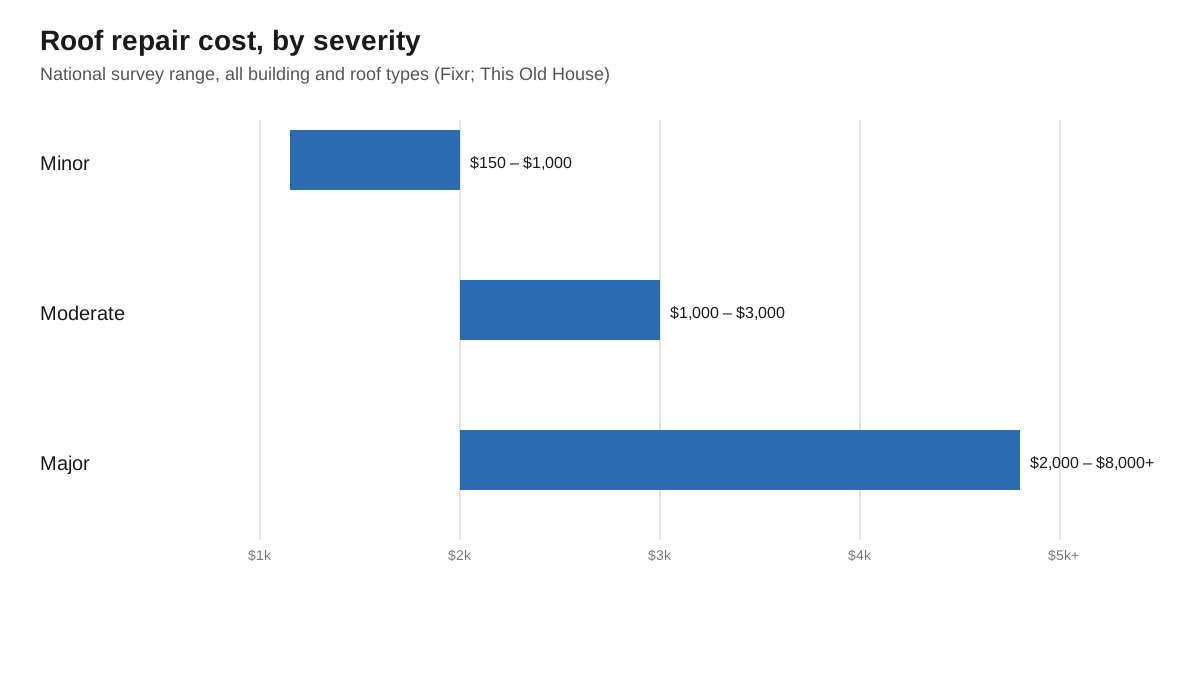
National roof repair cost bands (all building types), Fixr and This Old House.
Here's where this guide has to be direct about a gap: the national cost surveys behind this page track homeowner-reported jobs, overwhelmingly steep-slope residential roofs, not commercial or warehouse membrane work specifically. That doesn't make the numbers useless; it means treat them as an order-of-magnitude reference for materials and labor, not a commercial quote.
Job type
Typical range
What moves the price
Source
Roof inspection / condition report
$100 – $600 per visit
Roof size, whether a moisture scan is included, access
This Old House
Minor repair (single small leak or patch)
$150 – $1,000
Size of the damaged area, membrane type, number of spots
Fixr
Moderate repair (seam run, flashing rebuild)
$1,000 – $3,000
Linear footage of seam or flashing, deck condition underneath
Fixr; This Old House ($1,001–$2,000)
Major repair (storm damage, multiple failure points)
$2,000 – $8,000+
How much of the roof is affected, whether insulation and decking need replacing
Fixr; This Old House
Full replacement, material order of magnitude
Asphalt-comparable materials $3–$7/sq ft; metal $7–$16/sq ft; premium membranes and tile/slate-class materials $10–$30/sq ft
System type, deck condition, tear-off vs. recover, roof size and equipment access
HomeAdvisor; HomeGuide
How we got these numbers: the repair figures come from Fixr's and This Old House's national roof-repair surveys, and the per-square-foot material figures come from HomeAdvisor's and HomeGuide's roof-replacement surveys, both blends of steep- and low-slope residential jobs. Neither source publishes a commercial-only or warehouse-only breakout, so a commercial roof replacement cost for your specific building, at your specific square footage, comes down to a written, on-site bid, not a table like this one. Use these ranges to sanity-check a quote, not to replace one.
Maintenance Contracts: What They Actually Buy You
Sign a commercial roof maintenance contract and you get a standing agreement with a roofing company to inspect and service the roof on a set schedule, instead of waiting for a leak to force the call. Most contracts bundle a handful of things: two scheduled inspections a year (commonly spring and fall), debris and drain clearing at each visit, a minor-repair allowance covered under the contract rather than billed separately, and a written report after every visit that goes into the roof's permanent maintenance log.
That log matters for two reasons beyond catching problems early. Many manufacturer warranties, including the certified-contractor programs described later in this guide, require documented, regular maintenance to stay valid; a warranty can be denied on a claim if there's no record the roof was ever maintained, regardless of how the damage happened. Insurers reviewing a claim often ask the same question. Second, a maintenance contract turns an unpredictable expense, an emergency warehouse roof repair at whatever rate is available on a Sunday, into a budgeted, predictable line item.
Before signing one, get clear, written answers to what counts as "minor" under the repair allowance, whether emergency after-hours calls are included or billed separately, and what happens to the contract if the building changes ownership or the roof is replaced partway through the term. A vague contract that just says "periodic maintenance" without specifics is worth less than the paper it's printed on if a dispute comes up later.
Downtime, Business Interruption and What a Leak Actually Costs You
The roofing bill is rarely the biggest number in a commercial roof failure. Water reaching pallets of inventory, electronics, paper records, or manufacturing equipment can cost far more than the repair that would have prevented it, and it happens fast: a soaked ceiling tile today can mean a spreading stain, and standing water on flooring or product, by the next morning. Standing water and wet materials that aren't dried out promptly also create conditions for mold growth, which the EPA notes can begin within 24 to 48 hours on a damp surface.
Property insurance and business interruption coverage are usually separate line items, not automatically bundled, and it's worth confirming with your broker exactly what your policy covers before you need it: lost income while the building is unusable, extra expense to operate from a temporary location, and whether roof-related water damage to stock and equipment falls under your property policy, a separate inland marine or equipment policy, or isn't covered at all.
Physical safety is part of this risk picture too. A large, flat commercial roof brings fall hazards, unguarded edges, skylights that can fail under a worker's weight, and rooftop equipment with its own electrical and mechanical hazards, that a residential roof simply doesn't have. That's a core reason commercial roof access is a job for an insured, trained crew rather than facility staff improvising a look after a storm.
How to Choose a Commercial Roofing Company
A commercial roofing company worth hiring should hand over three things before you sign anything: proof of an active state contractor license, a certificate of insurance naming your business as an additional insured (both general liability and workers' compensation), and a written estimate that spells out the system and manufacturer, the scope of tear-off versus recover, warranty terms in writing, cleanup responsibilities, and a payment schedule. A verbal promise about any of those is worth nothing once the job is underway.
Manufacturer and industry certifications are a useful second filter, since they tie the contractor to a specific level of training and, often, to a stronger warranty:
Certification
Issued by
What it verifies
PROCertification / CERTA torch safety training
NRCA (National Roofing Contractors Association)
Individual crew-member skill and safety training tied to a specific roofing system or hot-work method
Master Elite, Certified, and Certified Plus tiers
GAF
Contractor has met GAF's installation, licensing, and insurance standards at increasing tiers, tied to GAF's own warranty programs
Preferred and Platinum Preferred Contractor
Owens Corning
Contractor is enrolled in Owens Corning's contractor network, tied to Owens Corning's own warranty programs
Watch for a short list of red flags: a crew that showed up unsolicited after a storm with out-of-state plates and no local address, pressure to sign and pay in full before any work starts, a bid with no manufacturer or product named, and reluctance to put a warranty term in writing. If you'd rather start with a name you can verify than a stranger who knocked on the loading-dock door, call 888-679-3798 to reach a roofing contractor that serves your area and can walk you through licensing, insurance, and a written estimate before anyone gets on your roof. Our broader how to choose a roofing contractor guide covers contract red flags and questions to ask in more depth.
Warranties, Financing and Tax Questions
Commercial roof warranties come in two basic flavors, and the difference matters more than most building owners realize until a claim comes up. A material-only warranty covers defects in the membrane or panels themselves, not installation error. A system or NDL (no dollar limit) warranty, typically only available through a manufacturer's certified-contractor program like the tiers listed above, covers the installed system as a whole for a set term, commonly written for 10, 15, 20, or 25 years, and is generally the stronger protection, but it usually requires the documented maintenance history covered earlier in this guide to stay in force. Get the exact warranty document, not a sales sheet, before you sign a contract.
Financing is common on larger commercial roofing jobs. Many contractors either offer in-house payment plans or work with a third-party lender, and some manufacturer contractor networks include financing as a program benefit. Terms, rates, and what happens if the roof needs warranty work mid-loan vary a lot by lender, so compare a financed replacement against paying from an insurance claim, a capital reserve fund, or a maintenance budget before committing, and read the full payment schedule before signing.
Whether a repair or replacement is immediately tax-deductible as a repair expense or has to be capitalized and depreciated as a capital improvement is a real question with a real answer for your business, but it's an IRS and accounting question, not a roofing one. This guide can't tell you which treatment applies to your specific job; a CPA or tax professional familiar with your business structure can.
Regional Notes: Hail Alley, Wind Zones and the Sun Belt
Major hail events by state, 2025 (Insurance Information Institute, citing NOAA SPC).
Where a building sits changes which failure cause on the ranked list above shows up first. The Insurance Information Institute's count of 5,432 major hail events nationally in 2025 wasn't spread evenly: Texas alone saw 902, followed by Kansas (375), Oklahoma (369), Nebraska (315), and Missouri (253), the core of what's informally called hail alley. Across all U.S. homeowners losses from 2018 to 2022, wind and hail combined made up 40.7% of claims dollars, with an average claim frequency of 2.82 per 100 house-years and an average severity of $13,511, figures drawn from residential policies, but the same storm systems that generate those claims move across commercial rooftops in the same states.
A warehouse or distribution center in that hail belt benefits from a membrane and, where budget allows, an impact-rated cover board, rated Class 4 under UL 2218 (the standard's highest impact-resistance classification), chosen with hail exposure in mind, plus a post-storm inspection built into the maintenance contract rather than left to chance; our hail damage roof repair guide covers how to spot storm damage and file the claim. Coastal and Gulf-facing buildings face a different profile: high sustained wind uplift at parapets and roof edges, where flashing and membrane attachment get tested hardest during a named storm; roofs in these zones are commonly specified to an FM Global wind-uplift rating such as FM 1-90, denoting resistance to at least 90 pounds per square foot of uplift pressure.
Farther south and in high-desert climates, intense year-round UV exposure ages a membrane's surface faster than the same product would age in a cloudier, cooler region, which is one more reason a coating or a reflective membrane color can pay for itself over the roof's life in those markets. In freeze-thaw regions, the risk shifts to drains and scuppers: ice damming at a clogged or slow drain in shoulder-season freezes can back water up under flashing in a way that doesn't show up until the next thaw. None of this changes what a roof needs structurally, but it does change how often it's worth walking, and what a contractor should be checking for first when they do.
Frequently asked questions
What is commercial roofing?+
Commercial roofing is roofing work on any building that isn't a single-family or duplex home, warehouses, retail stores, offices, schools, and apartment buildings among them. Most of it is low-slope membrane roofing (TPO, EPDM, PVC, or modified bitumen) rather than the asphalt shingles used on most houses, though metal panel roofs are common on newer warehouses and industrial buildings too.
How much does a commercial roof cost?+
There's no single national figure specific to commercial and warehouse roofs in the surveys behind this guide; the residential surveys they do track put full roof replacement material costs at roughly $3 to $30 per square foot depending on the system, with metal and premium membranes well above asphalt-comparable pricing. Roof size, deck condition, and equipment access move a commercial job's price more than the base material does, so a written, on-site bid is the only reliable number for your building.
How long does a commercial roof last?+
Service life varies by membrane type, installation quality, and how well it's maintained, and the data behind this guide doesn't include a verified national lifespan figure by system, but the range commonly cited across the roofing industry is roughly 20 to 30 years for TPO, EPDM, and PVC membranes and 40 years or more for a well-installed standing-seam metal roof. Ask each contractor for their specific product's manufacturer warranty length in writing rather than relying on a rule of thumb; that warranty term is the most reliable service-life estimate you'll get for your exact roof.
How long does a commercial roof replacement take?+
Timeline depends heavily on roof size, weather windows, and whether the old roofing has to be fully torn off or can be recovered, and the sources behind this guide don't include a verified national average for commercial jobs specifically. A contractor doing the on-site measurement should give you a written schedule, including how the building stays weathertight if the job runs more than a single day.
How long are commercial roof warranties good for?+
Warranty length depends on the manufacturer, the specific product line, and on whether the roof is covered by a material-only warranty or a full system warranty backed by a certified-contractor program like GAF's or Owens Corning's tiers. Ask for the warranty document itself, not a sales sheet, before signing anything, since a verbal promise about warranty length isn't enforceable if a claim comes up later.
How much should a commercial roof repair cost?+
National repair-cost surveys, not commercial-specific, put minor repairs around $150 to $1,000, moderate repairs at roughly $1,000 to $3,000, and major repairs, the kind involving storm damage or several failure points, from about $2,000 up to $8,000 or more. Where a repair lands in that range depends mostly on how much of the roof is affected and whether the deck or insulation underneath is damaged too.
Does roof coating or restoration actually work?+
A roof coating can extend the life of a membrane that's still structurally sound but showing UV wear or a few scattered leaks, essentially resealing and reflecting rather than replacing. It isn't a fix for a roof with widespread ponding, brittle or cracking membrane, or wet insulation underneath; a contractor should confirm with a moisture scan that the deck is dry before recommending a coating over a full tear-off.
Are commercial roof repairs tax deductible?+
Whether a roof repair is immediately deductible as a business expense or has to be capitalized and depreciated over time depends on IRS rules about repairs versus improvements, and that determination is specific to your business and building. This guide isn't tax advice; a CPA or tax professional can tell you how a specific repair or replacement should be treated on your return.
Do roofing companies offer financing?+
Many commercial roofing contractors offer financing options or work with third-party lenders, particularly for full replacements, and some manufacturer contractor programs include financing as a member benefit. Terms vary widely by lender and contractor, so compare financing against paying from an insurance claim or a reserve fund before signing, and get the full payment schedule in writing first.
How long does a temporary roof patch or tarp last?+
A temporary patch or tarp is meant to stop active leaking until a permanent repair can be scheduled, not to last through a full season, and it should be inspected again after any additional wind or rain event. Treat it as a stopgap measured in days to a few weeks, not a substitute for the permanent fix.