Trane AC repair, Carrier AC repair, Lennox furnace repair, and Goodman furnace repair cost about the same once a technician names the failed part: a capacitor runs $100-$400, a compressor or heat exchanger up to $3,000. What changes by brand is the warranty paperwork and dealer network, not the bill. Register the unit and get a written, itemized estimate before approving repair work.
Type trane ac repair or goodman furnace repair into a search bar and the results are dealer locators, brand-run "find a contractor" tools, and rating sites that never explain how they scored anything. None of that tells you what happens once a technician is standing at your outdoor unit or kneeling in front of your furnace with the blower door off. Here is the honest version: the part that failed sets the price and the fix, almost regardless of whether the cabinet says Trane, Carrier, Lennox, or Goodman. A capacitor is a capacitor. A cracked heat exchanger is a cracked heat exchanger. What changes by brand is the paperwork: how the warranty is structured, whether your area has more than one authorized dealer, and how fast a specific part shows up.
This guide walks through what trane ac repair, carrier ac repair, lennox furnace repair, and goodman furnace repair each tend to involve, what the repairs cost using national cost-survey data, how warranty and insurance claims work, and the certifications that matter far more than the logo when you are picking who does the work.
How Much the Brand Changes an HVAC Repair
No dataset a publisher can verify tracks hvac brand reliability the way a vehicle recall database tracks defects by model year. The star ratings on retail and review sites mix marketing spend, dealer count, and how annoyed a handful of reviewers happened to be on a given afternoon, not a controlled measurement of failure rates across millions of installed units. So this page will not tell you Trane beats Carrier or Goodman beats Lennox. What it can tell you, reliably, is what each brand's repairs tend to cost, what owners type into a search bar after something breaks, and which certifications separate a technician who can service any of these systems correctly from one who is guessing.
Which HVAC Brand Is Best?
There is no honest single answer to which hvac brand is best, because "best" depends on what you are optimizing for. Trane and Carrier are the two most recognized names at the premium end of residential HVAC, and both sell through networks of independently owned, factory-authorized dealers rather than company-run service centers, so pricing and parts availability vary by which dealer covers your zip code. Lennox runs a similar independent-dealer structure. Goodman, along with its sister brand Amana, is built by Daikin and is generally positioned as the budget tier within that manufacturer family.
That positioning shows up in how people search for help. In the keyword data behind this page, lennox furnace repair and goodman furnace repair each draw roughly 18,100 searches a month nationally, while trane ac repair draws about 5,400 and carrier ac repair about 3,600. That is a demand signal, not a reliability one, but it is real: furnace-repair searches for these two brands run far ahead of the AC-repair searches for the other two.
Trane AC Repair: Common Failures, the Reset Question, and What It Costs
Search trane ac repair and the autocomplete fills in with trane ac problems, trane ac not working, and trane ac replacement cost, which is a fairly typical spread for any central AC brand: people either want to know why it stopped, or what it costs to make the problem go away for good.
Is There a Reset Button on a Trane AC Unit?
Most residential split-system condensers, Trane included, do not have a single labeled "reset" button the way a garbage disposal does. What functions as a reset is cutting power at the outdoor disconnect (the pull-out block or breaker switch mounted next to the unit) for 30 to 60 seconds, then restoring it, which clears a lot of minor control-board hiccups the same way unplugging a router does. If the compressor still will not run after that, or if it hums and clicks without starting, the next likely cause is a failed capacitor or a tripped high-pressure or low-pressure safety switch, and neither of those is something to force past by cycling power repeatedly.
Common Trane AC Problems and What They Cost
The failures that show up most in common trane ac problems searches track the same pattern as central AC in general: a weak or dead capacitor first, a dirty condenser coil or clogged filter second, a refrigerant leak third, and a failed compressor as the expensive outlier. None of those costs are brand-specific in the survey data available; a capacitor runs $100 to $400 and a compressor runs $600 to $3,000 whether the badge says Trane or anything else, according to Fixr's national repair-cost survey. The physical part still has to match the system: residential run capacitors are commonly rated 370 volts or 440 volts, and the wrong microfarad or voltage rating simply will not run the motor even if it fits in the mounting bracket. What can shift with Trane specifically is parts sourcing, since some components on higher-end variable-speed Trane systems are proprietary to the brand's authorized-dealer supply chain rather than generic stock a independent shop keeps on the truck.
Carrier AC Repair: Warranty Claims, Common Failures, and What It Costs
Carrier ac repair searches lean heavily toward customer-service and warranty questions rather than symptom troubleshooting, which lines up with the autocomplete pattern behind this page: carrier ac warranty, how to claim carrier ac warranty, and carrier ac repair charges all outrank pure "why won't it turn on" phrasing. That is worth noting on its own, because it suggests a fair number of Carrier owners already suspect the unit is still under some kind of coverage and want to know how to use it before they pay out of pocket.
What Is Carrier AC Warranty Coverage?
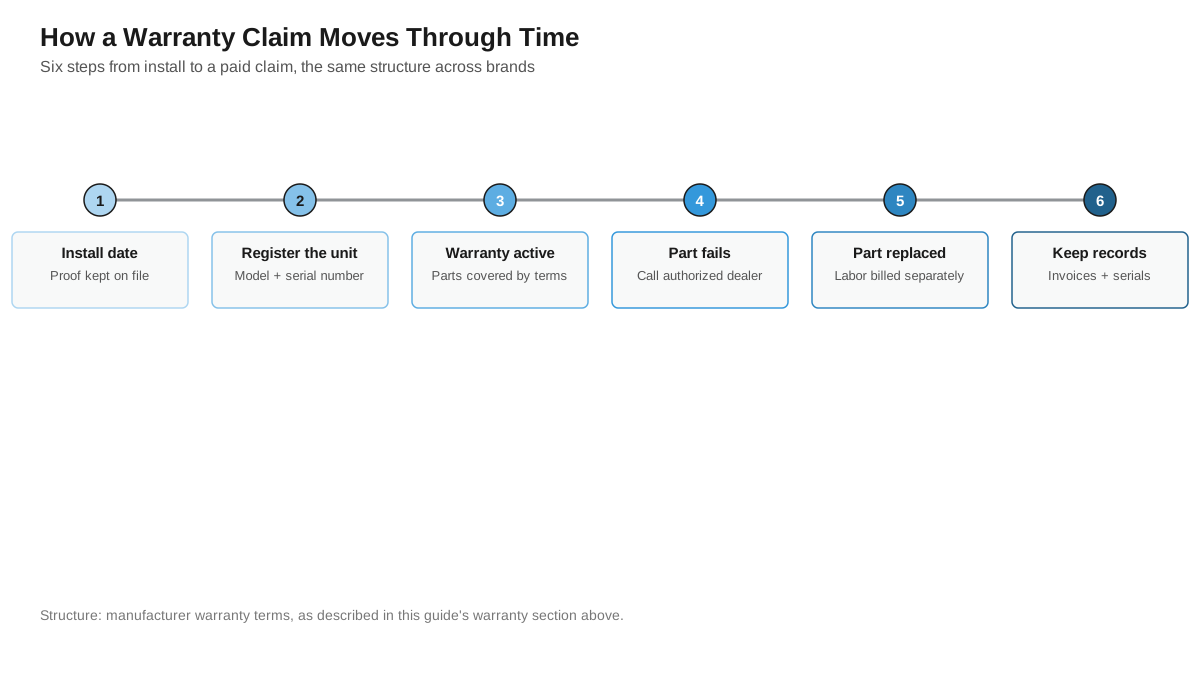
Manufacturer warranties, Carrier's included, generally follow the same two-tier structure across the industry: a shorter base parts warranty that applies automatically from the install date, and a longer registered warranty that only kicks in if the homeowner (or the installing dealer, on their behalf) registers the unit within a set window after installation. Registration typically requires the model and serial number and proof of install date. The manufacturer warranty almost always covers parts only, not the labor to diagnose and swap them, which is why a "free" warranty repair can still carry a real bill from the technician's time.
Common Carrier AC Failures
Mechanically, Carrier systems fail the same way any central AC does: capacitors first, then airflow restriction (dirty filters or coils), then refrigerant leaks, then blower motors and compressors. Fixr's national data puts a thermostat repair or replacement at $150 to $500 and a blower motor at $300 to $2,000, both figures that apply regardless of the brand of the outdoor unit they are paired with, since thermostats and indoor blower assemblies are frequently interchangeable across brands within the same duct system.
Lennox Furnace Repair: Reset Steps, Cover Panels, and What It Costs
Lennox furnace repair is one of the highest-volume repair searches in this entire dataset, at roughly 18,100 monthly searches nationally, and the autocomplete leans toward two very different reader intents: how long does a lennox furnace last and how much does a lennox furnace cost (people evaluating an aging unit), and how to reset a lennox furnace and how to remove lennox furnace cover (people mid-breakdown, trying to get heat back before calling anyone).
How to Reset a Lennox Furnace
Like most modern gas furnaces, Lennox units lock out after a set number of failed ignition attempts, usually as a safety measure so the system stops trying to relight and potentially venting unburned gas. The fix that works most often is the same power-cycle approach as an AC unit: switch off power at the furnace's dedicated switch (often a light-switch-style toggle near the unit, sometimes at the breaker panel) for about a minute, then turn it back on and let the furnace run its normal ignition sequence once. If it locks out again on the next cycle, that is a real fault, not a fluke, and it is time to stop retrying and call someone.
Removing the Furnace Cover Panel
The blower access door on most residential furnaces, Lennox included, is wired to a safety interlock switch, so pulling it (usually with a couple of retaining screws or spring clips) cuts power to the blower and control board automatically. Homeowners can generally, safely, open this panel to check or swap an air filter and to look at the LED status light near the control board. What is behind the sealed burner compartment and the heat exchanger itself is not: that section handles combustion gas and is not a do-it-yourself area.
What Lennox Furnace Repair Costs
Furnace repair nationally runs $133 to $505 on average per HomeAdvisor, with Fixr's separate survey putting the typical range at $349 to $650. The individual parts inside that range do not vary by brand in the available cost data: an ignitor runs roughly $100 to $250, a flame sensor $150 to $250, and a full heat exchanger replacement $1,000 to $3,000, which is high enough that it usually triggers a real conversation about replacing the whole furnace instead.
Goodman Furnace Repair: The Reliability Question, Cleaning, and What It Costs
Goodman furnace repair ties Lennox for the highest search volume in this data pack, at roughly 18,100 monthly searches, and the questions behind it are almost entirely about trust: are goodman furnaces reliable, is goodman a reliable furnace, and does goodman make a good furnace all appear as distinct autocomplete phrases, which suggests a lot of buyers land on a Goodman unit because it was the price the installer quoted, then go looking afterward to see if they should be worried.
Are Goodman Furnaces Reliable?
As with the Trane-versus-Carrier question above, there is no independently audited failure-rate dataset behind the "is Goodman reliable" question that this guide can point to honestly. What is verifiable is that Goodman is manufactured by Daikin, one of the largest HVAC manufacturers in the world, and is positioned and priced as the value tier rather than the premium tier, which affects features more directly than it affects whether a given unit breaks.
How to Reset and Clean a Goodman Furnace
The reset procedure matches other gas furnaces: cut power for roughly a minute at the switch or breaker, then restore it and let the ignition sequence run once through. For cleaning, the homeowner-safe scope is the same as any furnace: replace or wash the air filter on the schedule printed on the filter frame, and vacuum visible dust from the return-air grille and the accessible blower compartment once the cover is off and power is cut at the switch. Do not open the sealed burner or heat-exchanger compartment, and never attempt to service the gas line or handle refrigerant yourself; refrigerant work without an EPA Section 608 certification is a federal violation, and any furnace repeatedly failing to ignite, or a natural-gas smell anywhere near it, means shutting off the gas at the valve and getting everyone out of the house before doing anything else.
What Goodman Furnace Repair Costs
The same national repair-cost ranges apply here as with the other three brands: HomeGuide's survey puts furnace service at an average of $268, with an ignitor around $100 to $250 and a control board $200 to $600. Hvac parts availability is the one place brand genuinely matters day to day, and it is worth asking a contractor directly, rather than assuming: because Goodman shares a smaller parts catalog across more model years within the Daikin family, some independent shops keep common Goodman parts in truck stock, which can shorten a repair from a multi-day wait to a same-visit fix.
What You Can Safely Check Before You Call Anyone
Before any technician shows up, brand or no brand, there is a short list of checks that cost nothing and rule out the most common false alarms. Work through them in order.
Check the thermostat first. Dead batteries, a tripped breaker feeding the thermostat, or a smart thermostat that lost its connection to the system can look exactly like a dead furnace or AC unit even though every mechanical part is fine.
Check the breaker panel and any dedicated disconnect switch. A tripped breaker or a furnace power toggle left off, sometimes bumped during other work, accounts for a real share of "it just stopped" calls.
Check the air filter. A filter clogged enough to choke airflow can trigger a furnace's safety lockout or make an AC coil freeze over, and it is the cheapest possible fix if that is all it is. A standard 1-inch pleated filter is usually rated on the MERV scale, which runs from 1 to 16, and needs checking every 1 to 3 months; a thicker 4- or 5-inch media filter, where the cabinet has room for one, can often go 6 to 12 months between changes instead.
Power-cycle the unit once. Cut power for about a minute at the disconnect or switch, then restore it and let the system run one full cycle before deciding it needs a technician.
Look for a flashing LED or lockout code on the control board. Most modern furnace and some AC control boards flash a code when they fault, usually keyed to a sticker inside the access panel; matching it before you call narrows down what the technician needs to bring.
Check the outdoor unit for obvious blockage. Grass clippings, an overgrown fence line, or a season's worth of debris packed into the condenser fins restricts airflow enough to mimic a bigger failure.
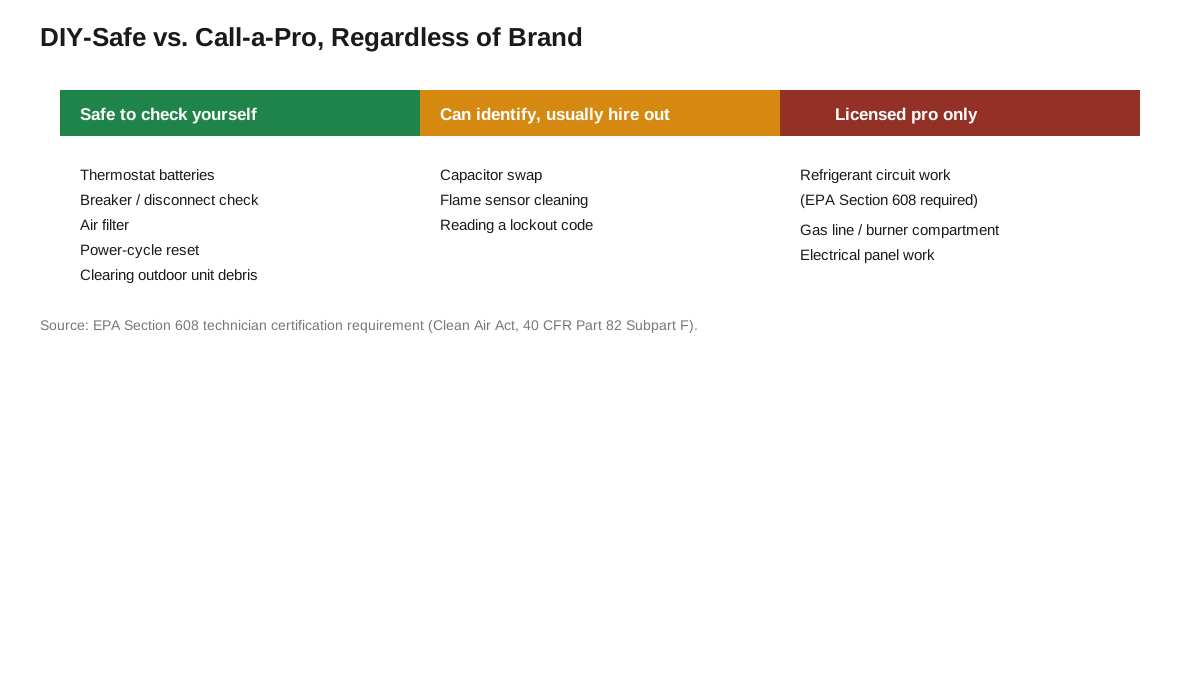
Where a repair sits on the DIY-to-professional spectrum, regardless of brand.
If none of that resolves it, you now have useful information to hand the technician on the phone, which tends to shorten the visit and, sometimes, the bill. What you should not do, regardless of brand: open the sealed refrigerant circuit, work on gas piping, or keep forcing repeated restarts on a furnace that keeps locking out, since a repeated ignition failure is often the control board correctly refusing to let gas keep venting unburned. If a symptom sounds more urgent than a slow weekday repair, our guide to what actually can't wait until morning walks through the difference.
National fire data covering home heating equipment broadly puts the annual average at 44,210 home structure fires, 480 civilian deaths, and more than a billion dollars in direct property damage, according to the National Fire Protection Association. Space heaters cause a disproportionate share of the deaths within that category, but the lesson applies to central furnaces too: any unit that smells like gas, trips a carbon monoxide alarm, or short-cycles repeatedly is a call-now situation, not a weekend project.
What Brand-Name HVAC Repair Costs
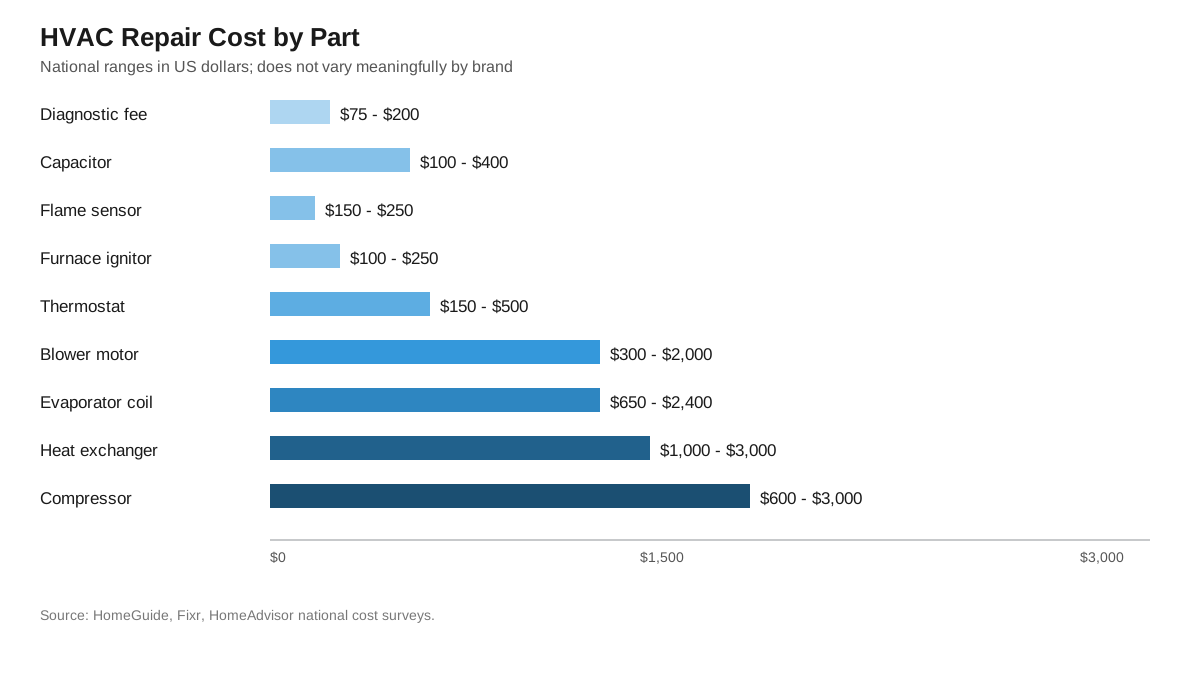
The table below uses national cost-survey figures from HomeGuide, Fixr, and HomeAdvisor. None of these three surveys breaks results out by manufacturer, and none claims to; the price is driven by the part and the labor, not the badge on the cabinet, which is the whole point of showing it this way instead of pretending brand-specific numbers exist when they do not.
Repair
Typical cost range
What moves the price
Source
Diagnostic / service call
$75 – $200
Often applied toward the repair if you approve it on the spot
HomeGuide
Capacitor
$100 – $400
Cheapest common repair; wears out from routine heat cycling
Fixr
Thermostat
$150 – $500
Smart-thermostat compatibility issues on older systems
Fixr
Furnace ignitor
$100 – $250
One of the most common furnace-only repairs
HomeGuide
Flame sensor
$150 – $250
Fouling from normal combustion buildup over seasons
HomeAdvisor
Blower motor
$300 – $2,000
Motor type (PSC vs. variable-speed) and accessibility
Fixr
Evaporator coil
$650 – $2,400
Refrigerant type and how buried the coil is in the plenum
HomeGuide
Furnace heat exchanger
$1,000 – $3,000
Age of unit and parts availability; often a replace-instead point
HomeGuide
AC compressor
$600 – $3,000
Widest range of any single part; often the replace-instead point
Fixr
Three of those rows sit close to what a full system costs. When a repair estimate lands in that overlap zone, price full replacement before you approve anything.
Failed component
Repair cost
Full replacement cost
Source
AC compressor
$600 – $3,000
$2,500 – $7,500 (full AC unit)
Fixr / HomeGuide
Furnace heat exchanger
$1,000 – $3,000
$2,000 – $5,400 (full furnace)
HomeGuide
Evaporator coil
$650 – $2,400
$2,500 – $7,500 (full AC unit)
HomeGuide
National repair cost ranges by part, based on HomeGuide, Fixr, and HomeAdvisor cost surveys. These ranges do not vary meaningfully by brand.
There is no dataset in this pack for what these repairs cost specifically for a Trane, Carrier, Lennox, or Goodman unit as opposed to any other brand, and any page that claims otherwise is guessing. Ask any contractor for a written, itemized estimate that names the part, not just a bundled number. For a deeper breakdown of AC-side pricing specifically, see our full AC repair cost guide; for furnace-side symptoms, see diagnosing the most common furnace failures.
How HVAC Warranty Repair Claims Work
Hvac warranty repair is its own small maze, and it works roughly the same way across Trane, Carrier, Lennox, and Goodman, because the underlying structure is an industry norm rather than a brand-specific policy.
Parts vs. Labor
Manufacturer warranties almost always cover the part, not the labor to remove the old one and install the new one. That distinction is easy to miss until the bill arrives: "your compressor is covered" and "your compressor replacement is free" are two different sentences. Some installing dealers separately offer a labor warranty, but that is a dealer-level promise, not a manufacturer one, so ask about it specifically and get it in writing.
Registration and Who Can Do the Work
The longer, registered version of a manufacturer warranty typically requires registering the unit within a set window of the install date, with the model and serial number and proof of install, and often requires the installing contractor to be an authorized dealer for that brand. A repair done by an unauthorized shop can, depending on the manufacturer's terms, void remaining coverage on that component, which is a real cost to weigh against a lower quote from a shop that is not on the authorized list.
What to Keep
Keep the original install paperwork, the model and serial numbers (usually on a sticker on the outdoor unit and on the furnace cabinet), and every service invoice, even for small repairs, since warranty claims departments generally ask for a service history, not just a single receipt.
The registration and claim sequence described above, the same across Trane, Carrier, Lennox, and Goodman.
Does Home Insurance Cover AC or Furnace Repair?
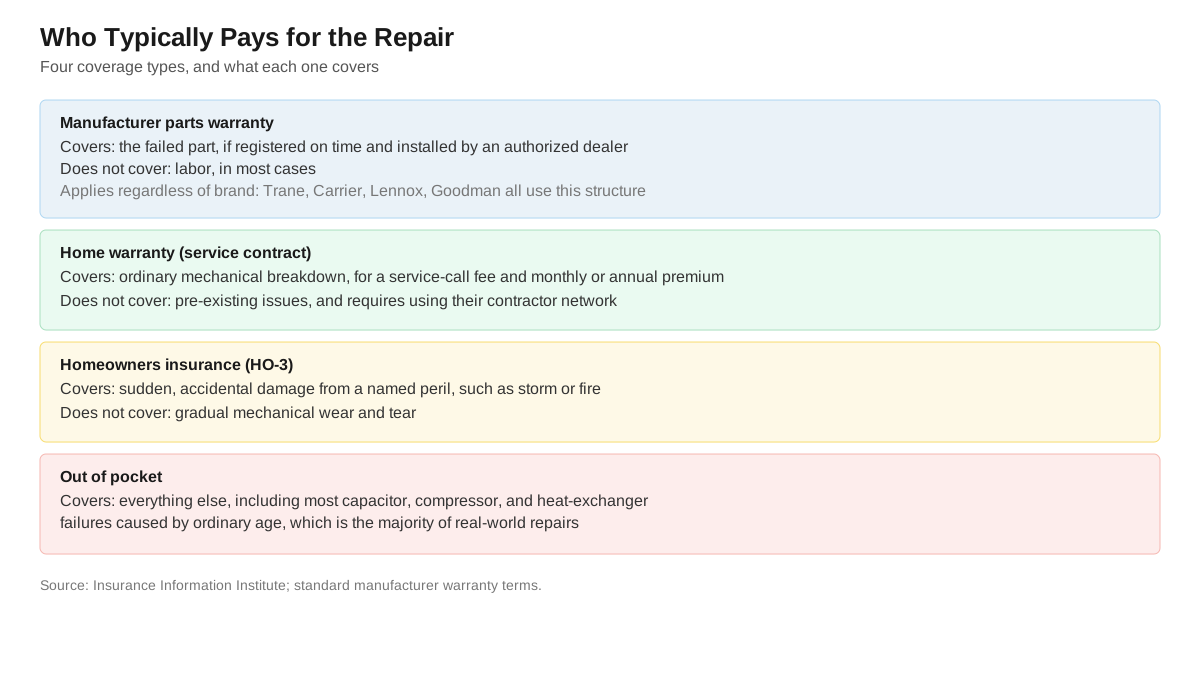
Search does home insurance cover ac repair or does insurance cover furnace replacement and the honest answer is usually no, for the most common failure mode. A standard HO-3 homeowners policy is built to cover sudden, accidental damage from a named peril, such as a tree limb crushing the outdoor condenser in a storm, a fire, or a burst pipe flooding a furnace closet, not the ordinary mechanical wear that takes out a capacitor or a compressor after years of normal operation. The Insurance Information Institute describes standard homeowners coverage in exactly those terms: sudden and accidental, not gradual wear and tear.
What a Home Warranty Covers Instead
A home warranty, also called a home service contract, is a separate paid product from homeowners insurance and is the coverage built for mechanical breakdown of systems like HVAC, water heaters, and major appliances. It typically comes with its own service-call fee, its own network of contractors you have to use, and its own exclusions for pre-existing conditions or lack of documented maintenance, so read the contract terms before assuming a repair will be covered.
Who typically pays for what, before you assume a repair is covered.
When Insurance Does Apply
If the AC or furnace failure traces to a covered peril, wind damage to the outdoor unit, a house fire that damaged the furnace, a burst pipe that flooded a mechanical closet, document the damage with photos before anything is moved or repaired, get a written repair estimate, and file the claim before you approve work, since some insurers want to inspect first.
How Long These Units Last, and When Repair Stops Making Sense
How long do trane ac units last, how long does a carrier hvac last, and how long does a lennox furnace last are three of the most common questions behind this page, and no manufacturer publishes a hard expiration date for any of these four brands, so any specific-sounding number you see quoted elsewhere is an estimate dressed up as a fact. What determines how long a unit runs is maintenance history, run hours (a system in a hot, humid climate cycles far more often per year than one in a mild one), and whether it was sized correctly for the house in the first place, not the name on the cabinet. Residential systems are rated in tons of cooling capacity, commonly 1.5 tons for a small house up to 5 tons or more for a large one, and a unit sized wrong in either direction short-cycles and wears its own parts out faster no matter whose logo is on it.
The Repair-or-Replace Math
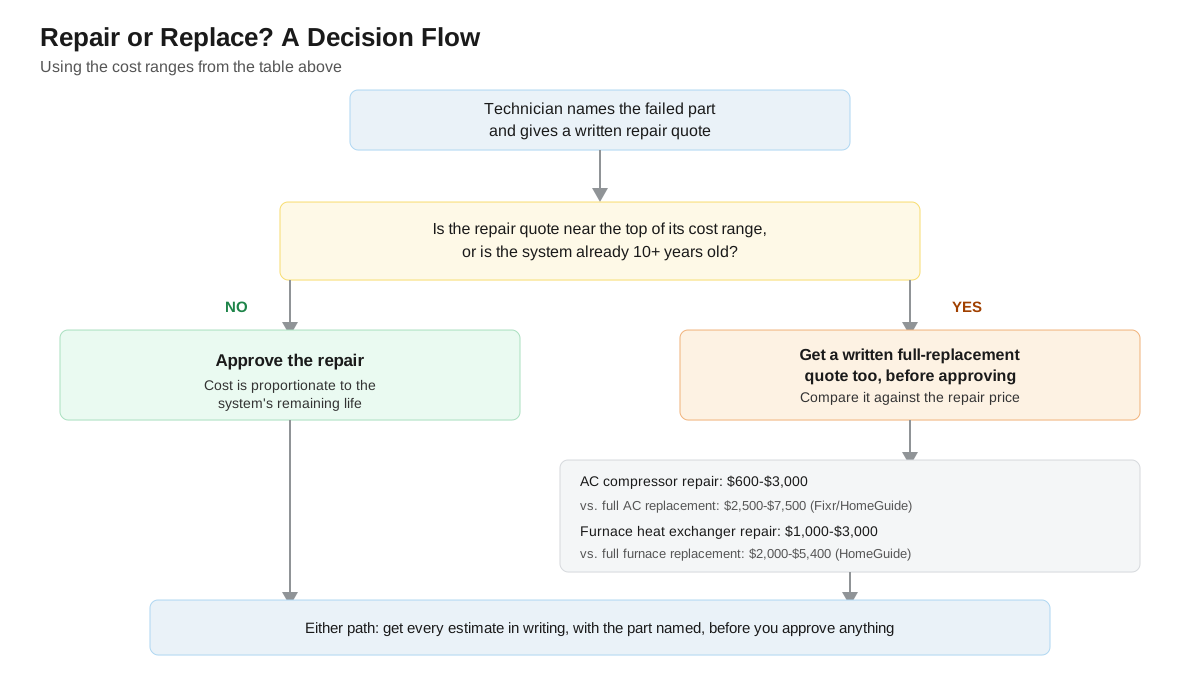
Rather than chase a lifespan number that does not exist in verifiable form, weigh the repair estimate against the age of the system and the cost of a full replacement, using the ranges in the table above. A compressor quote near the top of its $600–$3,000 range, on a system already a decade or more old, is close enough to a full AC replacement at $2,500–$7,500 that getting a second, written replacement quote before approving the repair is worth the extra day it takes; our AC replacement cost guide breaks that math down by unit size and SEER rating.
Preventing the Next Repair
The single most effective habit, across all four brands, is a filter changed on schedule and one seasonal tune-up a year, ideally right before the season that stresses the system most: spring for AC, fall for furnaces. A tune-up is inexpensive next to any of the repairs in the table above, and it is the point at which a technician finds a weak capacitor or a fouled flame sensor before it strands you without heat or air.
A repair-or-replace decision path built from the cost ranges in the table above, sourced from Fixr and HomeGuide.
Hiring the Right Technician, Not Just the Right Logo
Because brand explains so little of the repair outcome, the technician's credentials matter more than the badge on their shirt. Three certifications are worth asking about.
Credential
What it verifies
Body
NATE Certified HVAC Professional
Passed exams covering HVAC fundamentals, electrical and controls, airflow, installation, and service
North American Technician Excellence
EPA Section 608
Legally required to purchase, handle, or recover refrigerant under the Clean Air Act
US Environmental Protection Agency
ACCA Manual J / S / D
Correctly calculates the house's actual heating and cooling load, then sizes and ducts the equipment to match it, instead of guessing at tonnage
Air Conditioning Contractors of America
A technician handling refrigerant on any brand's AC system is legally required to hold an EPA Section 608 certification, issued under the Clean Air Act at 40 CFR Part 82, Subpart F, and split into a Core exam plus Type I (small appliances), Type II (high-pressure systems), and Type III (low-pressure systems), with a Universal credential covering all three; the EPA does not issue physical certification cards, so ask to see the certificate or verify through the issuing testing organization directly rather than taking a verbal claim at face value. NATE certification is voluntary but is the closest thing the industry has to a standardized competency check across brands: the Certified HVAC Professional pathway requires passing five separate 30-question exams (HVAC fundamentals, electrical and controls, comfort and airflow, installation, and service), then recertifying every 2 years with 16 hours of continuing education, or retaking a specialty exam within a 120-day grace period.
Red Flags Regardless of Brand
Watch for a bid with no line items (just one bundled number), a contractor who will not name their license number or refuses to put the estimate in writing, pressure to sign the same day, and a quote that skips straight to full replacement without ever naming which specific part failed. A legitimate written estimate names the part, the labor rate, whether the diagnostic fee rolls into the total, and the warranty terms on both the part and the labor. Our full guide to choosing an HVAC contractor covers the license-lookup and insurance-proof steps in more depth than this page has room for.
Regional Notes: Freeze-Belt Winters vs. Year-Round Cooling Load
Climate changes what fails first, more than the brand does. In the Gulf Coast and the Southwest, an AC system can run close to continuously for months, which wears out capacitors, contactors, and compressors faster. In the northern freeze belt, furnaces log far more annual run hours than AC systems do anywhere in the country, which shows up as more ignitor, flame-sensor, and heat-exchanger repairs relative to the AC side. Coastal areas add a third stressor: salt-laden air corrodes outdoor condenser coils and cabinets faster than inland installs, regardless of brand, and it is worth asking a local, authorized dealer whether a coastal-rated coil coating is available for your specific model.
Frequently asked questions
Is there a reset button on a Trane AC unit?+
Most residential split-system condensers, Trane included, do not have a single labeled reset button. Cutting power at the outdoor disconnect for 30 to 60 seconds and restoring it clears many minor control faults the way unplugging a router does. If the compressor still will not start, or hums without starting, the likely cause is a failed capacitor or a tripped safety switch, not something to fix by cycling power repeatedly.
Are Trane AC units good?+
There is no independently verified, brand-by-brand failure-rate dataset behind that question, so this guide will not manufacture an answer it cannot back up. Trane is one of the two most recognized premium-tier residential AC brands in the US and sells through a network of factory-authorized dealers. What predicts how well any unit performs is correct sizing at install and consistent maintenance afterward.
How much do Trane air conditioners cost?+
This data pack does not include Trane-specific installed pricing, and any number quoted without a named source should be treated skeptically. National survey data for central AC installation in general runs $2,900 to $9,000 per HomeAdvisor, with the final number driven mainly by tonnage, SEER rating, and ductwork condition rather than brand alone. Get a written quote from a local authorized dealer for an exact number.
How long do Trane AC units last?+
No manufacturer, Trane included, publishes a hard expiration date for its equipment. Lifespan depends far more on run hours, climate, and maintenance history than on brand. Rather than chase a number that does not exist in verifiable form, weigh any repair estimate against the system's age and the full-replacement cost range in this guide's cost table.
What is the warranty on a Carrier air conditioner?+
Carrier follows the industry-standard two-tier structure: a shorter base parts warranty that applies automatically, and a longer registered warranty available if you register the unit, with its model and serial number, within a set window after installation. Manufacturer warranties almost always cover the part only, not the labor to diagnose and install it, so ask the installing dealer whether they separately offer a labor warranty.
How long do Carrier AC units last?+
There is no published, verifiable lifespan figure specific to Carrier equipment. What determines service life is how many hours the system runs each year, which varies enormously by climate, plus whether it received a seasonal tune-up and prompt filter changes. A well-maintained system in a mild climate typically outlasts a neglected one in a hot, humid one by a wide margin.
Does home insurance cover AC repair?+
Usually not, for the most common failure mode. A standard HO-3 policy covers sudden, accidental damage from a named peril, such as storm or fire damage, not the gradual mechanical wear that takes out a capacitor or compressor over time, according to the Insurance Information Institute. A separate home warranty (home service contract) is the product built to cover ordinary mechanical breakdown.
Are Lennox furnaces good, and how long do they last?+
Nobody publishes an audited, brand-by-brand failure rate for furnaces, Lennox included, so treat any specific lifespan number quoted online as a guess dressed up as a fact. Lennox is one of the highest-search-volume furnace brands nationally and sells through independent authorized dealers. Lifespan depends on run hours, climate, and maintenance rather than the brand name.
How much does a Lennox furnace cost?+
This pack does not include Lennox-specific pricing. National furnace replacement data from HomeAdvisor puts the typical range at $2,823 to $6,897, averaging $4,814, with natural-gas units running roughly $3,800 to $10,000 depending on efficiency tier and home size. Repair, rather than replacement, runs far less: national furnace repair averages $268 to $485 depending on the survey.
Are Goodman furnaces reliable?+
That question doesn't have an independently audited answer for Goodman or any competitor. Goodman is manufactured by Daikin and positioned as the value tier within that manufacturer family, which affects features and standard equipment more directly than it affects whether an individual unit breaks. Correct installation sizing and regular maintenance predict outcomes far more reliably than brand alone.
How do I reset a Goodman or Lennox furnace after a lockout?+
Cut power at the furnace's dedicated switch or the breaker for about a minute, then restore it and let the ignition sequence run through once. If the furnace locks out again on the very next cycle, that is a genuine fault such as a fouled flame sensor or failing ignitor, not something to clear by repeatedly cycling power, and it is time to call a licensed technician.