Most Daikin and Mitsubishi mini-split failures trace back to four things: a tripped breaker, a dirty filter or iced coil starving airflow, a failing capacitor or control board, or a slow refrigerant leak. A Daikin mini split repair almost always starts with the blink code on the indoor unit, which narrows the cause down once you match it to your exact model.
A wall-mounted Mitsubishi head that's been running fine since June and suddenly starts blinking every ninety seconds, or a Daikin outdoor unit that goes silent on the first cold snap of November, is a different kind of troubleshooting problem than a central system throws at you. There's no single furnace closet to check, no one filter for the whole house, and the unit itself is trying to tell you something through a blink pattern that means one thing on an older Daikin and something else entirely on a current Mitsubishi Hyper-Heat model.
This guide walks through what tends to fail on ductless systems from these two brands, roughly in the order a technician would rule things out, and what each category of fix costs based on national repair-cost data. It covers the checks a homeowner can safely run before calling anyone, the point where the job legally belongs to an EPA-certified technician, and how a single failing zone stacks up against tearing the whole system out for central air.
What's Actually Failing Inside a Ductless Mini-Split
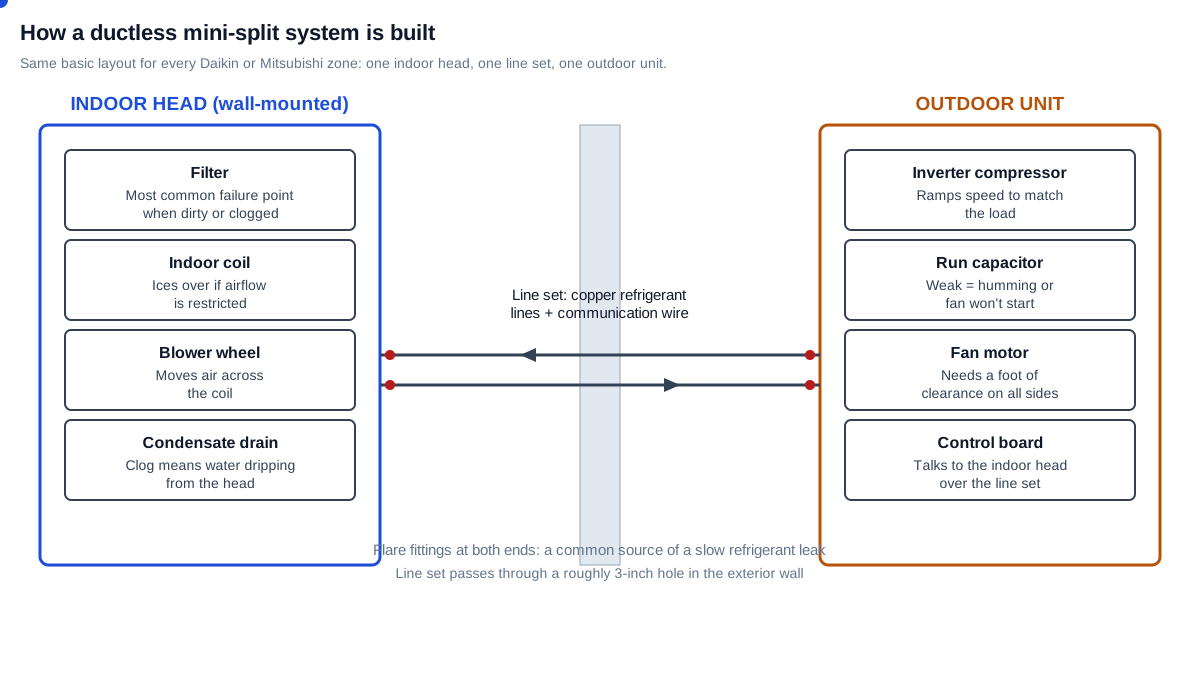
A ductless mini-split is really two small machines linked by copper tubing and a control wire, not one machine with the ducts removed. Outside, a compact inverter compressor unit does the same basic job as a central air condenser or heat pump, except it ramps its speed up and down to match the load instead of cycling fully on and off. Inside, each wall-mounted, ceiling-cassette, or floor-console head has its own blower wheel, its own small coil, and its own condensate drain, all fed by a line set, the pair of copper refrigerant lines and low-voltage wiring that runs through a roughly three-inch hole in the wall to the outdoor unit.
That layout changes where things go wrong compared with central air. There's no single shared blower or filter for the whole house, so a problem in one zone rarely explains a problem in another unless the outdoor unit itself has failed. The connections at each end of the line set use flare fittings, a compression-style joint rather than the brazed copper joints typical of central air, and a fitting that wasn't torqued correctly at installation is one of the more common sources of a slow refrigerant leak years later. The indoor and outdoor units also talk to each other constantly over that control wire; when that link drops, most current systems display a communication error rather than simply doing nothing, which is often the first useful clue that a fault is electrical rather than mechanical.
In practice, failures cluster in four places: the outdoor unit itself (compressor, fan motor, control board, or the run capacitor that starts them), the line set and its fittings (leaks, kinks, or a communication wire chafed through), the indoor head (a clogged filter, an iced coil, a failed blower motor, or a blocked condensate drain), and the remote or wall controller. A Daikin mini split repair and a Mitsubishi mini split repair follow the same basic troubleshooting order, even though the two brands use different blink patterns and slightly different part names for the same components.
How the indoor head and outdoor unit connect, and where the components covered above actually sit.
Causes Ranked: What Usually Breaks First
Not every cause shows up with the same frequency, and troubleshooting in the wrong order just wastes a service call. Here's the rough order these show up in, from most to least common:
Cause
How common
Telltale sign
Typical fix level
Dirty or clogged indoor filter
Very common
Weak airflow, system feels underpowered on the hardest days
DIY: clean or replace the filter
Blocked or dirty outdoor coil
Very common
Unit runs but capacity drops on the hottest or coldest days
DIY clearing debris, or a basic service call
Iced indoor coil
Common
Visible ice on the coil or line set, water pooling under the head
DIY thaw, then a pro finds the cause
Refrigerant leak at a flare fitting
Common
Capacity fades slowly over weeks or months; hissing near the lines
Licensed, EPA 608-certified tech
Failing run capacitor
Common
Outdoor unit hums, fan won't spin, or the system short cycles
Licensed tech (electrical)
Communication error, indoor to outdoor
Occasional
A specific error code shows; the unit won't start or stops mid-cycle
Licensed tech (wiring or board)
Clogged condensate drain
Occasional
Water dripping from the indoor head, musty smell nearby
DIY flush; pro if the float switch keeps tripping
Blower motor failure
Occasional
Indoor head runs but moves little or no air
Licensed tech (part plus labor)
Compressor failure
Least common
Outdoor unit is silent; breaker and capacitor both test fine
Licensed tech, often a replacement decision
The most common complaint a field technician hears is a mini split not cooling on the day it's needed most, and across both brands the same short list of culprits shows up again and again: a filter or coil so dirty the indoor head can't move enough air, ice built up on that same coil once its surface drops below the 32°F freezing point of water, typically from restricted airflow, a leak at one of the flare fittings slowly bleeding refrigerant out of the line set, or a failing run capacitor on the outdoor unit. Refrigerant work is where the biggest cost jump happens, and it's also the one category that's federally regulated: refrigerant doesn't get used up in normal operation, so a system running low on charge is leaking somewhere, and topping it off without finding that leak buys a few months at most before the same complaint returns.
Electrical failures cluster around the outdoor unit's run capacitor and control board more than any other component. A weak capacitor shows up as a compressor that hums without starting, or a system that short cycles, turning on and shutting back off every few minutes, and the longer that pattern runs unaddressed, the more wear it puts on the compressor itself. A dropped connection on the communication wire between indoor and outdoor units produces its own error code on most current Daikin and Mitsubishi models rather than a silent failure, which is one of the more useful diagnostic clues these systems give compared with older equipment.
A Step-by-Step Way to Diagnose It Yourself
Work through these before deciding whether this is something you can fix yourself or a call to a certified technician. Each step takes only a few minutes.
Check the wall controller or remote for a blinking light or a displayed code, and write down exactly what you see (the number of blinks, the color, or the code letters) before doing anything else.
Check the breaker panel. Mini-splits typically run on their own dedicated circuit, so a shared or overloaded circuit is an easy thing to rule out first.
Open the front panel of the indoor head, which usually lifts up and off with a firm, even pull near the top edge, and pull the filter. Hold it up to a light; if you can't see through it, that alone explains a lot of "mini split not cooling" complaints.
Look at the indoor coil, now visible with the filter out, and the exposed line set outside for any ice.
Walk outside and check that the outdoor unit has clear airflow on all sides, the fan is spinning, and nothing built up against it (leaves, a fence panel, a stored deck box) since it last ran.
Check the condensate drain line where it exits the house near the outdoor unit for a steady drip or a clog, and check for water pooling under or behind the indoor head.
If the system has more than one indoor head, note whether just one zone is affected or all of them; a single bad head points at that head specifically, while every zone failing together points at the outdoor unit.
Find and record the full model number, printed on a sticker on the indoor head's side panel and on the outdoor unit's nameplate, before calling anyone. The code from step one only means something once it's matched to that exact model.
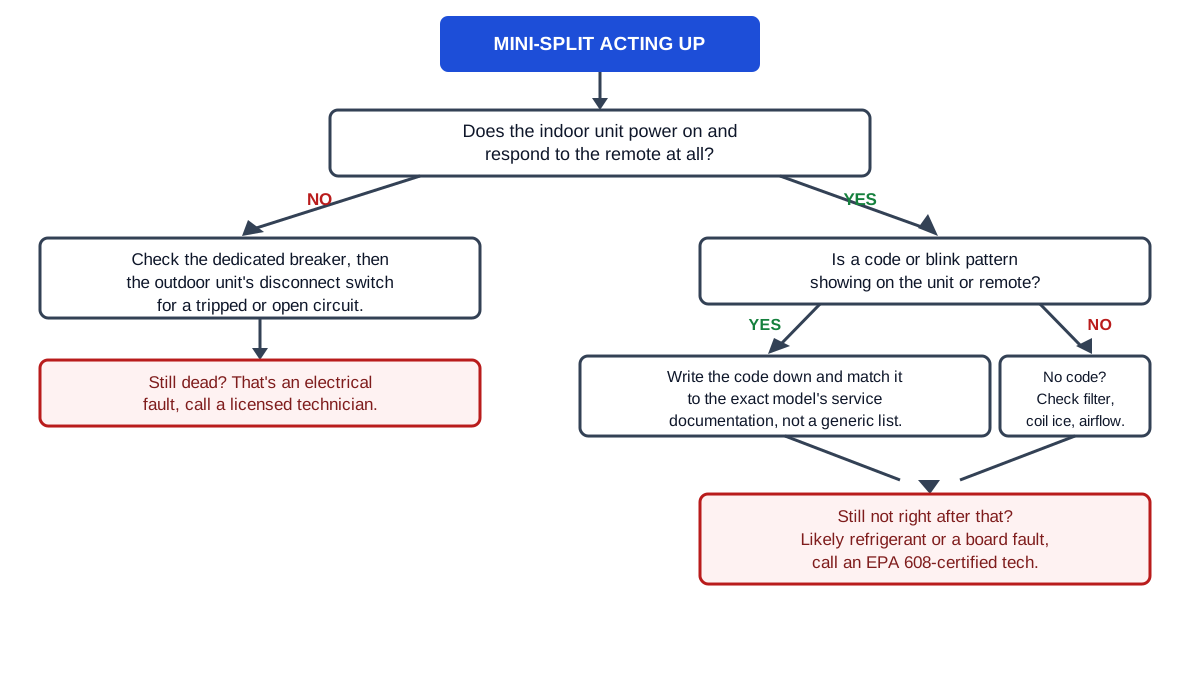
That last step matters more with mini-splits than with most home HVAC equipment, because the model number determines everything downstream, including which fixes below actually apply. A step-by-step way to narrow down why a Daikin or Mitsubishi mini-split isn't working right.
Reading the Codes: What a Daikin or Mitsubishi Display Is Telling You
Both brands build in a debugging tool most homeowners never use fully: an error display, either a printed code or a blink pattern, that narrows the fault down before anyone opens the unit. The catch is that neither brand uses one consistent scheme across every generation of equipment.
Daikin's alphanumeric codes
On most current Daikin ductless systems, the wall remote or the indoor unit's own display shows an alphanumeric code, and searches for a specific mini split error code are common precisely because that letter-and-number combination is where people start. What a particular code means changes by model generation, so a code on an older unit doesn't necessarily map to the same fault on a newer one. Matching it against the service documentation for the exact model recorded in the diagnosis steps above is the only reliable way to read it.
Mitsubishi's blink patterns
Mitsubishi systems more often communicate through a blinking operation light on the indoor unit itself rather than a code on a remote screen, and the number of blinks along with the pause between them is the pattern a technician, or the model-specific documentation, translates into a fault. Counting the blinks and timing the pauses before calling anyone speeds up the diagnosis considerably.
A reset clears more than people expect. Cutting power at the breaker for a minute or two, then restoring it, forces the indoor and outdoor units to re-establish communication and often clears a code that was caused by a momentary glitch rather than a real fault. If the same code or blink pattern reappears within a few minutes of a reset, that's useful information in itself: it means an underlying condition, not a communication hiccup, triggered it, and it's worth writing down alongside the code before calling anyone. A Daikin mini split repair call that starts with "the code came right back after I reset it" tends to move straight to a real diagnosis instead of a second reset attempt.
Fixes: What You Can Try, and What Belongs to a Licensed Tech
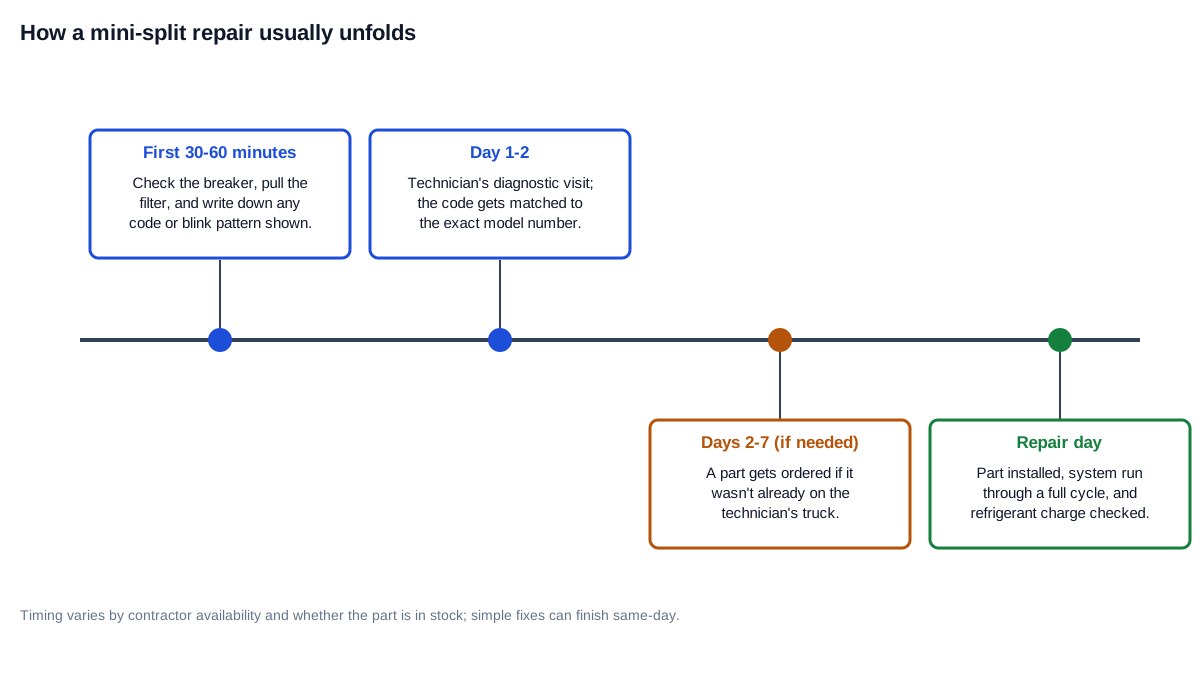
Once a code or a clear symptom points at a cause, here's roughly how the repair itself tends to unfold, from the first checks to the day a part actually goes in: How a mini-split repair typically unfolds, from the first checks to the day the part actually gets installed.
What you can safely try yourself
A handful of fixes solve a real share of mini-split calls without any tools beyond what's already in a kitchen drawer: washing or replacing the indoor filter (most Daikin and Mitsubishi filters are washable foam or mesh rather than a disposable cardboard-framed one, so check the panel before assuming a replacement part is needed), clearing at least a foot of open space around the outdoor unit and cutting back nearby plants, and resetting the breaker once if the system won't respond at all. If the indoor coil is iced over, switch the whole system off, including the fan setting, and let it thaw for several hours before running it again; forcing air across ice just refreezes the water it produces. The condensate drain can usually be cleared with a wet/dry shop vacuum held gently at the outdoor end of the line, pulling out the same algae buildup that causes a musty smell and, eventually, water dripping from the indoor head.
What belongs to a licensed technician
Task
Who handles it
Why
Wash or replace the indoor filter
Homeowner
Slides out from behind the front panel, no tools needed
Clear space around the outdoor unit
Homeowner
Needs roughly a foot of clearance on every side to breathe
Reset the breaker once
Homeowner
If the code returns immediately, stop resetting and diagnose instead
Thaw an iced coil
Homeowner, then a pro for the cause
Turning the system off and waiting is safe; chipping at ice isn't
Flush the condensate drain
Homeowner (basic)
Wet/dry vac at the outdoor end of the drain line
Replace a run capacitor
Licensed tech
Capacitors hold a charge even with power disconnected
Repair or recharge refrigerant
Licensed, EPA 608-certified tech
Federally regulated substance and equipment by law
Replace a compressor
Licensed tech
Often the point where a technician recommends replacing the system instead
Repair communication wiring or a control board
Licensed tech
Low-voltage, but tied into board-level electronics
The flare fittings connecting a mini-split's indoor and outdoor units carry the same federally regulated refrigerant as central air, so opening one without an EPA Section 608 certification is illegal as well as a genuine frostbite risk. That rule covers recharging a system, repairing a leak, and replacing a compressor: all three involve breaking into the sealed refrigerant circuit, and all three sit outside what a homeowner can legally do, no matter how simple a video makes it look.
What a Mini-Split Repair Actually Costs
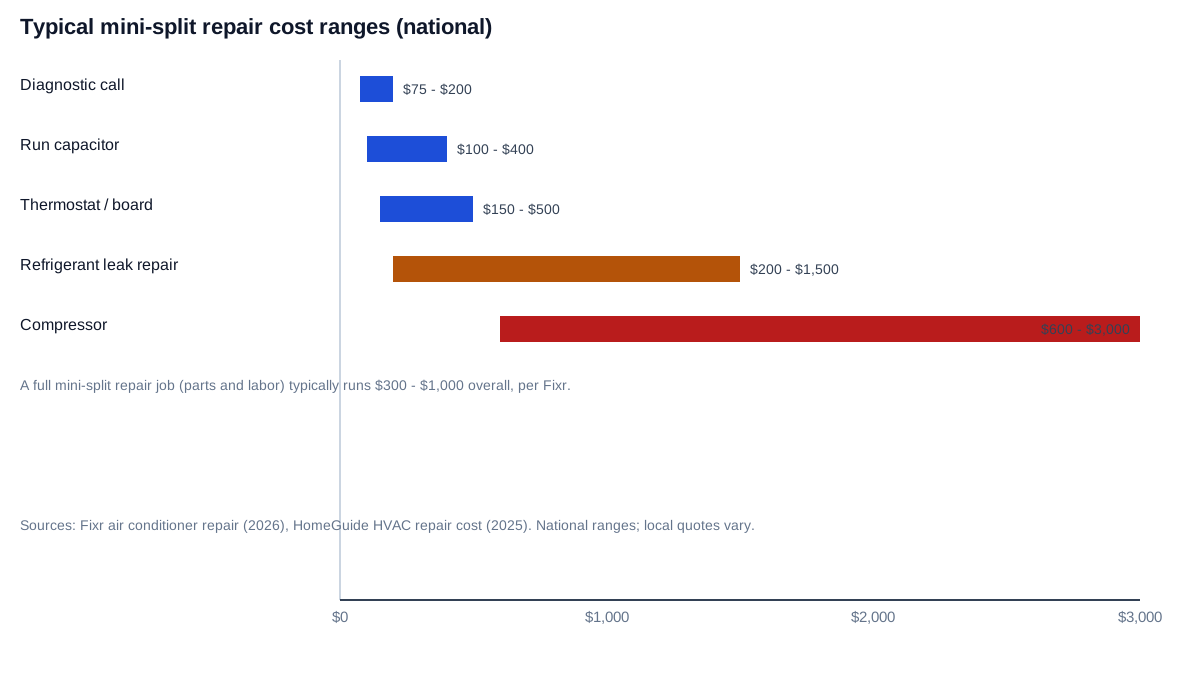
Any honest ductless system cost conversation has to separate a repair from a full replacement, because the range between them is enormous. Here's the repair side broken out by job, with a source on every row: Typical national repair cost ranges by job, from a diagnostic call at the low end to a compressor replacement at the high end.
Job
Typical range
What moves the price
Source
Diagnostic / service call
$75 - $200
Distance, after-hours timing, and whether it's applied toward the repair
HomeGuide, 2025
Typical mini-split repair (parts + labor)
$300 - $1,000
Which component failed and how accessible the unit is
Fixr, 2026
Run capacitor replacement
$100 - $400
Part cost is low; most of it is labor and the trip
Fixr, 2026
Thermostat / wall controller or control board
$150 - $500
Basic controller versus a smart, Wi-Fi-connected model
Fixr, 2026
Refrigerant leak repair (find, seal, recharge)
$200 - $1,500
Where the leak is and how much refrigerant the unit holds
Fixr, 2026
Refrigerant recharge only, no leak repair
$100 - $600
Amount of refrigerant needed for the specific unit
HomeGuide, 2025
Compressor replacement
$600 - $3,000
Whether the part is still under manufacturer warranty
Fixr, 2026
New ductless system installation (one or more zones)
$1,900 - $16,100
Number of zones, unit size, and distance to the outdoor unit
HomeAdvisor, 2026
How we got these numbers: HomeGuide and Fixr both publish national repair-cost surveys built from contractor pricing data, updated within roughly the past year, and HomeAdvisor's installation figures come from the same kind of national contractor sample. There's no regional price index in the data behind this guide, so treat every range above as a national one; what a technician in a specific city quotes depends on local labor rates and how far out the trip runs, and a written estimate is the only real way to pin that down. For repairs that turn out to be capacitor- or compressor-related specifically, the blower motor, capacitor and compressor repairs guide breaks those costs down further across HVAC equipment generally, not just ductless units.
The repair-versus-replace decision usually comes down to two numbers: how old the failing unit is, and how close the repair estimate sits to a new installation. A compressor failure or a major refrigerant leak on a unit already several years into its expected service life is the point where a technician typically lays out both options side by side, and the mini split repair cost for that single job can approach a meaningful fraction of installing a new zone outright.
When to Stop and Call an EPA-Certified Technician
Most mini-split problems are inconvenient rather than dangerous, but a few situations change the urgency.
A breaker that trips more than once is the clearest signal. Resetting it a single time is reasonable troubleshooting; a breaker that trips again immediately is telling you there's a short or an overloaded circuit, not a random glitch, and repeated resets risk overheating wiring instead of fixing anything. Mini-splits aren't combustion appliances the way a furnace is, but they're still electrical equipment on a dedicated circuit, and heating equipment as a category was behind 13 percent of home structure fires and an estimated 44,210 of them a year between 2016 and 2020, with an estimated 480 civilian deaths, 1,370 injuries, and more than a billion dollars in direct property damage annually, according to NFPA — a reason not to keep forcing a breaker that won't stay reset.
Refrigerant exposure is a smaller but real risk, and it's the reason the line-set work stays in the licensed-technician column above. Liquid refrigerant released from an opened line can cause frostbite on contact, and in an enclosed indoor space it can displace breathable air.
Extended loss of heating or cooling during extreme weather is its own category of risk, separate from anything mechanical. Infants, older adults, and anyone with certain heart or respiratory conditions are more vulnerable during a multi-day outage in extreme heat or cold, and it's worth knowing where the nearest public cooling or warming option is before you need it rather than during it. If the mini-split is the only heating or cooling source in the space and it's down during a genuine weather extreme, that shifts this from a routine repair call to something worth treating with more urgency. The emergency HVAC guide covers how to sort out what actually can't wait until morning.
Finding Someone Qualified to Work on This Equipment
Not every technician who shows up with a gauge set is equally qualified to work on ductless equipment specifically, and the gap matters most on exactly the jobs covered above: refrigerant work and correct sizing for the zone.
Certifications worth checking for
Credential
Issuing body
What it verifies
NATE Certified HVAC Professional (CHP-5)
North American Technician Excellence
Five 30-question exams covering fundamentals, electrical and controls, comfort and airflow, installation, and service; recertifies every 2 years with 16 hours of continuing education or a 120-day grace period to retake a specialty exam
EPA Section 608 Technician Certification
U.S. Environmental Protection Agency
Legally required under 40 CFR Part 82, Subpart F of the Clean Air Act for anyone handling refrigerant; one of four categories (Type I, II, III, and Universal), with Type II covering the high-pressure refrigerant most mini-splits use
ACCA Manual J / Manual S familiarity
Air Conditioning Contractors of America
Correct load calculation and equipment sizing, which matters most when adding a new zone rather than repairing an existing one
Red flags
Two patterns come up often enough to name directly. Be cautious of anyone offering to add refrigerant without first checking for a leak, since that's a temporary fix sold as a permanent one, and it usually means a return visit within weeks or months. Be equally cautious of a quote that skips straight to replacing the whole outdoor unit before a code has even been matched to the model or a capacitor has been tested, since a bad, inexpensive part and a dead compressor can look identical from outside the cabinet.
Ask for a written estimate before any repair begins, and expect it to list the diagnosed cause, the part, the labor, and the total, not just a lump-sum number. A company unwilling to put that in writing, or one that can't confirm its technicians hold EPA 608 certification without checking, is a reason to call someone else. The how to choose an HVAC contractor guide covers the fuller checklist, including license lookups and insurance proof, that applies across every HVAC job, not just ductless repair.
Maintenance That Actually Prevents the Next Breakdown
Most of the causes ranked earlier in this guide are preventable with a handful of habits that take less time than the original diagnosis did.
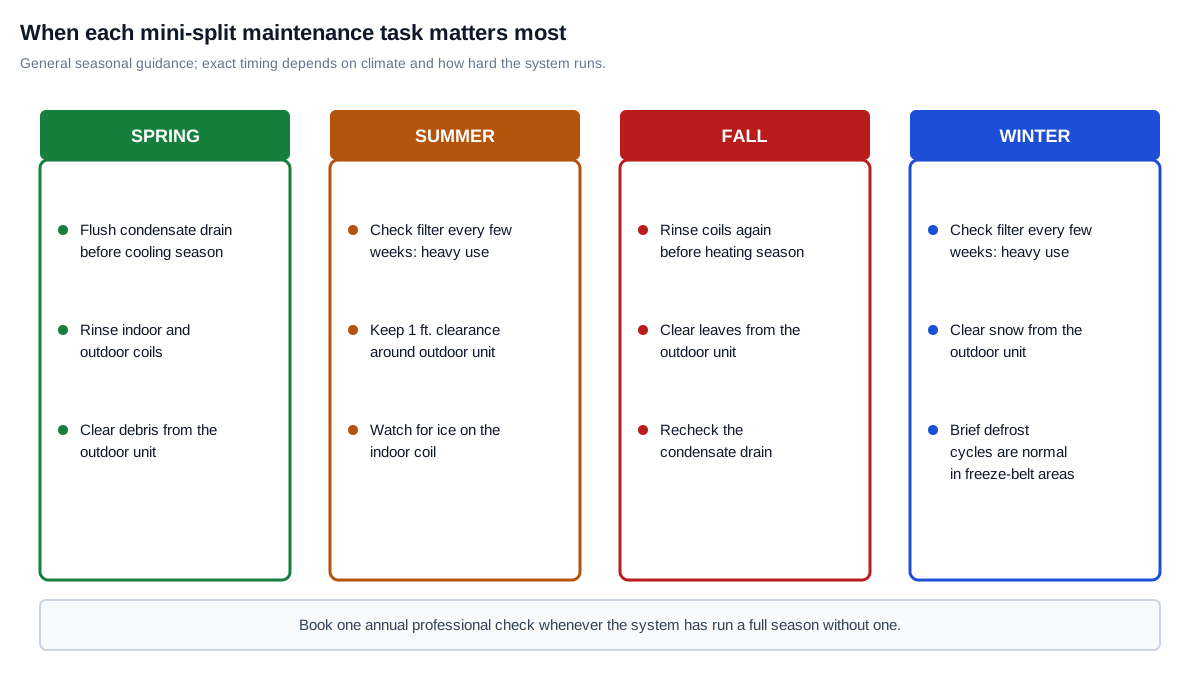
Clean or replace the indoor filter regularly: check it every few weeks during heavy heating or cooling use, since a mini-split's filter is smaller than a central air filter and clogs faster.
Keep the outdoor unit clear of leaves, snow drifts, and anything built up against the coil fins, with roughly a foot of open space on every side.
Rinse the indoor and outdoor coils a couple of times a year, gently, since a build-up of dust or pollen on either one is one of the more common paths to reduced capacity and eventual icing.
Flush the condensate drain before the season it works hardest, using a wet/dry vac at the outdoor end of the line, to head off the algae clog that causes water dripping from the indoor head.
Book an annual professional check, especially if the system has run all season without one; a basic mini split maintenance visit typically costs in the same range as the diagnostic service call in the cost table above.
The HVAC maintenance checklist covers the same seasonal routine for central systems and furnaces, useful if the household has both ducted and ductless equipment to keep track of.
The prevention habits above, mapped to the time of year each one matters most.
Regional Notes: Freeze Belt, Humid Coast, and Salt Air
The mechanics above apply to every mini-split, but which failure shows up most often depends heavily on climate.
In freeze-belt climates, a mini-split running in heat mode is a heat pump, and heat pumps periodically run a brief defrost cycle that can look like a malfunction to someone who doesn't know it's normal: the outdoor unit pauses, may run its fan in reverse briefly, and the indoor head can blow cool air for a few minutes during that cycle. That's expected behavior, not a fault, though a unit stuck in defrost or cycling through it far more often than usual points at a real problem with airflow or refrigerant charge. The heat pump not heating guide goes deeper into the defrost cycle and the other heat-mode failures that don't apply to cooling-only troubleshooting.
Along the Gulf Coast and humid Southeast, the condensate side of the system works harder for longer stretches of the year, pulling more moisture out of the air on top of cooling it; algae clogs in the drain line and water dripping from the indoor head show up more often here than in drier regions. Coastal installations generally also put extra stress on the outdoor unit's coil and cabinet, where salt-laden air accelerates corrosion faster than it does inland, part of why some manufacturers sell coated coils built for shoreline homes.
In hot, dry, or high-pollen regions, the indoor filter works harder relative to its size, so check it on the shorter end of the maintenance interval above. Older housing stock that never had ductwork installed is actually where mini-splits do their best work: retrofitting a zone without ducts avoids the duct-sizing mismatches common in older homes that added central air after original construction, an advantage worth keeping in mind heading into the comparison below.
Mini-Split vs Central Air: When Repair Isn't the Right Question
A mini split vs central air question comes up naturally once a repair estimate starts creeping toward what a full swap would cost, and it's worth answering with real numbers instead of gut feeling.
Feature
Ductless mini-split
Central air
Typical installed cost
$1,900 - $16,100 depending on zones
$2,900 - $9,000 for equipment; add $1,000 - $5,000 if ductwork is needed
Zoning
Each head controls its own room independently
Whole house typically shares one thermostat unless a separate zoning system is added
Best fit
Room additions, older homes without ducts, single problem rooms
Whole-house comfort where ductwork already exists
Repair pattern
Failures usually isolated to one zone; outdoor unit failures affect all heads on that unit
A single failure, like a compressor or blower, affects the whole house at once
Ongoing maintenance
A filter in every indoor head; more frequent, lower-effort cleaning
One central filter; less frequent, higher-volume airflow to maintain
The clearest case for staying ductless is a home that never had ducts to begin with, or a single problem room, like an attic conversion or a garage turned office, that a central system can't easily reach without expensive duct extensions. The clearest case for switching to, or adding, central air is a home with existing, healthy ductwork and a whole-house comfort problem, where running several separate mini-split heads starts costing more in total than one central system would. Either way, get the comparison from someone who installs both, not just whichever one a given contractor happens to specialize in. For the equipment-only side of that comparison, the AC not cooling guide covers the central air version of the same diagnostic process laid out earlier in this guide.
Frequently asked questions
How do you reset a Daikin mini-split?+
Cut power to the system at the breaker, wait a full minute or two, then restore it; that forces the indoor and outdoor units to re-establish communication and clears most codes caused by a momentary glitch. If the display shows the same code again within a few minutes, the underlying fault is still there and a reset alone won't fix it. Match the code to your model's documentation before calling anyone.
What does a blinking green light on a Mitsubishi mini-split mean?+
A blinking operation light signals that the system detected a fault rather than shutting down silently, but the exact meaning of the pattern, how many blinks and how long the pauses run, varies by model, so it can't be read reliably without matching it to that specific unit's documentation. Count the blinks and time the pattern before calling for service, since that detail speeds up diagnosis considerably.
What is the warranty on a Daikin mini-split?+
Warranty terms on Daikin ductless systems vary by product line and depend on whether the unit was registered and professionally installed, so there's no single coverage period this guide can state as a fact. Check the paperwork from the original installer or Daikin's own documentation for the specific model, since a registration deadline after installation can shorten what's covered if something fails later.
What is the warranty on a Mitsubishi mini-split?+
Like most manufacturers, Mitsubishi's ductless warranty coverage depends on the specific product line and on whether the system was registered after a professional installation, so there's no single figure that applies to every unit. The safest approach is checking the original installation paperwork or the model's documentation directly, since an unregistered system can default to shorter coverage than a registered one.
Do mini-splits need regular maintenance?+
Yes. Ductless systems need the same basic upkeep as any HVAC equipment: regular filter cleaning, clear airflow around the outdoor unit, and an occasional professional check, and skipping it is one of the more common paths to the failures covered earlier in this guide. Because each indoor head has its own smaller filter, mini split maintenance runs a bit more often, if lower-effort per visit, than the single filter change a central air system needs.
How long do Mitsubishi mini-splits last?+
Service life depends heavily on installation quality, climate, and how consistently the filters and outdoor unit get maintained, so there's no single reliable figure to quote here without a source behind it. A well-installed, regularly maintained system tends to run reliably for many years before a major component like the compressor becomes the limiting factor; a poorly installed one, especially with bad flare-fitting connections, can develop leaks far sooner.
Should I leave my mini-split on all the time?+
There's no single right answer, and it depends more on the specific system and climate than on a universal rule. Inverter-driven compressors, which most current Daikin and Mitsubishi units use, run more efficiently holding a steady temperature than cycling fully off and restarting from a bigger swing, so leaving a unit running at a moderate setting rather than shutting it off completely is often the more efficient choice in shoulder seasons.
How do you clean a Daikin or Mitsubishi mini-split?+
Start with the indoor filter: most models use a washable mesh or foam filter that lifts out from behind the front panel and rinses clean with plain water, then air-dries before going back in. The outdoor unit benefits from a gentle hose rinse of the coil fins a couple of times a year and keeping debris cleared from around the cabinet. Avoid pressure washers on either coil, since the fins bend easily.
Who installs and services Mitsubishi mini-splits?+
Any licensed HVAC contractor can generally service Mitsubishi ductless equipment, though refrigerant work specifically requires EPA Section 608 certification regardless of brand. Some repairs, especially anything still under manufacturer warranty, may need to go through a factory-authorized dealer to keep that coverage intact, so it's worth checking the original installation paperwork before assuming any local technician can handle a warranty claim.
Is Daikin a good mini-split brand?+
Daikin is a large, well-established manufacturer with a wide network of installers across the country, but how well a system performs ultimately depends on correct sizing and installation more than on brand alone. A well-installed unit from any major manufacturer, maintained on the schedule covered earlier in this guide, tends to outperform a poorly installed unit from a brand with a stronger name. Installation quality matters more than the badge on the cabinet.