A heat pump not heating is most often one of four things: the thermostat is set to cool or fan-only, the system is mid-way through a normal defrost cycle, the outdoor coil is iced over or blocked, or a refrigerant or electrical fault has stopped the compressor. Check the thermostat and the outdoor unit first; most no-heat calls end there.
The furnace kicks on with a roar and blows hot air within a minute. A heat pump doesn't work that way, and that difference is behind a good share of the "my heat pump isn't heating" calls a technician answers every winter. The system is often running exactly as designed, quietly, at a lower supply temperature, with a defrost cycle built in, while the person standing at the thermostat is convinced something just broke.
Some of the time something really has broken. A capacitor fails, a breaker trips, ice builds up on the outdoor coil faster than the defrost cycle can clear it, or refrigerant has leaked out over a season or two. This guide walks through how to tell a false alarm from a real failure, a step-by-step check you can run at the thermostat and the outdoor unit, what auxiliary and emergency heat are actually for, and what repairs tend to cost when a technician is genuinely needed.
What "Not Heating" Usually Turns Out to Be
Start with the two readings that get mistaken for a broken system. The first is a defrost cycle: for a few minutes every so often in cold, humid weather, a heat pump reverses itself, runs like an air conditioner, and pushes noticeably cooler air through the vents while it melts frost off the outdoor coil. The second is simply how a heat pump feels compared to a furnace. Gas and oil furnaces push out a blast of hot air; a heat pump moves a steady stream of warm air, and on a genuinely cold day, "warm" can feel underwhelming even when the system is running at full output.
A heat pump blowing cold air only during those defrost cycles, or only for the first minute after start-up, is not automatically a fault. What separates a false alarm from a real problem is duration and pattern. If the air stays cold for more than about ten to fifteen minutes, if the indoor temperature keeps dropping instead of holding steady, or if the outdoor unit never seems to come back on afterward, that's an actual failure rather than the system doing its job.
The exact phrase people search, heat pump blowing cold air, covers both situations, which is why the checks in the next two sections matter: they tell you which one you're dealing with before you spend money on a repair call.
The Most Likely Causes, Ranked by How Often They Show Up
Not every no-heat call has the same odds. Based on how HVAC technicians describe their service calls, the causes tend to stack up in roughly this order, from most to least common:
Thermostat mode or schedule. Set to "cool," "off," or a vacation hold, or a smart thermostat wired wrong for a heat pump's reversing-valve terminal.
Normal defrost cycle. Covered above, self-resolving, usually finished within about ten minutes.
Dirty air filter or blocked return. Restricted airflow makes the whole system work harder and can trip a high-limit safety switch.
Iced or debris-blocked outdoor unit. Leaves, snow drifts, a fence too close, or a failed defrost sensor can all stop the coil from shedding frost properly.
Tripped breaker or a failed capacitor. The most common electrical failure on the outdoor unit; the fan or compressor hums but won't start.
Low refrigerant charge or a leak. Reduces the system's ability to move heat and, left alone, can damage the compressor.
Failed reversing valve. The part that switches the system between heating and cooling; when it sticks, the unit can get stuck in the wrong mode.
Control or defrost board failure. Less common, but it can leave the system stuck in defrost or unable to call for heat pump auxiliary heat when it should.
Power outage reset. After an outage, some heat pumps need the breaker cycled or the thermostat reprogrammed before they'll call for heat again.
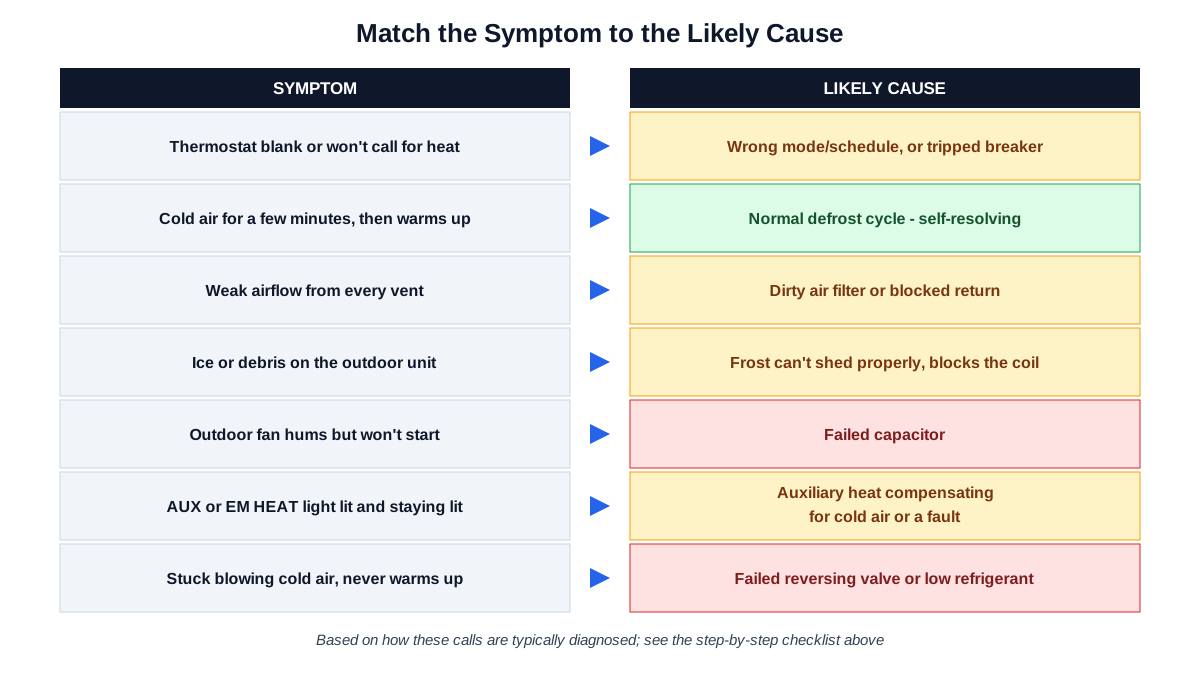
Cross-reference what you're seeing at the thermostat or outdoor unit against the most likely cause before deciding whether to keep troubleshooting or call a technician.
How to Check It Yourself, Step by Step
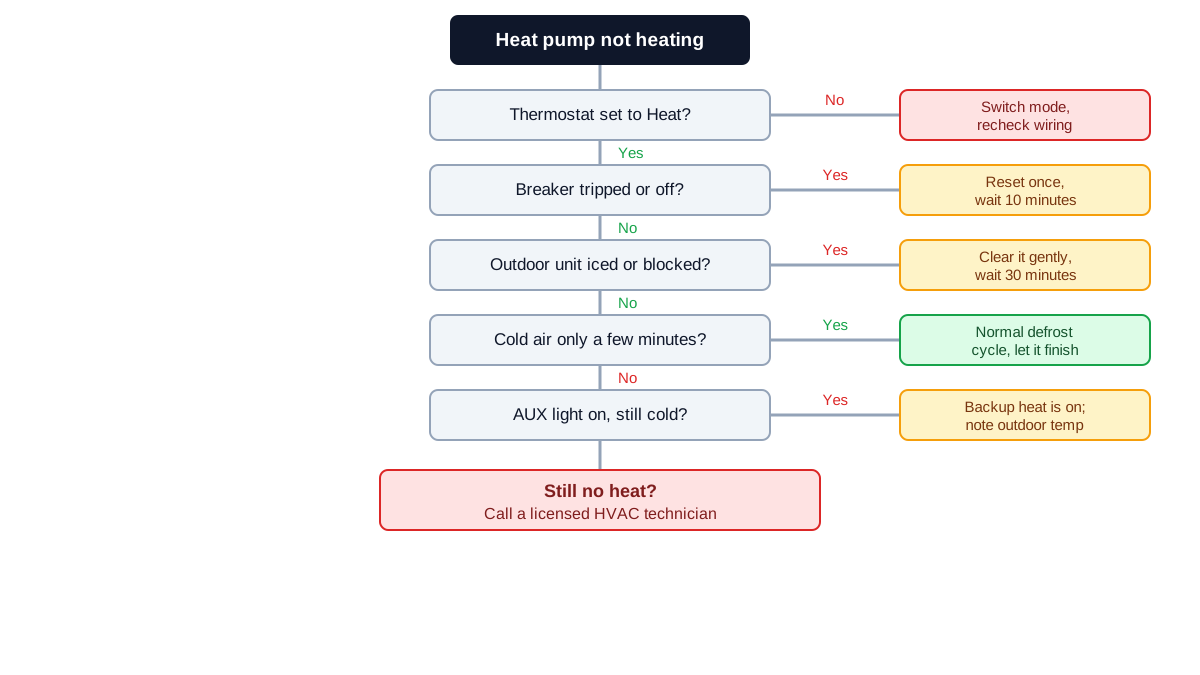
Work through these in order. Most homeowners can get through the first five without any tools, and what you find determines whether you need a technician at all. Work down the checklist in order; most no-heat calls resolve before reaching the last box.
Check the thermostat mode. It should read "heat," not "cool," "auto-cool," or "off," and the set temperature should be above the current room temperature.
Check the breaker or disconnect near the outdoor unit. A tripped breaker or a pulled disconnect block will stop the outdoor unit cold while the indoor fan keeps running.
Look at the outdoor unit. Ice on the coil, a snowdrift against the cabinet, or leaves packed into the fins all restrict airflow and can trigger a defrost cycle that never quite catches up.
Pull and check the air filter. A filter that's gray and matted restricts airflow enough to shut a system down on a safety switch.
Time the cold air. If it's cold for a few minutes and then turns warm on its own, that's very likely a defrost cycle finishing normally.
Raise the thermostat 2 to 3 degrees and listen for a second, louder blower stage or a distinct "AUX" or "EM HEAT" light. That's auxiliary heat engaging, and it confirms the system can still call for backup heat even if the compressor itself has a problem.
Check for a blinking light or error code on the outdoor unit or the indoor air handler's control board, and write it down before calling anyone, it saves diagnostic time on the service call.
If none of that resolves it, or the outdoor fan and compressor stay silent with the breaker on, stop troubleshooting and call a licensed contractor.
Why the Defrost Cycle Looks Like a Breakdown (and Usually Isn't)
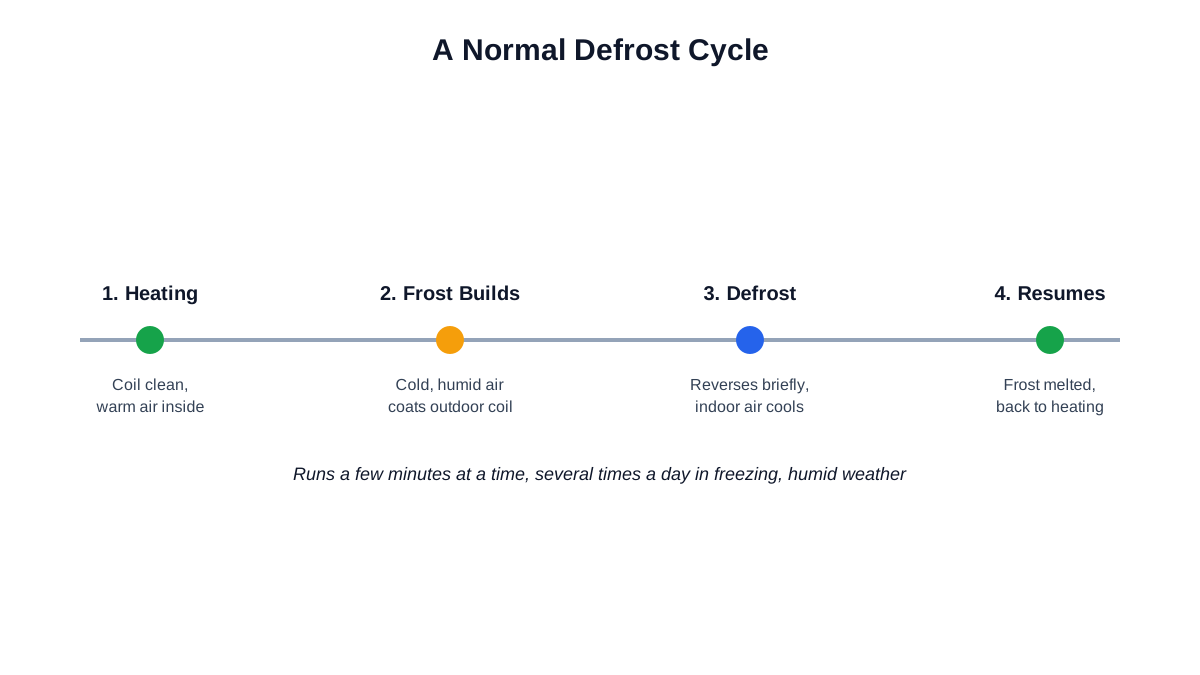
In cold, damp weather, frost collects on a heat pump's outdoor coil the same way it collects on a car windshield overnight, whenever the coil's surface temperature drops below 32°F, the freezing point of water, while the surrounding air still carries moisture. Left alone, that frost layer would eventually block airflow across the coil entirely and shut the system down. To prevent that, the heat pump periodically reverses itself, briefly runs in cooling mode to send warm refrigerant through the outdoor coil, and melts the frost off. You'll often see steam or light haze rising off the outdoor unit during this, which is just melting frost, not a fire risk.
Anyone searching for a heat pump defrost mode explanation is usually looking for confirmation, not a repair. During defrost, the indoor unit can't pull heat from outside, so the supply air blowing indoors turns noticeably cooler for a few minutes. Many systems bring on auxiliary heat automatically during this window specifically so the house doesn't feel a cold draft while the outdoor coil clears itself. A defrost cycle runs a few minutes at a time and is a normal part of cold-weather operation, not a failure.
A defrost cycle that repeats every few minutes around the clock, rather than occasionally during freezing, humid stretches, points to a real problem: a failed defrost sensor, a stuck reversing valve, or a low refrigerant charge making the coil run colder than it should. That pattern is worth a service call even though a single short cycle is not.
What Auxiliary Heat and Emergency Heat Actually Do
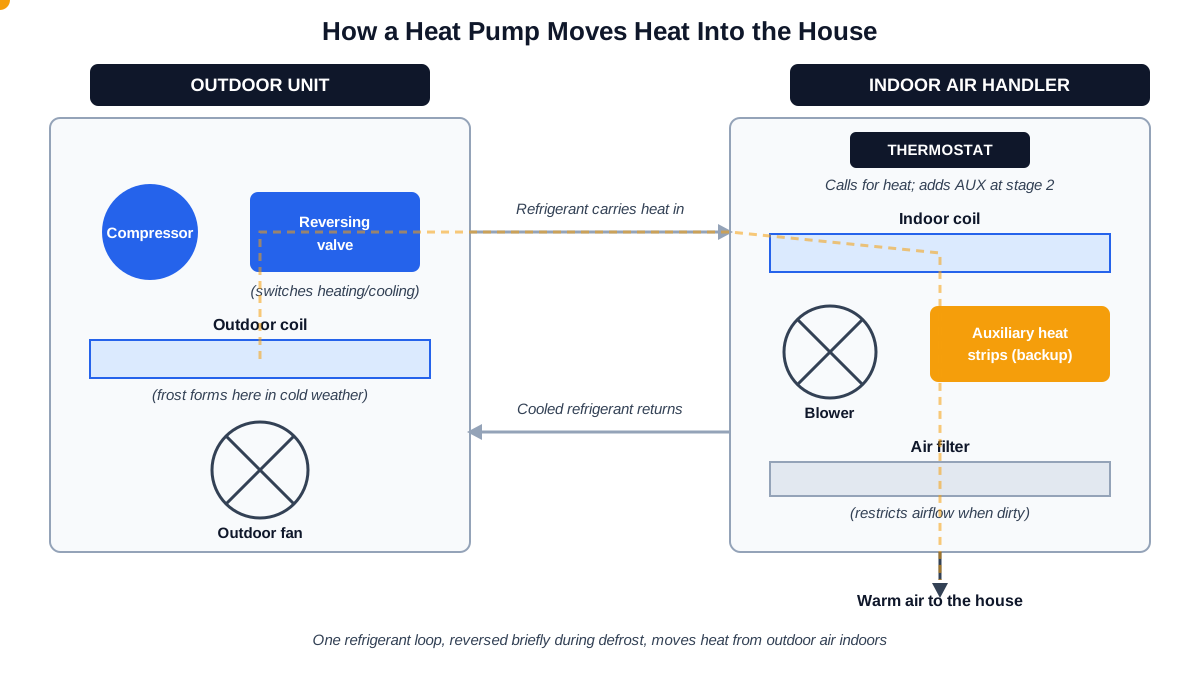
Auxiliary heat is a bank of electric resistance coils built into the indoor air handler, the same basic technology as a space heater, sized to supplement the heat pump's output. It switches on automatically in two situations: during a defrost cycle, and when outdoor temperatures drop low enough that the heat pump alone can't keep the house at the set temperature. There's a point, colder than a typical fall or spring day, where a compressor-based heat pump can't pull enough heat out of the outside air to keep up, no matter how well it's running. Past that point, heat pump auxiliary heat is doing part of the job by design, not because anything failed.
Emergency heat is a manual override, usually a separate switch on the thermostat, that shuts the heat pump's compressor off entirely and runs on the electric backup coils alone. It exists for when the outdoor unit itself is down, frozen solid, waiting on a part, or mid-repair, so the house still has heat. It isn't meant to run for weeks at a time: resistance heat costs several times more per hour to run than the heat pump compressor, and a thermostat left on emergency heat all winter shows up as an unwelcome utility bill.
If the "AUX" or "EM HEAT" indicator is lit and staying lit, that's useful diagnostic information for a technician, not something to switch off and ignore. Note it, along with the outdoor temperature at the time, before you call.
One refrigerant loop carries heat between the two units; the electric auxiliary strips shown here only add extra heat when the compressor alone can't keep up.
Fixes: What to Try Before You Call, and What Needs a License
A short list of things a homeowner can safely do first:
Clear the outdoor unit. Snow, leaves, and ice against the cabinet restrict airflow. Brush snow off gently and clear a couple of feet of space on all sides; never chip at ice with a shovel or screwdriver, since it's easy to bend the thin aluminum fins or puncture a refrigerant line.
Replace the air filter. A cheap fix that solves more no-heat calls than people expect.
Reset the breaker once. If it trips again immediately, stop and call a technician rather than resetting it repeatedly.
Check the thermostat batteries and mode on any unit that isn't hardwired, and confirm a smart thermostat is actually configured for a heat pump; wrong wiring configuration is a common installer mistake with universal smart thermostats.
Past that point, the repair needs a licensed HVAC contractor, and in a couple of cases the law requires it. Refrigerant is a federally regulated substance: under EPA Section 608 (40 CFR Part 82, Subpart F), only a technician who has passed the EPA Core exam plus the matching Type I, II, III, or Universal specialty exam is legally allowed to recover, add, or work with the refrigerant in a heat pump, so a leak or a low charge is never a DIY fix. The same goes for anything involving the reversing valve, the compressor, or the control and defrost boards, all of it needs specialized gauges, equipment-specific wiring diagrams, and, for compressor work, recovering the refrigerant first. A NATE-certified technician has passed the Certified HVAC Professional pathway: five separate 30-question exams covering HVAC fundamentals, electrical and controls, comfort and airflow, installation, and service, with recertification required every 2 years via 16 hours of continuing education. See how to choose an HVAC contractor for the rest of what a licensed tech's credentials should look like before you let them near the system.
What Heat Pump Repair Costs Look Like
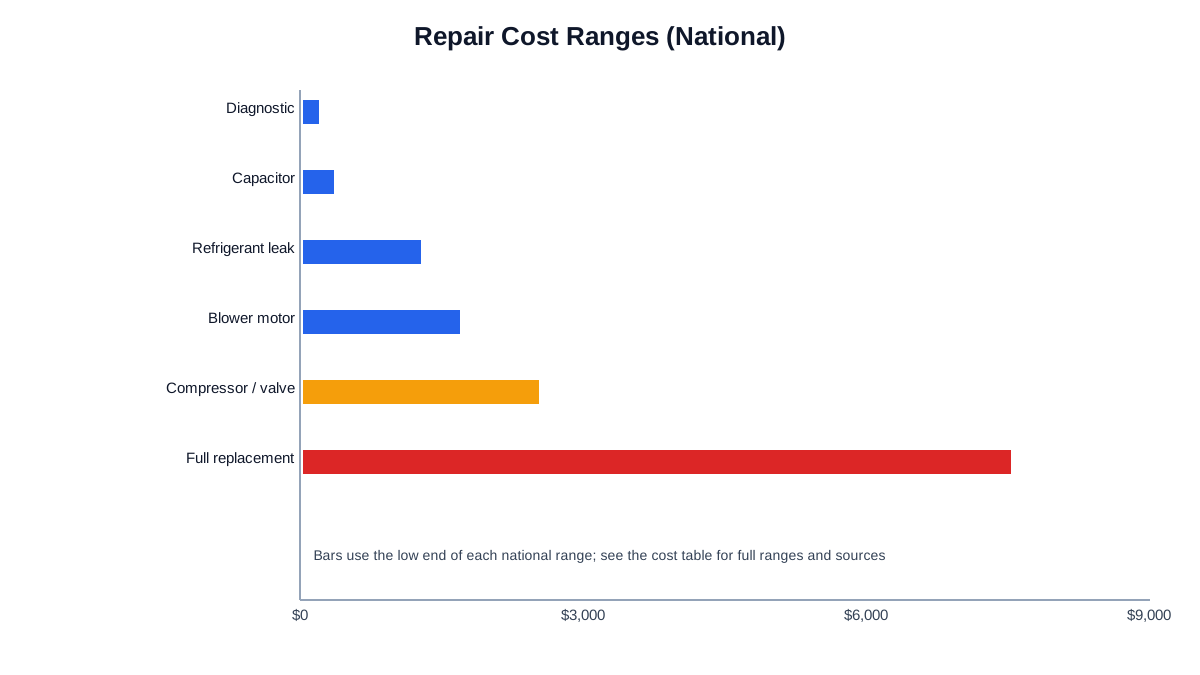
No cost survey tracks heat pump repair as its own category the way it tracks central air conditioners and furnaces. That's not as strange as it sounds: a heat pump is mechanically a central air conditioner with a reversing valve added, sharing a compressor, coils, and refrigerant lines with one, and its indoor air handler shares a blower, filter, and control board with a furnace. The closest real numbers come from AC and furnace repair data for those identical parts, which is what the table below uses; labor on top of the diagnostic fee typically runs $75 to $175 an hour, whether the visit turns out to be a capacitor swap or a compressor job.
Repair
Typical range
What moves the price
Source
Diagnostic / service call
$75 – $200
After-hours or weekend timing, drive time
HomeGuide, 2025
Capacitor or contactor
$100 – $400
OEM vs. universal part, how hard the unit is to access
Fixr / HomeGuide, 2025-2026
Refrigerant leak find-and-repair
$100 – $1,500
Refrigerant type, leak location, how much charge was lost
HomeGuide / Fixr, 2025-2026
Reversing valve or compressor
$600 – $3,000
Whether the compressor is still under manufacturer warranty, labor to evacuate and recharge the system
Fixr, 2026
Blower / air handler motor
$150 – $2,000
Variable-speed (ECM) motors cost more than single-speed
HomeAdvisor, 2026
Control or defrost board
$200 – $600
Proprietary boards sourced through the manufacturer
Fixr, 2025
Full outdoor unit replacement
$2,900 – $9,000
Tonnage, efficiency rating, ductwork condition
HomeAdvisor, 2026
How we got these numbers: each row uses the national range reported for the matching central air conditioner or furnace part, since no publisher currently breaks heat pump repair cost figures out separately. These are national ranges, not local prices; cost of living, permit fees, and which brand's proprietary parts your system uses all shift the number in either direction, so treat the table as a starting point for judging a written estimate, not a quote. Component repair costs use AC and furnace repair data for the same parts; see the full table for sources.
Safety, and When to Call a Pro Right Away
Most no-heat calls aren't emergencies in the sense of immediate danger, but a few situations are: a breaker that trips again as soon as it's reset, a burning smell from the indoor unit, or an outdoor unit making a loud grinding or screeching noise. In any of those, shut the system off at the breaker or the disconnect and call a technician rather than testing it again.
Never remove a panel or attempt refrigerant or electrical work on a heat pump yourself; capacitors inside the outdoor unit can hold a dangerous electrical charge even after the power is off, and refrigerant work legally requires an EPA-certified technician.
If the house has a backup gas or oil furnace as part of a dual-fuel system, treat any smell of gas or repeated pilot or ignition failures as a furnace safety issue first, and follow the furnace manufacturer's shutoff instructions before calling anyone. Home heating equipment causes an estimated 44,210 house fires, 480 deaths, and 1,370 injuries nationwide every year, about 13 percent of all home structure fires, according to NFPA data, most of it preventable with basic clearance and maintenance, one more reason not to improvise a fix under time pressure in a cold house. For a broader rundown of what genuinely can't wait until morning, see emergency HVAC: what actually can't wait.
Preventing the Next No-Heat Call
A lot of these problems are seasonal and preventable. Annual heat pump maintenance in early fall, before the first hard freeze, is what catches a marginal capacitor, a slow refrigerant leak, or a dirty coil while it's still an inexpensive fix rather than a no-heat emergency in January. See the seasonal HVAC maintenance checklist for the full list beyond what's below.
Keep 2 feet of clearance around the outdoor unit on all sides, and don't stack firewood, patio furniture, or trash cans against it.
Change the filter every 1 to 3 months during heating season, more often with pets or a dusty return.
Route downspouts and gutters away from the outdoor unit; water dripping onto the coil all winter refreezes and makes defrost cycles longer and more frequent.
Don't cover the top of the unit even in winter; manufacturers generally warn against full covers because they trap moisture and can force condensation into the electrical compartment.
Consider surge protection for the outdoor unit's disconnect in areas with frequent storm-related power outages, since a hard power cycle is a common trigger for compressor failures on older units.
Heat Pump, Furnace, or Both: The Real Trade-Off
The heat pump vs furnace question isn't really about which one is "better." It's about your climate, your utility rates, and whether the house already has both. A heat pump moves heat rather than generating it, which makes it efficient right up until it passes its balance point, the outdoor temperature where there isn't much heat left in the air to move. A furnace burns fuel to generate heat directly, so its output doesn't drop as outdoor temperatures fall.
Setup
How it handles a hard freeze
Typical trade-off
Heat pump only
Leans on auxiliary electric heat once it passes its balance point
Lower running cost most of the season, higher electric use on the coldest days
Furnace only
Output stays consistent regardless of outdoor temperature
No cooling function; a separate AC system is needed for summer
Dual-fuel (heat pump + furnace)
Automatically switches to the furnace below a set outdoor temperature
Higher upfront equipment cost, lowest combined running cost across a full winter
None of that makes a working heat pump a poor choice for a cold-weather no-heat complaint. Most of the time, a system that's "not heating" is a working heat pump caught mid-defrost, running on auxiliary heat as designed, or stalled on something as simple as a dirty filter, not proof the technology is wrong for the climate. For furnace-specific symptoms on a dual-fuel system, see furnace not working: diagnosing the most common failures.
Regional Notes: Cold Climates, Coastal Humidity and Power Outages
Where you live changes which of these problems shows up most. In the freeze belt, the northern tier of states with long stretches below freezing, cold-climate heat pump models built with larger compressors and improved low-temperature performance are increasingly common, and dual-fuel setups with a furnace as backup are typical rather than unusual. In milder coastal and southern climates, a heat pump alone often covers the whole winter, but coastal humidity means more frequent, shorter defrost cycles simply because there's more moisture in the air to turn to frost.
Areas prone to ice storms or hurricane-season power outages carry an extra risk that's easy to overlook: heat pumps depend entirely on electricity, so a multi-day outage means no heat at all unless there's a generator or battery backup, regardless of how well the equipment itself is running. That's worth factoring into a winter emergency plan the same way a boil-water notice or an evacuation route would be. If the system that's acting up is a ductless unit rather than a central heat pump, see ductless mini-split systems: common problems instead, since the failure points differ from a central system's.
Frequently asked questions
Why is my heat pump not heating my house?+
The most common causes are a thermostat set to the wrong mode, a normal defrost cycle in progress, a dirty filter restricting airflow, or ice and debris blocking the outdoor unit. Check the thermostat mode and the outdoor coil first, since those two checks resolve most no-heat calls without a technician. If the breaker is on and the outdoor fan and compressor are both silent, that points to an electrical or component failure that needs a professional.
Why is my heat pump blowing cold air when the heat is on?+
It's usually a defrost cycle, which runs for a few minutes in cold, humid weather to melt frost off the outdoor coil and briefly reverses the system into cooling mode. If cold air lasts more than about ten to fifteen minutes, or the indoor temperature keeps dropping, that's no longer a normal defrost cycle and points to a stuck reversing valve, a failed defrost sensor, or low refrigerant.
Why is my heat pump not heating when it's cold outside?+
Every heat pump has a balance point, a temperature below which it can't pull enough heat from the outdoor air to keep up on its own; that's when auxiliary or backup heat is supposed to take over. If the house still feels cold with auxiliary heat running, or the "AUX" light won't turn off, the backup system or the heat pump itself likely needs a service call.
Do heat pumps take a while to heat up?+
Yes, more than a furnace does. A heat pump moves warm air at a lower supply temperature and ramps up gradually rather than blasting hot air the moment it starts, so a room can take longer to feel warm even when the system is working correctly. Large thermostat setbacks make this more noticeable, which is why most manufacturers recommend a steady setpoint instead of big overnight swings.
How much does heat pump repair cost?+
Most heat pump repairs fall in the same range as central air conditioner and furnace repairs for the same parts, since the systems share a compressor, coils, and blower: roughly $75 to $200 for a diagnostic visit, and anywhere from about $100 for a simple capacitor swap to $3,000 for a compressor or reversing valve replacement. A written, itemized estimate from a licensed contractor is the only way to get a number specific to your system.
Can heat pumps be repaired, or do they need to be replaced?+
Most heat pump failures are repairable: capacitors, control boards, blower motors, and even reversing valves and compressors can usually be replaced rather than requiring a whole new system. Replacement tends to make more financial sense on units past 10 to 15 years old, especially if the compressor fails on an aging system, since you'd be paying compressor-replacement labor on equipment already near the end of its expected service life.
Does insurance cover heat pump repairs?+
Usually not for ordinary wear, mechanical failure, or lack of maintenance; a standard homeowners policy treats that as a maintenance responsibility, not a covered loss. Coverage is more likely if the damage was sudden and caused by a covered peril, such as a lightning strike, fire, or a falling tree limb that damaged the outdoor unit. Check your specific policy language and call your carrier before assuming either way.
How much does heat pump maintenance cost?+
A seasonal tune-up is a smaller expense than a repair call, generally similar in scope to a furnace tune-up, since the visit covers filter, coil, refrigerant charge, and electrical component checks on comparable equipment. No national heat-pump-specific maintenance survey exists, so ask a local contractor for a written price rather than assuming a number; many bundle it into an annual service plan.
How much does it cost to replace a heat pump?+
A full outdoor unit replacement runs roughly in the same range as a central air conditioner installation, since it's the same basic equipment with a reversing valve added: commonly $2,900 to $9,000 depending on tonnage, efficiency rating, and ductwork condition. Cold-climate models and larger homes push toward the higher end. Get at least two written estimates before committing, since the range is wide.
Why did my heat pump stop working after a power outage?+
Some heat pumps and smart thermostats need a manual reset after a power interruption, particularly if the outage happened mid-defrost-cycle or mid-compressor-start. Try cycling the breaker off for about a minute and back on, then give the system ten to fifteen minutes to respond. If it still won't start, a hard power cycle can also damage a capacitor or control board, which then needs a technician.
Is a heat pump not heating water the same problem as a heat pump not heating a house?+
No. A heat pump water heater is a separate appliance that heats a home's water supply, with its own compressor and tank, while the heat pump covered in this guide heats and cools the living space through ductwork. The causes and fixes are different equipment entirely, so if it's the hot water that's the problem, look for water-heater-specific troubleshooting rather than these steps.