If you've priced out a new roof recently, you already know metal costs more than asphalt shingles going in. What the estimates don't always explain is why: the panel type, the fastening method, and the crew's experience with metal roof installation all move the number more than they would on a shingle job. This guide walks through what a metal roof installation actually involves, from the tear-off decision to the fastening pattern, what it costs by the numbers, and how the process changes depending on whether the roof sits in hail country, snow country, or salt air. It also covers the questions that come up every time someone starts pricing a metal roof: can you install over existing shingles, is this a realistic DIY project, and what should a contractor be able to answer before you sign anything.
What You're Actually Buying When You Buy a Metal Roof
"Metal roof" covers a wider range of products than most homeowners expect. The two install families that matter most are exposed-fastener panels, which are screwed straight through the face of the panel into the deck or purlins, and standing-seam panels, which lock together at raised seams with hidden clips so no fastener ever punctures the weather side of the panel. Metal roof installation for a standing-seam system costs more in labor because the seams get mechanically crimped or snap-locked one run at a time, while exposed-fastener panels go up faster and cheaper but rely on the fastener washers staying sealed for decades.
The metal itself is usually steel (often coated with a Galvalume or painted finish), aluminum, which resists corrosion better near salt water, or occasionally copper or zinc on higher-end jobs. This guide covers installation on a typical house built with plywood or OSB decking under asphalt shingles or bare sheathing. If you're roofing a pole barn or a true metal building on steel purlins, the fastening pattern and structural rules are different enough that you should talk to a contractor who specializes in that assembly rather than follow a residential playbook.
Weighing metal roof pros and cons comes down to a short list on each side. In favor: better wind and hail performance than asphalt in most independent comparisons, a finish that doesn't lose granules the way shingles do, and a lighter overall roof in many cases. Against: a higher upfront price, visible dents on thin-gauge panels after a bad hailstorm, and a phenomenon called oil canning, a rippled, wavy look on wide flat panel faces that's cosmetic but bothers some homeowners enough to pick a narrower panel profile instead.
Why Homeowners Pay More for Metal, and What It Buys Back at Resale
Ranked by how often it actually drives the decision, the case for metal starts with survivability: panels shed hail, high wind and wildfire embers better than a shingle roof in most side-by-side comparisons, which is why insurers in hail-prone states increasingly ask about roof material when they quote a policy. Lower on the list, but still real, is the promise of a metal roof lifespan that outlasts a single shingle roof's practical life, though as the maintenance section below covers, the honest way to judge that promise is the warranty paperwork, not a number quoted verbally.
Resale is where the math gets more interesting. The 2025 Cost vs. Value report from JLC and Zonda tracks cost recouped, the share of a project's price that a home's higher resale value pays back. Metal roofing scored $51,865 in job cost with 50% recouped; an asphalt shingle replacement in the same report averaged $31,871 in job cost and 68% recouped. That doesn't mean metal is a bad investment; it means the panels are priced for durability and performance, not for what an appraiser credits on a listing sheet, and homeowners who choose metal are usually doing it to keep the roof off their to-do list for good, not to flip the house next year.
For the fuller breakdown of what drives roof replacement pricing across every material, see our roof replacement cost guide.
How a Metal Roof Installation Actually Goes, Step by Step
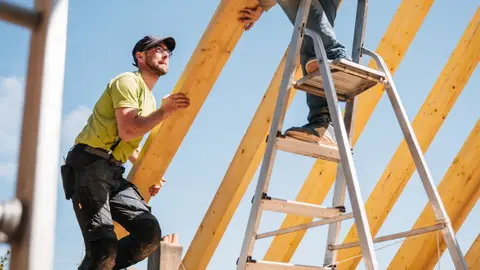
Every legitimate metal roof installation follows roughly the same sequence, whether the crew is running exposed-fastener panels on a ranch house or standing seam on a two-story colonial. What changes is how long each stage takes and how much prep the deck needs before the panels go down.
- Inspect the deck and pick tear-off or overlay. The crew checks for soft spots, rot and how many layers of old roofing are already there.
- Repair or replace damaged sheathing. Metal transfers stress to whatever it's fastened to, so a spongy deck gets new plywood or OSB before anything else happens.
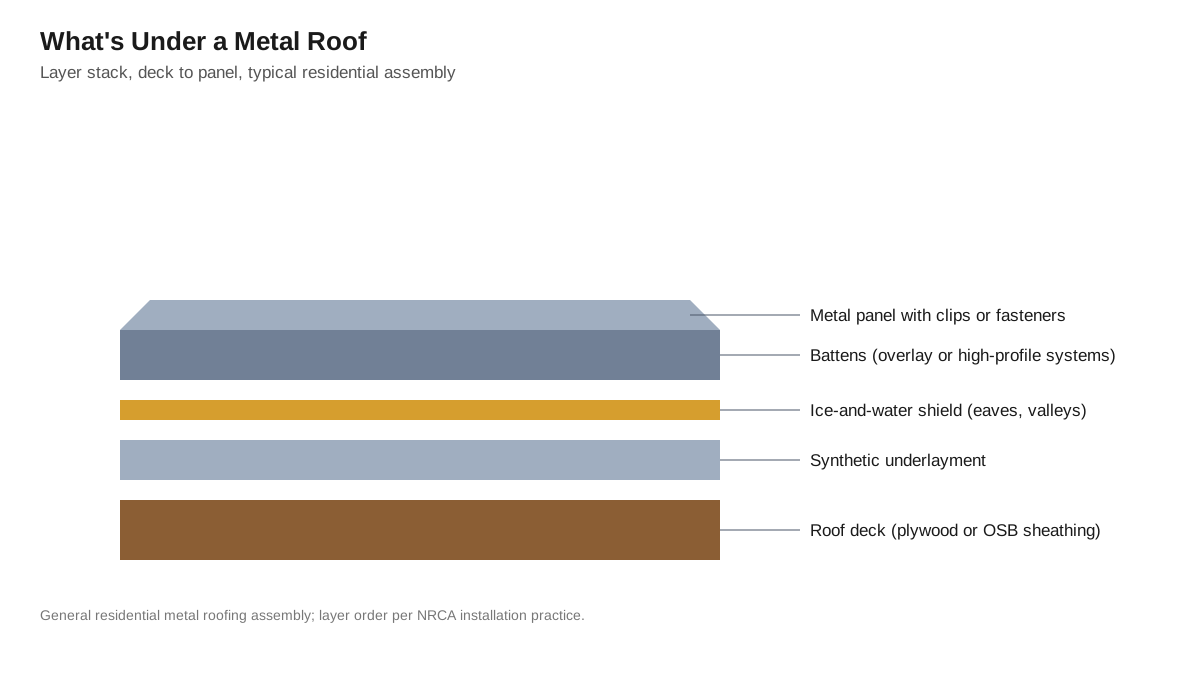
- Roll out underlayment: synthetic felt across the field, with an ice-and-water shield membrane at eaves, valleys and any penetration.
- Install drip edge and any battens or furring strips the panel system calls for.
- Set the starter panel square to the roof's longest, most visible edge, since every following panel lines up off that first one.
- Fasten or seam each panel in sequence, working with the prevailing wind direction so laps shed water instead of catching it.
- Flash every penetration by hand: vent pipes, chimneys, skylights, since a pre-made boot that doesn't match the panel profile is where most new-roof leaks start.
- Install the ridge cap, trim and any snow-retention hardware the roof pitch or climate calls for.
- Walk the finished roof for a final quality check and clean the site of metal shavings and fasteners, which rust and stain if left on shingles or a driveway.
Metal roof installation time depends more on deck condition and roof complexity than on the panels themselves. A crew that's done this before can usually run panels faster than a shingle tear-off and reroof would take, but a steep, cut-up roof with a dozen penetrations still slows everyone down no matter how good the crew is.
Can You Install a Metal Roof Over Existing Shingles?
Sometimes, and the answer depends on what's already up there. A single layer of asphalt shingles over a sound deck is the most common case where an overlay is realistic: the crew runs battens or a slip sheet over the shingles, then installs the metal panels on top, skipping the cost and mess of a full tear-off.
Two or more layers already on the roof usually rule an overlay out. Most building departments cap how many layers of roofing a deck can carry, and stacking a third layer on top, metal or otherwise, can trip that limit even where the code doesn't explicitly ban it for metal. If you don't know how many layers are already on your roof, that's the first question to ask a contractor, not a detail to guess at.
Overlay onto plywood alone, with no existing shingles, is the simplest case: underlayment goes down directly, and the deck condition rather than the shingle question drives every other decision. Installing a new metal roof over an existing metal roof is possible on some systems but adds weight and complicates flashing at every penetration twice over, so most contractors will only recommend it when the original panels are structurally attached in a way a new layer can key into.
| Situation | What usually happens | Why it matters |
|---|---|---|
| One shingle layer, deck sound, local code allows overlay | Battens or a slip sheet go over the shingles, then panels install on top | Skips tear-off and disposal cost, but adds weight and hides deck problems |
| Two or more layers already on the deck | Full tear-off is required in most jurisdictions before a new layer goes on | Most local codes cap how many roofing layers a deck can carry |
| Deck shows soft spots, rot or sagging | Full tear-off, deck inspection and any needed sheathing replacement first | A soft deck won't hold fasteners securely under wind load |
| You want the full manufacturer warranty | Full tear-off with new underlayment installed to spec | Most warranties assume a proper deck and underlayment, not an overlay |
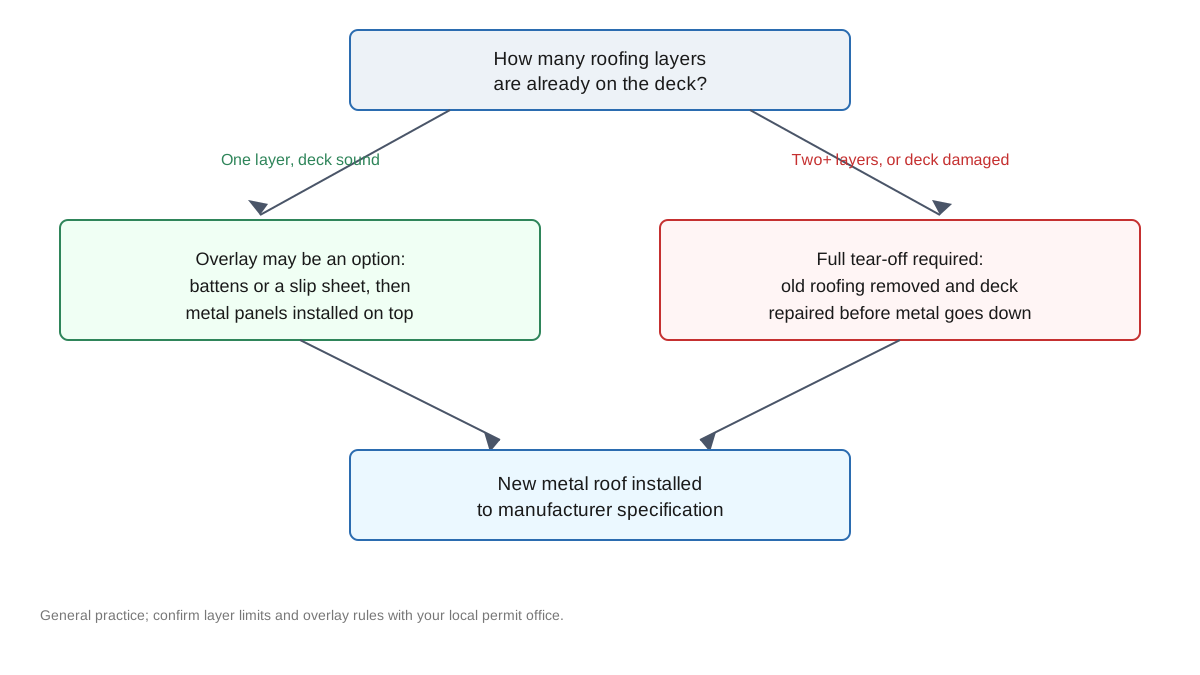
Whatever the situation, confirm the answer with your local permit office rather than a supplier's sales sheet. Code requirements for overlay, layer limits and even fastener spacing vary by state and are amended locally, and the permit desk is the only source that's actually current for your address.
Is a Metal Roof Installation Hard to Do Yourself?
Hard is relative, but the honest answer is that metal roof installation punishes small mistakes more than shingle work does. A shingle that's slightly misaligned still sheds water. A metal panel that's fastened crooked, or a screw driven at the wrong angle, can open a path for water that won't show up as a leak for a full season.
Where do the screws go? On exposed-fastener panels, screws go through the flat of the panel, never through the raised rib, into solid decking or a purlin, using a rubber-washered fastener driven straight and snug, not overdriven. A washer compressed flat no longer seals, and one left loose leaks just as fast. Standing-seam panels work differently: on most systems, no fastener ever penetrates the panel face at all. Concealed clips do the holding, which is a large part of why standing seam costs more to install and lasts longer at the seams.
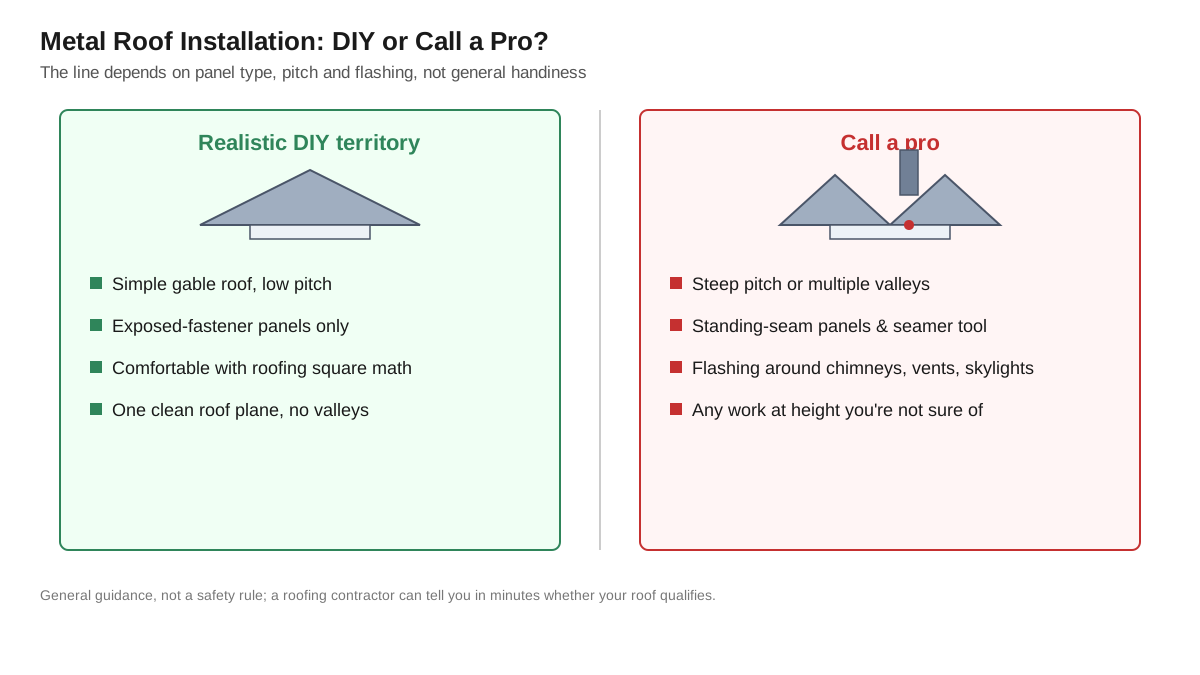
A homeowner who's comfortable on a low-pitch roof, understands roofing square math, and is willing to buy or rent a seamer (the tool that crimps standing-seam panels together) for standing-seam work can install exposed-fastener panels on a simple gable roof. Anything with a steep pitch, multiple valleys, or a standing-seam system is a different level of risk, both to the roof's water-tightness and to the person on the ladder. Search around and most metal roof installation DIY stories end the same way: the field panels went fine, and the flashing around a chimney or vent pipe is what leaked eight months later.
What Metal Roof Installation Costs, by the Numbers
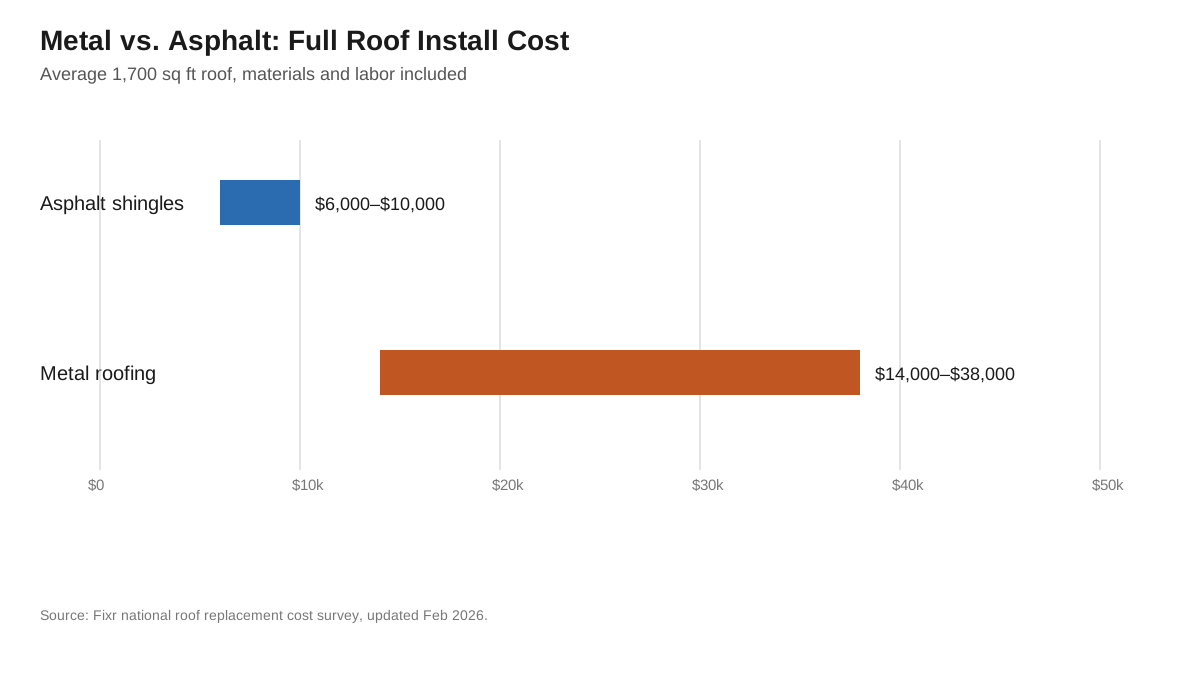
Metal roof cost per square foot is the number most homeowners search first, and the national surveys land in a wide but consistent band: HomeGuide puts installed metal roofing at $5 to $16 per square foot, HomeAdvisor puts material and labor together at $7 to $13 per square foot, and Fixr prices a full 1,700-square-foot metal roof at $14,000 to $38,000 installed, against $6,000 to $10,000 for the same roof in asphalt shingles. Roofers price material and labor by the square too, 100 square feet of roof area, which is why the table below mixes per-square-foot and per-square figures. These are researched ranges pulled from national cost surveys, not a quote for your roof, and none of them account for your pitch, panel choice or region. Installed cost varies by region, roof access and how much rot or hidden damage the crew finds once the old roofing comes off, which is why a written estimate from a local contractor is the only number that's actually binding. If you'd rather skip the range and get a real number, a roofing contractor that serves your area can measure the roof and quote it directly. The line for this site is 888-679-3798, and it helps to have your roof's approximate size, pitch and current material ready before you call.
| Job | Typical range | What moves the price | Source |
|---|---|---|---|
| Metal roof, fully installed (per sq ft) | $5 – $16 | Panel profile, steel vs. aluminum, roof pitch and complexity | HomeGuide, 2025 |
| Metal roof, fully installed (avg. 1,700 sq ft roof) | $14,000 – $38,000 | Same factors, plus tear-off vs. overlay | Fixr, Feb 2026 |
| Metal roofing material only (per square, 100 sq ft) | $100 – $800 | Steel vs. aluminum vs. copper/zinc, exposed-fastener vs. standing seam | HomeGuide, 2025 |
| Installation labor (per square) | $150 – $300 | Roof pitch, access, local labor rates | HomeGuide, 2025 |
| Tear-off and disposal of old roofing | $1,000 – $3,000 | Number of existing layers, disposal fees, dumpster access | HomeAdvisor, Jun 2026 |
| Roofing permits | $100 – $1,400 | Local jurisdiction, project value | HomeAdvisor, Jun 2026 |
| Repair to an existing metal roof | $1,700 average | Fastener back-out, sealant failure, panel damage | HomeAdvisor, Jun 2026 |
Standing seam pricing sits at the top of that range
Within the per-square-foot band above, a standing seam metal roofing system runs toward the higher end. HomeGuide's $100 to $800 per square for material alone reflects that spread, with standing seam and premium finishes like copper or thicker-gauge steel landing well above basic exposed-fastener panels in galvanized steel.
How we got these numbers: every figure above comes from a national cost survey, not a regional index. The data pack behind this guide doesn't include a metal-specific price index for any one metro area, so treat these as a national starting point and let a written local bid set the real number for your roof, your panel choice and your market's labor rates.
How to Vet a Metal Roofing Contractor Before You Sign
Licensing rules vary by state, and some states don't license roofers at all, so verify the license directly with your state's contractor licensing board rather than assume it's current. Confirm the contractor carries general liability insurance and workers' compensation coverage — ask to see the certificate of insurance rather than taking their word for it — and ask them to name the manufacturer certification they hold for the specific panel line they're quoting. Programs like NRCA's contractor certifications and Owens Corning's Preferred Contractor network mean the installer has been vetted on that manufacturer's installation standards, which matters more for warranty claims than a generic license does.
Ask for three things in writing before you sign anything: the exact panel profile and gauge (gauge is the sheet metal's thickness; a lower number means thicker, more dent-resistant steel — residential panels commonly run from 24-gauge steel on the heavy end down to 29-gauge on the light end), the fastener type and spacing, and the flashing detail at every penetration on your roof. A bid that just says "standing seam metal roof, $X" without those details is a bid you can't actually compare to the next one.
Get every bid in writing with the panel gauge, fastener type, underlayment and flashing details spelled out, and never climb onto a wet or icy metal roof yourself to "take a look" before a contractor gets there.
If you're gathering bids, calling 888-679-3798 connects you with a roofing contractor that serves your area. Ask them the certification and warranty questions above before you compare their number to anyone else's.
For the full checklist on licensing, red flags and what a legitimate estimate should include beyond metal-specific questions, see our guide to choosing a roofing contractor.
How Climate Changes the Metal Roof Installation Decision
Hail is the biggest regional factor in whether metal makes financial sense. The Insurance Information Institute tracked 5,432 major hail events in 2025, most concentrated in Texas (902), Kansas (375), Oklahoma (369), Nebraska (315) and Missouri (253), and NOAA's Storm Prediction Center defines severe hail as 1 inch in diameter or larger, with significant severe hail starting at 2 inches. In those states, panel gauge and any documented impact resistance matter more than they would in a milder market. A thicker steel panel dents less than a thin aluminum one, and it's worth asking a contractor to show manufacturer impact-testing documentation, such as a UL 2218 Class 4 impact rating, rather than taking "hail resistant" at face value.
Cold and snow country brings a different set of questions: how the panels handle snow load and shedding, and whether the roof needs snow-retention hardware so a sheet of snow doesn't avalanche onto a walkway below. Metal roof installation in winter is possible on new construction or a planned reroof, but sealants and adhesives used at flashing details cure more slowly in cold weather, so a winter install calls for a crew that knows how to work around that instead of rushing the schedule.
Metal roofs run cooler in the summer than most people expect, despite the sheet-metal stereotype. A reflective factory finish combined with proper ventilation between the deck and panel keeps a metal roof from radiating heat into the attic the way a dark, unventilated roof of any material would. The panel doesn't hold heat after sundown either, unlike asphalt, which is one reason metal shows up so often on energy-conscious builds in hot climates.
Near salt water, aluminum panels or marine-grade coated steel resist corrosion better than standard galvanized steel, and fastener hardware should match. A steel screw in an aluminum panel sets up galvanic corrosion at the contact point over time, a reaction between dissimilar metals that eats away at the weaker one. If you're within a few miles of the coast, ask specifically about the metal alloy and fastener compatibility, not just the finish color.
The Metal Roof Noise Myth, and a Few Others Worth Retiring
The metal roof noise myth pictures every rainstorm sounding like a tin shed. In practice, a metal roof installed over solid decking and underlayment, the way almost every residential system is built today, sounds close to a shingle roof from inside a finished attic or a room below. The loud-tin-roof sound people remember comes from open-framed structures like carports and pole barns where the panels are fastened directly to purlins with nothing solid or absorbent underneath.
Rust is another myth that doesn't hold up for most modern systems. Galvalume and painted steel panels carry a factory coating specifically designed to resist corrosion, and aluminum doesn't rust at all, though it can develop a white surface oxidation in some conditions that's cosmetic rather than structural. The failure point usually isn't the panel field, it's a scratched or cut edge where the coating has been compromised and never touched up.
Lightning is the other one that comes up constantly, and metal doesn't attract lightning any more than any other roofing material on the same house in the same spot. Metal does conduct electricity better than shingles if a strike does happen, which some homeowners read as safer, since the charge disperses across a conductive surface rather than concentrating and igniting combustible material the way it can with wood shakes.
Maintaining a Metal Roof, and Making Sense of the Lifespan Question
Maintenance on a metal roof is lighter than on a shingle roof, but it isn't zero. Clear debris and leaves out of valleys twice a year so they don't trap moisture against a seam. Walk the roof, or have a contractor do it, after any major hailstorm or wind event to check fastener heads on exposed-fastener systems, since a fastener that's backed out even slightly is the single most common source of a slow leak on that panel type.
The metal roof lifespan question comes up in nearly every conversation about the material, and the most honest answer avoids quoting a single number. Ask instead for the manufacturer's specific finish warranty and structural warranty, get both in writing, and compare those documented years directly against whatever a competing bid offers, rather than trusting a verbal "lasts X years" claim from either contractor.
Touch up scratches and cut edges with matching paint as soon as you notice them, since bare metal at a cut edge is where corrosion gets its first foothold. If a tree branch or ladder dents a panel, a cosmetic dent rarely compromises the seal, but a puncture does. For repair-specific pricing once damage shows up, see our roof repair cost guide.
For a day-by-day look at what a full reroof involves regardless of material, see our roof replacement timeline guide.
Insurance, Storm Claims and What to Document Before the Next Hailstorm
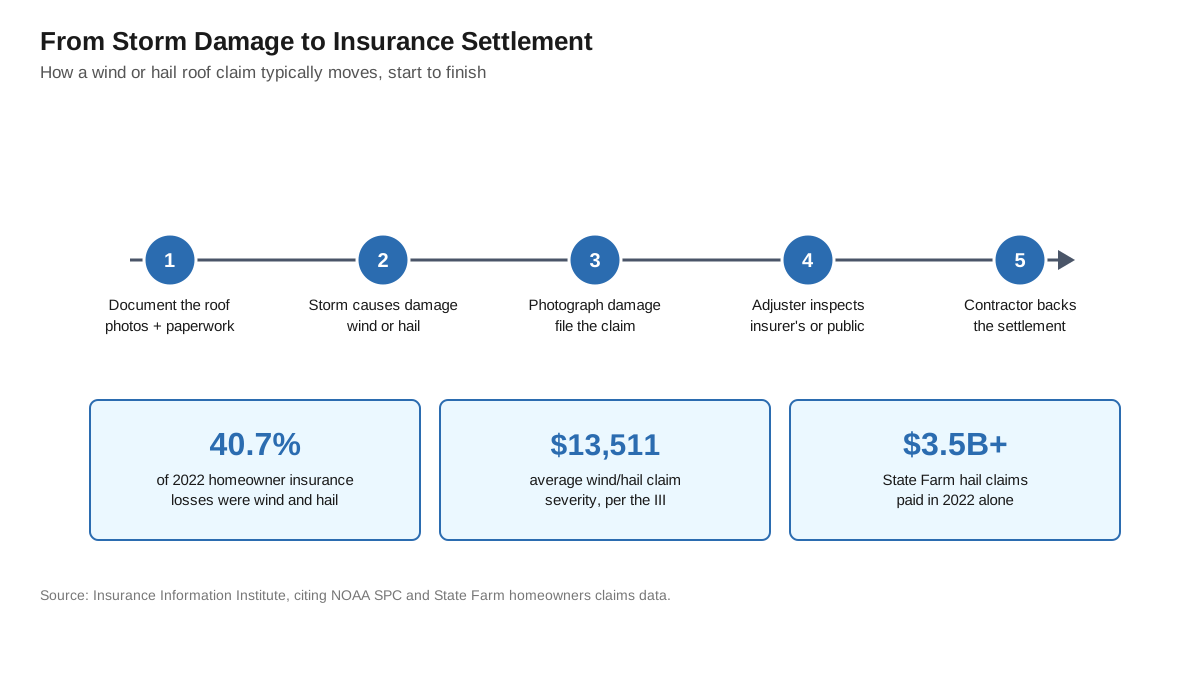
Wind and hail together accounted for 40.7% of homeowners insurance losses in 2022, with a claim frequency of 2.82 per 100 house-years and an average claim severity of $13,511, according to the Insurance Information Institute. State Farm alone paid out more than $3.5 billion in hail claims in 2022, concentrated in Minnesota, Texas, Arkansas, Illinois and Nebraska. None of that is a reason to panic about a roof that's already up, but it's a reason to document what you have before a storm, not after.
Photograph your roof from the ground and, if it's safe to do so, from a ladder at each corner, once a year and again after any hailstorm severe enough to dent a car hood or strip leaves off trees. Keep your roofing contract, warranty paperwork and any inspection reports in one folder, physical or digital, so a claims adjuster has documentation to work from instead of your memory of when the roof went on. For the specifics on filing a hail claim once damage is confirmed, see our hail damage roof repair guide.
One practical note for anyone comparing bids after a storm: a public adjuster works for you and takes a percentage of the settlement, while the insurance company's adjuster works for the insurer. Neither one replaces a roofing contractor's own inspection, and a legitimate contractor will document damage with photos and measurements that hold up whichever adjuster you're dealing with.
Frequently asked questions
Can a metal roof be installed over existing shingles?
Is a metal roof installation hard to do yourself?
Where do the screws go when installing a metal roof?
Can a metal roof be installed in winter?
Are metal roofs hot in the summer?
Why do homeowners choose metal over asphalt shingles?
Can you install a new metal roof over an old metal roof?
How much does labor cost to install a metal roof?
How much is a standing seam metal roof installed?
What's the real difference between exposed-fastener and standing-seam panels?
Sources and further reading
- Roof Replacement Cost — Fixr, Updated February 4, 2026
- How Much Does It Cost to Install a Roof? — HomeAdvisor, Updated June 17, 2026
- Roof Replacement Cost — HomeGuide, November 7, 2025
- Roof Replacement Cost — Forbes Home, 2026
- Cost vs. Value Report 2025 — JLC / Zonda, 2025
- How Much Does It Cost to Repair a Roof? — HomeAdvisor, Updated June 19, 2026
- Facts + Statistics: Hail — Insurance Information Institute, 2025 data
- Facts + Statistics: Homeowners and Renters Insurance — Insurance Information Institute, 2018-2022 data
- Storm Prediction Center FAQ — NOAA Storm Prediction Center, undated
- NRCA Roofing Manual and Contractor Certification — National Roofing Contractors Association, current
- Roofing Contractor Network — Owens Corning, current
People also search for
Related guides
How to Choose a Roofing Contractor (Certifications, Contracts and Red Flags)
· 19 min read
Hail Damage Roof Repair: Spotting It and Filing the Insurance Claim
· 21 min read