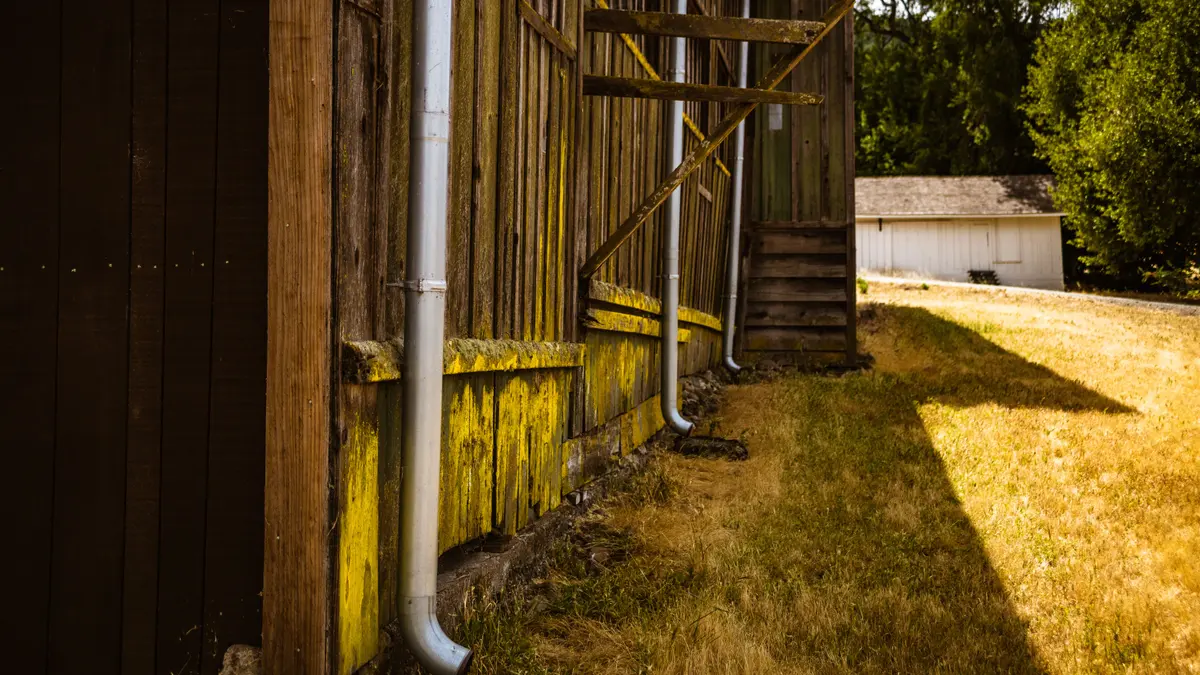
A roof does its job of shedding water long before anyone thinks about where that water goes next. Gutter installation is the unglamorous half of a weathertight house: the trough-and-downspout system that catches roof runoff and routes it away from the fascia, the siding, and the foundation instead of letting it fall straight down in a curtain. This guide covers what a proper installation actually involves, how materials and gutter size affect both performance and price, what drives the cost when no single national number tells the whole story, when the job is safe to do yourself and when it isn't, and how the right setup changes by region: a system built for a Buffalo winter and one built for a Houston downpour are not the same project.
What Gutters Actually Do for a Roof and a Foundation
Look at any roof and the physics are simple: rain lands on a sloped plane and runs to the lowest edge, the eave, where it has to go somewhere. A gutter installation is what decides where "somewhere" is. Done right, it catches that runoff in a trough hung along the fascia, carries it sideways with a steady fall, and drops it out a downspout well away from the house. Skip it, or let an old system fail, and the water sheets off the edge in a curtain, landing exactly where a house can least afford it: against the fascia board, down the siding, and into the soil a few inches from the foundation. 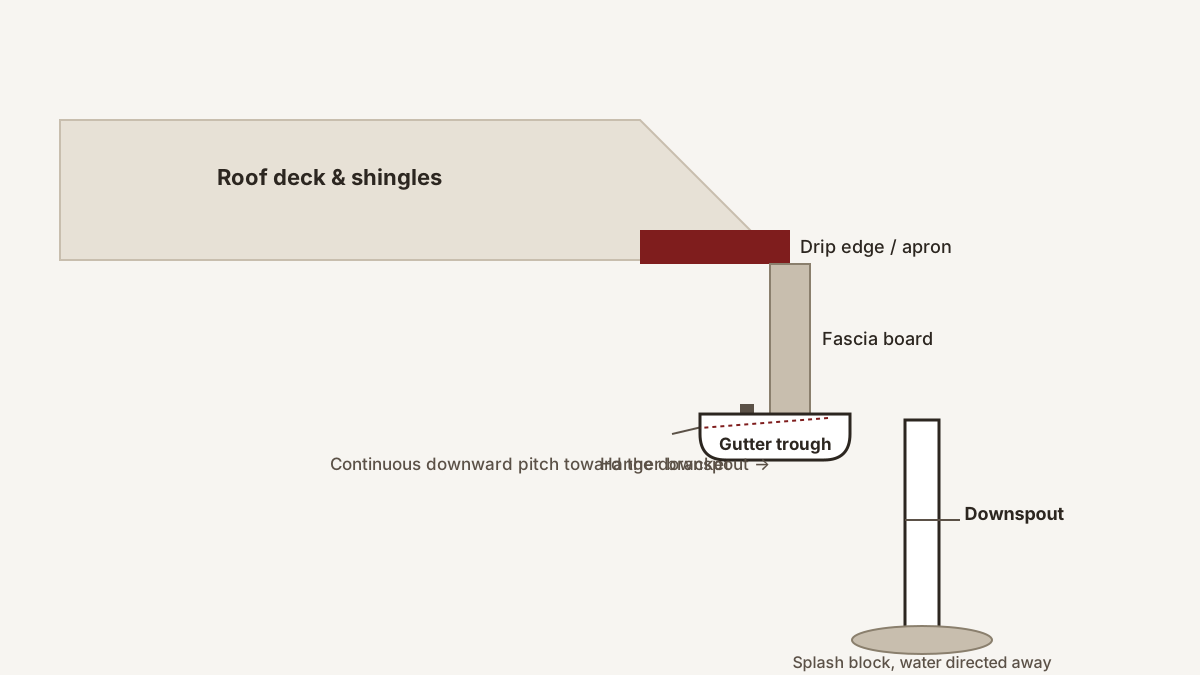
That last part is the one homeowners underestimate. A roof that sheds a heavy storm's worth of water onto a narrow strip of dirt next to the footing is running a slow, repeating experiment in soil saturation. Over a few seasons that pattern shows up as basement dampness, efflorescence on the foundation wall, or a crawlspace that never quite dries out, the kind of standing-moisture conditions the EPA points to as a starting point for indoor mold growth. It's also why water-damage restoration groups like IICRC treat controlling moisture at a building's envelope as step one, long before anyone needs a dehumidifier in the basement, and why FEMA's guidance on protecting homes from water damage includes routing roof drainage well clear of the structure.
Picture a 1980s split-level with sagging aluminum gutters and a dark, streaked band on the siding under every seam: that's not a paint problem, it's a drainage problem, and it's one of the most common things a roofing crew gets called out for on a house that otherwise looks fine. For leaks that trace back to the roof deck itself rather than the gutters, see finding the source of a roof leak.
Signs the Old Gutters Are Past Saving
Some signs point to a quick fix. Others mean the whole run needs to come down. Here's roughly the order a roofing crew sees them, most common first:
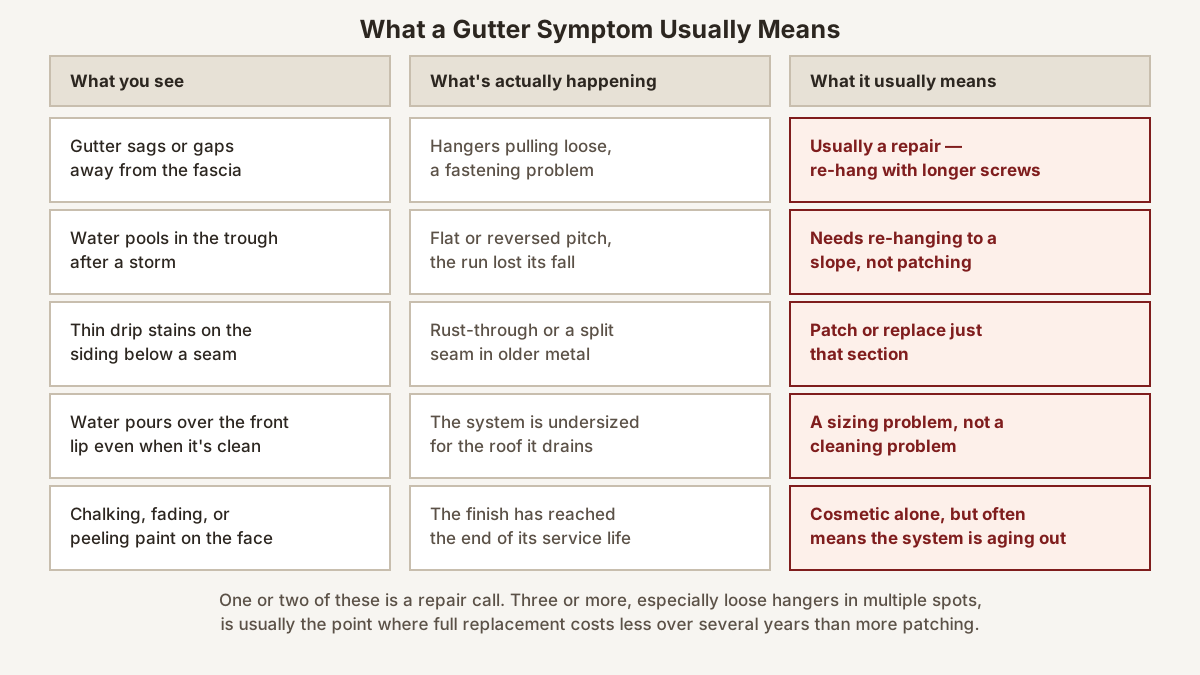
- Hangers pulling out of the fascia. The gutter separates from the roofline in a visible gap, sags between brackets, or tips forward under the weight of wet leaves. This is usually a fastening problem, not a material problem, and it's often fixable by re-hanging with longer screws into solid wood.
- Flat or reversed pitch. Water sits in the trough after a storm instead of running to the downspout: standing water, algae streaks, or mosquito activity in the run. A section that's lost its fall (the built-in slope toward the outlet) needs to be re-hung, not patched.
- Rust-through or split seams on older galvanized steel or aging sectional aluminum. Pinhole rust and hairline cracks at the joints show up as thin drip lines staining the siding below, worse after every rain.
- Overflow during hard rain, even when clean. If water pours over the front lip in a heavy downpour and the gutters aren't clogged, the system is undersized for the roof it's draining, a sizing problem covered below, not a cleaning problem.
- Chalking, fading, or peeling paint on the gutter face itself, usually meaning the finish has reached the end of its service life even if the metal underneath is still sound, cosmetic on its own, but a signal the whole system is aging out at once.
One or two of these on an otherwise sound system is a repair call. Three or more, especially hangers pulling loose in multiple spots, is usually the point where a full gutter installation costs less over several years than another round of patch repairs.
Gutter Types and Materials, Side by Side
Every gutter sold today is either sectional (pre-formed lengths joined with connectors) or formed on site from a coil of metal on a portable roll-forming machine, so a long wall gets one continuous run with no joints except at corners and end caps. The on-site method costs more per foot and cuts down on leak-prone joints; sectional costs less and is easier for a crew to replace piecemeal later. On aluminum jobs, the coil that feeds the roll-former typically runs 0.027-inch or 0.032-inch stock; the heavier gauge shrugs off hail and ladder contact better but adds to the per-foot price. Material choice matters just as much as the forming method:
| Material | Handling and weight | How it ages | Where it fits best |
|---|---|---|---|
| Aluminum | Light, easy to form on site, holds paint well | Won't rust; can dent in hail or under a falling limb | The default choice for most houses in most climates |
| Vinyl | Lightest, cheapest, snaps together by hand | Can go brittle and crack in hard freezes; UV fades it over time | Mild climates, budget replacements, DIY jobs |
| Galvanized or Galvalume steel | Heavier, needs more support, harder to cut and fit | Handles snow load and ladder contact better; can rust once the coating is scratched through | Snow country, roofs with heavy ice and debris load |
| Copper | Heaviest, priciest, usually soldered by a specialist | Needs no paint; develops a weathered patina instead of rusting | Historic homes and houses where the gutter is meant to be seen |
Profile shape is a smaller decision but still worth knowing: K-style gutters (the crown-molding-like profile on most American houses) hold more water for their height than half-round gutters, which is why half-round shows up mostly on older and historic homes chasing a specific look rather than maximum capacity. If a metal roof is also on the table, material compatibility between the roofing panels and the gutter matters too; see the metal roofing guide for how that pairing works.
Picking the Right Gutter Size for Roof Runoff
Bigger isn't automatically better, but undersized gutters overflow no matter how well they're installed. The right gutter size for roof runoff depends on how much roof area drains into each run and how hard the rain comes down in your area, not just the size of the house. 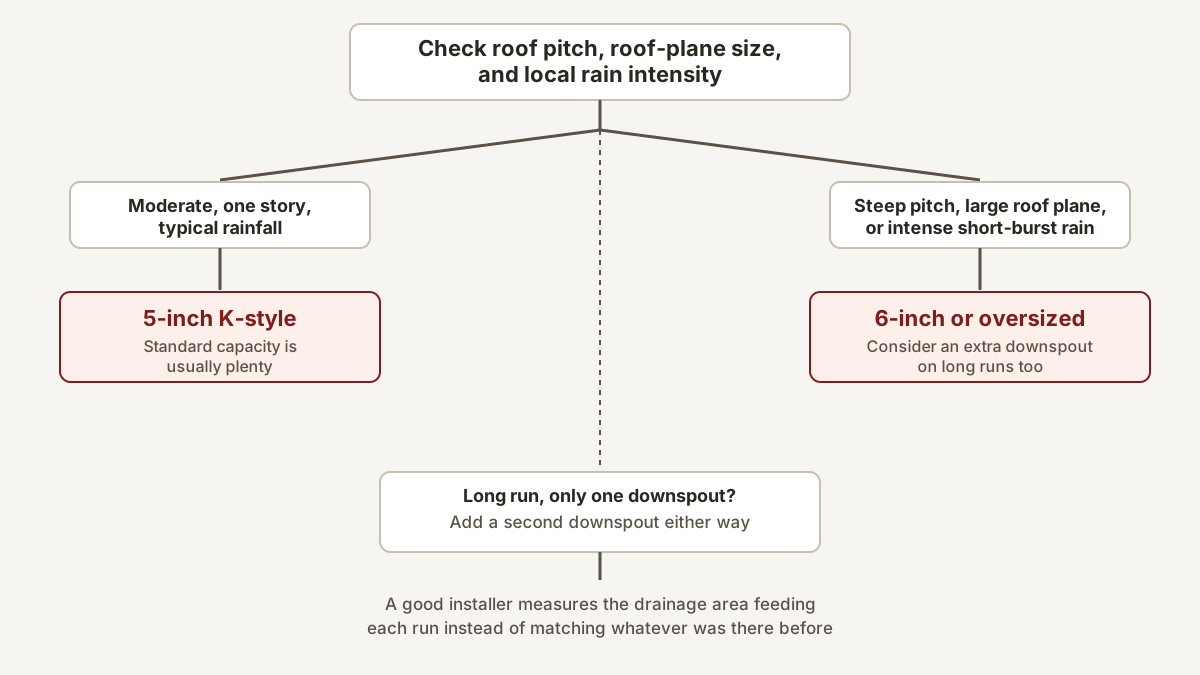
| Your situation | 5-inch K-style | 6-inch or oversized |
|---|---|---|
| One-story house, moderate roof pitch, typical rainfall | Usually plenty of capacity | Overkill for most runs |
| Steep roof pitch or a large, unbroken roof plane feeding one run | Can overflow in a hard downpour | Handles the faster runoff better |
| Region that gets intense, short-burst rain (tropical storms, high-desert monsoon patterns) | Marginal during the heaviest events | Recommended, sometimes with an extra downspout added |
| Long, uninterrupted gutter run with only one downspout | Struggles at the far end of the run | Better paired with a second downspout regardless of gutter width |
A good installer walks the roof, counts the drainage area (the roof square footage actually feeding each gutter run) and the number of downspouts, and sizes the system to that math instead of just matching whatever was there before. If the old gutters overflowed constantly, upsizing during replacement is usually the fix, not a bigger argument with the gutter guards.
How a Proper Gutter Installation Goes, Step by Step
A crew that knows what it's doing follows roughly the same sequence on every roof — a straightforward ranch or a place with a dozen corners and three roof planes: 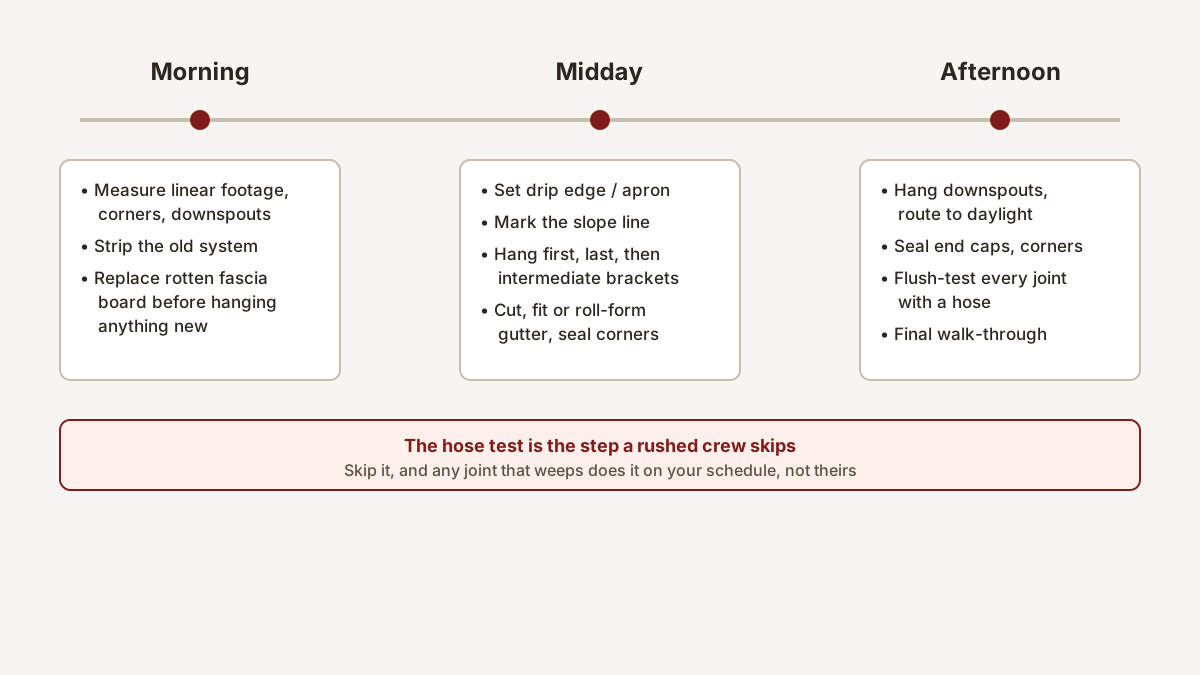
- Measure and plan the run. Total linear footage, corner count, downspout locations, and any obstacles (a deck roof, a bay window, a chimney) get mapped before any material shows up.
- Strip the old system and prep the fascia. Rotten fascia board gets replaced now, not after the new gutter is hung over it: hanging a gutter on soft wood just guarantees a repeat call in a year or two.
- Set the drip edge or gutter apron so roof runoff sheds behind the back of the gutter instead of running down the fascia and behind the new trough.
- Mark the slope line from the high point of the run down to each downspout outlet, then hang the first and last hangers to that line before anything else goes up.
- Set the intermediate hangers tight enough that the gutter won't sag under a full load of wet leaves or an ice load, keeping the pitch consistent the whole way.
- Cut and fit the gutter — or, for a one-piece system, run the coil through the roll-forming machine, a portable tool that shapes one continuous, joint-free gutter straight off the coil, on site to the exact wall length, sealing corners and end caps as they go.
- Hang the downspouts — 2-by-3-inch or 3-by-4-inch stock, the two standard sizes, with the larger moving more water off a big roof plane — and route them to daylight, a splash block, or a buried drain line, well clear of the foundation.
- Flush-test the whole run with a hose before the crew leaves, watching every joint and corner for a drip and checking that water actually reaches and clears each downspout.
That last step is the one corners get cut on. A rushed crew packs up before the hose test, and any joint that's going to weep does it on the homeowner's schedule instead of the installer's.
Gutter Guards Worth It?
Every guard style promises to end gutter cleaning. None of them fully deliver on that promise, but the good ones cut cleaning frequency by a real amount and keep large debris (whole leaves, pine-needle mats, tennis balls) out of the trough.
Micro-mesh screens block the most debris but need periodic brushing when fine grit or asphalt shingle granules cake onto the mesh. Reverse-curve (surface-tension) guards shed leaves well in a hard rain but can struggle in a light drizzle, where water tends to follow the curve rather than drop straight through. Foam inserts are the cheapest and easiest DIY option but degrade faster and can hold moisture against the gutter metal. Brush-style guards are simple and inexpensive but the least effective in a yard with heavy tree cover.
The honest answer to whether gutter guards are worth it depends on what's actually falling on the roof. A house shaded by pines or oaks gets real value from a decent mesh system: fewer ladder trips, less risk of ice damming from packed leaf debris. A house with no overhanging trees is paying for a problem it barely has. Either way, a guard is an added line item on the estimate, not a substitute for correct pitch and hanger spacing, and some manufacturers will void a product warranty if the wrong guard style goes on their gutter.
What Gutter Installation Costs
There's no single verified national survey of gutter installation costs in the data behind this guide, so treat any flat number you see online, including a lot of the online calculators, with some skepticism. What's true everywhere is that gutter installation cost per foot (priced by the linear foot, the standard unit contractors quote in) is the figure most estimates lead with, and that per-foot price swings hard based on a handful of factors:
| What's on the estimate | What moves the price | Source |
|---|---|---|
| Material | Vinyl and standard aluminum sit at the low end; steel, copper, and half-round profiles cost more per foot in both material and labor | Not in a verified survey; standard trade pricing factor |
| Sectional vs. on-site formed | A coil-fed, joint-free run typically costs more per foot than pre-formed sectional pieces, since it needs a specialized machine and truck | Not in a verified survey; standard trade pricing factor |
| Corners, valleys, and roof complexity | Every inside or outside corner, plus custom flashing at a valley, adds labor beyond a simple straight run | Not in a verified survey; standard trade pricing factor |
| Fascia condition | Rotten fascia board found mid-job means added carpentry before the new gutter can be hung, usually priced as a line item | Not in a verified survey; standard trade pricing factor |
| Downspout count and routing | Extending a downspout to daylight, tying into a buried drain, or adding downspouts to fix an undersized system all add to the total | Not in a verified survey; standard trade pricing factor |
| Gutter guards | Priced separately per foot on top of the base gutter installation, and the range varies a lot by guard style | Not in a verified survey; standard trade pricing factor |
Because the gap between a basic vinyl job and a copper, on-site-formed system with guards is enormous, the only number worth trusting is a written, itemized estimate for your actual house — material, linear footage, corner count, and downspouts spelled out, not a single lump figure. Get two or three of them before signing anything.
For scale, a full roof replacement itself averages $9,607 to $10,000 across major contractor-cost surveys (HomeAdvisor, Fixr), with typical jobs ranging from $5,902 to $13,374 depending on size and material; gutters are a comparatively small line item, one reason many owners fold new gutters into that scope instead of paying for a second mobilization when the fascia needs work anyway. Every figure in this guide, gutter or reroof, is a researched range pulled from published surveys, not a quote for your project — the only number that's actually binding is a written estimate from a contractor who has walked your roofline in person.
DIY or Hire a Pro?
Gutter work spans a wide range of difficulty. Cleaning a single-story ranch's gutters from a sturdy ladder is a Saturday project for most homeowners. Reworking the pitch (the gutter's built-in slope toward the downspout) on a two-story colonial with a steep roof is a different job entirely.
| Task | Realistic DIY? | Why |
|---|---|---|
| Cleaning debris out of existing gutters (single story) | Yes, with a stable ladder and a helper | Low height, no cutting or fastening involved |
| Resealing a leaking joint or end cap | Often yes | A tube of gutter sealant and basic prep handle most small leaks |
| Replacing a single damaged section | Sometimes, if the pitch of the existing run is sound | Matching the exact profile and re-hanging to the same slope is the tricky part |
| Full tear-off and new gutter installation on a two-story fascia | Not recommended for most homeowners | Fall risk, fascia repair, and getting the pitch right over a long run all compound |
| Cutting and fitting corners, matching pitch across multiple runs | No | Small angle errors show up as standing water and overflow later |
| Any work near an overhead power service mast or line | No | Ladder and metal gutter work near a live service drop is a job for a professional every time |
The honest dividing line isn't cost, it's height and complexity. A one-story cleaning job with a good ladder is low risk. Anything involving a second story, a steep pitch, or fascia carpentry shifts the balance toward a professional crew that carries the right ladders, harnesses, and insurance for the job.
Ladder Safety and When to Call a Pro Instead
Most gutter injuries have nothing to do with the gutter itself — they happen on the ladder. A straight or extension ladder needs to rest against something solid enough to hold it, and a gutter is not that thing.
Never lean a ladder directly against the gutter — the lip will flex or crush under the load and take the ladder down with it, so set the ladder against the fascia or roof edge with a stand-off stabilizer, or move it to solid trim.
A few other rules matter more than people think: set the base 1 foot out from the wall for every 4 feet of height up to where the ladder rests (the standard 4-to-1 angle), keep three points of contact at all times, never lean out sideways to reach "just a little farther" (walk the ladder instead), and skip the ladder entirely on wet grass, ice, or a slope you can't get level footing on. If a storm just tore hangers loose and a section is swinging free over a walkway or a driveway, that's not a ladder job at all — rope off the area underneath and get it looked at by someone who does this for a living. Calling 888-679-3798 connects you with a roofing contractor who can send someone out to assess storm damage to gutters, flashing, or the roof deck itself, and describe over the phone what you're seeing so they know what to bring.
Working on a steep-pitch roof to fix a gutter from above instead of from a ladder is its own, higher-risk category — fall protection (a harness anchored to the structure, not just good boots) is standard practice for a roofing crew and not something to improvise on a Saturday.
How to Choose a Gutter Installer
A gutter installation is small compared to a full reroof, but the vetting is the same. Start with the basics: is this a business with a permanent address and a landline, not just a truck and a sign?
- Proof of insurance — general liability and workers' compensation, not just a claim of being "insured." Ask for a certificate naming your address, not a photo of one.
- Licensing where it applies — contractor licensing rules for gutter and exterior work vary by state and sometimes by county, so ask directly what license number covers this job and verify it's current rather than taking their word for it; most states post a free contractor-license lookup online for exactly this, and it's worth confirming active liability insurance the same way before any work starts.
- Manufacturer or trade certification — installers who also do roofing work are sometimes affiliated with a program run through the National Roofing Contractors Association or a shingle manufacturer's contractor network, worth asking about even though it isn't required for gutter work specifically.
- A written, itemized estimate — material, gauge or thickness, linear footage, downspout count and routing, guard line item if included, disposal of the old system, and a start-to-finish timeline, all on paper before a deposit changes hands.
Red flags worth walking away from: a price that only exists "if you sign today," a request for full payment up front, no local references, or a crew that shows up without a ladder stabilizer or fall protection on a two-story job. A call to 888-679-3798 can connect you with a roofing contractor who installs gutters as part of a broader roofing scope, which often helps if the fascia or roof edge needs work at the same time as the gutters. For the full breakdown of certifications and questions to ask before hiring, see how to choose a roofing contractor.
Gutter Maintenance: Keeping a New System Working
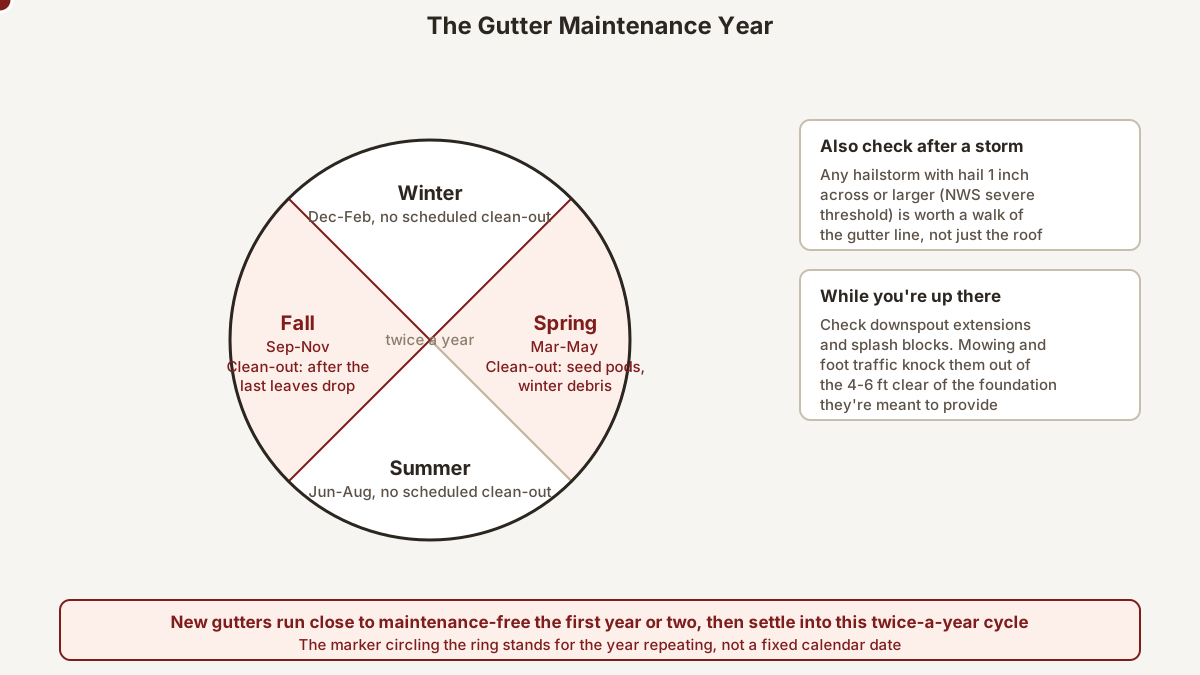
New gutters, installed correctly, are close to maintenance-free for the first year or two. After that, gutter maintenance becomes a twice-a-year habit that keeps the whole system doing its job, ideally paired with a full roof inspection so both get checked at once.
Clear debris in late fall, after the last leaves have dropped, and again in early spring, once seed pods and winter debris have accumulated — more often under heavy tree cover. While you're up there (or watching a pro do it), check for the same signs covered earlier: sagging sections, pulled hangers, standing water after a hose test, and any new dents from a storm. After any hail event at or above the National Weather Service's severe threshold — hailstones 1 inch across or larger — it's worth a quick walk of the gutter line along with the roof, since the same hail that dents a roof vent or shingle tab dents gutters and downspouts just as easily.
Trim back branches that overhang the roofline; a single overhanging limb feeds more debris into one gutter run than the rest of the roof combined, and it's also a common cause of a hanger snapping loose in a windstorm. Downspout extensions and splash blocks are worth checking too — they get kicked out of place by mowing and foot traffic more often than people expect, which quietly undoes a well-installed system by dumping water right back at the foundation instead of the 4 to 6 feet clear that a properly aimed extension is meant to provide.
Regional Notes: Freeze Belt to Hurricane Coast
A gutter system built for a Phoenix bungalow and one built for a Buffalo colonial should not look the same, even if the roof size is identical.
Freeze Belt
In the northern tier, ice is the bigger threat, not rain volume. Meltwater that refreezes overnight at 32°F backs up behind ice built up in a clogged or flat-pitched gutter and pushes water under the shingles above it — the start of an ice dam, covered in more detail in the companion guide on ice dams and roof leaks. Steel gutters or reinforced hangers handle the added weight of ice better than a light aluminum system on marginal fasteners.
Hail Alley
The central Plains states see the highest hail exposure in the country. 5,432 major hail events were recorded nationally in 2025, with Texas, Kansas, Oklahoma, Nebraska, and Missouri topping the list, according to NOAA Storm Prediction Center data compiled by the Insurance Information Institute. In that stretch of the country, dented gutters and downspouts after a hail event are common enough that many insurers expect a claim to cover the roof and the gutters together rather than as separate items.
Hurricane Coast
Along the Gulf and Atlantic coasts, the concern is wind-driven volume and fastener strength, not ice. Hangers spaced tighter than the bare minimum, and fasteners rated for wind uplift rather than standard screws, keep a gutter system attached through a tropical storm instead of peeling off in sheets. Downspouts sized for a fast, heavy burst of rain matter more here than almost anywhere else in the country.
Arid and Wildfire-Adjacent Regions
Less rain doesn't mean no gutter needs — monsoon-pattern downpours in the Southwest can overwhelm an undersized system in minutes even in a place that's dry most of the year. In wildfire-adjacent areas, a metal guard system that keeps dry pine litter and embers from collecting in the gutter is a real defensive-space consideration, not just a debris issue.
Whatever the region, checking local NOAA climate normals for typical rainfall intensity, and following seasonal home-preparedness guidance like Ready.gov's severe-weather checklist, is a better starting point than assuming a national average tells you anything about your roof. Installation cost follows the same logic: it varies by region and roof access, and the extent of any hidden fascia rot found once the old gutters come down usually moves the final number more than which state you're in.
Frequently asked questions
Is gutter installation something I can do myself?
Cleaning existing gutters or resealing a small leak is realistic for most homeowners with a stable ladder. A full gutter installation, especially on a two-story fascia or a steep roof, involves fall risk, fascia carpentry, and getting a consistent pitch across a long run — details that are hard to get right without experience, and easy to get wrong in ways that only show up during the next hard rain.
How much does gutter installation cost?
There's no single trustworthy national figure, since price swings widely by material, sectional versus on-site-formed gutters, roof complexity, and downspout count. The only number worth relying on is a written, itemized estimate for your specific house — material, linear footage, corners, and downspouts spelled out. Get two or three quotes rather than trusting a flat online calculator.
Why is gutter installation so expensive on some houses?
Complexity drives the price more than square footage does. A house with many corners, valleys, a steep roof pitch, rotten fascia that needs replacing first, or an upgrade to steel, copper, or an on-site-formed system will cost more per foot than a simple single-story run in standard aluminum, even on a smaller home.
Are gutters covered by homeowners insurance?
Sudden storm damage — a branch that crushes a run, hail that dents a section — is typically covered the way other wind and hail damage is. Wind and hail losses made up 40.7% of homeowner claim payouts in 2022, with an average claim severity of $13,511, according to the Insurance Information Institute. Gradual wear, rust, or damage from years of neglect usually is not.
Sectional or one-piece: what's the best way to install gutters?
One-piece, on-site-formed gutters have fewer joints and therefore fewer places to leak, which makes them the better long-term choice on most houses. Sectional gutters cost less and are easier to repair piecemeal later, which still makes sense on a budget job or a house where a future partial replacement is likely.
Do I need 5-inch or 6-inch gutters?
A 5-inch K-style gutter handles a typical one-story roof with moderate pitch just fine. A steep roof, a large unbroken roof plane, a region with intense short-burst rain, or a long run with only one downspout all push the decision toward 6-inch or larger, sometimes with an added downspout instead of just a wider trough.
Are gutter guards worth the extra cost?
For a house shaded by pines or oaks, a decent mesh or reverse-curve guard cuts cleaning frequency in a real way and reduces the ice-dam risk that comes from packed leaf debris. For a house with little overhanging tree cover, guards mostly add cost for a problem that barely exists. No guard style eliminates cleaning completely.
How are gutter downspouts and hangers installed?
Hangers get set to a marked slope line, starting with the first and last bracket at each end of a run, then filled in tightly enough to prevent sagging under a full leaf or ice load. Downspouts attach at the low point of each run and route to daylight, a splash block, or a buried drain line well clear of the foundation.
Is a gutter system actually necessary?
For most houses, yes. Without one, roof runoff sheets straight down next to the foundation, which over time contributes to basement dampness, soil erosion, and siding stains — the kind of standing moisture that groups like the EPA associate with mold-friendly conditions. A house with a very wide roof overhang and sandy, fast-draining soil is the rare exception where the risk is lower.
How often do gutters need maintenance?
Plan on clearing debris twice a year — late fall after leaves drop and early spring — more often under heavy tree cover. Check again after any hail event at or above the National Weather Service's one-inch severe threshold, since the same storm that dents a roof usually dents the gutters and downspouts too.
Sources and further reading
- Facts + Statistics: Hail — Insurance Information Institute (citing NOAA Storm Prediction Center), 2025 data
- Facts + Statistics: Homeowners and Renters Insurance — Insurance Information Institute, 2018-2022 data
- Frequently Asked Questions — NOAA Storm Prediction Center
- NRCA — National Roofing Contractors Association
- Mold — U.S. Environmental Protection Agency
- IICRC — Institute of Inspection, Cleaning and Restoration Certification
- U.S. Climate Normals — NOAA National Centers for Environmental Information
- Ready.gov — U.S. Department of Homeland Security
- FEMA — Federal Emergency Management Agency
- Cost to Replace a Roof — HomeAdvisor, Updated June 2026
- Roof Replacement Cost — Fixr, Updated February 2026
People also search for
roof leak repairroof inspection costice dam roof leakhow to choose a roofing contractorroof replacement costmetal roofing installation costroof repair costemergency roof repairhail damage roof repairsagging roof repairchimney flashing leaksroof coatingshingle replacementflat roof repairtile roof repaircommercial roofingroof financing optionsroof replacement timeline
Related guides


Roofinginspection
Roof Inspection: What a Real Inspection Covers and How Often You Need One
· 18 min read

Roofingstorm damage
Ice Dams: Why They Form and How to Stop the Leak Without Making It Worse
· 17 min read

Roofinghiring
How to Choose a Roofing Contractor (Certifications, Contracts and Red Flags)
· 19 min read