An AC not turning on almost always comes down to one of four things: a thermostat set wrong or dead on batteries, a tripped breaker, a failed run capacitor, or a stuck contactor relay. Check the thermostat and breaker first — both take two minutes and cost nothing. A capacitor swap typically runs $100 to $400. Anything inside the outdoor unit's electrical panel is a job for a licensed HVAC technician.
You set the thermostat to 72, you hear nothing, and the house keeps climbing toward 80. An air conditioner that refuses to start is one of the most common calls an HVAC contractor gets during the first heat wave of the season, and it's also one of the easier problems to at least partly diagnose before anyone shows up with a truck.
The reason it's so common is that "AC not turning on" isn't really one failure. It's a symptom that four or five completely different parts can cause, from a thermostat with dead batteries to a capacitor that's been slowly failing for two years before it finally gives out on the hottest day you've had all summer. Some of those causes are a five-minute fix. Others live inside the outdoor unit's electrical panel, and that's not a place to improvise.
This guide walks through the causes in roughly the order a technician would check them, gives you the steps that are safe to try yourself, and lays out what repairs typically cost so you're not guessing when someone gives you a number over the phone.
Why Your AC Won't Start: The Four Most Likely Causes
Technicians see the same handful of culprits behind a silent air conditioner, and they check them in a specific order because the most likely cause is also the fastest to rule out. Here's that order, from most common to least.
The thermostat is the first stop. A unit set to "heat" instead of "cool," a dead set of batteries in a battery-powered model, or a smart thermostat that lost its Wi-Fi connection and reverted to a safe default can all look exactly like a dead AC system from where you're standing. This is the single most common reason a homeowner calls a contractor for an AC that turns out to have nothing wrong with it mechanically.
Next is the breaker or fuse. Central air conditioners typically run on their own dedicated double-pole breaker, separate from the rest of the house's wiring. A power outage, a lightning strike, or an aging breaker that's simply worn out can trip it, and once it trips, nothing in the system gets power — not the outdoor condenser, not the indoor blower.
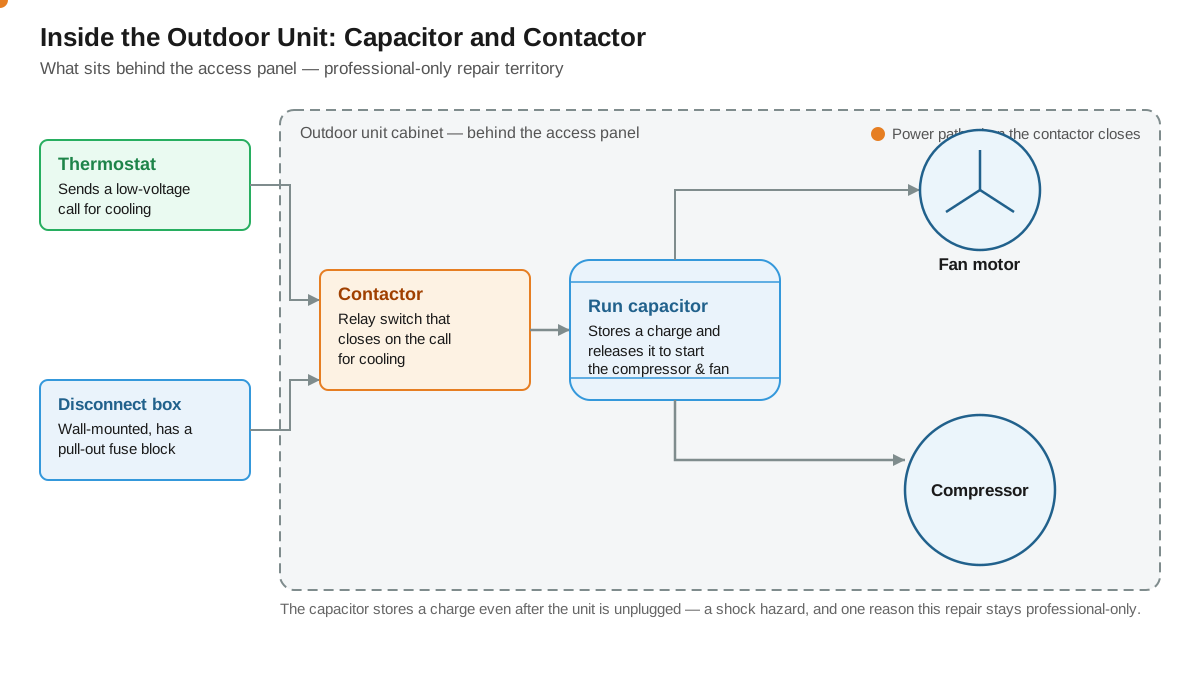
Third is the run capacitor, a small cylindrical part in the outdoor unit that stores an electrical charge and releases it to give the compressor and fan motor the jolt they need to start spinning. Capacitors degrade with heat and age, and a long stretch of 95-degree days is hard on them; a capacitor that's been weakening for a year can finally fail on the first brutally hot afternoon, which is exactly why AC service calls spike during heat waves.
Fourth is the contactor, a relay switch that closes when the thermostat sends its low-voltage signal, routing full power out to the compressor and fan. Contactors get pitted and burned from years of arcing every time they open and close, and eventually they stop making a clean connection at all.
What you notice
Most likely cause
Safe to check yourself?
Thermostat screen is blank
Dead batteries or a tripped low-voltage fuse
Yes
Thermostat is lit but nothing happens when you lower the setpoint
Wrong mode, weak batteries, or a wiring issue
Yes, for mode and batteries
Breaker is in the "off" or middle position
Tripped breaker
Yes, reset once
Breaker trips again immediately after resetting
Electrical short or a failed part drawing too much current
No — stop and call a technician
Outdoor unit hums but the fan doesn't spin
Failed run capacitor
No — capacitors hold a charge
Outdoor unit is silent, indoor fan runs fine
Bad contactor, tripped safety switch, or a control board fault
No
Burning smell from the outdoor unit or panel
Electrical fault
No — shut off the breaker and call a technician
How to Diagnose It Yourself in the Next Ten Minutes
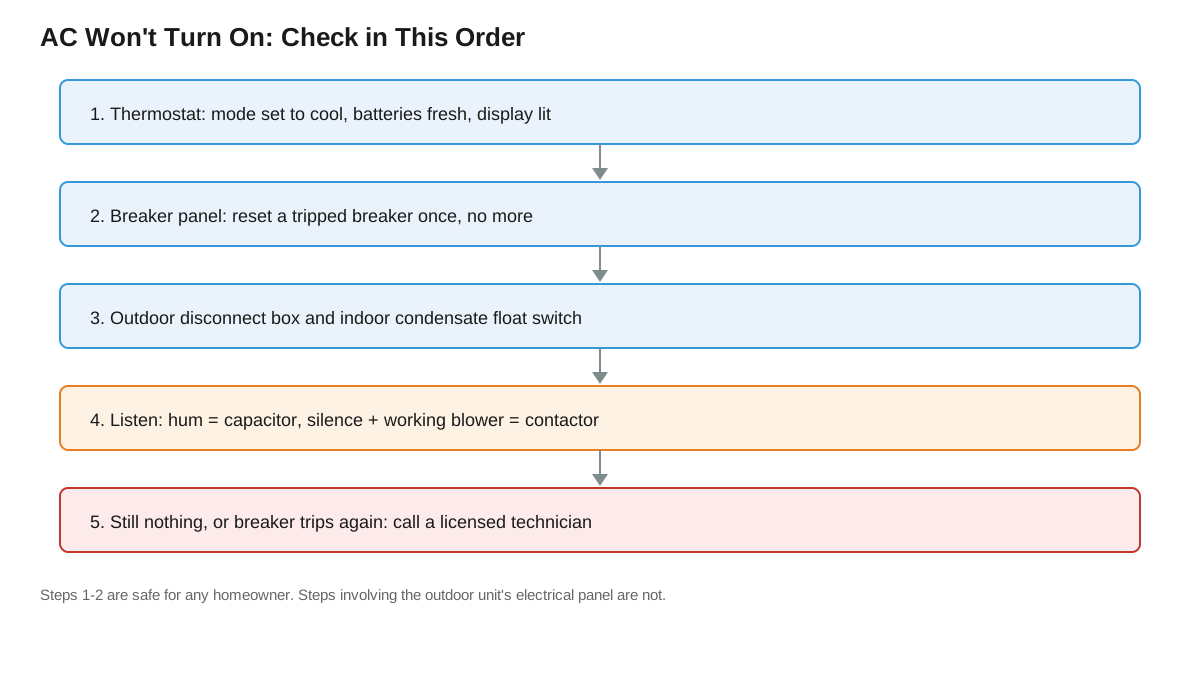
Before you call anyone, you can rule out the two most common causes safely, in about 10 minutes. None of these steps involve opening the outdoor unit's electrical panel.
Work through these five checks in order before assuming the worst.
Check the thermostat display. If it's blank, replace the batteries, or check whether it's a hardwired unit that's lost power from a tripped breaker.
Confirm the mode is set to cool, not off, heat, or fan-only, and that the set temperature is at least a few degrees below the current room temperature.
Find your electrical panel and look for a breaker labeled AC, air handler, or condenser that's in the middle position or fully off. Switch it fully off, then fully on, once.
Check for a second, smaller shutoff — a gray or red disconnect box mounted on the wall right next to the outdoor unit. Some hold a pull-out fuse block inside; make sure it's pushed all the way in.
Look at the condensate drain line (typically 3/4-inch PVC on a residential system) and float switch, usually near the indoor air handler or furnace. Many systems won't start at all if this safety switch senses a clogged drain pan about to overflow — that's a design feature, not a malfunction, and it means the drain line needs clearing.
Listen at the outdoor unit for 10 seconds after you raise the setpoint. A hum with no fan movement points to the capacitor. Total silence with the indoor blower running points to the contactor, a control board, or a tripped high-pressure switch — the ac compressor not working scenario technicians treat most cautiously, since compressor repair or replacement runs into real money.
If the breaker trips again the instant you reset it, stop. Don't reset it a second time.
If you've gone through this list and the system still won't start, or you don't feel comfortable opening the disconnect box, this is the point where a call to a local HVAC contractor makes more sense than more troubleshooting.
Breaker Tripped or Fuse Blown: What It Means and What Not to Do
A tripped breaker is not a random event — a properly sized breaker on a properly wired air conditioner circuit trips because more current tried to flow through it than the wire and breaker are rated to carry safely. The first trip after a storm, a brief power blip, or someone bumping the panel is usually nothing. Reset it once and move on.
A breaker that trips again within seconds of being reset is telling you something different: a short circuit somewhere in the compressor windings, the wiring, or a capacitor pulling far more current than it should on startup. This is the scenario people mean when they search ac breaker keeps tripping — it isn't a fluke, it's a short. If the breaker trips again the moment you reset it, stop resetting it and call a licensed HVAC technician — repeated tripping means a short circuit, not bad luck, and forcing it back on risks an electrical fire.
This is also where DIY needs to end. Diagnosing which component inside the outdoor unit is drawing excess current means opening the electrical disconnect and testing individual parts with a multimeter, which is exactly the kind of work licensed technicians train for and homeowners get hurt attempting. A breaker that won't reset and stay reset is one of the few AC symptoms that qualifies as a genuine same-day HVAC call rather than a wait-and-see problem, especially in a heat wave with vulnerable people in the house.
If the breaker itself looks physically damaged, scorched, or smells like burning, don't touch it again. Shut off the main if you can do so safely, and call an electrician or your utility, not an HVAC contractor.
When the Thermostat Is the Real Problem
If the breaker is fine and the outdoor unit hums to life on its own, but the system won't respond to the thermostat at all, the thermostat itself is the most likely broken link, and it's worth another ten minutes before you assume the worst.
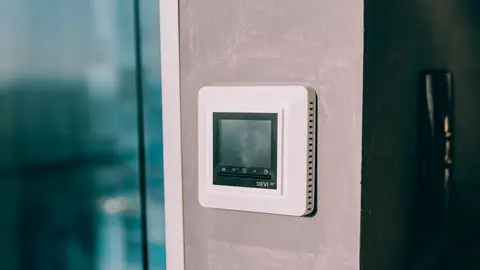
Smart thermostats add a failure mode that older mechanical dials never had: a lost Wi-Fi connection, a firmware update that stalls mid-install, or a missing C-wire (the continuous low-voltage wire that keeps a smart thermostat powered around the clock, not just while it's calling for cooling) can all leave the display lit but unresponsive, or blank entirely. If your thermostat is a smart model and the screen shows a battery icon, a Wi-Fi symbol with a slash through it, or simply won't wake up when you tap it, that's straightforward thermostat not working territory, not a compressor problem.
Wiring is the other common culprit, especially after a DIY thermostat swap. Low-voltage wires — usually labeled R, C, G, Y, and W — that get swapped, loosened, or pinched behind the wallplate during installation will stop the system from calling for cooling even though the outdoor unit is perfectly capable of running. If your AC stopped responding shortly after someone replaced the thermostat, mismatched wiring is the first thing to suspect.
A full walkthrough of thermostat wiring, batteries, and smart-thermostat compatibility issues, including what each labeled wire does, is covered in our thermostat troubleshooting guide. If your thermostat checks out but the outdoor unit still won't run, the next likely stop is the capacitor.
Capacitor and Contactor Failures: The Part Most Often to Blame
If the thermostat is calling for cooling correctly, has power, and the breaker holds, but the outdoor unit still won't start — or it hums for a second and then goes quiet — the run capacitor is the next and most statistically likely suspect.
A run capacitor stores electrical charge and releases it in a short burst to help the compressor and fan motors overcome inertia and start spinning. It's a wear part, not a defect — every capacitor eventually degrades from heat cycling, and an outdoor unit sitting in full sun through a run of 95-plus-degree days puts more stress on a capacitor than the same unit would see in a mild climate. A hum with no visible movement from the fan blades is the classic symptom people mean when they search ac unit not turning on outside.
The contactor is a separate part that often gets confused with the capacitor because the symptoms overlap. It's a relay: a small electromagnetic switch that the thermostat's low-voltage signal energizes to close a set of contacts and send full power out to the compressor and fan. Contactors arc every time they open and close, and over thousands of cycles the contact points pit, burn, and eventually stop making a clean connection. A contactor stuck open means total silence at the outdoor unit; one stuck closed means the fan keeps running even after you turn the thermostat off, which is its own version of an AC that won't respond on command because it never properly stopped.
Capacitors hold a stored electrical charge even after the unit is unplugged and can deliver a serious shock, which is one of the reasons this repair sits solidly in professional territory even though the part itself is inexpensive. Search terms like ac capacitor replacement and ac capacitor replacement cost return a wide range online, but two national cost surveys agree closely enough to trust: HomeGuide puts it at $100 to $250, Fixr at $100 to $400, so budget $100 to $400 for ac capacitor replacement including labor. More on what a capacitor, contactor, or blower motor repair actually involves and costs is in our mechanical repair guide.
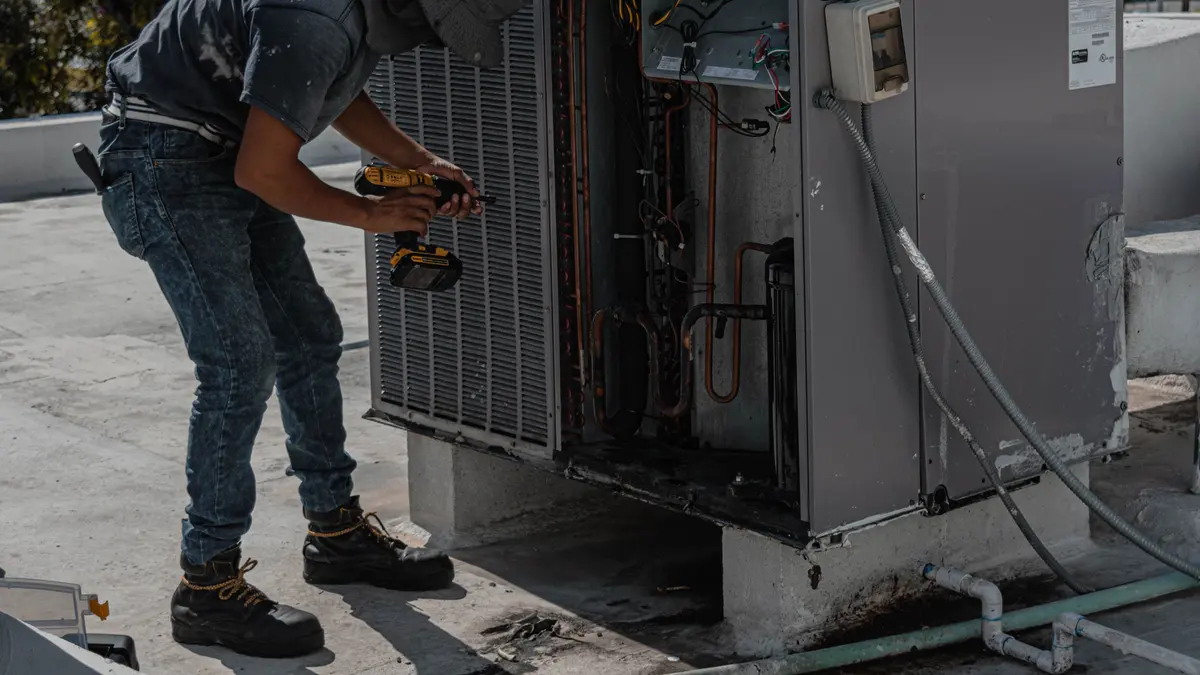
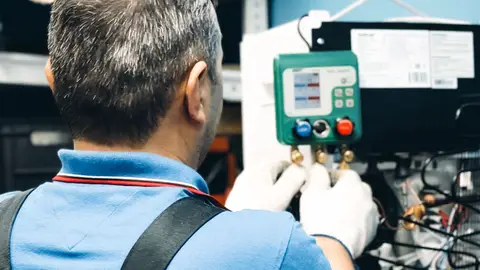
The capacitor and contactor sit behind the outdoor unit's access panel — why both repairs stay professional-only.
Fixes: What You Can Try, and Where DIY Ends
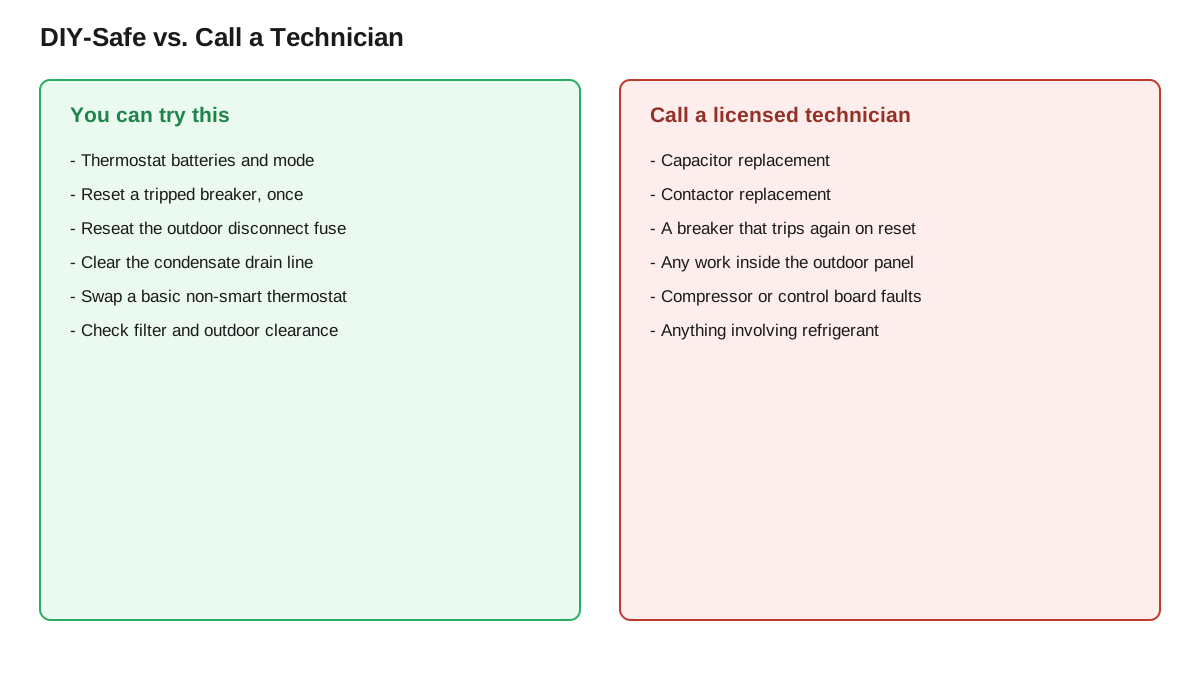
Not every fix here requires a truck roll. Here's a realistic breakdown of what's reasonable to try yourself versus what belongs to a licensed technician.
What's reasonable to try yourself, and what belongs to a licensed technician.
Safe to try yourself: replacing thermostat batteries, switching the mode to cool, resetting a tripped breaker once, checking and reseating a disconnect fuse block, clearing a condensate drain line at the outdoor termination point, and swapping in a basic non-smart thermostat using the wiring diagram from the old one.
Better left to a professional: anything involving the outdoor unit's electrical panel — capacitor replacement, contactor replacement, or figuring out why a breaker keeps tripping. These parts sit behind a cover for a reason, and capacitors specifically store enough charge to injure someone who doesn't know how to safely discharge one first. A technician carries a multimeter and the manufacturer's wiring diagram and can usually confirm which part failed in the same visit rather than guessing.
Somewhere in between: smart thermostat wiring and compatibility issues are usually manageable for a confident DIYer, provided the power is off at the breaker while you're working behind the wallplate and you photograph the original wiring before disconnecting anything. If you're not confident reading R, C, G, Y, and W labels, this is a reasonable one to hand off too.
When you do call someone, ask what a licensed HVAC contractor should have before they show up: proof of licensing in your state, current liability insurance, and ideally a technician with NATE certification. The Certified HVAC Professional pathway requires passing five separate exams covering HVAC fundamentals, electrical and controls, comfort and airflow, installation, and service, then recertifying every 2 years or requalifying within a 120-day grace period if it lapses, rather than relying on on-the-job training alone. Ask to see both the license and the current insurance certificate before any work starts, not just take their word for it; a legitimate contractor will show you a license number you can verify with your state's licensing board without hesitating.
What It Costs to Get a Silent AC Running Again
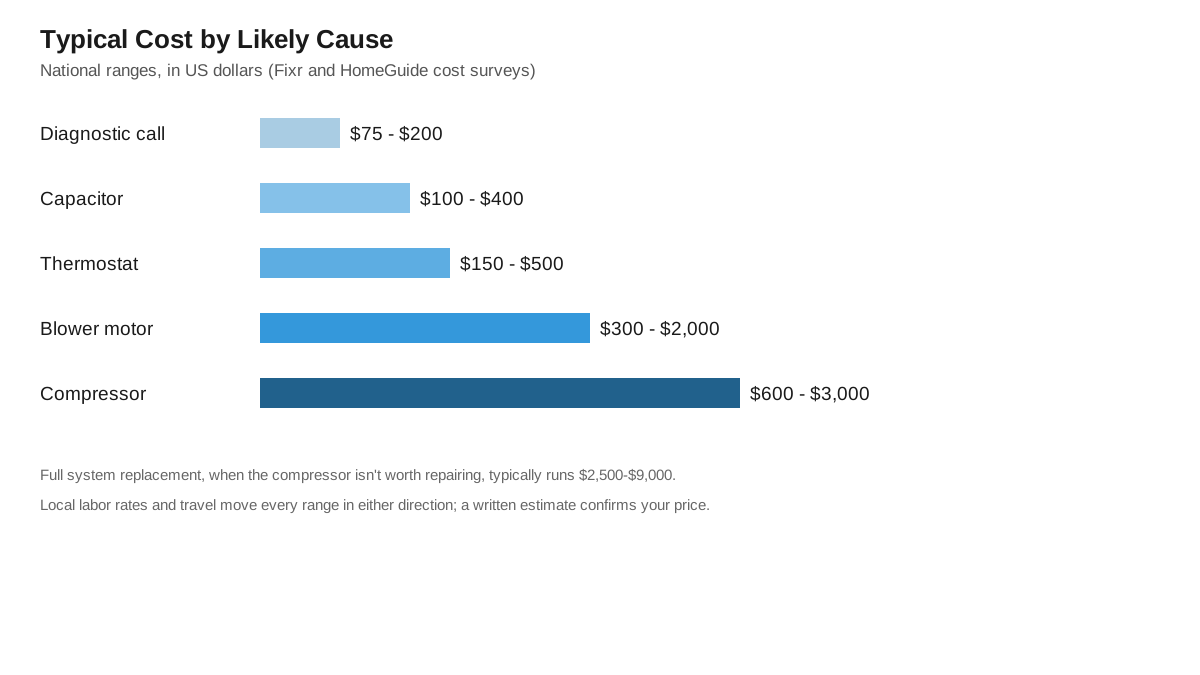
Once you know roughly which part failed, the price range stops being a mystery. These figures are researched ranges pulled from independent national cost surveys, not a quote from any single contractor's rate card, so treat them as a ballpark for comparing a quote against, not a guarantee of what you'll pay locally.
Typical national cost ranges by likely repair, from Fixr and HomeGuide.
Likely repair
Typical cost range
What moves the price
Source
Diagnostic / service call
$75 – $200
Time of day; whether it's applied to the repair
HomeGuide, 2025
Capacitor replacement
$100 – $400
Microfarad rating, brand, after-hours labor
Fixr, 2026
Thermostat replacement
$150 – $500
Smart vs. basic model, wiring, C-wire install
Fixr, 2026
Blower motor replacement
$300 – $2,000
Motor type (PSC vs. ECM), system age, part availability
Fixr, 2026
Compressor replacement
$600 – $3,000
Tonnage, refrigerant type, warranty coverage
Fixr, 2026
Full system replacement (if the compressor is old and not worth repairing)
$2,500 – $9,000
System size, SEER rating, ductwork condition
HomeGuide, HomeAdvisor
Two things worth knowing before a technician gives you a number. First, most companies charge a flat diagnostic fee just to send someone out and identify the failed part, separate from the repair itself, and that fee runs $75 to $200 per HomeGuide's national survey; some companies apply it toward the repair if you approve the work on the spot, others don't. Ask which policy applies before the technician arrives, not after.
Second, a capacitor is one of the least expensive parts on the entire system, but replacing it is billed as labor plus a marked-up part, which is why a low-cost wholesale capacitor can still show up as a fair, ordinary few-hundred-dollar line item — the cost is mostly the visit and the expertise to confirm it's actually the capacitor and not the compressor behind it. If a quote for a simple capacitor swap comes in far above the $400 high end shown here, or a quote for full AC repair seems out of line with these ranges, a second opinion from another licensed contractor is a reasonable ask, not an insult.
These are national ranges: the final number varies by region, how hard the unit is to access, and what a technician actually finds once the panel is open, not just what a phone diagnosis predicted. Local labor rates and permit requirements shift it further. The only way to know your real cost is a written estimate from a contractor who has looked at your unit in person; that estimate, not this table, is what's binding.
Safety First: When to Stop and Call a Licensed Technician
A few situations move this from an annoyance to "stop and call someone now," regardless of how confident you feel with a screwdriver.
Call immediately, and don't attempt anything past shutting off the breaker, if you notice a burning smell anywhere near the outdoor unit, the indoor air handler, or the electrical panel; if you see scorch marks or melted insulation; if the breaker trips again the instant you reset it a second time; or if anyone in the household depends on air conditioning for a medical reason and the outage is stretching past a few hours in dangerous heat.
Refrigerant is a separate hazard worth knowing about, even though it's rarely the reason an AC won't start at all — a refrigerant leak more often causes weak cooling than total silence. Federal law under the Clean Air Act requires anyone who services equipment containing refrigerant to hold an EPA Section 608 technician certification, precisely because refrigerant handling carries real safety and environmental risk. That's one more reason a full diagnostic from a certified technician, not a guess, is worth paying for when the cause isn't obvious from the driveway.
None of this is meant to make a dead AC sound more dangerous than it usually is. Most no-start calls end with a thermostat battery, a reset breaker, or a $100 to $400 capacitor, not an emergency. The point is knowing which handful of signs mean stop, rather than treating every silent outdoor unit the same way.
Regional Notes: Heat Waves, Storms, and Coastal Humidity
Where you live changes which cause tops the list, even though the diagnostic order stays the same everywhere.
The Gulf Coast and Southeast see capacitor failures cluster hard in the first real heat wave of the season, because units that sat mostly idle through a mild spring get asked to run nearly continuously the moment temperatures spike, and a capacitor that was already weak doesn't survive the jump. Coastal humidity also accelerates corrosion on contactor contacts and electrical connections faster than it would in a dry climate, which shortens the working life of both parts.
Across the Southwest and inland areas that see monsoon or thunderstorm activity, lightning strikes and grid surges are a more common trigger for tripped breakers and, less often, a fried control board. A whole-house surge protector at the panel is a relatively low-cost way to reduce that specific risk, worth asking an electrician about if storms regularly knock out your AC.
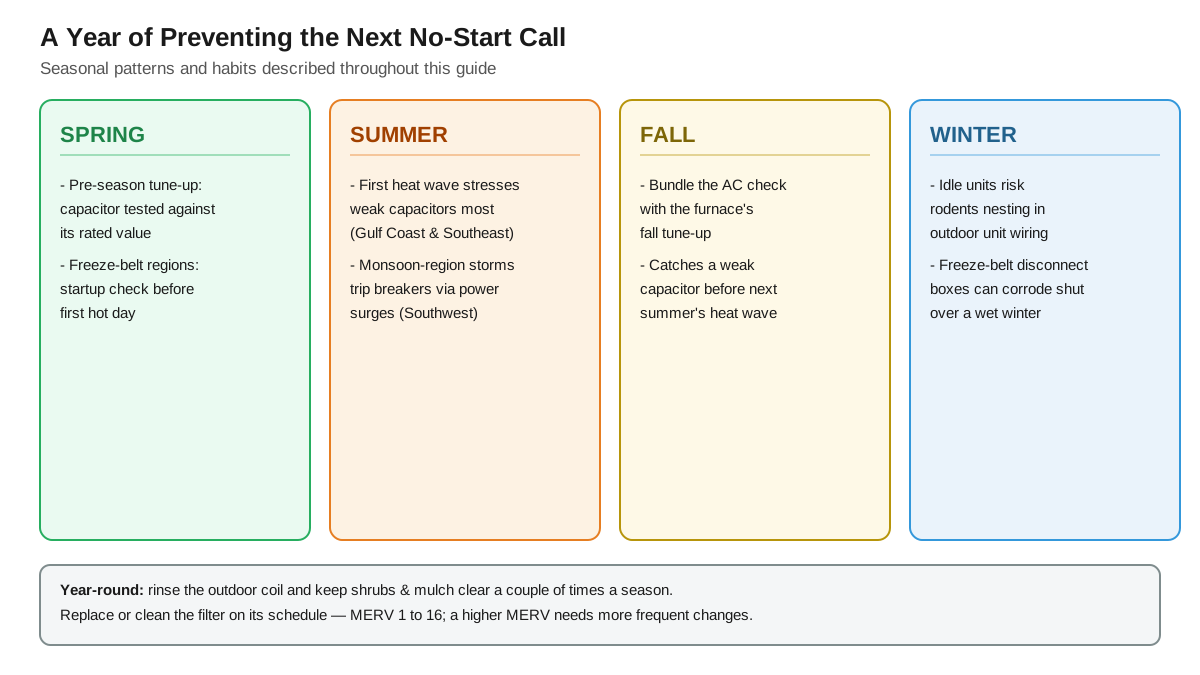
Winters change the picture in freeze-belt regions of the North and Upper Midwest: an AC that won't start after a long winter is often less about heat stress and more about disuse, such as rodents nesting in an idle outdoor unit's wiring, or a disconnect box that corroded shut over a wet winter. A spring startup check before the first hot day, sometimes bundled with the furnace's fall tune-up, catches most of these before they turn into a no-cool emergency in July.
After any named storm or extended power outage, treat the first startup carefully in any region: a large voltage spike or brownout when power returns can be hard on a system that was already borderline, and it's a reasonable time to listen for the hum-but-no-start pattern described earlier rather than assuming a clean restart.
Preventing the Next No-Start Call
Most of the causes on this page are preventable, or at least catchable before they strand you without air conditioning on the hottest day of the year.
An annual pre-season tune-up is the single highest-value habit here: a technician tests capacitor output against its rated microfarad value, tightens electrical connections that loosen from thermal cycling, and checks contactor contacts for pitting before they fail completely rather than after. Catching a capacitor testing at a fraction of its rating in April costs the same service call as replacing one that fails outright in July, minus the days spent waiting for an appointment during peak season.
Between visits, a few homeowner-level habits help: keep the area right around the outdoor unit clear of shrubs, mulch, and stored items so it isn't straining against restricted airflow, rinse the outdoor coil gently with a garden hose a couple of times a season to clear pollen and grass clippings, and replace or clean the indoor air filter on the schedule printed on it. Residential filters fall somewhere on the 1 to 16 MERV scale, and a higher-MERV filter traps more but restricts airflow more too, so it needs changing more often; a badly clogged filter of any rating forces the whole system to work harder and stresses the same electrical components discussed above.
A full seasonal checklist, including what a technician checks at each visit and what you can do between them, is laid out in our maintenance checklist guide.
Bundling the AC check with the furnace's fall tune-up and testing the capacitor each spring catches most of the failures in this guide before they strand you in a heat wave.
Frequently asked questions
Why isn't my AC turning on at all?+
Most of the time it's the thermostat, a tripped breaker, or a failed capacitor, roughly in that order because that's also the order from most to least common. Start with thermostat mode and batteries, then check the breaker panel for a switch sitting in the middle position. If both check out and the outdoor unit hums without spinning, the capacitor is the next suspect, and that part is a job for a technician.
What should I do if my AC unit is not turning on?+
Check the thermostat first: confirm it's set to cool, the temperature is below room temperature, and the display isn't blank from dead batteries. Next, check your breaker panel for a tripped double-pole breaker labeled AC or condenser and reset it once. If it trips again immediately, stop and call a licensed HVAC contractor rather than resetting it repeatedly.
Why is my outside AC unit not turning on?+
An outdoor condenser that stays silent while the indoor blower runs usually points to a failed contactor, a tripped safety switch, or a control board fault, none of which are safe to diagnose without opening the unit's electrical panel. If it hums for a second without the fan spinning, suspect the run capacitor instead. Either way, this symptom belongs to a technician, not a screwdriver.
Can I replace an AC capacitor myself?+
Technically yes, but it isn't recommended for most homeowners, because a capacitor stores an electrical charge even after the unit is unplugged and can deliver a serious shock if it isn't discharged correctly first. The part itself costs relatively little; the risk comes from working inside a live electrical panel without the right tools and training. Most people are better off paying for the labor here.
How long does it take to replace an AC capacitor?+
The swap itself usually takes a technician well under an hour once they've confirmed it's the actual failed part. Most of the appointment time goes to diagnosis, testing the capacitor's output against its rated microfarad value and ruling out the contactor or compressor, rather than the physical swap, which is quick once the correct replacement part is on the truck.
How much does it cost to replace a capacitor on an AC unit?+
National cost surveys put capacitor replacement between about $100 and $400, including both the part and the labor to diagnose and install it, according to Fixr and HomeGuide's cost data. Where you land in that range depends on the capacitor's size, whether the call happens during regular hours or after hours, and local labor rates, so a written local estimate is the only way to know your actual number.
How often should you replace an AC capacitor?+
There's no fixed replacement schedule, because capacitors don't wear out on a calendar; they degrade from heat and electrical cycling, so a unit that runs hard through long, hot summers stresses its capacitor faster than one in a mild climate. An annual pre-season tune-up that tests capacitor output against its rated value is the most reliable way to catch a weakening capacitor before it fails outright.
What happens when a start capacitor goes bad?+
A failing capacitor usually can't deliver the jolt of stored charge the compressor or fan motor needs to overcome inertia and start spinning, so the motor hums under load without turning, or trips a built-in thermal overload trying. Left long enough, that repeated strain can damage the motor windings themselves, turning a $100 to $400 capacitor repair into a far larger compressor or motor replacement.
Why is my AC not turning on in my apartment?+
In a rental, start with the same thermostat and breaker checks as any other home, since those are almost always within a tenant's control and cost nothing to try. If both check out, most leases make HVAC repair the landlord's or property manager's responsibility, and shared or building-wide condenser systems sometimes have building-level shutoffs a tenant can't access, so the next call is to management, not a contractor.
How do I troubleshoot an AC that won't turn on?+
Work through it in order: thermostat mode and batteries, the breaker panel, the outdoor disconnect box, and the condensate float switch near the indoor unit, each of which takes about a minute to check and rules out a real possibility. If everything checks out and the outdoor unit still won't run, or it hums without the fan spinning, stop troubleshooting electrical components yourself and call a licensed technician.