Flat roof repair means patching or resealing the membrane — TPO, EPDM, modified bitumen, or PVC — instead of tearing off the whole roof. Simple patches run in the low hundreds; multi-seam or flashing repairs run into the thousands, per national 2026 roof-repair cost data. Ponding water and failed seams cause most calls, and a written on-roof estimate settles the real number for your building.
A pinhole leak over a break room and a blistered seam over a warehouse loading dock both get filed under the same two words: flat roof repair. The first job might cost a homeowner $200 and an afternoon. The second might take a commercial crew two days and a few thousand dollars. What separates them isn't luck. It's which membrane is up there, how long the problem sat before anyone found it, and whether water has already reached the insulation or deck underneath.
This guide covers what "repair" actually means on a low-slope roof, the causes that account for most service calls, how a contractor tracks down a leak that doesn't show up where you'd expect, what a repair versus a recover versus a full tear-off actually costs based on national 2026 cost data, and when a repair budget is better spent on something bigger. Every dollar figure below traces to a named source, and where the data doesn't split flat roofing out from pitched roofing, that gap is called out rather than papered over with a made-up number.
What Flat Roof Repair Actually Means
"Flat roof" is mostly a figure of speech. Almost every low-slope roof has a slight built-in pitch, just enough to move water toward a drain instead of leaving it in the middle of the deck. Flat roof repair covers everything from a five-minute sealant dab over a pinhole to a multi-day membrane section replacement, and the term gets used on ranch-house additions, strip-mall storefronts, and warehouse roofs the size of a city block alike.
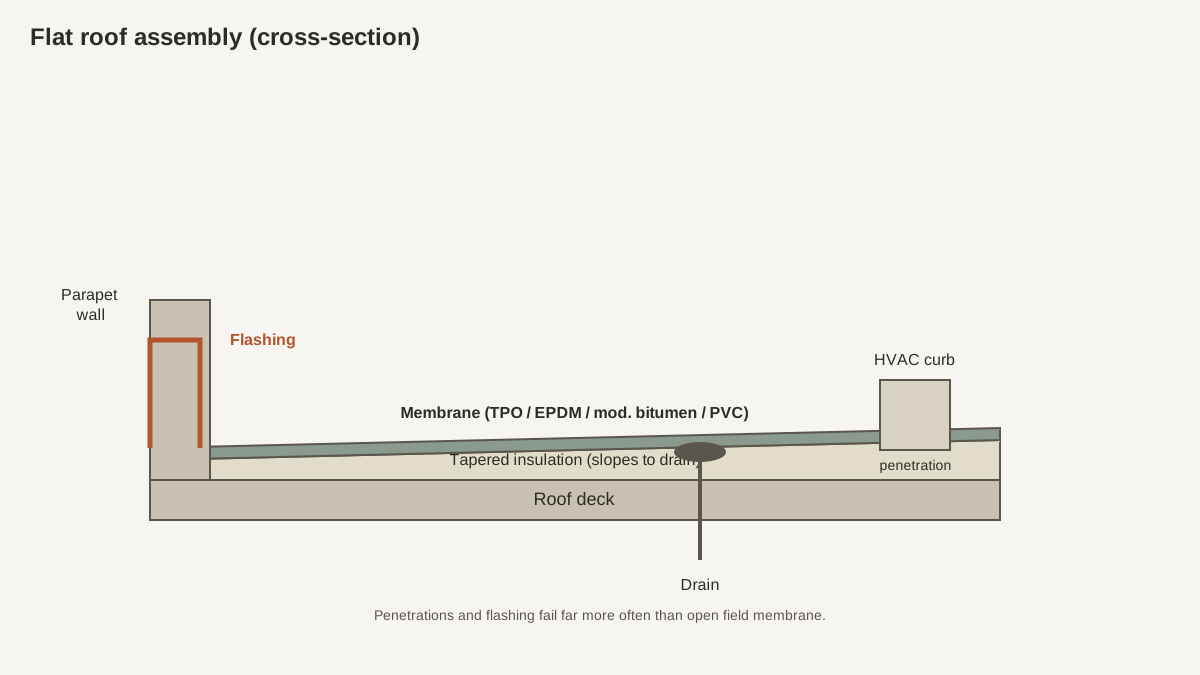
Penetrations and flashing — not open field membrane — are where most flat roof leaks start.
Most low-slope roofs built in the past few decades use one of four membrane systems. TPO (thermoplastic polyolefin) is a heat-welded white or gray sheet showing up on a growing share of new commercial work. EPDM is a black synthetic rubber membrane, glued down, ballasted with stone, or mechanically fastened, common on older commercial roofs and plenty of residential flat sections. Modified bitumen is an asphalt-based roll product, torch-applied, self-adhered, or hot-mopped, common on older buildings and small additions. PVC is a heat-welded plastic membrane similar to TPO but with different chemical resistance, often specified for roofs near restaurant grease exhaust. Older buildings sometimes still carry a built-up roof, alternating layers of asphalt and felt under a gravel cap.
Membrane types at a glance
Membrane
How it's installed
Where it's common
Typical weak point
TPO
Heat-welded seams, mechanically fastened or fully adhered
New and re-covered commercial roofs
Seams welded off-spec; foot-traffic punctures
EPDM
Glued, ballasted with stone, or mechanically fastened
Older commercial roofs; residential flat sections
Seam tape lifting; UV cracking where unballasted
Modified bitumen
Torch-applied, self-adhered, or hot-mopped
Older buildings; small residential additions
Blistering, granule loss, seam and flashing cracks
PVC
Heat-welded, similar process to TPO
Restaurant and light-industrial roofs
Brittleness in older sheet stock
Repair means fixing a defined problem area, such as a seam, a puncture, or a section of flashing, without touching the rest of the roof. That's different from a recover, which adds a new membrane layer over the old one, and different again from a full tear-off replacement. Which one a given roof actually needs depends on how much has failed and how much life is left underneath, which the rest of this guide walks through.
Why Flat Roofs Fail: The Causes, Ranked
Flat roofs don't fail the way pitched roofs do. There's rarely one missing-shingle moment; most leaks build slowly from a short list of well-documented failure points. Roughly in order of how often they show up on a service call:
Ponding water. Water that doesn't drain within a day or two of rain sits on the membrane, blocks the surface's UV reflectivity, and adds weight the deck wasn't necessarily built to carry long-term. Roofers sometimes shorthand this as a flat roof pooling water problem, and it's one of the most common reasons a roof gets a callback within its first few years.
Seam failure. Every membrane roof is built from sheets joined at seams: heat-welded on TPO and PVC, taped or glued on EPDM, torched or hot-mopped on modified bitumen. A seam finished off-spec, or one that's simply aged out, is the single most common leak source contractors report.
Flashing and penetration failures. Anywhere something pokes through the membrane, a vent pipe, an HVAC curb, a drain, or the wall where the roof meets a parapet, counts as a joint, and joints fail before flat field membrane does.
Membrane punctures and blisters. Foot traffic from HVAC service calls, dropped tools, and gas or moisture trapped under the sheet (blistering) all create weak points that eventually split open.
UV and age degradation. Every membrane has a service life, and sun exposure dries and stiffens the surface year over year. A roof past its expected service life tends to fail in several places at once instead of one clean spot.
Poor original slope or drainage design. Some roofs pond in the same corner every time it rains because the deck was never built with enough taper to a drain. Patching that spot repeatedly doesn't fix it; the roof needs added drains or a tapered insulation system.
Finding the Real Leak Before Anyone Patches Anything
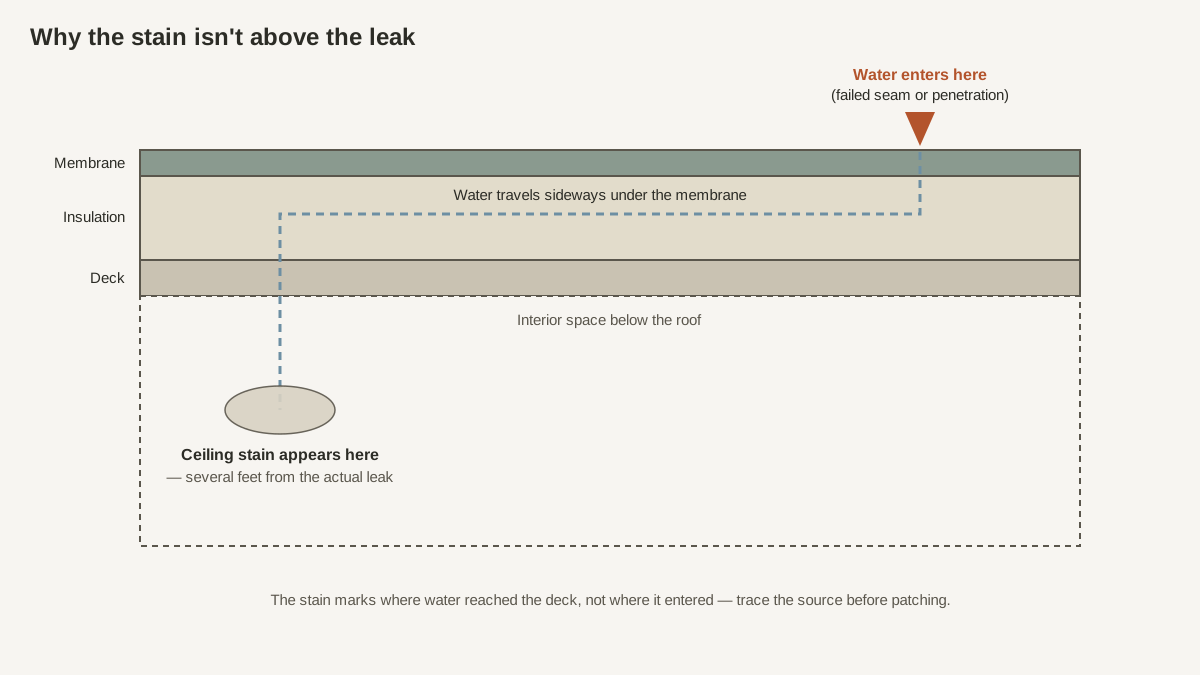
Water on a flat roof does not always drip straight down from where it got in. It can travel sideways under the membrane, along a deck seam, or across a structural beam before it finally shows up as a ceiling stain, which is why guessing at the source and patching the nearest visible flaw is one of the most common ways a "repaired" flat roof leaks again within a month. A methodical check saves a second service call.
Start with the ceiling stain, then work backward. Note exactly where the water shows up inside and how the building's framing runs. The actual entry point is often several feet away.
Rule out anything that isn't the membrane first. Check the stain against plumbing lines, HVAC condensate lines, and bath fan ducts; a surprising share of "roof leaks" turn out to be a clogged condensate drain a few feet from a roof penetration.
Walk the roof after a dry stretch, not during rain. Look for dirt rings left by standing water, blistered or lifted membrane, open seams, and cracked or lifted flashing at every penetration and parapet wall.
Check every penetration before assuming it's a mystery puncture. Vent stacks, HVAC curbs, drains, and parapet caps fail far more often than open field membrane does.
Run a flood test on a suspect area if the source still isn't obvious. A roofer dams off a section, floods it with a measured amount of water, and watches from inside to see exactly where it enters.
Get a moisture scan for anything more than a small, obvious patch. An infrared or capacitance moisture meter finds wet insulation hiding under membrane that still looks intact, which matters because a leak "fixed" over wet insulation keeps causing problems until that insulation is cut out and replaced.
Water travels sideways under a flat roof membrane before it shows up inside — trace the leak before patching the spot below the stain.
Fixing It: What You Can Patch Yourself and What Needs a Roofer
Not every flat roof problem needs a licensed crew on day one, but the honest line between a homeowner patch and a professional repair is narrower on a membrane roof than it is on shingles.
What a homeowner can reasonably handle
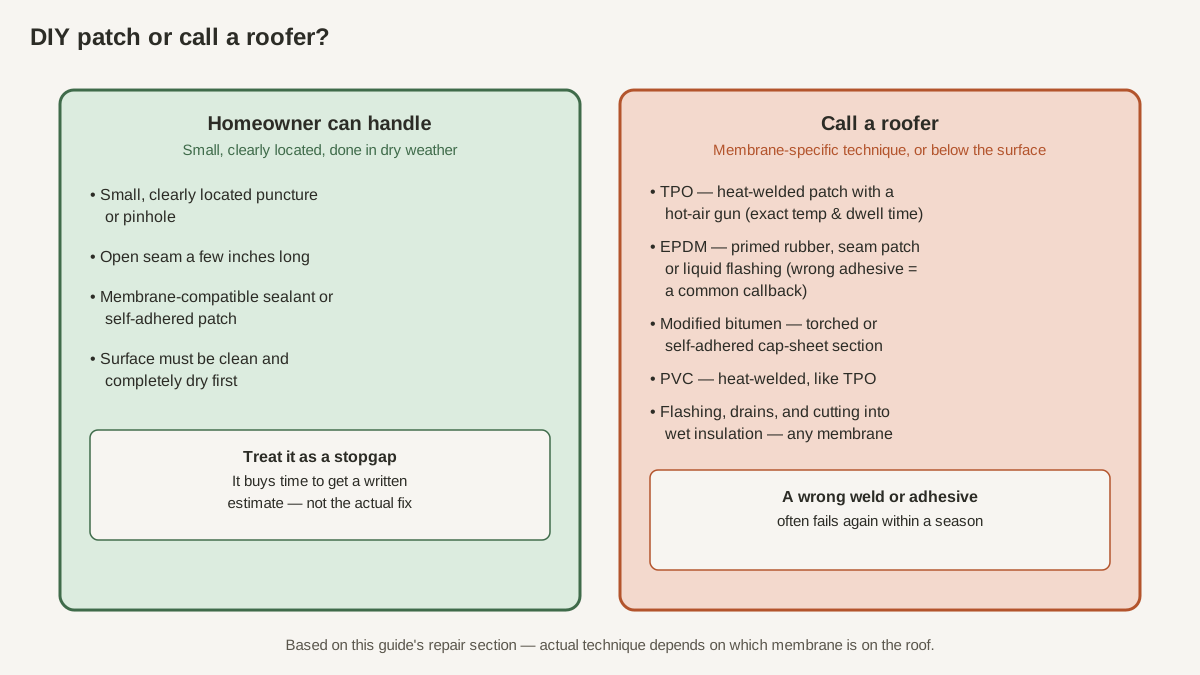
A small, clearly located puncture or an open seam a few inches long is within reach for most people comfortable on a ladder and working on dry, mild-weather days. A membrane-compatible sealant or a self-adhered patch, applied to a clean and completely dry surface, can stop a small leak for a season. Treat it as a stopgap that buys time to get a written estimate, not as the actual fix.
What actually needs a roofer
A TPO roof repair almost always means heat-welding a new patch over the damaged area with a hot-air gun set to the right temperature and dwell time. A weld done wrong can look fine on the day and fail again within a season, which is why this isn't a good first DIY project. An EPDM roof repair typically means priming the rubber on both the patch and the existing membrane, then applying a seam patch or a liquid-applied flashing made for that specific system; using an incompatible adhesive on EPDM is one of the most common callback causes contractors describe. Modified bitumen repairs usually mean torching or self-adhering a new cap-sheet section, and PVC repairs, like TPO, are heat-welded rather than glued.
Flashing replacement, drain work, and anything that requires cutting into wet insulation are professional jobs across every membrane type. Get those wrong and the repair traps moisture instead of removing it, which usually shows up as a bigger bill a year later.
A DIY patch buys time; TPO, EPDM, modified bitumen and PVC each need membrane-specific technique to actually hold.
What Flat Roof Repair Actually Costs
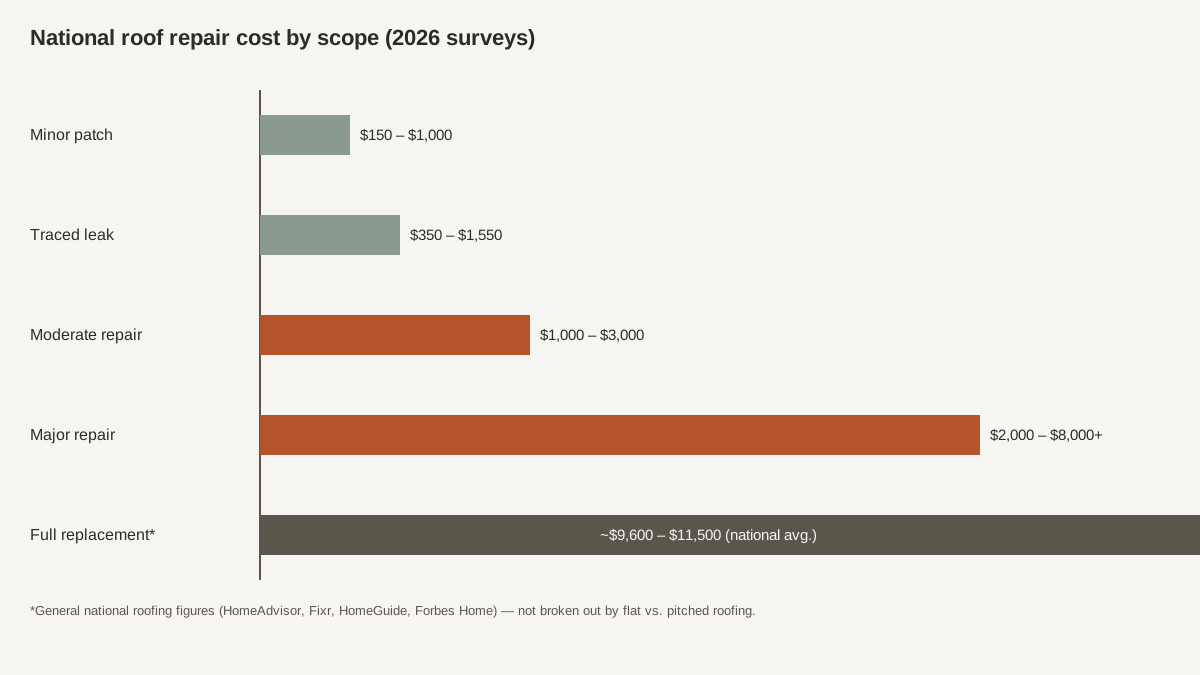
None of the national cost surveys below break roofing repair out by roof shape, so there's no dataset that reports "flat roof repair cost" as its own line item. What they do report is roof repair cost broadly, and it's a reasonable starting point once you account for the gap: flat and low-slope membrane work (TPO, EPDM, PVC, modified bitumen) tends to sit at the higher end of each range below, because heat-welding or torch-applying a seam takes more specialized labor and equipment (Fixr's 2026 survey puts general roof-repair labor at $50 to $120 an hour before specialty membrane work is even factored in) than swapping a bundle of shingles, and commercial buildings add crew size and roof-access costs pitched residential jobs rarely carry. These are researched ranges pulled from published contractor surveys, not a quote for any one roof, and the number a given building actually lands on shifts with region and how hard the roof is to reach.
National roof repair cost ranges by scope of work. Flat and commercial membrane jobs tend to land at the higher end of each band.
Repair scope
National typical cost
What moves the price
Source
Minor patch (small puncture, blister, pinhole)
$150 – $1,000
Membrane type, roof access, spot fix vs. full seam reseal
Fixr 2026; This Old House 2026
Single leak, traced and sealed
$360 – $1,550
How long the leak went untraced; how much insulation got wet
HomeAdvisor 2026; Bob Vila
Flashing repair (parapet, drain, penetration)
$200 – $500
Number of penetrations; whether counterflashing needs replacing
Area affected, crew access, welded vs. adhered seams
Fixr 2026; This Old House 2026
Major repair (large membrane section, deck damage)
$2,000 – $8,000+
Deck and insulation replacement, size of the affected area
Fixr 2026; This Old House 2026
Roof inspection with moisture check
$100 – $600
Roof size; whether an infrared or capacitance scan is included
HomeAdvisor 2026; This Old House 2026; Bob Vila
Emergency or after-hours callout
adds $100 – $300
Time of day, storm demand, crew availability
Fixr 2026; Bob Vila
How we got these numbers: these are national roof-repair ranges pulled from four separate 2026 and 2023 contractor cost surveys (Fixr, HomeAdvisor, This Old House, Bob Vila), none of which isolate flat or membrane roofing from pitched shingle roofing. Size moves the number roughly in proportion: HomeAdvisor's data puts a 100 sq. ft. patch at $350 to $1,200 and a 500 sq. ft. repair at $1,750 to $6,000. None of the sources publish a regional price index for this category, so treat every figure here as a national starting point, not a local quote — the only way to get a number specific to a given roof is a written, on-site estimate.
Repair, Recover, or Replace: How to Tell Which One You Need
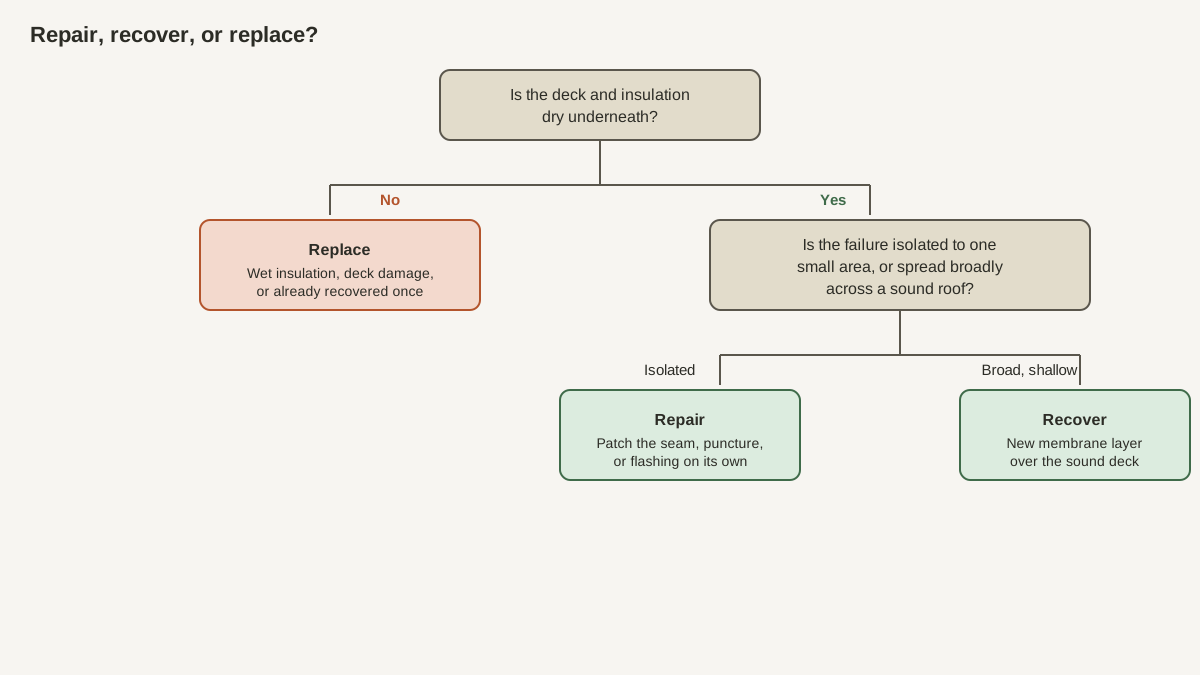
A patch is only worth paying for if the roof underneath still has meaningful life left. Past a certain point, spending repair money on a membrane that's failing broadly is money that doesn't carry forward into anything.
How to decide between a repair, a recover, and a full tear-off replacement.
Situation
Repair
Recover (new membrane over old)
Full replacement (tear-off)
Where the damage is
One isolated area — a seam, a penetration, a puncture
Membrane failing broadly, but deck and insulation are dry and sound
Multiple existing layers, wet insulation, or visible deck damage
What's under the membrane
Not touched
Stays in place — a second layer goes over it
Removed down to the deck
Relative cost
Lowest, scoped to the affected area
Mid-range — adds material and labor for a full layer, but skips tear-off
Highest, but resets the clock on membrane life and warranty
Best fit
Roof under roughly 10–15 years old with a defined, small failure
Sound deck, one existing membrane layer, broad but shallow wear
Wet insulation, structural concerns, or a roof already recovered once
National full tear-off replacement figures for roofing generally cluster in the $9,600 to $11,500 range according to HomeAdvisor, Fixr, HomeGuide, and Forbes Home, though — like the repair figures above — none of those surveys separate flat commercial systems from pitched residential ones, and a large commercial tear-off can run well past that on square footage alone. How much of that estimate holds once a crew is actually into the roof depends on what they find under the membrane: wet insulation or an extra layer nobody knew was there can turn a repair into a recover, or a recover into a full tear-off, which is exactly why a written estimate from a local contractor is the only number that's binding; everything on this page is a planning range. Flat roof lifespan is less about which membrane got chosen on day one and more about drainage and maintenance history: a well-drained, well-flashed roof reliably outlasts a neglected one built from the exact same material. Most manufacturers back their membrane systems with a written warranty term specific to the product and installer, so ask for that document rather than a verbal number.
Commercial Flat Roof Repair: What Changes on a Bigger Building
Commercial flat roof repair covers the same membrane systems as a homeowner's garage or rear addition, but the stakes and the logistics both scale up. A leaking retail, warehouse, or office roof risks inventory damage and business interruption on top of the physical repair, so how fast a crew can respond and how the work gets scheduled around business hours often matters as much as the price.
Low-slope roofs became the default on large commercial buildings for practical reasons: a flat or low-slope deck is simpler and less expensive to frame across a wide footprint than a pitched one, and it gives rooftop HVAC units, exhaust fans, and mechanical equipment a level surface to sit on instead of requiring a separate structure. That's also why penetrations, and the flashing around them, tend to be denser on a commercial roof — more equipment means more places for water to find a way in.
Property managers with larger buildings usually do better on a maintenance contract than on one-off emergency calls: a roofer who inspects the roof on a regular schedule, clears drains and scuppers before they clog, and documents membrane condition over time catches small failures while they're still minor patch money instead of major repair money. For the deeper mechanics of running a commercial roof over its full service life — maintenance contracts, downtime risk, and system choice — see commercial roofing systems and maintenance.
When to Stop and Call a Roofer Immediately
Most flat roof problems can wait for a scheduled appointment. A short list can't.
A ceiling that's sagging or feels soft underfoot on the floor above — that's a possible structural issue, not a cosmetic stain.
Active water intrusion near an electrical panel, light fixture, or outlet.
Any point where you can see daylight through the roof deck from inside.
Storm damage discovered by walking the roof yourself without fall protection (OSHA requires it for anyone working within 6 feet of an unprotected roof edge, and a homeowner checking storm damage on a wet or debris-covered membrane carries the same fall risk a crew does) — call a professional to assess it from a safe position instead.
If the water is still coming in and you can't safely assess it yourself, calling a line like 888-679-3798 can connect you with a roofing contractor that serves your area, so you're not searching for a company name while a ceiling drips.
Never let a crew torch-apply modified bitumen, or heat-weld near open foam insulation, without a fire watch in place and a class A extinguisher within reach — hot-work fires are one of the few flat-roof failures that turn a repair bill into a total-loss claim. The National Roofing Contractors Association runs a torch-safety training program, CERTA, specifically because hot-work fires on modified bitumen jobs are a recurring, preventable hazard rather than a freak accident.
How to Choose Someone to Do Flat Roof Work
Membrane roofing is a narrower specialty than asphalt shingles, and not every roofer who handles pitched residential work does flat roofs well. A few checks filter out most of the weak options before a contract gets signed.
License, insurance, and certification
Confirm the contractor holds any license your state requires for roofing work, and before signing anything, ask for proof of current general liability insurance and workers' compensation coverage — a business card that says "insured" is not proof, and a policy that lapsed last year won't cover a claim on your roof today. Manufacturer training programs are a useful signal: GAF Master Elite and Owens Corning Preferred or Platinum Preferred contractor status both require background checks and ongoing training to maintain, and the National Roofing Contractors Association runs its own PROCertification workforce credential. None of these are legally required to do roofing work, but a contractor who bothered to earn one has usually also bothered to get licensing and insurance right.
Red flags on a flat roof estimate specifically
A quote with no membrane brand or product named — just "flat roof material," with no way to check the warranty
No mention of how existing wet insulation, if any, will be found and handled
Pressure to sign the same day, especially paired with an unverified "storm damage" claim
A single lump-sum number with no breakdown of membrane, insulation, flashing, and labor
What a written estimate should include
A real estimate names the specific membrane product and manufacturer, the scope of work in plain language, a price broken into material and labor, a timeline, and the warranty terms for both material and workmanship. If a contractor won't put that in writing, treat the verbal number as a starting point for negotiation, not a real flat roof repair estimate.
If you'd rather start with a phone call than a search, 888-679-3798 connects you with a roofing contractor that serves your area. For a deeper checklist beyond what's here, see how to choose a roofing contractor.
Preventing the Next Flat Roof Leak
Flat roof maintenance is cheap compared to flat roof repair, and almost all of it is preventable neglect rather than bad luck.
Keep drains, scuppers, and gutters clear of leaves and debris — a blocked drain is how a normal rain event turns into standing water that sits for days.
Schedule a walk-through inspection twice a year, in spring and fall, and after any major hail or wind event in between.
Keep HVAC technicians and other trades off the membrane field when possible, and require walk pads or protection boards where regular foot traffic is unavoidable.
Address a small blister, open seam, or lifted flashing corner as soon as it's found — this is the cheapest point in the roof's life to fix any of those.
Consider a roof coating on an aging but structurally sound membrane. A coating won't rescue a roof with wet insulation or failed seams, but on the right candidate it adds reflectivity and buys years before a full replacement is due — see roof coating for what it can and can't do.
Regional Notes: Freeze-Thaw Country, Hail Alley, and the Sun Belt
The same membrane behaves differently depending on the climate it's installed in, and the failures a flat roof develops in Minneapolis are not the ones it develops in Phoenix or Houston. Freeze-thaw damage doesn't need a hard freeze to do its work: trapped moisture only has to cross 32°F and back on a regular cycle to expand, contract, and eventually crack a seam or a flashing joint.
Region
Dominant stressor
Typical failure point
What that means for maintenance
Freeze-thaw belt (Upper Midwest, Northeast)
Repeated freezing and thawing of trapped moisture
Seam and flashing cracking as materials expand and contract
Clear drains before the first freeze; a wet-insulation problem gets worse, not better, over winter
Severe hail — one inch diameter or larger by NOAA's definition, two inches or larger for significant severe storms
Membrane bruising and punctures, worse on aged or brittle sheet
Post-storm inspection matters — hail bruising on membrane isn't always visible from the ground
Hurricane coast (Gulf and Atlantic seaboard)
Sustained high wind and wind-driven rain
Membrane uplift at edges, parapets, and mechanically fastened seams
Edge and perimeter attachment matters more than field membrane condition
Sun Belt / desert Southwest
Intense, sustained UV exposure
Faster membrane embrittlement and surface cracking
Reflective membranes and regular UV-damage inspection extend service life
Texas alone logged 902 major hail events in 2025, more than any other state, with Kansas, Oklahoma, Nebraska, and Missouri rounding out the top five, according to the Insurance Information Institute citing NOAA's Storm Prediction Center, out of 5,432 major hail events nationwide that year, up from 5,373 in 2024. Nationally, wind and hail combined accounted for 40.7% of homeowners insurance losses in the 2018–2022 period the Institute tracked, striking at a frequency of 2.82 claims per 100 house-years and an average claim severity of $13,511 — a useful reminder that storm-driven flat roof damage is common enough to be a routine insurance category, not a rare event.
Frequently asked questions
How much does flat roof repair cost?+
Simple patches typically run $150 to $1,000, based on 2026 data from Fixr and This Old House. A single traced leak, sealed and reflashed, runs $360 to $1,550 per HomeAdvisor and Bob Vila. Multi-seam or flashing-heavy repairs move into the $1,000 to $3,000 range, and major sections with deck or insulation damage can run $2,000 to $8,000 or more. These are national roofing figures rather than flat-specific ones, so a written on-roof estimate settles the real number for a given building.
Can a flat roof actually be repaired, or does it always need replacing?+
Most flat roof problems can be repaired rather than replaced, as long as the damage is isolated and the deck and insulation underneath are still dry. A single bad seam, a puncture, or failed flashing is routine repair work on every membrane type. Replacement becomes the better option once wet insulation, multiple existing layers, or deck damage are involved, or once a roof has failed broadly instead of in one spot.
How do I find a flat roof leak before calling someone?+
Start with where the water shows up inside, then check it against plumbing and HVAC condensate lines before assuming it's the roof. On dry days, walk the roof looking for dirt rings from standing water, lifted seams, and cracked flashing around every penetration and parapet wall — penetrations fail far more often than open field membrane. A stubborn or hidden leak usually needs a professional flood test or moisture scan to pin down precisely.
How long does a flat roof repair take?+
A minor patch or single-seam repair is often a same-day job once a crew is on-site, sometimes finished within an hour or two for a small, accessible area. Moderate repairs involving multiple seams, flashing replacement, or a section of wet insulation typically take one to two days. The bigger variable is usually scheduling and material lead time, not the repair labor itself.
How long does a full flat roof replacement take?+
A residential flat section can often be torn off and re-membraned in one to a few days, weather permitting. A large commercial roof takes considerably longer and is usually scheduled in phases so the building stays weathertight overnight. Ask a contractor for a project-specific timeline in the written estimate rather than assuming a national average applies to your building.
Does a flat roof affect homeowners insurance?+
There's no national dataset showing flat roofs carry a higher standalone premium than pitched ones; insurers price primarily on age, material condition, claims history, and location-based storm risk rather than roof shape alone. What is well documented is that wind and hail together made up 40.7% of homeowners insurance losses in 2018–2022, per the Insurance Information Institute, so a poorly maintained roof of any shape is the bigger factor in future claims and premiums.
Why do commercial buildings have flat roofs?+
A flat or low-slope deck is simpler and less expensive to frame across a wide commercial footprint than a pitched one, and it provides a level surface for rooftop HVAC units, exhaust fans, and other mechanical equipment that would otherwise need a separate structure. The tradeoff is more penetrations through the membrane and a drainage system that has to be actively maintained rather than relying on gravity and a steep pitch alone.
Is a flat roof a good idea for a house?+
It depends on the climate and how well the roof gets maintained. Flat sections work fine on additions, porches, and modern designs when they're built with proper slope, enough drains, and a quality membrane, and when someone actually keeps drains clear and schedules regular inspections. In heavy snow or hail regions, a flat section demands more upkeep than a steep pitched roof does, and that maintenance commitment matters more than the material choice.
How do I deal with ponding water on a flat roof?+
If water sits for more than a day or two after rain in the same spot every time, that's a drainage design problem, not just a leak risk — patching the membrane there without fixing drainage means the same spot ponds again next storm. A roofer can add a drain, regrade with tapered insulation, or in some cases correct the framing, depending on how the roof was originally built.
Can I do flat roof repair myself?+
A small, clearly located puncture or a short open seam is within reach for a comfortable DIYer using a membrane-compatible patch kit on a clean, dry surface, and it can buy time as a stopgap. Heat-welding TPO or PVC, priming and patching EPDM correctly, torch work on modified bitumen, flashing replacement, and anything touching wet insulation are professional jobs — getting those wrong tends to trap moisture and cost more to fix later than it would have to hire it out from the start.