A roof coating service can extend a structurally sound roof's life by resealing seams, blocking ultraviolet breakdown, and cutting the heat cycling that fatigues membranes, often for a fraction of a tear-off's cost. It won't fix an active leak, rotted sheathing, or a roof already past its material's expected life. A hands-on inspection, not a sales pitch, tells you which roof you actually have.
A flat-roofed garage apartment with a fifteen-year-old modified bitumen membrane, chalky and sun-bleached but still bone dry inside, is exactly the roof a roof coating service is built for. A three-tab shingle roof with curling edges, a soft spot over the upstairs bathroom, and two prior leak repairs this year is not, no matter how similar the pitch sounds when the same product gets sold to both owners. Search results for roof coating rarely draw that line, and not every crew that shows up with a sprayer will draw it for you either.
This guide covers what a roof coating service actually does to a roof, which substrates and roof ages make good candidates, how silicone roof coating compares with acrylic, elastomeric and polyurethane formulas, what the application job involves from prep to cure, what it costs relative to a repair or a full roof replacement even though no independent survey prices coating on its own, and the specific signs that mean coating is the wrong call this year.
What Is a Roof Coating, Exactly?
A roof coating is a fluid-applied, monolithic membrane rolled, brushed or sprayed directly over an existing roof surface. It cures into a single, continuous layer that renews waterproofing and, in most formulas, reflects solar heat instead of absorbing it. That's what separates a real roof coating service from a can of roof paint: paint adds color and a little UV protection, while a coating adds real waterproofing thickness and, applied correctly, usually carries its own manufacturer warranty.
Coatings show up most often on low-slope and flat roofs, where the substrate underneath is typically built-up roofing (BUR), modified bitumen, a single-ply membrane like TPO or EPDM, or spray polyurethane foam. Metal roof coating is its own common category, used to stop surface rust and cut the radiant heat a bare metal panel otherwise passes straight into the building below. Coating over standard asphalt shingles is far less common and more limited in what it can do; several shingle manufacturers treat a field-applied coating as grounds to void the shingle's own warranty, which makes that a conversation for the manufacturer, not just the applicator, before anyone opens a bucket.
What a coating is not: a substitute for structural repair, or a way to add years to a roof that's already failing underneath. It's a renewal layer for a roof that's still fundamentally sound.
Does Roof Coating Actually Extend a Roof's Life?
On the right roof, yes, and the mechanism is straightforward. A coating reseals the small cracks, open laps and pinholes that would otherwise turn into leaks over the next few years. It blocks the ultraviolet exposure that makes membranes brittle, which is usually what ends a low-slope roof's service life before the roof physically wears through. On a reflective formula, it also cuts how hot the surface runs in direct sun, which matters because repeated heating and cooling, sometimes called thermal cycling, fatigues most roofing membranes as much as raw age does.
What it does not do is fix anything already broken. A coating can't stop an active leak into the deck, restore a rotted substrate, or add structural life to sheathing that's already soft. Applied over a roof with trapped moisture underneath, a coating can make things worse by sealing that moisture in rather than letting it escape, which is exactly the scenario the candidacy checklist below is built to catch before anyone gets a quote. Think of coating as extending a roof's remaining life, not resetting its age back to zero.
How to Tell if Your Roof Is a Candidate for Coating
Before anyone climbs up with a roller, a roof needs to clear a short checklist. Skipping this step is how a coating job turns into a callback six months later.
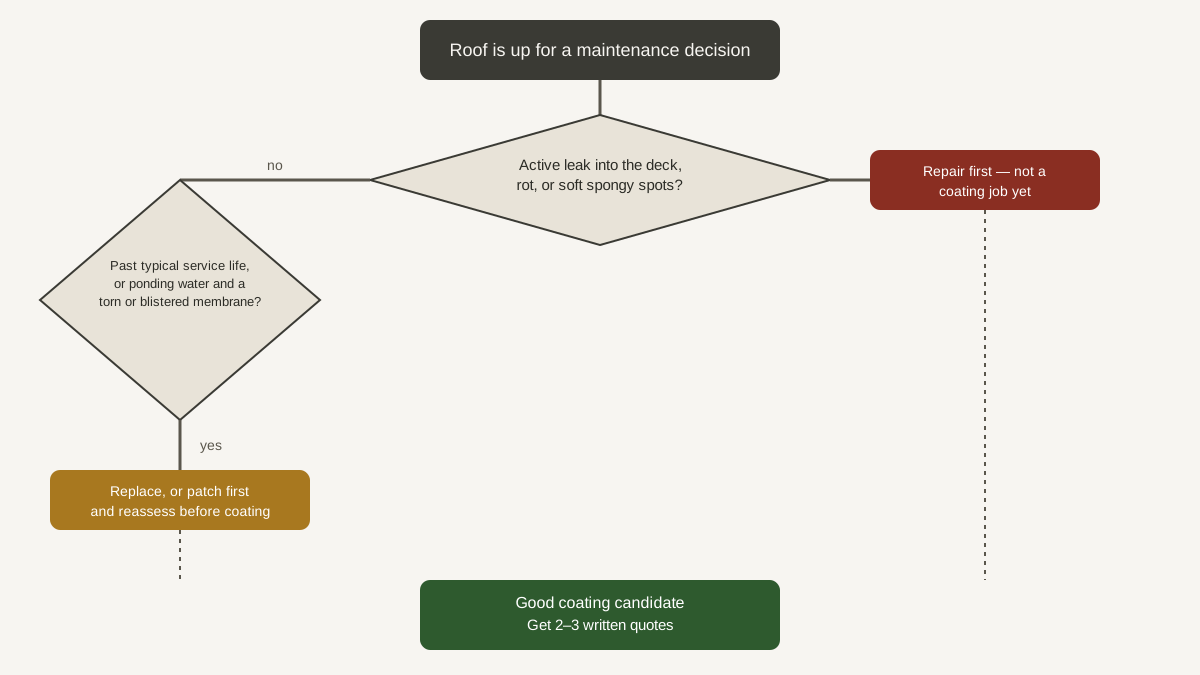
Check the roof's age against its material's typical service life, and ask a roofer directly whether your specific membrane or panel is still in the window where coating makes sense.
Walk the roof only if it's low-pitched, dry and safe to be on; otherwise have a professional handle this step, since falls are the biggest risk in this whole process. Look for ponding water, areas that stay wet more than 48 hours after rain, since standing water shortens almost any coating's working life.
Look for active leaks, soft or spongy spots underfoot, and staining on the ceiling below, all of which point to a deck problem coating can't reach.
Confirm the substrate. Built-up roofing, modified bitumen, single-ply membrane, metal, and spray foam are the roofs coatings are built for; standard asphalt shingles usually are not.
Check whether the existing roof is still under a manufacturer's warranty, and if so, whether that warranty requires a specific certified applicator for any coating work.
Never let anyone apply a coating over a roof with trapped moisture underneath, wet insulation, or an unrepaired leak, since sealing water in under a membrane accelerates rot instead of stopping it, and the coating hides the problem from view right up until it's a far bigger repair. That single rule matters more than any product brand or price on this page.
A roof that clears all five checks is usually a good coating candidate. A roof that fails even one of the first three, active leaks, soft decking, or serious ponding, needs that problem fixed first; coating comes after, not instead of, that repair.
Working out whether a roof is a coating candidate, a repair job, or a replacement.
Silicone, Elastomeric, Acrylic and Other Coating Types
"Roof coating" covers several different chemistries, and they don't perform the same way once weather and ponding water get involved.
Silicone roof coating
Silicone roof coating is the formula most tolerant of standing water, which makes it a common pick for flatter roofs with drainage that's less than perfect. It holds up well against UV and weathering over time, but it tends to cost more than acrylic, can get slippery and dirt-attracting on the surface over the years, and generally needs a fresh silicone recoat rather than a different chemistry layered on top when it's time to renew it.
Acrylic and elastomeric coatings
Acrylic coatings are the most widely used, most affordable option on low-slope roofs in dry-to-moderate climates, but standing water can soften and shorten an acrylic film, so drainage has to work. Elastomeric roof coating isn't one specific chemistry; it's a performance category describing any coating that stretches and rebounds like rubber, which can be acrylic-, silicone- or polyurethane-based depending on the product. Polyurethane coatings sit at the higher-durability, higher-cost end, more common on roofs that see foot traffic or equipment.
Coating on metal roofs
Silicone and acrylic elastomeric coatings are both routinely used to stop surface rust on standing-seam or corrugated metal, reseal fastener penetrations, and reflect heat that would otherwise transfer straight through the panel. The metal has to be properly cleaned, and any rust treated, before a coating will bond correctly.
How a Roof Coating Job Actually Goes
A properly run coating job follows the same broad sequence no matter which chemistry ends up on the roof.
Inspection and moisture scan, checking for wet insulation or a compromised deck before anything else happens.
Pressure washing or another approved cleaning method, to strip dirt, chalking and biological growth the coating won't bond to.
Repair of any failures found: reflashing, patching tears, replacing rotted deck sections, and resealing penetrations like vents and pipe boots.
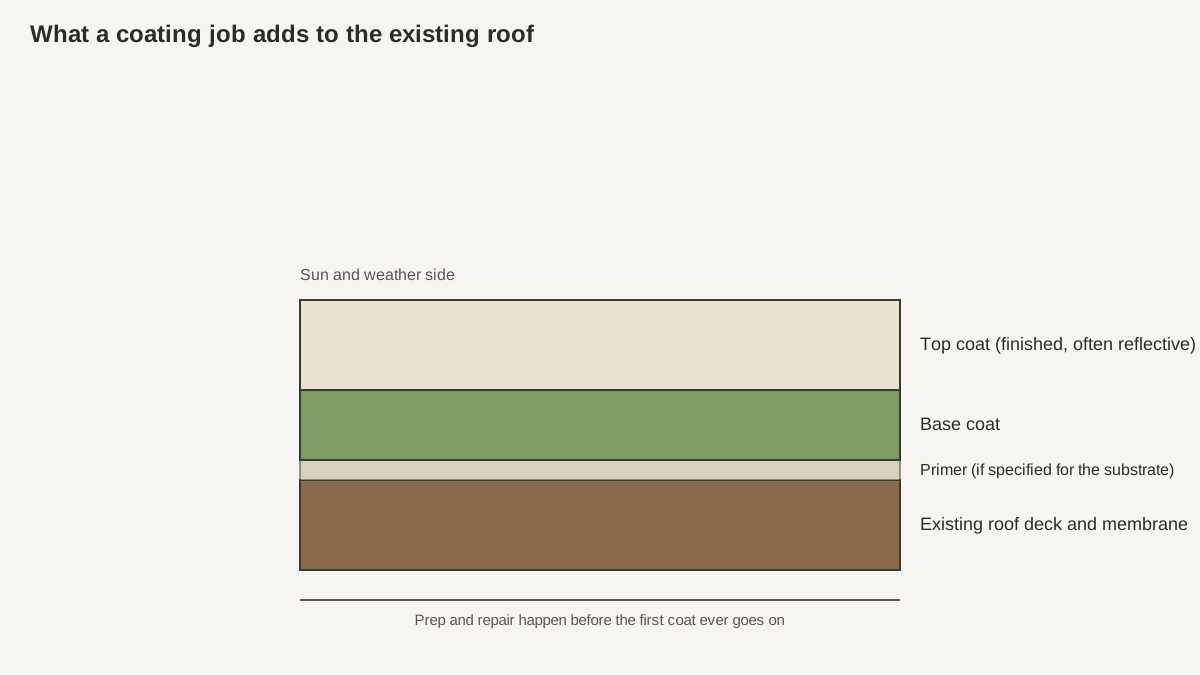
Priming, where the manufacturer's specification calls for it on that particular substrate.
Base coat application, often with reinforcing fabric embedded at seams, penetrations and other detail work.
Topcoat application, typically a second full coat, to reach the manufacturer's specified film thickness.
Final inspection and cure time, with the crew watching the forecast since most coatings need a dry window to cure before rain hits.
That prep-and-repair step is where a rushed job fails. A coating rolled straight over dirt, chalking or an unrepaired seam looks fine on day one and fails within a season. It's also where hiring matters most: look for a crew trained through a program like the National Roofing Contractors Association's PROCertification or CERTA safety curriculum, or one certified directly by the coating manufacturer, the same way you'd check certifications before hiring for a full roof replacement. Verify that contractor's current state contractor's license, and confirm a certificate of insurance showing active liability coverage, before any deposit changes hands; a legitimate crew hands over both without hesitation. Our guide to choosing a roofing company covers license lookups, insurance proof and the red flags that apply here too. If you'd rather start with a phone call than a search, 888-679-3798 connects you with a roofing contractor that serves your area for an on-roof estimate rather than a guess from photos.
The layers a coating job adds on top of the roof that's already there.
What Roof Coating Costs, and Why We Won't Guess at a Number
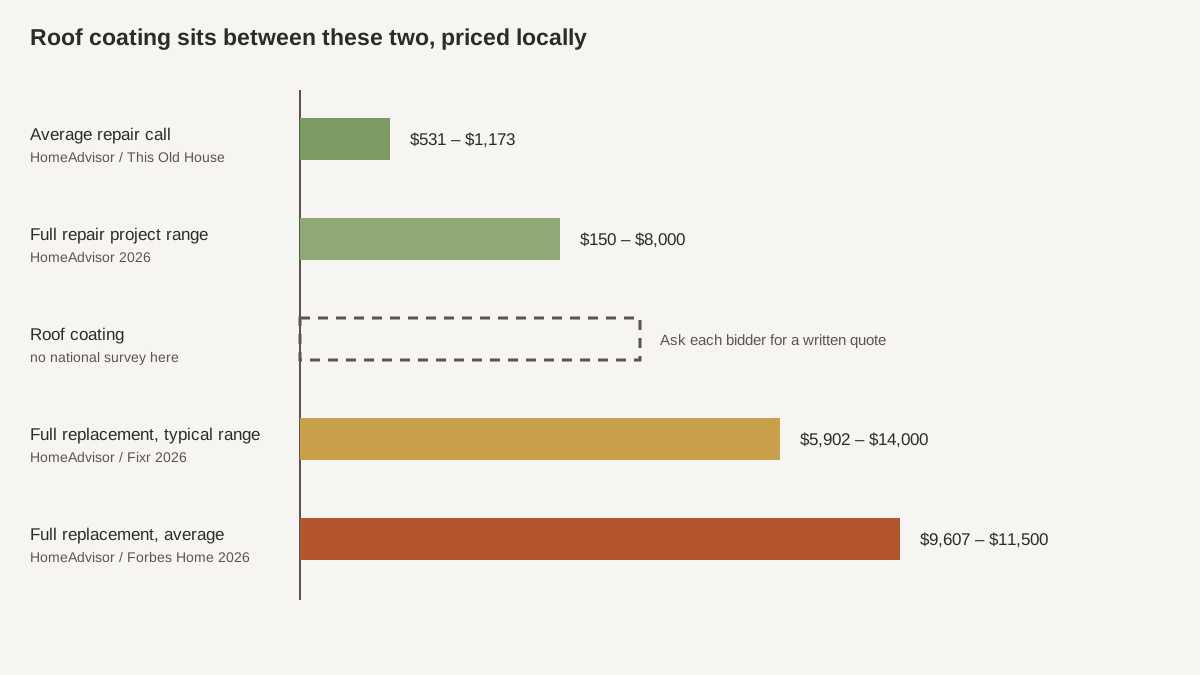
Search results are full of specific per-square-foot figures for roof coating. No independent, verifiable survey prices coating on its own the way the surveys below price repair and replacement, so instead of repeating a number we can't source, here's what actually moves the price, and the two real benchmarks that box the question in.
Job type
Typical range
Notes
Source
Minor roof repair (sealant, few shingles)
$150 – $1,000
Lower end of the range a low-prep coating job can resemble
Fixr 2026
Moderate to major roof repair
$1,000 – $6,000+
Where a prep-heavy coating job or a large roof can land
Fixr 2026
Average single repair call
$531 – $1,173
National averages across several publishers, 2026 data
This Old House / HomeAdvisor
Full roof replacement
$9,607 – $11,500 average
Typical range $5,902 – $14,000 depending on size and material
HomeAdvisor / Forbes Home / Fixr 2026
Roof coating (no independent survey)
No independent survey available
Get 2–3 written local estimates; ask each for coating type, coats, and mil thickness
—
How we got these numbers: the repair and replacement rows come from national cost-survey publishers current as of their 2026 update dates, and every figure on this page is a researched range pulled from those cited surveys, not a quote for your roof. Roof coating pricing depends on too many local variables, roof size in squares (a square is roofing shorthand for 100 sq ft of surface), coating chemistry, how much repair the roof needs before coating can even start, number of coats, reinforcing fabric at details, and roof pitch or access, for a single national figure to mean much even where one exists. Treat a contractor's coating quote the way you'd treat any other roofing estimate: get a written estimate itemized by material and labor, and compare at least two before you sign. The only number that actually binds anyone is the one a local contractor puts in writing after walking your roof in person.
One number worth knowing if replacement ends up on the table instead: the 2025 Zonda Cost vs. Value report puts the average asphalt shingle roof replacement job cost at $31,871 nationally, recouping about 68% of that at resale, versus $51,865 for a metal roof recouping about 50%. That's a different sample than the repair and replacement figures above, covers a full project rather than a coating job, and is useful mainly as context for the math in the next section.
The two sourced numbers that box in the coating cost question, and why coating itself needs a local quote.
Roof Coating vs. Replacement: Running the Decision
This is the roof coating vs replacement decision boiled down to what actually matters, not to whichever option a given contractor happens to sell.
Factor
Favors coating
Favors replacement
Roof age vs. material's expected life
Roof is within its material's normal service window
Roof is at or past the end of its expected life
Leaks and deck condition
No active leaks; deck is dry and sound
Active leaks into the deck, rot, or soft spots present
Substrate type
Flat/low-slope membrane, metal, or spray foam
Standard asphalt shingles, or a substrate coatings aren't rated for
Budget goal
Buying years before the bigger project is affordable
Ready to fund the larger project now
Resale plans
Not selling soon; delaying the bigger expense is fine
Selling within a few years; a documented new roof can help recoup value
Existing damage extent
Isolated, already-repaired trouble spots
Widespread wear or storm damage across the roof
That resale line matters more than it looks. Per the 2025 Zonda Cost vs. Value report, an asphalt shingle replacement recoups about 68% of its job cost at resale on average, and a metal roof recoups about 50%. Neither figure exists for a coating job in the published cost surveys, and that gap is itself useful information: coating is generally a maintenance move that protects value by avoiding a leak-driven loss, not a renovation that adds resale value the way a documented new roof does.
The clearest wrong call is coating a roof that's already failed structurally just to put off the bigger bill. That approach tends to cost the price of the coating and the eventual replacement, on a longer, more stressful timeline than choosing one path up front.
When to Skip the Coating and Call a Roofer for a Real Inspection
Most of the roofs where coating comes up are not emergencies. A slow, chalky, still-watertight membrane can wait for a scheduled estimate. A shorter list of signs means it can't.
You can already see daylight through the roof deck, or feel it flex noticeably underfoot.
Water is actively coming through into a room below right now.
The roof took a recent hailstorm and shows cracked, bruised or missing material rather than just surface dirt. NOAA's Storm Prediction Center defines severe hail as 1 inch in diameter or larger, and significant severe hail as 2 inches or larger; either size can crack a substrate coating can't fix.
You see blistering or delamination, bubbles or lifted sections in the existing membrane, which usually means moisture is already trapped underneath.
If the water is still coming in and you can't safely assess it yourself, a line like 888-679-3798 connects you with a roofing contractor that serves your area, so you're describing the problem to someone who can act on it instead of searching for another article. That's a repair or inspection call, not a coating call; the coating conversation comes after the roof is dry and sound.
Hail is not rare in parts of the country. The Insurance Information Institute recorded 5,432 major hail events nationally in 2025, up about 1% from 5,373 in 2024, with Texas leading at 902 events, followed by Kansas (375), Oklahoma (369), Nebraska (315) and Missouri (253). If your roof sits in that footprint, a post-storm inspection before any coating decision is worth the trip even without an obvious leak yet.
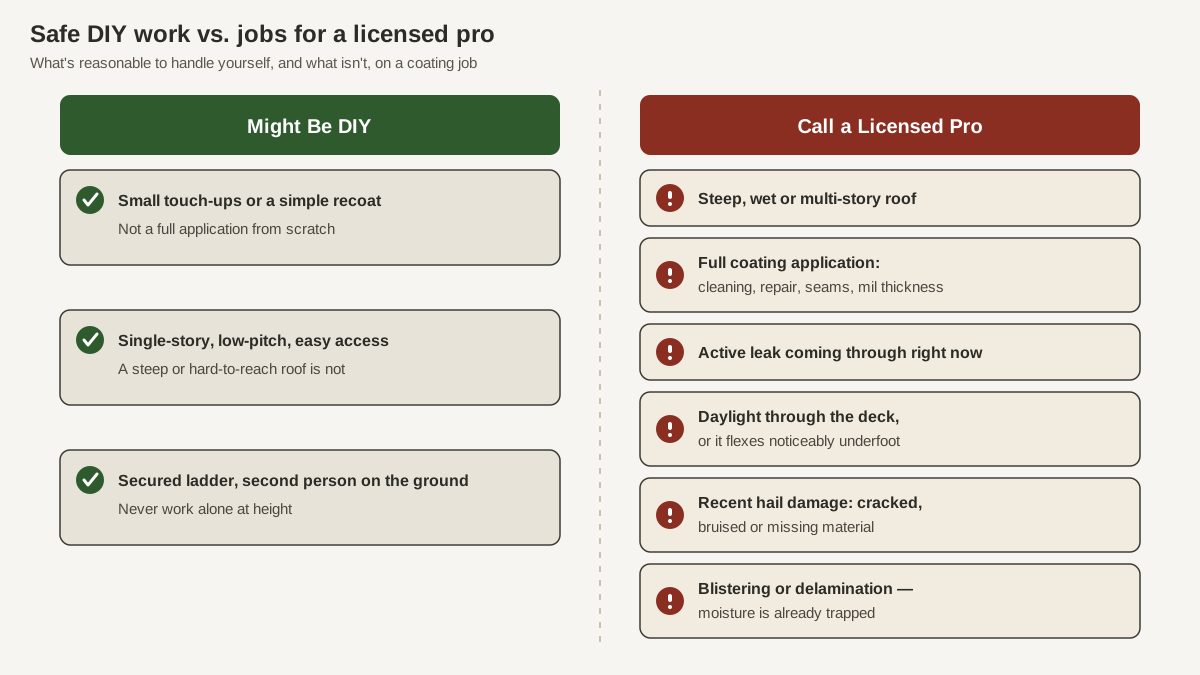
Most coating work is a professional job — this splits out the narrow slice that is reasonably DIY.
Does Insurance Cover Roof Coating or Roof Repairs?
Coverage comes down to why the roof needs work, and that detail is worth nailing down before filing anything.
Scenario
Typically covered
Typically excluded
Preventive roof coating on a roof with no storm damage
—
Yes, treated as routine maintenance
Repair of hail-cracked or wind-torn membrane
Often, with adjuster documentation
—
Gradual wear, chalking, or UV breakdown over years
—
Yes, treated as age-related deterioration
Sudden leak from a fallen branch or wind-lifted flashing
Yes, as sudden accidental damage
—
A standard HO-3 policy generally covers sudden, accidental damage and generally excludes wear, age and routine maintenance, and a preventive coating job falls on the excluded side almost every time. Where it gets less clean-cut: if hail or wind damage triggers a covered repair, the underlying substrate work might get paid through that claim, and some homeowners choose to add a coating at the same time, out of pocket, while the roof is already open. That's worth raising with the adjuster directly rather than assuming either way.
Wind and hail claims are common enough to plan around. The Insurance Information Institute puts the average severity of a homeowners wind or hail claim at $13,511, with a frequency of 2.82 claims per 100 house-years, and wind and hail together made up about 40.7% of homeowners losses in 2022. Separately, Insurance Information Institute data citing State Farm shows that one insurer alone paid out more than $3.5 billion in hail claims in 2022, over $1 billion more than the year before, a sense of scale for how much storm-driven roof work insurers end up paying for instead of homeowners. Document any storm damage with photos, dated notes and a contractor's written assessment before you call it in, and see our hail damage roof repair guide for the full claims checklist.
Getting the Most Life Out of a Coating
A coating is not a maintenance-free surface, even though it's often sold that way.
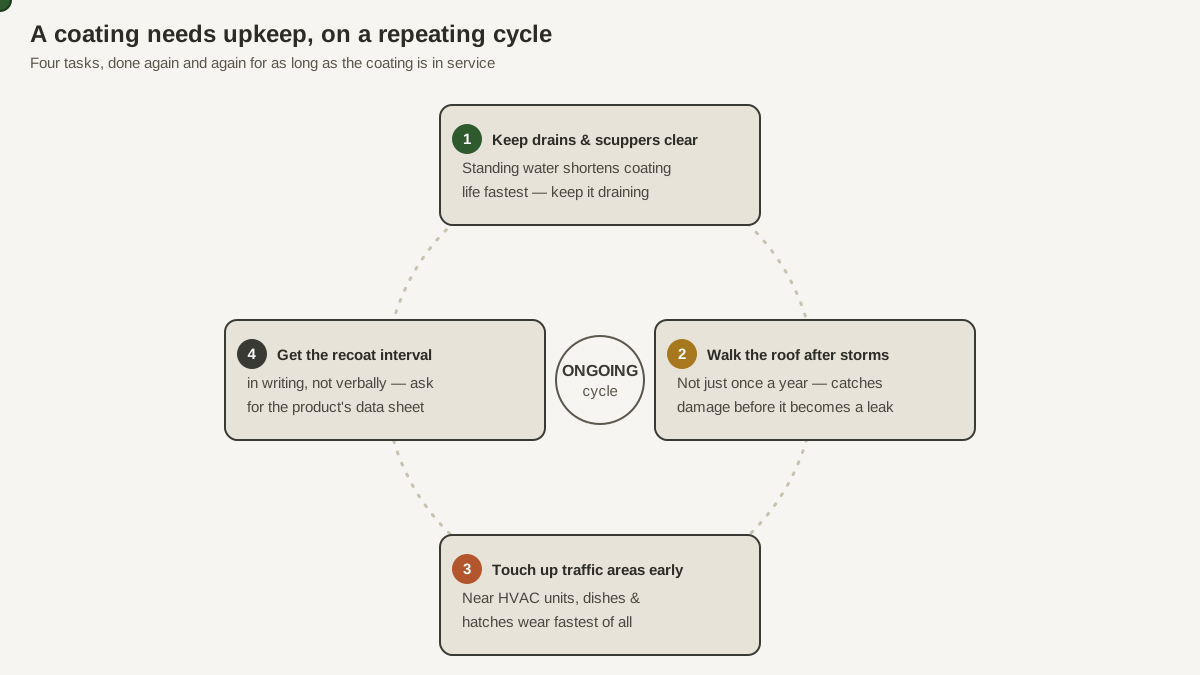
Keep drains and scuppers clear. Standing water is one of the fastest ways to shorten a coating's working life, and clogged drainage is the most common, most preventable cause of it.
Walk the roof after storms, not just once a year. A coating hides small membrane problems about as well as it fixes them, so a post-storm check catches new damage before it turns into a leak.
Touch up traffic areas early. Foot traffic near HVAC units, satellite dishes or roof hatches wears a coating faster than open field areas; a small recoat there costs far less than waiting for it to fail outright.
Get the recoat interval in writing. Ask the applicator for the specific product's data sheet and the manufacturer's recommended recoat schedule instead of a verbal estimate, since real roof coating lifespan varies by chemistry, film thickness, and how much sun and weather the roof takes.
None of this replaces a real inspection. A coating chalking evenly across the whole roof, a light, powdery surface residue, is aging normally; a coating that's cracking, peeling, or lifting in patches is telling you something failed underneath it, and that's worth a call before it spreads.
A coating still needs upkeep after it cures — these four tasks repeat for as long as it is in service.
Regional Notes: Hail Belt, Hot Climates and Freeze-Thaw Country
Climate changes both whether coating makes sense and which formula holds up once it's on the roof, and it changes the price too. Labor rates, roof access, and how much hidden repair a crew finds once the old surface is cleaned and opened up all vary by region, which is why the ranges in this guide are a starting point and a written local estimate is the number that actually counts.
Hail belt (Texas, Kansas, Oklahoma, Nebraska, Missouri)
These five states led the country for major hail events in 2025, according to the Insurance Information Institute, and NOAA's Storm Prediction Center defines severe hail as 1 inch in diameter or larger, with significant severe hail starting at 2 inches. Coating a roof that's already taken hail impacts without a real inspection first just hides bruised or cracked material under a new surface, which is exactly backwards; get the roof checked and any hail damage repaired or claimed before a coating goes on top of it.
Hot, high-UV climates
This is where a reflective coating earns its keep most directly. Cutting how hot the roof surface runs in direct sun reduces the thermal cycling that fatigues most membranes, on top of the UV protection every coating formula provides to some degree. Reflective coatings are a common retrofit on older flat and metal roofs in these regions for exactly that reason.
Freeze-thaw and snow-load country
Cold climates ask more of a coating's flexibility, since a membrane that goes brittle at low temperatures can crack under snow load or repeated freeze-thaw cycling. Most water-based acrylic coatings need surface and air temperatures well above freezing, 32 degrees Fahrenheit, to cure properly, since the water carrying the coating has to evaporate out before a hard freeze can hit it; silicone and polyurethane formulas tolerate cooler application windows but still carry their own manufacturer-published minimum. Check the manufacturer's data sheet for the coating's minimum application temperature and its cold-weather flexibility rating before committing to a product, and plan the application window around a stretch of dry, moderate weather rather than squeezing it in right before the first freeze.
Frequently asked questions
What is a roof coating?+
A roof coating is a fluid-applied, continuous membrane rolled or sprayed over an existing roof to renew its waterproofing and, in most formulas, reflect solar heat. It differs from roof paint, which mainly adds color, because a coating adds real waterproofing thickness and typically carries its own manufacturer warranty. Coatings are most common on flat and low-slope roofs, metal roofs, and spray foam roofs.
Does roof coating actually extend a roof's life?+
Yes, on a structurally sound roof. Coating reseals small cracks and open laps, blocks the ultraviolet exposure that makes membranes brittle, and, on reflective formulas, cuts the heat cycling that fatigues roofing over time. It cannot fix an active leak, rotted decking, or a membrane already torn through, and applying it over trapped moisture can make hidden damage worse.
How long does roof coating last?+
No independent survey breaks roof coating lifespan down by product, and manufacturers publish their own figures that vary by chemistry, film thickness and climate. Ask the applicator for the specific product's data sheet and recoat interval in writing rather than relying on a general number, since silicone, acrylic and polyurethane formulas age differently.
How much does a roof coating cost?+
No independent national survey prices roof coating separately from repair or replacement. Cost depends on roof size, coating chemistry, how much prep and repair the roof needs first, and local labor rates. As reference points, national repair averages run roughly $531 to $1,173 and full replacement averages $9,607 to $11,500; get two or three written local coating quotes rather than guessing between those numbers.
Are roof coatings worth it, or should I just replace the roof?+
It depends on what's underneath the coating. On a sound roof nearing the end of its expected life with no active leaks, coating can be a reasonable way to buy years before a full tear-off. On a roof with structural damage, widespread leaks, or a substrate already past repair, coating just delays a replacement that's coming anyway, at a real added cost.
Can I apply roof coating myself?+
Small touch-ups or a simple recoat on an easily accessible, single-story, low-pitch roof are within reach for a confident do-it-yourselfer with a secured ladder and a second person on the ground. A steep, wet, or multi-story roof is not a do-it-yourself job: falls are one of the most common serious home-repair injuries, and no coating job is worth that risk. A full coating application also needs proper cleaning, repair of existing failures, seam detailing and correct mil thickness to hold up, so a botched job can trap moisture instead of keeping it out. Most homeowners hire a roofing contractor for the full job.
Does roof coating work on a metal roof?+
Yes, metal roof coating is one of the more common uses. Silicone and acrylic elastomeric coatings go over standing-seam or corrugated metal to stop surface rust, reseal fastener penetrations, and reflect heat that would otherwise transfer straight through the panel. The metal has to be properly cleaned and any rust treated first, or the coating won't bond correctly.
Is roof coating the same as roof paint or roof sealant?+
No. Roof paint is mostly cosmetic and adds limited protection. A roof sealant typically targets one detail, like a seam or a penetration. A true roof coating is a full-roof, continuous waterproofing membrane with real film thickness and, from most manufacturers, its own warranty. The three get marketed under overlapping names, so ask exactly which product and thickness a quote covers.
Does homeowners insurance cover roof coating or roof repairs?+
Standard HO-3 policies generally cover sudden, accidental damage like wind or hail and generally exclude gradual wear, age-related deterioration, and routine maintenance. A roof coating applied as preventive maintenance is almost never a covered expense on its own. If hail or wind damage triggers a covered repair, the underlying substrate work might be paid through that claim even when a maintenance coating wouldn't be.
What is a coated roof, and can any roof be coated?+
A coated roof is one that's already had a fluid-applied membrane installed over the original roofing material. Not every roof qualifies: flat and low-slope membranes, metal roofs and spray foam roofs are typically good candidates, while standard asphalt shingles usually are not, and some shingle manufacturers treat coating as grounds to void the shingle warranty. A roofer can confirm what your specific roof allows.
How long does a full roof replacement take if coating isn't an option?+
No published national survey breaks out a specific timeline figure for replacement duration; it varies with roof size, material, weather and crew size. What the numbers do show is the cost gap: a repair averages roughly $531 to $1,173 nationally, while a full replacement averages $9,607 to $11,500, so it's worth getting a written scope and schedule alongside the price before work starts.