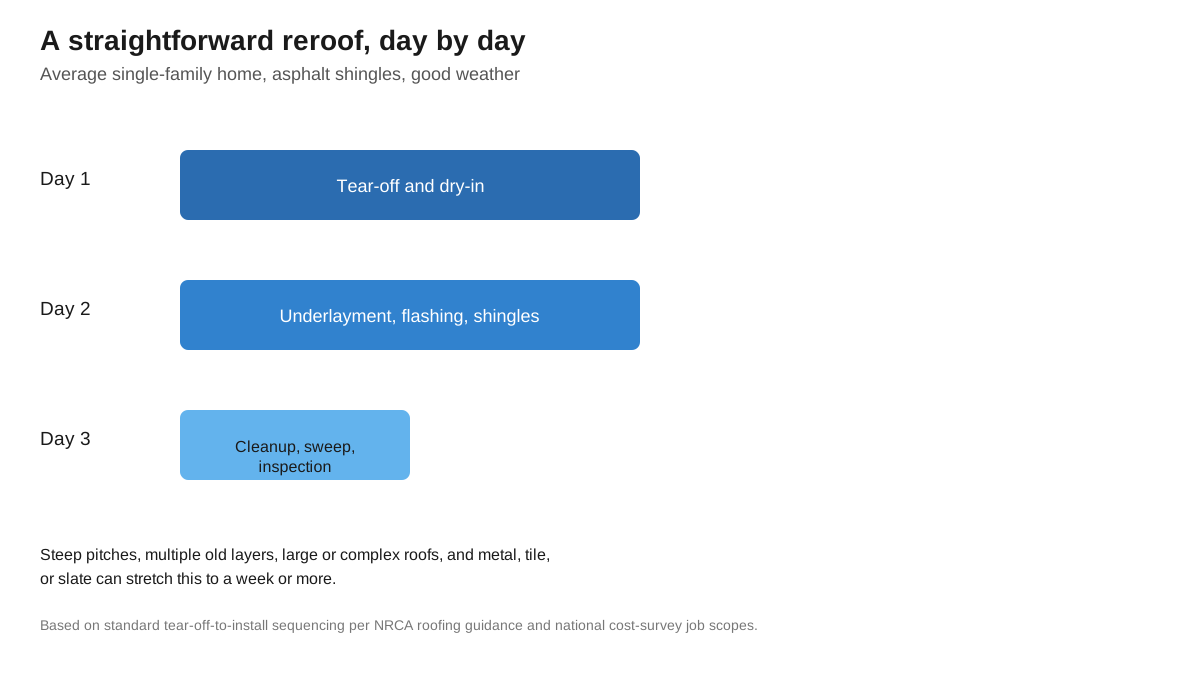
A straightforward asphalt-shingle roof replacement handled by most roofing services usually takes one to three working days: tear-off and dry-in the first day, underlayment and shingles the second, then cleanup and a final inspection. Steep pitches, multiple old layers, metal, tile, or slate, and weather delays can stretch that to a week or longer.
Picture a 1990s colonial outside Cedar Rapids with three-tab shingles curling at every ridge. The estimate the homeowner just signed says the crew starts Monday and finishes by Wednesday, weather permitting, and now the real question sets in: what actually happens to the house for those three days? Dumpsters and ladders show up, sure, but so does a fairly precise sequence that most roofing services follow in roughly the same order, because the materials and the building code leave little room to improvise.
This guide walks through that sequence day by day: what a crew tears off first, how a deck gets dried in before the first drop of rain can reach it, where flashing and ventilation fit into the install, and what a final walk-through is supposed to catch before the crew leaves. It also covers the variables that stretch or shrink the schedule, material, roof size, layers of old shingles, and weather, plus the regional patterns that push some areas toward multi-week waits after a bad storm season. If your roof is actively leaking right now rather than waiting on a scheduled reroof, that's a different problem: call 888-679-3798 and describe what you're seeing to reach a roofing contractor who handles emergency work, and see our emergency roof repair guide for what to do until someone arrives.
How Long Does a Roof Replacement Actually Take?
For a straightforward asphalt-shingle reroof on an average single-family home, most roofing services plan on one to three working days: one day to tear off and dry in, a second day to install the new field material and flashing, and a partial third day for cleanup, a magnetic sweep for stray nails, and a final walk-through. That's the baseline. Steep pitches (roofers generally treat anything beyond a 4-in-12 slope, meaning 4 inches of vertical rise for every 12 inches of horizontal run, as needing extra fall-protection gear and slower footing), multiple layers of old shingles, a large or complex roof, premium materials like metal, tile, or slate, and weather all push the number higher, sometimes to a full week or more.
A straightforward asphalt reroof, day by day, before accounting for size, pitch, layers or weather.
Contractors sometimes call this whole process a reroof, shorthand for tearing an old roof down to the deck and installing a full new roofing system, as opposed to a repair, which patches one section without touching the rest. A reroof moves through the same rough stages almost every time:
Material delivery and staging in the driveway or yard
Tear-off of the old roofing down to the bare deck
Deck inspection and repair of any rotten or soft sheathing
Underlayment and ice-and-water shield installed to dry in the roof
Flashing, starter strip, and the new field material installed
Ridge vent or ridge cap installed, tying the ventilation together
Cleanup, a magnetic nail sweep, and a final inspection
Every section below covers one of those stages in more detail, roughly in the order a crew actually works through them.
Before the Crew Arrives: Permits, Scheduling and Prep
Most jurisdictions require a permit before tear-off starts, and your contractor typically pulls it, not you. Permit costs run from about $100 on the low end to as much as $1,400 in stricter jurisdictions, depending on the size of the job and the town, according to HomeAdvisor's national cost survey (Fixr's separate survey puts the typical range closer to $100 to $500). Permit review adds its own lead time on top of the contractor's own schedule, sometimes a few business days, sometimes longer in a busy building department, so ask early in the estimate process whether the quoted start date already accounts for permit approval.
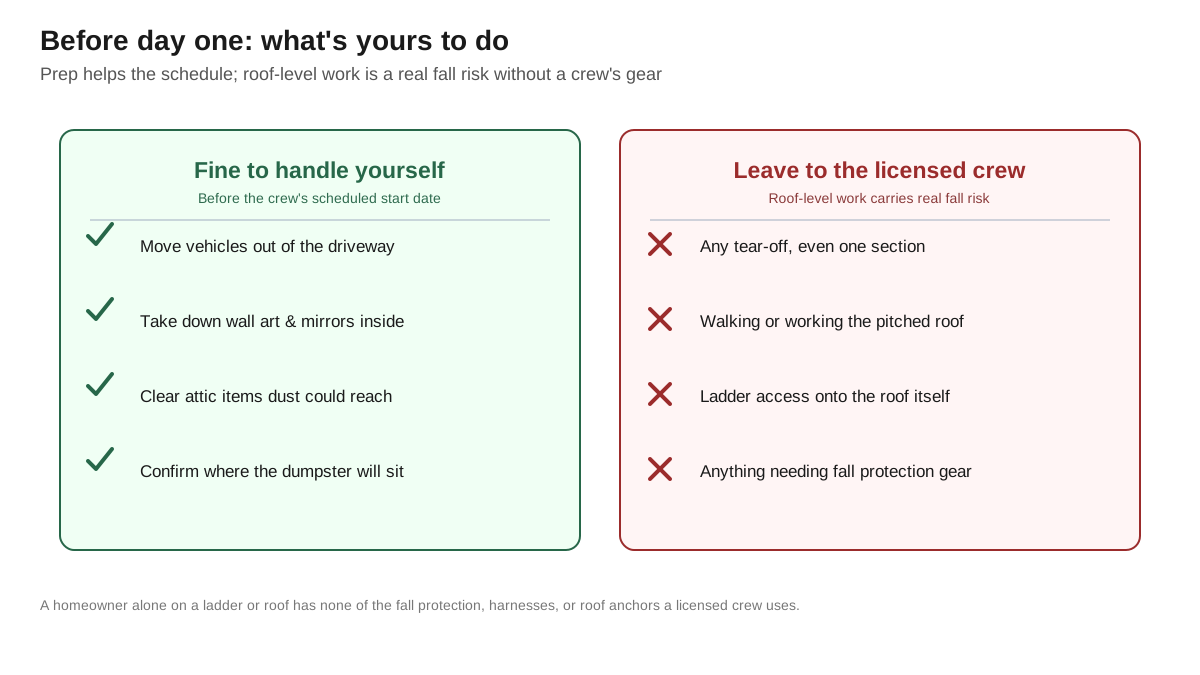
Once a start date is set, a short prep list keeps the job moving instead of stalling on day one: move vehicles out of the driveway and away from the house, take down wall art and mirrors inside (hammering vibration can knock things loose), cover or move anything stored in the attic that dust or debris could reach, and confirm where the dumpster or debris trailer will sit so it doesn't block a neighbor's driveway. Staging is the term crews use for delivering material to the site ahead of the actual work date, and a well-staged job rarely loses a day to a missing bundle of shingles.
Day One: The Tear-Off
Tear-off is exactly what it sounds like: the crew strips every layer of the old roof down to bare decking, using flat shovels and specialized tear-off tools to pry up shingles, nails, and old underlayment in sections. The roof tear-off process is the loudest and messiest part of the whole job, and it's also the point where surprises show up. A contractor who only priced the job from a ground-level look or a satellite photo can't know what's under the old shingles until this stage, which is why a fair estimate treats deck repair as a separate, priced-later line item instead of folding it into a flat number.
Debris goes straight into a dumpster or trailer parked as close to the roof edge as the property allows, sometimes down a chute, a covered slide that funnels material off the roof, instead of being carried down by hand. On a typical single-family roof, tear-off often eats the first half of day one, sometimes less on a simple single-layer roof, more if there are two or three layers of old shingles stacked on top of each other. Multiple layers not only slow tear-off, they also add to the disposal cost, since more material by weight has to leave the site.
Decking Repairs and Getting the Roof Dried In
With the old roofing gone, the crew can finally see the deck, the plywood or OSB sheathing that everything else attaches to. Soft spots, delamination, or rot around old vent boots and chimneys get cut out and replaced with new sheathing, priced separately from the base job at roughly $2 to $8 per square foot of deck replaced, according to Fixr's cost survey. A roof that needs extensive deck repair is one of the most common reasons a firm quote grows once the tear-off is done, so ask upfront how the contractor handles and prices that possibility rather than being surprised by it.
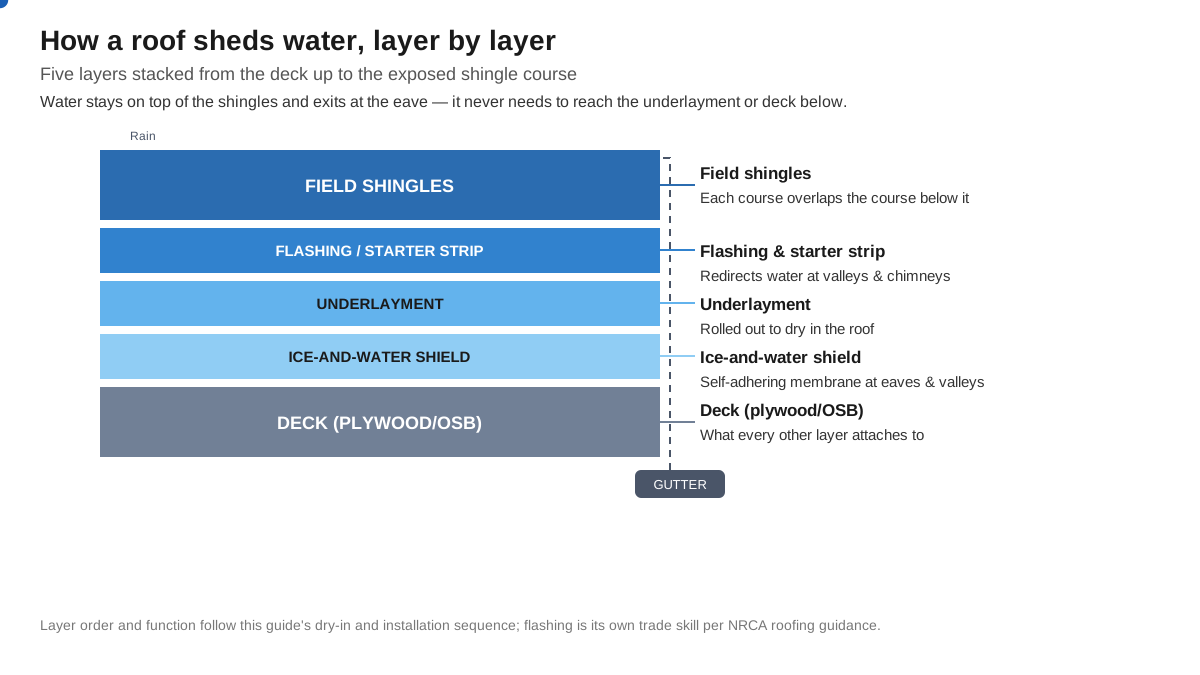
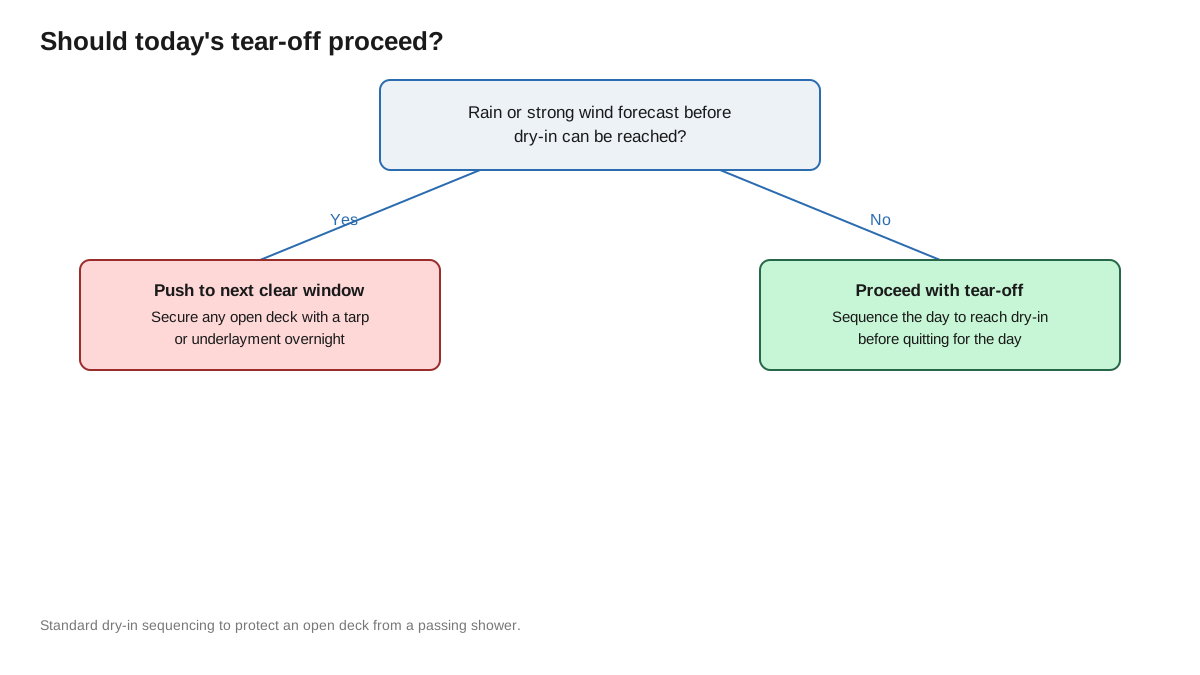
Once the deck is sound, the crew moves to what's called dry-in: rolling out synthetic underlayment or felt paper across the whole roof and installing ice-and-water shield, a self-adhering waterproof membrane, along eaves, valleys, and around penetrations like chimneys and skylights (building code in cold-climate areas typically requires it to extend at least 24 inches past the interior face of the exterior wall, to block ice-dam backup). Dry-in is the point where the roof stops being vulnerable to a surprise afternoon shower. On a job that can't finish tear-off and dry-in the same day, a good crew never leaves a deck exposed overnight without at least a secured tarp or underlayment down, and that single detail is worth asking about directly if your job is likely to span more than one day.
Day Two: Underlayment, Flashing and Shingle Installation
With the deck dried in, day two (or the back half of day one on a smaller job) is where the new roof actually goes on. A starter strip runs along the eaves first, then flashing, thin sheet metal that redirects water away from joints and penetrations, goes in at every valley, chimney, sidewall, and vent pipe before a single shingle covers that area. Flashing failures cause many of the leaks that show up years later, which is why NRCA's roofing guidance treats it as its own trade skill rather than a shortcut a general crew improvises on the fly. Our chimney flashing and skylight leak guide covers what that failure looks like once it happens.
From there, field shingles (or panels, for metal) go on course by course, working up from the eaves toward the ridge, with each course overlapping the one below it per the manufacturer's nailing pattern. Nailing pattern and nail placement matter more than most homeowners realize: manufacturer instructions typically call for 4 nails per shingle, 6 in high-wind zones, with each nail driven long enough to penetrate at least 3/4 inch into the deck, and too few nails, or nails placed wrong on the shingle, can void a manufacturer's wind warranty even though the roof looks identical from the ground. The ridge gets a vent strip or ridge cap last, tying the whole roof's ventilation system together so the attic can breathe the way it's designed to.
Why a roof stays dry: water sheds across the shingle layer and off the eave, never reaching the underlayment or deck beneath it.
Final Day: Cleanup, Magnetic Sweep and Final Inspection
The last stretch of the job looks less like construction and more like housekeeping, but it matters just as much. A magnetic roller sweep of the yard, driveway, and any grass under the eaves catches stray roofing nails before they end up in a tire or a bare foot, and a careful crew runs it more than once. Gutters get checked and often cleared of debris that fell during tear-off; if yours are older or undersized for the new roof's runoff, this is a natural point to also look at gutter installation, since a new roof and failing gutters right next to each other rarely makes sense.
The contractor should also walk the roof, or send photos, for a final visual check, confirm the permit's final inspection is scheduled or complete where one was pulled, hand over the manufacturer's warranty registration paperwork, and put the workmanship warranty, the contractor's own guarantee on their labor, in writing too. Ask for both warranties in writing before the crew leaves, material and labor, since a verbal promise is worth nothing if the company changes hands or closes before you ever need it.
How Loud a Roof Replacement Gets, and Living Through It
There's no getting around it: roof replacement noise is a real disruption, not a minor inconvenience. Hammering, nail guns, tear-off shovels scraping the deck, and material being dropped or dragged across the roof all happen directly above whatever room is under that section of roof, and most local ordinances restrict work to daytime hours, commonly starting around 7 or 8 a.m., though the exact window varies by city and county. If you work from home, have a newborn on a nap schedule, or keep pets that spook at loud banging, plan around the loudest day rather than trying to work straight through it.
The good news is that the worst of the noise is concentrated in tear-off, the first several hours of the job, and it eases once the crew moves into the quieter rhythm of laying underlayment and shingles. A dog that's anxious around strangers or loud noise is usually better off at a sitter's or in a back room with white noise running than loose in a yard a crew is actively working above. None of this is dangerous, just loud, and knowing which day is loudest ahead of time turns a stressful surprise into a manageable one.
How Weather Changes the Schedule
Good roof replacement weather means a dry stretch with no rain in the forecast for the tear-off and dry-in window, moderate temperatures, and wind under the manufacturer's installation limits for that material. Asphalt shingles rely on a thermal seal, an adhesive strip that bonds to the shingle below it once the sun warms it, and that bond forms poorly in cold weather, typically needing hand-sealing with roofing cement when install-day temperatures sit below 40°F, which is one reason many contractors avoid starting a tear-off late in the day during colder months: an incomplete dry-in overnight, combined with a shingle that won't seal until temperatures rise, is a bad combination.
How a crew decides whether to proceed with tear-off or push to the next clear window.
Rain mid-project is the scenario every contractor plans around rather than hopes to avoid. Once dry-in is complete, underlayment and ice-and-water shield can handle a passing shower without damage to the interior, even if work pauses for the day. Rain that arrives before dry-in is finished is the real risk, which is why a good crew sequences the job to reach dry-in before quitting for the day whenever the forecast looks uncertain, even if that means a longer first day. Strong, sustained wind usually stops work outright for safety, not just quality, since a crew standing on a pitched roof in gusty conditions faces a real fall risk regardless of experience.
How to Avoid the Most Common Delays
A handful of decisions before day one prevent most of the delays that turn a three-day job into a two-week one. Confirm the roof replacement permit is pulled and approved before a start date gets locked in, not the week the job is scheduled to begin. Order specialty materials, an uncommon shingle color, tile, slate, or a custom metal panel, well ahead of the install date, since these can carry a longer lead time, the wait between placing the order and having material on site, than standard three-tab or architectural asphalt. Ask for a written schedule with a start date and an expected finish date, plus language covering what happens if weather pushes the job past that window.
Never let a crew start tear-off on a roof they haven't priced from an in-person, on-the-roof inspection: a quote built from a photo, a satellite measurement, or a drive-by is a common cause of a price that changes mid-project and a schedule that slips right along with it. It's tempting to save the deposit and do a small tear-off section yourself before the crew arrives, but roofing work carries a real fall risk even for a short stretch (federal workplace-safety rules require fall protection for anyone working 6 feet or higher on a residential roof), and a homeowner working alone on a ladder or a pitched roof has none of the fall protection, harnesses, and roof anchors a licensed crew uses as a matter of course. Leave the roof itself to the professionals and save the DIY effort for the prep list instead.
The line between helpful prep and a real fall risk: what's fine to do yourself before the crew arrives, and what to leave to them.
Signs a Crew Is Cutting Corners on Your Timeline
A schedule that looks too good to be true on paper is worth a second look. Crews that skip pulling a permit, that go straight to an overlay, installing new shingles over the old layer instead of tearing it off, without discussing it, or that promise a full reroof of a large or complex roof in a single day are often cutting a step somewhere, dry-in, flashing, deck repair, or nailing pattern, to hit an unrealistic timeline. Certifications are one useful filter: NRCA's PROCertification program, GAF's Master Elite tier, and Owens Corning's Preferred Contractor network all require crews to meet training and volume standards the certifying company checks on an ongoing basis, which is a stronger signal than a truck wrap or a stack of reviews alone.
Other red flags show up in how a company talks about scheduling rather than in the roof itself: pressure to sign the same day to lock in a price, no written start-and-finish window, or a refusal to say who's actually doing the labor (a sales-only company that subcontracts the crew isn't automatically bad, but you deserve to know before day one, not after). If you want a second opinion on how a company would sequence your specific job before you sign anything, calling a roofing contractor at 888-679-3798 to ask a few direct questions about their timeline and crew is a reasonable gut check, and our guide to choosing a roofing contractor covers license and insurance verification in more depth.
What a Roof Replacement Costs, by Material and Size
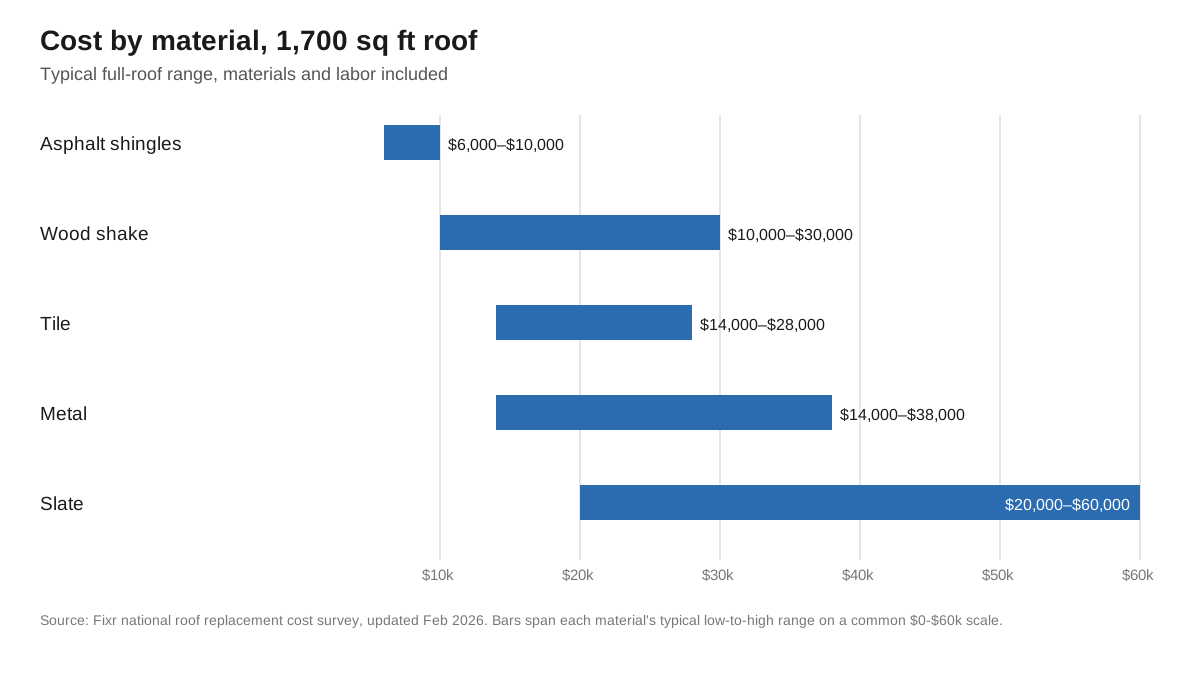
Timeline and cost move together more than most homeowners expect: a bigger, steeper, or more complex roof takes longer to work and costs more, and a premium material like tile or slate takes both more days and more money than asphalt on an identical footprint. A square, the unit roofers use to price a job, equals 100 square feet of roof area, and both the day count and the dollar total scale with how many squares your roof covers.
Roof replacement cost by material, low to high, for a roughly 1,700 sq ft roof (Fixr).
Material
Typical full-roof cost (roughly 1,700 sq ft roof)
Source
Asphalt shingles
$6,000–$10,000
Fixr
Wood shake
$10,000–$30,000
Fixr
Tile
$14,000–$28,000
Fixr
Metal
$14,000–$38,000
Fixr
Slate
$20,000–$60,000
Fixr
Those figures track a roughly 1,700 square foot roof; a larger or more cut-up roof scales both cost and days upward together. For the full breakdown by size, labor share, and what a fair written estimate should itemize line by line, see our roof replacement cost guide. If what you're actually dealing with is a handful of damaged shingles or a single active leak rather than a full reroof, that's a different, much smaller conversation, both in dollars and in days on site: national roof repair costs typically run $395 to $1,966, averaging around $1,173, according to HomeAdvisor's cost survey, and the crew is usually in and out well inside a single day.
Situation
What it usually means
Effect on your schedule
Isolated leak, one flashing point, or a handful of missing shingles
Repair, not a full replacement
Often the next available slot; usually well under a day on site
Widespread shingle curling, multiple soft deck spots, or a roof past its material's rated age
Full replacement is likely the honest answer
Add tear-off, permit lead time, and any material lead time to the calendar
Fresh storm damage: hail, high wind, or a fallen limb
Possible insurance claim
Documentation and adjuster scheduling can add days before work even starts
Regional Timeline Differences: Storm Season, Freeze Belt and Contractor Backlogs
A national timeline estimate assumes a contractor with an open slot and no competing demand, and that assumption breaks down fast in the wrong place at the wrong time. The country's hail corridor, running through the Plains and into parts of the South, saw 5,432 major hail events in 2025 (NOAA's Storm Prediction Center classifies a hailstone at least 1 inch in diameter as severe and 2 inches or larger as significant severe, the threshold behind that count), essentially flat from 5,373 in 2024, with Texas alone logging 902 of them, followed by Kansas (375), Oklahoma (369), Nebraska (315), and Missouri (253), according to the Insurance Information Institute citing NOAA's Storm Prediction Center. After a storm like that moves through a county, every roofing contractor in driving distance can end up booked for weeks on storm-damage claims before they get to a routine, non-storm reroof, which is the single biggest regional swing on a real-world timeline. See our hail damage and insurance claim guide for what to document if a storm is why you're replacing your roof.
Cold-climate regions add a different variable: contractors in the freeze belt, the northern tier where winter temperatures routinely sit below freezing, often push non-emergency reroofs into a narrower warm-weather season, since asphalt's thermal seal bonds poorly in cold temperatures and ice on a pitched roof is a serious fall hazard for a crew, the same freeze-driven pattern that also causes ice dams along the eaves of a finished roof. That seasonal squeeze can mean booking weeks or months ahead for a summer slot, even without any storm involved. Coastal and hurricane-season regions see the opposite pattern in reverse: contractors there build slack time into spring and early summer schedules specifically because a named storm can pull every available crew into emergency tarping and temporary repairs with no notice. Wherever you live, ask a contractor directly how their current backlog compares to a normal season before you lock in a start date, since the honest answer sets your real-world expectations better than any national average can.
Frequently asked questions
How long does a roof replacement take?+
Most straightforward asphalt-shingle reroofs on an average single-family home take one to three working days: a day for tear-off and dry-in, a day for installation, and a partial day for cleanup and inspection. Steep pitches, multiple old layers, premium materials like metal, tile, or slate, and weather can extend that to a week or more. A contractor's written schedule based on an actual roof inspection, not a phone estimate, is the only reliable number for your specific job.
Do I need a permit for a roof replacement?+
In most jurisdictions, yes, and the contractor typically pulls it on your behalf rather than the homeowner filing it directly. Permit costs run from roughly $100 to as much as $1,400 depending on the town and job size, per HomeAdvisor's cost survey (Fixr's survey puts the typical range closer to $100 to $500). Permit review can add its own lead time before work starts, so confirm with your contractor whether the quoted start date already accounts for approval, not just their own crew availability.
How loud is a roof replacement?+
Loud enough to notice throughout the house, especially during tear-off, when shovels, nail guns, and material being dragged across the deck happen directly overhead. Most crews work within local daytime-hours ordinances, commonly starting around 7 or 8 a.m. depending on the city. The worst of the noise is concentrated in the first several hours of tear-off and eases once the crew moves into laying underlayment and shingles, so plan work-from-home calls or a nervous pet's schedule around the loudest stretch.
What counts as good roof replacement weather?+
A dry stretch with no rain forecast for the tear-off and dry-in window, moderate temperatures, and wind under the material manufacturer's installation limits. Asphalt shingles rely on a thermal seal that bonds poorly in cold weather, which is why many contractors avoid starting a tear-off late in the day during colder months. Once dry-in, the underlayment and ice-and-water shield stage, is complete, a passing shower usually won't threaten the interior even if work pauses for the day.
What happens during the roof tear-off process?+
The crew strips every layer of old roofing down to the bare deck, using tear-off tools and shovels to pry up shingles, nails, and old underlayment, then hauls debris to a dumpster or trailer, sometimes through a chute. It's the loudest, messiest stage, and the point where hidden problems like soft or rotten decking finally become visible, which is why a fair estimate treats deck repair as a separately priced item rather than folding it into the original number.
Can you do roofing in the winter?+
Yes, but with real limits. Asphalt shingles need warmth to fully bond through their thermal seal, so a winter install may need hand-sealing or extra care to bond properly, and ice on a pitched roof is a genuine fall hazard for the crew. Many contractors in colder climates schedule non-emergency replacements for warmer months and reserve winter slots for storm damage or active leaks that can't wait, which is also why winter scheduling windows tend to book up early.
How long do roofing companies warranty their work?+
Warranty length varies by company and isn't something a national guide can quote as one number, since it depends on the contractor's own labor warranty terms as well as the manufacturer's material warranty for whatever product they install. Ask for both warranties in writing before the crew leaves, material and labor spelled out separately, and confirm whether the labor warranty transfers if you sell the house before it expires.
How long is a roofing contract good for?+
That depends entirely on the individual contract, so read the start-date, finish-date, and cancellation terms in your specific agreement rather than assuming a standard. A well-written contract should specify a start window, an expected finish date, what happens if weather delays the work, and how a deposit or scheduling fee is handled if either side needs to reschedule. If any of that is missing, ask for it in writing before you sign.
How much do roofing contractors charge per square?+
By material and installation combined, published surveys put shingle roofing at roughly $300 to $600 per square (a square equals 100 square feet), with labor alone running about $150 to $300 per square, according to HomeGuide's national cost data. Premium materials like metal, tile, or slate run well above that per-square range. Ask any contractor to break their bid down by square so you can compare estimates on the same basis.
How do you deal with a roofing contractor who wants to rush your timeline?+
Ask direct questions: why the schedule is faster than a comparable job, whether tear-off happens down to the deck or the roof gets layered over instead, and who specifically is doing the labor. A legitimate roofing contractor can answer all three without hesitation. Pressure to sign the same day, no written start-and-finish window, or vague answers about the crew are signs to get a second estimate before committing to that schedule.