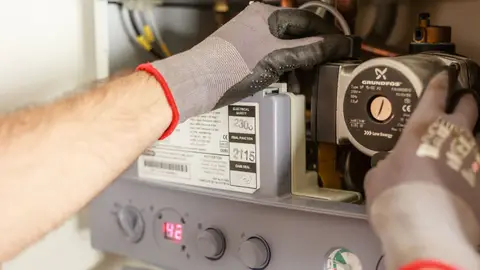
Garbage disposal not working is almost always a jam, not a dead motor: press the reset button on the unit's underside, then clear the jam with a hex key before touching the switch again. If it hums but won't turn, it's jammed. If it's silent with no hum, check the breaker and outlet first, then the reset button.
It's eight at night, there's a pot still on the stove, and the disposal just quit mid-scrape, dead silent or buzzing under the sink while water starts to pool around the last bites of dinner. That specific moment is why this page exists: almost every disposal call turns out to be one of two things, a physical jam the unit can't grind through, or power that isn't reaching the motor at all, and both have a fix you can try before anyone drives over with a wrench.
This guide walks through how to tell which one you have, how to clear a jam safely with the reset button and a hex key, what a buzzing sound or a burning smell actually means, and when the smarter move is to stop and call a plumber instead of trying a sixth time. It also covers what a repair or a full replacement tends to cost, since that number depends more on the unit's age and the local labor rate than on anything you did wrong.
What's Actually Going On When the Disposal Won't Run
Most of the time, a garbage disposal not working is not a broken appliance. It's a small motor that stalled against something it couldn't grind, and it's waiting for you to clear the jam and tell it to try again. Disposals are built with a safety cutoff for exactly this reason: rather than burn out the motor when the flywheel jams, the unit trips an internal overload switch and goes quiet.
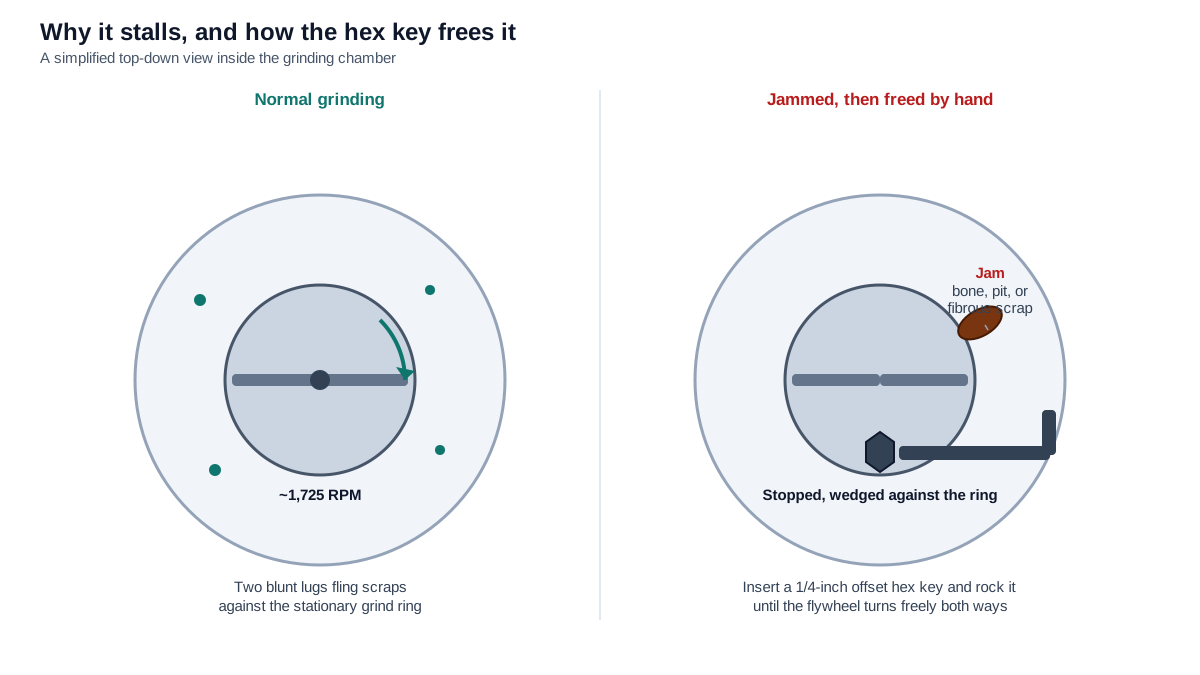
Picture the flywheel as a small steel plate spinning at roughly 1,725 RPM — the standard induction-motor speed built into most residential units — with two blunt lugs, not actual blades, that fling food scraps against a stationary grind ring. Drop in a chicken bone, a fruit pit, a bottle cap that slipped off the counter, or a wad of celery strings, and the flywheel can lock up mid-spin. The motor tries to push through it, draws too much current, and the built-in overload protector shuts the circuit down before anything melts.
That's the humming case. A disposal that hums but doesn't spin has power reaching the motor, and the motor is trying to turn, it's just physically blocked. A disposal that's completely silent, no hum, no vibration, is a different problem: power isn't reaching the motor at all, and the fix starts at the breaker panel and the wall switch, not inside the unit.
Knowing which of those two you have before you touch a tool saves a service call. The rest of this guide walks through both paths, plus what to do if the unit runs fine but the sink still won't drain, or the disposal has started leaking instead of just refusing to start.
What's actually happening inside the housing when a disposal hums but won't spin, and how rocking the hex key frees the flywheel by hand.
The Most Likely Causes, Ranked by How Often They Show Up
Every disposal call boils down to a short list of usual suspects. In rough order of how often each one turns out to be the answer:
A jam at the flywheel — silverware, a fruit pit, glass, or a fibrous scrap like celery or corn husk wedged between the flywheel and the grind ring. This is by far the most common cause of a garbage disposal jammed against something it can't grind.
A tripped reset button — the small red or black button on the underside of the unit pops out when the internal breaker senses a stall or an overload, even after the jam itself is gone.
A tripped household breaker or a loose outlet connection — more common in older kitchens on a shared circuit, or right after a power outage.
A worn-out motor or a seized bearing — units typically run 10 to 15 years; past that, a stall that won't clear with a reset and a manual turn of the flywheel usually means the motor itself has failed.
A bad wall switch or loose wiring — if the unit is completely silent, no hum at all, and the breaker and outlet both check out, the switch or the connection behind it is the next suspect.
A cracked housing or a failed seal — shows up as garbage disposal leaking from the bottom or the sink flange, not as a unit that won't turn on at all, though a bad enough leak can eventually trip a GFCI outlet and look like an electrical fault.
How to Diagnose It, Step by Step
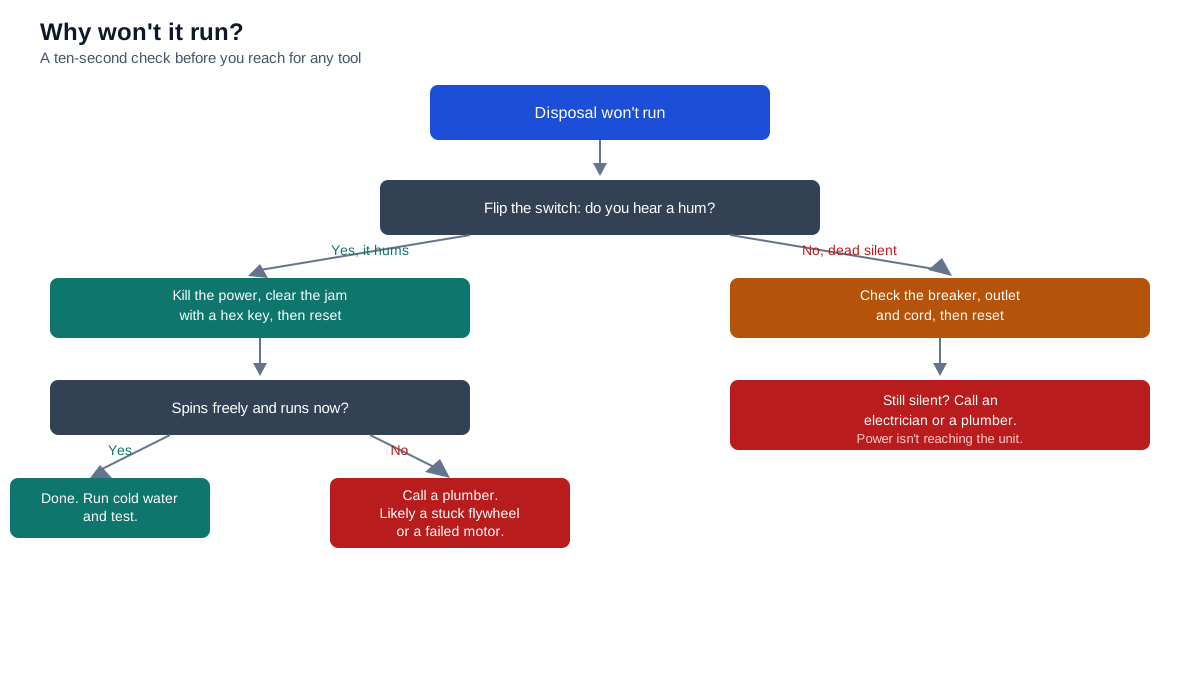
Flip the switch and listen first: a hum means a jam to clear with a hex key, dead silence means check the breaker and outlet before anything else.
Work through these in order. Most jams resolve by step four.
Cut the power first. Flip the wall switch off, then turn off the breaker that feeds the kitchen counter circuit, or unplug the unit if it sits on a cord under the sink.
Look and listen: turn the switch back on for one second only. A hum means power is reaching the motor and something is physically stuck. Dead silence, no hum, no sound, points to power not reaching the unit at all.
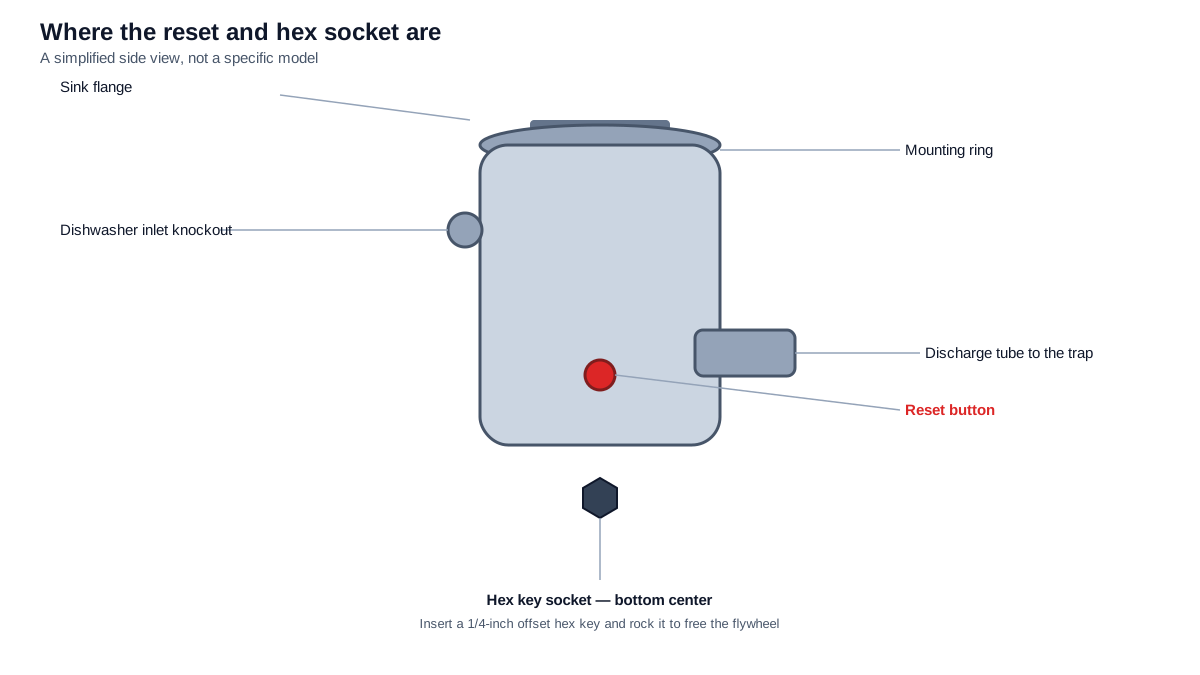
Check the reset button, the small square button on the bottom center of the unit, underneath the sink. Push it in. If it clicks and stays in, the internal breaker had tripped; if it pops right back out even after you've cleared a jam, give the motor ten to twenty minutes to cool before trying again — the overload protector resets on temperature, not just on contact.
Kill the power again, then find the jam. Use a flashlight and look down into the drain opening for anything metal, glass, or fibrous. Never reach in with your fingers.
Free the flywheel with a hex key. Most disposals have a hex-shaped socket in the center of the bottom housing. Insert a 1/4-inch offset hex key, often included with the unit, or sold separately for a few dollars, and work it back and forth until it turns a full rotation freely in both directions.
Remove what you find with tongs or pliers, never your hand, then spin the flywheel a few more times by hand to confirm nothing else is caught.
Press the reset button, restore power, and test with cold water running and the wall switch on. If it spins cleanly, run it another 10 to 15 seconds to clear any remaining debris.
Where to find the reset button and the hex key socket on a typical garbage disposal, mounted underneath the sink.
If you worked through all seven steps and the disposal still won't turn, or it turns but sounds like metal grinding on metal, stop. That's a job for a plumber, not another round of the hex key.
Does the Brand Change Anything? Badger, InSinkErator, Moen, Evergrind
The mechanics behind a stalled disposal don't change by brand. A Badger from InSinkErator, an Evergrind, a Moen GXP-series unit, or any other model all use the same basic layout: a flywheel, a grind ring, an overload protector, and a hex-key socket in the bottom center. If you're searching something like an evergrind garbage disposal not working or trying to track down a garbage disposal not working gxp50c issue, the diagnosis steps above still apply in the same order, breaker and outlet first if it's silent, hex key and reset if it hums.
What does change by brand and model is where the reset button sits and what size hex key the bottom socket takes, almost always 1/4 inch, but check the sticker on the unit or the installation manual if one came with the house. A why is my badger garbage disposal not working search and a why is my moen garbage disposal not working search both lead to the same place: pop the reset, grab the hex key, check the flywheel, and if that doesn't resolve it inside a few tries, stop and call a plumber rather than keep forcing it.
What Each Symptom Is Actually Telling You
Humming But Not Turning
A garbage disposal humming but not working is almost always a mechanical jam, covered in the diagnosis steps above. The motor has power and is trying to spin; something physical is stopping it. Don't keep flipping the switch on and off once you hear the hum. Repeated attempts against a jam are exactly what burns out a motor that a hex key would have freed in thirty seconds.
No Sound at All
If you get garbage disposal not working, no sound, nothing, when you flip the switch, the disposal isn't receiving power. Check the breaker panel first, then the reset button on the unit, then the outlet under the sink if the unit plugs in rather than hard-wires. A garbage disposal not working but has power at the outlet, confirmed with a phone charger or a simple outlet tester, and still silent, usually means the wall switch or the wiring between the switch and the unit has failed.
Buzzing, a Burning Smell, or the Breaker Keeps Tripping
A disposal that's garbage disposal not working and buzzing loudly, or one that gives off a burning-plastic smell, has a motor under real strain, not a light jam. Cut power immediately. If the breaker trips again as soon as you reset it, or trips a second time within a day, stop trying to run the unit. That pattern points to a shorted motor winding or damaged wiring, and running it again risks a small kitchen fire, not just a dead disposal.
Runs Fine, But the Sink Still Won't Drain
Sometimes the disposal spins normally and the real complaint is a garbage disposal not working and sink not draining, or water backing up on the other side, in the dishwasher. That's a drain-line problem downstream of the disposal, not the unit itself. The branch drain under most kitchen sinks runs just 1.5 inches in diameter, narrow enough that a grease-and-food clog just past the trap builds a full blockage fast, whether or not a disposal is installed, and a standard drain-clearing visit resolves it, not a disposal repair. Garbage disposal not working, dishwasher backing up specifically points to the knockout plug inside the disposal's dishwasher inlet, which ships in place and has to be knocked out during installation; if a previous installer missed it, the dishwasher will never drain properly no matter what you do to the disposal.
Leaking From the Bottom or the Seams
A unit that runs but is garbage disposal leaking from the bottom, the sink flange, or the dishwasher connection has a sealing failure, not an electrical one. Water at the very bottom of the unit means the internal seal around the motor shaft has failed, and that's not a repair; the unit gets replaced. Water higher up, around the sink flange, usually just means the plumber's putty or gasket needs to be redone, a far smaller job. That distinction matters for a homeowners insurance claim too: industry guidance generally treats a sudden, accidental leak as covered damage, while a leak that ran undetected for weeks typically falls under the gradual-damage exclusion most standard policies carry.
When to Stop and Call a Plumber Instead
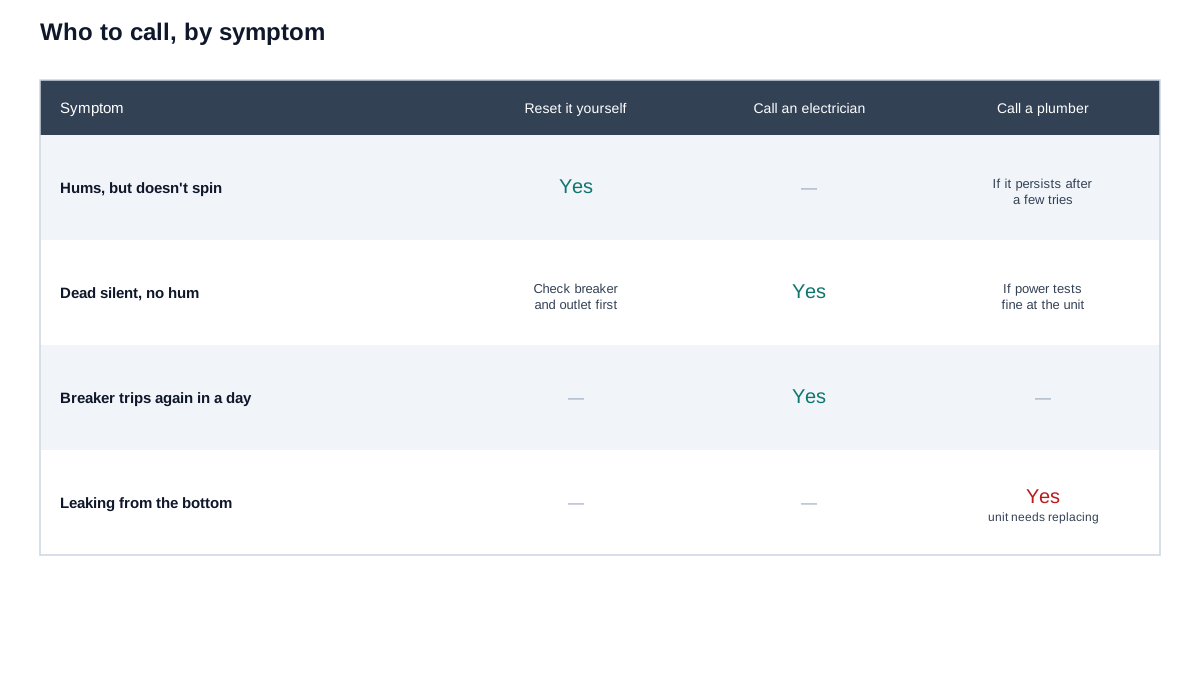
Who to call, by symptom: most humming jams are a DIY fix, a repeatedly tripping breaker needs an electrician, and a leak from the bottom needs a plumber.
Most disposal stalls are a five-minute fix. Call a plumber when any of these apply, rather than working through another round of the hex key:
Sign
Try This Yourself
Call a Plumber
Hums, doesn't spin, first time
Yes — hex key and reset
Only if it doesn't clear after a few tries
Silent, breaker and outlet both fine
No
Yes — likely a bad switch or wiring
Grinding-metal sound, not a clean spin
No
Yes — flywheel or motor damage
Leaking from the bottom of the unit
No
Yes — the unit needs replacing
Runs fine, sink still won't drain
Plunge past the disposal first
Yes, if plunging doesn't clear it
Other signs worth flagging on their own: the reset button pops back out immediately more than two or three times after you've confirmed the flywheel spins freely by hand, or the unit is more than 10 to 12 years old and has stalled more than once in the past year, at which point a repair often costs close to a garbage disposal replacement cost anyway, and a new unit comes with a fresh warranty.
If the water is backing up and won't clear at all, describe exactly what you're seeing, hum or silence, standing water, a smell, to 888-854-0126 so a plumber that serves your area can bring the right tools on the first visit. If you don't already have someone you trust, our guide on how to choose a licensed plumber covers the license lookup and red flags to watch for. Before anyone opens the cabinet under your sink, ask for the state license number and verify it yourself through your state's plumbing licensing board, and confirm the company carries current liability insurance — a legitimate local plumber hands over both without hesitation.
What Repair, Reset Calls, and Replacement Actually Cost
There's no national cost survey specific to garbage disposal replacement in our data, so treat any flat number you see elsewhere with caution. The figures in the table below are researched ranges pulled from the cited national cost surveys, not a quote for your address — only a written estimate from a plumber who has actually looked at your sink is binding. What's known, and useful here, is what actually drives that estimate up or down, and what a related drain-clearing visit costs if the real issue turns out to be downstream of the disposal rather than inside it.
What Moves a Disposal Repair or Replacement Estimate
Factor
Why It Changes the Price
What to Ask
Motor size
Continuous-feed units commonly run from about 1/3 to 1 horsepower; higher horsepower units cost more and grind tougher scraps with less jamming
What horsepower is being quoted, continuous-feed or batch-feed?
Mounting compatibility
A same-brand swap onto the existing mounting ring is faster labor than switching brands, which sometimes needs a new mounting assembly
Does this unit fit the existing mount, or is a new one needed?
Electrical work
A hard-wired unit that needs a new cord kit, or a switch that also needs replacing, adds labor beyond a simple swap
Is the existing wiring and switch being reused as-is?
Old unit removal
Some plumbers include haul-away of the failed unit in the quote, others charge separately
Is removal and disposal of the old unit included?
Actual pricing also varies by region's labor rates, how accessible the disposal is in a crowded sink cabinet, and what the plumber finds once the old unit is actually out — a corroded shutoff valve, a cracked drain flange, or rot in the cabinet floor can add labor that no phone estimate priced in.
If the Problem Turns Out to Be the Drain, Not the Disposal
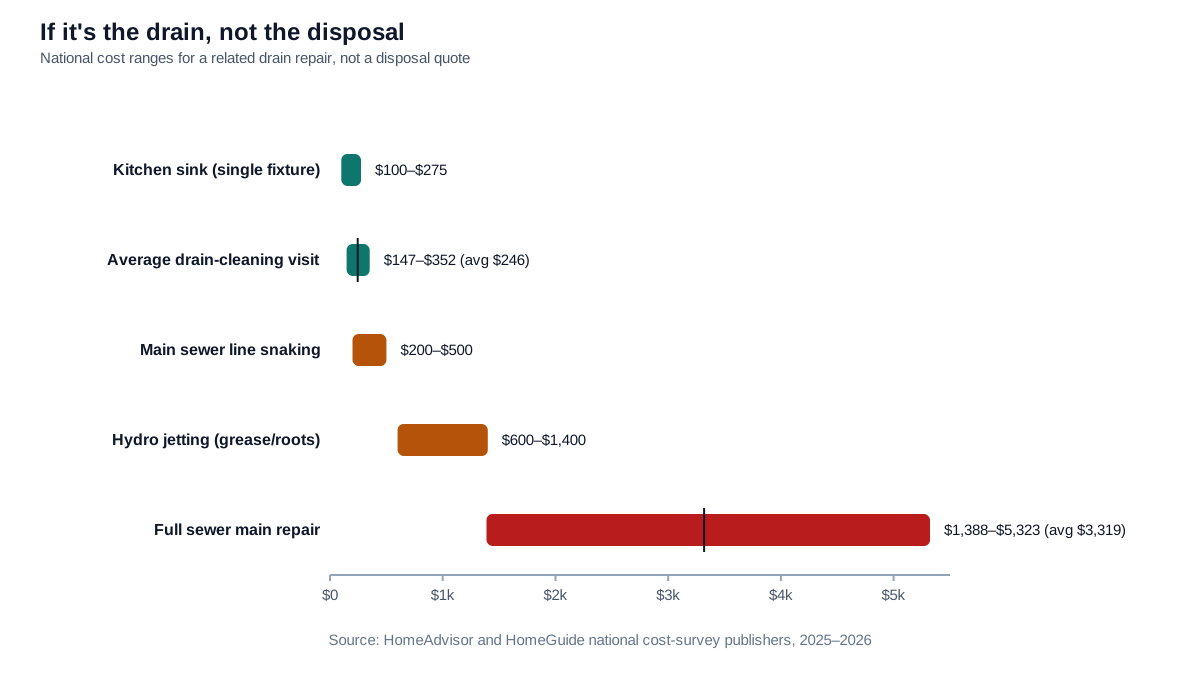
When the disposal runs fine but water still backs up, the fix is usually a standard drain-clearing visit rather than a disposal repair at all. These figures come from national contractor cost-survey publishers, each averaging across thousands of logged jobs; nobody surveyed local plumbers for this table, and local labor rates will move the number in either direction, so use it to sanity-check a quote, not replace one.
Situation
Typical Range (National)
Source
Single fixture (just the kitchen sink), slow or stopped
$100–$275
HomeGuide, 2025
General drain-cleaning visit, average job
$147–$352 (average $246)
HomeAdvisor, 2026
Main sewer line snaking
$200–$500
HomeGuide, 2025
Hydro jetting, heavier grease or root buildup
$600–$1,400
HomeGuide, 2025
Full sewer main repair (rare — root intrusion or a collapsed section, not a simple clog)
$1,388–$5,323 (average $3,319)
HomeAdvisor, 2026
Our drain cleaning guide goes deeper on snaking versus hydro jetting if that turns out to be your actual problem. For the disposal itself, if a plumber tells you the garbage disposal replacement cost is close to or more than half the price of a mid-range new unit installed, replacing it usually makes more sense than repairing a unit that's already most of a decade old. Call 888-854-0126 to reach a plumber that serves your area and describe the symptoms, hum or silence, any leak, and the unit's age, for a faster read on repair versus replace.
What a related drain-clearing visit costs nationally if the disposal turns out fine, from HomeAdvisor and HomeGuide's 2025–2026 cost surveys.
The Safety Rules That Matter Here
A disposal is a small appliance with a spinning flywheel and exposed electrical connections underneath a sink you can't always see into clearly. A few rules matter more than the rest.
Never put your hand, a spoon, or any tool other than the hex key into the disposal opening without first switching it off at the wall and killing the breaker, because the reset button can pop back in and re-energize the unit while your hand is still inside. The wall switch alone isn't a safe enough barrier; a stuck switch, a wiring fault, or someone else in the house flipping it back on are all real possibilities.
Beyond that one rule: keep the hex key, tongs, or needle-nose pliers as your only tools inside the unit — never a screwdriver used as a pry bar against the flywheel, which can bend it. If you smell anything electrical, burning plastic, or hot insulation, cut power at the breaker, not just the switch, and leave it off until a plumber or electrician looks at it. And if a disposal keeps tripping a ground-fault (GFCI) outlet nearby, treat that as a sign of a wiring or motor fault, not a nuisance trip to reset and ignore.
Keeping the Next Jam From Happening
Most disposal jams are preventable with a few habits:
Run cold water, not hot, while grinding and for a few seconds after; cold water keeps grease firm enough to grind and chop through, where hot water melts it into a film that coats the flywheel and grind ring.
Feed scraps in gradually with the water already running, instead of dumping a full bowl in at once.
Keep fibrous scraps out, celery, corn husks, onion skins, artichoke leaves; the strings wrap around the flywheel shaft instead of grinding.
Never put bones, fruit pits, glass, metal, or plastic down the disposal; none of it grinds, all of it jams.
Run ice cubes through it every few weeks; the ice knocks built-up grime off the flywheel and grind ring without any chemical.
Skip the drain cleaner. Chemical drain cleaners sit inside the disposal chamber and can pit the metal and irritate skin if you later reach in for a jam.
None of this eliminates the occasional jam entirely, a bottle cap or a stray fork will always find its way in eventually, but it cuts how often you're underneath the sink with a hex key. For the rest of the house beyond the disposal, our seasonal plumbing maintenance checklist covers the habits that prevent bigger emergency calls.
Regional Notes: Septic Systems, Hard Water, and Older Wiring
A disposal behaves about the same in a Phoenix kitchen as it does in a Minneapolis one, but a few things change by region and by house.
Septic Systems
Homes on a septic tank rather than a municipal sewer connection put more scraps directly into a tank sized for wastewater, not solids. A disposal isn't off-limits on septic, but running it heavily adds solids that speed up how often the tank needs pumping, and a household that leans hard on the disposal on septic should have the tank inspected on a shorter interval than one on city sewer.
Hard Water Regions
In areas with hard, mineral-heavy water, common across much of the Southwest and parts of the Midwest, scale can build up around the flywheel shaft and the seal over time, which shortens the interval between jams and can eventually contribute to the seal failure behind a garbage disposal leaking from the bottom. Running ice through the unit and avoiding grease down the drain both help more in these areas, not less.
Older Wiring
Most disposals run on a standard 120-volt household circuit, and many installations give the unit its own dedicated 15-amp or 20-amp breaker, separate from the dishwasher and the counter outlets. In houses built before the 1980s, a kitchen circuit sometimes carries the disposal, the dishwasher, and part of the counter outlets on one shared breaker instead. A silent disposal with no hum at all is more likely to be a shared-circuit overload in these homes, which is one more reason to check the breaker before assuming the unit itself has failed.
Frequently asked questions
Why is my garbage disposal not working?+
The most common reason is a jam: something got wedged between the flywheel and the grind ring, tripped the internal overload switch, and the unit went silent to protect the motor. Press the reset button on the bottom of the unit, then check for a jam using a hex key in the bottom socket before flipping the switch again. If it's completely silent with no hum at all, check the breaker and outlet first instead.
Why is my garbage disposal humming but not working?+
A hum without spinning means the motor has power and is trying to turn, but something physical is blocking the flywheel, a fork, a fruit pit, a piece of glass, or fibrous food scraps. Cut the power, insert a hex key into the bottom socket, work the flywheel free, remove whatever caused the jam with tongs, then press the reset button and test again with cold water running.
Can you reset a garbage disposal?+
Yes. Every disposal has a small reset button, usually red, on the bottom of the housing underneath the sink. After clearing any jam and confirming the flywheel spins freely by hand, press the button in until it clicks, then restore power and try the switch. If it pops back out right away, something is still jamming the flywheel; if the flywheel already turns freely, give the motor ten to twenty minutes to cool before pressing the button again.
Why is my garbage disposal not working but has power?+
If the outlet tests fine and the unit still won't run, the most likely cause is a jam that hasn't fully cleared, or a reset button that hasn't been pressed after the jam was removed. Less often, it points to a failing motor or a bad internal switch, especially on a unit more than ten years old that has stalled before.
Why did my garbage disposal stop working after a power outage?+
A power outage can trip the reset button on its own, especially if the disposal was mid-cycle when the power cut out, or the surge when power returns can trip it. Press the reset button on the bottom of the unit first; if it holds and the disposal still won't run, check the breaker for that circuit before assuming the unit itself was damaged.
What causes a burning smell or buzzing sound from the disposal?+
A burning smell or a loud buzzing under real load usually means the motor is straining against a jam it can't clear, or a winding inside it has started to fail. Cut power immediately at the breaker rather than the switch alone. If the smell or buzzing returns after you reset it, stop trying to run the unit and call a plumber before it fails completely or damages the wiring.
Why is my garbage disposal leaking?+
Leaking from the very bottom of the unit means the internal seal around the motor shaft has failed, which isn't repairable and means the unit needs replacing. Leaking higher up, around the sink flange or the dishwasher connection, is usually just a worn gasket or old plumber's putty that needs to be redone, a much smaller job than a full replacement.
The disposal runs fine, so why is the sink still not draining?+
A disposal that spins normally but leaves standing water points to a clog in the drain line past the trap, not a problem with the unit itself. Grease, coffee grounds, or food residue can build up in the pipe whether or not a disposal is installed. A standard drain-clearing visit resolves it; running the disposal longer will not.
Can you sharpen garbage disposal blades?+
Not really, and there's nothing to sharpen in the way a knife blade needs it: most disposals use blunt lugs on the flywheel, not cutting blades, to fling food against a stationary grind ring. What looks like dullness over time is usually just grime and mineral buildup on the flywheel and ring, which running ice cubes through the unit clears better than any sharpening attempt would.
How much does it cost to replace a garbage disposal?+
There's no single national number worth quoting here, since the price swings with motor size, brand, and whether new wiring is needed. Ask any plumber quoting the job for a written estimate that breaks out the unit cost, labor, and haul-away of the old one, and compare that to a same-day repair cost before deciding which makes more sense for a unit already several years old.