A running toilet almost always comes down to one of two parts: a flapper that no longer seals the flush valve, or a fill valve that won't shut off once the tank refills. Running toilet repair is usually a ten-minute diagnosis and a twenty-minute fix with an inexpensive hardware-store part, no plumber required unless the tank itself is cracked or the shutoff valve won't turn.
The sound is easy to tune out at first, a faint hiss from the bathroom, a trickle you half-hear between flushes, and then one day you notice it hasn't stopped in an hour. Nationally, people search "running toilet repair" close to three thousand times a month, which tells you this is one of the most common repairs in an American house, right up there with a dripping faucet.
The good news is that running toilet repair is one of the cheaper, faster fixes in plumbing. Almost every case traces back to two parts you can hold in one hand: the flapper that seals the tank's drain hole, and the fill valve that refills the tank after every flush. This guide walks through how to tell which one has failed, how to fix each yourself, what it costs if you'd rather hire it out, and the small number of situations where the smart move is to stop and call a plumber instead.
What's Actually Running in the Tank
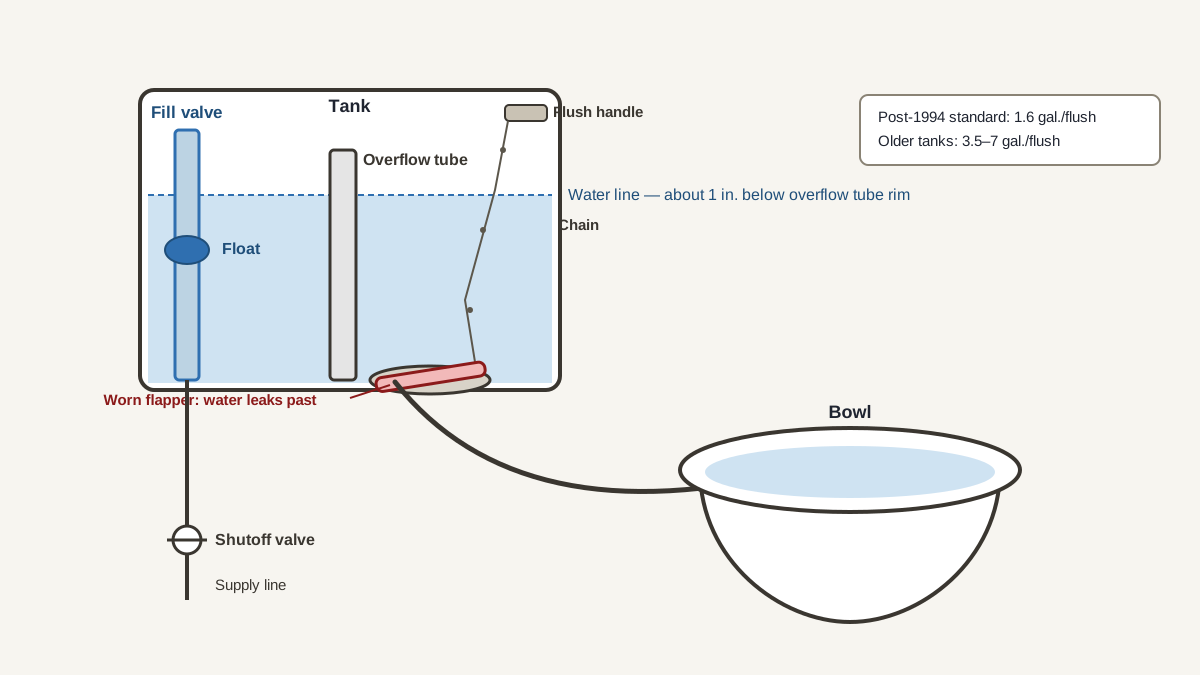
Lift the lid off the tank and you'll find four moving parts that matter. The fill valve sits on one side, usually the left, connected to the water supply line below the tank; its job is to refill the tank and bowl after every flush and then shut off. A float, either a ball on an arm or a cup that rides up and down the fill valve's own shaft, tells the fill valve when to stop. The flapper sits at the bottom of the tank, a rubber or silicone flap hinged over the flush valve seat, the hole that drains the tank into the bowl. A chain connects the flapper to the flush handle, so pressing the handle lifts the flapper just long enough to empty the tank. A toilet built after 1994 is capped at 1.6 gallons per flush under the federal low-flow plumbing standard; older tanks predate that limit and can use closer to 3.5 to 7 gallons every time the flapper lifts, which is part of why a running toilet on an older fixture wastes water faster than one on a newer low-flow model.
An overflow tube stands in the middle of the tank, usually attached to or built into the flush valve. It's a safety feature: if the fill valve ever overfills the tank, water spills down the inside of that tube into the bowl instead of over the tank's rim and onto your floor. When a toilet keeps running, water is escaping somewhere it shouldn't, either past a flapper that isn't sealing, out through an overflow tube that's catching more water than it should, or because a fill valve simply never got the signal to stop. This guide covers a toilet that runs on its own; if yours won't flush at all instead, our clogged toilet guide covers that problem instead.
Toilets built after 1994 use 1.6 gallons per flush; the animated droplet traces how a flapper that won't seal keeps leaking from tank to bowl between flushes.
The Usual Suspects, Ranked by How Often They're the Culprit
What causes a running toilet comes down to a short list, and they don't happen with equal frequency. Here's the rough order, most common first.
A worn or warped flapper. Rubber and silicone flappers harden, crack, or warp over years of sitting in tank water, and once the seal against the flush valve seat isn't perfectly flat, water seeps past it continuously. This is the single most common cause of toilet running constantly.
A fill valve that won't fully shut off. Sediment, a worn washer, or a valve that's simply reached the end of its life can leave the fill valve dribbling water even after the float says the tank is full.
A float set too high. If the float sits too high on its arm or shaft, the fill valve tries to push the water level above the top of the overflow tube, and the excess just drains continuously down the tube into the bowl.
A chain that's too long, too short, or tangled. Too much slack lets the flapper drop back down crooked instead of flat, so it never fully seats. Too little slack, or a chain caught under the flapper's edge, holds it open just a crack.
A scratched or mineral-crusted flush valve seat. Hard water leaves mineral deposits on the rim the flapper seals against, and grit or a scratch there keeps even a brand-new flapper from sealing flat.
A stuck handle or lift arm. A handle that doesn't spring back after a flush keeps tension on the chain, holding the flapper open the entire time.
A cracked overflow tube is rare but worth ruling out if none of the above explains what you're seeing, since a hairline crack lets water leak out below the intended overflow point no matter how well the flapper seals.
How to Find the Exact Cause in About Ten Minutes
Before buying a replacement part, spend ten minutes confirming which one has actually failed with a simple dye test. Guessing wrong means a second trip to the hardware store.
Take the tank lid off and set it somewhere padded; it's ceramic and chips easily.
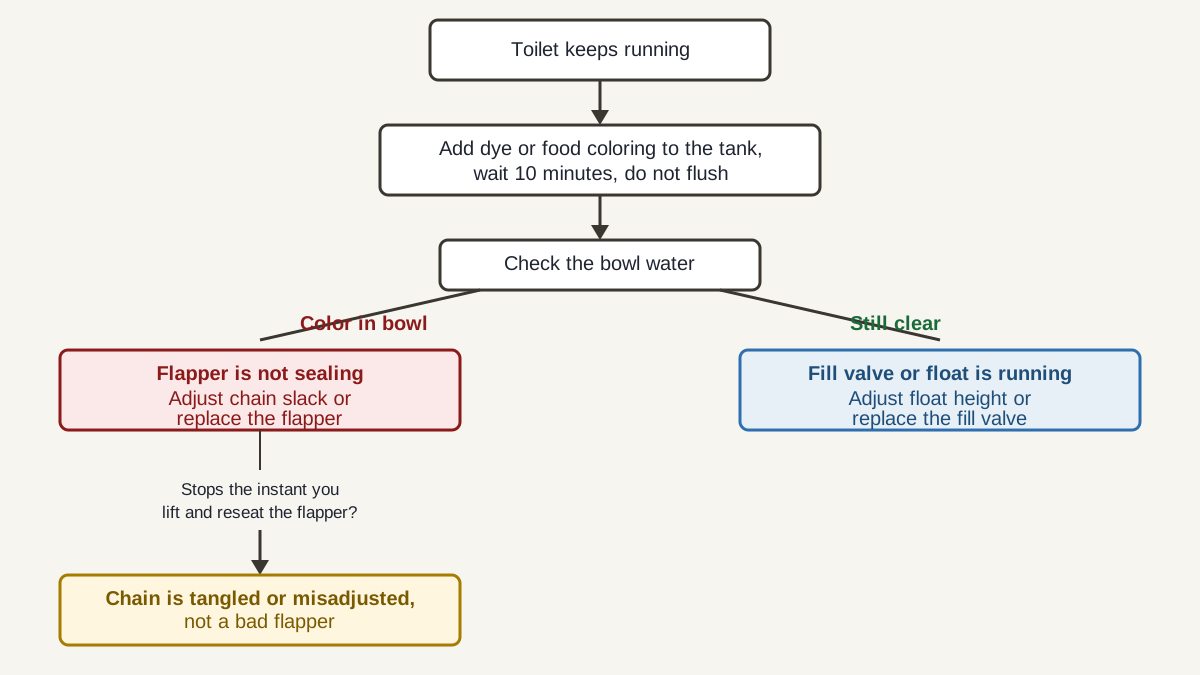
Look at the water level. It should sit about 1 inch below the top of the overflow tube. If water is right at the rim of the tube or spilling into it, the fill valve or float is the problem. If the level looks normal but you still hear running, suspect the flapper.
Add a few drops of food coloring, or a dye tablet if you have one, directly into the tank water. Don't flush.
Wait ten minutes without touching anything.
Check the bowl. If color has crept into the bowl water, the flapper isn't sealing and water is leaking past it into the bowl.
If the bowl water is still clear but you can still hear the tank refilling on its own, the fill valve is running past where it should shut off, even with no demand on the system.
Gently lift the flapper by hand and let it drop back into place. If the running stops the instant it reseats correctly, a tangled or short chain is likely the actual cause, not a bad flapper.
What you notice
Most likely cause
Where to look first
Hissing or trickling nonstop
Flapper not sealing
Flush valve seat and flapper edge
Runs 30–60 seconds after every flush, then stops
Fill valve finishing its cycle slowly
Fill valve and float height
Runs by itself every 20–30 minutes, no one home
Slow flapper seep (phantom flush)
Flapper hinge and chain slack
Water spilling into the overflow tube nonstop
Float set too high or fill valve stuck open
Float arm or clip and fill valve washer
Handle sticks down or feels loose
Lift arm or chain issue
Handle assembly and chain length
Running changes after using in-tank cleaning tablets
Chlorine-degraded flapper
Flapper material and age
A ten-minute dye test tells you whether the flapper, the fill valve, or the chain is the actual cause.
Fixing a Flapper That Won't Seal
Toilet flapper replacement is the single most common running toilet repair, and it doesn't require any special tools.
Turn off the water at the shutoff valve behind the toilet, usually a small oval handle low on the wall or floor; a modern quarter-turn ball valve needs about a 90-degree twist to fully close, while an older gate-style valve takes several full turns.
Flush the toilet and hold the handle down to drain as much water out of the tank as you can.
Unhook the chain from the flush lever, then unclip or slide the flapper's ears off the two pegs on either side of the overflow tube.
Take the old flapper with you to the hardware store, or note the toilet's brand and model stamped inside the tank. Flappers aren't fully universal; a flapper sized for one flush valve can sit slightly crooked on another.
Press the new flapper's ears onto the pegs and connect the chain to the lever, leaving a small amount of slack, roughly a half inch, so the flapper can seat flat without the chain holding it up.
Turn the water back on, let the tank fill, and flush twice to test the seal.
If the dye test showed color in the bowl but the flapper looks new and undamaged, check the flush valve seat itself for grit or mineral buildup before assuming the new part is faulty; a quick wipe with a rag often solves a seal that still isn't flat.
Fixing a Fill Valve That Won't Shut Off
Fill valve replacement takes a little longer than a flapper swap but is still well within reach for most homeowners.
Shut off the water supply valve and flush to drain the tank as fully as you can.
Disconnect the supply line from the bottom of the fill valve, then remove the mounting nut underneath the tank, usually hand-tight or turned with pliers.
Lift the old fill valve straight out.
Set the new fill valve to match the tank's height, most modern valves adjust by twisting or sliding a collar, and lower it into the mounting hole.
Hand-tighten the mounting nut underneath, then reconnect the supply line.
Attach the small refill tube from the top of the fill valve into the overflow tube's opening, clipped so it sits just inside the rim and above the water line.
Turn the water back on and let the tank fill. Adjust the float clip or dial down slightly if water is reaching the top of the overflow tube; the target is about 1 inch below the tube's rim.
Flush once to confirm the fill valve shuts off cleanly and the flapper reseats.
Fluidmaster is one of the most common fill valve brands in American toilets, and most of its models use a similar twist-cap height adjustment and a small pressure-relief button on top if the valve won't stop running right after installation; pressing it briefly often clears an air lock that's holding the diaphragm open.
Float, Chain, Handle and the Overflow Tube
Not every running toilet repair means replacing a part outright.
A float set too high is often just an adjustment. On a ball-and-arm float, bending the arm down slightly lowers the shutoff point. On a cup-style float that rides the fill valve's own shaft, there's usually a small clip or screw that raises or lowers it without any new parts. A chain problem is even simpler: unhook it, cut off any excess so about a half inch of slack remains when the flapper sits flat, and reattach it to a different link on the flush lever if the existing hole has worn oval-shaped.
A handle that sticks down instead of springing back usually just needs the mounting nut inside the tank loosened slightly, since it's often threaded backward from what feels intuitive, or the lift arm straightened if it's bent and dragging against the tank wall. A cracked overflow tube is the one item on this list that usually isn't a simple DIY fix; the tube is part of the flush valve assembly, and replacing it means pulling the whole flush valve or, in some cases, the tank itself.
When to Stop Turning Wrenches and Call a Plumber
Most running toilet repair jobs never leave the bathroom. A short list of situations is different.
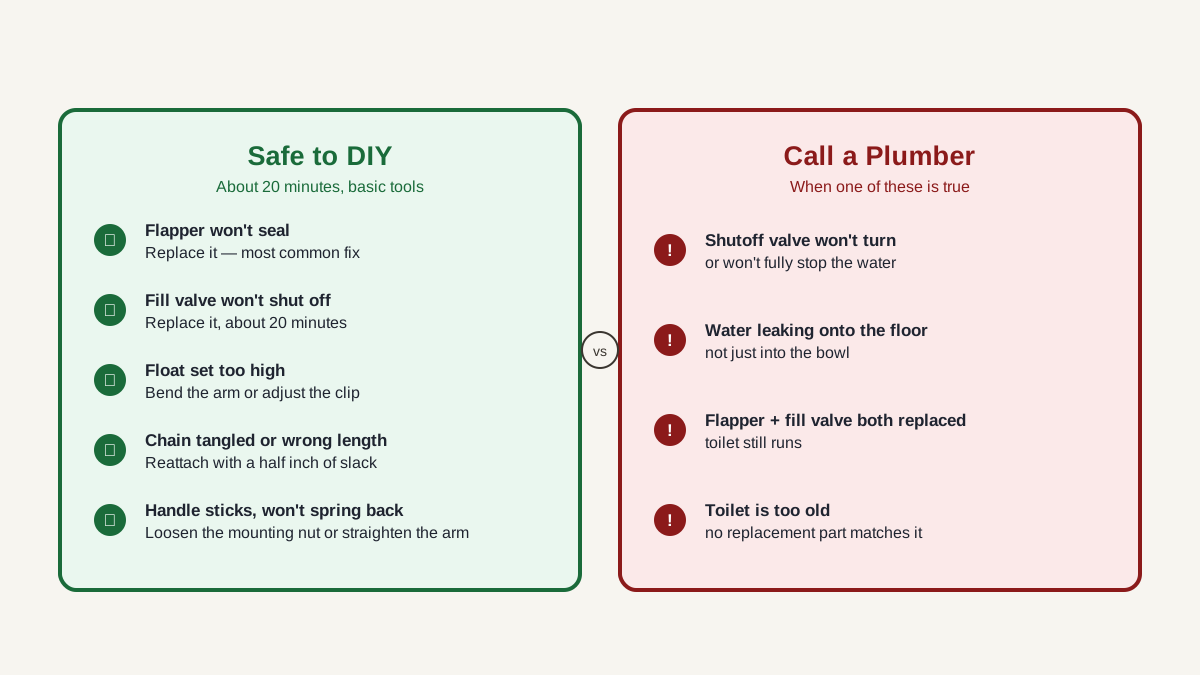
The shutoff valve behind the toilet won't turn, or turns and doesn't actually stop the water. A stuck or corroded shutoff valve is its own repair, and forcing it can snap the stem and turn a twenty-minute job into a flood.
Water is visibly leaking onto the floor around the base or the tank bolts, not just running into the bowl. That's a different problem, a wax ring or a cracked tank, and it's not something a new flapper fixes.
You've replaced both the flapper and the fill valve and the toilet still runs. At that point the flush valve seat itself, or the tank, likely has a flaw a new part can't compensate for.
The toilet is old enough that the model number is worn off or the tank shape doesn't match anything sold today, which happens with fixtures installed decades ago.
If water is already reaching the floor or the shutoff valve won't fully close, stop working on it yourself and call 888-854-0126 to describe what you're seeing before you do anything else. A plumber can often tell over the phone whether it's safe to leave the water off overnight or whether it needs same-day attention. For a broader sense of which plumbing problems genuinely can't wait, see our guide on when you actually need an emergency plumber.
Every fix on the left is a same-day, twenty-minute repair; the four situations on the right are the ones worth handing to a licensed plumber.
What Running Toilet Repair Actually Costs
The honest answer is that most running toilet repair costs almost nothing beyond the price of a single part at a hardware store, since a flapper or fill valve is inexpensive and the repair itself takes no special equipment. There's no verified national figure for that part price in this report, so treat the checkout price at your local hardware or plumbing supply counter as the real number.
If you'd rather hire it out, or the shutoff valve situation calls for a professional, here's what national cost-survey data says about the plumbing side of things.
Job
Typical range
What moves the price
Source
DIY flapper or fill valve part
No verified national figure in this report
Toilet brand, universal vs. exact-match part
Check at your local hardware or plumbing supply counter
Plumber visit for a toilet repair (flat rate)
$110 – $275
Whether it's a simple part swap or a stuck shutoff valve and access issue
HomeAdvisor
Plumber billed by the hour instead of flat rate
$75 – $150 per hour
Local labor rates, time of day, number of trips
Fixr
Separate trip or service-call fee
$50 – $200+
Whether it's waived or credited if you book the repair
HomeGuide
Full toilet replacement (only if the tank is cracked)
No verified national figure in this report
Fixture brand, one-piece vs. two-piece, rough-in size
Ask for a written, itemized estimate
These are national researched ranges pulled from HomeAdvisor, Fixr and HomeGuide contractor pricing surveys, not a quote for your specific bathroom; this dataset doesn't include a regional price index, so treat them as a starting point and let a local written estimate, the only figure that's actually binding, settle what your house costs. For scale, a running toilet repair sits near the bottom of what plumbers get called out for: a sewer line repair averages $3,319 nationally, and a water heater replacement averages $1,347, both according to HomeAdvisor's cost data. A running toilet almost never approaches either figure.
A running toilet repair visit is among the cheapest calls a plumber makes; national averages from HomeAdvisor.
If You Do Call Someone: What a Fair Visit Looks Like
For a repair this small, the biggest risk isn't the price, it's getting talked into more than the job needs.
Ask for a written, itemized estimate before any work starts, one that separates the diagnostic or trip fee from the actual repair. Confirm whether that fee applies toward the cost of the repair if you move forward. It's also worth verifying the plumber's state license yourself, most states let you look it up online through the same licensing board, and confirming they carry current liability insurance before anyone touches the tank; a legitimate local plumber won't hesitate on either question. The final price can still shift once the tank's open, since it varies by region, how accessible the shutoff valve and supply lines are, and how much corrosion or damage turns up once the old part comes out. A straightforward flapper or fill valve swap shouldn't turn into a sales pitch for a full toilet replacement unless the plumber has actually found a cracked tank or a flush valve seat that a new part can't fix, and if that's the claim, ask to see it. Our guide to choosing a licensed plumber covers the licensing and insurance questions worth asking for any bigger job; for something this size, most homeowners can reach a plumber that serves their area at 888-854-0126 and get it handled in a single visit.
Watch for a quote that jumps well past the flat-rate range above for what should be a simple part swap, a plumber who won't put the estimate in writing, or one who insists on cash before starting. None of those are normal for a job this routine.
Stopping the Next One Before It Starts
A running toilet repair you do once tends to repeat itself if the underlying habits don't change.
Skip in-tank chlorine or bleach cleaning tablets. They keep the water in constant contact with the flapper, and that constant exposure breaks down rubber and silicone far faster than normal use does. A flapper that would otherwise last years can fail within months in a tank that always has a tablet dissolving in it.
Run the dye test once a year. It costs nothing, takes the same ten minutes as the diagnosis above, and catches a flapper that's starting to seep before the water bill shows it.
Check chain slack any time you work inside the tank, including after a plumber's visit, since it's an easy thing to leave a half turn too tight or too loose.
Fold this into a broader seasonal check. Our plumbing maintenance checklist covers the handful of other spots around a house worth a quick look twice a year, shutoff valves included.
Freeze Belt, Hard Water: Does Climate Change the Fix?
The mechanics of running toilet repair don't change by region, but what tends to fail first does.
In freeze-belt climates, a supply line or fill valve routed through an exterior wall or an unheated crawlspace can develop a hairline crack over a hard winter without anyone noticing right away; the running often doesn't show up until the first real thaw puts full water pressure, typically 40 to 80 psi in a municipal system, back through a line that's already compromised. If a toilet that behaved fine all winter suddenly starts running after a cold snap, check the supply line and fill valve connections for a crack before assuming it's just an aging flapper.
In homes on well water, or anywhere water runs harder than average, mineral scale builds up on the flush valve seat and inside the fill valve faster than it does with treated municipal water, so both parts tend to need replacing more often. If running toilet repair has become an every-year event in a hard-water house, that's the more likely explanation, not a defective part.
Climate changes which part fails first, not the fix itself — freeze-belt and hard-water homes just need to check sooner.
Frequently asked questions
Why is my toilet running constantly?+
The most common cause is a worn or warped flapper that no longer seals flat against the flush valve seat, letting tank water leak into the bowl nonstop. The second most common cause is a fill valve that won't fully shut off. A quick dye test in the tank tells you which one it is within about ten minutes.
What causes a toilet to run only occasionally, not all the time?+
Intermittent running usually points to a chain that's catching under the flapper's edge some of the time but not always, or a flapper that's just barely failing to seal and only leaks enough to trigger a refill every so often. This is sometimes called a phantom flush, since the tank refills on its own with nobody near it.
Is a running toilet an urgent repair?+
Not usually. A toilet that's running but not overflowing can wait for a convenient time, since the only real cost is wasted water, not damage to the house. It becomes urgent only if water is visibly leaking onto the floor or the shutoff valve won't fully close.
How much does it cost for a plumber to fix a running toilet?+
A flat-rate toilet repair visit typically runs $110 to $275 according to HomeAdvisor's national cost data, or $75 to $150 an hour if the plumber bills hourly instead, per Fixr. Some plumbers add a separate trip or service-call fee of $50 to $200 or more, per HomeGuide, so ask upfront whether that's credited toward the repair.
Is it easy to fix a running toilet myself?+
For most homes, yes. Swapping a flapper or a fill valve needs no special tools beyond a wrench for the shutoff valve, and both jobs are within reach for a first-time DIYer in about twenty minutes. It gets harder only if the shutoff valve is stuck or corroded, which is worth calling a plumber for rather than forcing.
How do I fix a running Fluidmaster toilet?+
Fluidmaster fill valves are common and usually adjust with a twist or slide cap to set the water level, with a small pressure-relief button on top that can clear an air lock if the valve keeps running right after you install it. If the flapper is the Fluidmaster brand too, it clips onto the same two pegs most flush valves use, so replacement follows the same steps as any other flapper swap.
How long does running toilet repair take?+
Most flapper or fill valve swaps take about twenty minutes from shutting off the water to flushing to test the fix, plus however long it takes to get to the hardware store first. The diagnosis itself, figuring out which part has failed, takes about ten minutes with a dye test.
Why is the toilet running after flush but stops after about a minute?+
A toilet running after flush for thirty to sixty seconds is usually normal, just a fill valve finishing its refill cycle, especially if the float takes a few extra seconds to settle at the shutoff point. If it's stretching well past a minute or happening on every single flush without exception, the fill valve may be nearing the end of its life and worth replacing before it fails to shut off at all.
Will a running toilet raise my water bill?+
Yes. A toilet that runs continuously is one of the largest single leaks a home can have, since it's constant rather than an occasional drip. The clearest way to see the effect on your own running toilet water bill is to note your water meter reading, let the toilet run for an hour without using it, and check the meter again.
What makes a toilet run by itself every 20 or 30 minutes with nobody home?+
This is a slow flapper seep, sometimes called a phantom flush. Water leaks past the flapper gradually rather than in a steady stream, the tank level drops just enough to trip the float, and the fill valve tops it off, which sounds like the toilet running on its own. Replacing the flapper almost always solves it.