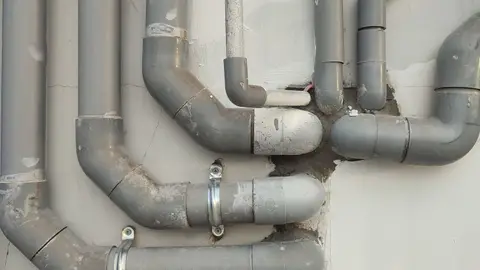
Commercial plumbing covers the water, drain, and gas systems inside stores, restaurants, offices, and apartment buildings, work that differs from a house job in scale and code requirements. A commercial plumber deals with grease interceptors, backflow preventers, larger shared drain lines, and an inspection cycle a residential job never sees. Costs run on a written, project-specific estimate rather than a flat published rate.
Ask a facilities manager what keeps them up at night and grease, backflow, and a shared drain line serving a dozen tenants usually come up before anything else. That's the gap this guide fills. A house has one bathroom group and one homeowner accountable for it. A commercial building has multiple fixture groups, a landlord, a tenant, a health inspector, and a water utility all with a stake in whether the plumbing works, which is exactly why commercial plumber searches spike whenever something in that chain breaks.
What follows covers what actually separates commercial work from residential, what breaks most often and why, what backflow prevention testing and grease trap cleaning actually involve, what a repair costs based on the closest national data available, when a problem is a same-day call versus something that can wait, and how to vet a plumber before you hand them keys to a shared system.
What Makes a Plumbing System “Commercial” in the First Place
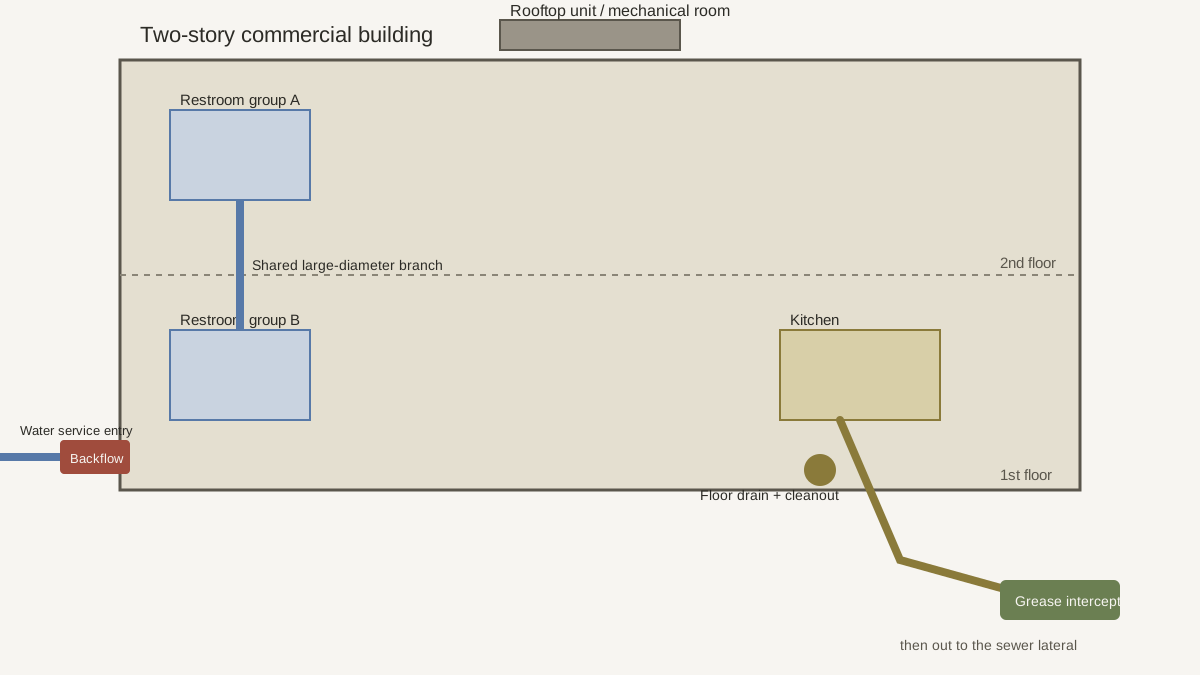
A restaurant, a strip-mall dental office, a warehouse, and a 40-unit apartment building do not share much on the surface, but their plumbing has more in common with each other than with the house next door. A commercial plumber works on systems built for volume: bigger supply lines, larger-diameter drains (a shared commercial main commonly runs 4 to 6 inches or larger, against roughly 1.5 to 2 inches for a typical house branch), multiple restroom groups fed off one branch, and equipment a single-family home never has, like grease interceptors, backflow preventers, and floor drains rated for standing water and built with a trap seal of at least 2 inches to keep sewer gas from venting back into the room. The scale changes the job. A clog that would be a ten-minute fix in a house can mean a shared drain serving twelve units, which means twelve tenants affected at once.
What a commercial plumber does day to day looks different too. Alongside repairs, the work includes reading blueprints for tenant build-outs, running new branch lines to a remodeled kitchen, testing and documenting backflow devices, and coordinating with a property manager or facilities team rather than a single homeowner. Code compliance sits closer to the center of the job: a commercial building is inspected on a cycle a house rarely sees, and the plumber's paperwork (test tags, permits, as-built drawings) often matters as much as the repair itself.
The table below lines up the two side by side. None of it is a hard rule everywhere, since local code has the final say, but it is the pattern that shows up across most jurisdictions.
Factor
Typical house
Typical commercial building
Fixture count on one branch
A handful, one bathroom group
Often a dozen or more, stacked across floors
Backflow prevention
Rarely required
Usually required at the water service entry, tested on a cycle
Grease/FOG discharge
Not applicable
Required interceptor for any food-service drain
Inspection cycle
At sale or major remodel only
Recurring, tied to occupancy permit and fire/health code
Who answers for a failure
The homeowner
Owner, property manager, and tenant may all share responsibility
Impact of one failure
One household
Every tenant, customer, or patient on that line
The parts of a building's plumbing that only show up on commercial jobs.
Why Commercial Systems Break Down: The Usual Suspects
Ranked roughly by how often each one shows up on a service call, here is what actually takes down a commercial system.
Grease and food waste tops the list. Any kitchen drain that isn't running through a properly sized, properly maintained interceptor will build a wax-like layer inside the pipe. It narrows the line gradually, then a slow Tuesday afternoon becomes a Friday-night backup. This is the single most common cause of a commercial plumbing emergency tied to a restaurant, cafeteria, or breakroom kitchen.
Root intrusion and aging clay or cast-iron mains come next. Older commercial corridors, strip malls, and downtown buildings often still run on lateral pipe installed 50 to 100 years ago. Tree roots find a joint, a crack lets in soil, and the line narrows the same way a grease clog does, just slower. Our sewer line repair guide covers how that failure gets diagnosed and repaired in more depth.
A failed or neglected backflow preventer causes its own share of calls. These devices have internal check valves and rubber seats that wear out. A device that fails its annual test, or one nobody scheduled for testing at all, is both a code violation and a real cross-connection risk, meaning contaminated water could siphon back into the clean supply.
High-volume fixture wear also takes a toll. A restroom that serves an office floor, a retail store, or a restaurant dining room cycles through far more flushes, faucet uses, and floor-drain traffic in a week than a single-family bathroom does. Duty cycle, not age alone, is what predicts failure on commercial fixtures.
Rooftop and exposed-line freeze is another regular cause. Mechanical penthouses, rooftop units, and exterior-wall runs common in commercial construction sit outside the thermal envelope more often than a house's plumbing does, which raises freeze risk in cold months.
Work that skipped a permit is the sleeper cause. A prior tenant's build-out, done without a permit or final inspection, is a common hidden cause. It shows up years later as a trap that was never vented right or a line that was undersized for the load added since.
Backflow Prevention, Grease Traps, and the Codes Behind Both
These three topics come up together because they are the parts of commercial plumbing code a business owner is most likely to get a letter about.
Backflow prevention testing
Backflow prevention testing checks that the device keeping used or contaminated water from siphoning backward into the clean supply is still sealing correctly. Most water utilities require it at the point where a commercial service enters the building, and most also require it on a recurring cycle, annually in most jurisdictions, with the results reported back to the utility or the local cross-connection control program. The interval and the required device type are set locally, not nationally, so the right first step is checking your last test tag or calling your water utility directly rather than assuming a schedule.
Grease trap and grease interceptor cleaning
A grease trap (small, usually under a sink) and a grease interceptor (larger, often buried outside) both do the same job: they slow wastewater down long enough for fats, oils, and grease to separate and float, so they don't leave the building and coat the municipal sewer. Grease trap cleaning on a schedule that matches your kitchen's volume is what keeps a restaurant off a health inspector's violation list and off the receiving end of a fine from the sewer utility for a discharge that exceeded the allowed grease content. Most servicers gauge that schedule against the industry's 25 percent rule: once the combined grease and solids layer reaches a quarter of the interceptor's liquid depth, it's due for pump-out. The exact interval still depends on interceptor size and how much fryer and grill volume runs through the kitchen, which is a conversation to have with your servicer rather than a number that applies everywhere.
Commercial plumbing inspection and permits
A commercial plumbing inspection happens at more points than a homeowner ever sees: new construction rough-in and final, any tenant build-out that touches supply or drain lines, and periodic life-safety inspections tied to your occupancy permit in many jurisdictions. Any work that adds a fixture, moves a drain, or changes pipe sizing typically needs a permit pulled by a licensed plumber, and skipping that step is exactly the kind of gap the next section's diagnosis often uncovers.
Commercial Drain Cleaning: Diagnosing the Clog Before You Call Someone
Commercial drain cleaning starts the same way any good diagnosis does: figuring out which part of the system is actually blocked before anyone runs a cable or a jetter. Work through it in this order.
Note which fixtures are affected. One sink slow to drain points to a branch line problem near that fixture. Multiple fixtures backing up together, especially the lowest drain in the building, points to the main line.
Check the timing. A backup that only shows up during peak hours (lunch rush, laundry cycle, a full house) suggests a partial blockage that the system can handle at low flow but not at full load.
Look for a pattern tied to the kitchen. If backups track with kitchen hours or happen worst on the day after a big cooking event, grease buildup upstream of the interceptor is the likely cause.
Check the grease interceptor or trap itself. A trap that is full, or an interceptor overdue for pumping, will show slow drainage right at that fixture even if the rest of the system is clear.
Ask whether anything changed recently. New equipment, a remodel, or a plumbing repair in the last few months narrows the list of likely causes fast.
If none of that points to an answer, a camera inspection is the next step. It shows exactly where the line narrows, whether it's grease, roots, a belly, or a break, and that answer decides whether the fix is a snake, hydro jetting, or a repair.
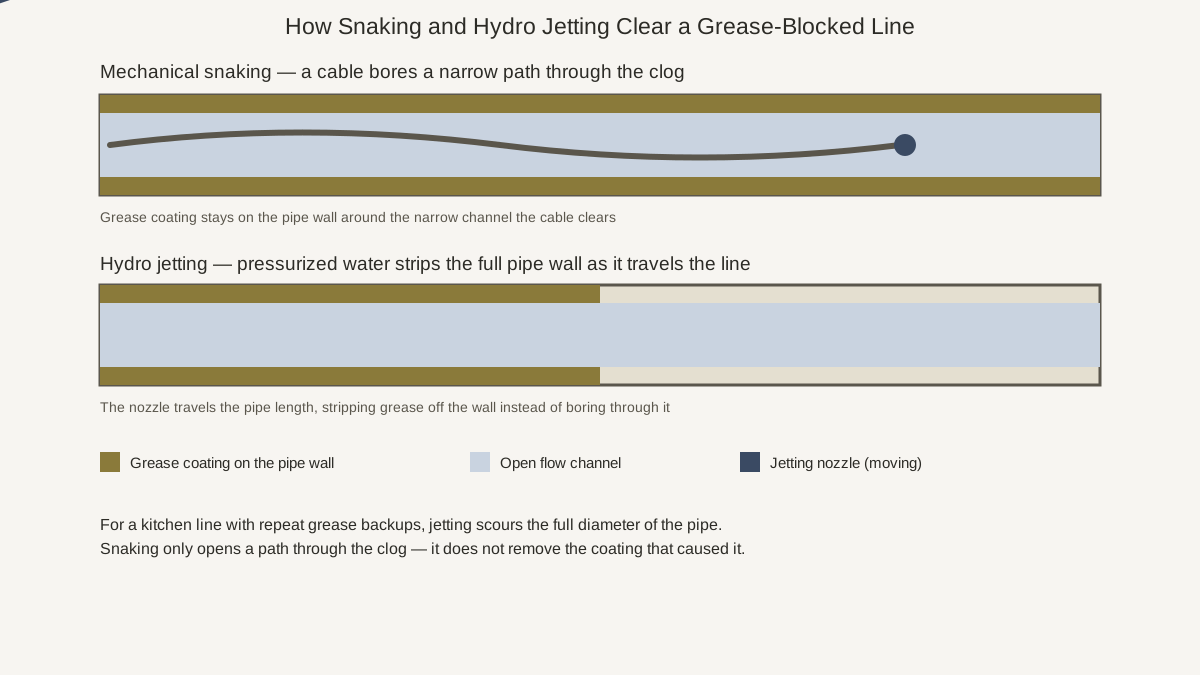
Most commercial lines respond to either mechanical snaking or hydro jetting. A cable clears a path through the blockage; hydro jetting scours the full diameter of the pipe with high-pressure water, commonly 3,000 to 4,000 psi on commercial equipment, which does a better job on grease because it strips the buildup off the pipe wall instead of just punching a hole through it. For a kitchen line with a history of grease backups, jetting on a maintenance schedule is usually the more effective long-term fix, even though the single visit costs more than snaking. Our drain cleaning cost and methods guide breaks down when each method makes sense.
Snaking bores a path through a clog; hydro jetting scours the full pipe wall as the nozzle travels the line.
Fixes: What You Can Check Yourself vs What Needs a Licensed Commercial Plumber
Some of this is safe for facilities staff to handle. Most of it is not, and the line matters both for safety and for your building's code compliance.
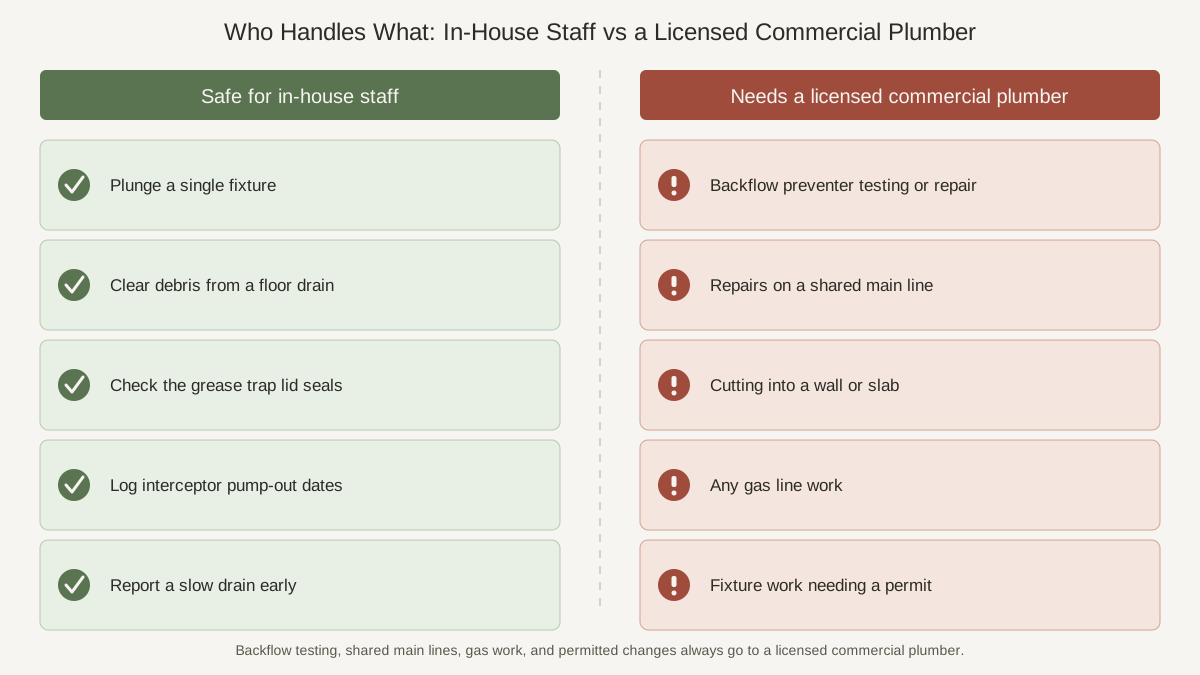
Safe for in-house staff: plunging a single fixture, clearing visible debris from a floor drain strainer, checking that a grease trap lid seals properly, keeping a log of when interceptors were last pumped, and reporting a slow drain before it becomes a backup instead of after.
Needs a licensed commercial plumber: anything involving the backflow preventer (testing has to be done and reported by a certified tester in most jurisdictions), any repair on a shared main line, cutting into a wall or slab, gas line work of any kind, and any fixture addition or relocation that requires a permit. A licensed commercial plumber carries the credentials that let their work pass inspection; unlicensed repairs on shared systems can leave a property owner liable and can void a warranty on newer equipment. Gas line work in particular is worth reading up on separately in our gas line repair guide before you assume anyone can touch it.
One more distinction worth knowing: can a commercial plumber do residential work too? Often yes. Many licensed plumbers hold a general license that covers both, and plenty of commercial-focused companies will still take a house call. The reverse is less reliable. A residential-only plumber may not carry the specific certifications, testing equipment, or bonding a commercial building's insurance and code require, so it's worth asking directly about commercial experience before hiring one for a business.
What facilities staff can safely check themselves, and what always has to go to a licensed commercial plumber.
What Commercial Plumbing Work Actually Costs
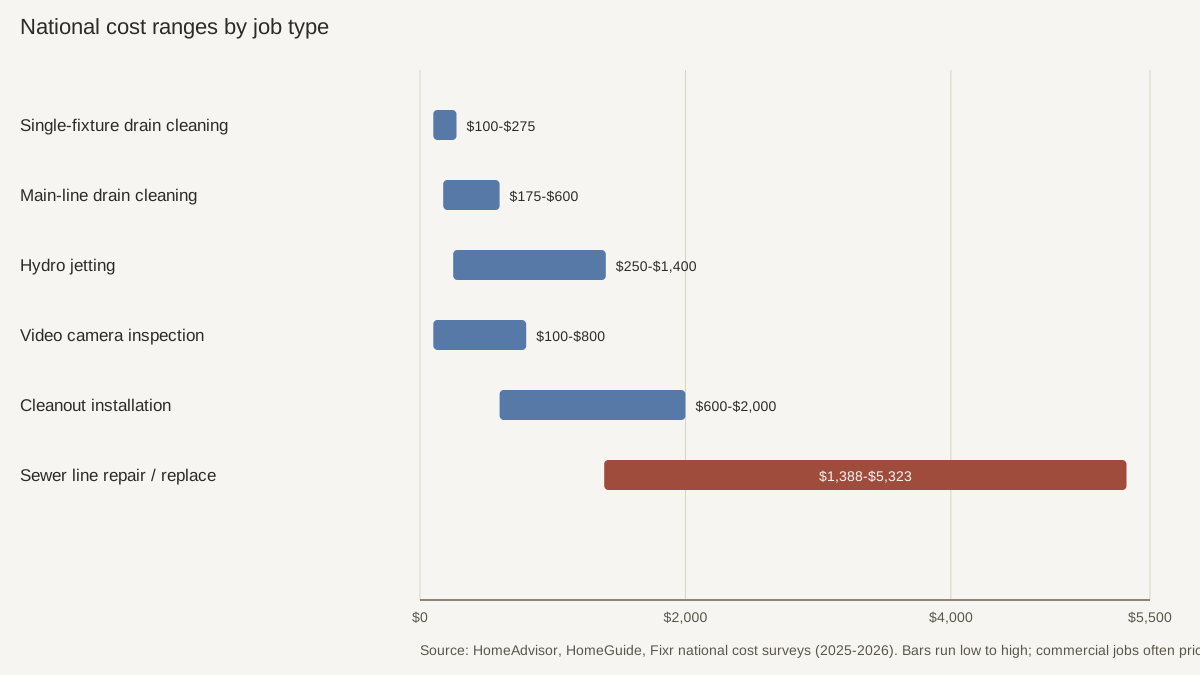
Nobody publishes a national price list for commercial plumbing the way they do for a house call, because commercial pricing depends heavily on pipe diameter, access, after-hours scheduling, and how much documentation a job requires. What follows are the national residential cost surveys available for the closest comparable jobs. Treat them as a starting point, not a quote: commercial jobs commonly land at the high end of these ranges or above, because of larger pipe, harder access, and off-hours labor. A written, on-site estimate is the only way to get a real number for your building.
Job type
National range
What moves the price
Source
Single-fixture drain cleaning
$100 - $275
Fixture type, accessibility
HomeGuide
Main-line drain cleaning (snake)
$175 - $600
Pipe diameter, distance to cleanout, grease severity
HomeGuide
Hydro jetting
$250 - $1,400
Grease load, pipe length, whether a camera pass is included
HomeGuide, Fixr
Video camera inspection
$100 - $800
Number of access points, footage length
HomeAdvisor, Fixr
Cleanout installation
$600 - $2,000
Number of access points required by code, commonly one every 100 feet of horizontal run
Fixr
Sewer line repair or replacement
$1,388 - $5,323 (avg $3,319)
Length, depth, trenchless vs open-cut, paving restoration
HomeAdvisor
Plumber hourly rate (general reference)
$75 - $150 / hour
Licensing tier, after-hours or emergency premium
Fixr
Water heater install (per unit, residential-scale reference)
$600 - $3,900
Tank vs tankless, fuel type, venting; a multi-unit commercial building scales beyond this per project
HomeAdvisor, NerdWallet
Two figures that don't have a national survey behind them, and that you should get in writing rather than estimate: grease interceptor pumping and backflow prevention testing. Both are typically billed by interceptor size, haul distance, or device count rather than a flat national rate, so ask your servicer for a written quote tied to your specific equipment.
National cost ranges for the jobs a commercial building calls about most.
Commercial Plumbing Emergencies: When to Shut Off and When to Call
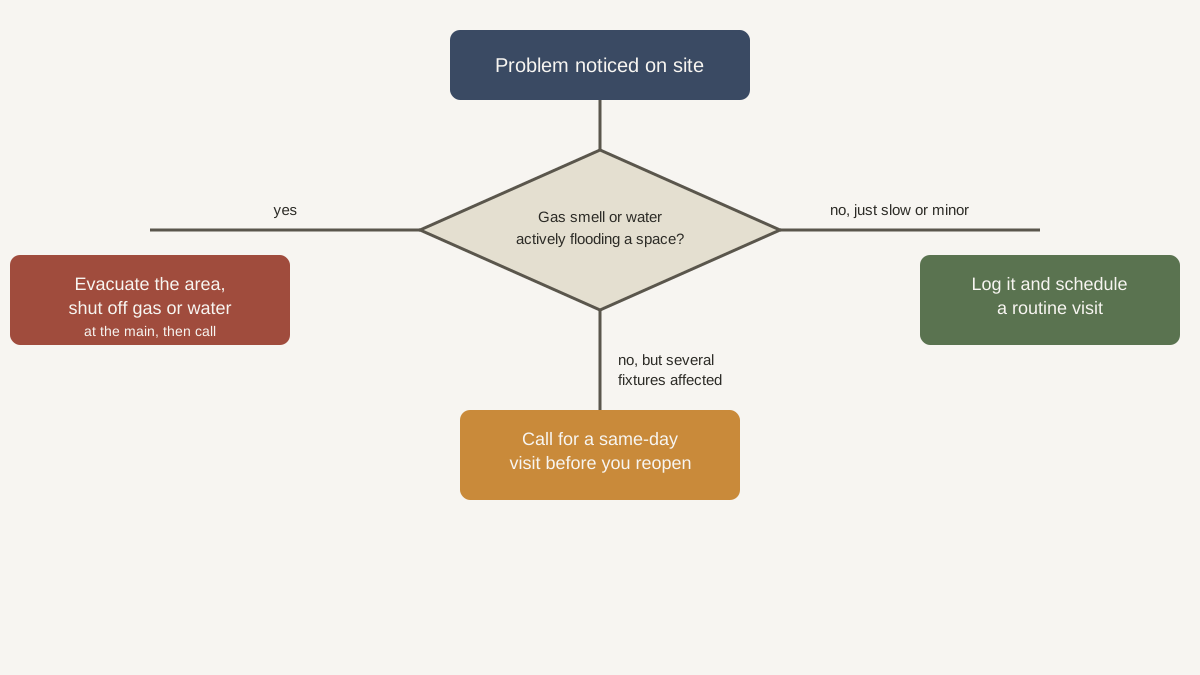
Not every plumbing problem in a business is a commercial plumbing emergency, and treating every drip like one wastes money on after-hours rates. But a few situations genuinely cannot wait for a scheduled visit.
If you smell gas anywhere near a water heater, boiler, or gas line, get everyone out of the area, don't flip any light switches, and call your gas utility's emergency line before you call a plumber. That rule matters more than any other in this guide.
Short of a gas smell, treat these as same-day calls: water actively flooding a space and reaching electrical outlets or stock; a backup affecting multiple fixtures or the lowest drain in the building, which usually means the main line; a failed backflow test result, since that's both a safety issue and a compliance deadline; and any sewage backup in a food-service or healthcare space, which can trigger a health-code shutdown until it's resolved.
If the water is still coming in and you can't identify where it's entering, call 888-854-0126 and describe what you're seeing, then shut off the nearest supply valve or the building's main if you know where it is. Everything else, a slow drain, a dripping faucet, a running toilet in one restroom, can be logged and scheduled during business hours without the emergency premium. For a longer rundown of what counts as urgent, our guide on when you actually need an emergency plumber goes through more scenarios.
Is this a shut-it-off emergency, or can it wait?
How to Choose a Commercial Plumber for Your Building
Hiring for a commercial building carries more stakes than hiring for a house, because one bad repair can shut down a kitchen, fail an inspection, or leave a property owner answering for it. Work through this list before you sign off on anyone.
Confirm the license covers commercial work, not just residential, and ask to see the number rather than take it on faith.
Ask for proof of general liability insurance and workers' compensation, both of which a property manager or landlord will usually require in a certificate of insurance.
Ask whether the company carries backflow tester certification in-house, if your building has a device that needs testing.
Get a written estimate that breaks out labor, materials, permit costs, and any after-hours premium separately.
Ask how they document the work, since a permit pulled and a final inspection passed protect you if the same system fails again later.
Red flags: a quote with no line items, reluctance to pull a permit for work that clearly needs one, no certificate of insurance available on request, and pressure to sign same-day for a non-emergency job. A commercial plumber who does this work regularly will have all of the above ready without being asked twice. Our broader guide to choosing a licensed plumber covers verification steps that apply to both residential and commercial hires.
If you're vetting someone for an upcoming project rather than an emergency, reach a 888-854-0126 line that serves your area and ask the questions above before scheduling a site visit.
Preventing the Next Emergency: A Maintenance Routine for Commercial Systems
Most of what shows up as a commercial plumbing emergency was preventable with a routine, not a one-time fix. A basic schedule looks like this: grease trap or interceptor cleaning on the interval your servicer sets for your volume, not a guess; backflow preventer testing on whatever cycle your water utility requires, tracked so it doesn't lapse; a camera inspection of the main line every few years for older buildings, since roots and bellies develop slowly and are cheaper to catch early; and a facilities log that records every slow drain or minor leak reported by staff, so a pattern shows up before it becomes a backup.
The building types most worth tightening this up for are food service (grease is the single biggest driver of emergency calls), older strip malls and downtown buildings on original clay or cast-iron laterals, and any tenant space that has changed hands multiple times, since each build-out is another chance for a permit to have been skipped.
Regional Notes: Freeze Belt, Coastal Humidity, and Local Grease Rules
Commercial plumbing risk isn't the same in every region. In the freeze belt (the northern tier and mountain West), rooftop mechanical rooms, exposed exterior risers, and unheated storage areas common in commercial construction are the parts most likely to freeze in a hard cold snap, and a burst line there can flood a floor below before anyone notices. Water freezes at 32°F, and pipe-wall temperature only has to touch that mark briefly for ice to form and expand enough to split copper or PEX pipe from the inside. Buildings in that zone benefit from insulating and, where possible, heat-tracing any exposed run before winter rather than after a first freeze event.
Along the Gulf Coast and other high-humidity, high-rainfall regions, older sewer laterals see more root intrusion and more infiltration from groundwater, which can overload a main line during heavy storms even when the building itself is dry. Coastal and food-heavy commercial corridors also tend to have the strictest local commercial plumbing code enforcement around grease discharge, since sewer utilities in those areas deal with more grease-related overflows.
Because backflow testing intervals, grease discharge limits, and permit requirements are all set locally rather than nationally, the single most useful step for any commercial property owner is confirming the specific rules for your city and water utility rather than assuming what applied at a previous location still applies here.
Frequently asked questions
What is commercial plumbing?+
Commercial plumbing is the water, drain, gas, and fixture systems inside non-residential buildings: offices, restaurants, retail, warehouses, and multi-unit housing. It covers the same core trade as residential plumbing but at larger scale, with added requirements like backflow prevention, grease interceptors, and a recurring inspection cycle tied to the building's occupancy permit.
What does a commercial plumber do?+
A commercial plumber installs and repairs supply, drain, and gas systems in non-residential buildings, tests and services backflow preventers, works on grease interceptors, reads blueprints for tenant build-outs, and pulls the permits that let that work pass inspection. Much of the job is coordinating with a facilities manager or property owner rather than a single homeowner.
Can a commercial plumber do residential work too?+
Often, yes. Many plumbers hold a general license covering both, and commercial-focused companies frequently still take house calls. It doesn't always work the other way: a residential-only plumber may lack the backflow certification, bonding, or commercial code familiarity a business needs, so ask directly about commercial experience before hiring for a business property.
How much do commercial plumbers charge per hour?+
A general national reference point for plumber hourly labor is $75 to $150 an hour, though commercial jobs often run at the higher end because of licensing tier, larger equipment, and after-hours premiums for emergency calls. There's no single commercial rate, since it depends on your market and the scope of work, so get it in writing before the job starts.
What is commercial drain cleaning?+
Commercial drain cleaning is clearing a blocked drain or sewer line in a non-residential building, usually with mechanical snaking for a straightforward clog or hydro jetting for grease-heavy kitchen lines. Because commercial lines are larger and often shared across many fixtures, diagnosis (figuring out which line and what's causing it) matters as much as the clearing method itself.
How do you unclog a commercial drain?+
Start by identifying which fixtures are affected and whether the backup tracks with kitchen hours or peak use, which points toward the likely cause. A plumber then clears it with a cable snake for a straightforward blockage or hydro jetting for grease buildup, and follows up with a camera inspection if the line has backed up more than once.
How much does it cost to get drains cleaned?+
Nationally, drain cleaning at a single fixture runs about $100 to $275, while a main line or multiple-fixture job runs $175 to $600, and hydro jetting for tougher, grease-heavy lines runs $250 to $1,400. These are residential cost survey figures; commercial jobs on larger lines often price at the high end or require a separate written quote.
What's a grease trap, and does my business need one?+
A grease trap or interceptor separates fats, oils, and grease from kitchen wastewater before it reaches the sewer line. Most jurisdictions require one for any food-service drain, sized to the kitchen's volume. Skipping cleaning on schedule is one of the most common causes of a backed-up commercial kitchen and can also trigger a code violation.
How often do backflow preventers need to be tested?+
Testing intervals are set locally by your water utility or state plumbing code rather than by a single national standard, so the right way to find yours is checking the tag on your device or calling your utility's cross-connection control program directly. Missing a required test can mean a compliance notice even if the device itself is still working.
What's the difference between a spot repair and a full sewer line replacement?+
A spot repair fixes one isolated defect, such as a cracked joint, and works when the rest of the line is still round and sound. Full replacement or trenchless relining is for a line with multiple defects, a collapsed section, or a significant sag. National figures put a typical whole sewer repair or replacement job at $1,388 to $5,323.
How do you clean a trench drain?+
Lift or unbolt the grate, clear visible debris by hand, then flush the channel with water to check flow toward the outlet. If water still backs up, a cable or jetter run through the drain's cleanout clears buildup further down the line. Commercial kitchens and parking structures should have trench drains checked on a routine schedule, not just when they back up.
Is a service call fee separate from the repair cost?+
Usually, yes. Many commercial plumbers charge a trip or diagnostic fee to come look at the problem, separate from the labor and materials for the actual repair. Ask upfront whether that fee is credited toward the job total if you approve the work on the spot, since practices vary by company.