A low water pressure repair starts with one question: is it every fixture, or just one? Whole-house drops usually trace to a partly closed main valve, a failing pressure-reducing valve, or a tired well pump. Trouble at a single tap almost always means a clogged aerator, a stuck cartridge, or sediment inside the water heater. Work through the checks below before calling anyone.
You turn on the shower and it barely rinses the shampoo out, or the kitchen faucet takes forever to fill a stockpot. Somewhere between "this is annoying" and "something is actually wrong," most homeowners start searching for a low water pressure repair, and the honest answer is that it depends entirely on where the drop is happening.
This guide walks through how to tell a whole-house pressure problem from a single stubborn fixture, what actually causes each one, what you can check yourself with an inexpensive gauge from a hardware store, and when the job needs a licensed plumber instead. We'll also cover what a pressure-reducing valve does, why well systems fail differently than city water, and what repairs typically cost when the data behind this guide has a real number to point to.
None of the numbers here are invented. Where a dollar figure appears, it comes from a named cost-survey publisher, cited in the table below and in the sources list at the end. Where there's no published number for a repair, we say so plainly instead of guessing.
What Counts as Low Water Pressure
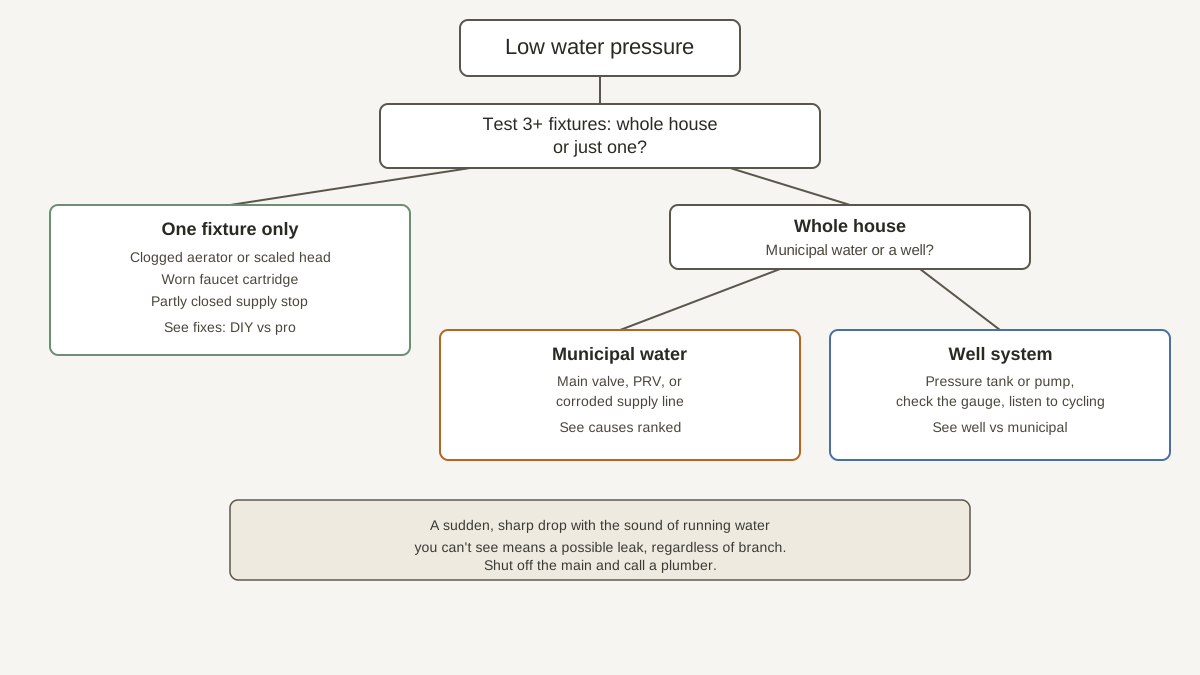
Start by testing more than one fixture, then follow the branch that matches what you find.
Low water pressure shows up as a weak shower, a kitchen tap that takes forever to fill a pot, or a washing machine whose fill cycle seems to run in slow motion. Before troubleshooting anything, it helps to separate two things people usually lump together: pressure, the force pushing water through the pipe, and flow rate, how much water actually comes out per minute. Even a healthy fixture has a ceiling: federal rules cap most new shower heads at 2.5 gallons per minute measured at 80 psi, so a shower that feels brisk rather than forceful may simply be doing what it's built to do, not failing at all. A partly clogged aerator can choke flow at one faucet while pressure everywhere else in the house stays completely normal. A failing main valve or a bad pressure-reducing valve drops pressure everywhere at once, and flow suffers at every fixture as a result.
A real low water pressure repair starts with figuring out which of those two problems you actually have, because the fix for a scaled shower head has nothing to do with the fix for a corroded street-side supply line. That's the first branch in the decision flow above, and it's worth answering before you call anyone: is this happening at one fixture, or everywhere in the house at once?
Most low-pressure complaints turn out to be cheap. A clogged aerator or a scaled shower head takes a few minutes to clear and costs next to nothing. The cases that actually need a plumber, a corroded supply line, a failed pressure-reducing valve, a tired well pump, show up less often, but they tend to get worse rather than better if you leave them alone.
Whole-House Low Pressure vs. Just One Fixture
Start by testing more than one fixture. Run the kitchen faucet, then a bathroom sink, then a hose bib outside if you have one. If every one of them is weak, you're dealing with a whole-house problem, and the cause lives upstream: the meter, the main shutoff, the pressure-reducing valve, or, on well systems, the pump and pressure tank.
A low water pressure in house-wide pattern rarely comes from a single worn-out fixture. It's almost always mechanical: a main valve that got bumped partly closed during other work, a PRV that's failed toward the low side, sediment building up inside the water heater and choking the hot side specifically, or a genuinely low-pressure day from the municipal utility itself.
A low water pressure one faucet problem is a different animal entirely. If the kitchen sink is weak but the shower down the hall is fine, the cause is local to that fixture: a clogged aerator, a partly closed supply stop under the sink, or a faucet cartridge that's failing internally. A low water pressure in shower complaint specifically often comes down to a scaled shower head or a single-handle mixing cartridge that's lost its seal, not the plumbing behind the wall at all.
One more test worth running before you assume the worst: check with a neighbor, or ask in a neighborhood group online, if the drop happened suddenly and you're on municipal water. A pressure dip hitting the whole block usually means the utility is doing repair work, flushing hydrants, or dealing with high demand, not something wrong inside your house.
What's Causing Your Low Water Pressure, Ranked by Likelihood
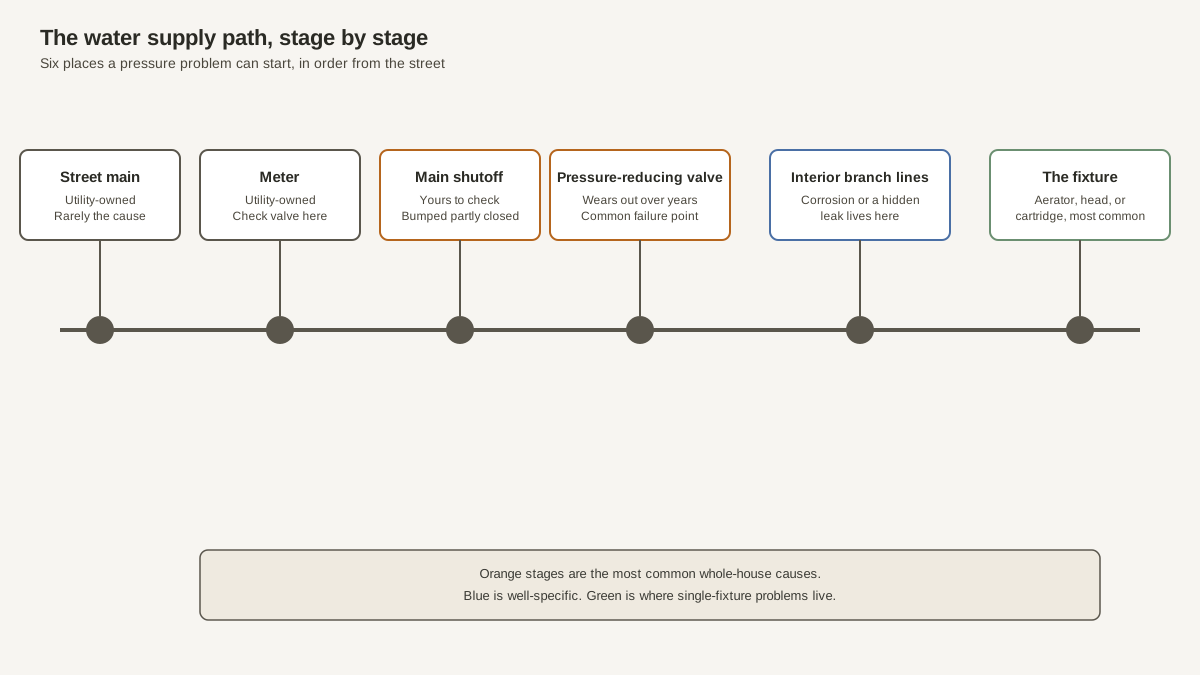
Where a low-pressure problem starts, from the street to the faucet.
The lists below separate whole-house causes from single-fixture causes, roughly in the order a plumber would check them.
Whole-House Low Pressure, Most Likely First
A main shutoff valve, or a valve at the meter, that's not fully open, common after any work near the meter or a recent renovation.
A failed or poorly set pressure-reducing valve, the bell-shaped fitting usually found just after the main shutoff, which regulates incoming municipal pressure down to a safe household level.
Sediment or mineral scale narrowing an older galvanized steel supply line from the inside, common in houses built before copper and PEX became standard.
A hidden leak elsewhere in the system, a slab leak or a leaking supply line inside a wall, that's bleeding off pressure before it reaches your fixtures.
Genuinely low pressure from the municipal utility itself, especially during high-demand periods, nearby firefighting, or water-main repair work.
Single-Fixture Low Pressure, Most Likely First
A clogged or mineral-caked aerator on a faucet, or a scaled shower head, the single most common cause overall.
A partly closed supply stop valve under a sink or behind a toilet, often left that way after a repair.
A failing faucet cartridge or mixing valve that's restricting flow internally as it wears.
A kinked or collapsed flexible supply line, more common with older braided-metal connectors than with modern ones.
A clogged inlet screen on a dishwasher or washing machine, which mimics a plumbing problem but is a machine issue.
Notice what's missing from both lists: a mystery. Nearly every low water pressure repair traces back to one of these ten causes, which is why a methodical check, rather than a guess, gets most people to the answer fast.
City Water vs. a Private Well: Different Causes, Different Checks
If you're on a municipal system, the utility maintains everything up to the meter, and anything after that, the line into your house, the PRV, the interior plumbing, is your responsibility. A search for well pump low pressure points to a completely different system with its own failure points, since there's no utility pushing water to you at all, a pump and a pressure tank do that job instead.
Well Systems
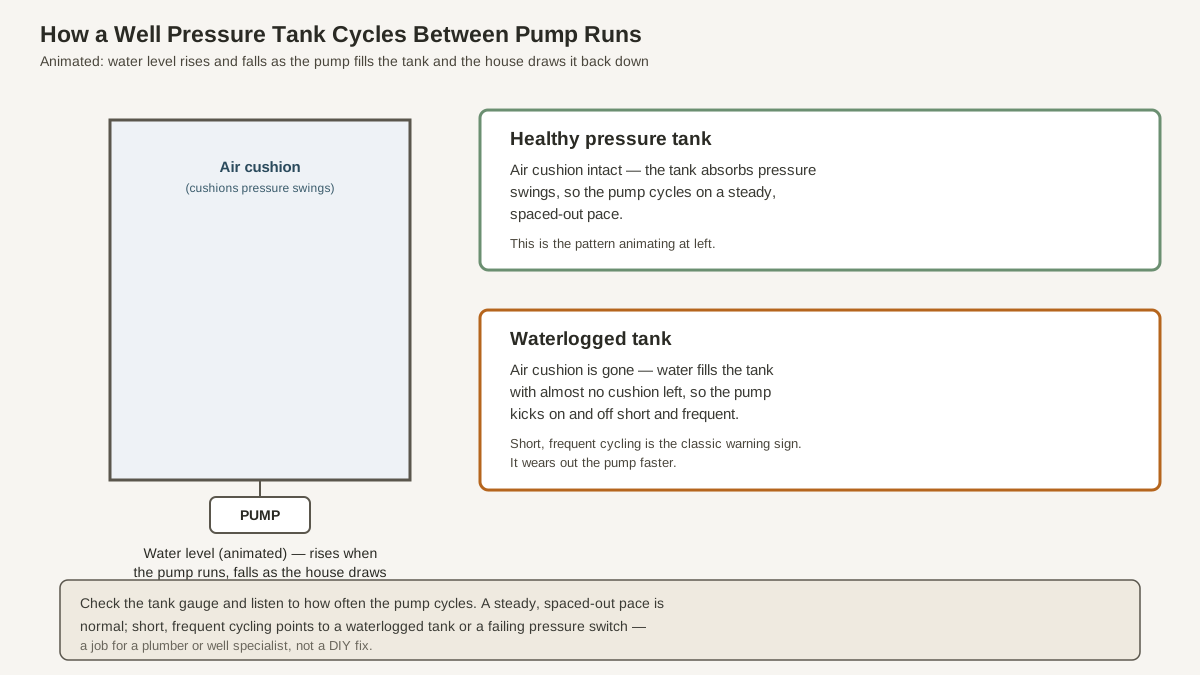
A private well relies on a pump (submersible or jet, depending on well depth) that fills a pressure tank, which then maintains pressure between a low and high cutoff point as the pump cycles on and off. When pressure drops across the whole house on a well system, the usual suspects are a waterlogged pressure tank that's lost its air cushion, a failing pressure switch that's not telling the pump to kick on, a pump that's simply wearing out, or a dropping water table during drought that leaves the pump working harder for less water. A pressure gauge mounted near the tank, most systems have one, is the fastest way to see whether the tank is cycling in its normal range or falling short.
Municipal Water
On city water, the PRV is the component most likely to fail over time, since it's a mechanical part with a spring and a diaphragm that wear out after years of regulating pressure day and night. A PRV that's failed toward the low side drops pressure at every fixture at once; one that's failed toward the high side does the opposite and can eventually cause its own problems, from water hammer to premature fixture wear. Either failure mode is a job for a plumber, since adjusting or replacing a PRV means working on the main line.
A healthy pressure tank cycles slowly; short, frequent cycling means the air cushion is gone.
How to Diagnose Low Water Pressure, Step by Step
Work through these checks in order. Most people find the answer before they reach step five.
Test at least three fixtures in different parts of the house, including one outside if you have a hose bib, to confirm whether this is whole-house or local to one fixture.
If it's one fixture, remove the aerator or shower head and run water directly from the pipe. Strong flow with it off confirms a clogged aerator or shower head; weak flow either way points further upstream, to the supply stop or the cartridge.
Check that the main shutoff valve, and any valve at the meter, is turned fully open, a quarter-turn ball valve should have its handle parallel to the pipe, not perpendicular, that quarter turn is about 90 degrees between fully open and fully shut.
Locate the pressure-reducing valve, usually a bell-shaped brass fitting just past the main shutoff, and check whether it has an adjustment screw that's been tampered with or looks corroded.
If you have a garden hose gauge, inexpensive at any hardware store, thread it onto an outside spigot and take a reading. Most homes run comfortably in the 40 to 60 psi range; a reading below that confirms a whole-house pressure problem rather than something you're imagining, and a reading above roughly 80 psi is its own issue, since that's the point most codes call for a pressure-reducing valve to bring it back down.
On a well system, check the pressure tank's gauge and listen for how often the pump cycles, short, frequent cycling is a classic sign of a waterlogged tank.
Check your water heater's age and history. If hot water specifically is weaker than cold at the same fixture, sediment inside the tank is a likely cause, worth reading about alongside our no hot water guide if the two problems are showing up together.
If you get through all seven steps without a clear answer, or if the pressure drop showed up suddenly and hard rather than fading over months, that's the point to call a plumber rather than keep guessing. A sudden, sharp drop is more often a leak than a slow mechanical failure.
Fixes: What You Can Try Yourself, and What Needs a Plumber
Match what you're seeing to what's reasonable to try yourself using the table below.
What You're Seeing
Likely Cause
DIY-Safe?
Typical Next Step
Weak flow at one faucet only, removing the aerator doesn't help
Clogged aerator or scaled shower head
Yes
Soak in vinegar or replace, a few minutes either way
Weak flow at one fixture, removing the aerator does help
Failing faucet cartridge or partly closed supply stop
Partial, open the stop fully yourself first
Call a plumber for a cartridge replacement if that doesn't fix it
Weak pressure at every fixture, main valve not fully open
Valve bumped closed during other work
Yes, just open it fully
None needed if that resolves it
Weak pressure everywhere, main valve already fully open
Failed pressure-reducing valve
No
Call a plumber to test and replace the PRV
Sudden, sharp pressure drop, possibly with a wet spot or the sound of running water
Hidden leak, possibly a slab leak
No
Shut off the main and call a plumber right away
Well system, pump short-cycling, gauge reading low
Waterlogged pressure tank or failing pressure switch
No
Call a plumber or well specialist
Once you've narrowed things down, a licensed plumber can confirm the diagnosis and put the fix in writing before doing any work; you can reach a plumber that serves your area at 888-854-0126. Ask what the written estimate includes, and before you agree to anything, verify their state license is current and ask to see proof of active liability insurance, our guide on how to choose a licensed plumber covers both.
If the cause turns out to be a corroded or heavily sedimented water heater tank rather than the supply lines themselves, replacement is usually the more practical fix than repair once a tank is old enough to be scaling internally; see the cost table below and our water heater replacement cost guide for the full breakdown.
What It Costs to Fix Low Water Pressure
How we got these numbers: most low-pressure fixes, cleaning an aerator, opening a valve, swapping a supply stop, don't have a meaningful published cost because they're minutes of labor or a low-cost part. For the fixes that do have real cost data behind them, we're citing named cost-survey publishers rather than guessing. Where no published range exists, the table says so honestly instead of inventing one. Where this table does show a number, it's a researched range pulled from a published survey, not a quote for your job, the only number that's actually binding is a written estimate from a plumber who has seen your pipes, and even that can move once the wall or fixture is open and the real extent of the problem is visible. Final cost varies by region, by how hard the fix is to access, and by how much damage turns up once work starts.
Job
Typical Range
What Moves the Price
Source
Aerator or shower head cleaning/replacement
Low-cost hardware-store part
Brand and finish
Not a job that needs a written estimate
Supply stop valve replacement
No published national range
Access, valve type, pipe material
Get a local written estimate
Pressure-reducing valve replacement
No published national range
Access to the main line, valve size, soldered vs threaded
Get a local written estimate
Well pump or pressure tank replacement
No published national range
Well depth, pump type, tank size
Get a local written estimate
Whole-house repiping (corroded galvanized lines)
No published national range
Home size, wall access, pipe material chosen
Get a local written estimate
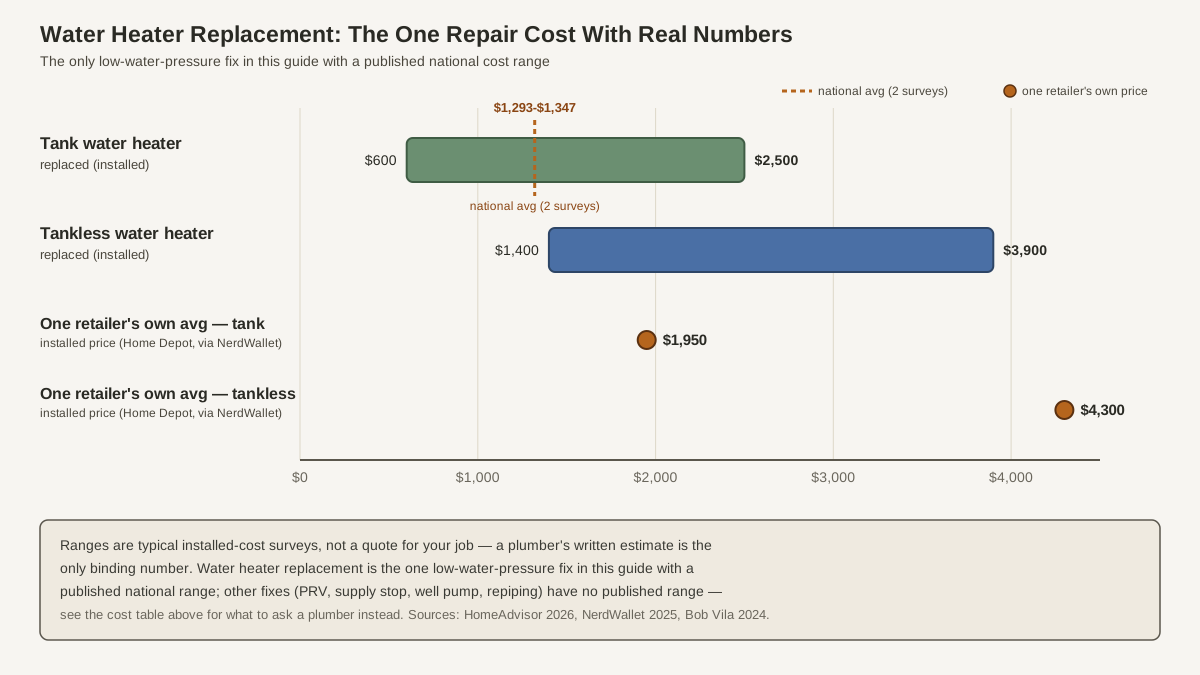
Water heater replaced (sediment/corrosion choking flow), tank
$600 – $2,500
Fuel type, tank size, code updates
HomeAdvisor, 2026
Water heater replaced, tankless
$1,400 – $3,900
Gas line upsizing, new venting, electrical work
HomeAdvisor, 2026 / NerdWallet, 2025
National average, all water heater types
$1,293 (Bob Vila) – $1,347 (HomeAdvisor)
Two separate surveys, not a range
Bob Vila, 2024 / HomeAdvisor, 2026
The pattern in that table isn't an accident. Most causes of low water pressure are mechanical adjustments or small-part swaps, and the closest thing to a real published cost is water heater replacement, relevant when sediment or internal corrosion is choking hot-water flow specifically rather than the supply side of the house. If a plumber quotes you a number for a PRV, a supply stop, or a repipe, that quote is the real number for your house; there's no national survey to check it against, so a second opinion is the closest thing to a benchmark.
For context, NerdWallet also tracked what one big-box retailer's own installed-price averages run: about $1,950 for a tank water heater and $4,300 for tankless, both higher than the national averages in the table above and, for tankless, above the typical range itself, worth knowing if a retailer's quote is your only comparison point.
Water heater replacement is the only low-water-pressure fix here with a published national cost. Sources: HomeAdvisor 2026, NerdWallet 2025, Bob Vila 2024.
When Low Water Pressure Is a Safety Issue, Not Just an Annoyance
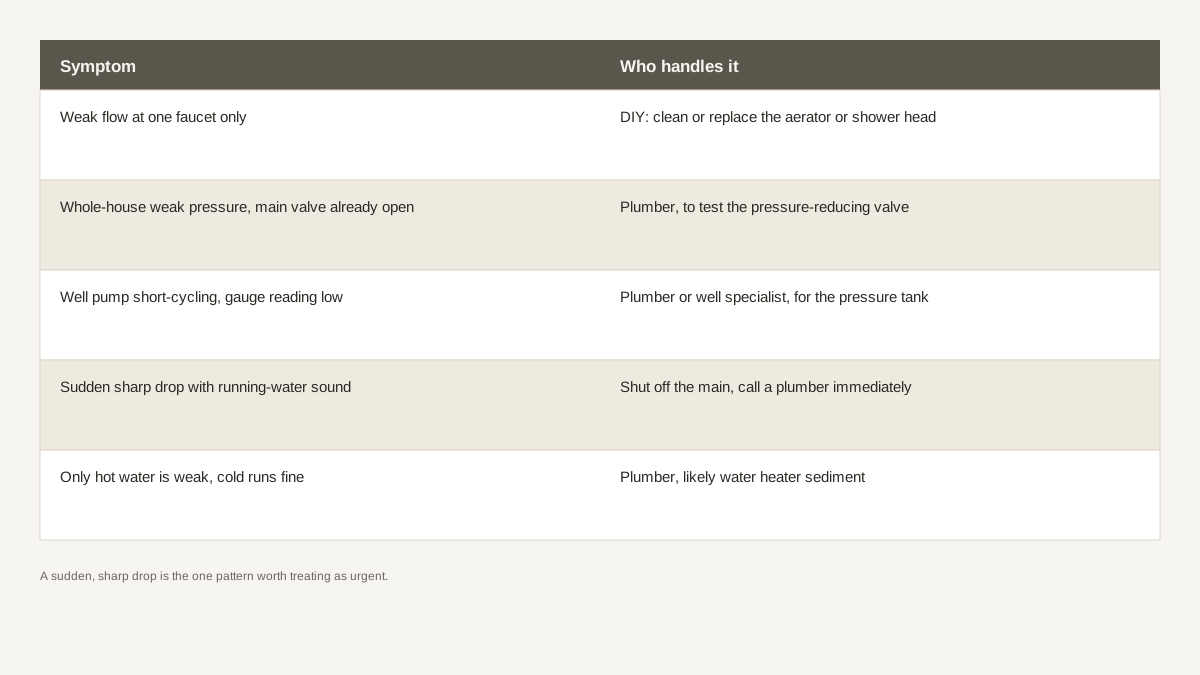
Match the symptom to who handles it first.
Most low water pressure complaints are inconveniences. A handful of patterns change that.
If your pressure drops fast and hard, especially if you hear running water inside a wall, under a slab, or in the yard with no fixture open, shut off the main valve and call a plumber before you do anything else. That combination points to a leak, not a mechanical adjustment, and a leak that's run unnoticed for hours can mean a soaked subfloor, a damaged foundation, or water intrusion into a space where it doesn't belong.
Why is low water pressure dangerous, beyond the leak scenario? On its own, weak flow isn't a health hazard. But a pressure drop caused by a break in the supply line can let contaminants get pulled backward into the system if pressure falls low enough, part of why municipal utilities take sudden area-wide pressure loss seriously and sometimes issue a boil-water notice until they've confirmed the system is intact. If your utility issues one after a pressure event, follow it, even if your water looks and smells normal.
A well system that's lost pressure and won't recover, rather than just running weak, can mean the pump has failed outright, leaving a household with no water at all rather than just low pressure, worth treating with more urgency than a slow fade. If a hidden leak did cause water damage before you caught it, check your homeowners policy before paying out of pocket; the Insurance Information Institute has a plain-language overview of what a standard policy typically covers and excludes. And if low pressure shows up alongside discolored water or a sudden drop in one area of a multi-unit building, that combination is worth a plumber's attention sooner rather than later; a plumber that serves your area is reachable at 888-854-0126.
How to Prevent Low Water Pressure From Coming Back
Clean aerators and shower heads on a schedule, every few months in hard-water areas, less often elsewhere. A quick vinegar soak dissolves mineral buildup before it fully blocks flow.
Flush the water heater annually. Draining a few gallons from the bottom valve clears sediment before it narrows flow through the tank, especially on the hot side, most residential tanks hold 40 or 50 gallons, with 75-gallon tanks in larger households, and sediment collects fastest in whichever size goes longest without a flush.
Have the pressure-reducing valve checked during any plumbing service call, even if it's not the reason you called, it's a wear part that fails quietly over years, not something that announces itself.
On a well system, have the pressure tank's air charge checked annually. A tank that's lost its air cushion waterlogs and makes the pump work harder and cycle more often, shortening its life.
Know where your main shutoff is, and check once a year that it's still fully open, it's an easy thing to bump partly closed during unrelated work and forget about.
If your home still has original galvanized steel supply lines and it's more than 40 or 50 years old, ask a plumber to look at their condition during any other visit; internal corrosion narrows these pipes gradually, long before a full failure.
None of these habits are expensive, and most take less time than the low-pressure shower that prompted the search for this guide in the first place.
Regional Notes: Old Pipes, Hard Water and Well-Dependent Areas
Region or Situation
Main Risk
What to Do
Older housing stock (Northeast, Rust Belt, parts of the Midwest)
Original galvanized steel supply lines corroding and narrowing from the inside over decades
Have a plumber assess pipe condition; budget for eventual repiping rather than waiting for a full failure
Hard-water regions (much of the Southwest and parts of the Midwest)
Faster mineral scale buildup in aerators, shower heads, and water heater tanks
Clean fixtures more often; consider a whole-house softener or filter
Rural and well-dependent areas
Pump and pressure tank wear, and falling water tables during drought
Annual pressure tank service; monitor well output during dry periods
Freeze-prone regions (Upper Midwest, Northeast, Mountain West)
A partially frozen line reducing flow without stopping it completely
In older housing stock, a slow, years-long decline in pressure is more often the pipe material itself narrowing than any single part failing, different from the sudden drops covered in the safety section above. In hard-water regions, the same fixes apply faster and more often than the general prevention schedule suggests, since scale builds up on a shorter timeline than in soft-water areas. Rural households on a well should treat pressure tank service as routine maintenance, not an emergency repair, since catching a waterlogged tank early is far cheaper than replacing a pump that failed from constant short-cycling.
NOAA's climate normals data confirms which parts of the country see hard freezes regularly enough to plan around, and Ready.gov publishes broader guidance on preparing home utilities, plumbing included, before severe weather hits. Water freezes at 32°F, and a line doesn't need to freeze solid to choke flow, ice forming along the inside wall narrows the opening well before a full blockage. In freeze-prone climates, a pressure drop that shows up specifically during a cold snap and disappears once temperatures rise is worth checking against a partially frozen line before you assume something is broken for good.
Frequently asked questions
Why is my water pressure low?+
Low water pressure almost always comes from one of two places: something restricting flow at a single fixture, like a clogged aerator, or something reducing pressure for the whole house, like a partly closed main valve, a failed pressure-reducing valve, or a corroded supply line. Test more than one fixture first to know which category you're dealing with.
How do I fix low water pressure?+
Start by testing whether the problem is at one fixture or the whole house. A single weak faucet usually means a clogged aerator or shower head, fixable in minutes. Whole-house pressure loss points to the main valve, the pressure-reducing valve, or, on well systems, the pump and pressure tank, and those repairs are a job for a licensed plumber.
How much does it cost to fix low water pressure in a house?+
It depends entirely on the cause. Cleaning an aerator or opening a valve costs next to nothing. A pressure-reducing valve, a supply stop, or a repipe don't have a published national cost range in the data behind this guide, so a local written estimate is the only real number. If sediment inside an aging water heater is the cause, national replacement costs run $600 to $3,900 depending on type.
Is low water pressure a plumbing emergency?+
Usually not. A gradual decline is worth investigating but rarely urgent. It becomes an emergency when the drop is sudden and sharp, especially alongside the sound of running water somewhere you can't see it, since that combination points to a leak rather than a mechanical issue and can mean real damage if it sits unnoticed.
Who fixes low water pressure?+
A licensed plumber handles most causes: a failed pressure-reducing valve, a corroded supply line, a stuck faucet cartridge, or a leak. On a private well, a well or pump specialist may handle the pressure tank and pump specifically, though many plumbers cover both. Start with a plumber either way; they can tell you if the job needs a specialist.
Will low water pressure fix itself?+
Sometimes, if the cause is temporary, like a municipal utility doing nearby repair work or flushing hydrants. Mechanical causes, a clogged aerator, a failing PRV, a corroded pipe, don't resolve on their own and tend to get worse over time rather than better, so it's worth diagnosing rather than waiting it out.
How do I fix low pressure on a well system?+
Check the pressure tank's gauge and listen to how the pump cycles first, short, frequent cycling usually means the tank has lost its air charge and is waterlogged. If the gauge reads low and stays low, or the pump runs constantly without building pressure, that points to a failing pump or pressure switch, a job for a well or plumbing specialist.
Why is low water pressure dangerous?+
On its own, it usually isn't. The real risk is what caused it, a burst or leaking line, for example, or a pressure drop severe enough that a utility issues a boil-water notice over backflow concerns. Treat a sudden, sharp pressure drop as a signal to investigate rather than a hazard by itself.
How do I increase low water pressure?+
Clear the easy causes first: clean or replace clogged aerators and shower heads, and confirm the main shutoff valve is fully open. If pressure is still low everywhere, a plumber can test the pressure-reducing valve and, on older homes, check whether corroded supply lines are narrowing flow, both are repairs, not settings you can adjust yourself.
How do I adjust a pressure-reducing valve?+
Most PRVs have an adjustment screw on top that a plumber can turn to raise or lower the set pressure, but finding and adjusting it isn't a beginner task since it means working on the main line while water is pressurized. If your PRV is old enough that you're not sure it's adjustable versus failing, that's a question for a plumber rather than a trial-and-error fix.
Why is water pressure low in just my shower?+
A shower-only problem is almost always local: a scaled shower head, a single-handle mixing cartridge that's wearing out, or a flow restrictor stuck in the head. Remove the shower head and run water directly from the pipe, strong flow confirms the head or restrictor is the cause rather than anything upstream.
How to fix low water pressure in a kitchen sink?+
Unscrew the aerator from the tip of the faucet and check it for mineral buildup or debris, this is the single most common cause of kitchen sink weak flow. If clearing or replacing the aerator doesn't help, check the supply stop valves under the sink, a partly closed valve or a failing cartridge inside the faucet is the next most likely cause.