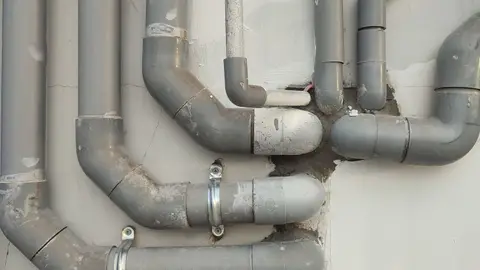
Clogged drain repair for a kitchen sink, bathroom sink, or shower usually starts with a plunger, then a hand auger if that fails, and most single-fixture jobs clear in twenty minutes without a plumber. A professional visit for one fixture runs roughly $100 to $275. When more than one drain backs up at once, the clog sits deeper in the line and usually can't wait.
Every kitchen sink slows down eventually, usually while you're rinsing a roasting pan the morning after a big dinner. A bathroom sink or shower backs up on its own timeline, hair and soap scum building into a mat across months until the water barely moves. None of that is unusual, and almost none of it needs a plumber on day one.
This guide covers clogged drain repair for the three fixtures that clog the most, in the order the causes actually happen, not the scary version you find scrolling social media. You'll get a step-by-step sequence to try before you call anyone, honest cost ranges for when a plunger and a bottle of drain cleaner have both failed, and the one habit that causes more repeat clogs than any other single thing.
If the fixture in question is a toilet, that's a related but different repair with its own tools; see clogged toilet repair. And if water is coming up out of more than one drain at once, or out of a floor drain, skip ahead to the section below on when to stop and call a plumber, because that's not a slow-sink problem anymore.
What's Actually Happening When a Drain Clogs
A drain clog is a narrowing, not usually a total wall. Water still gets through, just slower, until one more rinse of grease or one more strand of hair finally bridges the gap. That's why a "sudden" clog almost always has weeks of warning behind it: a sink that drained a little slower every week, a shower that started pooling around your ankles before it went fully still.
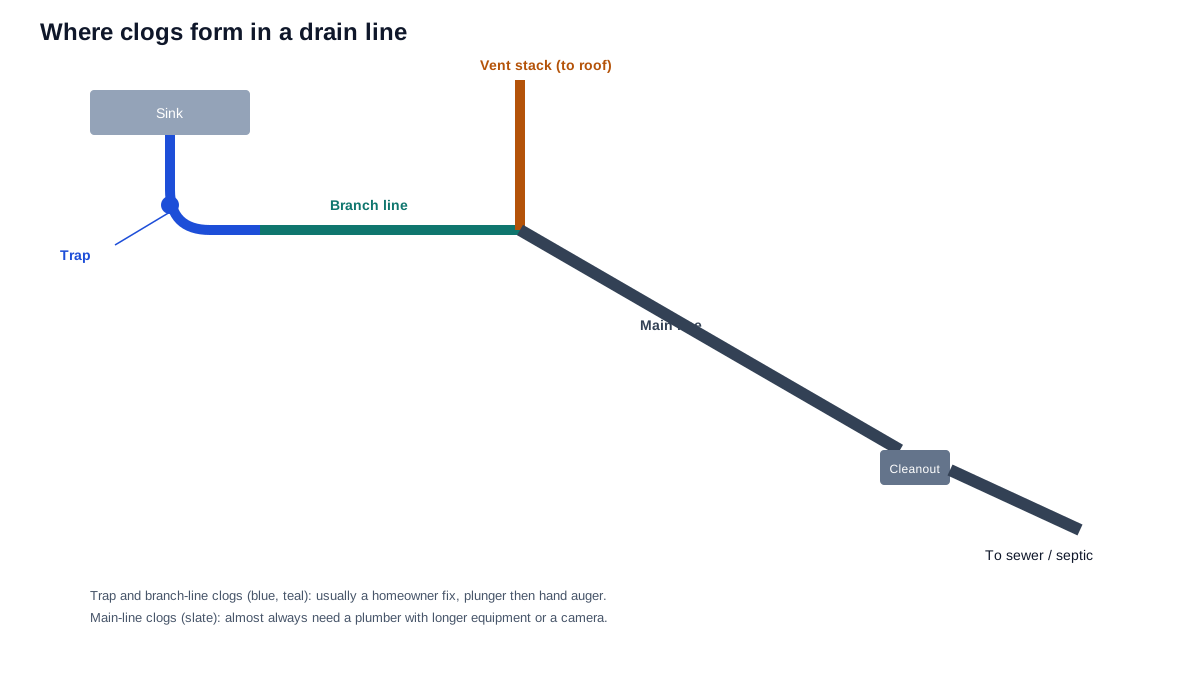
Every fixture drains through a trap, the curved section of pipe under the sink or behind the tub wall that holds a plug of water, as little as 2 inches deep under most plumbing codes, and blocks sewer gas from coming back up into the room. Past the trap, the fixture ties into a branch line, and branch lines feed into the home's main drain line, commonly a 4-inch pipe on a single-family home, on their way to the sewer or septic tank. Where the clog sits changes everything: a trap clog is a homeowner job most days, and a main-line clog is almost always a professional one.
Kitchen sinks clog differently than bathroom fixtures. A kitchen sink clogged with grease, coffee grounds, or rice usually blocks right at the trap or the branch line just past it, because that's where cooling grease first hardens against the pipe wall. Bathroom sinks, tubs, and showers clog with hair and soap scum, which catch on the trap's curve or on the crossbar of the drain stopper and build outward from there.
Why Kitchen, Bathroom and Shower Drains Clog, Ranked by How Often It's the Cause
Most homeowners assume every clog is the same clog. It isn't, and knowing which one you're dealing with saves a wasted trip to the hardware store.
Grease and food solids (kitchen sinks, most common cause). Fat is liquid when it goes down the drain hot and solid an hour later, once it's cooled against a pipe wall that's room temperature. Coffee grounds and rice behave almost the same way, absorbing water and swelling inside the trap instead of washing through.
Hair and soap scum (bathroom sinks, tubs, showers, most common cause). Hair doesn't dissolve, and soap scum, the waxy residue that bar soap and hard water leave behind, binds loose hair into a mat that grows a little with every shower until the drain is a fraction of its original width.
Garbage disposal misuse also causes its share. A garbage disposal clogged with fibrous scraps (celery, banana peels, corn husks) or with too much food ground at once pushes solids into the branch line faster than water can carry them away, and the disposal itself can jam without a full drain clog at all.
Mineral buildup and pipe scale play a role too: in hard-water areas, dissolved minerals coat the inside of older pipes over years, narrowing the usable diameter until an ordinary amount of hair or grease is enough to finish the job.
Venting problems are easy to miss. Every drain system needs a vent pipe, generally required to clear the roofline by at least 6 inches, to let air in behind the falling water; a blocked roof vent (leaves, a bird's nest, ice) can make a sink gurgle and drain slowly even with no clog at all in the trap itself, which is why "I snaked it and it's still slow" sometimes points to the roof, not the sink.
Root intrusion and pipe damage are least common at the fixture level but the most expensive to ignore: tree roots finding a hairline crack in an older clay or cast iron main line, or a bellied (sagging) section that collects solids no matter how often it's cleaned.
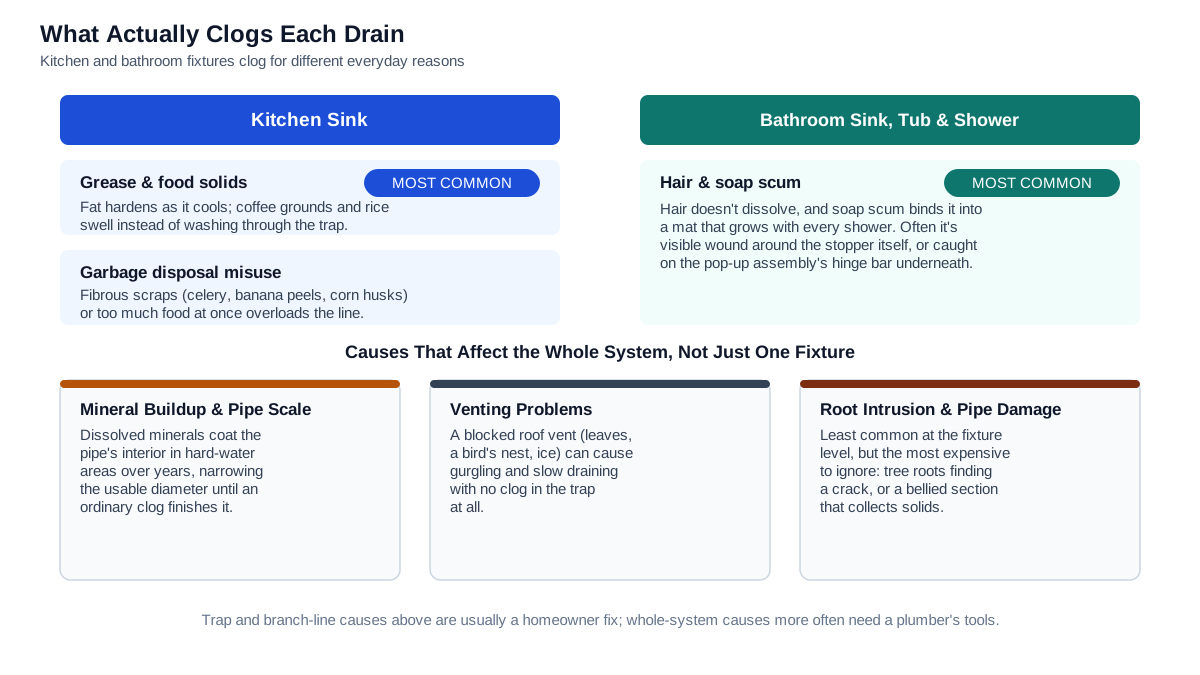
Kitchen and bathroom drains clog for different everyday reasons; scale buildup, vent blockages and root intrusion affect the whole system no matter which fixture backs up first.
Diagnosing the Clog: One Fixture, or the Whole House
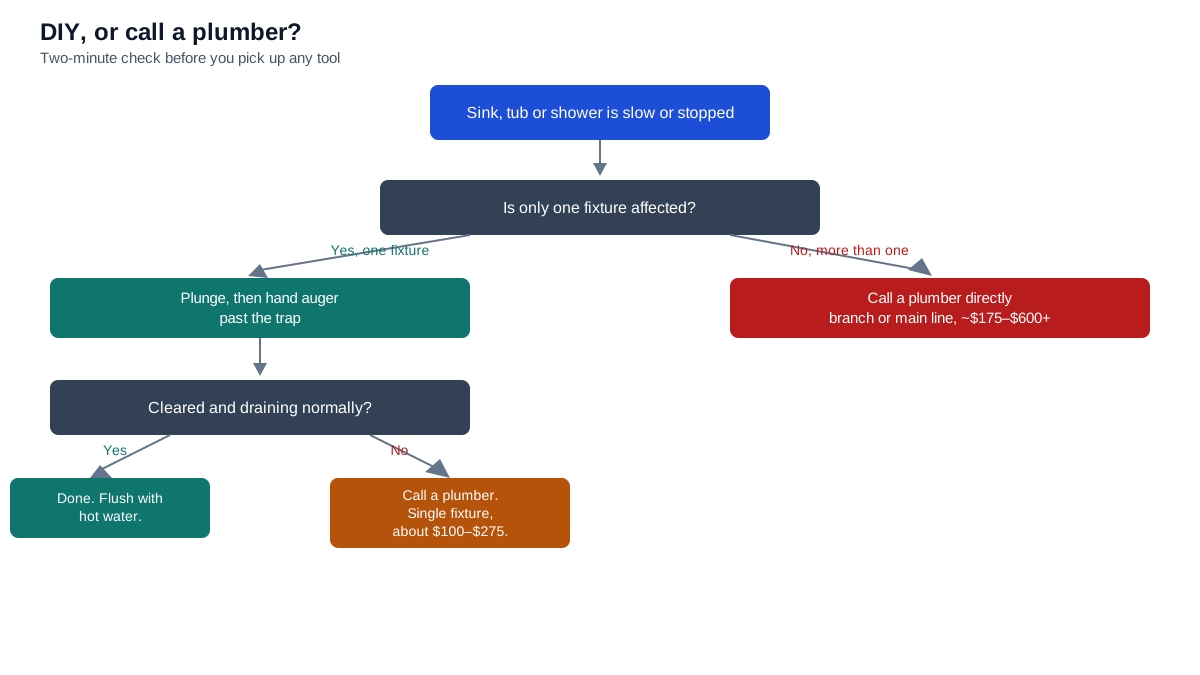
Before you pick up a plunger, spend two minutes figuring out how big the problem actually is. How to size up a clog before you reach for a plunger: one fixture usually means DIY, multiple fixtures at once means call a plumber.
Only one fixture is affected. Water backs up in the kitchen sink but the bathroom drains fine, or a shower drain clogged while every other fixture in the house works normally. This is almost always a trap or branch-line clog you can address yourself.
Two fixtures on the same line back up together. A bathtub that gurgles or fills when you run the washing machine, or a toilet that bubbles when the shower drains, means those two fixtures share a branch line and the clog sits downstream of both.
Every low fixture backs up at once. Toilets, tub, and the lowest sink all slow down or back up around the same time. That points to the main line, past where every branch joins, and it's a job for a plumber with a main-line auger or a camera.
Water backs up somewhere you've never seen it before, like a floor drain or a basement cleanout, the capped fitting that gives a plumber access to the line. Stop using every drain in the house until a plumber looks at it; running more water in only pushes the backup further.
What to Try First, Before You Call Anyone
Here's how to unclog a drain yourself, for a single slow or stopped fixture: work through these steps in order. Skip straight to a hand auger if you already know the clog is past the trap (a plunger only pushes water, it can't pull a mat of hair out).
Remove standing water with a cup, then check the stopper or the disposal for anything visible caught right at the drain opening.
Run hot tap water for two minutes if the fixture drains at all, even slowly, to soften grease or soap scum before you work on it.
Plunge with a flat-bottomed cup plunger (not the bell-shaped toilet kind) over a sealed drain opening, fifteen to twenty firm strokes, keeping enough water in the basin to cover the cup.
If plunging doesn't clear it, run a hand auger, also called a drain snake and typically loaded with about 25 feet of cable, past the trap: feed the cable in slowly, and when you feel resistance, crank rather than push to hook or break up the clog instead of packing it tighter.
Flush with hot water for a full minute once it's draining freely, to carry the loosened material the rest of the way through the branch line.
If two rounds of plunging and a full pass with an auger haven't moved it, stop. That's the point where it's a plumber's job, not a longer DIY session.
Here's how the common tools stack up against each other, so you reach for the right one the first time instead of the third:
Tool
Best for
Skip it when
Plunger (flat cup)
First move on any single clogged fixture, kitchen sink, bathroom sink, tub or shower
A chemical cleaner is already sitting in the drain
Zip-it / drain stick
A bathtub drain clogged with hair sitting shallow, just past the stopper
Kitchen sink clogs, food and grease slide past it without catching
Hand auger (drain snake)
Clogs past the trap, stubborn shower and tub hair mats
Toilets; use a closet auger instead so you don't scratch the bowl
Wet-dry shop vacuum
Pulling a plunger-resistant clog back out instead of pushing it further in
You can't get a tight seal around the drain opening with a rag
Chemical drain cleaner
Rarely; a fresh, minor grease clog a plunger already loosened somewhat
Standing water, older pipes, or any drain you plan to auger next
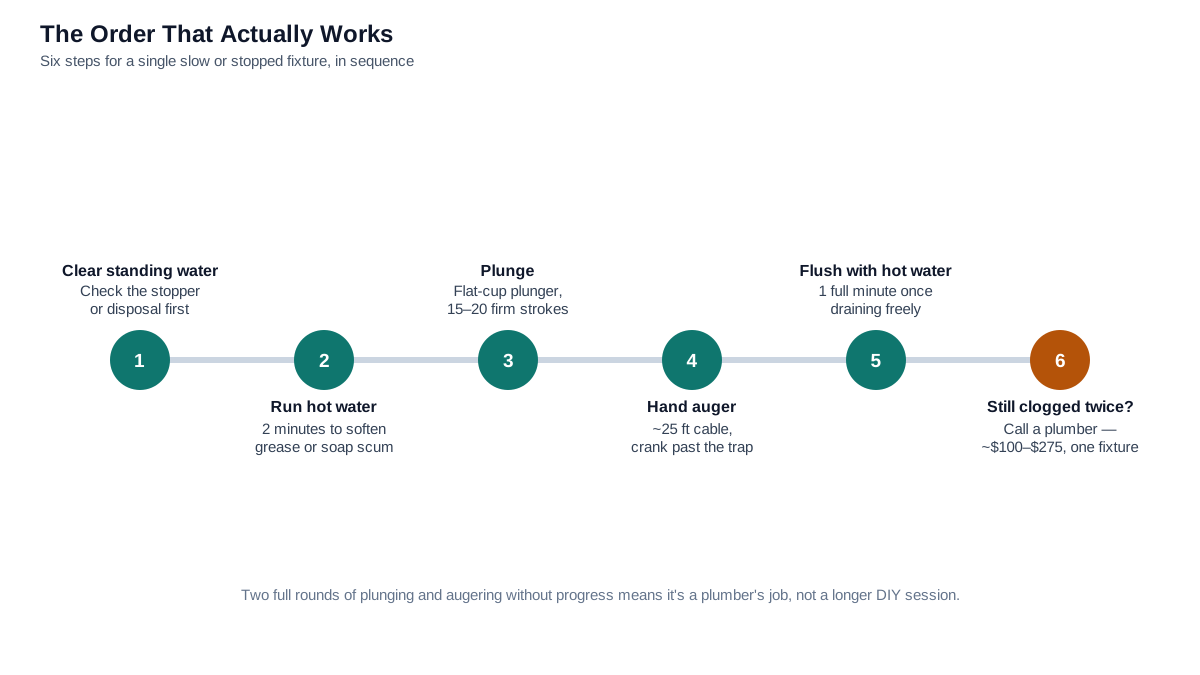
The order that actually works, step by step — stop and call a plumber (about $100 to $275 for one fixture) after two full rounds without progress.
Kitchen Sink Clogged? Start With the Disposal and the Trap
A kitchen sink clogged with grease behaves differently than a bathroom clog, and the disposal complicates it further, so work the sequence a little differently.
If a garbage disposal sits under the sink, check it first: turn it off at the wall switch, never reach in with your hand, and use the hex-key hole on the bottom (most disposals include one) to manually turn the flywheel and clear a jam before you assume the drain itself is blocked. A disposal that hums but won't spin is usually jammed, not clogged, and the reset button on the unit's underside solves a surprising share of these.
Once the disposal turns freely, plunge the sink with the other basin (in a double sink) plugged, since an open second drain lets the plunger just move air instead of building pressure. If it's still slow after plunging, the trap under a kitchen sink, usually 1.5-inch pipe, unscrews by hand in most cases, so pulling it to check for a solid grease plug is a reasonable next step for anyone comfortable with a bucket and a wrench. Where a clog sits changes the fix: trap and branch clogs are usually a DIY job, main-line clogs almost always need a plumber.
What doesn't help: repeated hot water alone on a fully hardened grease clog, and pouring more grease or oil down the drain "to flush it through," which is close to the opposite of what actually works. A disposal that hums, won't spin, and won't reset at all is a separate repair; see garbage disposal not working for the full troubleshooting sequence.
Bathtub Drain Clogged With Hair, Shower Drain Clogged With Soap Scum
A bathtub drain clogged with hair is close to the most predictable repair in residential plumbing, and it's usually visible without any tools at all. Pull the stopper (most lift straight out or unscrew from a horizontal crossbar underneath) and you'll often find the entire clog wound around it.
When the shower drain clogged is deeper than the stopper, a zip-it tool handles a shallow hair mat in under a minute; feed it in, twist, and pull straight back out. For anything past that point, a hand auger through the drain opening (with the stopper removed) reaches the trap.
Bathroom sinks clog the same way but slower, since less water and less hair pass through than a shower sees, and the trap itself is usually narrower too, 1.25-inch pipe against a kitchen sink's 1.5-inch. A pop-up stopper assembly traps hair on its own hinge bar even when the drain "looks" clear from above, so check there before assuming the clog sits deeper in the trap.
Chemical Drain Cleaner Damage: Why We Don't Recommend the Bottle
Chemical drain cleaner damage is common enough that most plumbers ask whether you've used one before they touch a slow drain. The sodium hydroxide or sulfuric acid in these products generates heat as it reacts, and that heat can soften or crack older PVC, and it's known to eat through the rubber washers and gaskets in older metal traps and P-traps.
It also solves the wrong problem: chemical cleaners dissolve organic buildup like hair and grease film, but they do nothing for the more common cause of a truly stopped drain, a solid mat or a mechanical jam, which just sits in a basin of caustic liquid until someone has to deal with it by hand anyway.
If a chemical drain cleaner is already sitting in a blocked drain, do not run a plunger or an auger on it, and do not add a second dose; call a plumber and tell them exactly what product and how much you used, because the splash-back from either tool can cause a serious chemical burn.
The safer version of a "chemical" fix is baking soda followed by white vinegar down a mostly-clear drain, then a hot water flush a few minutes later. It won't touch a real hair mat or grease plug, but it's harmless to pipes and reasonable as routine maintenance between actual clogs.
What Clogged Drain Repair Costs
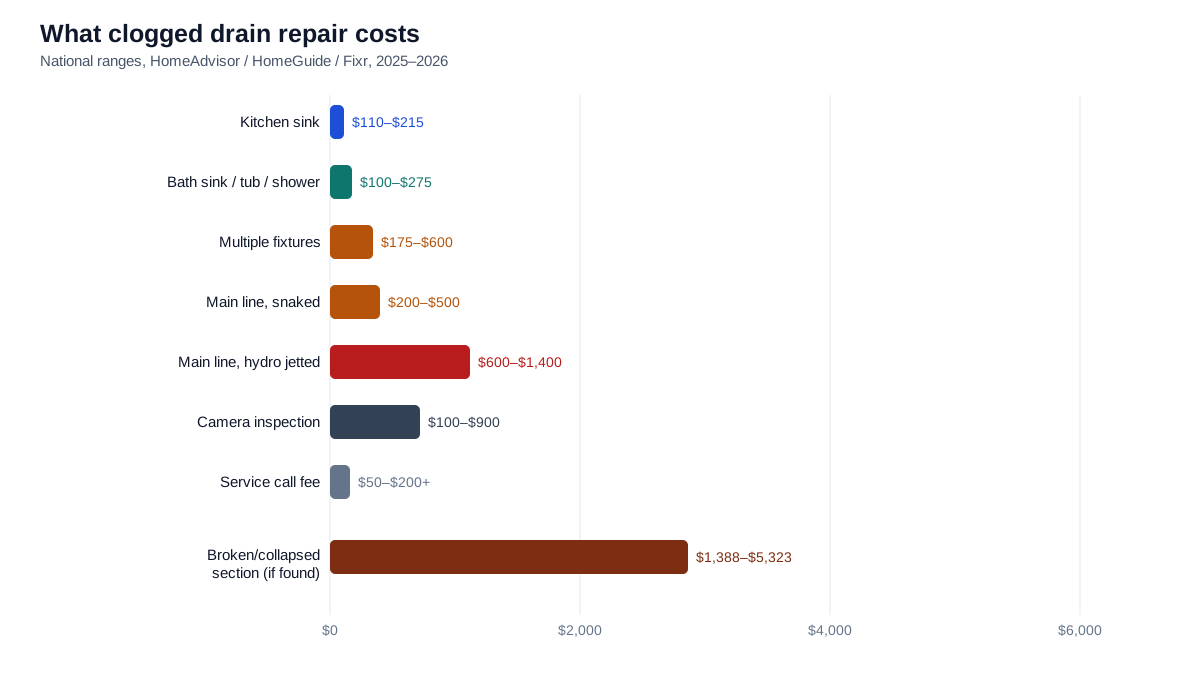
These are researched ranges pulled from published cost surveys at HomeAdvisor, HomeGuide, and Fixr, not a quote for your specific job; the data pack behind this guide has no regional price index, so treat the low end as likely in lower cost-of-living areas and the high end as likely in expensive metro markets. Only a written estimate from the local contractor who's actually doing the work is binding, so get one before you commit to anything past a service call. Typical clogged drain repair cost by job type, national survey ranges from HomeAdvisor, HomeGuide and Fixr.
Job
Typical range
What moves the price
Source
Kitchen sink, snaked
$110 – $215
Grease severity, whether the disposal has to come off first
HomeAdvisor, 2026
Bathroom sink, tub, or shower, snaked
$100 – $275 (about $225 typical for tub/shower)
Length of run to the trap, thickness of the hair mat
HomeAdvisor / HomeGuide
Toilet, augered
$110 – $275
How far the clog sits, whether the toilet needs to be pulled
HomeAdvisor, 2026
Multiple fixtures or whole-house stoppage
$175 – $600
How many drains are affected, single branch versus main line
HomeGuide, 2025
Main line, cable-snaked
$200 – $500 (national average near $475)
Length of run, number of cleanouts, tree roots
Fixr / HomeGuide
Main line, hydro jetted
$600 – $1,400
Grease severity, pipe material, whether roots need cutting
HomeGuide, 2025
Camera / video inspection
$100 – $900
Standalone diagnostic versus bundled with a jetting job
HomeAdvisor / Fixr
Service call / trip fee
$50 – $200+
After-hours timing, distance, whether it's credited toward the repair
HomeGuide, 2025
Broken or collapsed section (if a camera finds one)
$1,388 – $5,323 (average $3,319)
Trenchless lining versus open trenching, depth, length
HomeAdvisor, 2026
Every one of these is a range for a reason: the final cost varies by region, by how hard the clog is to access, and by what the plumber actually finds once the trap or a wall is open. A plumber who quotes a single flat number sight unseen, before running a camera, is guessing the same way you would be. For a closer comparison of snaking versus hydro jetting and when each one is worth the extra cost, see drain cleaning cost and methods.
When to Stop and Call a Plumber
Call rather than keep trying when any of these apply: more than one fixture is backing up at the same time, water or sewage is coming up through a floor drain or a low fixture instead of down, you smell sewer gas that wasn't there before, or you've already plunged and augered a single fixture twice without progress.
If water is rising faster than you can keep up with, or it's coming from more than one drain at once, that's not a wait-and-see situation. A licensed plumber who serves your area, reachable at 888-854-0126, can tell you over the phone whether what you're describing sounds like a branch clog or a main-line problem, and how urgent it is before anyone drives out. Before that plumber starts any work, ask for their state license number, verify it's active through your state's licensing board, and ask for proof of current liability insurance; a legitimate local pro has both ready without hesitation.
Sewage backing up out of a drain is a different category of mess than a slow sink. Treat any water that's come from a sewage backup as contaminated (the water restoration industry classifies it as Category 3 water under the IICRC S500 standard) rather than something to mop up bare-handed; the CDC notes raw sewage can carry bacteria and viruses that make direct contact a real health risk, not just an unpleasant chore. If you're unsure whether what you're looking at counts as an emergency at all, when you actually need an emergency plumber walks through the calls that can't wait versus the ones that can.
Does Insurance Cover a Clogged Drain?
Usually not the clog itself, but the cleanup can be a different story. A standard homeowners policy treats a slow or stopped drain the same way it treats a dirty air filter, as maintenance the homeowner is responsible for, according to the Insurance Information Institute's general guidance on water damage claims.
What often is covered: sudden, accidental water damage that results from a backup, like water that overflowed a tub or sink onto flooring or into a ceiling below, if your policy includes sewer and drain backup coverage (frequently a separate endorsement, not automatic on an HO-3 policy). What's typically excluded either way: the cost of clearing the clog itself, and damage from a backup you knew about and didn't address.
If you're filing a claim on the resulting water damage rather than the clog, document it before cleanup starts: photograph the affected area, keep the plumber's invoice describing what caused the backup, and note the time the water first appeared. A claim tied to "we noticed water on the floor, called a plumber, and here's exactly what they found" moves faster than one without documentation.
Keeping Drains From Clogging Again
The single habit that prevents the most repeat clogs is simple: nothing goes down a kitchen drain that's solid or fatty at room temperature. Pour grease into a can instead, let it solidify, and throw it out; scrape plates into the trash before rinsing rather than after.
For bathrooms, a cheap mesh hair catcher over the tub or shower drain, emptied weekly, does more than any product poured down the drain afterward. A drain stopper without a catcher just moves where the hair collects, from the visible strainer to the invisible trap below it.
Run hot water through kitchen and bathroom drains for thirty seconds after the day's last use, especially in a kitchen sink that saw any grease at all, so nothing has a chance to fully cool and harden against the pipe overnight. Once or twice a year, a baking-soda-and-vinegar flush on slow-but-not-stopped drains is a reasonable habit; it isn't a substitute for an actual clog-clearing tool once a drain has truly stopped.
Regional Notes: Freeze Belt, Hard Water and Older Sewer Lines
Clog patterns shift by climate and by the age of the housing stock, and it's worth knowing which category your home falls into.
Region / home type
Common extra cause
What to do differently
Freeze-belt states (Midwest, Northeast, Upper Plains)
A kitchen trap on an exterior wall can partially freeze once pipe temperatures drop below 32°F in a hard cold snap, slowing drainage even without a real clog
Keep cabinet doors open below freezing so warm room air reaches the pipe; a steady trickle helps on the coldest nights
Gulf Coast and Southeast, high water table
Heavy rain can push groundwater into an older main line, backing water up from the lowest fixture in the house during a storm
A backwater valve on the main line stops sewage from being pushed back into the house; ask a plumber if your home has one
Hard-water Southwest and parts of the Midwest
Mineral scale narrows pipe diameter gradually, so an ordinary amount of hair or grease finishes a clog that softer-water homes wouldn't have
Hydro jetting clears scale better than a cable snake; a whole-house softener slows future buildup
Pre-1970s homes with cast iron branch or main lines
Iron pipe rusts from the inside, and the rough interior surface snags hair and grease that would otherwise wash through
A camera inspection before a big clog (not after) shows how much service life is left before replacement becomes the real fix
If a camera inspection turns up a bellied, cracked, or root-invaded section rather than an ordinary clog, that's a repair on its own; see sewer line repair for how trenchless options compare to open trenching.
Frequently asked questions
How do you fix a clogged drain?+
Start with a plunger over a sealed drain, fifteen to twenty firm strokes with the second basin plugged on a double kitchen sink. If that doesn't clear it, a hand auger fed past the trap handles most hair and grease clogs. Two rounds of both without progress means the clog sits further down the line, and it's time to call a plumber rather than keep trying the same tools.
How do you fix a really bad clogged drain that a plunger won't touch?+
A stubborn clog usually means it's past the trap or it's a solid mass a plunger can only push against, not break up. A hand auger cranked (not just pushed) through the trap and into the branch line is the next step; if the cable meets resistance twenty to twenty-five feet in, that's likely the main line, and it needs a plumber with longer, motorized equipment.
How much does it cost to repair a clogged drain?+
A single fixture, kitchen sink, bathroom sink, tub, or shower, typically runs $100 to $275 for a professional visit, according to HomeAdvisor and HomeGuide cost surveys. Multiple fixtures backing up together or a main-line clog costs more, usually $175 to $600, and can run higher if a camera inspection or hydro jetting is needed to clear it.
How much does drain cleaning cost if a plumber handles it?+
Drain cleaning by a licensed plumber ranges from about $100 for a single fixture up to $1,400 for a main line cleared by hydro jetting, per HomeGuide and Fixr data. Most single-fixture jobs land under $275, and a service call or trip fee, often $50 to $200, sometimes applies separately or gets credited toward the repair.
Why do my drains keep getting blocked?+
Repeat clogs almost always trace back to one habit: grease or food solids going down a kitchen drain, or hair going down a bathroom drain without a catcher. Mineral scale in hard-water areas and aging cast iron pipe can also narrow a line gradually until an ordinary amount of debris is enough to stop it, which is why the same drain clogs again every few months.
Does homeowners insurance cover a clogged drain?+
No, not the clog itself; a standard policy treats it as routine maintenance, similar to a dirty filter. Sudden water damage that results from a backup can be covered if your policy carries sewer and drain backup coverage, which is often a separate endorsement rather than automatic. Check your declarations page or ask your agent whether that endorsement is on your policy.
How do you fix a slow draining sink?+
A slow draining sink that isn't fully stopped usually has a partial hair or grease buildup at the trap. Hot water for two minutes, then a plunger, clears most of these; a hand auger reaches anything past that point. If the sink is slow but every other fixture in the house is affected too, check the roof vent or call a plumber instead of repeating the same fix on one sink.
What causes a slow draining sink that isn't fully clogged?+
A partial blockage, soap scum and hair in a bathroom sink, grease film in a kitchen sink, that hasn't yet closed the pipe completely. A blocked or restricted vent pipe can cause the same symptom with no material blockage at all, since the drain needs air behind the water to flow at full speed. If plunging and an auger don't speed it up, the vent is worth checking.
How do you fix a clogged garbage disposal drain?+
First rule out a jam rather than a clog: turn the disposal off at the switch, and use the hex-key hole on the unit's underside to turn the flywheel manually. A disposal that jams often but isn't actually clogging the drain behind it usually needs the reset button pressed after clearing the obstruction. If the sink itself is slow once the disposal spins freely, plunge and auger it like any other kitchen sink clog.
How do you fix a clogged kitchen sink drain?+
Check the garbage disposal for a jam first if one is installed, then plunge the sink with the other basin sealed in a double-bowl setup. If it's still slow, most kitchen sink traps unscrew by hand for a direct look at a hardened grease plug. A hand auger clears anything the trap check misses, and repeated grease down the drain is almost always why it happens again.