A water heater leaking from the top is usually a loose fitting or a failing pressure relief valve, both cheap fixes a plumber can knock out fast. A leak from the bottom or a puddle under the tank with no fitting nearby almost always means the steel tank itself has corroded, and at that point repair isn't the answer, replacement is, typically $600 to $2,500 installed depending on the type.
You noticed it this morning: a damp ring on the carpet outside the closet where the water heater lives, or a slow drip you heard before you saw it. Whatever brought you here, a leaking water heater sits in a strange middle ground between plumbing nuisance and small emergency, and the honest answer to "is it bad" depends entirely on where the water is coming from and how the tank looks up close.
This guide walks through the ways a tank starts leaking, in the order we'd actually check them standing in a basement or utility closet. You'll find a diagnostic routine that takes about fifteen minutes, a straight answer on what tends to be a cheap fix versus a sign the tank is done, real installed-cost ranges pulled from national contractor surveys, and the one safety rule that matters more than any of the plumbing advice below it. If you searched water heater leaking hoping for a quick way to tell "fix it" from "shut it down and call someone," that's exactly what follows.
What a Leaking Water Heater Is Actually Telling You
A leaking water heater can mean almost anything from a few drops of condensation on a humid morning to a tank that's actively failing and about to soak the floor around it. The word "leak" covers both, which is part of why so many people search water heater leaking and come away more confused than when they started. The fix, and the urgency, depend on two things: where the water is coming from, and whether it's water from inside the tank at all rather than moisture from the air around it.
Start with the easy elimination. If the outside of the tank is damp all over, especially on a humid day or right after a long, hot shower drained some of the tank, that's probably condensation — water vapor meeting a cold supply line or a tank that just refilled with cold water after a big draw. Wipe it bone dry, check again in twenty minutes. If it's still dry, you're done. If water is actively dripping, pooling, or running from one specific point, a fitting, a valve, or a seam in the tank itself, that's a real leak, and the next two sections cover what it means.
One more quick check: touch isn't required, but sound often helps. A hissing or steady trickle near the top of the tank usually points to the temperature and pressure relief valve, often shortened to T&P valve, either doing its job or failing at it. A silent puddle at the base with no sound at all more often points to the tank body itself, a different and more serious problem covered next.
Where Is It Leaking From: Top, Bottom, or the Valve
Take a flashlight and look at where the water actually starts, not just where it pools, because water runs downhill along the tank jacket before it hits the floor and can fool you into blaming the wrong spot. Searches for water heater leaking from top and water heater leaking from bottom are both common for a reason: the two failure patterns are close to opposite problems with opposite fixes.
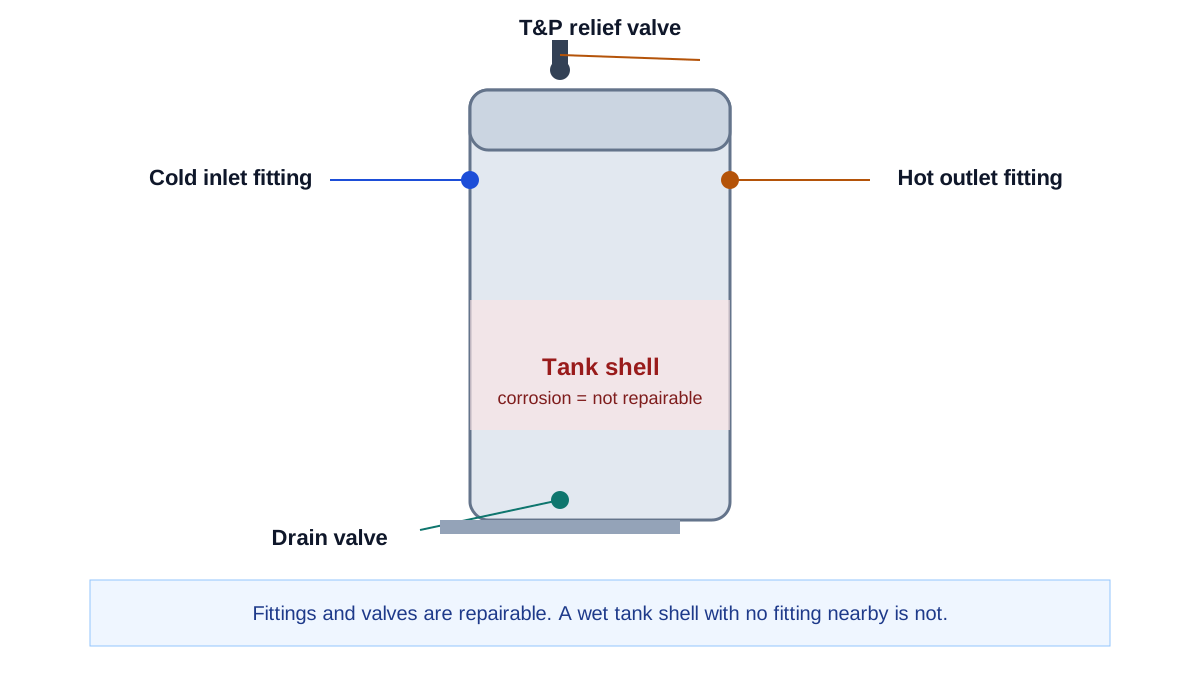
A water heater leaking from top usually traces to one of three places: the cold water inlet fitting, the hot water outlet fitting, or the temperature and pressure relief valve and its discharge pipe. Fittings loosen with age, vibration, and thermal cycling; a quarter turn with the correct wrench, power off first, sometimes stops it cold. Interest in water heater pressure relief valve leaking specifically runs high because that valve is designed to open once pressure or temperature crosses a set point, 150 psi or 210 degrees Fahrenheit on a standard residential tank, whichever hits first, so a small weep from its discharge pipe can be the valve doing exactly its job, or it can mean the valve itself has worn out and needs replacing, a job well inside DIY range for anyone comfortable with a wrench.
Bottom leaks tell a different story. If the water traces to a fitting near the base, the drain valve used for flushing sediment, that's often just a loose valve or a worn washer, cheap to fix. But if there's no fitting at the source and the water is simply seeping from the tank's steel shell, that's water heater tank leaking in the fullest sense: corrosion has breached the tank, and no sealant, tape, or clamp fixes a hole in pressurized steel holding dozens of gallons of scalding-hot water. That tank is done.
Where it's leaking
Most likely cause
What it usually means
Top, near fittings
Loose inlet or outlet connection, worn washer
Often a same-day DIY or quick pro fix
Top, from the valve or its pipe
T&P valve relieving pressure, or the valve has failed
Inexpensive part; replace the valve if it won't stop
Bottom, from a fitting
Loose drain valve, worn gasket
Usually fixable without replacing the tank
Bottom, from the tank shell
Internal corrosion has breached the steel
Not repairable; plan for replacement
Underneath, no visible source
Condensation, or a slow tank-shell leak running down the jacket
Dry it and recheck before assuming the worst
One more source that surprises people: fittings that thread directly into the top of the tank, like the anode rod port, can weep without anything being wrong with the tank body itself. That's why the diagnosis routine below has you check each point individually instead of guessing from where the puddle ends up.
Where a tank actually leaks from, and what each location usually means.
What's Causing It, Ranked by How Often We See It
Ranked roughly by how often each one turns out to be the answer, these are the causes behind a leaking water heater:
Tank corrosion. Steel tanks are lined with glass and protected by a sacrificial anode rod, but the lining always has weak spots eventually, and once rust breaks through from the inside, the leak shows up as pinholes or a seam failure. This is the single most common cause on any tank old enough that nobody remembers when it went in.
Loose or worn fittings. The inlet, outlet, and drain valve all thread into the tank, and threaded connections work loose with vibration, thermal cycling, and time. This is the most common cause on newer tanks, especially in the weeks right after installation.
A worn or overworked T&P valve. This valve is supposed to open if temperature or pressure gets too high, so an occasional discharge is normal. Frequent or continuous discharge usually means either the valve has failed or something upstream, a thermostat set too high, water pressure that's crept up, is genuinely pushing the tank past its limits.
Excess pressure from thermal expansion. On a "closed" system, one with a check valve or backflow preventer at the meter, heated water has nowhere to expand, so pressure spikes every time the burner or element fires. Without an expansion tank to absorb that spike, the T&P valve ends up doing the expansion tank's job, which wears it out fast.
Sediment buildup at the bottom of the tank, which insulates the burner or element from the water above it and can crack a glass lining or jam the drain valve partly open.
A failed heating element gasket on electric models, or a condensate drain issue on high-efficiency and power-vent gas models, both of which can look like a tank leak until you trace the water back to its actual source.
Age is the biggest single predictor. Most of the leaks we'd call "the tank is just done" show up well into a water heater's service life, while the fixable, inexpensive leaks cluster in the first year or two after install, a fitting not fully seated, or after a plumbing change elsewhere in the house shifted the water pressure.
Is It Fixable, or Is the Tank Just Old?
The honest rule of thumb: a leak from a fitting, a valve, or the drain valve is fixable, full stop, regardless of the tank's age, because none of those parts are the tank itself. A leak from the tank's steel shell is not fixable, also full stop, regardless of how new the tank looks, because there's no safe or lasting way to patch a pressurized vessel holding scalding water. Everything else is a judgment call that comes down to age and cost.
Situation
Repair or replace
Leak from a fitting, valve, or drain valve, any age
Repair
Leak from the tank's steel shell, any age
Replace
Tank old enough nobody remembers the install date
Lean replace, even for a fitting leak, since another failure is likely soon
Tank a few years old, leak is a fitting
Repair with confidence
Tank water heaters aren't built to last forever: most are rated for a service life of about 8 to 12 years. Sacrificial anode rods exist specifically to corrode before the tank does, and once that rod is mostly consumed, usually visible as a rod pulled for inspection and found badly eaten away, the tank's own steel starts absorbing the corrosion instead. Do water heaters leak when they go bad? Almost always, yes: a leak from the tank body is usually the first visible sign a unit has reached the end of its service life, not an early warning that gives weeks of notice.
If your unit is old enough that you're not sure how many years it's actually been running, and the leak is coming from the tank rather than a fitting, that's your answer: replace it rather than chase a repair that won't hold. If it's young, still under warranty, or the leak traces to a part rather than the shell, a repair is not just possible, it's the obviously cheaper and faster move.
How to Diagnose It in the Next 15 Minutes
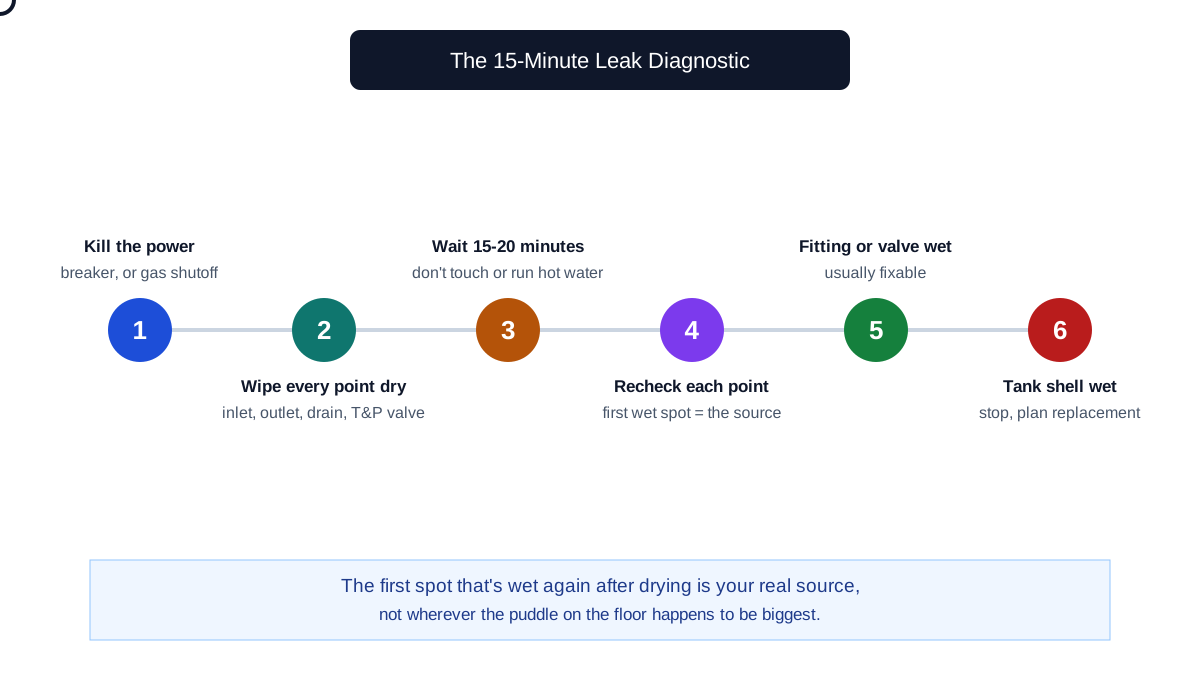
Before you call anyone, spend fifteen minutes confirming exactly where the water is coming from. This is the single most useful thing you can do, because it tells the plumber, or tells you, whether this is a five-minute fix or a same-week replacement, and it keeps you from paying for a service call just to hear "it's the tank, sorry."
Kill the power. For electric units, switch off the breaker; for gas units, locate the gas shutoff nearby so it's ready if you need it.
Wipe every suspect surface bone dry with a towel: the inlet fitting, the outlet fitting, the drain valve, and the T&P valve and its discharge pipe.
Wait 15 to 20 minutes without touching anything or running hot water anywhere in the house.
Check each point again. The first spot that's wet again is your source, not wherever the puddle on the floor happens to be biggest.
If a fitting is wet, try snugging it a quarter turn with the correct wrench. Never force it; overtightening cracks fittings and makes things worse.
If the T&P valve or drain valve is wet, note whether it's dripping continuously or just damp. Continuous flow from the T&P valve means something is actively venting pressure, not just a worn seal.
If the tank body itself is wet with no fitting nearby to blame, stop testing and treat it as a tank failure.
Keep a flashlight and a phone camera handy through this process. Photos of the wet spot and the model and serial number plate, usually on the side or top of the tank, will save time whether you end up calling a plumber or filing an insurance claim later.
Work through these six steps in order — the first spot that's wet again after drying is the real source, not wherever the puddle looks biggest.
Fixes: What You Can Handle, and What Needs a Plumber
Not every leaking water heater needs a plumber, but knowing which repairs are genuinely within reach saves both money and a wasted service call.
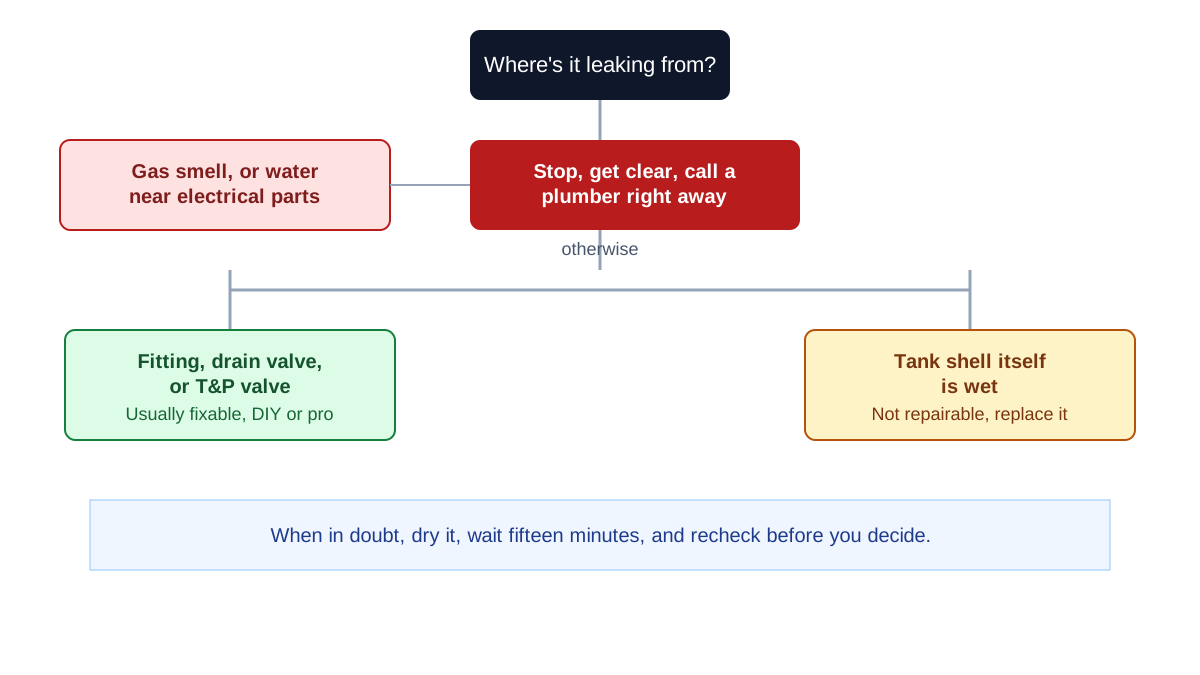
Gas smell or water near electrical parts means stop and call a plumber immediately; otherwise, the leak location decides the fix.
Fixes most homeowners can handle: tightening a loose fitting with the correct wrench, replacing a worn drain valve, an inexpensive part at any hardware store, though shutting off and draining the tank first is non-negotiable, and swapping a failed T&P valve, which threads in and out like any other fitting once the tank is drained below its level. None of these require a permit, and our brand-specific repair guides for the major tank makers walk through each one step by step.
Fixes that call for a licensed plumber: anything involving the gas line or gas control valve, any repair on a tankless unit's internal components, our tankless water heater troubleshooting guide covers those separately, recurring T&P discharge that turns out to be a thermal expansion problem requiring a new expansion tank plumbed into the cold supply line, and full tank replacement. A plumber pulling the permit, sizing the new unit correctly, and bringing the venting and gas connections up to current code earns the labor cost on a job like that.
If you've worked through the diagnosis above and landed on "the tank itself," or you're just not confident doing the repair yourself, a licensed plumber that serves your area, reachable at 888-854-0126, can confirm the diagnosis and quote the job on the spot. Before that plumber touches a gas or water line, verify the license is current with your state's plumbing licensing board and ask the company to email a certificate of liability insurance directly from their carrier, not just a verbal yes; our guide to choosing a licensed plumber covers the rest of what to check. For a look at how these leaks fit into the brand you actually own, our repair guide by brand breaks down Rheem, A.O. Smith, and Bradford White specifics.
What It Costs: Repair vs. Replacement
If the leak traces to a part, not the tank, the repair itself is cheap: a drain valve or T&P valve is a low-cost item at any hardware store or plumbing supply house. What we don't have solid national data for is the labor-only cost of a single-part repair call, since most published cost surveys track full replacement, not a five-minute valve swap. Expect a plumber's standard service-call minimum plus that small part cost, and always get a written estimate before work starts. If you searched water heater leak repair cost expecting one specific number, that gap is exactly why: most of what's published, including the figures below, covers replacement, because that's the job homeowners actually hire out.
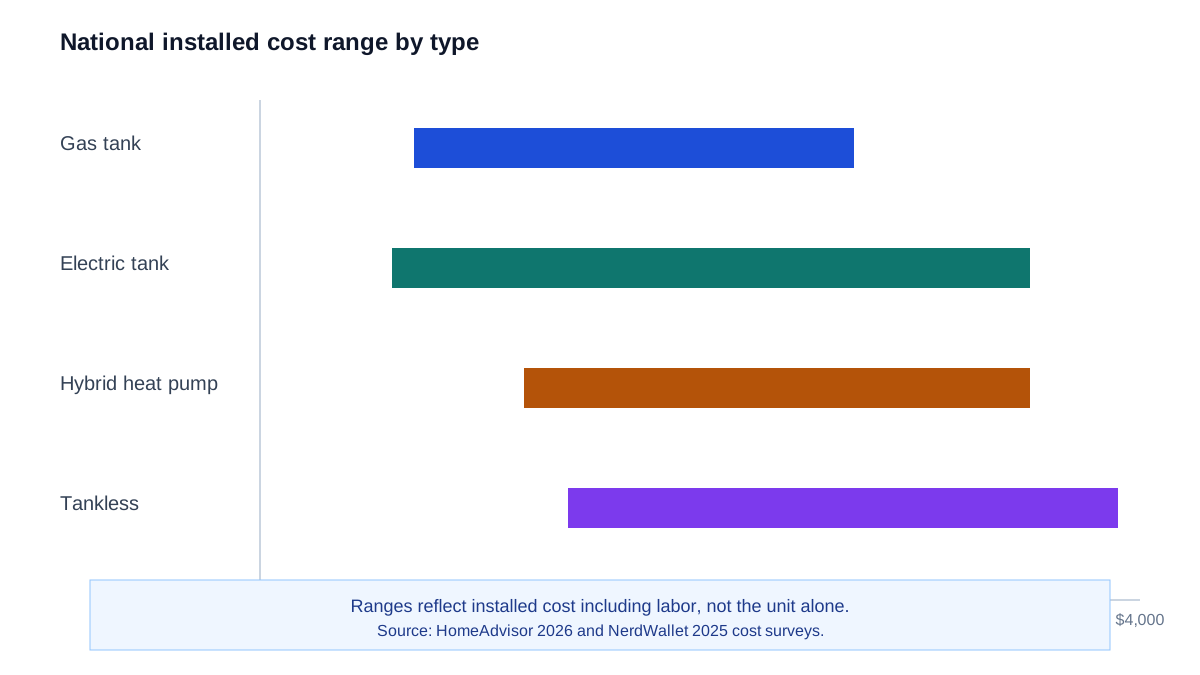
Replacement is where solid national data exists. The national average for a full water heater replacement is $1,347, with most homeowners landing between $881 and $1,825, according to HomeAdvisor's 2026 cost survey. An independent survey from Bob Vila puts the average slightly lower at $1,293, with a typical range of $874 to $1,765, close enough to the HomeAdvisor figure that both make a reasonable planning range. Both are researched ranges pulled from national contractor-cost surveys, not a quote for your specific tank, fuel type, or access, the only number that's actually binding is a written estimate from a local, licensed plumber who has seen the job.
Job type
Typical installed range
What moves the price
Source
Tank replacement (national average)
$600 - $2,500 (avg. $1,347)
Tank size, fuel type, permit, access
HomeAdvisor, 2026
Tankless replacement
$1,400 - $3,900
Unit capacity, venting and electrical upgrades
NerdWallet, 2025
Gas tank unit
$700 - $2,700
Venting type, gas line condition
HomeAdvisor, 2026
Electric tank unit
$600 - $3,500
Amperage and wiring upgrades
HomeAdvisor, 2026
Hybrid heat pump unit
$1,200 - $3,500
Clearance and drainage requirements
HomeAdvisor, 2026
Installation labor only (tank)
$150 - $450
Old unit removal, access, local labor rate
HomeAdvisor / NerdWallet
Permit
$25 - $300
Local jurisdiction
HomeAdvisor, 2026
Expansion tank add-on
$90 - $350
Required where code mandates one
HomeAdvisor, 2026
How we got these numbers: both figures above come from independently run national contractor-cost surveys, not one company's job data, and they land close enough to each other, $1,347 versus $1,293 average, that the overlap is a reasonable planning range. Neither survey breaks out cost by city or region, so treat these as a national starting point: your real number varies by region, by how easy the tank is to reach, and by what a plumber actually finds once the old unit is disconnected and pulled, a rotted shutoff valve or a water-damaged subfloor under the tank adds cost no national average predicts. Local labor rates, permit fees, and code requirements like a mandatory expansion tank can move your actual number in either direction; a written estimate from a local, licensed plumber is the only way to pin down your real cost, and our full water heater replacement cost guide breaks the tank-versus-tankless decision down further.
Installed replacement cost ranges by water heater type, from HomeAdvisor and NerdWallet cost surveys.
Is This an Emergency? Safety First
Most leaking water heaters are not emergencies. A slow drip from a fitting can wait for a same-day or next-day appointment. A couple of situations change that.
Gas smell. If you smell gas anywhere near the water heater, on top of or instead of finding a water leak, that changes everything. If you smell gas near the water heater, do not flip any switches, do not light anything, leave the house, and call your gas utility or 911 from outside before you call a plumber. Gas leaks and water leaks sometimes show up together, since a corroding tank can also loosen the gas line fitting feeding the burner.
Electric units and standing water. If you have an electric water heater and water is pooling anywhere near the breaker panel, outlets, or the unit's own electrical connections, shut off power at the breaker before you do anything else, even before you grab a towel. Don't touch the unit, the water, or the breaker with wet hands.
Outside of those two situations, a leaking water heater is inconvenient, not dangerous. If the leak is active and won't stop, or you can't tell condensation from a real problem, a plumber that serves your area, reachable at 888-854-0126, can talk you through what to check while they're on the way. Meanwhile, close the cold water supply valve on top of the tank to stop feeding the leak, and set a bucket or towels under the affected point to protect flooring.
One more note on scale: a full 40- to 50-gallon tank emptying onto a finished floor is a real water-damage event, not just an annoyance. If you're dealing with standing water beyond what a bucket and towels can manage, our guide on when you actually need an emergency plumber covers the decision between an after-hours call and one that can wait until morning.
Is a Leaking Water Heater Covered by Insurance?
This is one of the most common questions we get, and the honest answer is: it depends on what caused the leak and what it damaged, not on the fact that a water heater leaked at all.
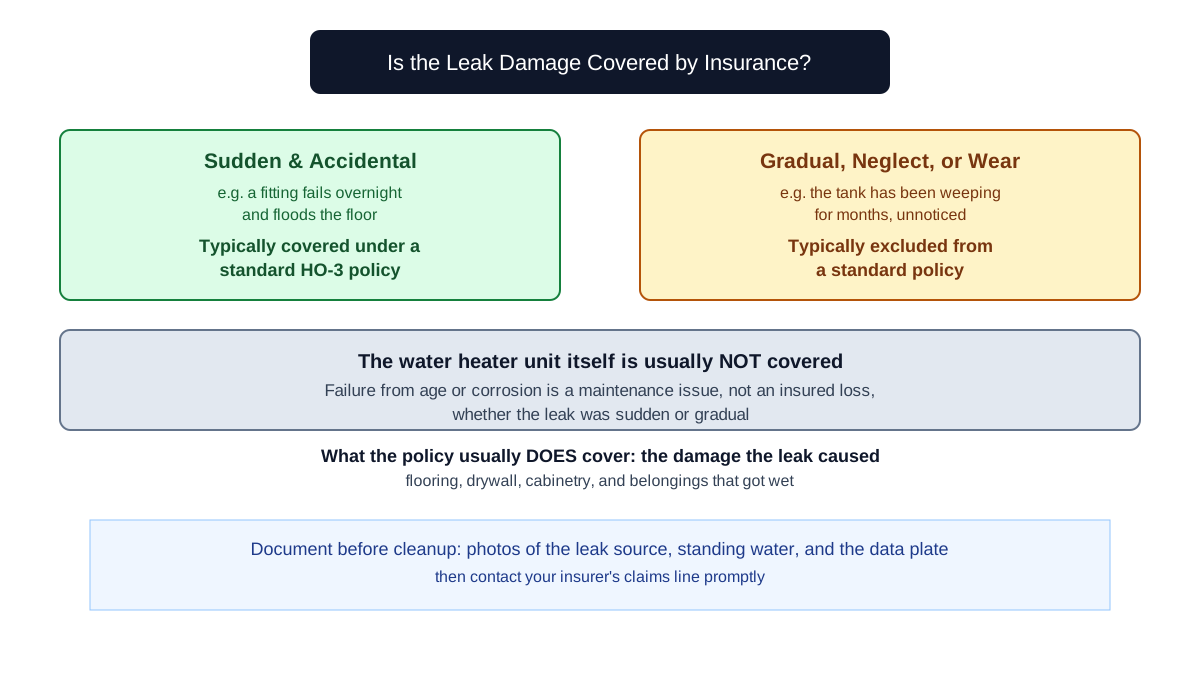
A standard HO-3 homeowners policy typically covers sudden and accidental water damage, think a fitting that let go overnight and soaked the flooring below, but typically excludes damage from gradual leaks, neglect, or normal wear. If your tank had been weeping slowly for months and you're only now noticing water-stained subfloor, an adjuster may treat that as a maintenance issue rather than a covered loss. If a fitting failed suddenly and flooded a room overnight, that's much more likely to be covered.
The water heater unit itself is a separate question from the water damage it caused. Most policies don't cover replacing a water heater that failed from ordinary age or corrosion any more than they'd cover a worn-out refrigerator; appliance failure is generally treated as a maintenance expense, not an insurable event. What the policy is far more likely to cover is the damage the leak caused to your home: flooring, drywall, cabinetry, and any belongings that got wet.
If you think you have a covered claim, document everything before you clean up: photos of the standing water, the source of the leak, and the tank's data plate, plus a written timeline of when you first noticed it. Contact your insurer's claims line promptly, since most policies set a reasonable-notice expectation even without a hard deadline. For a plain-language overview of what a standard homeowners policy does and doesn't cover, the Insurance Information Institute is a solid starting point (see sources below).
Coverage usually turns on how the leak happened, not on the fact that a water heater leaked — the unit itself is rarely covered regardless.
How to Stop It From Leaking Again
A little maintenance goes a long way toward keeping a tank leak-free for its full service life, and none of it requires more than an hour a year.
Flush sediment periodically. Draining a few gallons from the drain valve a couple of times a year keeps mineral buildup from insulating the bottom of the tank or clogging the valve itself.
Check the anode rod. This sacrificial rod is designed to corrode instead of the tank; once it's mostly gone, the tank starts absorbing the corrosion in its place. Pulling it for a look every few years, sooner in homes with a water softener or naturally aggressive water, catches this before it becomes a leak.
Test the water pressure at a hose bib. Most tanks and fittings are rated for up to 80 psi; sustained pressure above that stresses every fitting and valve in the system, not just the tank. A pressure-reducing valve at the main, if you don't already have one, is a one-time fix.
Install an expansion tank if your home has a check valve or backflow preventer at the meter and doesn't already have one; new installs often require this by code for exactly this reason.
Don't set the thermostat needlessly high. The Department of Energy's recommended setting is 120 degrees Fahrenheit, hot enough for normal household use; beyond the scald risk, a hotter tank works its components harder and shortens fitting and valve life.
None of this is complicated, and most of it fits naturally into the kind of seasonal walkthrough covered in our plumbing maintenance checklist, which covers the rest of the house, not just the water heater.
Regional Notes: Freeze-Thaw, Hard Water, and Humidity
A water heater in Minneapolis and a water heater in Miami fail for genuinely different reasons, and where you live changes both what to watch for and how urgent a "small" leak really is.
In colder regions, especially the northern tier and Appalachians where freeze-thaw cycling is frequent through the winter, patterns NOAA's U.S. Climate Normals track by region, water heaters are more often installed in unheated basements, garages, or crawlspaces, where standing water in an exposed fitting or supply line can freeze solid once the pipe itself drops to 32 degrees Fahrenheit and crack it, even if the tank itself is fine. If your leak shows up in the first cold snap of the season, check the pipe on the cold inlet side before you blame the tank.
Regions with hard water, meaning water with high mineral content, see sediment build up faster, drain valves clog more often, and tanks tend toward earlier corrosion-driven failure. If you're on well water or a municipal supply known locally for scale buildup, you'll usually already know from your kettle or showerhead, and shortening the interval on the sediment flush and anode rod check described above matters more than in a soft-water area.
Hot, humid climates along the Gulf Coast and Southeast see more condensation false alarms, especially in an unconditioned garage or closet in summer, so the dry-it-and-recheck step in the diagnosis section above is worth doing carefully before you assume the worst. Humid climates also mean any actual water intrusion around a water heater dries more slowly, which raises the mold risk if a real leak goes unnoticed for more than a day or two.
Climate factor
Effect on water heaters
What it means for you
Frequent freeze-thaw cycling
Cracked fittings and supply lines near the tank
Check pipe insulation before the first hard freeze each year
Hard water, high mineral content
Faster sediment buildup, quicker anode rod consumption
Flush and inspect more often than the general schedule above
High humidity
More condensation false alarms; slower drying if a real leak occurs
Confirm with the dry-and-recheck test; don't let a real leak sit
Coastal or high-corrosion air
Faster exterior and fitting corrosion, especially on outdoor or garage units
Inspect fittings and connections more frequently
None of this changes the diagnosis steps above, but it does change how much benefit of the doubt to give a "probably just condensation" leak in your specific climate.
Frequently asked questions
What do I do if the water heater is leaking?+
Shut off the power at the breaker for electric units and close the cold water supply valve on top of the tank first, then find the exact source with a dry towel and a few minutes of waiting. If it's a loose fitting, a plumber or a confident DIYer can often fix it same day. If water is coming from the tank body itself, treat it as a replacement, not a repair.
Is a leaking water heater an emergency?+
Usually not, unless you smell gas or standing water is reaching electrical outlets or a breaker panel, both of which mean act immediately. A slow drip from a fitting can safely wait for a same-day or next-day appointment. Close the cold water supply valve to slow or stop the leak while you decide, and keep an eye on how much water is accumulating.
Is a leaking water heater covered by insurance?+
Sometimes, and it depends on the cause. Sudden, accidental water damage from a failed fitting is more often covered under a standard HO-3 policy; a slow leak from age, neglect, or gradual wear is usually excluded, and the water heater itself is rarely covered as an appliance failure. The water damage it caused is the more likely covered piece, not the unit.
Is a leaking water heater fixable?+
It depends entirely on where the leak is. A leak from a fitting, the drain valve, or the pressure relief valve is fixable, often cheaply. A leak from the tank's steel shell itself is not repairable and means replacement, regardless of the tank's age or how minor the leak looks right now.
Where do water heaters leak from?+
Most commonly from three places: the inlet or outlet fittings at the top, the temperature and pressure relief valve and its discharge pipe, and the drain valve or tank shell at the bottom. Top leaks tend to be loose connections; bottom leaks from the tank body itself usually mean internal corrosion has broken through the steel.
Why is my water heater leaking from the bottom?+
Most often it's either a loose or worn drain valve, an easy and inexpensive fix, or corrosion that has breached the tank's steel shell, which isn't repairable. Dry the area completely, wait about fifteen minutes, and check whether the water is coming from the valve specifically or seeping from the tank itself with no fitting nearby to explain it.
Why is my water heater leaking from the pressure relief valve?+
Usually one of two reasons: the valve is doing its job and relieving genuine excess pressure or temperature, often because a closed plumbing system lacks an expansion tank, or the valve itself has worn out and needs replacing. Occasional discharge during a heating cycle can be normal; continuous dripping or flow means it needs attention.
Do water heaters leak when they go bad?+
Yes, in most cases a leak from the tank body is the first visible sign that a water heater has reached the end of its service life, not an early warning that gives weeks of notice. Once the internal lining and anode rod have worn through, corrosion reaches the steel tank itself and a leak typically follows within a short window.
Is a leaking water heater dangerous?+
Rarely on its own, but two situations make it genuinely dangerous: a gas smell alongside the leak, which points to a possible gas leak and needs immediate action, and standing water reaching electrical components on an electric unit. Outside of those, a leaking water heater is a plumbing and property-damage problem, not a safety emergency.
Why does my water heater keep leaking?+
If you've fixed a fitting once and it's leaking again, or a new leak keeps appearing somewhere else on the tank, that pattern usually points to age-related corrosion spreading through the tank rather than a series of unrelated small failures. At that point, chasing individual leaks costs more over time than replacing the unit.