No hot water almost always traces back to one of a handful of causes: a tripped breaker or reset button on an electric unit, a dead pilot light or thermocouple on a gas unit, or an error code and blocked flow sensor on a tankless model. Whole-house outages point to the water heater itself; hot water missing at just one faucet usually means a mixing valve or a crossed line. Work through the checks below before you call anyone.
You turn the tap and get a shot of cold water when you expected hot, or the shower goes icy halfway through and never comes back. No hot water is one of those problems that feels urgent the moment it happens but is rarely a true emergency, unless you smell gas, in which case skip everything below and get out of the house first.
This guide walks through what's actually happening inside a water heater when hot water stops, how to tell an electric unit's problem from a gas unit's problem from a tankless unit's problem, what you can safely check yourself, and what a licensed plumber needs to take over. We'll also cover what repairs and replacements typically cost nationally, when a failing water heater becomes a safety issue instead of an inconvenience, and how climate and water quality change the picture depending on where you live.
None of the numbers here are invented. Every dollar figure comes from named cost-survey publishers, cited in the table below and in the sources list at the end.
What "No Hot Water" Actually Means
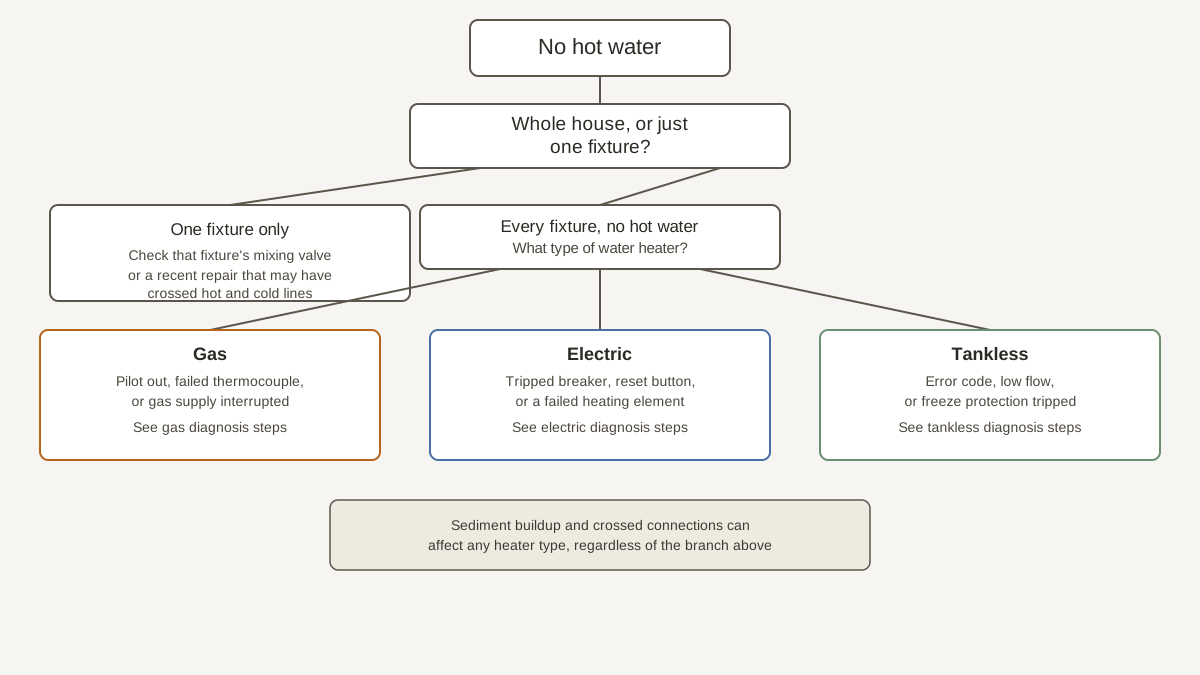
Start with whole-house versus single-fixture, then narrow by heater type.
A water heater's whole job is to take incoming cold water and raise its temperature before it reaches a fixture. When that stops, the failure is happening in one of three places: the heat source itself (a burner, a heating element, or a heat-pump compressor), the control system that tells the heat source to fire (a thermostat, a control board, an igniter), or the plumbing around the unit (a valve, a cross-connection, a supply-line freeze). Figuring out which one you're dealing with is most of the battle.
Start by narrowing the pattern. No hot water in house-wide, every faucet, every fixture, cold no matter how long you run it, almost always means the water heater itself has stopped producing heat. That's different from hot water missing at a single sink or shower while the rest of the house is fine, which usually points to something local: a single-handle faucet's mixing cartridge stuck toward cold, a shutoff valve under that fixture only partly open, or in older houses, hot and cold supply lines that got crossed during a past repair.
The timing matters too. Hot water suddenly stopped working after functioning normally an hour earlier usually means something snapped, tripped, or went out: a blown thermal fuse, a tripped high-limit switch, a pilot light that got blown out, an error code that shut a tankless unit down. A slower fade, where showers get shorter and lukewarm before disappearing entirely over days or weeks, points more toward sediment quietly burying a heating element or burner, or a failing part that's losing capacity rather than one that died all at once.
One more distinction worth making early: are you dealing with a tank (gas or electric), a tankless unit, or a boiler-fed system where an indirect tank or a combi boiler supplies your hot water? A boiler-fed setup with no hot water often has heat but no hot water for the taps, which is a different fault path than either kind of standalone water heater and is worth flagging to whoever you call, since it changes what they bring on the truck.
Why Your Hot Water Stopped, Ranked by Likelihood
The list below is ordered by how often each cause turns out to be the culprit, split by heater type, based on the failure points a plumber actually checks first.
If You Have an Electric Water Heater
Electric water heater no hot water complaints trace back to one of five points, in roughly the order a plumber would check them:
A tripped breaker, or a tripped high-limit reset switch (the small red button behind the upper access panel), the single most common cause.
A failed upper heating element, which usually means you get a burst of lukewarm water and then nothing.
A failed lower heating element, which usually means the tank stays warm at the top but runs out fast.
A bad upper or lower thermostat that's no longer telling an otherwise-working element to fire.
A loose or corroded wire connection at an element terminal, often after other work was done nearby.
If You Have a Gas Water Heater
Gas units fail differently, and the causes below explain most no-heat calls:
The pilot light is out (standing-pilot models). It's simple to check, and sometimes simple to fix.
A failing thermocouple or flame sensor, the small safety probe that senses the pilot flame; when it wears out, the pilot lights but won't stay lit.
Gas supply interrupted: a manual valve bumped closed, a utility-side shutoff, or an empty propane tank on rural systems.
A failed gas control valve or igniter on electronic-ignition models, often signaled by a blink code on the control panel.
A blocked burner or vent restricting combustion air, which can also be a safety issue, not just a comfort one.
If You Have a Tankless Water Heater
Tankless units fail on a different set of triggers, almost always visible as a code on the built-in display or companion app:
A power outage or a tripped breaker/GFCI outlet, which resets the whole unit's control board.
A gas or ignition fault throwing an error code; most manufacturers publish a code list in the install manual.
A flow sensor fouled by sediment or mineral scale, so the unit never detects that a fixture is calling for hot water.
Freeze-protection circuitry activating in cold weather, which can shut the unit down even when it isn't actually frozen.
Demand below the unit's minimum activation flow rate, so running a single low-flow fixture sometimes isn't enough to trigger ignition.
Causes That Apply to Any Type
A few causes cross every category. Heavy sediment coating the bottom of a tank can insulate the burner or lower element from the water it's supposed to heat, so a water heater not heating past a lukewarm trickle is sometimes just years of mineral buildup rather than a broken part. A crossed connection (a mixing valve installed backward, or a plumbing repair that accidentally tied a cold branch into the hot side) will mimic total failure at whichever fixture it feeds. And a Wi-Fi-enabled unit left in vacation or "away" mode, or a schedule set too low, produces the exact same symptom as a broken heater with none of the actual damage.
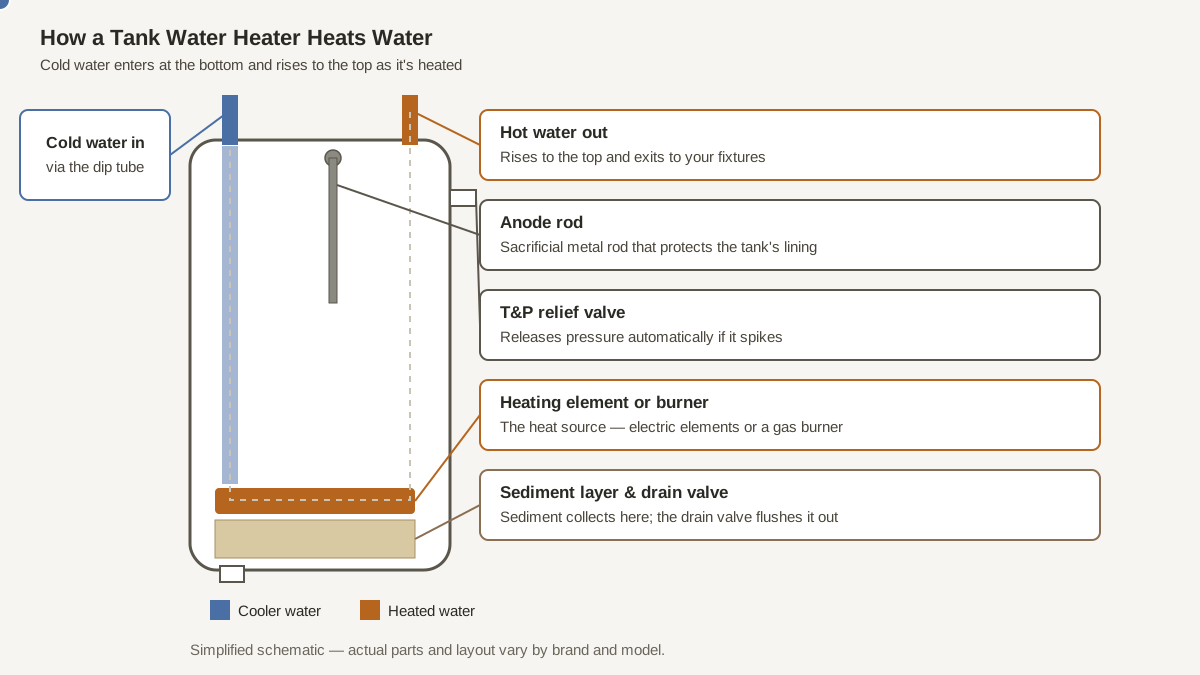
Cold water enters through the dip tube and is heated at the bottom — the same spot where sediment collects and has to be flushed out.
Diagnosing an Electric Water Heater With No Hot Water
Before you touch anything inside the access panels, shut the breaker off at the panel. Electric water heater elements run on 240 volts, and that isn't a circuit to work on live.
Check the breaker panel first. If it's tripped, reset it once. If it trips again immediately, stop: that's a short, and it needs a plumber or electrician, not a second attempt.
Find the reset button behind the upper access panel (pop the cover, move the insulation aside). If it's popped out, press it firmly. It only trips when water inside gets too hot, so a repeat trip means the upper thermostat is malfunctioning.
With the breaker off, pull each heating element's wires and test for continuity with a multimeter. No continuity means that element is dead and needs replacing.
Check both thermostats the same way, following the wiring diagram usually printed on the inside of the access panel.
If both elements test fine, look for a loose wire nut or a corroded terminal, since a connection that's carrying current but doing it badly can produce the same symptom as a dead part.
A water heater not heating at all, with a breaker that holds and a reset button that isn't tripped, usually means the upper element or its thermostat has failed outright. A unit that heats a little and then runs cold fast more often points to the lower element instead. Either job is a standard element swap for a licensed plumber, typically well under the cost of a full replacement.
Diagnosing a Gas Water Heater With No Hot Water
No Hot Water but Gas Is On? Start Here
If the stove and furnace both work, gas service to the house is fine, and the problem is local to the water heater. Work through these steps in order:
Open the lower access panel and look through the sight glass for the pilot flame. No flame means it's out.
Follow the relighting instructions printed on the tank's label — most standing-pilot models walk you through turning the gas valve to pilot, holding the igniter button, and lighting the pilot.
If the pilot lights but goes out again once you release the button, that's almost always a worn thermocouple or flame sensor, not something to keep re-attempting.
Confirm the manual gas shutoff valve on the line to the heater is fully open (handle parallel to the pipe, not perpendicular).
On electronic-ignition models with no visible pilot, check the control panel for a blinking status light and match it against the code chart on the unit or in the manual.
One safety note before you go further: if at any point you smell gas rather than just seeing no flame, stop the checklist. That's covered in the safety section below, and it changes who you call and in what order.
Diagnosing a Tankless Water Heater With No Hot Water
Tankless units are more electronic than mechanical, so diagnosis starts at the display, not the access panel.
Read the error code on the unit's screen or companion app. Manufacturers publish code charts in the install manual; a quick search of the exact code and model number usually tells you whether it's user-resolvable or not.
Confirm power: check the breaker for electric models, and confirm the outlet or hardwired connection is live for the control board on gas models.
Run a fixture at a higher flow than usual — some units won't ignite below their minimum activation flow rate, and a single low-flow faucet can fall under that threshold.
In cold weather, check whether freeze-protection mode has activated; some units shut down hot-water production while running a heater element just to keep internal components from freezing.
If the unit is more than a couple of years old and hasn't been descaled, mineral buildup on the flow sensor is a common, fixable cause — see our tankless water heater problems guide for brand-specific descaling steps.
Tankless troubleshooting is where DIY limits show up fastest: opening the unit's casing, working on the gas venting, or replacing an internal sensor is manufacturer-specific work that can void a warranty if it's done wrong, so treat the steps above as information to bring to a plumber rather than a full repair path.
Fixes: What You Can Try Yourself, and What Needs a Plumber
Use the table below to match what you're seeing to what's reasonable to try yourself.
What You're Seeing
Likely Cause
DIY-Safe?
Typical Next Step
Breaker tripped once, resets and holds
Power surge or an aging element drawing more than it should
Yes, reset and monitor
If it trips again, call a plumber
Breaker trips again immediately
Shorted heating element or wiring
No
Call a plumber for element/wiring replacement
Pilot won't stay lit
Failing thermocouple or flame sensor
Limited: 1-2 relight attempts only
Call a plumber for thermocouple replacement
Rotten-egg or gas smell near the unit
Gas leak
No, evacuate
Leave the house, call the gas utility, then a plumber
Tankless unit displays a repeating error code
Varies (flow sensor, ignition, or venting)
Depends on the code
Check the code chart; call a plumber if it repeats
Tank is leaking water at the base, unit is old
Internal tank failure
No
Replacement, not repair; call a plumber
Once you've narrowed things down, a licensed plumber can confirm the diagnosis and put it in writing before doing any work; you can reach a plumber that serves your area at 888-854-0126. Before anyone starts work, it's worth a minute to verify that license is current with your state's licensing board and ask to see proof of active liability insurance — a plumber in good standing has both ready without hesitation, and it's what protects you if something goes wrong mid-job. Ask specifically what credentials to look for and what a written estimate should include before that call; our guide on how to choose a licensed plumber covers both.
If your unit is a Rheem, A.O. Smith, or Bradford White, access panels and part numbers vary enough between brands that it's worth a look at our water heater repair by brand guide before you order a part that turns out to be the wrong one.
What It Costs to Fix or Replace a Water Heater
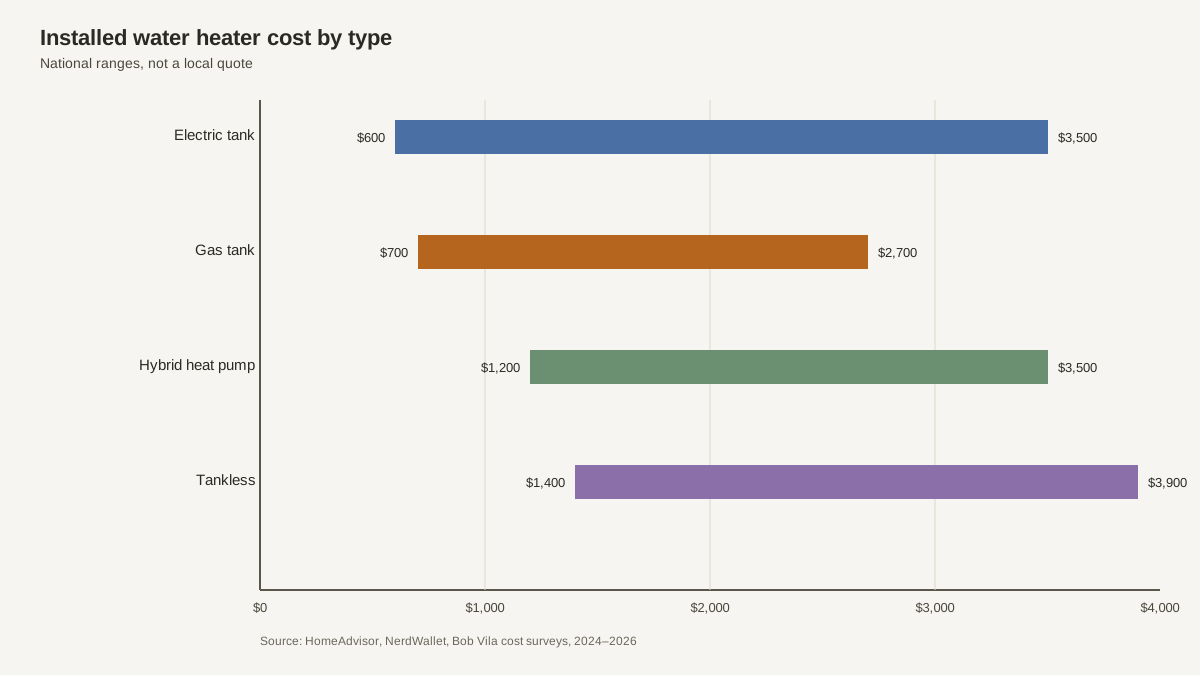
Installed cost ranges by water heater type (national, 2024–2026 survey data).
How we got these numbers: the ranges below come from three independent cost-survey publishers: HomeAdvisor, NerdWallet, and Bob Vila, each pulling from contractor-reported job data. These are researched ranges, not a quote for your house — the number that actually binds anyone is a written estimate from a licensed local plumber who has seen the unit, not a figure printed in a guide. This guide isn't tied to one city or region, so there's no local price index to apply; the final price varies by region, by how hard the unit is to access, and by what a plumber finds once the job is actually open, so treat these as national starting points and get a written local quote before you commit to anything.
For context, NerdWallet's data shows a big-box retailer's installed average running $1,950 for a tank swap and $4,300 for tankless, higher than the general market range above, which is worth knowing before you assume a retailer quote is the going rate. Tank size swings the number on its own: HomeAdvisor's data puts a 40-gallon replacement as low as $800 and a 75-gallon unit as high as $4,000, before anything about access or hidden damage adds to the job. For a longer breakdown by tank size and fuel type, see our water heater replacement cost guide.
None of our source surveys break out repair-only costs (a single element, thermocouple, or gas valve) separately from full replacement, so we won't invent a number for that here. In practice a repair is a fraction of a full replacement, usually a service call plus one part, but the only way to know your real number is a written estimate from a plumber who has looked at your specific unit.
If the failure caused a leak or water damage elsewhere in the house, it's worth checking your homeowners policy before you pay out of pocket; the Insurance Information Institute has a plain-language overview of what a standard policy typically covers and excludes.
Safety Signs and When to Call a Plumber Right Now
Most no-hot-water problems are inconveniences, not emergencies. A handful of signs change that.
If you smell gas anywhere near the water heater, stop troubleshooting immediately, get everyone out of the house, and call your gas utility's emergency line from outside before you call anyone else. Don't flip light switches, don't try to relight anything, and don't go back in until the utility or fire department clears the building.
Carbon monoxide is the quieter version of the same risk. A gas water heater that's venting improperly can produce it without any smell at all — headache, dizziness, or nausea that improves when you leave the house and returns when you're back near the unit are warning signs, not something to wait out. The CDC has more on recognizing and preventing carbon monoxide exposure at home.
Electrically, a breaker that trips repeatedly, a burning smell near the access panel, or visible scorching at a wire connection means stop resetting it and call a plumber or electrician. A tank leaking water at its base — as opposed to condensation on the outside — usually means the inner tank has failed, which is a replacement job, and letting it sit risks a bigger leak and water damage to the floor below.
Short of those signs, it's reasonable to spend 20 to 30 minutes working through the checks above yourself. Once you're past that — or once you hit a step that involves opening a gas valve assembly, working inside a tankless unit's casing, or anything electrical beyond a breaker and a reset button — a plumber that serves your area can take it from there; that's what 888-854-0126 is for.
How to Keep This From Happening Again
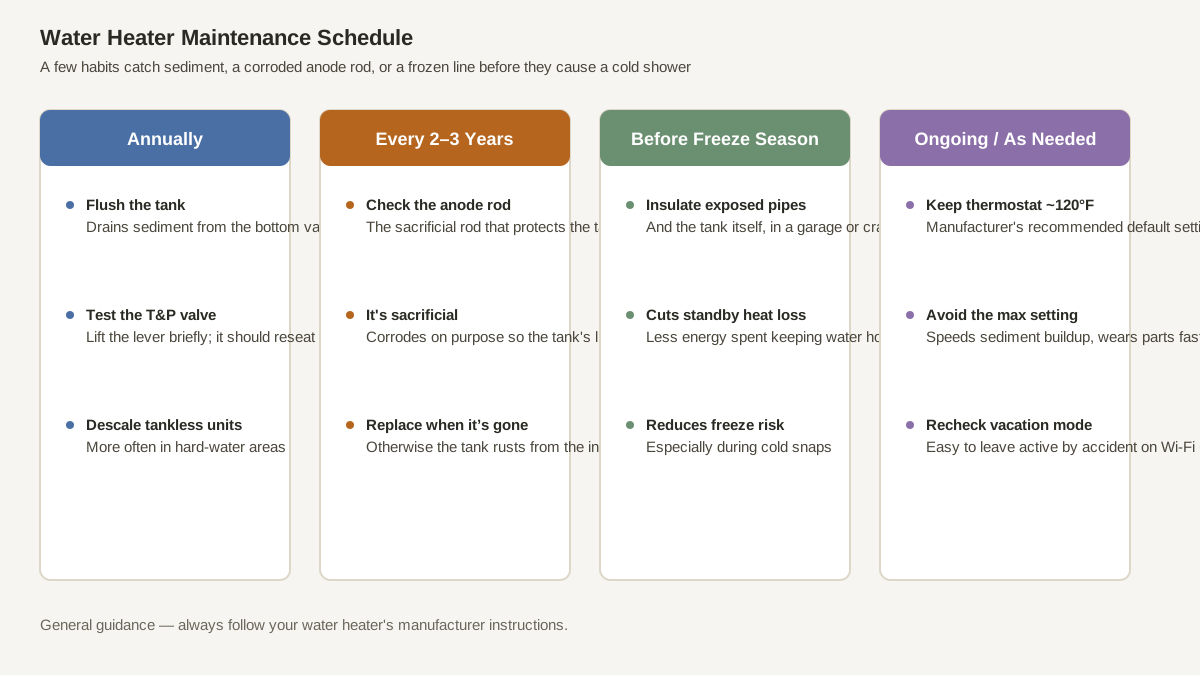
A handful of maintenance habits catch most of the causes above before they turn into a cold shower.
Flush the tank annually. Draining several gallons from the bottom drain valve once a year clears out sediment before it buries a heating element or burner. Tankless units need a similar descaling flush, more often in hard-water areas.
Test the temperature-and-pressure relief valve once a year by lifting the test lever briefly — it should release a burst of water and reseat cleanly. Standard T&P valves are built to open automatically once tank temperature passes roughly 210°F or pressure passes about 150 psi, both well past normal operating range, so a valve that won't reseat after a manual test needs replacing, not monitoring.
Check the anode rod every couple of years on a tank unit. This sacrificial metal rod corrodes on purpose so the tank's steel lining doesn't; once it's mostly gone, the tank starts rusting from the inside.
Insulate exposed pipes and the tank itself if the unit sits in a garage, crawlspace, or unconditioned utility room — it cuts standby heat loss and reduces freeze risk in cold snaps.
Keep the thermostat at the manufacturer's recommended setting — commonly around 120°F on factory defaults — rather than turned to maximum; besides scald risk, running hotter than necessary accelerates sediment formation and wears components faster.
Double-check any "vacation" or schedule setting on a Wi-Fi-enabled unit after using it — it's an easy thing to leave active by accident.
Our seasonal plumbing maintenance checklist covers these alongside the rest of a home's plumbing on a schedule, if you'd rather batch it with everything else.
A simple maintenance schedule that catches most causes of no hot water before they happen.
Regional Notes: Freeze Belt, Hard Water and Storm-Prone Areas
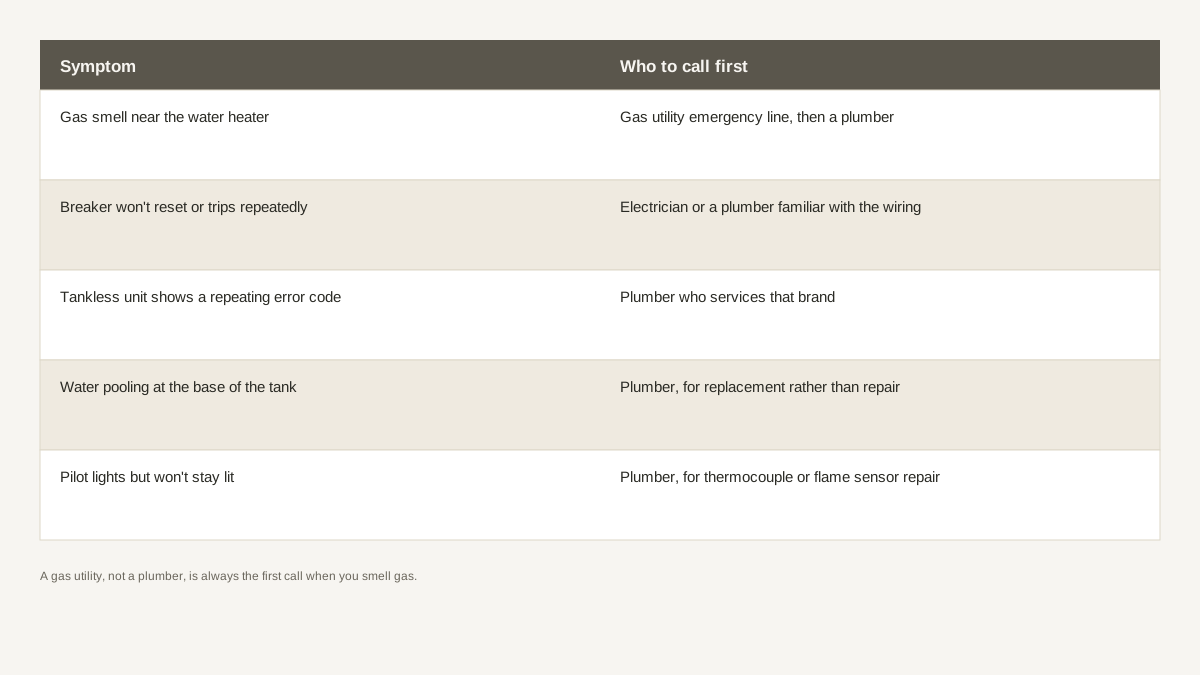
Match the symptom to who handles it first.
Where you live changes which cause on the list above is most likely.
Region
Main Risk
What to Do
Freeze belt (Upper Midwest, Northeast, Mountain West)
Supply lines or a garage-mounted unit freezing before the heater itself fails
Hard-water regions (much of the Southwest and parts of the Midwest)
Faster sediment and scale buildup, more frequent tankless flow-sensor clogging
Flush more often than the annual minimum; consider a whole-house softener or filter
Coastal and storm-prone areas (Gulf and Atlantic corridors)
Flood risk to ground-level or basement-installed units
Raise the unit on a stand where local code allows; after any flooding, have both a plumber and an electrician inspect before re-energizing it
In freeze belt states, a water heater installed in an unheated garage or an exterior utility closet is far more exposed than one in a conditioned basement — water freezes at 32°F, and an exposed supply line sitting at or below that for even a few hours can block flow to the unit before the heater itself has done anything wrong — and a tankless unit's freeze-protection circuitry can shut down hot water production as a protective measure even when nothing is actually broken, worth remembering before you assume the unit itself has failed. Hard water doesn't just mean more sediment; it means the same failure points above happen sooner and more often, so a maintenance schedule that's fine in one region can be too sparse in another. And in hurricane-prone coastal areas, the Ready.gov guidance on preparing utilities for severe weather is worth reading before storm season, not after a unit has already been underwater.
Frequently asked questions
Who do I call if I have no hot water?+
Start with a licensed plumber once you've ruled out a simple breaker trip or an easy pilot relight — they can diagnose gas, electric, and tankless units alike. If you smell gas, call the gas utility's emergency line first and evacuate; the plumber comes after the gas company clears the appliance, not before.
What causes no hot water in the house?+
Whole-house outages usually come from the water heater itself: a tripped breaker or reset switch on electric units, a dead pilot or thermocouple on gas units, or an error code on tankless models. Heavy sediment buildup and a crossed hot/cold connection can also cause it regardless of heater type.
Why did my hot water suddenly stop working?+
A sudden stoppage, as opposed to a slow fade, usually points to something that tripped or failed outright rather than wore down gradually — a tripped high-limit switch, a blown pilot light, or a tankless unit throwing an error code. Check the breaker panel and pilot window first; both take under a minute.
Does no hot water mean my pipes are frozen?+
Not usually — frozen pipes typically cause reduced or no water flow at all, hot and cold, not just missing hot water with normal cold-water pressure. If only hot water is affected and cold still runs fine, the water heater or its controls are the more likely cause, though a frozen line specifically feeding the heater is possible in a hard freeze.
What should I check first when I have no hot water?+
Check the breaker panel for an electric unit or the pilot light window for a gas unit first — those two checks resolve a large share of no-hot-water calls in under a few minutes. For a tankless unit, check the display for an error code and confirm the breaker or power connection is live.
Why is there no hot water at my kitchen sink but it's fine elsewhere?+
A single fixture with no hot water while the rest of the house is normal points to something local to that fixture, not the water heater — most often a single-handle faucet's mixing cartridge stuck toward cold, or a partly closed shutoff valve under that sink. A plumber can usually resolve this without touching the water heater at all.
How do I fix no hot water in an apartment?+
If you don't own the water heater, contact your landlord or property manager first — most leases make hot water their responsibility to repair, and many states set a timeline for how fast they must respond. If the unit is in-unit and you're allowed to troubleshoot, the same breaker and pilot checks in this guide apply.
Does no hot water make a rental uninhabitable?+
Habitability standards vary by state and city, so there's no single national answer, but a prolonged, unaddressed loss of hot water is treated as a habitability issue in many jurisdictions. Document the date it started and every request you make to the landlord in writing, and check your local housing authority for the specific standard where you live.
How do I fix no hot water from a boiler-fed system?+
A combi boiler or an indirect tank fed by a boiler fails differently than a standalone water heater — heat can keep working while hot water for the taps stops, often due to a diverter valve, a plate heat exchanger, or a low-water cutoff issue. This is specialized work; describe the symptom clearly (heat works, hot water doesn't) when you call a plumber.
What does no hot water mean during an Airbnb or short-term stay?+
If you're a guest, contact the host or property manager directly rather than troubleshooting someone else's water heater — most platforms also have a way to report the issue and request a resolution if the host is unresponsive. If you're the host, the diagnosis steps in this guide apply the same way they would in a home you live in.