Shingle replacement can mean a handful of shingles swapped out after a storm, or an entire slope redone once patches stop matching the roof around them. A small patch job typically runs $150 to $800; hail or wind damage pushes that higher. Once shingles are missing across more than one section on an older roof, a full replacement usually beats another mismatched patch.
A missing shingle looks like a small problem from the driveway, a single dark rectangle against a field of gray or brown. Whether it stays a small problem depends on how many are gone, where they are, and how old the rest of the roof already is. Shingle replacement covers a wide range of jobs, from a roofer swapping three loose tabs in an hour to a full tear-off once so many patches have failed to match that another one isn't worth doing. Getting that distinction right, before you pay for either kind of work, is most of what this guide covers.
Below: why shingles come loose or crack in the first place, how to tell what you're actually looking at from the ground and the attic, the shingle matching problem that makes small patches look worse than the damage did, what architectural and 3-tab shingles cost to replace, what the work runs nationally with sources for every figure, when missing shingles turn into an emergency, what a standard homeowners policy will and won't pay for, and how to hire someone to do it right the first time. Every dollar figure traces to a named contractor-cost survey or industry data source, listed at the bottom of the page.
What Shingle Replacement Actually Covers
Roofers use "repair" and "replacement" loosely, so it helps to separate three different jobs that all get called the same thing. A spot repair swaps out one shingle or a small cluster, usually after a storm knocks a few loose. A slope or section replacement redoes an entire face of the roof, often because damage is concentrated there or because that's the only way to get a clean match. A full roof replacement tears off every layer, including the underlayment, and starts over. All three fall under "shingle replacement" in casual conversation, but they price and schedule nothing alike.
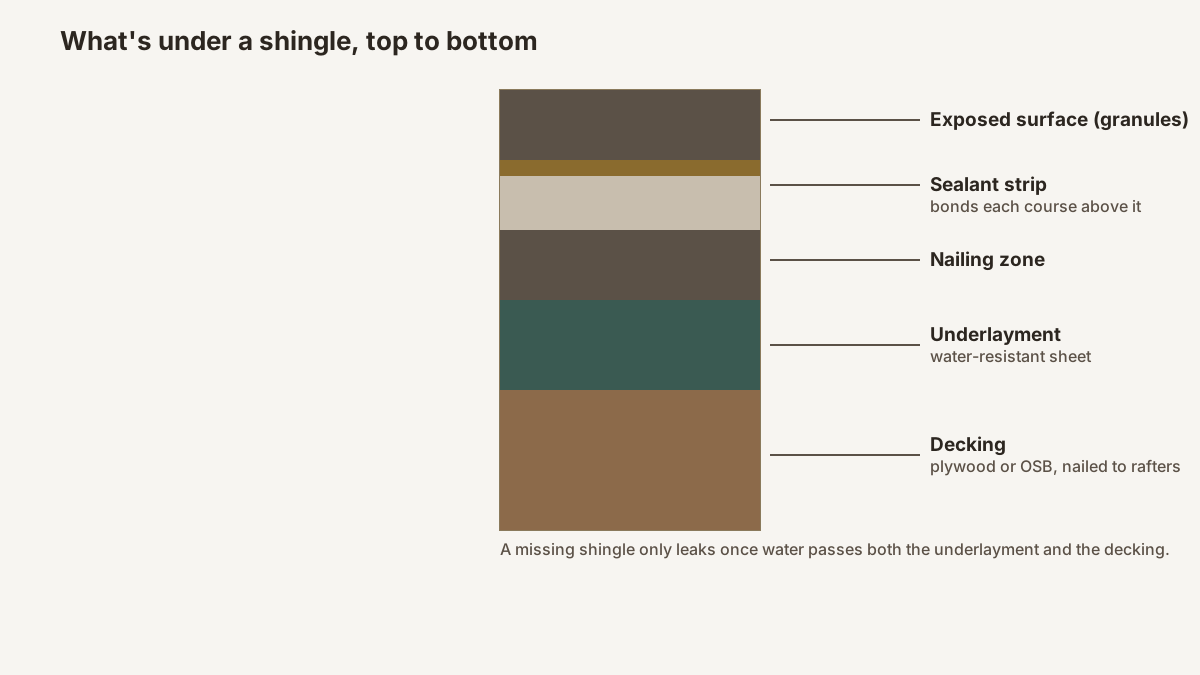
A shingle itself is a stack, not a flat sheet. A standard strip shingle runs roughly 12 inches by 36 inches, laid so each course exposes about 5 to 6 inches of that shingle to the weather while the rest is overlapped and pinned down by the course above. The exposed portion is what you see from the ground and what weathers; the sealant strip, a narrow band of adhesive that bonds each course to the one above it once sun-warmed, is what actually keeps damaged roof shingles or lifted tabs from becoming missing ones. Underneath sits the underlayment, a water-resistant sheet, and below that the decking, plywood or OSB nailed to the rafters. A missing shingle only becomes a leak once water gets past both of those lower layers too, which is why a handful of gone shingles isn't automatically an emergency, and why it isn't automatically nothing either.
What a shingle roof is made of, from the exposed surface down to the decking.
Why Shingles Go Missing or Get Damaged, Ranked by How Often It Happens
Based on how these jobs actually get called in, here's roughly the order you'll run into causes of missing shingles repair calls:
Wind uplift. Once wind gets under a tab edge, usually one where the sealant strip never bonded fully or has aged out, it can peel the shingle back and tear it loose. National data puts wind and hail together at 40.7% of homeowners insurance losses in 2022, with an average claim severity of $13,511, so this is not a rare event.
Hail bruising and cracking. Hail one inch in diameter or larger, the National Weather Service's threshold for "severe," can crack the fiberglass mat under the surface granules even when a shingle looks intact from the driveway; stones 2 inches or larger cross into the Storm Prediction Center's "significant severe" category, large enough to crack straight through the mat rather than just bruise it. The Storm Prediction Center and Insurance Information Institute logged 5,432 major hail events nationwide in 2025, essentially flat against 5,373 in 2024, concentrated in Texas (902), Kansas (375), Oklahoma (369), Nebraska (315) and Missouri (253).
Age and granule loss. Every asphalt shingle sheds granules gradually as it weathers; once bare patches show through, the mat underneath loses UV protection and becomes brittle, and shingles in that state crack or tear far more easily in ordinary wind.
Nail pops. A roofing nail driven at the wrong angle, or into a knot in the decking, can work its way back out over a few seasons of thermal expansion and contraction, breaking the seal around it and leaving that shingle loose.
Ice dam prying. In freeze-thaw climates, a ridge of ice at the eave can lever up the shingles above it as it grows, cracking tabs that would otherwise have lasted years longer.
Impact damage. A falling branch, a dropped tool during another trade's work, or foot traffic from someone walking the roof without care can crack or dislodge individual shingles with no weather involved at all.
How to Tell If You Need Shingle Replacement
Most of this you can check without getting on the roof. Work through it in order:
Walk the perimeter of the house and look up from a few different angles, ideally with binoculars, right after any storm with wind gusts or hail.
Count what's actually missing versus just lifted; a curled tab that's still attached is a different repair than a bare patch of exposed underlayment.
Check the gutters and the ground below downspouts for a buildup of granules, which look like coarse dark sand; heavy granule loss after a storm often means hail damage even where shingles look whole.
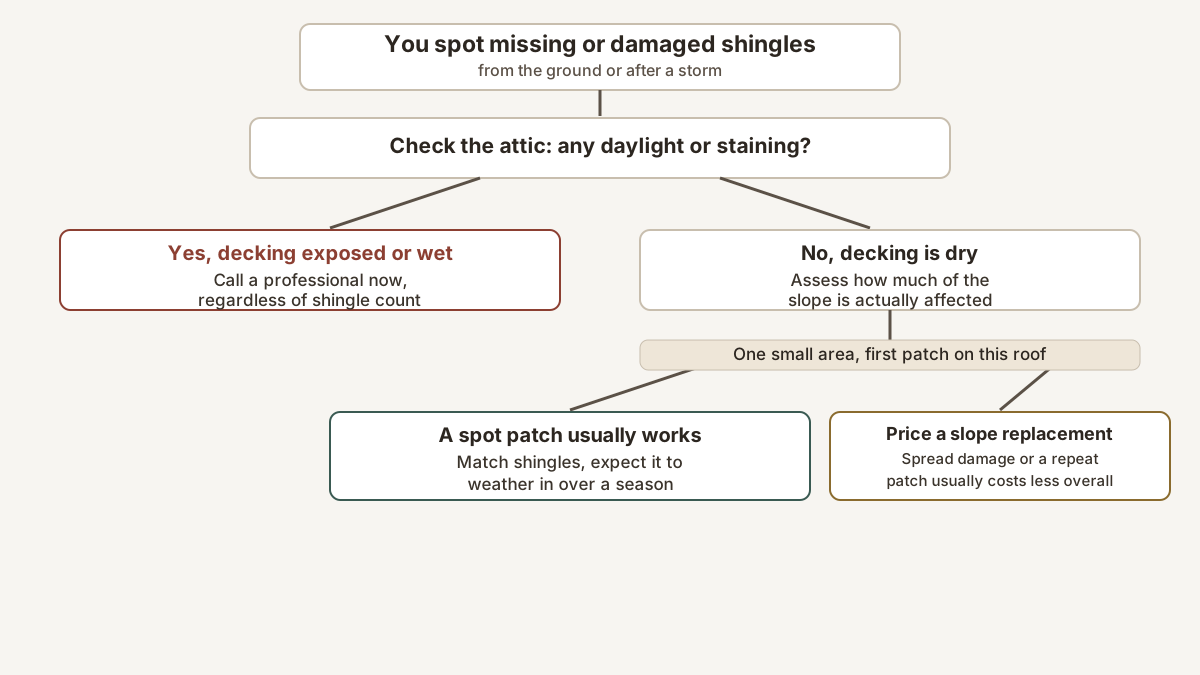
Go into the attic on a dry day with a flashlight and look for daylight coming through the decking, or staining and dampness along the rafters near where you saw missing shingles from outside.
Note how old the roof is, if you know. Shingles losing tabs regularly on a roof already well into its expected service life are a different conversation than the same damage on a roof installed five years ago.
If daylight or staining shows up in the attic, treat it like an active leak, not just cosmetic damage, and get someone out sooner rather than later.
How to decide between a spot patch and a fuller replacement.
How Many Shingles Missing Before Replacement Makes More Sense Than Repair
There's no fixed count where a patch stops being worth it; a roofer weighs it against three things instead. First, how much of a single slope is affected: a few shingles scattered across one face patch cleanly, while damage spread across most of that slope usually means redoing the whole face is faster and holds up better than a dozen individual patches. Second, whether the decking underneath is exposed or wet, since that changes the job regardless of how many shingles are missing. Third, whether this is the first patch on that roof or the fourth, because repeated patches that never quite match are often a sign the shingle line itself is near the end of what a roofer can still source. When more than one of those applies, ask for a written estimate that compares a slope replacement against another patch side by side, rather than guessing.
The Shingle Matching Problem: Why a Patch Rarely Disappears
New shingles dropped into an existing roof almost never blend in immediately, and that surprises a lot of homeowners more than the repair itself does. Asphalt shingles fade as they weather, and the rate depends on sun exposure, roof pitch, and even which slope faces south, so a roof installed even three or four years ago can already look noticeably different from shingles straight out of the bundle. This is the shingle matching problem in practice: the patch is functionally sound the day it's installed, but it reads as a lighter or duller rectangle against the surrounding field until weathering catches it up, which can take a full season or more.
Color isn't the only variable. Manufacturers produce shingles in production runs, and small color shifts between runs are normal even within the same product line, which is why a roofer trying to match a ten-year-old roof may not find an exact batch even with the identical shingle name and color. Discontinued lines make this worse; a color or profile that isn't in current production simply can't be matched, only approximated with the closest available option.
None of that changes whether the repair holds up. A well-installed patch that's slightly visible is still doing its job, keeping water out and the deck dry, and most patches blend in more with each passing season as the new shingles weather toward the rest of the roof. Where the color gap genuinely bothers a homeowner, replacing the entire visible slope, rather than chasing a match one course at a time, is usually the more satisfying fix and isn't always dramatically more expensive than several rounds of patching.
Architectural vs 3-Tab Shingles: What You're Actually Replacing
Before pricing anything, it's worth knowing which kind of shingle is already on the roof, since replacement and matching both hinge on it. 3-tab shingles are a single, flat layer with cutouts that create three even tabs per shingle, giving a uniform, repeating pattern. Architectural shingles, also called dimensional or laminated shingles, are built from two or more layers laminated together, which creates a heavier, shadow-lined look and has largely replaced 3-tab as the standard choice on new installs.
Attribute
3-tab shingles
Architectural shingles
Material cost per square (100 sq ft)
$80 – $130
$100 – $250
Typical installed cost per sq ft
$3 – $7
$4 – $6
Profile
Flat, single layer, uniform tab lines
Layered, dimensional shadow pattern
Matching an existing roof
Straightforward if the exact line is still made
Pattern variation tends to hide small color shifts better
Mixing the two on one roof, say, patching an architectural roof with 3-tab shingles because that's what a supplier had on hand, is possible but tends to be the most visible kind of mismatch there is, since the profiles read differently even before color enters into it. If a roofer suggests it as a stopgap, ask directly whether the existing shingle line is still available before agreeing.
Fixing It: What a Homeowner Can Handle and What to Hand to a Pro
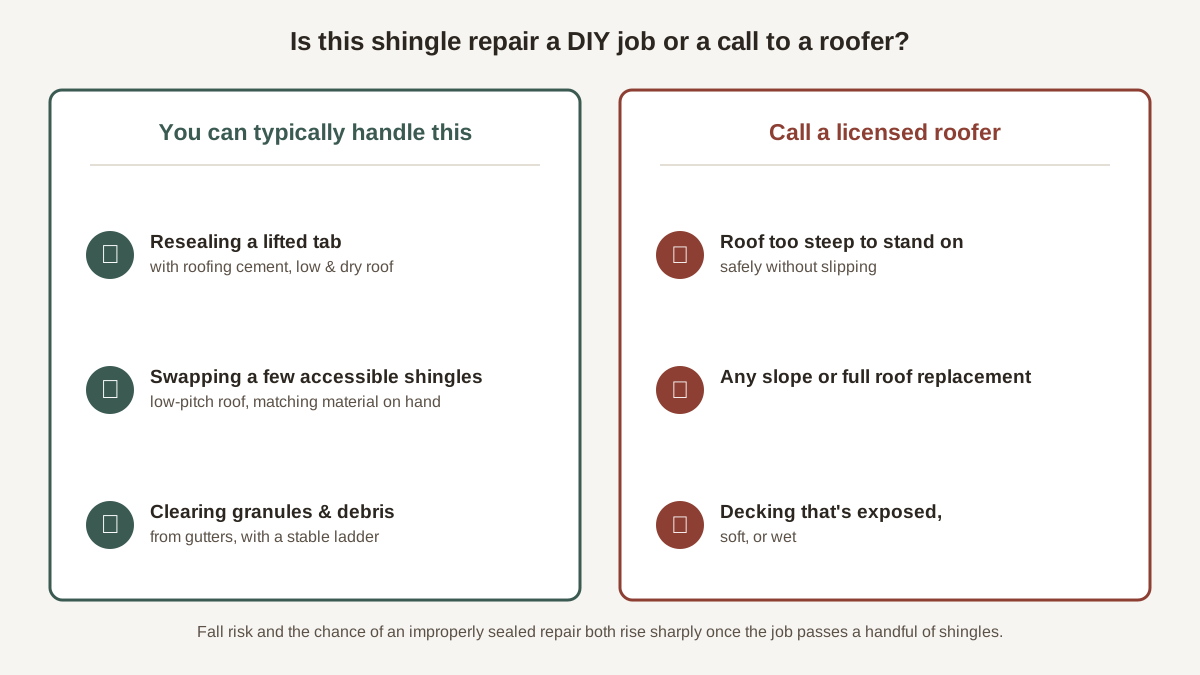
Some of this is legitimately within reach for someone comfortable on a ladder; a lot of it isn't, and the line matters more than it might seem from the ground.
Task
Homeowner can typically handle
Call a professional
Resealing a lifted tab with roofing cement, low and dry roof
Yes
—
Swapping a handful of accessible shingles on a low-pitch roof
Yes, with matching material on hand
—
Clearing granules and debris from gutters
Yes, with a stable ladder
—
Replacing shingles on a roof too steep to stand on without slipping
—
Yes, always
Any slope or full roof replacement
—
Yes, always
Repair where decking is exposed, soft, or wet
—
Yes, always
For the jobs that are within reach, work on a dry day, use a shingle from the same line and color if the roof still has spares stored from the original install, and set new nails just below the sealant strip line of the course above so the next shingle's adhesive covers them. Standard nailing calls for four nails per shingle (six in high-wind regions), roofing nails at least 1.25 inches long, driven flush rather than countersunk, since an overdriven head can cut straight through the shingle and start a new leak. Cracked or torn shingles should be fully replaced, not caulked over; sealant on top of a crack traps moisture underneath rather than keeping it out.
Everything else, especially shingles blowing off in numbers, anything on a steep or multi-story roof, or a section where the decking is already exposed, is worth a licensed roofing contractor rather than a weekend project. A roofing contractor that serves your area can usually tell over the phone, from a couple of photos, whether it's a quick patch or something bigger.
What's reasonable to handle yourself and what to hand to a licensed roofing contractor.
What Shingle Replacement Costs
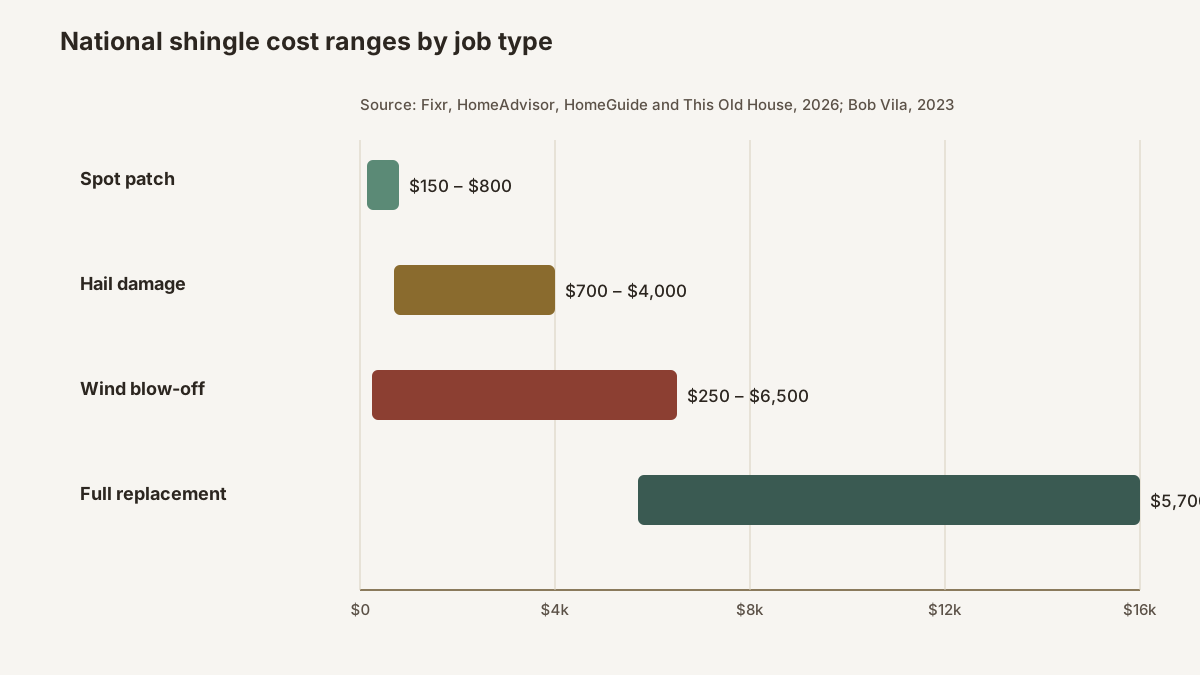
Cost depends heavily on scope, storm damage versus routine aging, decking condition, and whether the job is a few shingles or a full slope, not on how big the visible gap looks from the ground. These ranges come from multiple national 2026 contractor-cost surveys, not one company's price sheet, so use them to sanity-check a quote rather than as a quote themselves.
Job type
Typical range
What moves the price
Source
Handful of shingles, spot patch
$150 – $800
Number of shingles, roof pitch, ladder access
Bob Vila, 2023
Minor repair overall (flashing, a few shingles)
$150 – $1,000
Access, material match, story height
Fixr, 2026
Moderate repair (larger area, multiple courses)
$1,000 – $3,000
Square footage affected, decking exposure
Fixr, 2026
Hail-damaged shingle mat
$700 – $4,000
Extent of granule loss and mat cracking
Fixr & This Old House, 2026
Wind or storm blow-off repair
$250 – $6,500
Number of tabs lost, sheathing exposure
Fixr, 2026
Emergency or after-hours dispatch
+$100 – $300 on top of the repair
Same-day, weekend, or storm-surge demand
Fixr, 2026; Bob Vila, 2023
Materials only, per square, 3-tab
$80 – $130
Brand and local supplier pricing
HomeGuide, 2025
Materials only, per square, architectural
$100 – $250
Brand, weight class, local supplier pricing
HomeGuide, 2025
Full roof replacement (patches no longer worth it)
$5,700 – $16,000, national averages $9,600–$10,800
Roof size, material, layers to tear off, permits
HomeAdvisor / Fixr / HomeGuide, 2026
National cost ranges for shingle repair and replacement by job type.
How we got these numbers: the table blends several national contractor-cost surveys, mostly updated in 2026 with one 2023 figure still current, rather than relying on a single publisher, since individual sites weight regions and sample sizes differently. This dataset doesn't carry a regional price index, a multiplier some guides apply for local labor and material costs, so a written estimate from a licensed local roofing contractor is what actually sets your number, not this table.
Worth knowing before choosing replacement purely as an investment: the 2025 Cost vs. Value report puts a typical full asphalt shingle roof replacement job cost at $31,871, recouping about 68% of that at resale, a figure for a complete tear-off and reroof, not a patch or partial slope. That number is a useful reality check if a contractor frames replacement mainly as something that pays for itself; mostly, it pays for a dry, sound roof, and only partly for itself at resale.
When Missing Shingles Are an Emergency (and the One Rule That Matters Most)
Missing shingles cross into emergency territory when exposed underlayment or bare decking is visible, when it's actively raining or about to, or when the missing area is large enough that wind-driven rain could get under the surrounding tabs too. A single lifted shingle on a dry forecast can usually wait a few days for a scheduled repair; several gone shingles ahead of more weather cannot.
If wind just tore shingles loose and you can see bare decking or underlayment, call 888-679-3798 and describe what you're seeing, how much area is exposed, and whether rain is expected, so a roofing contractor that serves your area can tell you whether it needs a same-day tarp rather than a scheduled repair visit.
Never climb onto a wet, icy, or steeply pitched roof to inspect or patch missing shingles yourself; a fall from roof height is a far worse outcome than any patch, and a photo from the ground combined with an attic check gives a roofer nearly everything they need before they ever climb up. Workplace-safety rules require fall protection on residential roofing work above 6 feet, lower than most single-story eaves, which is the same margin a roofer is already weighing before deciding a ladder call is enough. A temporary tarp, set from a ladder and secured at the eave rather than by walking the roof surface, can hold water out until a crew arrives if the exposed area is large. Our emergency roof repair and tarping guide covers how to do that safely.
Does Homeowners Insurance Cover Shingle Replacement?
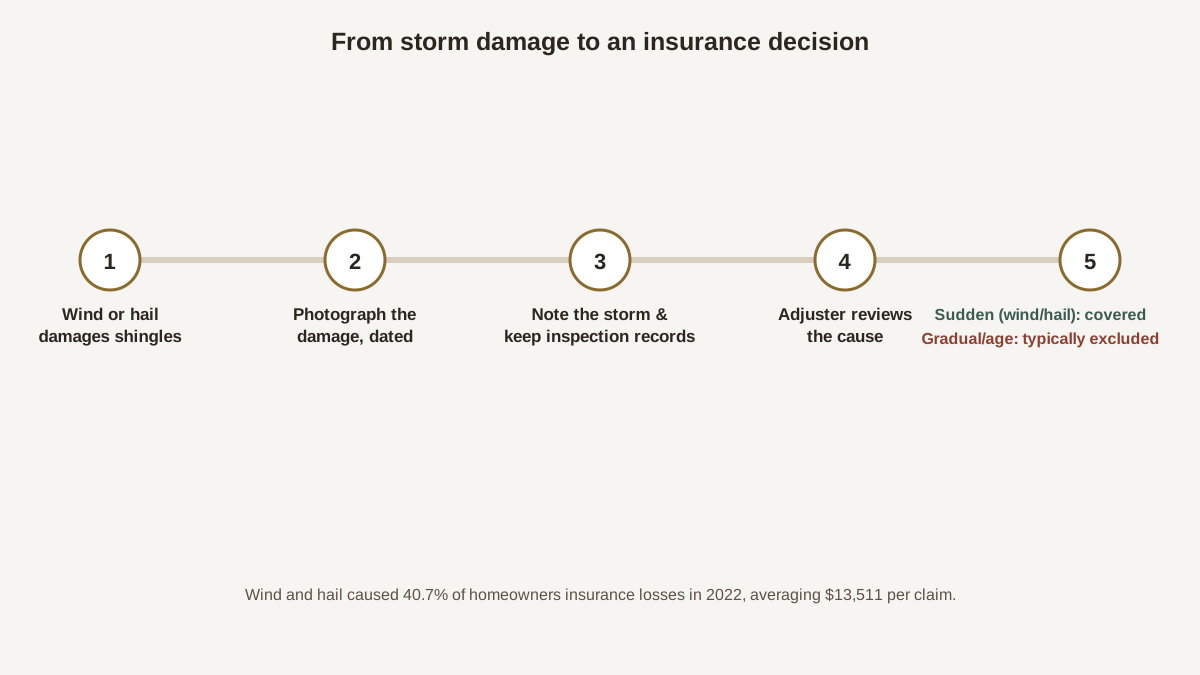
It depends on what caused the shingles to go missing, not on the fact that they're gone. A standard HO-3 homeowners policy typically covers sudden, accidental damage, like wind tearing shingles loose or hail cracking the mat, but not damage from gradual wear, age, or a roof that was already past its expected service life when the shingles let go.
Cause
Typically covered
Typically excluded
Wind uplift or storm blow-off (sudden)
Yes, usually, minus your deductible
—
Hail cracking or granule loss (sudden)
Yes, usually
—
Fallen branch or debris impact
Yes, usually
—
Gradual granule loss from age or UV wear
—
Almost always excluded
Roof already past the insurer's own age cutoff for that policy
Some carriers pay actual cash value only
Varies by carrier and state
Wind and hail together made up 40.7% of homeowners insurance losses in 2022, with a claim frequency of about 2.82 per 100 insured homes per year and an average severity of $13,511, so a storm-caused shingle claim is common rather than unusual. Nationally, insurers paid State Farm policyholders alone over $3.5 billion in hail claims in 2022, more than a billion dollars above the prior year.
If you're filing a claim, document the damage with dated photos before any repair starts, note the date and the storm that caused it, and keep any prior roof inspection records, since an adjuster's main question is whether the damage was sudden or gradual, and existing documentation is what settles that argument in your favor.
Wind and hail caused 40.7% of homeowners insurance losses in 2022, averaging $13,511 per claim, per the Insurance Information Institute.
How to Choose a Roofing Contractor for Shingle Work
Shingle work looks simple enough that it attracts unlicensed and uninsured operators, especially after a storm, which is exactly when homeowners are least equipped to vet someone carefully. A few checks handle most of the risk.
Confirm an active license through your state's contractor licensing board before signing anything; requirements and lookup tools vary by state, so search "[your state] contractor license lookup" if you don't already know the agency.
Ask for proof of general liability and workers' compensation insurance, not just a verbal assurance, and confirm coverage directly with the insurer if the job is large.
Look for manufacturer-level credentials such as GAF Master Elite or Owens Corning Preferred Contractor status, both of which require the roofer to meet training and volume standards the manufacturer sets, not just sell the product. Crews trained through the National Roofing Contractors Association, the industry's standards body, are another good sign.
Get a written estimate that names the exact shingle line and color, the scope (spot patch, slope, or full replacement), a timeline, and what happens if hidden decking damage turns up once the old shingles come off.
Treat storm-chasing door knockers, pressure to sign same-day, and requests for full payment upfront as red flags regardless of how reasonable the pitch sounds.
Get at least two written estimates for anything beyond a small spot patch, since prices for identical scope can vary meaningfully between crews. If you'd rather start with a phone conversation than a search, a 888-679-3798 connects you with a roofing contractor that serves your area.
Preventing the Next Round of Shingle Damage
Most future shingle replacement calls trace back to a handful of avoidable habits, not bad luck.
Trim branches back from the roofline; both direct impact and the abrasion from limbs rubbing shingles in wind wear tabs down faster than sun exposure alone.
Clean gutters at least twice a year, since backed-up water under the shingle edge is one of the most common causes of edge-course lifting and, in cold climates, ice dam formation.
Walk the attic with a flashlight each spring and fall, checking for new staining or daylight before it becomes a stain on the ceiling below.
Get a professional inspection after any hail event or major wind storm, even if nothing looks obviously wrong from the ground; hail bruising in particular is often invisible from a driveway-level look.
Avoid pressure washing shingles; the force can strip granules and shorten the roof's remaining life faster than normal weathering would.
Our roof inspection guide covers what a thorough inspection should include and how often to schedule one for your climate.
Regional Notes: Wind, Hail and Freeze-Thaw
What tends to knock shingles loose in the first place changes a lot by region, and that shapes both prevention and what a roofer checks first on an inspection.
Hail-cracked mat and granule loss, often invisible from the ground
5,432 major hail events nationwide in 2025; Texas alone logged 902
Hurricane coast (Gulf and Southeast Atlantic)
Wind uplift and tabs torn loose in storms
Damage right after a named storm; wind-rated shingles required on replacement in many coastal counties
Freeze belt (Upper Midwest, Northeast, Rockies)
Ice dams prying up edge courses each winter
Icicles along the eave, cracked tabs concentrated at the lower few courses
Everywhere else
Sealant strip fatigue and granule loss from age and UV exposure
Slow, steady tab lifting over years rather than after a single storm
In hail alley, the gap between what's visible and what's actually damaged is the biggest risk: a roof can look intact from the driveway with a full slope of cracked, bruised shingle mat underneath, which is why insurers and roofers both do a hands-on inspection rather than a drive-by after a hail event. Our hail damage roof repair guide covers how to spot that damage and file the claim correctly.
On the hurricane coast, wind uplift concentrates at roof edges, ridges, and corners, the spots engineers call high-pressure zones, which is why storm-damaged roofs so often show missing shingles in a border pattern rather than scattered randomly across the field. In the freeze belt, an ice dam forms when attic heat melts snow on the upper roof while the eave, outside the heated envelope, stays at or below 32°F; the refrozen meltwater builds a ridge that can crack and lift the shingles above it as it grows. Building code addresses that eave strip directly: the International Residential Code calls for a self-adhering ice barrier running from the eave edge to at least 24 inches inside the exterior wall line in areas with a history of ice damming, so it stays watertight even if a dam forms above it. Our ice dam guide covers how to stop that cycle without making the leak underneath it worse.
Frequently asked questions
Can you replace a single shingle?+
Yes. A single damaged or missing shingle can be replaced on its own without touching the surrounding roof, as long as a matching or close replacement is available. The process involves lifting the sealed tabs of the course above, removing the old nails, sliding the new shingle into place, and re-nailing and re-sealing it. It's one of the more accessible repairs for a homeowner on a low, dry, walkable roof.
How much does it cost to replace one shingle?+
A handful of shingles, including one, typically falls into the $150 to $800 range that covers minor spot repairs, according to national 2026 and 2023 contractor-cost surveys. Many roofers set a minimum service call fee that applies whether it's one shingle or several, since the ladder, travel, and setup cost the same either way. Ask whether a minimum applies before scheduling.
Can I replace shingles myself?+
On a low-pitch, dry, single-story roof, replacing a small number of accessible shingles is within reach for a comfortable DIYer with matching material on hand. Anything on a roof too steep to stand on safely, on a multi-story house, or where the decking underneath is exposed or wet is better left to a licensed roofing contractor.
How do you tell if your shingles need replacing?+
Look for curling, cracking, or cupped edges; bald patches where granules have worn away, exposing the darker mat underneath; and granules collecting in the gutters after normal rain. From the attic, check for daylight through the decking or staining along the rafters. Any of those, especially combined with the roof's age, is worth a professional inspection before deciding between a patch and full replacement.
Does homeowners insurance cover shingle replacement?+
Only when the cause was sudden and accidental, like wind uplift or hail cracking, rather than gradual wear or age. A standard HO-3 policy typically covers storm-caused shingle damage minus your deductible, but denies claims where an adjuster determines the shingles failed from normal aging or a lack of maintenance. Photograph the damage immediately and keep any prior inspection records to support the claim.
What do I do if shingles blew off in a storm?+
Check for bare decking or underlayment visible from the ground, and if you see it, call a roofing contractor and describe the exposed area and the forecast rather than waiting for a routine appointment. If more rain is coming, a temporary tarp set from a ladder can hold water out until a crew arrives. Don't climb onto the roof yourself to assess or cover the damage.
Can missing shingles be repaired, or do they need full replacement?+
Most missing shingles are repairable with a matching patch, especially when the damage is limited to one area and the decking underneath is dry. Full replacement of a slope or the whole roof makes more sense once damage is spread across multiple sections, patches keep failing to match, or the roof is already near the end of its service life regardless of the current damage.
How much does it cost to repair missing shingles?+
Minor missing-shingle repairs run $150 to $1,000 nationally, according to 2026 contractor-cost surveys, while storm-driven damage covering a larger area runs higher: $700 to $4,000 for hail-cracked shingles and up to $6,500 for extensive wind blow-off. Get a written estimate for your specific situation rather than assuming the low end applies.
How do you fix a missing shingle tab?+
If only one tab of a shingle is cracked or torn away rather than the whole shingle, most roofers replace the entire shingle rather than trying to patch just the tab, since a partial repair rarely seals properly against wind-driven rain. The damaged shingle gets pulled, nails removed, and a full replacement shingle installed and resealed in its place.
What's the difference between architectural and 3-tab shingles?+
3-tab shingles are a single flat layer with a uniform, repeating tab pattern and typically cost $80 to $130 in materials per square. Architectural, or dimensional, shingles are laminated from two or more layers for a heavier, shadow-lined look and run $100 to $250 in materials per square. Architectural has largely replaced 3-tab as the standard choice on new installs.
How many shingles missing before replacement makes more sense than repair?+
There's no fixed number; it comes down to how much of one slope is affected, whether the decking underneath is exposed, and whether this is a repeat patch on a roof where matches keep failing. Scattered damage across one small area usually patches cleanly. Damage spread across most of a slope, or a roof already on its second or third patch, is usually cheaper and more durable to replace as a section instead.
Is shingle replacement a DIY project?+
A small, accessible patch on a low, dry roof can be homeowner work if you have matching shingles and basic roofing tools. A full slope or roof replacement, anything on a steep pitch, and any repair involving exposed decking are not reasonable DIY projects; the fall risk and the chance of an improperly sealed repair both go up sharply once the scope grows past a handful of shingles.