Rheem, AO Smith, and Bradford White water heaters usually fail for the same handful of reasons: a tripped reset, a bad igniter or pilot, a failing thermostat or element, a worn anode rod, or a tank finally leaking from the shell itself. Check the reset and the rating plate first, match your symptom to the fix below, then call a licensed plumber once gas or the tank body is involved.
A water heater rarely fails all at once. It gives warning first: a pilot that won't stay lit, a red service light blinking on the front panel, water pooling at the base, or a shower that goes lukewarm halfway through. Whether the unit in your closet or garage is a Rheem, an AO Smith (also styled A.O. Smith), or a Bradford White, the diagnostic questions are nearly identical: is this a cheap part, a warranty claim, or a sign the tank itself is done.
This guide walks through rheem water heater repair, ao smith water heater repair, and bradford white water heater repair side by side, because the three brands share more troubleshooting logic than they differ on. Where a step genuinely varies by brand, such as where the reset sits or how the service light patterns read, it's called out by name. Where it doesn't, the advice applies to all three.
None of what follows invents a price for your specific repair. National cost ranges for replacement and installation labor come from the sources cited below; the actual dollar figure for the part or the visit in front of you comes from a written estimate, ideally more than one.
What's Actually Wrong: Reading the Symptoms Before You Call Anyone
Type rheem water heater repair or the AO Smith or Bradford White version into a search bar and most of what comes back is generic. The unit in your closet, garage, or basement isn't: it has a brand, a certain number of years on it, and one specific symptom that got you searching in the first place. Start with which of four buckets you're in, because it changes everything that follows.
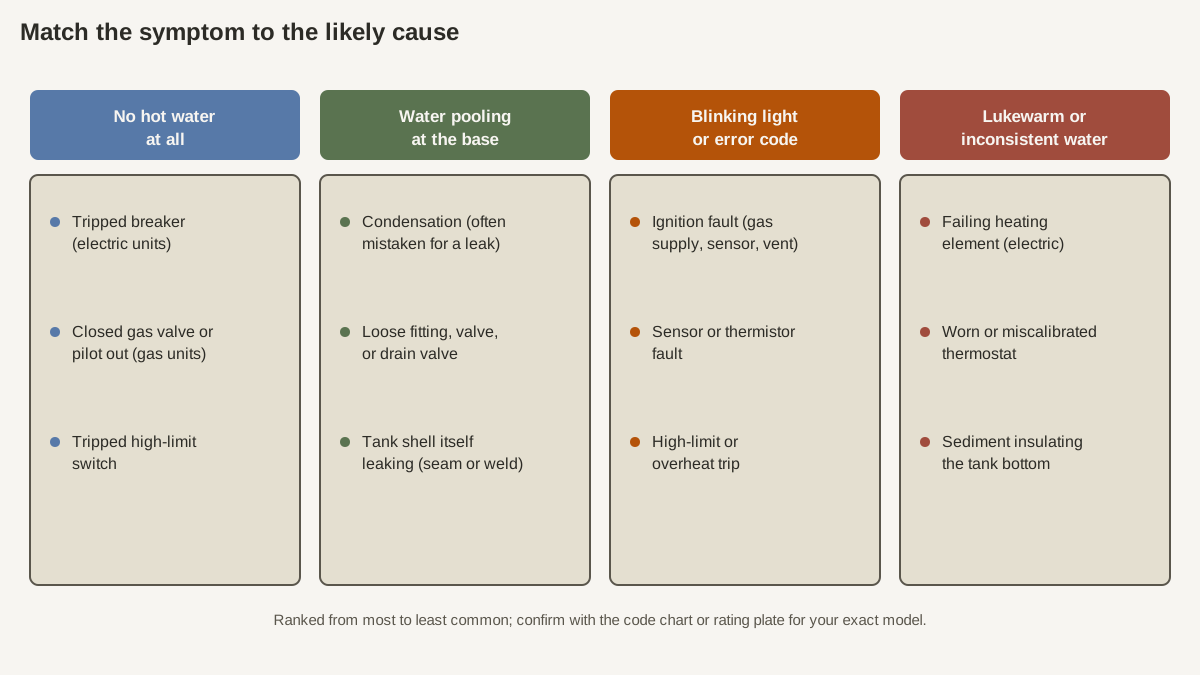
No hot water at all points first to power at the breaker (electric units), gas supply and ignition (gas units), or a tripped high-limit switch shutting the unit down as a safety measure. Water pooling at the base could be condensation, a loose fitting, or the tank shell itself failing, and where the water actually starts tells you which. A blinking light or an error code on the front panel is the unit trying to tell you something specific, even though the exact code varies by model generation. Lukewarm or inconsistent hot water usually traces to a failing heating element, a worn thermostat, or sediment insulating the bottom of the tank from the heat source above it.
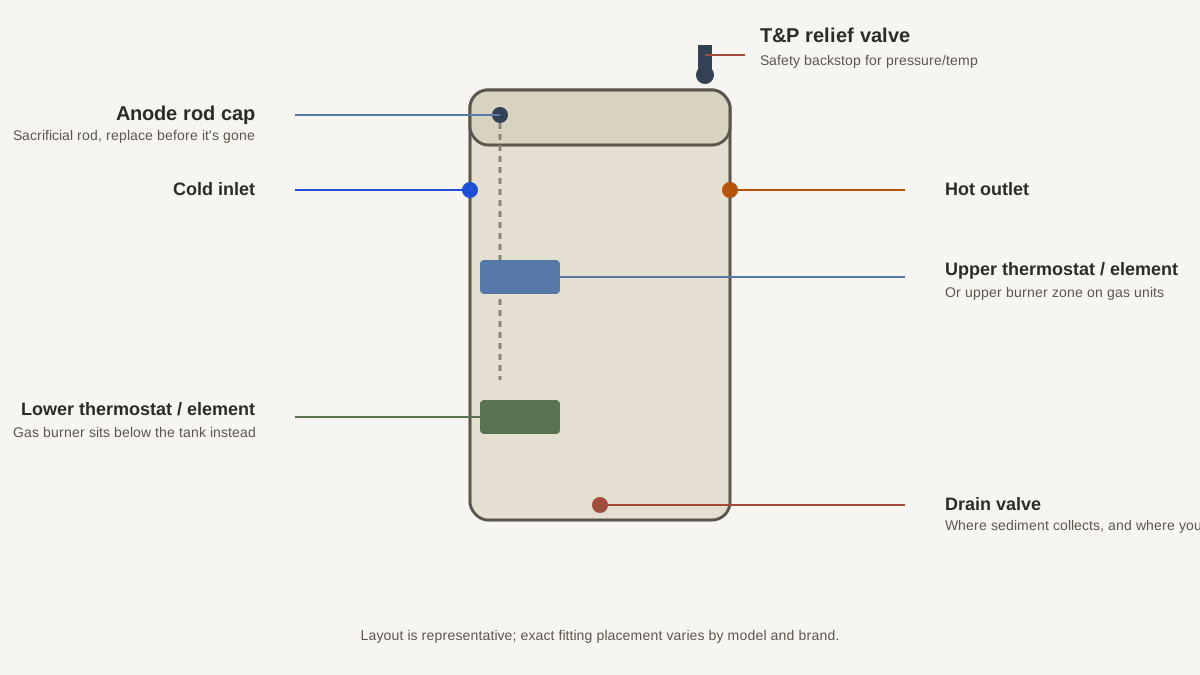
Rheem, AO Smith, and Bradford White build their residential tank units around the same basic architecture: a steel tank with a glass or enamel lining, an anode rod protecting that lining, a thermostat and heat source (gas burner or electric elements), and a temperature-and-pressure relief valve, factory-set to release at roughly 150 psi or 210°F, as the safety backstop. That shared architecture is why the diagnostic path below applies to all three; brand differences show up mostly in exact reset-button placement, the flash-code sequence on the service light, and how the warranty paperwork is structured, all covered in the sections ahead.
Where a residential water heater actually fails.
The diagram above labels the parts that fail most often, so the vocabulary in the rest of this guide has somewhere to attach.
Why Water Heaters Fail, Ranked by How Often It Happens
Ranked roughly by how often each cause actually shows up on a service call, from most common to least:
Sediment buildup. Minerals in the water settle at the bottom of the tank over time, insulating the burner or lower element from the water above it. This is the single most common reason a water heater seems to run out of hot water faster than it used to, and it's also the easiest cause to prevent with an annual flush.
A failed thermostat or heating element on electric units. Electric water heaters run one or two elements controlled by thermostats; either can fail outright or drift out of calibration, producing lukewarm water or none at all.
Pilot or ignition problems on gas units. A pilot that won't stay lit, a dirty thermocouple or flame sensor, or a clogged burner orifice are the most common reasons a gas unit won't ignite, or won't stay lit once it does.
A worn anode rod. The rod is designed to corrode instead of the tank lining. Once it's fully consumed, sometimes before it even looks used up to an untrained eye, the tank starts corroding from the inside, which is a one-way trip toward a leak.
A tripped high-limit switch or energy cutoff. Both gas and electric units carry a safety cutoff that shuts the unit down if it senses dangerous overheating, sometimes from a bad thermostat, sometimes from restricted flow through the tank.
Tank corrosion and age. Once the tank shell itself starts leaking, from a seam or the tank body rather than a fitting, no part swap fixes it. This is the point where repair stops being the economical answer.
Age on its own matters less than what's actually failed. A five-year-old unit with a bad element is a cheap fix. A twelve-year-old unit with the same bad element is still a cheap fix, provided the tank itself hasn't started going. The part that's broken, not the birthday on the rating plate, decides whether this is a repair or a replacement.
Start here: match what you're seeing to the cause it usually points to before you order a part.
Matching that ranking against the four symptom buckets from earlier lets you jump straight from what you're seeing to what's likely broken.
Step by Step: Diagnosing a Rheem, AO Smith, or Bradford White Water Heater
The steps below apply whether the unit is a Rheem, an AO Smith, or a Bradford White, gas or electric. Work through them in order; most homeowners can safely complete the first four.
Find the rating plate. It's on the side of the tank, usually near or behind the access panel, and lists the model number, serial number, and sometimes the installation date if it was ever recorded there. Photograph it with your phone before you do anything else.
Check power and gas supply. For electric units, confirm the breaker hasn't tripped. For gas units, confirm the gas valve at the unit is open and that other gas appliances in the house are still working.
Look for a reset button or lockout indicator. Electric tank units typically carry a red reset button on the upper thermostat, behind the access panel, tied to the energy cutoff that trips on dangerous overheating. Gas units more often show a lockout on the gas control valve after a failed ignition attempt rather than a manual reset button in the traditional sense. Exact layout varies by model year, so the manual for your specific unit is the real authority.
Read the service light, if there is one. A blinking or solid light on the front of the unit is usually counting out a flash-code pattern tied to a printed troubleshooting chart, either on a sticker on the tank itself or in the manual.
Trace any water to its actual source. Water travels along the tank jacket before it pools, so the puddle on the floor doesn't always sit under the real leak. Follow it upward, dry the area, and watch.
Decide whether this is still a DIY step. A tripped reset, a dirty pilot assembly on a unit you're comfortable relighting per the label instructions, or a fitting you can reach and tighten are reasonable to handle yourself. A gas smell, a leak from the tank body itself, or a problem that comes right back after you've already addressed it once is the signal to stop and call a licensed plumber.
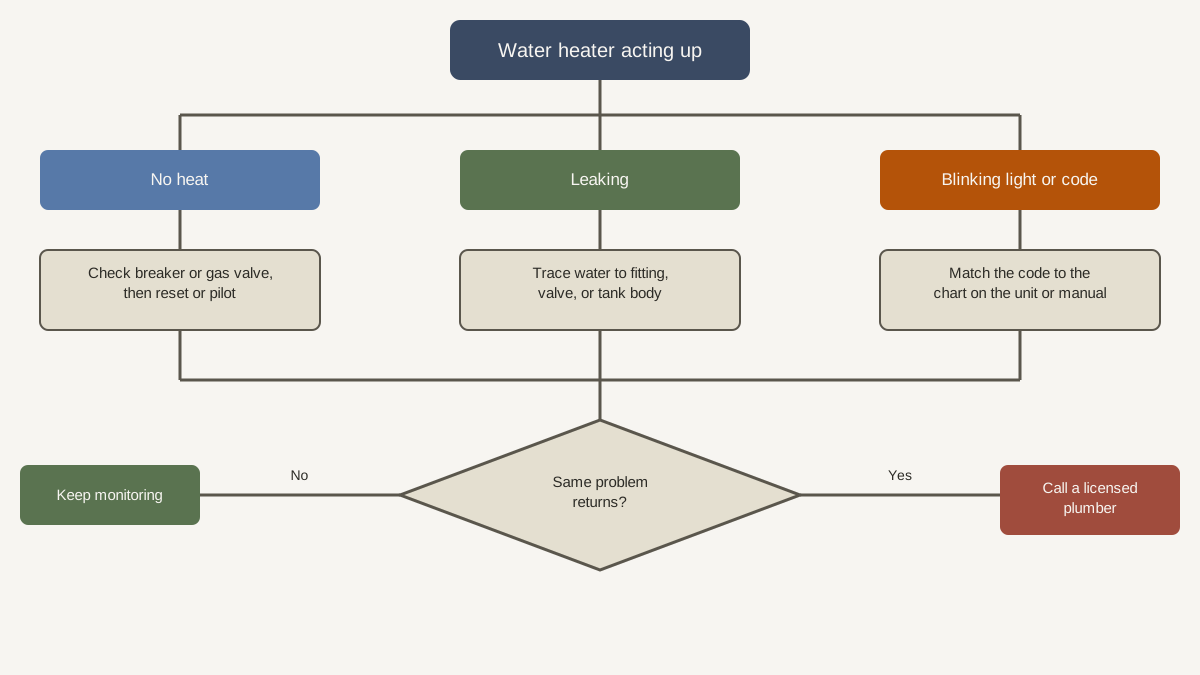
How to work through a symptom before you call anyone.
The flow chart above walks the same logic visually: symptom in, a short branch of checks, and an endpoint that's either a part you can handle or a call you should make.
What You Can Fix Yourself, and Where a Licensed Plumber Takes Over
The Anode Rod: The Most Common DIY Fix That Actually Extends Tank Life
Replacing a worn anode rod is more prevention than repair: it's inexpensive, it's within reach of most homeowners comfortable with a wrench, and it's the single biggest lever a homeowner has over how long the tank shell itself lasts. water heater anode rod replacement is usually a same-afternoon project:
Shut off power at the breaker (electric) or turn the gas control to pilot, and shut off the cold water supply to the tank.
Relieve pressure by opening a hot water tap elsewhere in the house.
Locate the anode rod fitting on top of the tank, often under a plastic cap, and loosen it with the correct socket; a unit that hasn't been touched in years sometimes needs a breaker bar.
Pull the old rod and inspect it. Heavy, exposed core wire along most of its length means it was past due; a rod that's mostly intact just needed the swap on schedule.
Install the new rod with plumber's tape on the threads, restore water and power, and check the fitting for weeping once the tank refills.
Homes on well water or in areas with naturally soft water tend to consume anode rods faster, since softened water is more corrosive to the rod, so a water heater in that situation benefits from checking the rod more often than the general schedule suggests.
Where the Job Stops Being DIY
A pilot light or igniter, a thermostat, and an anode rod are all reasonable homeowner territory. Gas line work, venting changes, anything requiring a permit, and the tank shell itself are not. The table below is a rough guide to which side of that line a given symptom usually falls on.
Situation
Usually a repair
Usually a replacement
Pilot won't stay lit
Thermocouple or pilot assembly, often DIY-safe to clean or swap
Rarely, unless it's a symptom of a failing gas control valve
Leak location
From a fitting, valve, or the drain valve
From the tank body itself, a seam, or a weld point
Age plus failure type
Any age, if the failed part is replaceable and the tank is otherwise dry
Any age, once the tank shell is corroding or leaking
Repeat failures
First occurrence of a given symptom
Same symptom recurring shortly after a repair
Warranty status
Still within the parts warranty printed on the rating plate
Well past the printed warranty term, especially with tank-body corrosion
A table like this doesn't replace an actual inspection, though. A licensed plumber who has looked at the specific unit will catch things a table can't, like a burner that's cracked in a way you can't see from the front.
Warranty Repair or Out of Pocket: Checking Age, Model, and Coverage
Before you spend money on a repair, it's worth ten minutes to find out whether the manufacturer already owes you the fix. water heater warranty repair claims are more common than most homeowners realize, especially on units still well within their first decade.
Start with the rating plate, the metal or foil sticker on the side of the tank. It carries the model number and serial number, and on most manufacturers' serial formats, an embedded date code, though the exact encoding scheme has changed across model generations and isn't something this guide can decode reliably without the specific unit in front of it. The safest path for a genuine water heater age lookup is the manufacturer's own model-and-serial lookup tool, or a direct call to their customer service line using the numbers straight off the plate.
Unit type
Rating plate location
Reset/lockout, typically
Gas tank
Side of the tank, near the gas control valve
Lockout on the gas control valve after a failed ignition; some models require holding the pilot button per the label
Electric tank
Side of the tank, behind the upper access panel
Red reset button on the upper thermostat, behind the same panel
Gas tankless
Front or side panel of the unit
Error code on the built-in display; cleared per the code, not a single button
Residential water heater warranties generally split into two pieces: a tank warranty covering the tank shell itself against leaks, and a shorter parts warranty covering components like the thermostat, element, or gas control valve. The exact term for either piece varies by brand and by model tier within a brand, which is exactly why the serial number and a direct check with the manufacturer beats guessing. If the unit was professionally installed and registered at the time, that registration paperwork is often the fastest proof of the install date when the rating plate's code is ambiguous.
One more wrinkle worth knowing before you call anyone: a manufacturer's warranty typically covers a defective part, not the labor to remove and reinstall it, and it doesn't cover a repair caused by installation error, lack of maintenance, or water conditions outside the manufacturer's spec. A plumber pulling the part under warranty will usually still bill for their labor and for any parts the warranty doesn't cover.
Error Codes and Blinking Service Lights: What They're Actually Telling You
water heater error codes and blinking service lights exist because modern gas control valves and tankless units run a small onboard diagnostic that's smarter than a simple on/off switch. Broadly, the codes and flash patterns fall into a few categories, though the exact meaning of any specific code or flash count is set by the manufacturer and printed on a sticker on the unit or in the manual, not something safe to guess at from a description alone:
Ignition faults: the unit tried to light and failed, often from a gas supply issue, a dirty sensor, or a blocked vent.
Sensor or thermistor faults: the control board is getting a reading from a temperature sensor that's out of the expected range, which can mean a failed sensor or a genuine overheat condition.
High-limit or overheat trips: a safety cutoff has activated, and the unit needs the underlying cause addressed, not just a reset, before it goes back into service.
Flow or ignition-attempts-exceeded faults, common on tankless units: the unit stopped trying after repeated failed attempts and needs manual intervention to clear.
A single blink or beep you haven't seen before is worth a look at the manual before anything else; most manufacturers print the full code table right on the unit or offer it as a free download using the model number. A code that keeps returning after you've cleared it once, though, has moved past a documentation problem and into a diagnostic one: something is still actually wrong, and continuing to reset it without addressing the cause risks masking a genuine safety trip.
What Repair or Replacement Costs, and Why
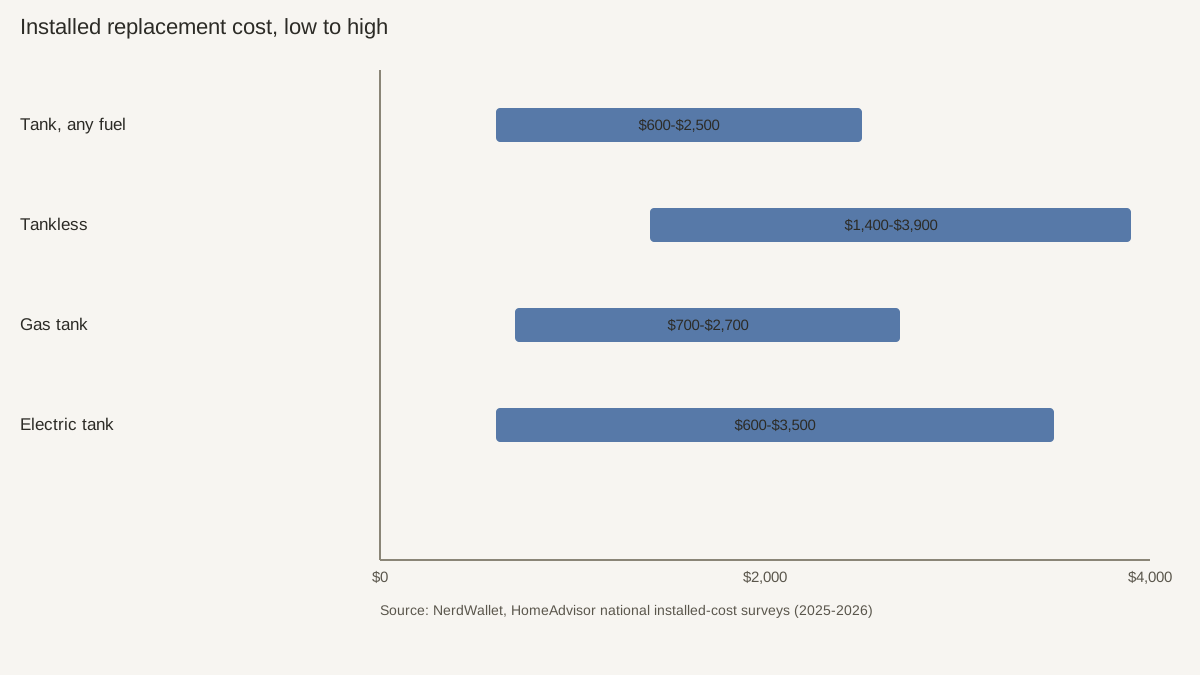
The figures below aren't specific to your repair: they're researched ranges from cost-survey publishers, not a quote for your particular job, useful for sanity-checking an estimate and weighing repair against replacement — only a written estimate from a local, licensed plumber who has actually opened the panel is binding. Blended across every fuel type and tank style, Bob Vila's most recent survey puts the national average water heater replacement at $1,293, with most homeowners landing between $874 and $1,765; the table below breaks that same territory down by type, tank versus tankless, where the real difference in what you pay actually shows up. Tank size moves the number more than almost anything else within the tank category: HomeAdvisor's data puts a 40-gallon tank at $800-$2,300 installed, a 50-gallon at $800-$2,500, and a 75-gallon at $1,100-$4,000.
Job type
Typical range
What moves the price
Source
Diagnostic / repair service call, hourly
$75 - $150 per hour
Company, region, time of day, after-hours status
Fixr
Service call / trip fee, before diagnostic time
$50 - $200+
Company, distance, after-hours or emergency status
HomeGuide
Tank replacement, installed
$600 - $2,500
Tank size, gas vs electric, access, permit
NerdWallet; HomeAdvisor
Tankless replacement, installed
$1,400 - $3,900
Venting changes, gas line upsizing, electrical
NerdWallet; HomeAdvisor
Gas tank replacement, installed
$700 - $2,700
Venting, gas line condition, tank size
HomeAdvisor
Electric tank replacement, installed
$600 - $3,500
Amperage or wiring changes, tank size
HomeAdvisor
Installation labor only, tank
$150 - $450
Access, old-unit removal and disposal
NerdWallet; HomeAdvisor
Installation labor only, tankless
$600 - $1,900
Venting and gas line changes
NerdWallet; HomeAdvisor
Permit, where replacement requires one
$25 - $300
Jurisdiction
HomeAdvisor
Expansion tank, often code-required on replacement
$90 - $350
Size, access
HomeAdvisor
National installed replacement cost, low to high.
How we got these numbers: the ranges above come from national cost-survey publishers current as of their listed dates, not a regional index for your specific market, and this data set doesn't include a local cost-of-living adjustment — the number you're actually quoted moves with your region, how accessible the tank is, and what a plumber finds once the panel or the wall around it is open. Use the low end as a rough floor for what a fair quote looks like and the high end as a rough ceiling; anything well outside that band, in either direction, is worth a follow-up question rather than an immediate signature. A part-level repair, a thermocouple, a control board, an anode rod, almost always costs less than any of the replacement figures above, but this data set doesn't include repair-specific national pricing, so the honest answer for that exact number is a written estimate from a plumber who has actually opened the panel.
When to Stop Troubleshooting and Call a Licensed Plumber
Most of what's covered so far is genuinely safe to handle yourself, or at least comfortable to schedule on your own timeline. A short list of situations isn't either.
If you smell gas near the water heater, do not attempt to relight anything yourself: get everyone out of the area, shut off the gas at the meter if you can reach it safely, and call a licensed plumber immediately. A gas smell that doesn't clear once the appliance is off is a call to your gas utility's emergency line, not a wait-and-see situation.
Water actively spreading across the floor from a failed tank is the other immediate call. Shut off the cold water supply valve at the top of the tank, or the main shutoff if you can't isolate the unit, then cut power or gas to the unit before anything else. If the water is still coming in once you've done that, call 888-854-0126 and describe exactly what you're seeing to a licensed plumber that serves your area.
Short of an active emergency, a repair also stops being DIY territory once it touches the gas line itself, the electrical wiring feeding the unit rather than just the thermostat behind an access panel, or venting on a gas or tankless unit. Those are code-regulated for a reason: get one of them wrong and the risk isn't a redo, it's carbon monoxide or fire.
Preventing the Next Failure, and How Climate Changes the Math
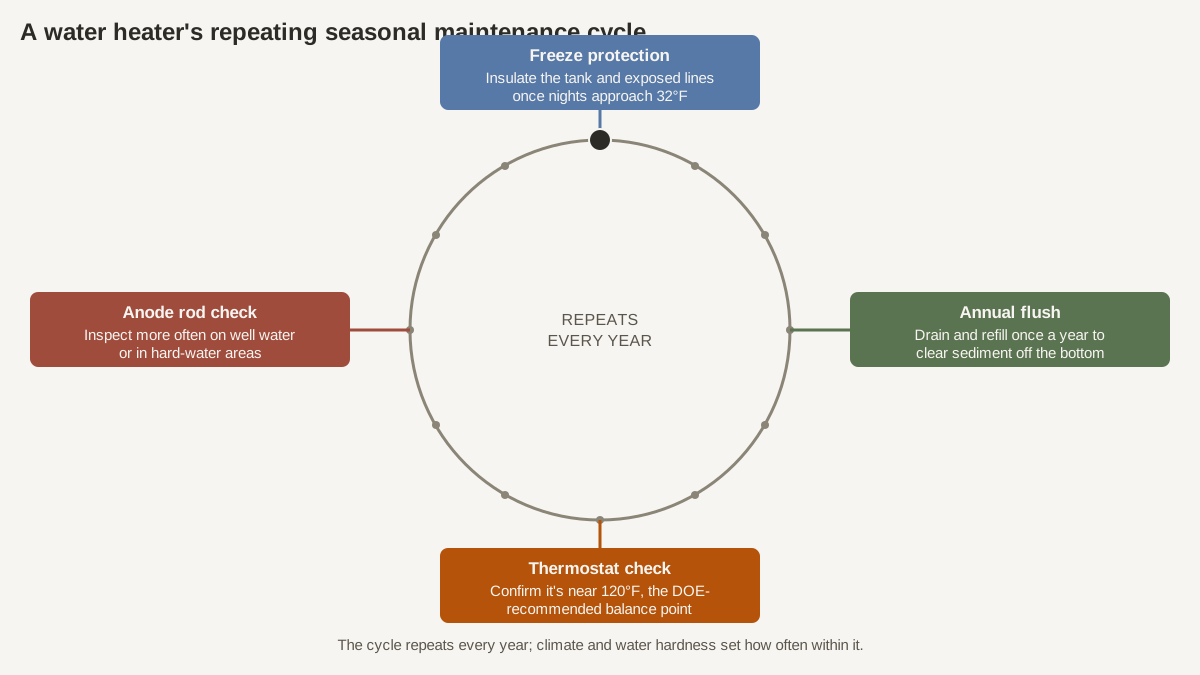
The single biggest lever a homeowner has over tank life is maintenance most people skip: an annual flush to clear sediment, and a periodic check of the anode rod rather than waiting for it to fail outright. Neither takes long, and both directly address the two most common failure causes covered earlier in this guide. It's also worth checking where the thermostat is actually set: most manufacturers ship it near 120°F, the setting the Department of Energy recommends as the balance between adequate hot water, energy cost, and scald risk, and a unit that's crept much higher works harder than it needs to.
Climate and water conditions change the math on both. In regions with hard water, mineral buildup accelerates, which means sediment collects faster and the anode rod works harder, so a flush and rod check on the more frequent end of the recommended schedule pays off. In colder climates with a real freeze season, where nighttime lows routinely drop below the 32°F freeze point, a water heater installed in an unconditioned garage or crawlspace works harder to hold temperature and is worth insulating, both the tank itself with a jacket rated for the unit type and any exposed supply lines nearby, the same freeze-protection logic covered in our guide to frozen pipe repair.
A water heater installed in a finished space, an attic, or a closet off a bedroom, benefits from a drain pan with a routed drain line, so a slow failure shows up as a wet pan instead of a stained ceiling. That's a small, inexpensive step at install time that gets expensive to retrofit once the unit is already in and running.
The same handful of habits, repeated every year, do more for tank life than any single repair -- 120°F setting per the U.S. Department of Energy.
The cycle above ties those same four habits to the point in the year they matter most.
Choosing a Plumber for a Warranty or Out-of-Warranty Repair
Whether the job is warranty-covered or fully out of pocket, the plumber doing the physical work still needs to be licensed and, ideally, familiar with your specific brand's parts and warranty paperwork. A few checks before you hand over a deposit apply regardless of brand:
Verify the license is active with your state's plumbing or contractor licensing board, using the exact number off the estimate, and ask to see current liability insurance before work starts — every state runs some version of this lookup, and California's Contractors State License Board (cslb.ca.gov) shows how fast the check usually is.
Ask whether they're a manufacturer-authorized servicer for your brand, which can matter for keeping a warranty claim valid, and if not, ask how they document the failure for a warranty submission.
Get a written estimate that separates the diagnostic fee, parts, and labor, rather than one lump number.
Ask directly what happens if the part they expect to need turns out not to be the actual problem once the panel is open.
Reaching 888-854-0126 connects you with a licensed plumber that serves your area for either a warranty-adjacent diagnosis or a straightforward out-of-pocket repair. Describe the brand, the symptom, and anything you've already checked, the reset, the rating plate, the code if there is one, so the visit starts with a plan instead of a cold diagnosis.
If the unit in front of you turns out to be past the point of a reasonable repair, our guide to water heater replacement cost covers tank and tankless pricing in more depth, and our no hot water guide is useful if the symptom isn't clearly a brand-specific issue at all. A tankless unit specifically, regardless of brand, has its own failure patterns worth a look in our tankless water heater problems guide.
Frequently asked questions
How do I know if my Rheem water heater is under warranty?+
Check the rating plate on the side of the tank for the model and serial number, then look up that combination on Rheem's own warranty-lookup tool or call their customer service line directly. The serial number carries a manufacture date that determines if you're still inside the tank or parts warranty term, and registration paperwork from the original install can confirm it faster if the plate itself is hard to read.
Where is the reset button on a Rheem water heater?+
On most electric tank models, it's a red button on the upper thermostat, reached by removing the access panel on the side of the tank. Gas models typically show a lockout on the gas control valve after a failed ignition attempt rather than a single reset button. Exact placement varies by model year, so the manual for your specific unit, using the model number off the rating plate, is the reliable source.
Why is my Rheem water heater not turning on?+
Start with the basics: a tripped breaker on electric units, or a closed gas valve and a pilot that's gone out on gas units. If power and gas check out, a tripped high-limit switch, a failed thermostat, or an ignition component is next, and a blinking service light, if present, points toward which one using the code chart on the unit or in the manual.
Is my AO Smith water heater under warranty?+
The fastest way to find out is the serial number on the rating plate, checked against AO Smith's own lookup tool or through a call to their customer service line. Warranty terms vary by model tier, and a tank warranty typically runs longer than the parts warranty covering the thermostat or gas control valve, so the same unit can be in warranty for one component and out for another.
How do I flush an AO Smith water heater?+
Turn off the power or set the gas control to pilot, shut off the cold water supply, and connect a hose to the drain valve near the bottom of the tank, routed somewhere safe for hot water. Open the drain valve and a hot tap elsewhere in the house to let air in, and let the tank drain until the water runs clear. This is the same basic procedure across brands and tank types, and it directly prevents sediment-related failures.
Are AO Smith water heaters good?+
Reliability comes down more to installation quality, water conditions, and maintenance than to brand alone, and this guide doesn't have independent reliability-rating data to compare brands directly. What does correlate with a longer service life regardless of brand is a properly sized unit, a working anode rod, and an annual flush. The manufacturer's own warranty length on the specific model you're considering is a more concrete signal than general brand reputation.
Why is my Bradford White water heater leaking?+
Where the water starts tells you the most: a loose fitting or valve is usually a repair, while water coming from the tank body or a seam means the tank itself has failed and needs replacing. Condensation on a humid day, or right after heavy hot-water use, can also look like a leak without being one, so dry the tank fully and watch for a few minutes before assuming the worst.
How long do Bradford White water heaters last?+
There's no single number that applies to every unit: lifespan depends heavily on water quality and maintenance, especially anode rod checks, and usage patterns, more than on brand alone. The manufacturer's warranty length on your specific model, found on the rating plate, is a more useful guide to how long that unit is built to run than any general average. Regular flushing and anode rod replacement are the two levers you actually control.
How much does it cost to install a Bradford White water heater?+
This guide doesn't have Bradford White-specific installed pricing, but national ranges for tank water heater installation run $600 to $2,500, and $1,400 to $3,900 for tankless, according to cost-survey data from NerdWallet and HomeAdvisor. Where your specific job lands in that range depends on tank size, fuel type, and whether venting or wiring changes are needed, which only a written estimate on your actual unit can answer precisely.
What does a water heater error code or blinking light mean?+
It's the unit's onboard diagnostic reporting a specific fault, an ignition failure, a sensor reading out of range, or a safety trip, using a flash-count or digital code tied to a chart printed on the unit or in the manual. The exact meaning is set by the manufacturer and model generation, so matching the code to your specific unit's chart is more reliable than guessing from a general description.
How do I replace a water heater anode rod?+
Shut off power or gas and the cold water supply, relieve pressure through a hot tap elsewhere in the house, then loosen the rod fitting on top of the tank with the correct socket, sometimes needing a breaker bar. Pull the old rod, inspect it for how much core wire is exposed, install the new one with plumber's tape on the threads, and restore water and power. It's a reasonable weekend project for most homeowners comfortable with basic tools.
What if my water heater pilot light won't stay lit?+
A dirty thermocouple or flame sensor is the most common cause, and cleaning or replacing it is within reach for a homeowner comfortable following the relighting instructions printed on the unit's label. If the pilot relights and goes out repeatedly after cleaning, or if you smell gas at any point, stop relighting it and call a licensed plumber instead.