Gas line repair means locating a leak or damaged section of pipe between the meter and your appliances, shutting off gas to that section, then replacing or resealing it under pressure test and inspection. A licensed plumber handles the repair; your gas utility handles emergency shutoffs and leak checks. Cost depends on access and pipe length, so get a written local estimate.
Search for gas line repair and you'll find plenty of ads and almost no straight answers about what's actually wrong, what it costs, or who's supposed to show up. Part of that is because "gas line repair" covers several genuinely different jobs, from a corroded fitting behind a water heater to a service line a landscaping crew clipped underground, and each one has a different answer to those three questions.
Picture a rental duplex in a college town where a tenant reports a faint rotten-egg smell near the kitchen range every time the oven preheats. That's a specific, localized problem with a specific likely cause, and it calls for a different response than a strong smell filling the whole basement after a contractor's excavator hit the yard line an hour ago. Both get called a gas leak. Only one is a leave-the-house-now emergency.
This guide walks through what typically causes a gas line problem, how to tell what you're looking at before anyone shows up, what's safe to check yourself, what gas line repair cost actually depends on, and exactly when to stop reading and get out of the house.
What People Mean by “Gas Line Repair” (and Why It's Rarely One Job)
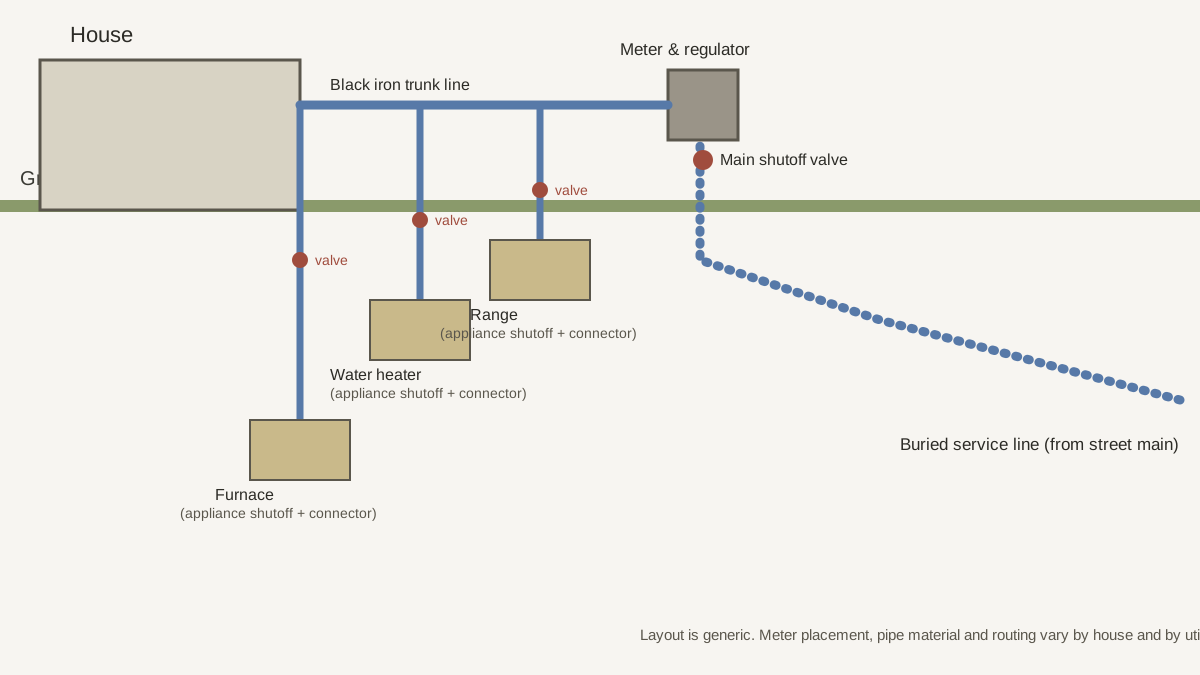
A home's gas piping is really several jobs wearing one name. Natural gas (or propane, on a tank system) arrives through a buried service line, rises at the outside wall through the meter and regulator, passes a main shutoff valve, and enters the house as a trunk line, traditionally threaded black iron pipe (Schedule 40 steel joined with tapered NPT threads), though many newer and remodeled homes run CSST (corrugated stainless steel tubing) instead. From there it branches, each branch ending at an individual appliance shutoff valve and a short flexible appliance connector feeding the furnace, the water heater, the range, a dryer, or an outdoor grill or fire pit. Gas line repair can mean fixing any one segment of that chain, and the segment matters more than the word.
Picture a 1970s rambler in a Rust Belt suburb where the furnace, the water heater, and the range all branch off one black iron trunk line running through a crawlspace. A corroded fitting six inches from the water heater is a different job, with a different cost and a different level of DIY risk, than a crushed service line where a fence contractor's post-hole digger clipped it two feet underground. Both get called gas line repair in casual conversation. Only one of them involves your utility company at all.
It also helps to separate repair from gas line installation: running new pipe to a range you're adding, a generator, or a fire pit that never had a gas connection before is a different scope of work, usually requiring a permit and a pressure test (one sensitive enough to catch even a small drop, which is why it's measured in inches of water column rather than pounds per square inch: 1 psi equals roughly 27.7 inches of water column), even though it uses the same trunk line and the same licensed trade. Both repair and installation end the same way, with an inspection that confirms the system holds pressure before anyone lights a burner.
How gas moves from the street to your appliances.
What Usually Causes a Gas Line Problem, Starting With the Most Common
Corrosion and worn threaded joints
Black iron pipe is durable but not immune to moisture, and a threaded joint in a damp crawlspace or an exterior meter assembly exposed to decades of weather is the most common place a small leak starts. The joint compound or tape used decades ago dries out and shrinks; the threads themselves rust and pit. None of this happens overnight, which is why a gas line inspection every few years catches most of these before they become an active leak rather than after.
Physical damage from digging or settling
A buried service line or yard-run branch line gets struck by a post-hole digger, a trencher, or an aggressive shovel more often than most homeowners expect, since many buried lines have only around 12 inches of soil cover in an open yard (deeper only where they cross under a driveway), especially on properties where nobody kept a record of exactly where the line runs. Before any digging near where a line might run, the safer move is calling your local utility locate service so the path gets marked before a machine finds it the hard way. Ground movement from frost heave or settling soil can also stress a buried line gradually, cracking a fitting rather than the pipe itself.
Appliance connector wear
The flexible connector between a shutoff valve and an appliance is meant to be replaced, not repaired, and it fails more often than the rigid pipe around it. A connector that's been kinked, pinched behind a range that got pushed back too far, or simply corroded after twenty years is a common source of a faint gas leak smell localized to one appliance rather than the whole house.
Improper DIY connections
Mismatched fittings, the wrong pipe dope or tape for gas-rated threads (fuel gas calls for yellow-coded PTFE tape or a pipe dope rated for gas, not the white tape sold for water lines), or a connector rated for one appliance reused on another all show up in broken gas line repair calls after someone's do-it-yourself appliance swap. A leak from a bad DIY fitting is one of the more preventable causes on this list, and it's also the one most often found only after the fact, during a routine check or an unrelated repair.
How to Figure Out What You're Dealing With Before Anyone Shows Up
A few minutes of noticing detail before you call anyone helps a plumber bring the right parts and skip a second trip. None of these steps involve opening a line or touching a fitting.
Note exactly where the smell or hissing sound is strongest: right at the meter, along a specific wall, or behind one appliance.
Check whether it's constant or only shows up when a particular appliance starts, since that points to a connector rather than the trunk line.
Look outside at the meter and any visible piping for obvious damage, rust, or recently disturbed soil nearby.
Check the flexible connectors behind the range, dryer, and water heater for kinks, cracking, or a loose fitting you can see without touching it.
Think back on any recent yard work, foundation work, or appliance installs or moves that line up with when the problem started.
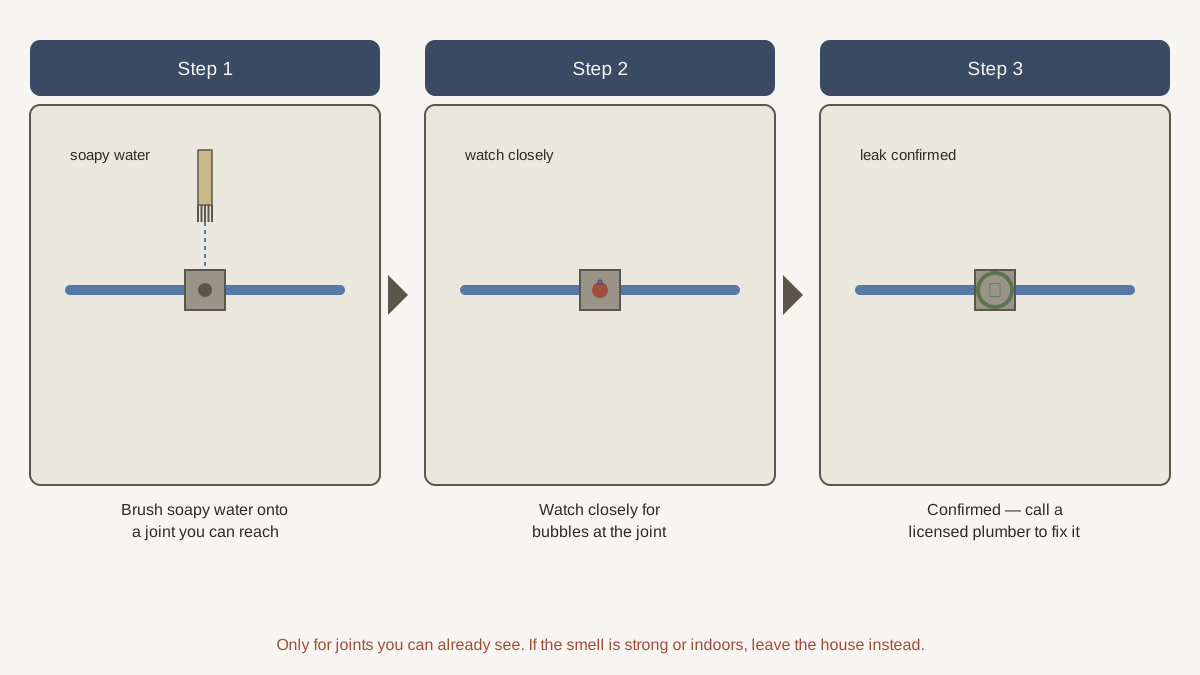
If the source seems safely accessible and you're not smelling gas continuously, a soap-and-water bubble test on a visible joint (the classic homeowner-safe check: brush on soapy water and watch for bubbles forming) can confirm a leak location without opening anything.
Write down what you found, including the smell, the sound, and anything you saw, before you make a call.
That last step matters more than it sounds. A plumber or utility technician who already knows the smell is strongest behind the dryer, not the whole house, can bring the right connector on the first visit instead of scheduling a second one.
How to run the soap-and-water bubble test described above.
What You Can Safely Check Yourself, and Where That Stops
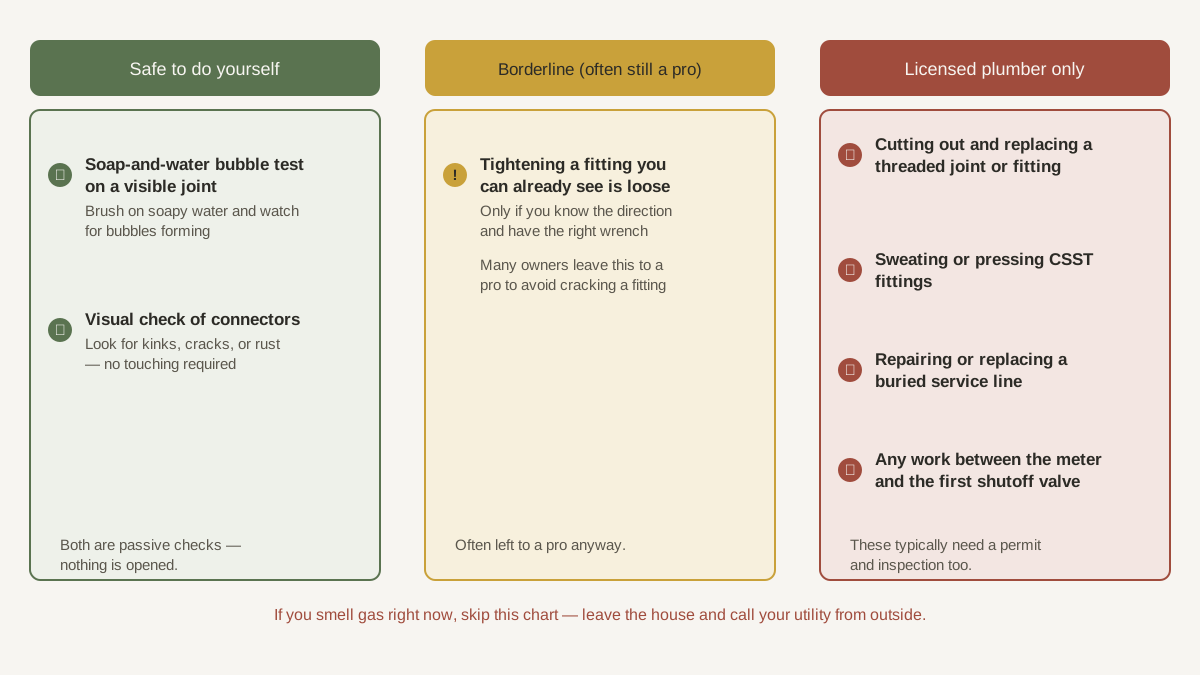
The soap-bubble test above is genuinely DIY-safe: it's passive, it uses nothing but water and dish soap, and it doesn't require opening the system. Visually checking connectors for obvious kinks or rust is the same category. Tightening a fitting you can already see is loose, if you know which direction and have the right wrench, sits right at the edge, and plenty of homeowners reasonably choose to leave even that step to a pro rather than risk over-tightening a brass fitting into a crack.
Everything past that point is a licensed job, and this is the point worth being blunt about: a gas line repair kit or roll of pipe repair tape sold for water lines is not a fix for an active gas leak. Nothing sold over the counter is rated to permanently seal gas-carrying pipe under pressure, and using one delays a real repair while leaving a leak in place. If a joint is leaking, the correct fix is cutting out and replacing that section with properly threaded, gas-rated fittings, followed by a pressure test, which is exactly the work a licensed plumber is trained and insured to do.
Cutting into black iron pipe, sweating or pressing CSST fittings, replacing a section of buried service line, or doing any work between the meter and the first shutoff valve also falls outside homeowner territory almost everywhere, both because it typically requires a permit and inspection and because a mistake there risks the whole house's supply, not just one appliance.
What's safe to check yourself, and where a DIY fix crosses into licensed territory.
What Gas Line Repair Cost Looks Like When No One Can Quote You a Number Online
There's no honest national average to give you here. Unlike water heater installs or sewer line work, gas line repair pricing depends so heavily on local permit rules, line depth, and how much of a house has to be opened up that a single national figure would be more misleading than useful. What we can give you is what actually drives the price on each type of job, and where those numbers would need to come from instead.
Job type
What's typically involved
What moves the price
Source for a real number
Exposed joint or fitting repair
Locate, shut off the branch, cut and replace the section, pressure test
Access, pipe material, whether drywall or flooring must be opened
Written estimate from a licensed plumber after they see it
Buried service line repair
Utility locate, excavation, repair or section replacement, inspection
Depth, soil type, distance from meter to the damaged section
Same, plus your utility for anything on their side of the meter
Gas line installation to a new appliance
Permit, new pipe run, fittings, pressure test, inspection sign-off
Length of run, number of fittings, local permit and inspection fees
Written estimate; ask whether the permit fee is included
Appliance connector replacement
Swap the flexible connector, confirm the new one is rated for that appliance
Connector length and type, ease of access behind the appliance
Often quoted as a flat per-connector fee by the plumber
For a sense of scale only, not a gas line quote: our sourced sewer line repair guide cites a $600 to $1,050 range for a single-section spot repair, and gas water heater installation runs $700 to $2,700 installed according to HomeAdvisor's 2026 survey, with NerdWallet reporting a similar $600 to $2,500 range for a standard tank unit. Gas line repair draws on the same licensed-trade labor rates and the same permit and inspection process as that work, which at least tells you the order of magnitude to expect before a plumber walks through the door. Treat any specific dollar figure you see elsewhere online for gas line repair cost the same way: as a starting point for a conversation, not a quote for your house.
When This Stops Being a Wait-and-See Problem
Most home repairs tolerate a day or two of thinking it over. A suspected gas leak doesn't, and the signs below sort roughly by how fast you need to act.
What you notice
What it likely means
How urgent
Strong rotten-egg gas leak smell, or a hissing sound near a pipe, meter, or connector
Active leak under pressure
Leave now, call from outside
Dead or discolored grass over a buried line, or bubbling in wet soil
Underground leak escaping through the soil
Move away, call the utility the same day
Higher gas bill with no added usage you can explain
Possible slow leak downstream of the meter
Schedule an inspection soon, not an emergency by itself
Pilot light won't stay lit, or a burner flame turns yellow-orange instead of blue
Could be a supply issue, or a combustion and venting problem
Same-week service call; if you also feel dizzy or headachy, treat it as an emergency
Whistling from a shutoff valve or the regulator
Valve or regulator wearing out
Schedule an inspection
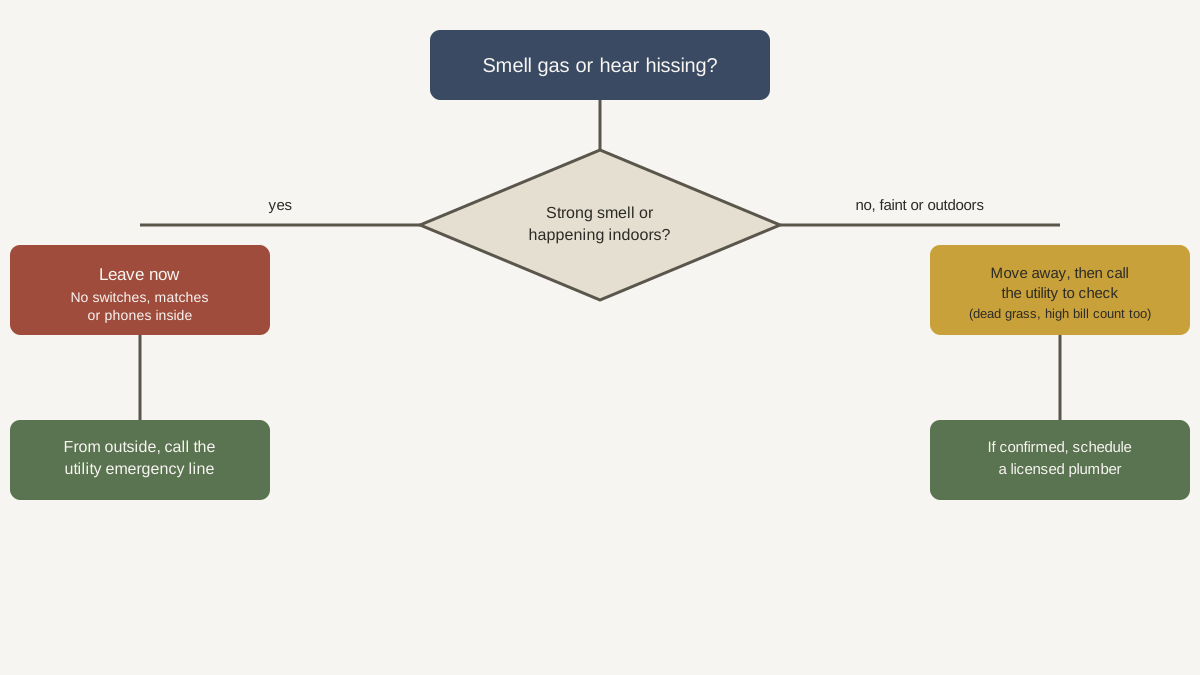
What to do the moment you suspect a gas leak.
If you smell gas strongly or hear hissing anywhere inside the house, leave immediately without flipping a light switch, striking a match, or using a phone indoors, get everyone else out too, and call only once you're outside. That single rule matters more than anything else on this page: natural gas only ignites within a narrow band, roughly 5 percent to 15 percent concentration in air (below or above that range it won't burn), but a leak filling an enclosed room can pass right through that window, and a spark from an ordinary switch is enough to ignite gas that's already accumulated in a room. Once you're safely outside and away from the house, call your gas utility's emergency line first. If the smell is still coming from inside your home or you can't reach the utility right away, call 888-854-0126 and describe exactly what you're noticing and where.
Carbon monoxide is a related but separate risk worth knowing about: a fuel-burning appliance that isn't venting correctly can produce it even without any gas smell at all, since natural gas itself has an added odorant (dosed so a leak is detectable by smell at around one-fifth, or 20 percent, of gas's lower explosive limit, a federal pipeline-safety requirement meant to give you a warning long before a room could reach an ignitable concentration), but carbon monoxide has none. OSHA's workplace exposure limit for carbon monoxide is 50 parts per million averaged over 8 hours, a level a poorly vented appliance can push past indoors with no odor cue at all. A working CO alarm near sleeping areas is the only reliable way to catch that on its own; if one goes off, treat it the same way as a gas smell and get everyone into fresh air first. If you're ever unsure whether a situation counts as urgent enough to skip a routine appointment, our guide to when you actually need an emergency plumber walks through that judgment call in more general terms.
Who's Actually Licensed to Touch a Gas Line in Your House
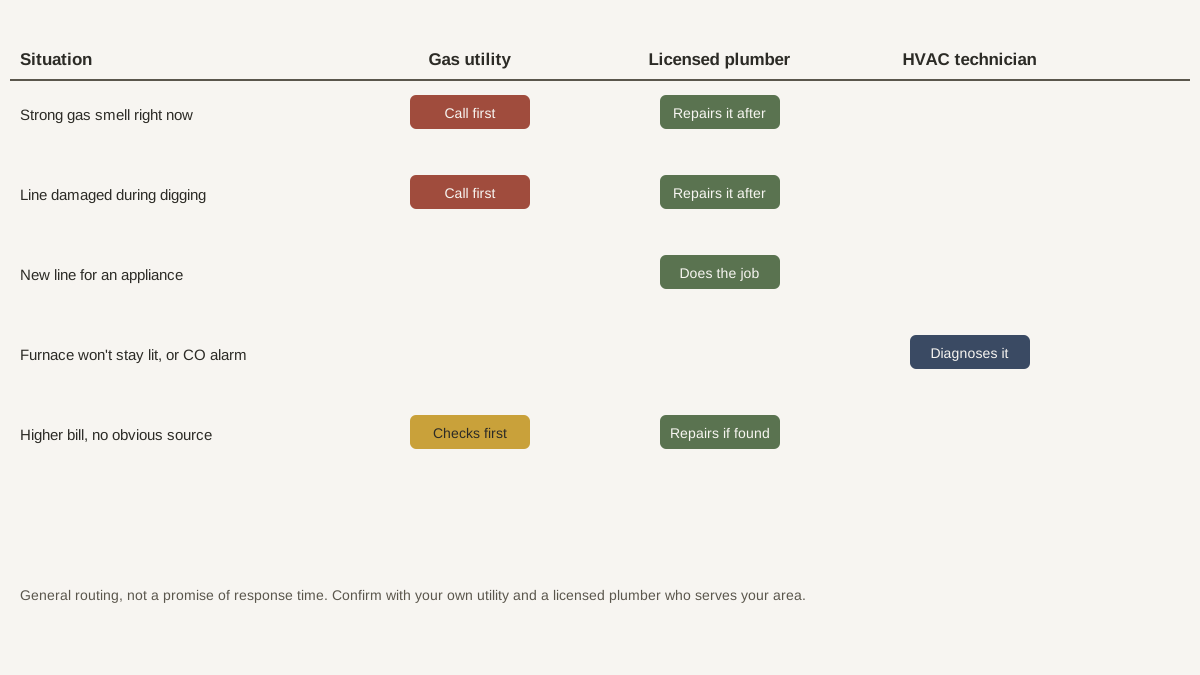
Three different professionals show up in most gas line situations, and they're not interchangeable. Two different questions hide inside who to call for gas leak searches: who handles the emergency safety response, and who actually repairs the pipe.
Your gas utility owns the service line up to the meter and is who to call first for any active leak or suspected leak, at any hour, and it typically costs nothing for them to come check. They will shut off gas to the house if needed and confirm whether a leak exists, but in most areas they don't repair piping on your side of the meter. A licensed plumber (in some states, a licensed gas fitter is a distinct trade) handles everything from the meter into the house: repairs, replacements, appliance connectors, and new gas line installation. An HVAC technician is who to call when the problem looks like it's specifically about an appliance not burning correctly, a pilot that won't stay lit, or a furnace that seems to be venting poorly, since that's diagnostic and repair work on the appliance itself rather than the supply line.
Who to call for five common gas line situations.
When you're ready to hire someone for the repair itself, confirm they're licensed for gas work in your state (plumbing licensing typically covers this, though a handful of states license gas fitting separately), ask to see proof of liability insurance, and get the permit and inspection plan in writing before work starts, not after. A written estimate should spell out the scope (what's being repaired versus replaced), the materials, whether a permit and inspection are included, and an itemized total rather than a single lump sum. If a company won't put that in writing, that's a red flag worth acting on. For a broader walkthrough of vetting any plumber, our guide to choosing a licensed plumber covers license lookups, insurance proof, and the questions worth asking before anyone starts work; reach a plumber that serves your area at 888-854-0126 and describe what you found during your own check.
How to Stop This From Happening Again
A gas line inspection on a rhythm of every few years, or any time you buy a house with piping older than a couple of decades, catches most corrosion and connector wear before it becomes an active leak. Ask specifically for the appliance connectors to be checked during that visit; they wear out faster than the rigid pipe around them and get skipped in a casual look.
Keep a simple record of where buried lines run on your property, including any branch lines added for a grill, fire pit, or generator, and call your local utility locate service before any digging, trenching, or fence-post work near that path. Know where your main shutoff valve is and how to operate it before you ever need to in an emergency; that's a five-minute task now versus a stressful guess later. If you're remodeling near existing gas piping, tell your contractor exactly where it runs rather than assuming they'll find it.
Install UL 2034-listed carbon monoxide alarms near sleeping areas if you don't already have them, and swap the batteries on the same schedule as your smoke detectors. It's a separate device from a gas leak detector, and it protects against a different (and odorless) risk from the same fuel-burning appliances.
Why Where You Live Changes the Job
In the freeze belt (the Upper Midwest, the Northeast, the Mountain states), frost heave shifts buried lines and fittings gradually over repeated freeze-thaw cycles, the same slow stress described in our guide to frozen pipes for water lines in those regions. Heavy snow and ice can also build up around an outdoor meter and regulator; clearing it by hand, never by chipping at it with a shovel or hard tool, keeps the vent openings on the regulator clear without risking damage to the assembly itself.
Older housing stock in the Northeast and industrial Midwest is more likely to still run black iron pipe installed decades ago, which is exactly the material most prone to the threaded-joint corrosion described earlier in this guide, so a gas line inspection matters more in these older neighborhoods than in newer Sunbelt construction, where CSST is more common and connector wear tends to be the bigger factor instead.
Along the Gulf Coast and other hurricane-prone areas, flooding around an outdoor meter is a real risk after a major storm, and utilities generally recommend not relighting appliances or restoring gas service yourself after any flooding until the meter, regulator, and interior connections have been checked by a professional. Coastal salt air also accelerates corrosion on any exposed metal fitting faster than an inland climate would, which is one more reason a periodic visual check of exterior piping is worth the five minutes it takes.
Frequently asked questions
How much does gas line repair cost?+
There's no reliable national figure for gas line repair cost, unlike more standardized jobs such as water heater replacement. Price depends on whether the damage is an exposed fitting or a buried line, how much access work is needed, and local permit fees. Get a written estimate from a licensed plumber after they've seen the specific problem rather than budgeting off any number you find online.
Who do you call for a gas leak?+
Call your gas utility first, at any hour, for any suspected leak; checking is typically free and they can shut off supply if needed. A licensed plumber then handles the actual repair on your side of the meter. If a pilot light or furnace venting issue looks like the cause rather than the supply line itself, an HVAC technician is who to call for that specific piece.
Do plumbers repair gas lines?+
Yes, in most states a licensed plumber's scope includes gas piping repair, replacement, and new installation from the meter into the house, alongside their water and drain work. A handful of states license gas fitting as a separate trade, so it's worth confirming a contractor's license specifically covers gas work in your state before you hire them, not just plumbing generally.
Who is responsible for gas line repair, the homeowner or the utility?+
The utility generally owns and maintains the line up to and including the meter; everything from the meter into the house, including appliance connectors, is the homeowner's responsibility. That split is why a leak right at the meter gets a different response than one found behind your water heater. If you're unsure which side a problem is on, your utility can usually tell you during their initial check.
How long does gas line repair take?+
A straightforward exposed-fitting repair is often finished in a single visit once a plumber is on site. A buried line repair or a new gas line installation that requires a permit and inspection typically spans a few days between the initial visit, the permitted work, and the inspection sign-off, since many jurisdictions won't let a plumber close up the work until an inspector confirms the pressure test.
Does homeowners insurance cover gas line repair?+
It depends on the cause and your specific policy. A standard HO-3 policy is more likely to cover sudden accidental damage, such as a line struck during a covered event, than gradual corrosion or wear, which most carriers treat as a maintenance exclusion. Pull your actual declarations page and ask your agent directly rather than assuming either way, since riders and exclusions vary by carrier and by state.
How much does gas line replacement cost compared to a repair?+
Replacement covers more pipe and more labor than a targeted repair, so it typically costs more, though neither has a reliable national average the way water heater or sewer line work does. A short section replacement after a repair attempt fails is a different scope than replacing an entire aging trunk line. Ask a licensed plumber for options at both scopes so you can compare them directly.
Can I repair a gas line myself?+
Only the passive checks: looking for visible damage, checking connectors for kinks or rust, and a soap-and-water bubble test on an accessible joint. Actually cutting, threading, or replacing gas pipe, including with tape or a repair kit sold for other pipe types, is not a safe or lasting DIY fix and is licensed work almost everywhere. If you find a leak, the safe next step is calling your utility, not reaching for a toolbox.
What's the difference between a gas leak repair and a full gas line installation?+
A repair fixes or replaces a damaged section of existing pipe, usually smaller in scope and faster to schedule. Gas line installation runs entirely new pipe to a location that never had gas service, such as a new range, generator, or fire pit, and almost always requires a permit and a full pressure test before an inspector signs off, even though the same licensed plumber typically handles both.
How do I know if it's a gas leak or something else, like a high bill or dead grass?+
A gas leak smell (that rotten-egg odor added to natural gas) or a hissing sound near piping is the clearest sign and should be treated as urgent. A creeping gas bill with no explanation, or a patch of dead or yellowing grass over a buried line, are quieter signs of a possible slow leak that's worth a same-week utility check rather than an immediate evacuation.