Moen faucet repair, Kohler toilet repair and Delta faucet repair almost always come down to one worn part: a cartridge, an O-ring, or a fill valve. Moen and Kohler cover the part for life, not the labor; Delta's coverage depends on the line and your receipt. Most single-fixture jobs are DIY-friendly — call a plumber if the leak is hidden or a shutoff won't close.
A dripping faucet or a toilet that keeps running is rarely a mystery once you know which brand you own. Moen, Kohler, and Delta dominate the fixtures installed in American homes over the last three decades, and each one fails in its own predictable way. Moen's single-handle kitchen and bath faucets almost always come down to a worn cartridge. Kohler's toilets tend to fail at the fill valve or flush valve inside the tank. Delta's faucets, especially the ball-type and cartridge models, usually leak at the base or the handle once the O-rings harden.
This guide walks through how to identify faucet brand and model before you buy a single part, what actually breaks first on each brand, which repairs a homeowner can do with a wrench and twenty minutes, and where the line sits between a $12 part and a job that needs a licensed plumber. Every dollar figure below is a real, sourced range for the closest comparable job in our data — we don't invent a number for a repair type our sources don't cover, and we say so plainly where that's the case.
How to Identify Faucet Brand and Model Before You Buy Parts
Ordering the wrong cartridge is the single biggest time-waster in fixture repair, and it happens because two brands' parts can look almost identical in a hardware store bin. Before you touch a wrench, confirm the brand three ways: the manufacturer's logo stamped into the handle or spout base, a model number etched or molded somewhere on the fixture body (Moen typically stamps it on the underside of the spout or on the cartridge itself once removed), and, if both of those are worn smooth, the shape of the handle screw and the retaining clip, which differ enough between brands that a plumbing supply counter can usually match them by sight.
For toilets, the brand is almost always cast into the underside of the tank lid or the back of the bowl near the floor, along with a date code that matters more than you'd expect: Kohler changed several fill-valve and flush-valve designs across production years, so a part that fits a 2015 tank may not fit a 2005 tank of the same model name. Write down the full model number and date code before you leave the house to shop for parts — a phone photo of both is faster and more reliable than memory.
If you can't find any markings, measure instead: the diameter and depth of the cartridge bore, the number and spacing of mounting holes on a widespread faucet, and the rough-in distance on a toilet (the gap from the wall to the center of the floor bolts, almost always 12 inches on modern installs, though 10-inch and 14-inch rough-ins turn up on older or space-constrained installs) will narrow a "mystery" fixture down to two or three likely models even with no visible branding.
Why Moen, Kohler and Delta Fixtures Fail, Ranked by Likelihood
The most common cause by far, across all three brands, is a worn or mineral-scaled cartridge — the internal valve that mixes hot and cold water and stops flow when you shut the handle off. Rubber and plastic seals inside it harden or pit over five to fifteen years depending on water hardness, and once they do, the fixture drips at the spout, leaks at the base, or gets hard to turn. This single failure point explains most of what people search for as "moen faucet leaking at base," "moen faucet leaking at handle," and "delta faucet repair." House pressure compounds the effect: most residential plumbing codes cap static pressure at 80 psi and call for a pressure-reducing valve above that line, so a house running hot on pressure wears cartridge seals and O-rings faster than the five-to-fifteen-year range above assumes.
Second most common: a worn flapper or fill valve inside a toilet tank, which is the near-universal reason behind "why does my kohler toilet keep running." The flapper is a rubber (or, on newer Kohler models, a foam-and-plastic) seal that lifts when you flush and should drop back to seal the tank; grit, age, or a chain that's too short or too long keeps it from sealing fully, so water trickles into the bowl around the clock.
Third: hard-water mineral buildup inside the aerator or valve seats, which mimics a bad cartridge (reduced flow, sputtering) without actually being one — this is the cheapest fix on the list and the one most often skipped because people assume the whole fixture is failing.
Lower down the list, but worth ruling out early because they change the whole repair: a failed shutoff valve under the sink or behind the toilet that won't fully close, a supply line that's corroded at the connection, or, on older galvanized systems, enough sediment moving into the fixture from the pipe itself that it damages new parts within weeks of installing them.
Step-by-Step: Diagnosing the Problem Before You Order Parts
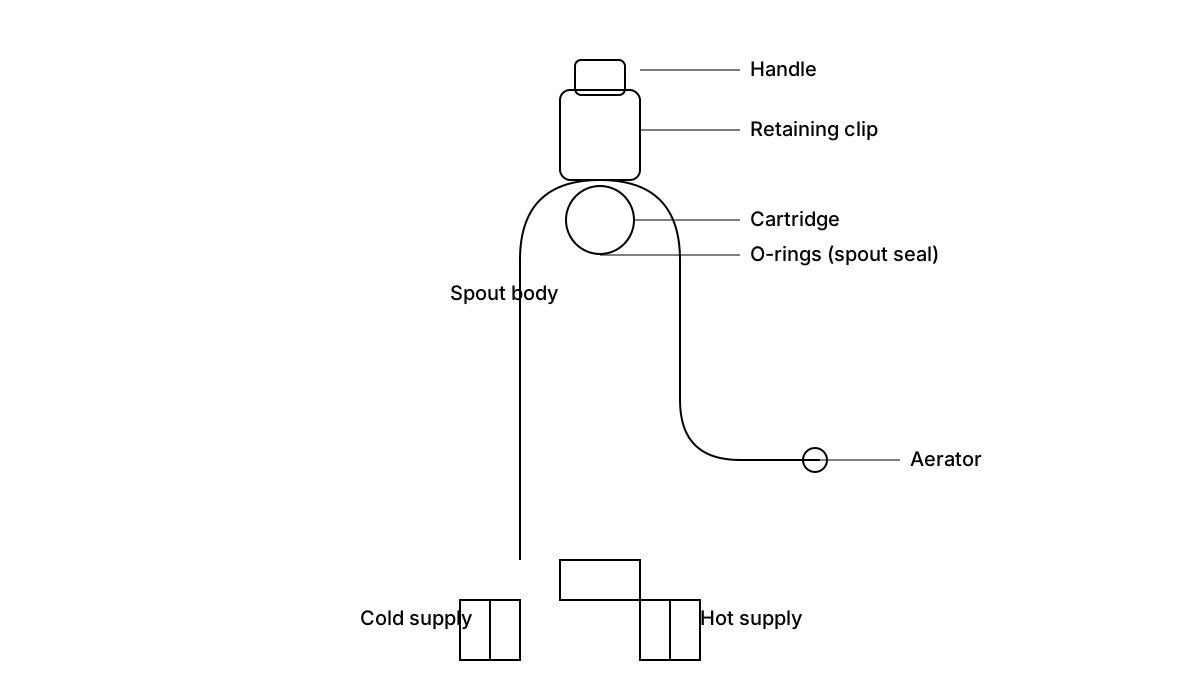
Work through this order before buying anything — it takes fifteen minutes and prevents the most common mistake, which is replacing a cartridge when the real problem is a scaled aerator or a bad shutoff valve. The diagram below shows where each of these parts sits inside a typical single-handle faucet.
The parts behind most Moen and Delta repairs: handle, retaining clip, cartridge, and the O-rings that seal the spout.
Shut off the water at the fixture's own shutoff valves (under the sink, or behind the toilet), not just the handle. If a shutoff valve won't turn or won't stop the flow, that valve is now part of the job.
Isolate where the leak actually starts. Run a dry paper towel around the base, the handle, and every visible connection with the water back on briefly. Where it gets wet first is your answer — a base leak, a handle leak, and a supply-line leak point to different parts.
Unscrew and inspect the aerator (the small mesh screen at the faucet tip) for white or greenish mineral crust. If flow is weak or sputtering and the aerator is caked, clean or replace it before assuming the cartridge has failed.
Pull the handle and inspect the cartridge for pitting, a torn O-ring, or visible mineral scale on the stem. Bring the old cartridge to the store or photograph the model number stamped on it — this is the single most reliable way to identify faucet brand and generation when the exterior markings are worn away.
For a running toilet, lift the tank lid and watch the flapper through a full flush cycle. If it drops and seals cleanly but water still trickles into the bowl a few minutes later, suspect the fill valve instead of the flapper.
Add a few drops of food coloring to the tank and wait ten minutes without flushing — color in the bowl confirms a flapper leak; no color with a still-rising or overflowing fill line points to the fill valve.
Moen Faucet Repair: Cartridges, Warranty and the Fixes That Work
Moen faucet repair starts and usually ends with the cartridge. Moen backs the cartridge itself, and most other functional parts, with a lifetime warranty against defects on the vast majority of its residential faucets, which answers the two questions people search most: are Moen faucet cartridges guaranteed for life, and does Moen replace a faucet for free. The part is typically covered for as long as the original purchaser owns the home; the labor to install it is not. Moen's customer service can usually identify your model from a photo of the spout base or the old cartridge and ship the correct replacement at no charge for the part.
To find your Moen faucet model number, check the underside of the spout, the mounting hardware under the sink, or the cartridge itself once pulled — Moen cartridges are stamped with a part number (common residential numbers include the 1225 and 1255 series) that a plumbing supply counter can cross-reference even without the full faucet model.
One caution worth flagging because it's a common follow-up search: if a faucet keeps leaking after a cartridge swap, the cause is almost never a defective replacement part. It's usually one of three things — the retaining clip wasn't fully seated, the O-rings on the cartridge weren't lubricated with plumber's grease before reinstalling, or the cartridge was rotated slightly off its index mark, which throws off the hot/cold balance and can cause a steady drip even with a brand-new part.
Moen faucet cartridges are not universal across brands, and they aren't fully universal even within Moen's own lineup — a 1225 and a 1255 cartridge are physically different and not interchangeable, so matching the exact number stamped on the old part matters more than matching the faucet's general appearance.
Kohler Toilet Repair: Fill Valves, Flush Valves and Running-Toilet Fixes
Kohler toilet repair is dominated by two parts working together inside the tank: the fill valve, which lets water in after a flush and shuts off at the right level, and the flush valve and flapper, which release water into the bowl and then reseal. Every toilet sold in the US since 1994 is built to use no more than 1.6 gallons per flush under the federal standard, and the fill valve's whole job is hitting that exact level and shutting off cleanly. When a Kohler toilet runs constantly, the fill valve is the more common culprit once the flapper checks out clean — a worn valve seat lets water bypass the shutoff even after the tank reaches its set level, and it will keep trickling into the overflow tube instead of stopping. Our running toilet repair guide walks through the flapper and fill-valve fix in more detail for any brand, not just Kohler.
Kohler's warranty on toilets and tank parts varies by product line and is generally a limited warranty on the mechanism rather than a blanket lifetime guarantee across every model, which is the honest answer to does Kohler offer a lifetime warranty on toilets — some higher-end lines carry longer coverage than others, so the specific model and its documentation, not a brand-wide rule, decide what's covered.
Kohler toilet parts are not fully universal across the lineup either. Kohler has revised its Class Five, Cimarron, and other flush mechanisms over the years, and the company's own parts lookup is organized by model and serial number rather than by generic "Kohler toilet repair kit" — a universal-fit kit from a hardware store will often work as a functional replacement, but a factory-matched part installs cleaner and is more likely to seal correctly on the first try.
Symptom
Most likely part
DIY difficulty
Constant running, no flush
Fill valve
Easy: 20–30 minutes
Trickle a few minutes after flushing
Flapper (or flapper seat, if scaled)
Easy: 10–15 minutes
Weak flush, incomplete bowl clear
Flush valve / flapper chain length
Moderate: may need adjustment, not replacement
Tank-to-bowl leak at the bolts
Tank-to-bowl gasket and bolts
Moderate: tank must come off
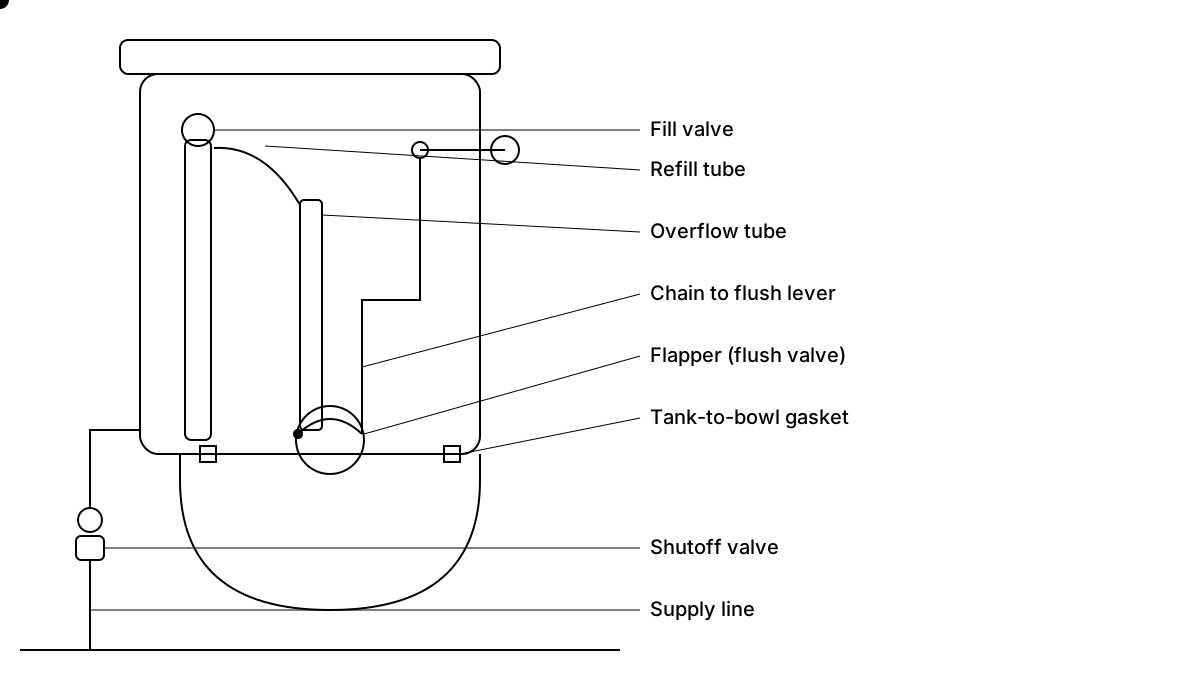
The two parts behind most Kohler toilet repairs, the fill valve and the flapper, shown together with the refill water path.
Delta Faucet Repair: Cartridges, O-Rings and the Leak at the Base
Delta faucet repair most often centers on the same failure as Moen (a worn cartridge), but Delta's product line includes more variety in mechanism type, from single-lever ball faucets on older installs to modern cartridge and diamond-seal designs. A leak at the base of the spout on a Delta faucet is almost always the O-rings that seal the spout to the body, not the cartridge itself, and it's one of the cheaper and faster repairs on this list: pull the spout straight up off the body, roll off the old O-rings, and replace them with the correct size, lightly greased. If the drip is at the spout tip rather than the base, our dripping faucet repair guide covers that specific pattern across brands.
A Delta faucet cartridge replacement follows a similar process to Moen's: shut off water, remove the handle, pull the retaining clip, and draw the cartridge straight out. Delta uses several distinct cartridge families (including its RP-series parts) across different faucet generations, so matching the number stamped on the old cartridge is the reliable path rather than guessing from the faucet's finish or shape.
Delta's warranty coverage is generally strong on residential faucets but, like Kohler, is documented by product line rather than a single blanket promise, and typically requires the original purchaser and proof of purchase for full coverage — worth locating before you call, since a receipt or the original box often speeds up getting a covered part at no charge.
Lifetime Warranties: What's Actually Free and What You'll Still Pay For
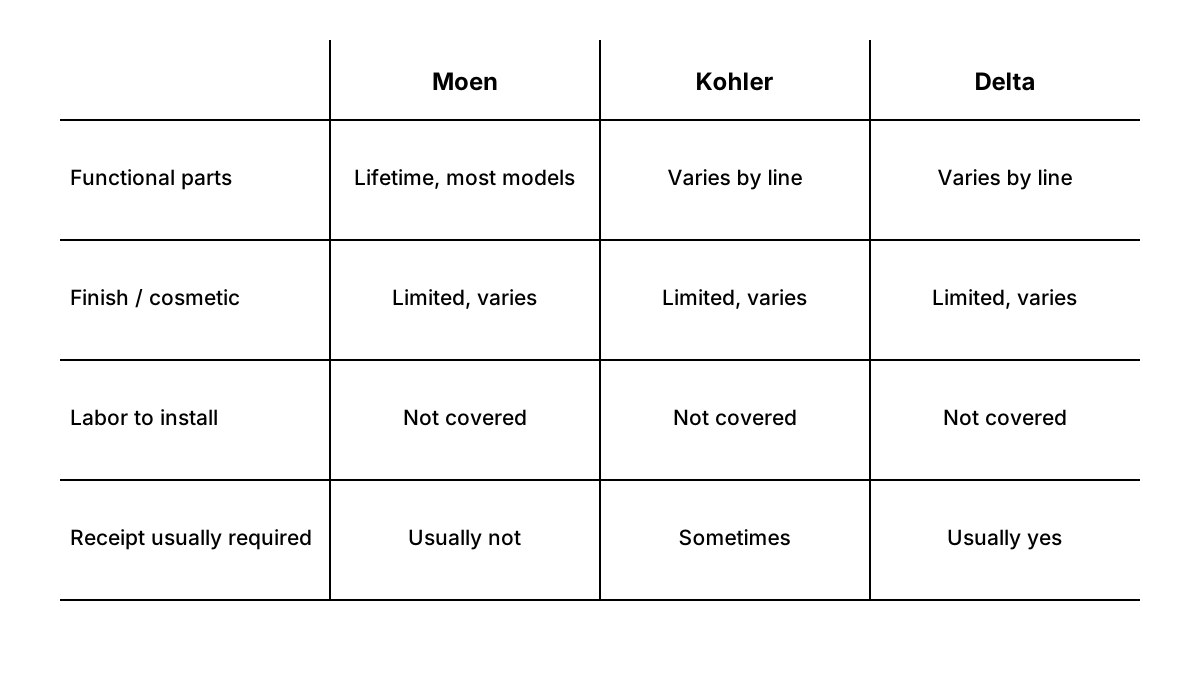
All three brands generally cover functional parts, not labor — and Delta is the brand most likely to ask for a receipt.
The phrase faucet lifetime warranty gets used loosely, and it's worth being precise about what it covers on all three brands here. A lifetime warranty on a residential faucet or toilet mechanism almost always means the manufacturer will replace a defective functional part (the cartridge, the fill valve, the flush valve) for as long as the original buyer owns the fixture. It essentially never means free labor, a free house call, or a free full-unit replacement once a model is discontinued; in that last case, the manufacturer typically offers a comparable current model instead of the exact original.
To make a warranty claim on any of the three brands, you'll generally need the model number, the approximate purchase or install date, and in Delta's case often proof of purchase. Moen and Kohler are usually able to work from photos of the part and the stamped numbers alone, without a receipt, which is one real advantage of buying from these two manufacturers if you tend not to keep home-improvement paperwork.
None of the three brands cover a leak caused by improper installation, a corroded supply line, mineral buildup from your home's water hardness, or damage from freezing — those are homeowner-side issues no matter how new the fixture is, and a plumber will usually flag which category a failure falls into within the first few minutes of looking at it.
What Fixing These Fixtures Actually Costs
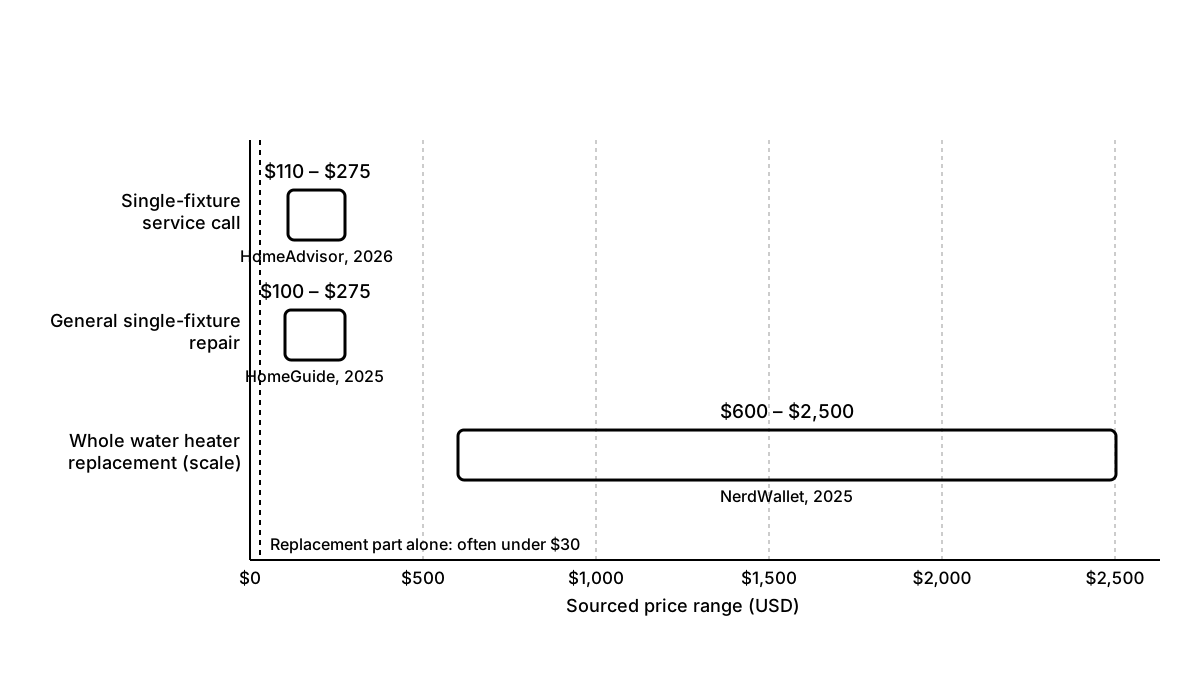
Here's the honest version of the cost picture. Our sourced data doesn't include a national survey specifically for cartridge, flapper, or fill-valve replacement — those jobs are usually too small and too fast for the cost-survey sites to track separately from a general service call. What we do have is real, sourced pricing for the closest comparable plumbing jobs: researched ranges pulled from published cost surveys, not a quote for your repair. The only number that's actually binding is a written estimate from a plumber who has seen the fixture in person.
Job type
What it typically involves
Sourced range (national)
Source
Single-fixture service call (e.g., clearing a clogged toilet)
Diagnosis, minor parts, one visit
$110 – $275
HomeAdvisor, 2026
General single-fixture drain/plumbing repair
Diagnosis plus minor parts and labor
$100 – $275
HomeGuide, 2025
Whole water heater replacement (for scale comparison only)
Full tank unit and install
$600 – $2,500
NerdWallet, 2025
Cartridge, flapper, or fill-valve swap by a plumber
Parts (often under $30 retail) plus a service call
No national survey in our data; get a written local estimate
n/a
The part itself is rarely the expense, and the same is true across most fixture brands, including the water heater brands covered in our brand-by-brand water heater repair guide. A Moen or Kohler warranty cartridge is often free if you claim it, and even paying retail, most cartridges, flappers, and fill valves run well under $30 at a hardware store. What you're really paying a plumber for on a small brand-fixture job is the service call and the labor — and that's priced closer to the single-fixture ranges above than to anything involving a full replacement. If a "simple" faucet or toilet fix turns into cutting into a wall, replacing a corroded shutoff valve, or a cracked tank, the job has effectively become a different, larger repair, and pricing should be treated that way rather than compared to a cartridge swap. The final number also moves with your region, how hard the fixture is to access, and how much a plumber finds once the wall or tank is actually open — which is exactly why the ranges above are a starting point, not a final price.
Sourced cost ranges for comparable jobs (HomeAdvisor 2026, HomeGuide 2025, NerdWallet 2025) shown against the roughly $30 retail cost of the part itself.
DIY Fixes vs When to Call a Pro
Most of what's covered above is genuinely DIY territory: an aerator clean, a cartridge swap on a faucet, a flapper or fill-valve replacement on a toilet. Basic tools (an adjustable wrench, needle-nose pliers, a cartridge puller for stubborn Moen and Delta cartridges) and thirty to ninety minutes handle the large majority of these jobs, and a wrong first attempt rarely makes things worse as long as the water is off before you start.
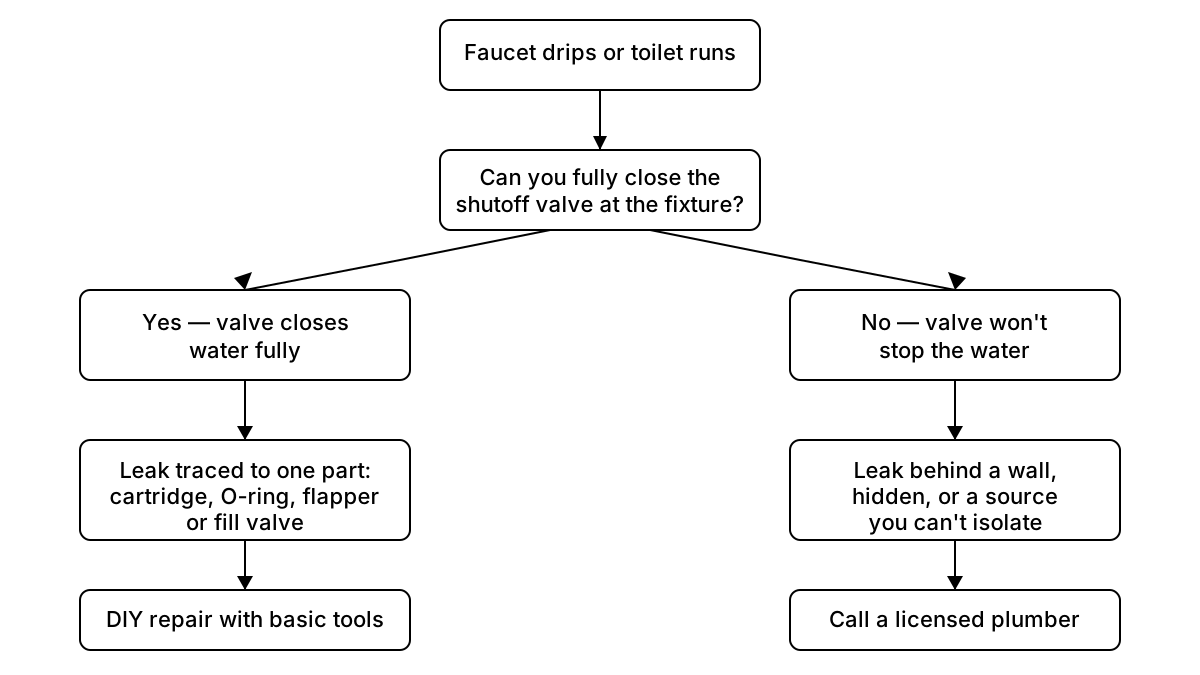
The comparison table below sums up where each brand's most common failure sits on that spectrum, and the flow chart after it walks through the same decision in order.
Start with the shutoff valve: if it won't fully close, or the leak is hidden, call a plumber before doing anything else.
Brand
Most common failure
DIY fix
Call a pro when…
Moen
Cartridge wear (drip at spout or handle)
Replace cartridge; often free under warranty
Leak traces behind the wall, or the shutoff valve won't close
Kohler
Fill valve or flapper wear (running toilet)
Replace fill valve and/or flapper kit
Tank cracks, wax ring fails, or subfloor shows water damage
Delta
O-ring or cartridge wear (leak at base)
Replace O-rings or cartridge
Leak is at a fixed connection under the counter, or hot/cold mix constantly
If your diagnosis points to something past this table — a leak you can't isolate, a shutoff valve that won't fully stop water, or any sign the leak has reached wood framing or drywall — a plumber who serves your area can usually work from a clear description of the brand, model, and symptom over the phone at 888-854-0126 before deciding whether a visit is needed.
When to Call a Plumber Instead, and the Line You Shouldn't Cross
Fixture repair stays low-risk as long as it stays contained to the fixture. It stops being a homeowner job the moment any of these show up: water inside a wall cavity or ceiling, a shutoff valve that won't close, standing water you can't identify the source of, a toilet that's actively overflowing onto the floor, or a toilet tank that's cracked rather than just leaking at a seal. If you can't fully stop the water at a shutoff valve, stop working and call a licensed plumber before you do anything else — every DIY fixture job depends on being able to isolate the water first, and a failed shutoff turns a $12 part into a flooded floor.
A plumber who serves your area can also be the faster option even for a job you could technically do yourself, if you don't already own a cartridge puller, don't know your model number, or are dealing with an older fixture where the shutoff valves themselves haven't been touched in a decade and may not hold. Before a bigger job like that starts, verify the plumber's state license yourself through your state's licensing board and ask them to confirm they currently carry liability insurance — a legitimate company puts both in writing without hesitation. Our guide on how to choose a licensed plumber covers the license, insurance, and estimate questions worth asking before anyone opens a wall. Calling 888-854-0126 and describing the brand, the symptom, and roughly how old the fixture is will usually get you a faster read on whether it's a same-visit fix or something that needs parts ordered first.
Basic safety still applies even on a "simple" job: never work on a fixture with the water main still open at that branch, keep a bucket and towels under any connection you're loosening, and if a toilet supply line or shutoff valve is original to a house built before the 1990s, treat it as likely to fail when you touch it and have a backup plan for shutting off water at the main.
Preventing Repeat Failures
The single biggest lever most homeowners can pull is water hardness. Mineral-heavy water accelerates cartridge, O-ring, and valve-seat wear on every brand, which is why the same Moen faucet lasts eight years in one house and eighteen in another a few miles away with softer supply water. A whole-house water softener or a simple sediment/scale filter ahead of high-use fixtures slows this wear meaningfully; even without one, an aerator cleaning every six months in hard-water areas keeps flow problems from being mistaken for cartridge failure.
Beyond water quality, three habits extend the life of any brand's fixtures: don't over-tighten handles when shutting off water (it stresses the cartridge stem and o-rings for no benefit), exercise shutoff valves once or twice a year by closing and reopening them fully so they don't seize when you actually need them (a modern quarter-turn ball valve only needs a 90-degree twist to shut off completely, while an older multi-turn compression stop takes several full rotations and is far more likely to seize from years of disuse), and replace a toilet flapper proactively around the seven-to-ten-year mark even if it isn't visibly failing yet, since a slow leak often runs for months before it shows up as a noticeably higher water bill. Our seasonal plumbing maintenance checklist lays out a schedule for this and the rest of the house.
Regional Notes: Hard Water, Freeze Belts and Well Water
Where you live changes which failure shows up first. In hard-water regions, including much of the Southwest, Texas Hill Country, and large parts of the Midwest, mineral scale is usually the dominant cause of both cartridge failure and running toilets, and a softener or scale-reducing filter pays for itself faster than in other regions. In freeze-belt states, the bigger risk isn't the cartridge at all: it's a supply line or shutoff valve that cracked when water trapped inside it dropped to 32°F, froze, and expanded enough to split the fitting — a failure that only reveals itself as a "faucet leak" once things thaw, which is why any repair that follows a cold snap deserves a check of the line and valve, not just the visible fixture.
Homes on private well water tend to see faster wear on rubber components (flappers, O-rings, cartridge seals) from sediment and iron content that municipal water treatment normally filters out, so well-water households may reasonably plan on replacing flappers and cartridges on a shorter cycle than the general guidance above suggests, and a whole-house sediment filter is often the single highest-value upgrade for extending fixture life in that situation.
Frequently asked questions
Can Moen faucets be repaired?+
Yes, and in most cases the repair is a cartridge swap rather than a full faucet replacement. Moen designs its residential faucets around a removable cartridge, and that part is usually covered under a lifetime warranty for the original owner, so repair is both the more common and the cheaper path compared with replacing the whole fixture.
Does Moen replace a faucet for free?+
Moen's lifetime warranty generally covers the internal functional parts, like the cartridge, rather than the entire faucet body or finish. If a fixture is truly beyond repair, Moen typically offers a comparable current model rather than shipping a free replacement of the original faucet, especially on older, discontinued designs.
Are Moen faucet cartridges guaranteed for life?+
Moen backs the cartridge and most other functional parts on the large majority of its residential faucets with a lifetime warranty against manufacturing defects, for as long as the original purchaser owns the home. That warranty covers the part itself, not the labor to install it.
How do I find my Moen faucet model number?+
Check the underside of the spout or the mounting hardware under the sink first. If both are worn smooth, pull the cartridge once the water is off — Moen stamps a part number directly on it, and that number alone is usually enough for customer service or a supply counter to identify the correct replacement.
Are Moen faucet cartridges universal?+
No. Cartridges are not interchangeable across brands, and even within Moen's own lineup, different series such as the 1225 and 1255 are physically different parts. Match the exact number stamped on the old cartridge rather than assuming any Moen cartridge will fit any Moen faucet.
Why is my Moen faucet leaking after replacing the cartridge?+
The new part is rarely the problem. The usual causes are a retaining clip that wasn't fully seated, O-rings that weren't lubricated with plumber's grease before reassembly, or a cartridge that got reinstalled slightly off its index mark, which throws off the hot and cold balance and can cause a steady drip even with a brand-new cartridge.
Does Kohler offer a lifetime warranty on toilets?+
Coverage varies by product line rather than applying as a single blanket rule across every Kohler toilet. Some lines carry longer or broader coverage than others, so check the documentation for your specific model rather than assuming lifetime coverage applies by default.
Why does my Kohler toilet keep running?+
The fill valve is the more common cause once the flapper checks out clean — a worn valve seat lets water bypass the shutoff point and keep trickling into the overflow tube. If the flapper visibly fails to seal after a flush, though, start there first since it's the faster and cheaper fix.
Are Kohler toilet parts universal?+
Not fully. Kohler has revised several of its flush mechanisms across production years, so a factory-matched part tied to your model and date code fits and seals more reliably. A universal-fit hardware-store kit will usually work as a functional replacement, but it's a looser match than an exact Kohler part.
How do I order Kohler toilet parts?+
Start with the model number and date code, usually cast into the underside of the tank lid or near the floor on the back of the bowl. Kohler's parts lookup and most plumbing supply counters use that number and date code together, since the same model name can use different internal parts across production years.