Dishwasher leak water damage usually starts with a worn door gasket, a loose supply line, a stuck water inlet valve, or a cracked drain hose, and it spreads sideways under the cabinet toe kick before it ever reaches the floor. Shut off the water at the valve under the sink, cut power if the outlet is wet, and extract standing water within the hour.
You open the cabinet under the sink for a sponge and your socks go cold. Or you're standing at the stove and notice the toe kick below the dishwasher looks darker than the rest of the cabinet run. Either way, a dishwasher leak rarely announces itself with a puddle in the middle of the kitchen. It shows up first as water under dishwasher panels and cabinet bases, in the gap where nobody looks until the particleboard starts to swell.
That's what makes dishwasher leak water damage different from a burst pipe or a flooded basement. The volume is usually small, a few cups to a gallon per cycle, but it leaks in the same spot every time the machine runs, and cabinet bases, subfloor, and the underlayment beneath vinyl or laminate flooring soak it up quietly for days or weeks before anyone connects the dots. By the time the floor feels soft underfoot, the water has usually been finding its way into the same three square feet for longer than you'd guess.
This guide walks through where the water is actually coming from, how to tell a five-minute fix from a call-a-technician problem, what the water damage itself costs to put right, and where a standard homeowners policy does and doesn't help.
Where the Water Is Actually Coming From
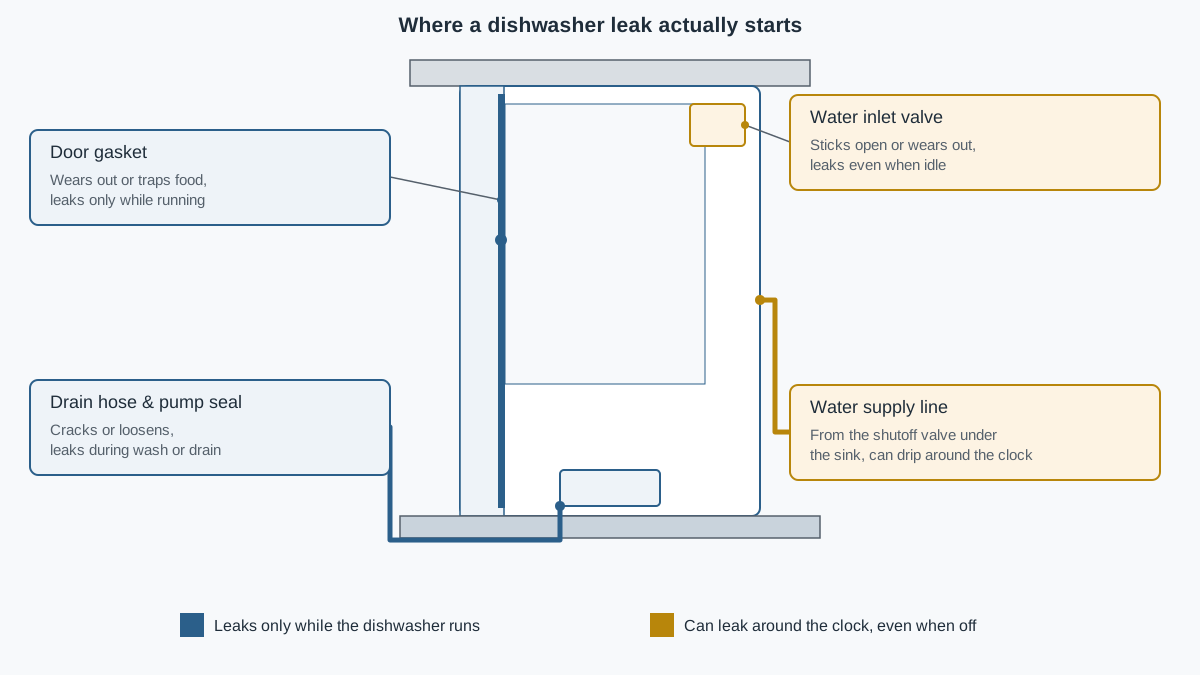
A dishwasher has four places water can escape, and each one leaves a different clue. Before you can fix anything, it helps to know which of the four you're dealing with.
The door seal, the rubber gasket that runs around the door opening, wears out or gets a food particle stuck in it and stops sealing the tub during the wash cycle.
The water supply line, the small flexible line running from the shutoff valve under the sink to the machine, typically a standard 3/8-inch compression fitting on each end, has a loose fitting or a cracked connector that drips whether the dishwasher is running or not.
The water inlet valve, the part that lets fresh water into the tub at the start of a cycle, sticks open or has a worn washer and lets water in when it shouldn't.
The drain hose or pump seal underneath the unit cracks, disconnects, or wears out, letting used wash water escape instead of draining back out through the sink or disposal.
Two of these, the door seal and the drain hose, only leak while the dishwasher is running. The other two, the supply line and the inlet valve, can leak around the clock, which is a useful first clue when you're trying to figure out which part is actually at fault.
The door gasket and drain hose only leak while the dishwasher runs; the supply line and inlet valve can drip around the clock, which is why finding a puddle with the machine off points straight at those two parts.
Why Your Dishwasher Is Leaking, Ranked by How Often It's the Cause
Not every cause is equally likely. In rough order of how often a leaking dishwasher turns out to be each one:
Worn or dirty door gasket. This is the single most common reason for a dishwasher leaking from the door, and the easiest to check: run a finger around the seal feeling for cracks, flat spots, or stuck food debris.
Overloading or improper loading. Yes, overloading a dishwasher can cause it to leak: plates and bowls that block the door from closing flush, or a tall item that hits the spray arm and knocks it loose, both let water past the seal or spray it somewhere it shouldn't go.
Loose or cracked water supply line. A fitting that was never fully tightened during installation, or a line that's cracked from age, drips at the connection point under the sink or at the back of the machine, and it does this whether or not the dishwasher is running.
Stuck or worn water inlet valve. If the valve doesn't fully close after the fill cycle, water keeps trickling in, overflows the tub's float switch threshold, and ends up on the floor even when nobody has run the machine in hours.
Damaged drain hose or pump seal. A cracked hose, a loose clamp, or a worn pump seal lets wash or drain water escape underneath the unit, usually during the wash or drain portion of the cycle rather than the fill.
Wrong or too much detergent. Using regular dish soap instead of dishwasher detergent, or overfilling the dispenser, creates excess suds that can force their way past the door seal during the cycle.
Cracked tub or spray arm. Less common, but a hairline crack in the tub itself or a spray arm that's come loose and is hitting the door can spray water past the seal on every cycle.
The pattern worth noticing: the first two causes account for most dishwasher leaking from bottom and dishwasher leaking from the door complaints, and both are things a homeowner can check without a service call.
How to Diagnose It in the Next 10 Minutes
Before you decide whether this is a DIY fix or a call to a technician, a short check narrows it down fast.
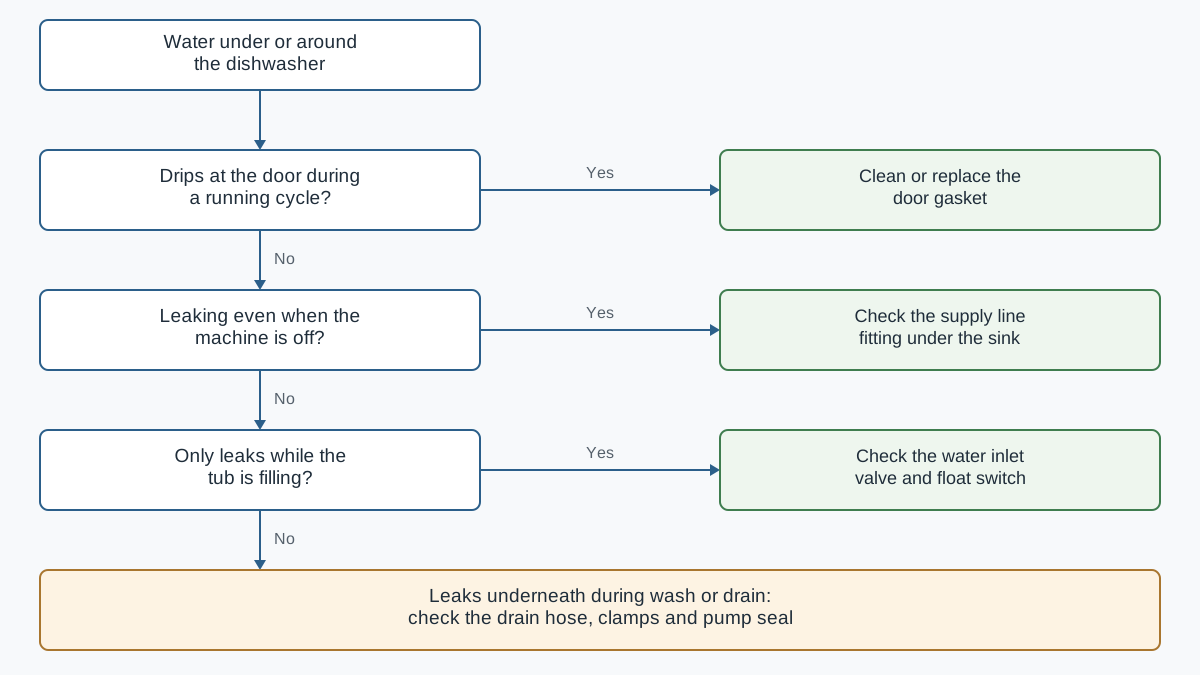
Whether the leak happens only while running, or around the clock, is the fastest clue to which part is at fault.
Run the dishwasher empty and watch the door seal for the first few minutes of the wash. If water beads or drips along the gasket, that's your answer.
Check the floor and cabinet base while it's off. If it's already damp before the cycle even starts, the leak is happening around the clock, point to the supply line or the inlet valve, not the door or drain hose.
Pull the dishwasher out (most slide out on their mounting brackets once the two screws under the countertop lip are removed) and look at the supply line, drain hose, and connections underneath with a flashlight.
Feel along the water leaking under sink when dishwasher runs connection point specifically: that fitting sits under ordinary household water pressure, typically 40 to 80 psi, around the clock, which is why it's the single most common source of an around-the-clock drip, and it's usually a simple compression fitting a wrench can snug back down.
Check the float switch inside the tub, the small cup with a rod that rises as the tub fills. If it's stuck down, the inlet valve keeps adding water past the point it should stop.
Write down where the water actually is, not just where you first noticed it. Water under dishwasher panels that's only there right after a cycle points to the door or the drain hose; water that's there before you've even started the machine points to the supply line or a stuck valve. That distinction alone will save a technician a diagnostic trip, or save you from replacing a part that was never the problem.
DIY Fixes You Can Try Before Calling Anyone
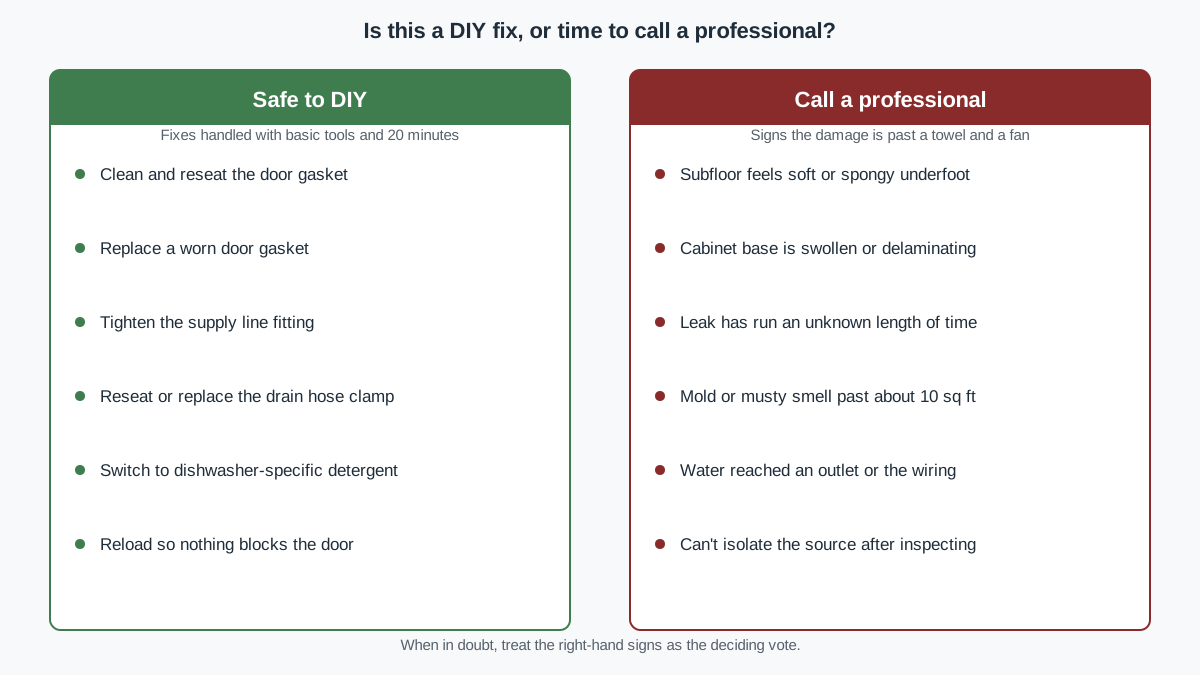
A good number of dishwasher leaks are fixable with a screwdriver and twenty minutes, no technician required.
Clean and inspect the door gasket. Wipe it down, check for food debris caught in the seal, and press it back into its channel if it's come loose anywhere.
Replace a worn gasket. A new door gasket is a low-cost part on most models and usually presses into place without tools, one of the more satisfying fixes on this list.
Tighten the supply line fitting. A quarter turn with an adjustable wrench on the compression fitting under the sink often stops a slow, constant drip completely.
Reseat or replace the drain hose clamp. If the hose itself looks sound but the clamp is loose or missing, a new hose clamp from a hardware store fixes it in minutes.
Switch detergents. If suds are the culprit, confirm you're using dishwasher-specific detergent, not dish soap, and that you're not overfilling the dispenser.
Load it level. Reload with nothing blocking the door from closing flush and nothing tall enough to catch the spray arm as it turns.
If any of that stops the leak, run one more full cycle with a towel spread under the unit before calling it fixed. If the towel stays dry, you're done.
Handling the Water Damage Itself, Not Just the Appliance
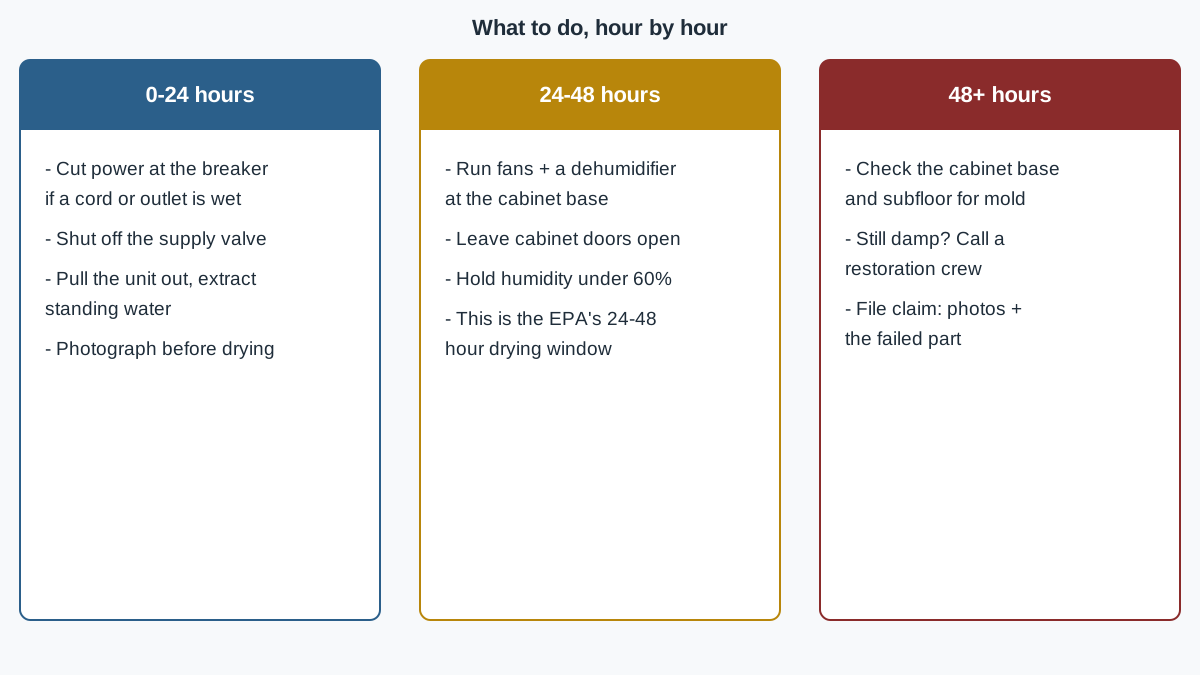
Fixing the dishwasher and cleaning up after it are two separate jobs, and the second one is time-sensitive. If the outlet under the sink or the dishwasher's power cord is sitting in water, cut power at the breaker before you touch anything, don't unplug a wet cord or reach into a wet outlet by hand: a standard 120-volt kitchen circuit is still enough to injure you through standing water.
Once power is safely handled:
The EPA's 24-48 hour drying window is the deadline that matters most for keeping mold out of the cabinet base.
Pull the dishwasher forward (with power and water off) so you can see and dry the full footprint underneath it, not just what's visible from the front.
Open the cabinet doors on either side and pull out anything stored under the sink so air can reach the cabinet base.
Mop up standing water and run a wet vac over the subfloor and cabinet toe kick, not just the visible floor surface.
Set up fans and, if you have one, a dehumidifier aimed at the cabinet base and the floor beneath the dishwasher.
Photograph everything, the standing water, the cabinet base, the flooring, before you dry or move anything, in case you need it for a claim later.
The EPA recommends drying water-damaged materials within 24 to 48 hours and keeping indoor humidity under 60 percent, ideally between 30 and 50, to keep mold from taking hold. Kitchen floor water damage from an appliance leak is almost always Category 1, clean supply-line water, under the IICRC's classification system, which makes it faster and cheaper to dry than a sewage or gray-water event, as long as you catch it inside that window. If cabinet bases, subfloor, or flooring are still damp after two full days of fans and a dehumidifier, that's past what a DIY setup reliably dries, and it's worth calling in a crew with commercial air movers and moisture meters. If water is still spreading and you can't get ahead of it, 888-407-9931 connects you with a water damage restoration company that serves your area; describe how much water there is and how long it's been sitting so they know what equipment to bring.
When a Dishwasher Leak Stops Being a DIY Job
Most dishwasher leaks stay small if you catch them fast. A few signs mean it's moved past what a towel and a fan can handle:
The subfloor feels soft or spongy underfoot near the dishwasher, a sign water has already saturated the particleboard or plywood beneath the flooring.
Cabinet bases are swollen or delaminating, since particleboard cabinet bases don't recover once they've absorbed water and started to expand.
The leak has been going on for an unknown length of time, which is common with a slow supply-line drip nobody noticed for weeks.
You can smell mildew when you open the cabinet, or see visible mold covering more than roughly 10 square feet, a 3-by-3-foot patch, which the EPA puts past what a homeowner should handle without containment.
Water reached an electrical outlet or the dishwasher's own wiring, which needs an electrician's sign-off before power goes back on regardless of how the water itself gets cleaned up.
It's a dishwasher leaking from underneath and you can't isolate which part after pulling the unit out and checking the obvious spots; a technician with the model's service manual will find it faster than continued guessing.
None of these require a full restoration crew on their own, but any one of them is a reasonable point to stop troubleshooting solo and bring in a professional, either an appliance technician for the machine or a water damage company for the cabinet base and flooring.
Any one item on the right, especially a soft subfloor or mold beyond the EPA's roughly 10-square-foot DIY threshold, is reason enough to stop troubleshooting solo.
What a Dishwasher Leak Actually Costs to Fix and Clean Up
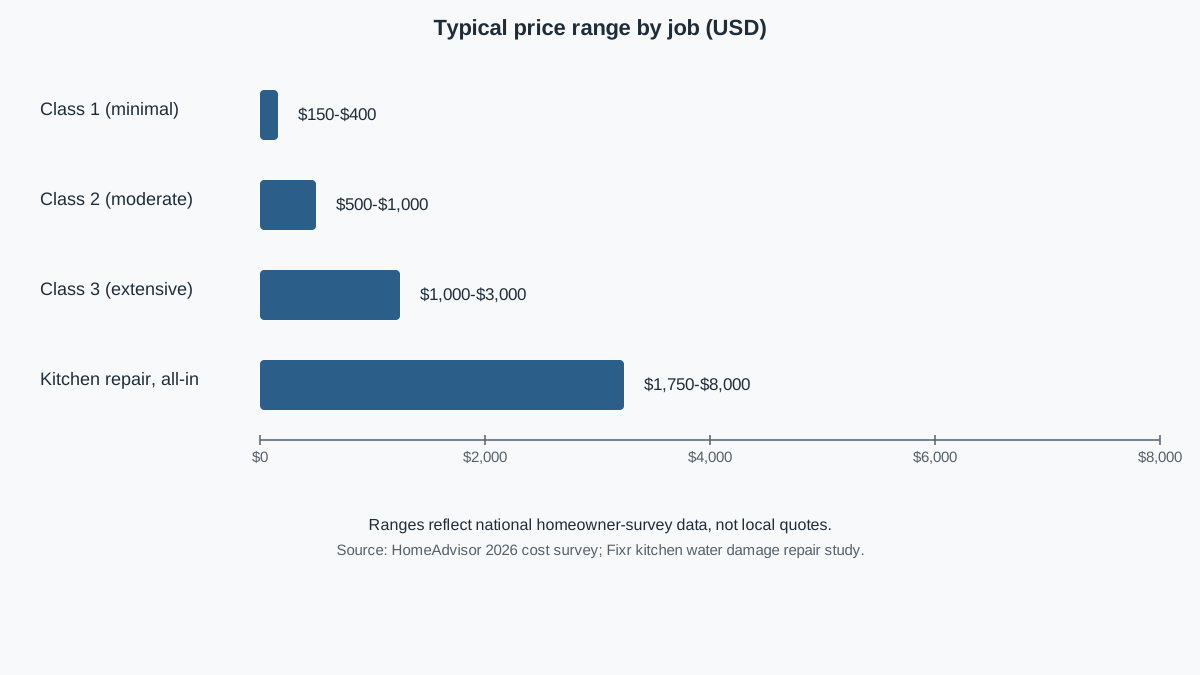
Costs split into two separate jobs: repairing the appliance itself, and repairing whatever the water reached. National cost surveys don't break out a dishwasher repair line item specifically, but they do cover the water damage side in detail:
Job
Typical range
What moves the price
Source
Kitchen water damage repair, all-in (cabinet base, floor, drywall)
$1,750-$8,000
How far water traveled, cabinet material, flooring type, whether the subfloor needs replacing
Fixr, 2025
Class 1 water damage (minimal, caught fast)
$150-$400
Square footage affected, how quickly drying started
HomeAdvisor, 2026
Class 2 water damage (soaked into cabinet base, some subfloor)
$500-$1,000
How far moisture wicked, materials involved
HomeAdvisor, 2026
Class 3 water damage (extensive, multiple materials saturated)
$1,000-$3,000
Extent of saturation, number of materials removed
HomeAdvisor, 2026
Clean-water extraction and drying (Category 1)
$3.75-$4.25 per sq. ft.
Square footage, how fast a crew starts
Fixr, 2025
Drywall repair, if water reached the wall behind or beside the cabinet
$300-$850
Size of the section, paint matching
HomeAdvisor, 2026
Mold remediation, if it gets that far
$1,100-$3,400 (avg. $2,225), up to $9,000 for larger jobs
Square footage affected, containment needed
HomeAdvisor; Fixr
National survey ranges by damage class; a local written estimate is the only number that reflects your actual kitchen.
The dishwasher water leak repair cost for the appliance itself, a new gasket, a supply line fitting, an inlet valve, or a drain hose, isn't tracked separately in national homeowner-survey data the way water damage restoration is. As a general rule, parts alone tend to be inexpensive; what varies is the diagnostic and labor time, and whether a service call is worth it versus replacing an older machine outright. How we got these numbers: the water-damage figures above are researched ranges pulled from national cost surveys, not a quote for your kitchen, and none of the underlying surveys break pricing out by state or metro. The final price also varies by region, how hard the area is to access, and how much damage turns up once a contractor actually opens up the cabinet base or subfloor. A written estimate from a local appliance technician, for the machine, and a local restoration company, for the cabinet and flooring, are the only numbers that are actually binding for your specific kitchen. For the fuller cost breakdown across every water damage job type, see our water damage restoration cost guide.
Dishwasher Leak Insurance: What a Standard Policy Covers
Dishwasher leak insurance questions come up constantly once the cleanup bill lands. Here's the general shape of it: a standard HO-3 homeowners policy typically covers sudden and accidental water discharge, a supply line that suddenly cracks, a valve that fails outright, but it typically excludes damage that built up gradually from a leak nobody caught for weeks or months. That distinction, sudden versus gradual, is usually the single biggest factor in whether a claim gets paid.
Some context on how often claims like this happen and what they cost. Water damage and freezing caused 27.6 percent of homeowners insurance losses in 2022, more than any category except wind and hail, according to the Insurance Information Institute, citing ISO, a Verisk Analytics business, with an average claim severity of $13,954. A separate analysis citing the same underlying data put the water-damage-and-freezing share at 22.6 percent of claims in 2023, with about one in every 67 insured homeowners filing a water-related claim each year and an average claim amount of $15,400.
If you're filing a claim over a dishwasher leak, document before you dry anything further:
Photograph and video the water, the cabinet base, and the flooring before you move or dry anything.
Keep the failed part, the cracked hose or the worn gasket, since an adjuster may want to see what actually failed.
Write down roughly when you first noticed the leak and how long you believe it had been happening.
Ask the adjuster directly whether the claim is being treated as sudden and accidental or as gradual, since that answer determines coverage.
Keep receipts for emergency drying equipment, a wet vac rental or a dehumidifier, which are often reimbursable even on a partial claim.
How to Choose a Company for the Cabinet and Floor Repair
If the water damage goes beyond what fans and a weekend can fix, cabinet base repair, subfloor replacement, or drywall work behind the sink, choosing the right company matters as much as catching the leak fast in the first place.
IICRC training for the water damage side: ask whether technicians hold current certification under the ANSI/IICRC S500 water damage restoration standard (Fifth Edition, 2021), and S520 (Fourth Edition, 2024) if mold has already shown up.
Proof of insurance, current general liability and workers' comp, not just documentation that a policy existed at some point, before anyone brings equipment into your kitchen.
A written scope and estimate before work starts: what's being removed, what's being dried in place, and what the cabinet or flooring repair actually includes.
State contractor licensing where your state requires it for the carpentry and flooring side of the job: verify it directly with your state's licensing board rather than taking a company's word for it.
Red flags: a company that wants full payment upfront, no written estimate, or pressure to sign an insurance assignment before you've read it.
If you're still assessing how far the water traveled, 888-407-9931 connects you with a restoration company that serves your area; describe the appliance, how long the leak ran, and whether the cabinet base or subfloor feels soft. For a fuller checklist on vetting companies and what a legitimate estimate should include, see how to choose a water damage company.
Preventing the Next Dishwasher Leak
Most repeat leaks trace back to the same handful of maintenance gaps, and none of them take long to close.
Where the water shows up
Likely cause
What to check first
Only under the door, right after a cycle
Worn or dirty door gasket, or overloading blocking the door seal
Clean and inspect the gasket; reload so nothing blocks the door
Water under dishwasher panels before the cycle even starts
Loose supply line fitting or a stuck water inlet valve
Tighten the fitting under the sink; check the float switch and valve
Only while the tub is filling
Stuck or worn water inlet valve
Watch the fill cycle; replace the valve if it keeps adding water
Underneath, during the wash or drain portion of the cycle
Cracked drain hose, loose clamp, or worn pump seal
Pull the unit out and inspect the hose and connections
Beyond diagnosing an active leak, a short annual check keeps most of these from happening at all: inspect the door gasket twice a year for cracks or debris, check the supply line fitting under the sink for corrosion or a slow drip, run a straightedge across the top rack to confirm nothing tall is hitting the spray arm, and replace the drain hose the moment it feels stiff or shows any cracking, since rubber and vinyl lose flexibility with age no matter how carefully the machine's been used. A cheap water alarm placed on the cabinet floor under the dishwasher, the kind that beeps at the first sign of moisture, catches the next slow leak long before it reaches the subfloor.
Slab Kitchens, Older Homes, and What Changes by Region
A dishwasher leak behaves a little differently depending on what's under your kitchen floor and how old the cabinetry is.
Homes on a slab foundation (common across the Sun Belt) have no crawl space or basement below the kitchen, so a slow leak has nowhere to go but sideways, into the cabinet base and adjoining flooring, which is often why it's discovered later than in a home with a basement below.
Homes with a basement or crawl space below the kitchen sometimes show the first sign of a dishwasher leak as a ceiling stain one floor down rather than anything visible in the kitchen itself; if that's your situation, our guide on ceiling leaking water covers tracing a leak from below.
Older kitchens with original 1970s-1990s cabinetry often have particleboard cabinet bases with no water-resistant coating, which swell and delaminate faster than the moisture-resistant materials used in newer installs, so the window to catch a leak before real damage sets in is shorter.
Humid coastal and Gulf climates give any water that does get trapped behind a cabinet toe kick less chance to dry passively between cleanups, which raises the odds of mold if the leak runs for more than a couple of days before anyone notices.
None of this changes the diagnosis steps, but it does change how fast you should assume the damage is spreading, and how much benefit of the doubt to give a floor that "feels fine so far."
Frequently asked questions
Is a dishwasher leak covered by homeowners insurance?+
It depends on whether the leak was sudden or gradual. A standard HO-3 policy typically covers water damage from a supply line or valve that fails suddenly, but it usually excludes damage that built up slowly from a leak nobody caught for weeks or months. Document when you first noticed the leak and keep the failed part, since that distinction is usually what the adjuster is deciding on.
Why is my dishwasher leaking water?+
The most common causes, in order, are a worn or dirty door gasket, overloading that blocks the door from sealing, a loose or cracked supply line fitting, a stuck water inlet valve, and a cracked drain hose or worn pump seal. Checking whether the leak happens only during a cycle or around the clock narrows it down fast: the door and drain hose only leak while running, the supply line and inlet valve can leak anytime.
Why is my dishwasher leaking water from underneath?+
A dishwasher leaking from underneath usually points to the drain hose, the pump seal, or a supply line connection rather than the door. Pull the unit out, with power and water off, and inspect the hose clamps and fittings with a flashlight. If it's leaking even when the machine isn't running, suspect the supply line or a water inlet valve that isn't fully closing.
Can overloading a dishwasher cause it to leak?+
Yes. A plate or bowl that blocks the door from closing flush lets water past the seal during the wash, and a tall item that catches the spray arm can knock it loose or aim water somewhere it shouldn't go. Reloading with the door closing fully and nothing tall interfering with the spray arm sometimes solves a leak with no parts needed at all.
Can a dishwasher leak when it's not running?+
Yes, and it's an important clue. A leak that happens whether or not the dishwasher is running almost always traces to the water supply line or a water inlet valve that isn't sealing fully closed, since both stay under water pressure at all times. A leak that only shows up during a wash cycle is more likely the door gasket or the drain hose.
How do I fix a leaking dishwasher?+
Start with the door gasket: clean it, check for debris or wear, and replace it if it's cracked or flattened. If the leak happens around the clock rather than only during a cycle, tighten the supply line fitting under the sink first, since a loose compression fitting is one of the most common causes. If neither fix stops it, a technician can pressure-test the inlet valve and pump seal.
How do I fix a dishwasher door that's leaking?+
Wipe down the door gasket and check it for cracks, flat spots, or trapped food debris, then press it firmly back into its channel if it's come loose anywhere. If the seal itself looks worn or damaged, a replacement gasket is a low-cost part that usually presses into place without special tools. Run one cycle with a towel underneath afterward to confirm the fix held.
Can a leaking dishwasher be repaired, or does it need to be replaced?+
Most leaks, a worn gasket, a loose fitting, a bad valve, are straightforward repairs on a machine that's otherwise working well. Replacement usually makes more sense on an older unit that's already had multiple prior repairs, since the labor and diagnostic time on an aging machine can add up to a meaningful share of what a new one costs.
Can a dishwasher leak cause mold?+
Yes, if the water sits in the cabinet base or subfloor longer than the roughly 24 to 48 hours the EPA recommends for drying water-damaged materials. Because a dishwasher leak often runs unnoticed for days before anyone spots it, the cabinet toe kick is a common spot for mold to start. Any visible mold covering more than about 10 square feet is past what the EPA considers a safe DIY cleanup.
How do I stop my dishwasher from leaking for good?+
Inspect the door gasket twice a year for cracks or debris, check the supply line fitting under the sink for corrosion, and replace the drain hose the moment it feels stiff or cracked, since rubber and vinyl lose flexibility with age. A cheap water alarm placed under the dishwasher catches the next slow leak before it reaches the subfloor, which matters more than any single repair.
How much does it cost to fix dishwasher leak water damage?+
National surveys put all-in kitchen water damage repair, cabinet base, flooring, and any drywall involved, at roughly $1,750 to $8,000, with minor Class 1 damage caught fast running closer to $150 to $400. The appliance repair itself, a gasket, valve, or hose, isn't tracked separately in national data; a local appliance technician's written quote is the only real number for that part of the job.