Toilet overflow cleanup starts with shutting off the water at the base of the toilet, then handling the water differently depending on what's in it: clear tank water is a mop-and-dry job, while bowl water carrying waste is a contamination problem that needs gloves, disinfectant, and often a professional if it reached carpet, drywall, or a floor below.
A toilet overflow is really two different problems wearing the same trigger. Sometimes it's the tank: a fill valve or float that doesn't shut off, sending clean supply water over the rim and onto the floor. Sometimes it's the bowl: something clogging the trapway or the line beyond it, so every flush pushes water, and whatever else is in the bowl, back up instead of down. Restoration crews use the IICRC's Category system to tell those two apart, Category 1 for clean water with no contact with waste, up through Category 3 for water that's carried sewage, and which one you're dealing with changes almost everything: what you can touch bare-handed, what has to be thrown out instead of dried, and whether a wet-dry vacuum and some towels are enough or you need a company with air movers and a dehumidifier.
This guide walks through the whole job: telling clean water from contaminated water, what to do in the first few minutes, the causes ranked by how often each is actually the culprit, step-by-step fixes for a clogged bowl and a tank that won't stop filling, cleanup once the water's off the floor, what repairs and restoration typically cost, how homeowners insurance treats a claim like this, and how to keep it from happening twice. Where the data doesn't cover a cost, the guide says so instead of guessing.
Clean Water or Contaminated: What Actually Overflowed
Before you grab a towel, figure out which side of the toilet the water came from. Water that rises out of the tank lid or around its base is almost always Category 1 water in IICRC terms, the same clean supply water that fills the tank between flushes, never having touched the bowl or the drain. Water that rises out of the bowl is a different story: even before anything visibly solid shows up, it has been in contact with the trapway and whatever was in the bowl at the time, which restoration standards treat as at least Category 2, and as Category 3, sewage-contaminated black water, the moment waste, toilet paper, or backup from another drain is present. Our guide to water damage categories and classes walks through the full IICRC framework if you want the longer version.
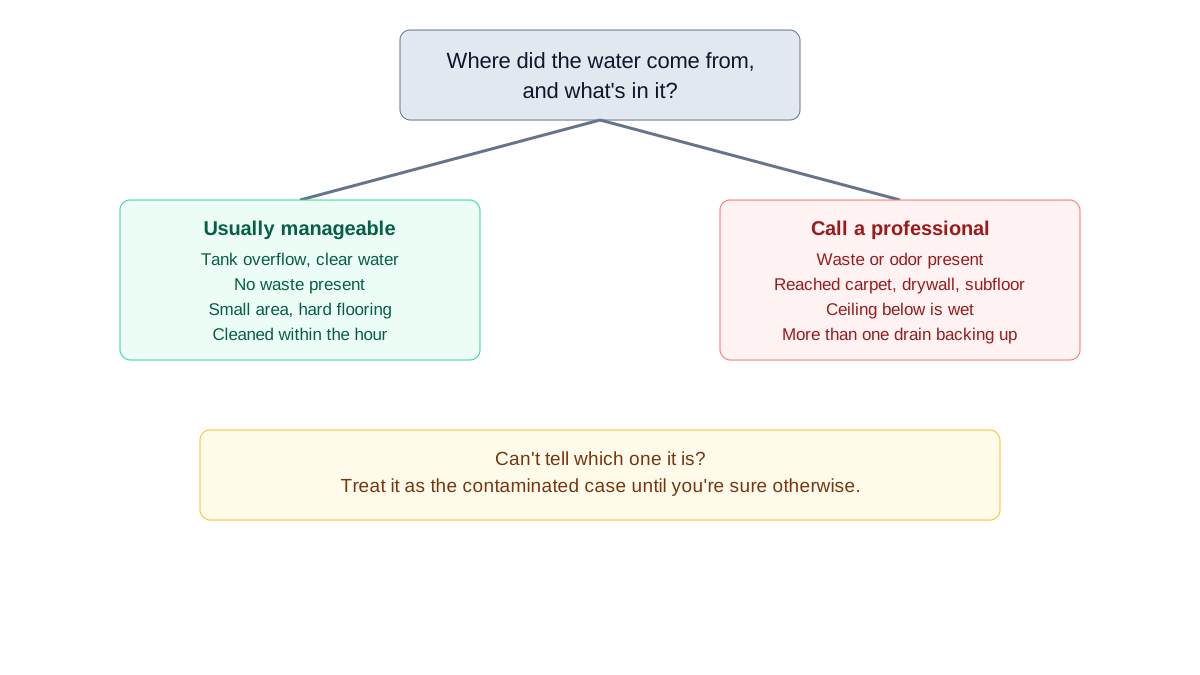
This distinction is what the rest of this guide hangs on. If there's any sign of waste in the water, solids, a strong odor, or water rising from more than one drain at once, treat everything it touched as contaminated and stop trying to clean it like an ordinary spill. Clean tank water on a hard floor is genuinely low-stakes: mop it, dry it, move on. The same volume of bowl water that backed up from a clogged line is a health and materials problem, not just a mess.
Clean, caught-fast tank water is usually manageable on your own; waste-contaminated or spreading water calls for a professional.
What to Do in the First Few Minutes
The moment a toilet overflowed, the clock started working against you: every extra minute is more water finding its way into flooring, baseboards, or the ceiling below. Work through roughly this order:
Reach behind the toilet and turn the shutoff valve clockwise until it stops, or lift the float inside the tank by hand if you can't reach the valve fast enough.
Keep people and pets off the wet floor, especially if there's any chance the water carries waste.
Contain the water with towels, a floor squeegee pushed toward a drain, or a wet-dry vacuum rated for liquids, not a regular household vacuum.
If the water is anywhere near an outlet, power strip, or a plugged-in appliance, cut power to that circuit at the breaker if you can reach it safely.
Take a few photos of the water level and what it touched before you start cleaning, in case you need them for an insurance claim later.
Put on rubber gloves before touching anything the water reached, even if it looks clear. You can downgrade the precaution once you know the source, not before.
If the water keeps coming despite the shutoff valve being closed, or it's rising from more than one drain at the same time, that's a plumbing or sewer-line problem bigger than the toilet itself. Call 888-407-9931 and describe what you're seeing, how fast it's rising, whether other drains are affected, and whether there's any odor, so a restoration company that serves your area knows what to send.
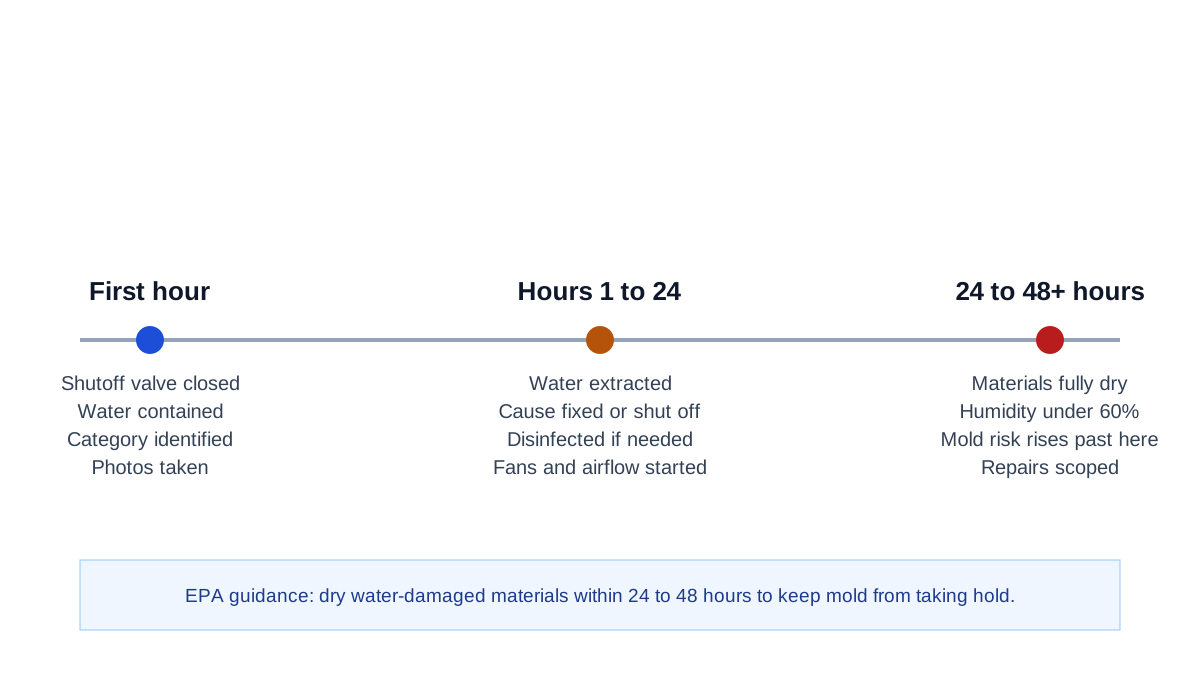
The EPA's drying window: get building materials dry within 24 to 48 hours or mold risk rises fast.
Why Toilets Overflow, Ranked by How Often It's the Reason
Most overflows trace back to one of a short list of causes. Here's roughly how often each one turns out to be the culprit, worst offender first:
A clog somewhere in the trapway or drain line
This is the classic case: toilet is clogged and overflowing because something, too much paper, a wipe, a toy, mineral buildup, is blocking the S-shaped trapway inside the toilet base or the branch line just past it, and every flush has nowhere to go but up. It's also the easiest to diagnose, since it shows up right after a flush rather than gradually.
A fill valve or float that won't shut off
Less obvious, and often mistaken for a clog: the tank keeps filling because the fill valve never gets the signal to stop, whether from a float set too high, a float arm that's bent or waterlogged, or a worn valve mechanism. This is the usual explanation when someone searches toilet overflowing from tank rather than from the bowl. How much water that adds up to depends on the toilet's age: a federally mandated low-flow tank built since 1994 holds about 1.6 gallons per fill, while an older pre-1994 model can hold 3.5 to 7 gallons, all of it headed for the floor if nothing shuts the valve off.
A flapper that doesn't seal
A flapper that's warped, mineral-crusted, or just old lets water leak from the tank into the bowl continuously, which triggers the fill valve to keep replenishing the tank in a loop. It can present as a toilet that runs constantly and, in a bad case, as a slow overflow. This is a common answer to toilet overflows but not clogged.
Backup from the drain line, not the toilet at all
Sometimes the toilet is the messenger, not the cause. A main line clog, roots in an older sewer lateral, or a washing machine draining into a shared line can send water back up through the lowest fixture in the house, which is very often the toilet. This is the likely explanation behind toilet overflows when washer drains and any overflow with no clear cause at the toilet itself.
A cracked or misaligned overflow tube
Less common, but it happens: the overflow tube, the vertical tube in the center of the tank that's supposed to carry any excess tank water into the bowl rather than over the rim, can crack, come loose, or sit at the wrong height after a repair. In that case the tank fills correctly but still overflows.
How to Tell Which One You've Got
A few checks, done in order, usually narrow it down fast:
Take the tank lid off and watch what happens during a flush. If the water level drops and the fill valve refills it to a stop, the tank side is working correctly and the problem is downstream.
Check whether the float sits at or below the fill line marked inside the tank once the valve shuts off. A float that's too high, or a valve that never shuts off at all, points to the tank.
Flush with the lid off and watch the overflow tube. Water flowing into it and down into the bowl at a controlled rate is normal; water spraying from a crack in the tube itself is not.
If the bowl is slow to drain or doesn't drain at all, that points to a clog in the trapway or the line beyond it, not the tank.
Check other drains in the house, a tub, a floor drain, another toilet. If more than one is backing up at the same time, the problem is in the shared drain line, not any single fixture.
The table below maps common symptoms to their most likely cause, as a starting point rather than a diagnosis:
What you're seeing
Most likely cause
Check first
Toilet overflows when flushed, every time
Trapway or drain-line clog
Plunge test; note the flush timing
Toilet keeps overflowing after flush, slowly
Flapper not sealing or fill valve running
Listen for the tank refilling on its own
Toilet fills slowly after flush
Partially closed shutoff valve or weak fill valve
Check that the valve behind the toilet is fully open
Toilet overflowing but not clogged
Tank-side fill valve or float issue
Watch the float during a flush
Multiple drains backing up at once
Main line or shared drain problem
Check a tub or floor drain, not just the toilet
Fixing a Clogged, Overflowing Toilet
Once the shutoff valve is closed and the water level has settled, most clogs are within reach of a homeowner:
Use a flange plunger, the kind with a rubber flap that extends into the drain opening, not the flat cup style made for sinks. Push down slowly to force air out first, then plunge with firm, steady strokes rather than hard slams.
Check whether water drains after several plunges. If it drains slowly rather than all at once, the clog has likely moved rather than cleared; plunge again.
If plunging doesn't work after a few attempts, a toilet auger, also called a closet auger, extends a roughly 3-foot cable past the trapway, further than a plunger can reach, and is an inexpensive tool worth trying before calling a plumber for a straightforward clog.
Turn the shutoff valve back on only once you're confident the clog has cleared, and test-flush with someone standing by to shut it off again if needed.
If the auger doesn't clear it, or the clog is clearly further down the line than a toilet-only tool can reach, that's the point to stop and call a plumber rather than push more water through a blockage you can't see.
Fixing a Toilet That Overflows From the Tank
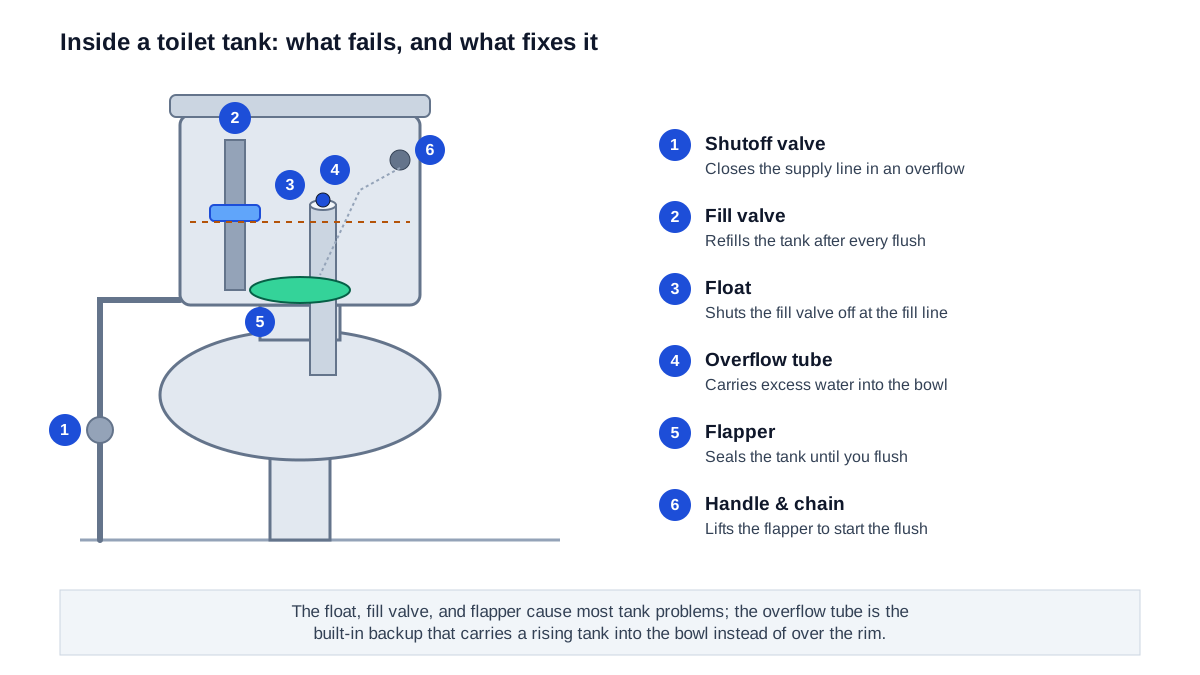
Tank-side overflows come down to three parts: the float, the fill valve, and the overflow tube.
Start with the float, either a ball on an arm or a cup that rides up and down the fill valve's shaft depending on the toilet's age. The fill valve should shut off once the float reaches the fill line marked inside the tank, generally set about 1 inch below the top of the overflow tube so the tube has room to act as a backup if the valve is slow to respond. If the float sits above that line, or the valve keeps running with the float clearly at the right height, the fill valve itself has likely worn out.
Replacing a fill valve is a manageable project: shut off the water, drain the tank by flushing with the shutoff closed, disconnect the supply line and the old valve from underneath the tank, and install a new valve kit sized to the tank's height, following the kit's instructions for setting the water level. Universal fill valve kits fit most standard toilets.
If water is escaping from the overflow tube itself, spraying from a crack, or the tube sitting too short so water pours over its rim even at the correct fill level, the fix is replacing the tube, which usually means replacing the whole flush valve assembly it's molded into. That's a bigger job: it requires removing the tank from the bowl, so budget more time, and if you're not comfortable with that step, this is a reasonable point to call a plumber instead of pushing through it.
The float, fill valve, and flapper cause most tank-side overflows; the overflow tube is the tank's built-in backup, carrying rising water into the bowl instead of over the rim.
Cleaning Up the Bathroom After an Overflow
Once the water's off the floor and the cause is handled, cleanup follows the category you identified earlier.
Clean, tank-only water
Mop and dry the floor, then check baseboards, the toe-kick of any nearby cabinet, and the subfloor around the toilet's base for softness over the next day or two. Clean water can still warp materials if it sat for a while before you caught it. A box fan or the bathroom exhaust fan run for several hours speeds drying.
Bowl water without visible waste
Treat it as contaminated until you're sure otherwise. Wear rubber gloves, mop with a disinfectant labeled for bathroom or general disinfecting use, and wash or discard any bath mat, towel, or rug the water reached rather than just drying it in place.
Water carrying waste, or repeated backups
This is bathroom flood cleanup in the fullest sense of the phrase: gloves and, ideally, rubber boots and eye protection; discard anything porous the water touched, bath mats, toilet paper, cardboard, unsealed grout lines in older tile; disinfect every hard surface twice, once to clean and once to disinfect after rinsing; and keep the room ventilated and off-limits to kids and pets until it's fully dry. If the water reached carpet, drywall, or a floor below, that's past the point where household cleaning products are enough, and it's worth bringing in a restoration company rather than guessing at what's safe to keep.
Whatever the category, dry the area within the 24 to 48 hour window the EPA points to as the threshold before mold becomes a real risk, and keep indoor humidity under 60 percent, ideally between 30 and 50 percent, while the area finishes drying. If mold shows up anyway, the EPA draws the do-it-yourself line at about 10 square feet, roughly a 3-by-3-foot patch: anything bigger than that calls for a mold remediation professional, not a spray bottle.
What It Costs: Cleanup, Repairs and the Parts You Replace
Three different costs get bundled together in searches for toilet overflow cleanup cost, and they're worth separating.
The plumbing fix itself, a new fill valve, flapper, or overflow tube, or an auger visit for a stubborn clog, isn't in the national cost datasets referenced for this guide. Plumbers typically price that kind of small job as a flat service call, and the real number depends on your market and whether it's a same-day emergency visit; a local written estimate is the only reliable figure for that piece. What the data does cover is the water damage side, once the overflow has actually soaked something beyond the toilet itself. Restoration companies size that kind of damage using the IICRC's separate Class system, Class 1 through 4, which measures how much of the structure and its materials absorbed water rather than what was in it, the same S500 standard that defines the Category system used earlier in this guide:
Job type
Typical range
What moves the price
Source
Class 1 cleanup (caught fast, small area, hard flooring)
$150 – $400
Square footage affected, whether a pro is called at all
HomeAdvisor / Fixr
Class 2 cleanup (soaked further, cabinet base, adjoining room)
$500 – $1,000
Extent of materials affected, drying time needed
HomeAdvisor / Fixr
Water extraction, clean water, per square foot
$3.75 – $4.25
Total square footage, equipment access
Fixr
Ceiling repair (overflow reached the floor below)
$450 – $1,600
Size of the stained area, whether drywall must be replaced
HomeAdvisor
Drywall repair
$300 – $850
Same drivers as ceiling repair
HomeAdvisor
Mold remediation (if drying was delayed)
$1,100 – $3,400, avg. $2,225
How long the area stayed wet, square footage
HomeAdvisor
Contaminated (Category 3) cleanup, single room
$2,000 – $3,000
Contamination level, how much has to be discarded
HomeGuide
How we got these numbers: the ranges above are researched ranges pulled from published national cost surveys, not any single contractor's price list, and not a quote for your job — they're national figures, not local ones. What you actually pay varies by region, how easy the space is to access, and how much damage turns up once flooring or drywall actually comes out, which is why a written estimate, not a guide, should set expectations for your job.
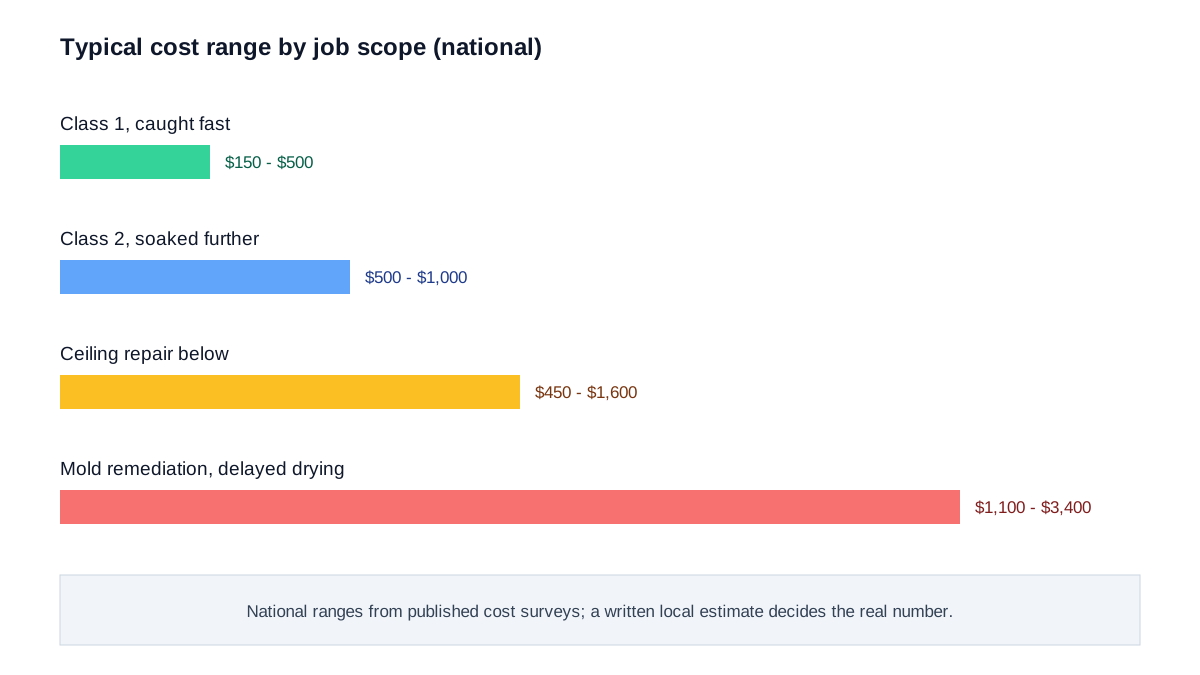
National cost ranges by scope, from a caught-fast clean-water job up to delayed drying that led to mold.
Is a Toilet Overflow Covered by Insurance?
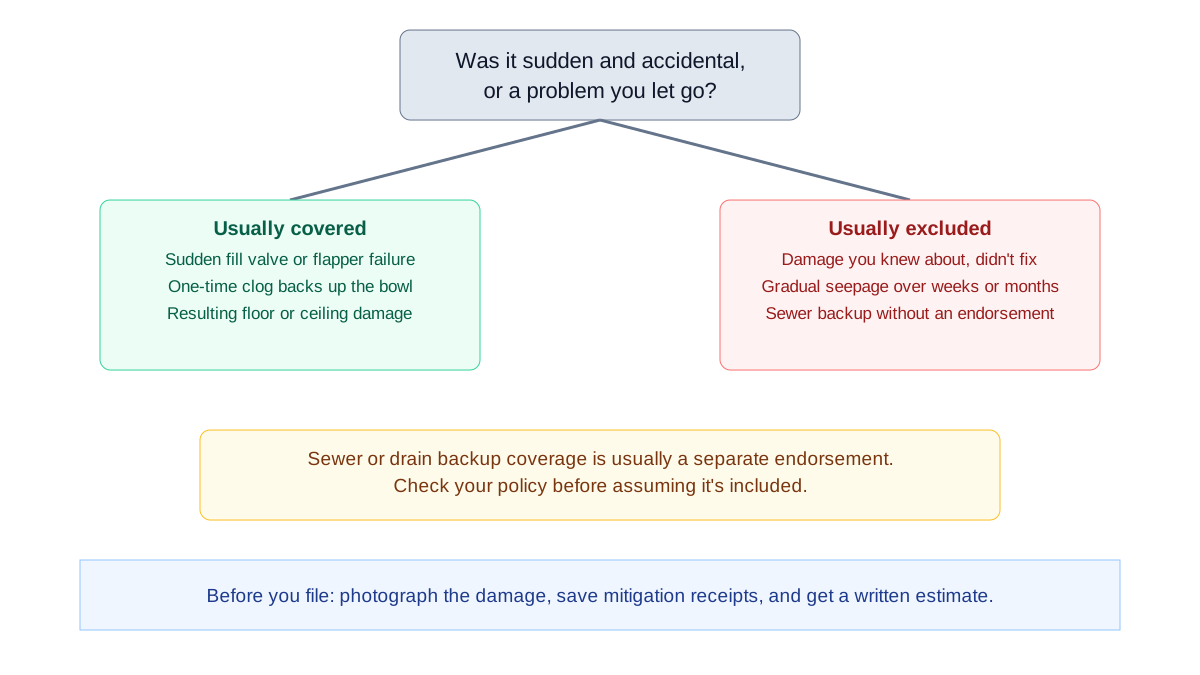
Standard homeowners policies, the common HO-3 form, generally treat a toilet overflow insurance claim the way they treat most sudden water damage: covered if it's sudden and accidental, excluded if it's the result of neglect or a problem you knew about and didn't fix. A fill valve that suddenly fails and overflows overnight is a textbook sudden-and-accidental loss. A toilet that's been running and slowly overflowing for weeks, ignored, is a much harder claim to win, since insurers treat that as a maintenance failure rather than an accident.
Usually covered
Usually excluded
A sudden fill valve or flapper failure that overflows the tank
Damage from a leak or overflow you knew about and didn't repair
A one-time clog that backs up and overflows the bowl
Backup through the drain from the municipal sewer line, unless you added a sewer or drain backup endorsement
Resulting damage to flooring, drywall, or a ceiling below
Gradual seepage or damage that built up over weeks or months
Nationally, overflowing toilet water damage falls under the broader "water damage and freezing" category insurers track, which accounted for 27.6 percent of homeowner insurance losses in 2022, according to the Insurance Information Institute, ranking second only to wind and hail. Average claim severity in that category was $13,954, at a filing rate of roughly 1.61 claims per 100 insured house-years. That's a category-wide figure covering every kind of water loss, not toilets specifically, but it explains why insurers scrutinize water claims closely and why documentation matters.
Before you file, or as you're building the claim:
Photograph and video the damage before you clean or discard anything.
Keep receipts for any emergency mitigation, a rented wet-dry vacuum, disposal of damaged materials. Most policies reimburse reasonable steps taken to prevent further loss.
Get a written estimate, not just a verbal number, from whoever does the repair or restoration work.
Ask specifically whether your policy has a sewer or drain backup endorsement if the overflow involved a backup rather than a simple clog, since that coverage is often sold separately and isn't automatic.
For a claim this size, most homeowners work directly with their insurer's own adjuster rather than hiring a public one. Our guide to water damage insurance claims covers documentation and the claims process in more detail.
A sudden, accidental cause is usually covered; damage you knew about and let go usually is not, and sewer backup needs its own endorsement, based on standard HO-3 policy treatment.
When to Call a Pro, and How to Vet Who You Call
Plenty of overflows never need a professional. Call one when any of these apply: the water carried waste or came from more than one drain, it reached carpet, drywall, insulation, or a floor below, it sat for more than a few hours before you caught it, or you've fixed the same tank problem twice and it's happening again.
If you're calling for cleanup and restoration rather than a plumbing repair, look for a few specific things before you hire anyone:
IICRC certification, specifically water damage restoration (WRT) training, confirms technicians were trained against the S500 standard (the fifth edition, published in 2021) rather than general handyman experience.
A current state contractor license, most state licensing boards let you verify a company's license number and standing online before anyone sets foot in your bathroom, plus proof of general liability insurance that's still active, not just a certificate from a past renewal, so you're covered if something else in the home gets damaged during the work.
A written estimate that breaks the job into extraction, disinfection, drying, and repairs, rather than one lump number with no detail behind it.
A straight answer about what has to be discarded versus what can be cleaned, and why, before any demolition starts.
Red flags: a firm price quoted over the phone without anyone seeing the space, pressure to sign before you've read the contract, or a crew that shows up without gloves or PPE for a contaminated job. You can reach a restoration company that serves your area at 888-407-9931 to describe what happened and ask what a walkthrough and written estimate would involve. Our guide on how to choose a water damage company covers licensing checks and interview questions in more depth.
Preventing the Next Overflow
A few habits catch most of the causes covered above before they turn into a flood:
Test the shutoff valve behind the toilet occasionally so it actually turns when you need it in an emergency. Valves that sit untouched for years can seize shut or start leaking once you finally move them.
Skip flushing wipes, paper towels, cotton products, and anything not genuinely flushable, even items marketed as flushable, since they're a leading cause of trapway and drain-line clogs.
Watch for early warning signs, a toilet that runs longer than usual after a flush, a bowl that drains slowly, or a fill valve that makes noise after it should have shut off, and address them before they become an overflow.
Replace a flapper or fill valve once it's visibly worn, cracked, or mineral-crusted rather than waiting for it to fail during use.
If your home is on a septic system, keep an eye on the tank's pumping schedule. A full septic tank backs water up into the house through the lowest fixture, often a toilet, well before it shows any sign outside.
A toilet overflow is one of several appliance-related floods that share the same first-hour rules; our guide to a washing machine flooding the laundry room walks through a similar scenario for the laundry side of the house.
Regional Notes: Septic Systems, Older Pipes and Freeze-Prone Areas
Where you live changes which cause is most likely. Homes on a septic system, common in rural and some suburban areas, face a version of overflow that has nothing to do with the toilet itself: a full or failing septic tank pushes back through the house's lowest drain, and if that happens repeatedly it points to the tank or leach field, not the toilet's own hardware.
Older housing stock with cast iron or clay drain lines is more prone to root intrusion and internal buildup narrowing the pipe over years, which shows up as recurring, unexplained backups rather than a single obvious clog, a pattern worth mentioning to whoever you call, since it changes the diagnosis from fixing the toilet to running a camera down the line, a sewer camera inspection that typically runs $125 to $500 rather than guessing from the symptoms alone.
In freeze-prone climates, an unheated basement or crawl space shutoff valve can seize or crack over a cold winter, which matters the one time you actually need to close it fast during an active overflow. Testing it before the cold season, rather than during an emergency, is worth the couple of minutes it takes.
Frequently asked questions
What should I do first when my toilet overflows?+
Reach into the tank and lift the float, or reach behind the toilet and turn the shutoff valve clockwise until the water stops running. That single move ends most overflows in seconds, before the second question, clean water or waste, even matters. Once the water's off, stop it from spreading with towels or a wet-dry vacuum, then figure out what you're dealing with before you clean it up.
How do I clean up after a toilet overflow?+
Clean water from the tank just needs mopping, drying, and a check for any warped baseboard or subfloor over the next day or two. Water that came up through the bowl needs rubber gloves, a disinfectant labeled for use on porous and nonporous surfaces, and anything absorbent it touched, bath mats, towels on the floor, cardboard, thrown out rather than washed. Run a fan or dehumidifier until the area is fully dry, ideally within the 24 to 48 hour window the EPA recommends for wet building material.
Is a toilet overflow covered by homeowners insurance?+
Usually yes, if it's sudden and accidental. A stuck fill valve or a one-time clog that overflowed counts as the kind of discharge a standard HO-3 policy covers. Coverage gets harder to win with repeat overflows from a problem you knew about and didn't fix, or with backups that came up through the drain from the sewer line, which many policies exclude unless you added a sewer backup endorsement. Read your policy's water damage section, or ask your agent directly, before you assume either way.
Why did my toilet overflow if it wasn't clogged?+
A clog is the most common cause, but not the only one. A fill valve that doesn't shut off keeps sending water into the tank past the point where the overflow tube can carry it away fast enough, and a flapper that doesn't seal lets the tank keep refilling after every flush, which reads as a slow, mysterious rise instead of an obvious blockage. A float set too high or a broken float arm causes the same problem from a different part.
How do I fix a toilet that keeps overflowing from the tank?+
Start by checking the float. The fill valve should shut off once the float reaches the fill line marked inside the tank, generally just below the top of the overflow tube. If the float sits at the right height and water's still running, the fill valve itself is likely worn and needs replacing, a job most homeowners can handle with a valve kit and the water shut off at the wall. If water is coming from the overflow tube itself, rather than around it, the tube may be cracked or set at the wrong height and needs replacing.
How do I fix or replace the overflow tube in a toilet?+
The overflow tube sits in the center of the tank, attached to the flush valve, and its job is to route any excess tank water into the bowl instead of over the rim, so a cracked or too-short tube lets water escape where it shouldn't. Shut off the water, drain the tank, and unscrew the flush valve assembly the tube is part of; most tubes come as one piece with the flush valve, sold as a kit sized to your toilet brand and tank height. Seat the new gasket carefully and test for leaks before you call it done.
How much does it cost to fix an overflowing toilet?+
That depends on which cost you mean, the plumbing fix, the cleanup, or both, and this dataset doesn't include a flat rate for a plumber auguring a toilet or swapping a fill valve. That's usually priced as a small service call, and only a local written estimate gives you a real number. What does have hard data is the water damage side: a caught-fast, clean-water overflow runs $150 to $400 to clean and dry, per HomeAdvisor and Fixr's national cost surveys, climbing from there if it soaked further or reached a ceiling below.
Why does my toilet take forever to fill or flush slowly?+
A slow fill usually means a partially closed shutoff valve, a fill valve that's wearing out, or low water pressure reaching the toilet, none of which cause an overflow by themselves but can mask one starting. A slow, weak flush more often points to a partial clog in the trapway or the drain line beyond it, mineral buildup narrowing the rim jets, or a flapper that isn't opening fully, worth checking before the next flush turns into a full overflow.
How do I unclog an overflowing toilet myself?+
Shut off the water first so a second flush doesn't send more water over the rim. Use a flange plunger, not the flat cup kind, and work it with steady pressure rather than hard slams, which tend to splash more than they clear. If plunging doesn't move it after several tries, a toilet auger reaches further into the trapway than a plunger can; beyond that, or if water is backing up from other fixtures too, it's a drain-line problem, not a toilet problem, and needs a plumber.
How can I prevent my toilet from overflowing again?+
Test the shutoff valve behind the toilet a couple of times a year so it actually turns when you need it, since valves that sit unused can seize. Skip flushing wipes, paper towels, and anything not genuinely flushable, even products marketed that way, since they're a leading cause of trapway and drain-line clogs. Replace a fill valve or flapper once it looks worn or cracked, rather than waiting for it to fail.
What about an RV toilet overflow?+
An RV toilet works on a small black tank instead of a sewer line, so an overflow there usually means the tank is full, a valve was left open into an already-full tank, or a clog in the short drain path between bowl and tank. Cleanup follows the same contamination rules as a house overflow, treat any waste-contaminated water as Category 3 and disinfect thoroughly, but the fix is almost always tank-related rather than a household plumbing repair.
A toilet overflow reached the ceiling in the room below. Now what?+
Treat the stain as active water damage, not a cosmetic mark to paint over. When an upstairs toilet overflow reaches the floor, it commonly finds its way through subfloor seams and shows up as a toilet-overflow-through-ceiling problem in the room underneath within minutes to hours, and the ceiling material, insulation above it, and anything electrical nearby all need to be checked before repairs start. Cut power to any fixture in that ceiling until an electrician or restoration company confirms it's dry. Our guide on ceiling leaking water covers finding the source and drying it out safely.