The clearest signs of water damage are a musty smell that will not go away, discoloration or bubbling on ceilings and walls, cupped or soft flooring, and a moisture meter reading noticeably higher than a dry baseline in the same material. Any one of those means water is getting in somewhere, and drying a stain out is not the same as fixing what caused it.
A stain the size of a dinner plate on a kitchen ceiling looks new. It usually is not. By the time water shows up as a ring, a bulge, or a patch of soft drywall, it has often been finding its way through insulation, framing, or subfloor for weeks, sometimes for a season or two, before anyone noticed. The most common signs of water damage are the small, easy-to-explain-away kind: a faint musty smell in a closet, a baseboard that feels a little spongy underfoot, a cabinet door that suddenly sticks. None of those look like an emergency, which is exactly why they get ignored until the repair is bigger and the bill has grown with it.
This guide walks through how to detect water damage before it becomes an obvious, expensive problem: what to check room by room, what a moisture meter reading actually tells you, why the smell matters as much as the stain, and where a homeowner's inspection has to stop and a professional's has to start. None of it requires guesswork. It requires knowing where to look and what a normal reading looks like next to an abnormal one.
How Hidden Water Damage Actually Shows Up
Nothing about a slow leak looks urgent while it is happening. A ceiling stain the size of a dinner plate, a baseboard that feels a little spongy, a cabinet door that suddenly sticks, none of those trigger the same reaction a burst pipe does, even though the underlying physics is identical: water found a way in and has been sitting somewhere it should not be. The gap between when water actually starts causing damage and when a homeowner notices the signs of water damage is where the real cost of a hidden leak gets built, one week at a time.
Insurers see the pattern from the other side. Water damage and freezing accounted for 27.6% of homeowners insurance losses in 2022, according to the Insurance Information Institute's analysis of ISO claims data, with an average claim severity of $13,954 and a claim frequency of roughly 1.6 per 100 insured homes that year. Very little of that total starts as a dramatic flood. Most of it starts the way this guide assumes yours might: a small sign that got noticed two weeks, two months, or two years later than it should have. Hidden water damage is not a different kind of damage from the obvious kind. It is the same physics, just moving slowly enough that nobody caught it in the act.
Knowing how to detect water damage before it becomes obvious comes down to three habits: checking the places water actually travels to, not just where it fell; trusting your nose as much as your eyes; and using a moisture meter instead of a guess when a reading would settle the question. The rest of this guide covers all three, room by room.
Why Water Damage Hides for Weeks or Years Before You Notice
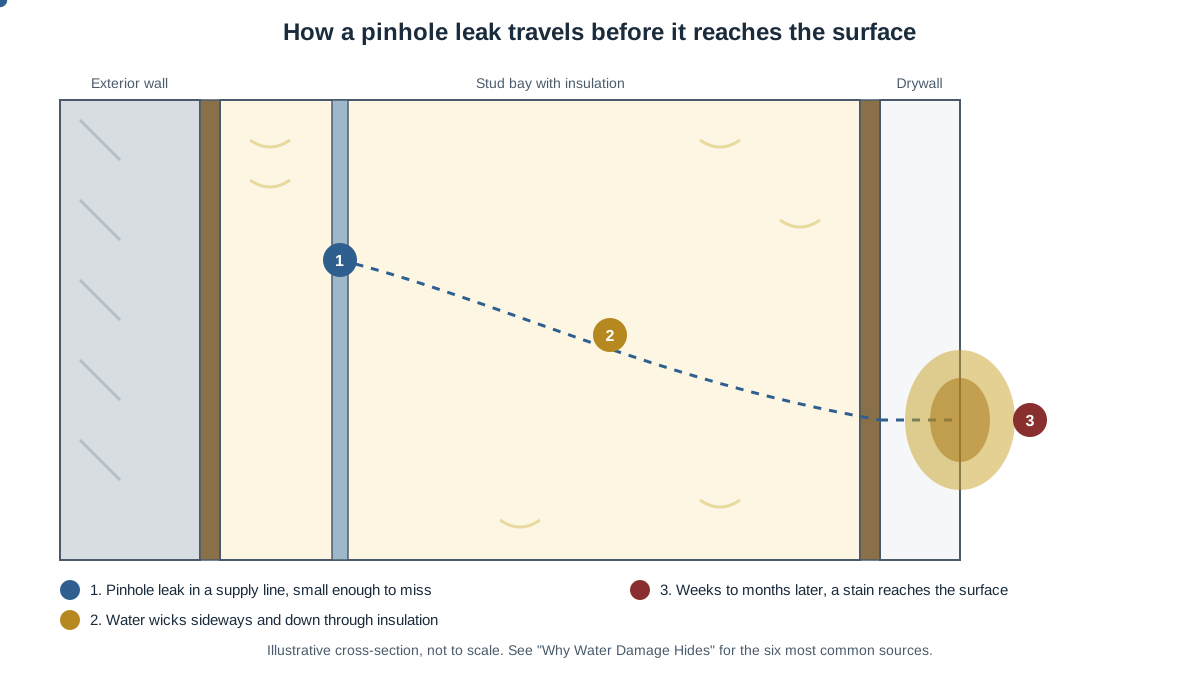
Water does not announce where it entered. It follows gravity and capillary action into whatever material will absorb it, which is often several feet from the actual failure. A pinhole leak in a copper supply line inside a wall can wick sideways along a stud bay for months before it ever reaches drywall paper and shows a stain. That gap between cause and visible sign is why the most common sources of hidden water damage tend to be the ones nobody is watching:
Slow supply line and fitting leaks. A compression fitting under a sink, a slab leak in a concrete-slab foundation, or a pinhole in old copper piping can leak at a rate too small to trigger a running-water sound but large enough to soak framing over time; most residential supply lines run at 40-80 psi, so even a pinhole-sized failure stays under enough pressure to keep pushing water sideways into a wall cavity for months.
Roof and flashing failures. Cracked flashing around a chimney or vent, or shingles nearing the end of their life, let rain travel down rafters and into attic insulation long before it reaches a ceiling anyone looks at.
Appliance supply lines and drain traps. The hose behind a washing machine, the line to an icemaker, and the trap under a dishwasher sit behind cabinetry that nobody opens unless something is already wrong.
Window and door flashing. Wind-driven rain finds gaps around old flashing and travels down inside the wall cavity, showing up as a stain at the baseboard rather than at the window itself.
Condensation from plumbing or HVAC lines. A sweating cold-water line or an undersized condensate drain can add moisture to a wall or ceiling cavity steadily, once its surface temperature drops below the surrounding air's dew point, without a single drop of an actual leak.
Cosmetic fixes over old stains. A prior owner, or a prior version of the current one, who repainted a ceiling stain without finding the source has effectively hidden the sign rather than solved the problem.
What all six have in common is time. None of them look like water damage the way a burst pipe does, so none of them get the same urgency, and that is exactly the gap this guide is meant to close. The diagram below shows how a single pinhole leak can travel through framing for weeks or months before it ever reaches a surface you can see. Why a leak can travel through framing and insulation for weeks or months before it ever shows up as a stain.
Room by Room: Where the Signs Show Up First
Some rooms hide water damage better than others simply because of what is in them: more plumbing, more cabinetry, more places for a small leak to travel before it reaches a surface you actually look at. Work through a house in this order and you will catch most problems while they are still cheap to fix.
Ceilings and Attics
A yellow-brown ring, a paint bubble, or a soft spot overhead almost always means water traveled down from above, whether that is a roof leak, an upstairs bathroom, or an HVAC condensate line running through the attic. Check the attic itself with a flashlight for dark streaks on rafters or insulation that looks matted and compressed instead of fluffy, both signs of water intruding before it ever reached the drywall below.
Walls
Press gently on drywall near any plumbing wall, window, or exterior corner. A soft, slightly spongy give where the wall should feel firm is one of the more reliable signs of water damage behind walls, especially paired with paint that looks bubbled, wallpaper that has lifted at a seam, or a baseboard that has separated slightly from the wall. Wood paneling and trim will sometimes darken or feel cool to the touch in the same spot, a sign that moisture is still present rather than just a mark left over from something that already dried.
Floors
Hardwood that has started to cup, meaning the edges of each board sit higher than the center, is one of the earliest visible signs of moisture reaching a subfloor from below or from a spill that was not fully dried. Tile can show grout that has darkened or crumbled near a shower curb or a toilet base. Carpet near an exterior wall, a water heater closet, or a laundry room that feels damp, cool, or slightly spongy underfoot, even when nothing looks wet on the surface, deserves a closer look before you write it off as imagination.
Cabinets, Under Sinks and Appliances
Open every cabinet under a sink and look at the particleboard or plywood floor of the cabinet itself, not just the pipes. Swelling, dark staining, or a soft spot in that board is usually the first physical sign of a slow supply line or drain leak, often well before a homeowner notices anything on the kitchen or bathroom floor outside the cabinet. The same goes for the floor under and behind a dishwasher, refrigerator icemaker line, and washing machine.
Windows, Doors and the Foundation
Run a hand along a window sill and the wall just below it after a hard rain. Softness, a musty smell, or paint that has started to peel at the corner points to failed flashing rather than a simple condensation problem. At the foundation level, check for efflorescence, the white, chalky mineral deposit that forms as water moves through concrete or masonry and evaporates, along with any gap where soil has settled away from the foundation and could be directing rainwater toward the house instead of away from it.
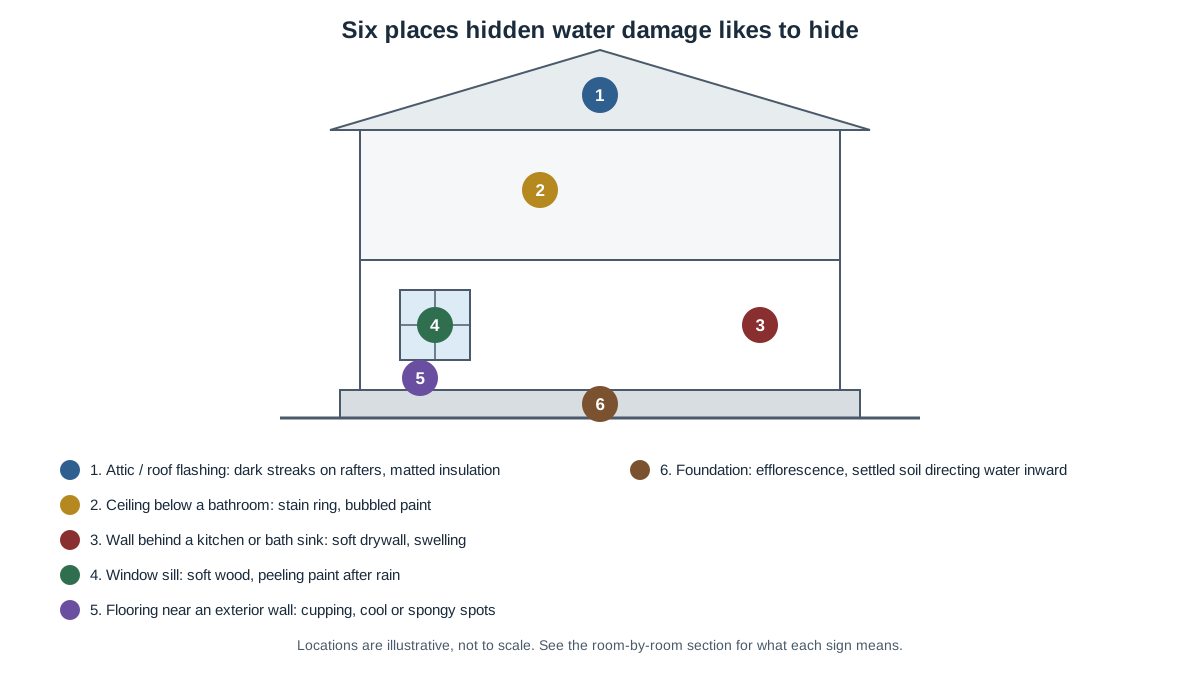
The diagram below maps all six of these locations onto a typical house, in roughly the order most inspectors check them. Six places hidden water damage likes to hide, from the attic to the foundation.
Open the cabinet; check shutoff valves for corrosion
Window or door
Soft sill, peeling paint at the corner
Failed flashing, wind-driven rain
Hand-press after a hard rain; look for staining below
Foundation
White chalky residue (efflorescence)
Water moving through concrete or masonry
Visual check along the base of exterior and basement walls
For a deeper look at ceiling stains specifically, including what the color and shape usually mean, see water stain on the ceiling.
The Smell Test: What a Musty Smell Is Actually Telling You
A water damage smell, the musty, earthy odor most people associate with a damp basement, is not the smell of water itself. Water is close to odorless. What you are actually smelling are microbial volatile organic compounds, the byproduct of mold and bacteria digesting damp wood, paper, drywall, or carpet backing. If that smell is present in a room with no visible stain, treat it as a real signal rather than something to mask with an air freshener. Odor is often the earliest sign of water damage, showing up before a stain has had time to bleed through paint or before a moisture meter reading would even register at the surface.
Localizing the smell takes a few minutes and no tools. Close the door to isolate one room at a time, and get close to baseboards, the inside of cabinets, closet corners, and any spot near plumbing, since those are the places musty air tends to concentrate. A smell that gets noticeably stronger near one specific wall, one cabinet, or one section of flooring is pointing you toward the source; a general mustiness throughout a basement or crawl space more often reflects overall humidity than a single leak, though it is still worth investigating, especially if it developed suddenly rather than being a long-standing feature of an older home.
The EPA's guidance on mold and moisture is direct about the stakes of ignoring that smell: materials need to be dried within 24 to 48 hours of getting wet to keep mold from establishing itself, and a musty smell without an obvious water event usually means that window already closed somewhere out of sight. A patch of visible mold under about 10 square feet, roughly a 3-foot by 3-foot area, is generally something a homeowner can clean up safely with gloves, eye protection, and detergent. Beyond that size, or if the smell persists after you have found and dried a small visible patch, the source is probably still active behind a surface you cannot see. For how quickly mold can establish itself once a leak goes unnoticed, see mold after water damage.
How to Check It Yourself, Step by Step
Confirming a suspicion does not require professional equipment for most of this list. A flashlight, a working nose, and a basic moisture meter, the inexpensive pin or pinless kind sold at any hardware store, cover almost everything below. Work through these in order before you decide whether the problem is cosmetic or active.
Walk every room with a flashlight, low and at an angle. Raking light across a wall or ceiling shows texture changes, like a slight bulge or a flattened spot, that flat overhead lighting hides completely.
Press-test anything that looks suspicious. Firm, even pressure with a fingertip on drywall, wood trim, or a cabinet floor should feel solid. Give or softness means moisture has already broken down the material's structure.
Take a baseline moisture meter reading first. Test a similar material in a room you know is dry, a hallway wall or an interior closet, before testing the suspect area. That baseline is what makes a single reading meaningful.
Test the suspect area and compare. A reading close to your dry baseline usually points to an old, already-dried stain. A reading noticeably higher than baseline means moisture is present now, not just a mark left over from the past.
Check the attic and crawl space directly. Both are easier to read than a finished wall, since insulation, framing, and subfloor are exposed rather than covered in drywall and paint.
Listen, in a quiet moment, near suspected plumbing walls. A faint hiss or trickle behind a wall with the house otherwise silent, no running fixtures, no ice maker cycling, is worth investigating immediately.
Check the exterior. Grading that slopes toward the foundation instead of away from it, a downspout that dumps water right at the wall, or missing flashing around a window are the outside half of an inside problem.
Bring in a professional when a reading, a smell, or a stain will not resolve into a clear answer. A licensed inspector's infrared camera can spot a temperature difference from evaporating moisture across an entire wall in seconds, and a borescope lets a technician look inside a wall cavity through a small drilled hole instead of guessing.
The flow below shows how to read a moisture meter comparison once you have both numbers in hand. A dry baseline is what turns one moisture meter number into a real answer.
Once you have confirmed an area is actively wet using that comparison, see how to dry out water damage for the drying steps that come next.
What It Costs to Find It, and Then Fix It
A water damage inspection focused on moisture and mold, rather than a full restoration estimate, is a modest cost relative to what it can save. Once a professional confirms an active leak or a mold problem behind a wall, the price shifts from inspection to the same restoration and remediation ranges that apply to any water loss, based on how much of the structure absorbed water, its class, and how contaminated the water is, its category. For scale, FEMA estimates that just 1 inch of standing water can cause roughly $25,000 in damage; a hidden leak often delivers that same volume into framing eventually, it just arrives a few ounces at a time over weeks instead of all at once.
Service
Typical Range
What Moves the Price
Source
Moisture or mold inspection
$300 - $800
Whether thermal imaging or air sampling is included
HomeGuide / Fixr
Class 1 restoration (minimal, small area)
$150 - $500
One small spot, caught fast
HomeGuide
Class 2 restoration (full room)
$1,500 - $5,000
Carpet, pad, some drywall involved
HomeGuide
Class 3 restoration (extensive)
$5,000 - $15,000
Multiple rooms, water has wicked up walls
HomeGuide
Class 4 restoration (specialty drying)
$15,000 - $100,000+
Hardwood, plaster, deep saturation
HomeGuide
Mold remediation
$1,500 - $9,000 (average $3,500)
Square footage, whether HVAC is involved
Fixr
Drywall repair
$300 - $850
Size of the cut-out and texture match
HomeAdvisor
Ceiling repair
$450 - $1,600
Whether framing or insulation also needs replacing
HomeAdvisor
Two things push a job from the cheap end of these ranges to the expensive end more than anything else: how long the water sat before anyone found it, and how much of it was hidden. A leak caught within the EPA's 24-48 hour drying window rarely needs anything beyond extraction and drying. A leak that ran behind a wall for three months usually means demolition, mold remediation, and reconstruction on top of whatever the original source repair costs. None of the figures above substitute for a written estimate from someone who has actually opened the wall or tested the floor in your house; treat them as a way to sanity-check a number you are hearing, not a quote. What it costs to find hidden water damage, then to actually fix it.
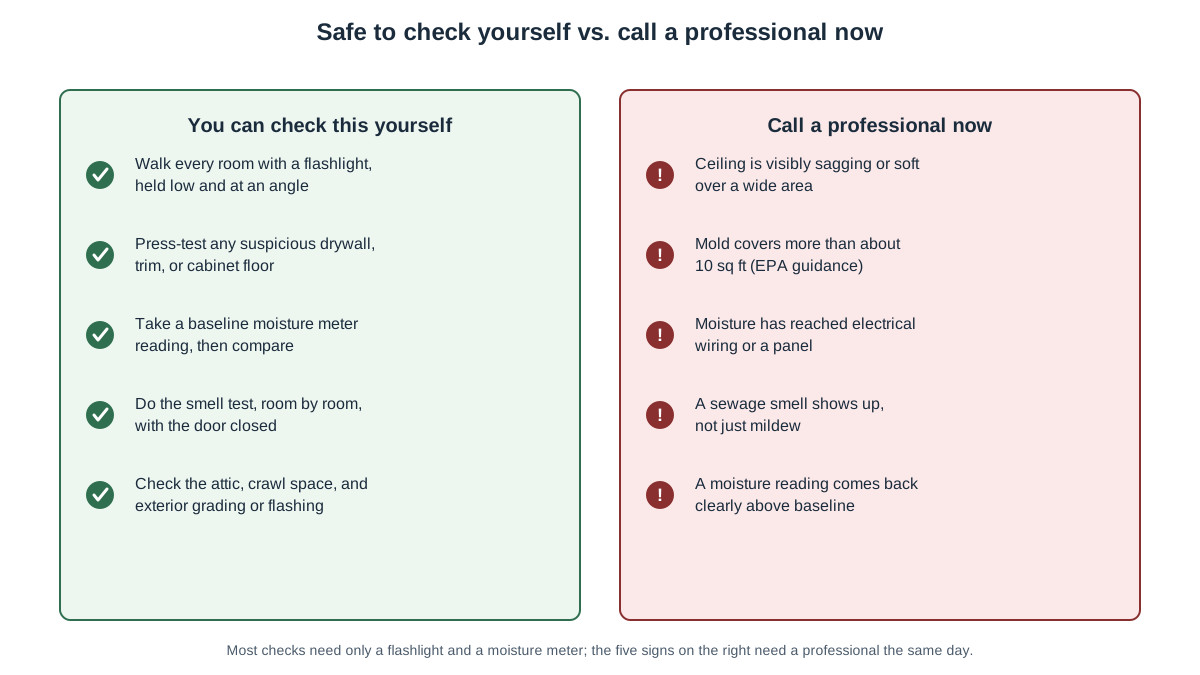
Most of what is in this guide is a homeowner's job: checking, pressing, comparing a moisture reading to a baseline, and tracking down a smell. A shorter list of situations should skip straight to a professional instead of more DIY checking. Call if a ceiling is visibly sagging or soft over a wide area, if you find mold covering more than roughly 10 square feet, if water or moisture has reached anywhere near electrical wiring or a panel, or if a smell of sewage rather than mildew shows up anywhere in the house.
If a moisture meter reading in a suspect area comes back clearly higher than a dry baseline taken elsewhere in the same material, treat that as an active leak and get it traced before you patch, paint, or carpet over it.
Cutting into a wall you have not tested, or painting over a stain to make it disappear, is the single most common mistake homeowners make with hidden water damage. It does not stop the leak, and it removes the visible evidence a professional would otherwise use to find the source quickly. If the water is still coming in and you cannot find or safely reach the shutoff, call 888-407-9931 and describe exactly what you are seeing, the location, the smell, any sound, so a restoration company that serves your area can send someone with the right equipment the first time.
The chart below separates what you can safely check yourself from the signs that mean calling a professional right away. Most of the checklist above is a homeowner's job; these five signs are the exception.
Will Insurance Cover Damage You Just Found?
Timing changes what a standard homeowners policy is likely to cover. Sudden and accidental water damage, a supply line that lets go overnight, is the kind most HO-3 policies pay for without much argument. A slow leak that has clearly been running for weeks or months before anyone noticed, the exact scenario this guide is about, falls into a grayer area that insurers often label a "maintenance issue" rather than a covered loss, on the theory that reasonable upkeep would have caught it sooner. That distinction is exactly why catching a sign early, while it still looks sudden and recent, matters as much for the claim as it does for the repair bill.
Insurers watch water losses closely for good reason, and the scale shows up again here: a separate industry estimate puts the average water-related claim at $15,400, striking roughly one in every 67 insured homes each year. Many policies also carry a water damage limitation, sometimes called a mold or fungi limitation, that caps how much an insurer will pay toward mold or secondary damage even when the original water event itself is covered, one more reason the 24-48 hour drying window matters even after the fact.
Whatever the timeline, document everything before repairs start: photos and video of every stain, soft spot, and moisture meter reading; the date you first noticed each sign; and receipts for anything purchased to prevent further damage. Ask directly whether the adjuster reviewing the claim works for the insurance company or is a public adjuster you have hired to represent your side, since that distinction matters more on a larger or disputed claim than on a small one. For a full scenario-by-scenario breakdown of what a standard policy covers, see does homeowners insurance cover water damage.
Choosing Someone to Inspect It Properly
Not every contractor who shows up with a moisture meter is qualified to interpret what it says. Look for a technician who holds current IICRC certification, the same standards body behind the S500 water damage restoration standard (Fifth Edition, 2021) and the S520 mold remediation standard (Fourth Edition, 2024), since that training covers moisture mapping and drying science specifically rather than general construction. Ask what equipment the inspection includes: a simple moisture meter alone tells you less than a meter paired with a thermal imaging camera, which can spot a cool, damp patch across an entire wall or ceiling in seconds rather than one probe point at a time.
A fair inspection ends with a written estimate that separates the inspection fee from any recommended repair work, states the moisture readings taken and where, and does not pressure you to sign a repair contract on the spot. Red flags worth walking away from include a technician who cannot explain what a specific reading means, anyone who wants to start demolition before you have a written scope, and a quote that arrived without anyone actually opening a cabinet or testing a wall. If the inspection turns up an active leak or contamination that needs a full crew, reaching a restoration company that serves your area is the next call: 888-407-9931 connects you with someone who can dispatch the right equipment based on what the inspection found.
The cheapest fix for hidden water damage is finding it while it is still small, and that mostly comes down to routine, not luck. Walk the rooms above once a season, not just when something smells off. A water sensor placed under the water heater, behind the washing machine, and under the kitchen and bathroom sinks costs very little and will text or call the moment it gets wet, catching a slow leak in hours instead of months. Replace rubber supply hoses on washing machines and dishwashers with braided stainless steel lines before they fail, not after, and know where the main shutoff valve is so a fast leak does not turn into a slow, hidden one the next time nobody is home to hear it. Keeping indoor relative humidity below 60 percent, ideally in the 30 to 50 percent range EPA recommends, also takes away some of the moisture mold needs to establish itself around a leak nobody has found yet. A full room-by-room checklist is in water damage prevention checklist.
Climate shifts which of the causes above is most worth watching. In the freeze belt, the Northeast, Upper Midwest, and mountain West, an uninsulated pipe in an exterior wall or attic can freeze once the water inside drops to 32°F, split as the resulting ice expands, and then leak quietly for days after a thaw before the ceiling below ever shows a stain; insulating exposed pipe before the first hard freeze catches this before it starts. Along the hurricane and tropical storm coast, wind-driven rain finds gaps in roofing and window flashing during a named storm, so a post-storm attic and window-sill check is worth doing even when nothing looks wrong from the ground. In humid parts of the Southeast and Gulf Coast, high ambient humidity slows natural drying enough that a small, unnoticed leak can support mold growth longer than the same leak would in a drier climate, part of why the smell test matters more there than almost anywhere else. In the arid Southwest, roofing built for years without much rain can fail during a single monsoon downpour, so a check right after the first big storm of the season catches damage while it is still fresh rather than a discovery months later.
Frequently asked questions
What are the earliest signs of water damage?+
The earliest signs of water damage are usually a musty smell with no visible source, a slightly soft or spongy spot on drywall, trim, or a cabinet floor, and a moisture meter reading that comes back higher than a dry baseline nearby. Visible stains, bubbled paint, and cupped flooring tend to show up later, once the material has been wet long enough to change color or shape.
How can I tell if there's water damage behind a wall?+
Press gently on the drywall near plumbing, windows, or an exterior corner; a soft or slightly spongy give where the wall should feel firm is a strong sign. Pair that with a moisture meter reading compared against a dry baseline elsewhere in the house, and with any musty smell concentrated near that same section of wall.
What does hidden water damage smell like?+
It smells musty and earthy, similar to a damp basement, because the odor comes from mold and bacteria digesting wet wood, drywall, or carpet backing rather than from the water itself. A smell that is strongest near one wall, cabinet, or section of flooring, rather than spread evenly through a room, is usually pointing you toward the source.
Can hidden water damage cause mold I can't see?+
Yes. Mold can establish inside a wall cavity, under flooring, or behind cabinetry well before it becomes visible on a surface, especially once water has been sitting past the EPA's 24-48 hour drying window. A persistent musty smell with no visible stain is often the only early sign that mold is growing somewhere you cannot see yet.
How do I use a moisture meter to check for water damage?+
Take a baseline reading first on the same type of material in a room you know is dry, then test the suspect area and compare the two numbers. A reading close to your baseline usually points to an old, already-dried stain, while a reading noticeably higher than baseline means moisture is present right now and worth tracing to its source.
Is discolored or peeling paint always a sign of water damage?+
Not always, since old paint can crack or peel on its own over time, but a yellow-brown ring, a bubble in the paint film, or peeling concentrated in one spot rather than spread evenly is a strong sign of water damage rather than normal aging. Press-testing the spot and checking for a musty smell nearby helps tell the two apart.
How much does a water damage inspection cost?+
A moisture or mold-focused inspection typically runs $300 to $800 depending on whether thermal imaging or air sampling is included, based on cost data from HomeGuide and Fixr. That is separate from any repair or restoration cost, which depends on how much of the structure absorbed water once the inspection confirms a problem.
Does homeowners insurance cover hidden water damage found late?+
It depends on how the damage happened, not just when you found it. Sudden, accidental water damage is usually covered even if you discover it days later, but a slow leak that clearly ran for weeks or months can get classified as a maintenance issue that a standard HO-3 policy excludes, so documenting when a sign first appeared matters for the claim.
How long can water damage go undetected in a wall?+
There is no fixed timeline. A slow supply line leak or a flashing failure can travel through a wall cavity for weeks or, in slower cases, well over a year before a stain, smell, or soft spot becomes noticeable on the surface. That is part of why routine checks, rather than waiting for an obvious sign, catch problems while they are still cheap to fix.
What tools do professionals use to find hidden water damage?+
Restoration technicians rely mainly on thermal imaging cameras, which show temperature differences caused by evaporating moisture across an entire wall or ceiling, pin and pinless moisture meters for precise readings, and sometimes a borescope, a small camera inserted through a drilled hole to see directly inside a wall cavity without removing drywall.