Most standard HO-3 homeowners policies pay for water damage that's sudden and accidental: a burst pipe, an overflowing washer, a water heater that fails overnight. They exclude flooding, gradual seepage, and damage traced to neglect. Water damage and freezing caused 27.6% of homeowners claims in 2022, averaging $13,954 each, which is the real water damage insurance claim help to know before you call your agent.
Water shows up in a house at the worst possible time, and the phone call that follows, the one to your insurance company, decides whether the next few weeks cost you a deductible or a second mortgage. If you are searching for water damage insurance claim help because a pipe let go behind the drywall or a storm found its way through the roof, you are not alone: water damage and freezing accounted for 27.6% of all homeowners insurance claims in 2022, more than any cause except wind and hail, according to the Insurance Information Institute.
The frustrating part is that homeowners insurance and flood insurance are two different products covering two different kinds of water, and the line between them trips up more claims than any adjuster volunteers upfront. This guide walks through what a standard policy actually pays for, what it will not touch, how to file a water damage claim that survives scrutiny, what repairs typically cost against what your policy is likely to reimburse, and when the smarter move is bringing in a public adjuster or a restoration company instead of handling it alone.
What Your Homeowners Policy Actually Covers
A standard HO-3 homeowners policy pays for water damage under what insurers call an open-perils or special-form dwelling policy: it covers everything except the specific things it lists as excluded, and water gets excluded a lot. The version that survives every carrier's fine print is sudden and accidental water, water that shows up because something broke, not because something wore out. A supply line, typically carrying 40 to 80 psi of household water pressure, that splits behind the washer on a Tuesday morning, a 40- or 50-gallon water heater that gives out overnight and floods a utility closet, a dishwasher hose that lets go over a long weekend, these are the claims adjusters approve without much of a fight.
People ask does homeowners insurance cover water damage as if it has one answer, and the honest answer is that it depends entirely on what broke and how fast. Coverage A, the dwelling itself, usually responds to structural repairs: drywall, flooring, cabinetry. Coverage C, personal property, responds separately for furniture, electronics, and belongings, often at actual cash value unless you paid extra for replacement-cost coverage. Water damage and freezing caused 27.6% of homeowners insurance losses in 2022, and the average claim ran $13,954, according to the Insurance Information Institute, citing ISO data.
Most policies also cover the resulting cleanup: extraction, drying equipment, and often a limited amount of mold remediation if the mold grew out of a covered water event and you responded promptly. That last condition matters more than most homeowners realize, and it comes up again later in this guide.
What Homeowners Insurance Won't Pay For
Insurers exclude water by cause, not by how much it costs to fix, and the exclusions follow a predictable order from most to least common. Flooding tops the list: rising water from a river, storm surge, or heavy rain pooling against the foundation is never a homeowners claim, no matter how much damage it does. That coverage lives in a separate flood policy, typically through the National Flood Insurance Program, and over 40% of NFIP claims come from properties outside the mapped high-risk zones, which is the FEMA statistic every homeowner should sit with for a second.
Sewer and drain backup is next, and it surprises people because the water looks identical to a burst pipe. Standard policies exclude it unless you have added a sewer-backup endorsement, usually a modest add-on worth asking about at renewal. Gradual leaks come third: a supply line that has been weeping behind a wall for months, a slow roof leak that finally stains the ceiling, condensation from an undersized AC line. Adjusters can often tell sudden from gradual damage by the staining pattern and the condition of the surrounding material, and they are trained to look for exactly that.
Rounding out the list: earth movement, including some foundation-seepage claims insurers argue are drainage or grading issues, neglect or deferred maintenance, and, on many policies, sump-pump discharge failures unless that specific endorsement is in place. Read the exclusions section of your declarations page once a year. It changes more than people expect.
Sudden and Accidental vs Gradual Damage: The Line That Decides Your Claim
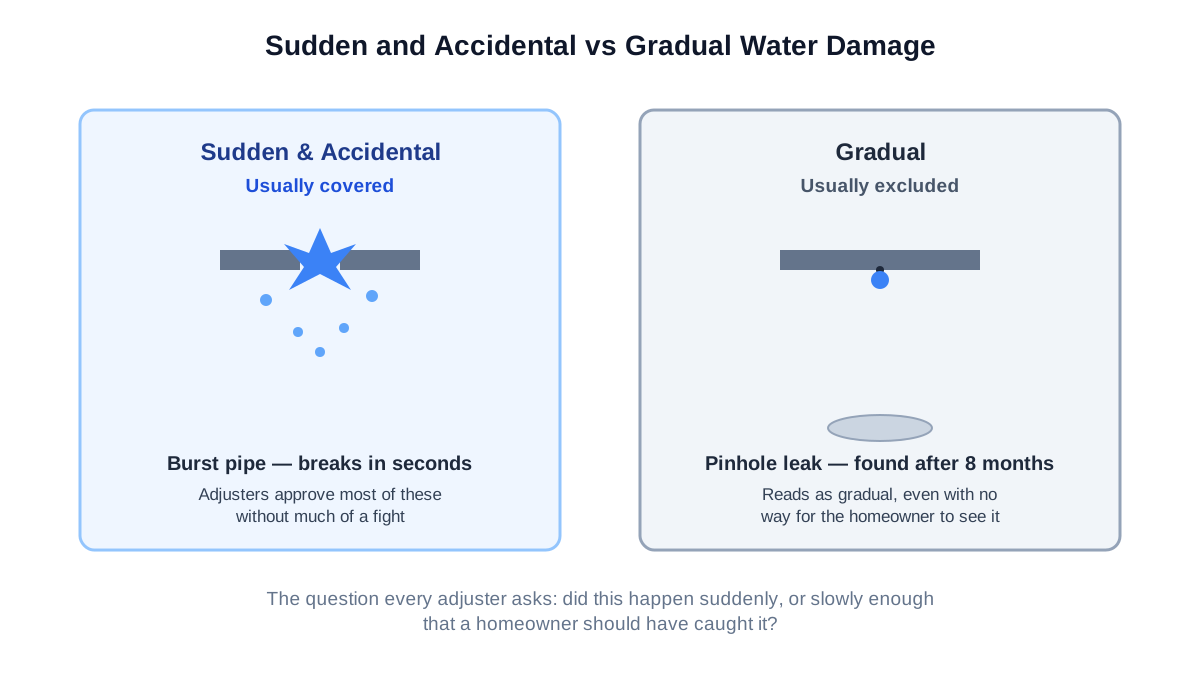
Every disputed water damage claim eventually comes down to the same question: whether it happened suddenly, or slowly enough that a reasonable homeowner should have caught it. Insurers use sudden and accidental water damage as the working definition of what they will pay for, and the phrase does real work in a claim file. A pipe that bursts is sudden. A pipe that has been pinhole-leaking inside a slab for eight months, discovered only when the floor finally buckles, reads as gradual, even though the homeowner had no way of seeing it.
Restoration companies and adjusters lean on the IICRC's category and class system to describe what they find: category describes water cleanliness (1 clean, 2 gray, 3 black), and class describes how much of the structure absorbed it (1 through 4). Neither category nor class tells an adjuster whether a loss is sudden or gradual, that is a separate judgment call based on staining, corrosion, mold growth, and how long materials show signs of saturation. A restoration crew that logs moisture readings across several days can sometimes be the deciding evidence in a disputed claim, one more reason to bring in a licensed company early rather than mopping it up yourself and hoping.
If your damage sits in a gray zone, sudden onset but slow discovery, a slab leak under a guest bathroom nobody used for a month, say so plainly in your claim notes. Do not guess at a cause you are not sure of. Adjusters read vague or inconsistent statements as a reason to dig deeper, and digging deeper rarely goes in the homeowner's favor.
Insurers decide coverage by how fast the water appeared, not by how much damage it caused.
How to File a Water Damage Claim, Step by Step
Here is how to file a water damage claim without giving the adjuster a reason to slow-walk it. The order matters almost as much as the individual steps.
Stop the source. Shut off the main water valve, tarp a roof breach, or unplug a failed appliance before anything else.
Call your insurer's claims line the same day and open a claim, even if you are not sure yet how bad the damage is.
Photograph and video every affected room before you move, dry, or discard anything, wide shots and close-ups of the source.
Separate damaged from undamaged belongings, and hold onto damaged items until the adjuster releases you to dispose of them.
Get a written estimate from a licensed restoration company, itemized by room and task, not a one-line total.
Meet the adjuster at the property, or send your documentation package if the insurer is handling the inspection remotely.
Compare the insurer's estimate against your contractor's line by line before you sign a release or accept a check.
If the numbers do not match, put your objection in writing and ask about the appraisal clause most policies include for exactly this disagreement.
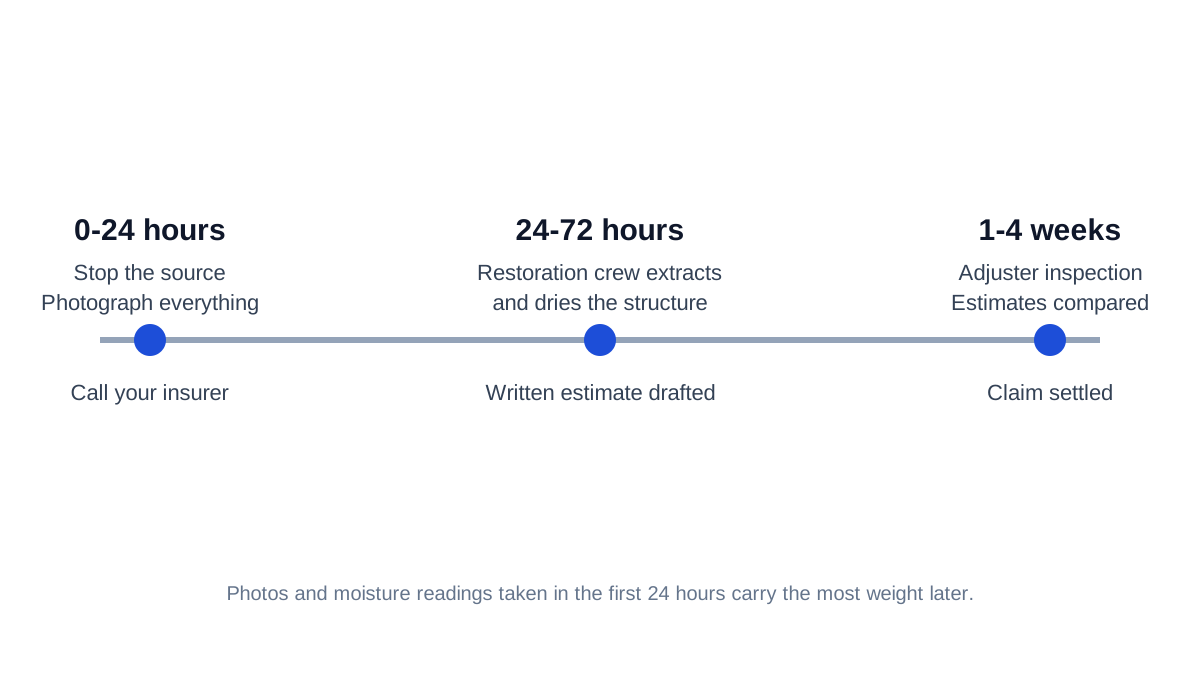
What happens in the first 24 hours, the next 72, and the following weeks of a water damage claim.
None of this needs to happen in a single afternoon, but step one and step three do. Everything after that can wait a day if it has to; the source and the photographs cannot.
Documentation That Actually Wins Claims
Adjusters approve or deny a claim based on what is in the file, not on how bad your week has been. Document every wet surface with photos and video before you start drying, tearing out, or throwing anything away, because an insurer can dispute or deny an entire claim it cannot verify. That single habit, camera before cleanup, resolves more disputes than any argument you could make after the fact.
Document or evidence
Why the insurer wants it
How to get it
Date-stamped photos and video of damage, before cleanup
Proves scope and likely cause
Phone camera, before touching anything
Moisture readings across affected materials
Confirms water category and how far it traveled
Restoration company's moisture-mapping report
Itemized inventory of damaged belongings
Supports the personal-property portion of the claim
Walk each room, list item, age, and estimated value
Receipts for emergency mitigation
Insurers reimburse reasonable steps taken to limit damage
Keep receipts for tarps, fans, pumps, and any hotel stay
Written restoration or repair estimate
Gives you a benchmark against the insurer's own number
Licensed local company, an IICRC-certified firm if possible
Correspondence log with the adjuster
Protects you if the claim is later disputed
Dates, names, and a summary of every call or email
Keep this file even after the claim closes. If mold or a secondary problem surfaces later and traces back to the original water event, a documented file makes a supplemental claim far easier to argue than starting from memory months later.
What Restoration Costs, and How Much of the Bill Insurance Usually Covers
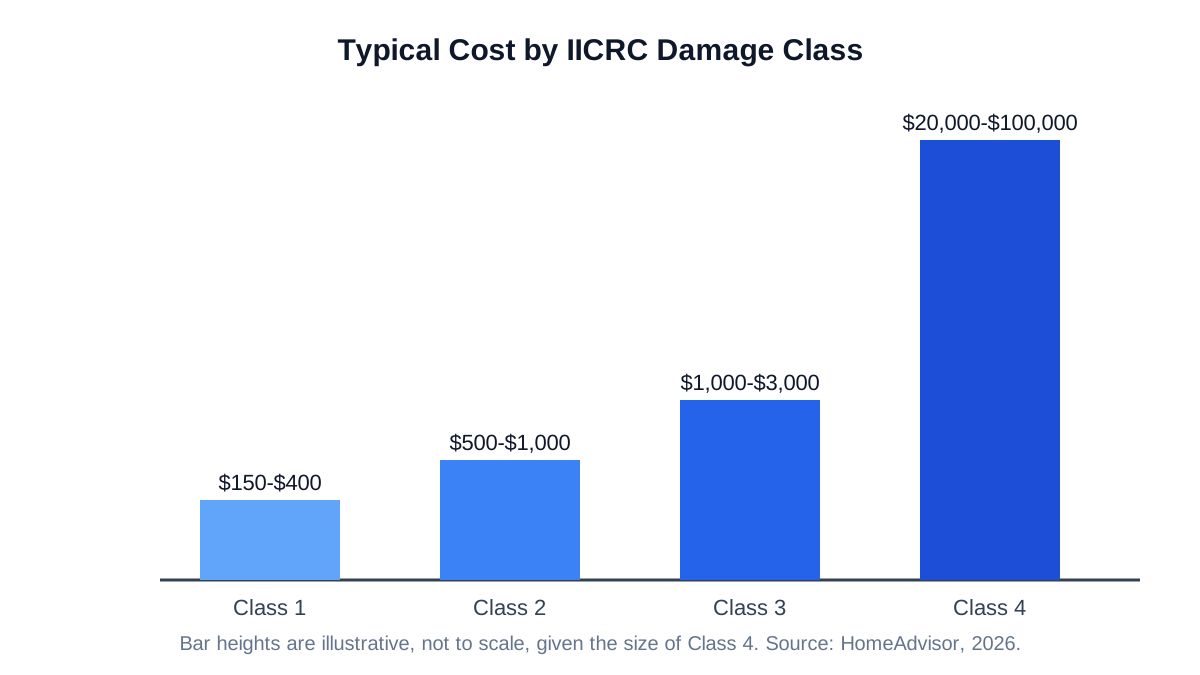
National data gives a useful floor for what to expect, even though every water damage restoration cost ultimately depends on a local written estimate. Homeowners pay a national average of $3,868 for water damage restoration, with most bills landing between $1,383 and $6,369, and a full range stretching from $450 for a small, quick response up to $16,000 for extensive damage, according to HomeAdvisor's 2026 cost data. Extraction itself is typically priced per square foot by water category: roughly $3.50 for clean water, $5.25 for gray water, and $7.50 for contaminated black water, before drying equipment and monitoring get added to the bill. The table below breaks that down by the IICRC's damage classes, plus two common add-ons.
Job or damage class
Typical range
What moves the price
Source
Class 1 (minimal)
$150 - $400
Small area, quick response, little absorption into building materials
HomeAdvisor, 2026
Class 2 (significant)
$500 - $1,000
A full room, carpet and pad, some wall absorption
HomeAdvisor, 2026
Class 3 (extensive)
$1,000 - $3,000
Water reached walls, ceilings, or insulation
HomeAdvisor, 2026
Class 4 (specialty drying)
$20,000 - $100,000
Hardwood, plaster, concrete, or stone holding trapped moisture
HomeAdvisor, 2026
Flooded basement
$500 - $80,000
Depth of water, finished vs. unfinished space, foundation repair
HomeAdvisor, 2026
Mold remediation add-on
$1,100 - $3,400 (avg. $2,225)
Square footage, water category, how long it sat before drying
HomeAdvisor, 2026
Sewage backup cleanup
$2,000 - $15,000+
Room count, contamination time, structural tear-out needed
HomeGuide, 2025
Typical restoration cost by IICRC damage class, HomeAdvisor 2026 data.
How much of that your insurer covers depends on the cause established earlier, your deductible, and whether you carry replacement-cost or actual-cash-value coverage on the dwelling. A covered loss should reimburse the full restoration bill minus your deductible; an excluded loss, flood, gradual leak, unendorsed sewer backup, leaves you paying the table above out of pocket, which is exactly why the coverage question matters more than the repair itself.
Why Water Damage Claims Get Denied, and What to Do Next
Insurers do not deny claims at random. A water damage claim denied letter almost always cites one of a handful of reasons, and most trace back to the coverage lines drawn earlier in this guide.
The most common reason is a gradual-damage finding: the inspection turned up staining, corrosion, or mold growth suggesting the leak had been running for weeks or months, not minutes. Second is a maintenance exclusion, where the insurer argues the homeowner should have caught a failing appliance hose or an aging water heater before it let go. Third, and increasingly common, is a flood reclassification: water that entered from outside the home, even during a storm, gets treated as flood water rather than a covered peril, sending the claim toward the NFIP instead of the homeowners policy, if flood coverage exists at all.
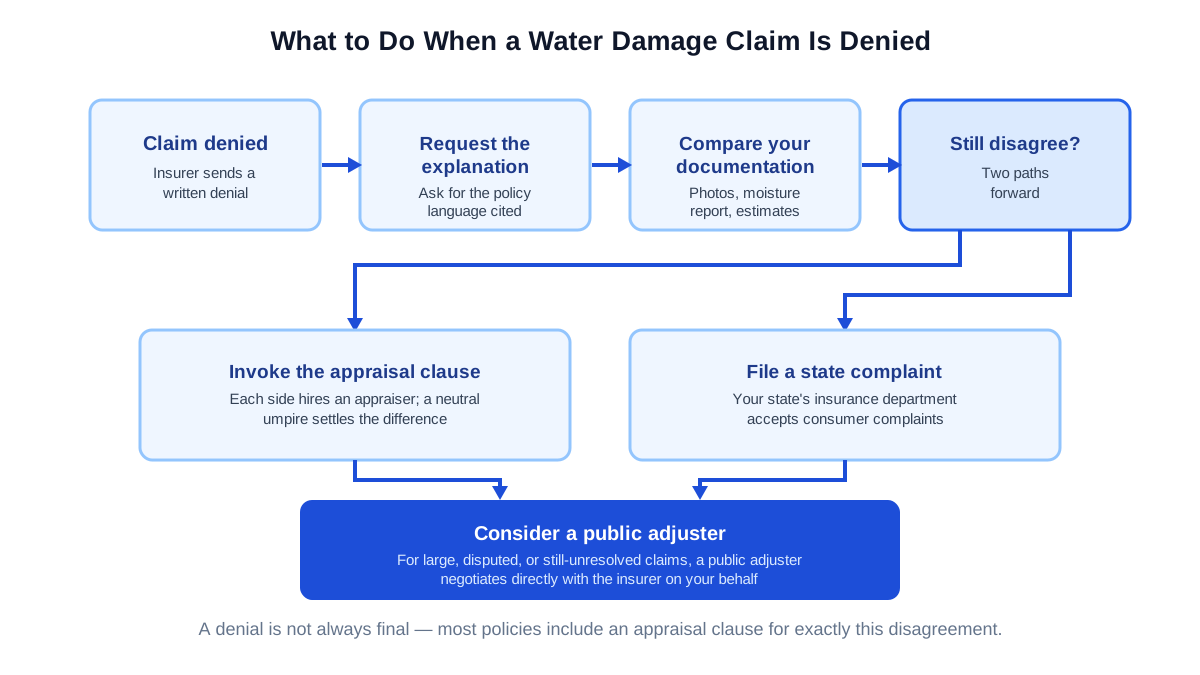
A denial is not always final. Start by requesting the adjuster's full written explanation and the policy language cited. Compare it against your documentation, especially the timestamped photos and the restoration company's moisture report, both of which can contradict a gradual-damage finding. Most states allow you to request a second inspection or invoke the policy's appraisal clause, where each side hires an appraiser and a neutral umpire settles the difference. If the denial still does not hold up, your state's insurance department accepts consumer complaints, and a growing number of homeowners bring in a public adjuster at this stage rather than negotiating alone.
Most policies include an appraisal clause for exactly this kind of disagreement, and a public adjuster is an option when the gap is large.
Public Adjuster vs the Insurance Company's Adjuster
Every claim gets a company adjuster by default: an employee or contracted adjuster the insurer sends out, or dispatches virtually, to inspect the damage and write the estimate the insurer will pay against. Their job is accuracy, but they work for the carrier, and their estimate reflects the carrier's pricing software and judgment calls, not necessarily yours.
A public adjuster water damage claim works differently: the homeowner hires a licensed adjuster, who inspects the same damage, writes a competing estimate, and negotiates directly with the insurer on the homeowner's behalf. Public adjusters typically work for a percentage of the final settlement, agreed to in writing before they start, rather than a flat fee, so it tends to make sense only when the gap between what you expect and what the company adjuster offered is large enough to justify sharing the recovery.
Company adjuster
Public adjuster
Who hires them
The insurance company
You, the homeowner
Who they represent
The insurer's interests
Your interests
Cost to you
None, built into your premium
A share of the settlement, set by contract
When it makes sense
Straightforward, clearly covered claims
Large, disputed, or denied claims with real dollars at stake
Ask any public adjuster for their state license number before signing a contract, and read the fee structure closely. A reputable one explains it in plain terms and will not pressure you to sign on the spot.
When to Call a Restoration Company (and Why Your Policy Expects You To)
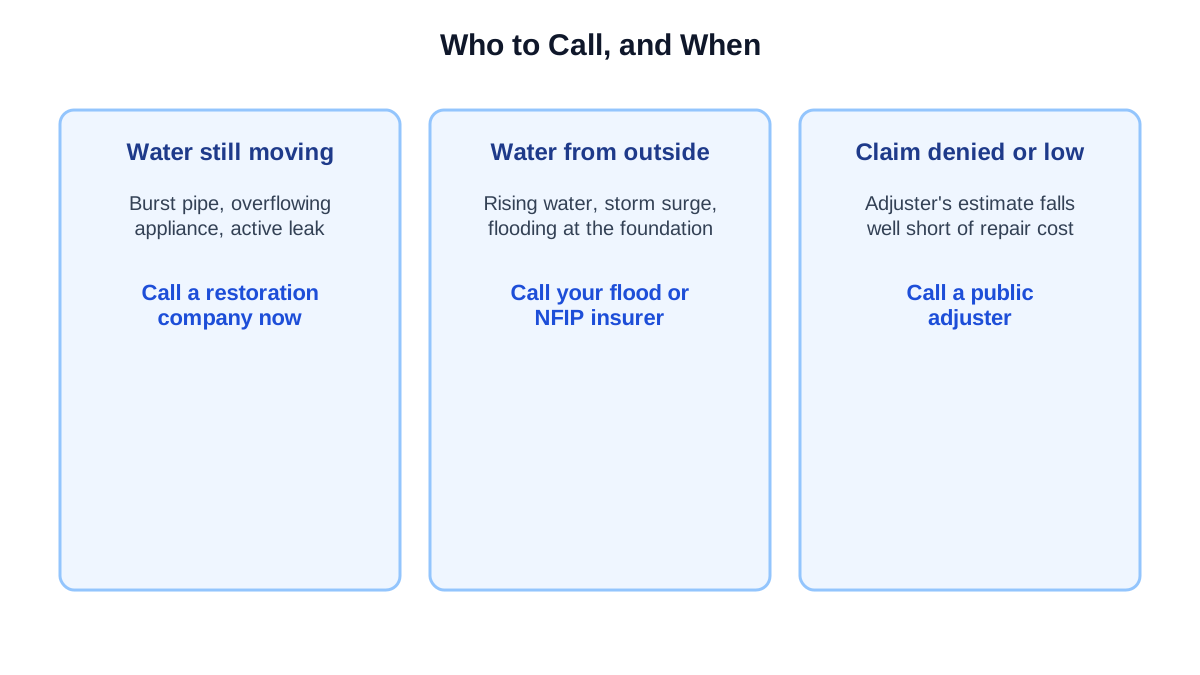
Most homeowners policies include a duty to mitigate: language obligating you to take reasonable steps to prevent further damage once you know about a loss, and insurers can reduce a payout if you do not. That is not a technicality. If the water is still moving, actively flowing from a fitting, pooling toward electrical outlets, soaking through a ceiling, call 888-407-9931 and describe what you are seeing before you do anything else. A dispatcher can talk you through the source shutoff while connecting you with a restoration company that serves your area.
Some situations are not a call-your-insurer-first problem, they are a stop-and-call-a-professional problem. Standing water anywhere near outlets, switches, or a breaker panel is an electrocution risk: shut off power at the breaker only if you can reach it without stepping in water, and call an electrician or your utility if you can't. A ceiling that is bulging or sagging under trapped water can let go without warning, so stay out of that room and call a professional instead of setting a bucket underneath it. And any water backing up from a toilet, floor drain, or sewer line is Category 3 black water; treat it as contaminated and bring in a licensed restoration crew rather than mopping it up yourself.
Beyond stopping the source, most of what happens in the first hours is judgment, not heroics: move furniture off wet carpet, run a dehumidifier if you have one and keep the room below 60% relative humidity, ideally in the 30-50% range the EPA recommends for slowing mold growth, and open windows if the weather allows it. The first hour after water damage sets the tone for everything that follows, including how your claim gets evaluated later.
A restoration company, a flood insurer, or a public adjuster, matched to the situation.
The 24 to 48 hour window matters for a second reason beyond insurance: it is roughly how long wet building materials can sit before mold becomes a realistic risk, according to the EPA's guidance on mold, moisture, and indoor air quality. If mold turns up once materials open up and it covers more than roughly 10 sq. ft., about a 3-by-3-foot patch, EPA guidance calls for a remediation professional rather than a DIY scrub; smaller patches a homeowner can usually handle with gloves, a mask, and plain detergent. A restoration crew brings extraction equipment and commercial dehumidifiers that dry a structure faster than fans and open windows ever will, which protects both your health and your claim.
Choosing a Restoration Company Your Insurer Won't Fight You On
Insurers scrutinize restoration invoices more than almost any other line item in a claim, so the company you hire affects how smoothly the payout goes, not just how the repair turns out. A crew whose paperwork matches industry standard practice gives the adjuster less to argue about.
Look for a company certified under the IICRC's S500 standard for water damage restoration (Fifth Edition, 2021), and S520 if mold remediation is involved (Fourth Edition, 2024), proof of general liability insurance, and a state contractor's license where your state requires one. Ask for a written estimate broken down by room and task, not a lump sum, and ask whether the company works directly with insurance adjusters; most established ones do this daily and know exactly what documentation a claim needs. You can also see how to choose a water damage company and vet local licensing before anyone sets foot in your house.
If you would rather start with a phone call than a search, 888-407-9931 connects you with a restoration company that serves your area; describe the source of the water, roughly how long it has been running, and whether you have contacted your insurer yet.
Red flags worth walking away from: a company that pressures you to sign an assignment of benefits before inspecting anything, one that cannot produce proof of insurance on request, or an estimate that arrives as a single number with no room-by-room detail. None of those help your claim, and some of them can complicate it.
Flood Insurance, NFIP and Why Region Changes Everything
The single biggest regional variable in a water damage claim is not climate, it is whether the water came from inside the house or outside it. Homeowners policies, everywhere in the country, exclude flood water; only a separate flood policy responds to it, and the National Flood Insurance Program covers roughly 4.7 million policyholders across more than 22,600 participating communities, with nearly $1.3 trillion in coverage in force. FEMA notes that just one inch of floodwater can cause roughly $25,000 in damage, and that over 40% of NFIP claims come from outside mapped high-risk zones, the strongest argument for carrying flood coverage even on a home that has never flooded. FEMA also reports that 99% of U.S. counties have experienced a flooding event since 1998, which is why the agency treats flood coverage as a near-universal recommendation rather than a coastal one.
The average NFIP claim between 2016 and 2022 topped $66,000, well above the homeowners-side average for water and freezing claims, largely because flood losses tend to affect an entire lower level rather than a single room. FEMA individual-assistance grants for uninsured flood victims have averaged only about $3,000, nowhere near enough to rebuild, which is the practical case for a flood policy rather than counting on disaster aid.
Hurricane-coast homeowners deal most often with wind-driven rain and storm surge working together, where the cause of a given inch of water, wind versus surge, can determine which policy pays; see flood damage restoration and the NFIP claim process for that comparison in more detail. Freeze-belt homeowners see the opposite pattern: burst pipes from a hard freeze, where water sitting in a supply line at or below 32°F expands as it turns to ice and splits copper or PEX from the inside, ice dams backing water under shingles, and frozen sump-pump discharge lines, all of which read as sudden, covered events under a standard policy, but only if the homeowner kept enough heat running to avoid a maintenance argument later.
Reducing Future Claims and Keeping Your Premium Down
Insurers track water-damage claim history closely, more closely than almost any other peril, because frequency runs about 1.61 claims per 100 house-years nationally, and a home with a prior water claim reads as a higher risk on the next renewal, against a national average homeowners premium of $1,411 in 2021, according to the Insurance Information Institute. Preventing the next event protects your basement and your premium at the same time.
Start with the cheap fixes: a water sensor near the water heater, washing machine, and under sinks that alerts your phone before a slow leak becomes a flood. Replace rubber supply hoses on washing machines with braided stainless-steel ones. Have a plumber inspect a water heater once it passes 10 years old, and know where your main shutoff valve is before you need it in the dark. A room-by-room prevention checklist covers the rest, kitchen, bathroom, laundry, and basement, in more detail than fits here.
None of this guarantees you will never file a claim again. It does mean that when you do, the story is simple: something broke suddenly, you documented it well, and the claim gets paid, instead of the kind of gradual, disputed loss that turns into a fight with your insurer over a water damage claim that should have been straightforward.
Frequently asked questions
Can you file an insurance claim for water damage?+
Yes. Homeowners insurance accepts claims for water damage whenever the cause is sudden and accidental, a burst pipe, a failed water heater, an overflowing appliance. Most policies expect prompt reporting, so call your insurer the same day you discover the damage rather than waiting to see how bad it gets. Filing does not obligate you to accept the first estimate; you can negotiate or request a second inspection if the numbers seem low.
Should I make an insurance claim for water damage?+
It depends on the size of the loss relative to your deductible and your claims history. A small leak that costs a few hundred dollars to fix may not clear your deductible, and filing it anyway can flag your policy for a premium increase at renewal even if the insurer pays nothing. Anything that requires professional extraction, drying equipment, or repairs beyond your comfort level is usually worth filing, since that is exactly what the policy exists for.
Should I file a claim for water damage?+
File when the damage is sudden, documented, and larger than roughly twice your deductible; the math rarely favors filing for anything smaller. Take photos immediately either way, even for damage you plan to handle yourself, because a related problem can surface weeks later, and documentation from day one makes a delayed claim far easier to support than reconstructing the timeline from memory.
Does insurance cover water damage?+
Standard homeowners insurance covers water damage that is sudden and accidental, and excludes flooding, gradual leaks, and neglect. The same policy that pays for a burst pipe will deny a claim for a slow leak that has been running behind a wall for months, so the cause matters more than the amount of water. Reading your declarations page once a year is the easiest way to know exactly where your policy draws that line.
What is water damage coverage?+
Water damage coverage is the part of a homeowners policy, usually within Coverage A for the dwelling and Coverage C for personal property, that pays to repair or replace items damaged by a covered water event. It typically includes extraction, drying, and structural repair, plus limited mold remediation if the mold resulted directly from the covered loss and you responded within a reasonable time.
What is considered water damage for insurance?+
Insurers define water damage by category and cause. The IICRC's category system separates clean water (Category 1), gray water from appliances (Category 2), and contaminated black water from sewage or flooding (Category 3), while the cause, sudden versus gradual, determines whether the policy pays at all. A burst pipe and a slow roof leak can look similar on a ceiling but are treated very differently in a claim file.
What water damage is covered by insurance?+
Burst pipes, failed water heaters, overflowing appliances, and storm-driven roof leaks are typically covered, since each qualifies as sudden and accidental. Flooding, sewer backup without an added endorsement, and gradual leaks from wear and tear are typically excluded. When in doubt, document the damage and let your insurer make the coverage determination rather than assuming either way and delaying the call.
Can home insurance cover water damage?+
Yes, for the causes described throughout this guide, but home insurance and flood insurance are separate products. A standard homeowners policy will never pay for rising floodwater, no matter how the water entered the house; that requires a policy through the National Flood Insurance Program or a private flood carrier. Confirm which policy, or both, applies before assuming a loss is covered.
Does dwelling insurance cover water damage?+
Dwelling coverage, Coverage A on a standard policy, pays for structural water damage: drywall, flooring, cabinetry, and the building itself, when the cause is sudden and accidental. Personal belongings fall under a separate coverage line with its own limits, so a flooded basement claim often involves two coverage calculations running at once, one for the structure and one for what was stored inside it.
Will homeowners insurance cover water damage?+
In most cases, yes, when the cause is sudden: a burst pipe, a failed appliance, storm-driven wind damage that lets rain in. Water damage and freezing accounted for 27.6% of all homeowners insurance losses in 2022, with an average claim of $13,954, so insurers see this category constantly and have well-established rules for handling it. The exceptions, flood, gradual leaks, and neglect, are consistent across nearly every carrier.